
China Student Travel Guide
TODO: Extract from article (100-160 chars)
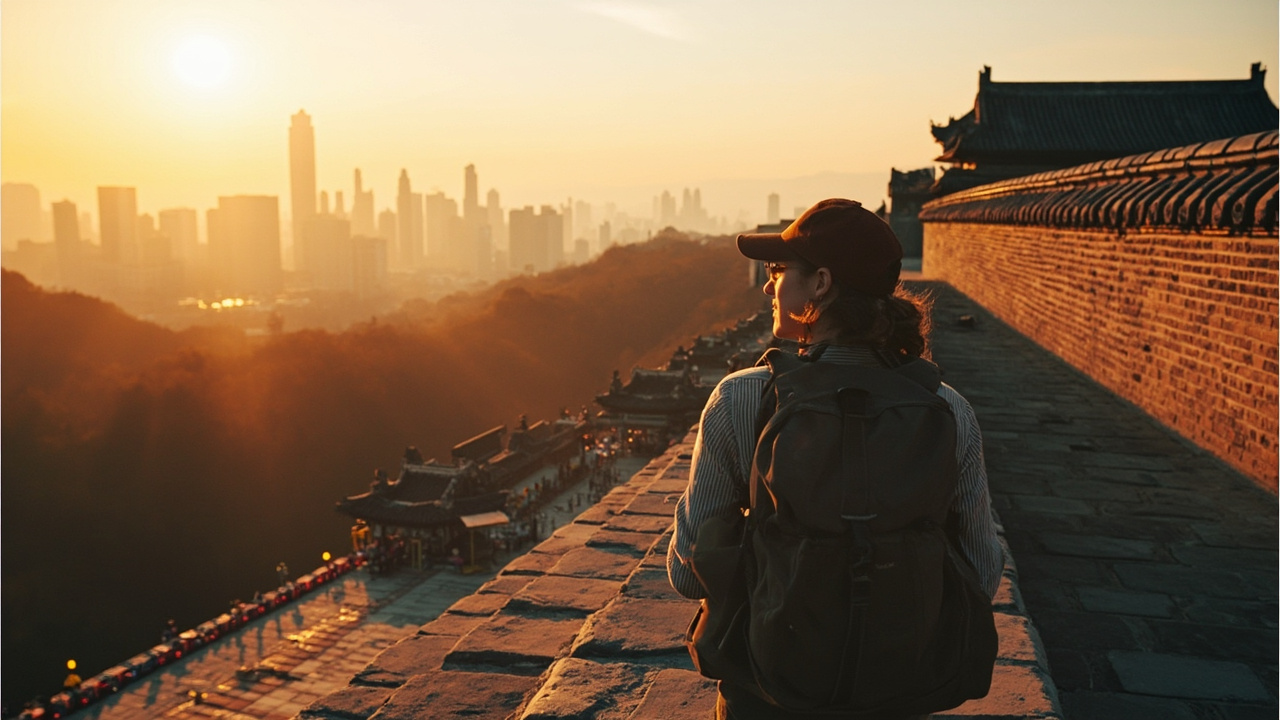
The cab driver in Xi’an looked at me in the rearview mirror, then back at the road, then back at me. “Ni qu nar?” he asked. I fumbled with my phone, showing him a screenshot of the hostel address in Chinese characters. He nodded, laughed at my pronunciation of “muslim quarter,” and we took off through the city walls. That was my first trip to China, and I was 24, broke, and completely unprepared. I’ve now been back forty-something times, lived in Beijing for seven years, and I still remember that feeling of being totally lost in the best possible way.
China is the kind of place that rewards the young traveler who’s willing to be uncomfortable for a few days. The food is cheap, the trains are fast, and the history is so deep it makes European castles feel like recent renovations. But it’s also a place where the digital infrastructure can trip you up if you don’t know what you’re doing. This guide is built from my own mistakes, the ones I made so you don’t have to. I’ll cover the ten places I think matter most for a first trip, how much things actually cost, and the practical stuff like getting online and paying for things.
Quick answer
For a first-time student trip to China in 2026, plan on spending $40-70 per day (CNY 290-500) covering hostels, street food, and trains, and budget 2-3 weeks to see Beijing, Xi’an, and either Chengdu or Shanghai. Most nationalities get visa-free entry for up to 30 days through the 2025 visa-free transit expansion, but you must register your accommodation and set up Alipay before you arrive. The best seasons are April-May and September-October when the weather is mild and the crowds are thinner.
The Short Version
If you only have 90 seconds, here’s what matters. China is safe, cheap, and easier than you think if you prepare properly. Download Alipay and link your foreign card before you fly. Get a VPN installed on every device. Book your first two nights of accommodation in advance, then figure the rest out on the ground. The high-speed rail network is your best friend. Eat everything you see. Skip the places that feel like tourist traps and go where the students go. You’ll spend less than you expect and come home with more stories than you can tell.
How I Picked These
I’ve traveled through every province in China except Tibet and Xinjiang, and I’ve made plenty of wrong turns along the way. For this list, I went back to the places I’d actually recommend to my own younger sister, who visited me last spring with a backpack and a tight budget. I also talked to hostel workers in six cities, a few university students I’ve met through teaching, and a retired train conductor who told me which routes have the best views. The result is a mix of the obvious must-sees and a few spots that most first-timers miss entirely. I’ve left out places like Zhangjiajie and Guilin because they’re beautiful but require more time and money to reach than most students want to spend. This list is about maximizing experience per dollar and per day.
Comparison Table
| Rank | Place | Best For | Approx Cost (USD) | Time Needed | When to Go |
|---|---|---|---|---|---|
| 1 | Beijing | First-timer essentials, history | $30-50/day | 4-5 days | Apr-May, Sep-Oct |
| 2 | Xi’an | Ancient capital, food, history | $25-45/day | 2-3 days | Mar-May, Sep-Nov |
| 3 | Chengdu | Pandas, food, laid-back vibe | $25-40/day | 2-3 days | Mar-Jun, Sep-Nov |
| 4 | Shanghai | Modern China, nightlife | $35-60/day | 2-3 days | Mar-May, Oct-Nov |
| 5 | Guilin & Yangshuo | Scenery, outdoor activities | $25-45/day | 3-4 days | Apr-Oct |
| 6 | Zhangjiajie | Avatar mountains, hiking | $30-50/day | 2-3 days | Apr-Jun, Sep-Oct |
| 7 | Lijiang & Dali | Old towns, Yunnan culture | $25-40/day | 4-5 days | Mar-May, Sep-Nov |
| 8 | Hong Kong | City energy, food, transport | $50-80/day | 2-3 days | Oct-Dec |
| 9 | Suzhou | Classical gardens, canals | $30-50/day | 1-2 days | Mar-May, Sep-Nov |
| 10 | Harbin | Winter festival, Russian influence | $30-50/day | 2-3 days | Dec-Feb |
Beijing — Where It All Comes Together
I remember my first morning in Beijing, jet-lagged at 5 AM, watching elderly couples do tai chi in a park near my hostel while a group of men played a game that involved a lot of shouting and a small wooden stick. The city felt enormous and ancient and alive all at once. That’s still how I’d describe it.
Beijing is the only place I’d tell a first-timer to start. The Forbidden City, the Great Wall, the Temple of Heaven, the hutongs — they’re all here, and they’re all genuinely worth your time. The city has a weight to it that’s hard to describe until you’re standing in Tiananmen Square looking at the portrait of Mao and realizing you’re in the middle of a place you’ve read about your whole life. The food is also underrated — Beijing duck is the famous one, but the real magic is in the street food and the family-run restaurants in the hutongs.
- 馃搷 Location: Central Beijing, spread across Dongcheng and Xicheng districts
- 馃帿 Entry fee: Forbidden City ~$10 (CNY 60), Great Wall at Mutianyu ~$7 (CNY 45) plus shuttle, Temple of Heaven ~$5 (CNY 30). Many parks are free or under $2 (CNY 15).
- 馃晲 Opening hours: Forbidden City 8:30-17:00 (closed Mondays). Mutianyu Great Wall 7:30-18:00. Temple of Heaven 6:00-21:00. Check seasonal variations.
- 馃殕 How to get there: Forbidden City — Take Subway Line 1 to Tiananmen East Station, Exit A, walk west. For Mutianyu, take a direct bus from Dongzhimen Station (Line 2), or book a shared van through your hostel.
- 鈴?When to visit: April-May or September-October. Weekdays are much quieter. Go to the Great Wall on a weekday if you possibly can.
- 馃挕 Insider tips: The Forbidden City limits daily visitors to 80,000 and tickets sell out days in advance — book on the official WeChat mini-program at least a week ahead. The Great Wall at Mutianyu has fewer crowds than Badaling and better scenery. Download a translation app before you arrive because English signage is limited outside major tourist sites. The subway is cheap ($0.40/CNY 3) and efficient but you’ll need your passport for ticket machines. Avoid the “tea ceremony” scams near Tiananmen Square where friendly strangers invite you for tea and then charge you $100.
I met a hostel worker named Xiao Li who spent an hour helping me figure out the subway system on my first day. She drew me a map on a napkin that I still have somewhere in a box.
Xi’an — The Food Capital Nobody Warns You About
The Muslim Quarter in Xi’an is chaos in the best way. I walked through narrow alleys lined with stalls selling lamb skewers, hand-pulled noodles, and something called “Persimmon cake” that I still dream about. The smell of cumin and grilled meat hangs in the air, and the crowds press in from all sides. I ate four different things in the first hour and regretted nothing.
Xi’an is where the Terracotta Warriors are, and yes, they’re worth the hype. But the city itself is often overlooked by first-timers who rush through on their way between Beijing and Chengdu. That’s a mistake. The city walls are the most complete in China, and you can rent a bike and ride the entire perimeter in about two hours. The Muslim Quarter is a food paradise, and the history goes back further than almost anywhere else in China — this was the starting point of the Silk Road.
- 馃搷 Location: City center, especially the area inside the city walls and the Muslim Quarter
- 馃帿 Entry fee: Terracotta Warriors ~$18 (CNY 120), City Wall ~$7 (CNY 54). Muslim Quarter is free.
- 馃晲 Opening hours: Terracotta Warriors 8:30-17:30. City Wall 8:00-22:00. Muslim Quarter stalls open from late morning until late night.
- 馃殕 How to get there: Terracotta Warriors — Take bus 306/307 from the Xi’an Railway Station, about 1 hour. Or take Metro Line 9 to Huaqingchi Station then transfer to a local bus. City Wall — Metro Line 2 to Yongningmen Station, Exit D.
- 鈴?When to visit: March-May or September-November. Go to the Terracotta Warriors first thing in the morning to beat the tour groups.
- 馃挕 Insider tips: The Terracotta Warriors site is actually three pits plus a museum — most people rush through Pit 1 and miss the smaller ones. The Muslim Quarter is best at night when the food stalls are fully open. Try the “rou jia mo” (Chinese hamburger) from a stall with a long line — that’s how you know it’s good. The city wall bike rental costs about $5 (CNY 45) for 2 hours and is worth every yuan. Learn to say “bu la” (not spicy) if you can’t handle heat — Xi’an food is serious about chili.
I got hopelessly lost trying to find my hostel in the Muslim Quarter and ended up in a tea shop where the owner refused to let me leave without trying his jasmine tea. He didn’t speak English. I didn’t speak Mandarin. We communicated through gestures and laughter for twenty minutes.
Chengdu — The City That Taught Me to Slow Down
I sat in a bamboo chair outside a tea house in Chengdu, drinking jasmine tea that cost about 30 cents, watching old men play mahjong and argue about nothing. A woman walked by with a basket of flowers on her back. Nobody was in a hurry. I checked my phone — I’d been sitting there for three hours without noticing.
Chengdu is the panda capital, and the Giant Panda Breeding Research Base is genuinely one of the best wildlife experiences I’ve had anywhere. But the city itself is the real attraction. It’s laid-back in a way that feels almost un-Chinese, with tea houses on every corner, a food scene that rivals Xi’an, and a nightlife that’s young and creative. The people are friendly in a way that feels genuine rather than performative.
- 馃搷 Location: Panda Base is in the northern suburbs; the city center is around Chunxi Road and Kuanzhai Alley
- 馃帿 Entry fee: Panda Base ~$7 (CNY 55). Kuanzhai Alley and Jinli Street are free.
- 馃晲 Opening hours: Panda Base 7:30-18:00 (arrive by 8 AM to see them active). Tea houses open from mid-morning until late.
- 馃殕 How to get there: Panda Base — Take Metro Line 3 to Panda Avenue Station, then a short taxi ride (about $2/CNY 15). Or take bus 198 from the city center.
- 鈴?When to visit: March-June or September-November. Go to the panda base on a weekday and arrive at opening time — the pandas are most active in the morning before it gets hot.
- 馃挕 Insider tips: The panda base is bigger than you think — allow 3-4 hours and wear comfortable shoes. Skip the hotpot restaurants that cater to tourists and find a local place where the menu is only in Chinese — just point at something and hope for the best. The Sichuan opera at the Shu Feng Ya Yun theater is touristy but genuinely entertaining. Try the “dan dan noodles” from a street stall, not a restaurant. If you’re on a budget, the tea houses in People’s Park are the cheapest way to spend an afternoon in any Chinese city.
I shared a table with a retired teacher named Mr. Chen who insisted on ordering for me and then refused to let me pay. He told me through a translation app that his daughter was studying in Australia and he hoped someone was being kind to her there.
Shanghai — The China You Didn’t Expect
The first time I saw the Shanghai skyline from the Bund, I actually laughed out loud. It looks fake, like a movie set designed by someone who’d never been to a real city. The skyscrapers are so new and so tall that they don’t seem like they should exist. But they do, and they’re filled with people working at 11 PM on a Tuesday.
Shanghai is the modern China that most foreigners don’t expect. It’s sleek, international, and expensive by Chinese standards — though still cheap by Western ones. The French Concession has some of the best bar and café culture in Asia, the food scene is incredible, and the city feels safer than most European capitals at 2 AM. It’s also where you’ll find the most English speakers, which makes it a good place to land if you’re nervous about the language barrier.
- 馃搷 Location: The Bund and Pudong for skyline views; French Concession for nightlife; People’s Square for museums
- 馃帿 Entry fee: The Bund is free. Shanghai Museum is free. Oriental Pearl Tower ~$20 (CNY 150) but you can get better views from the Shanghai Tower for ~$25 (CNY 180).
- 馃晲 Opening hours: The Bund is open 24 hours but best at sunset. Shanghai Museum 9:00-17:00 (closed Mondays). Most bars and clubs open until 2-4 AM.
- 馃殕 How to get there: The Bund — Take Metro Line 2 to Nanjing East Road Station, Exit 1, walk east for 10 minutes. Shanghai Tower — Metro Line 2 to Lujiazui Station, Exit 6.
- 鈴?When to visit: March-May or October-November. Avoid the summer humidity and the Chinese New Year period when everything shuts down.
- 馃挕 Insider tips: The Bund is spectacular at night when the buildings light up — go at 7 PM for the best views. The ferry across the Huangpu River costs about 30 cents (CNY 2) and gives you the same view as the expensive boat tours. The French Concession is best explored on foot or by bike — rent one of the shared bikes and get lost in the tree-lined streets. For cheap eats, go to the food court in the basement of any major department store. The Shanghai Museum is free but you need to book a time slot on their WeChat account in advance.
I got caught in a sudden rainstorm in the French Concession and ducked into a tiny bar that turned out to be one of the best craft beer spots in the city. The bartender, a guy from Michigan who’d been in Shanghai for eight years, told me he’d never planned to stay. Eight years later, he’s still there.
Guilin & Yangshuo — The Scenery Postcards Can’t Capture
The first time I saw the karst mountains of Guilin from a train window, I pressed my face against the glass like a kid. The peaks rise out of the flat farmland like something from a dream, wrapped in mist that shifts every few minutes. I’d seen a thousand photos, but none of them prepared me for the real thing.
Guilin and Yangshuo are where you go when you’re tired of cities. The Li River cruise between the two is one of the most beautiful boat trips in the world, and Yangshuo itself is a backpacker hub with a scene that’s young, international, and laid-back. You can go rock climbing, cycling through rice paddies, or just sit by the river and watch the bamboo rafts drift past.
- 馃搷 Location: Yangshuo town and the surrounding countryside; Guilin city is the transport hub
- 馃帿 Entry fee: Li River cruise ~$50 (CNY 350) including transport. Cycling in the countryside is free. Some viewpoints charge small fees ($2-5/CNY 15-35).
- 馃晲 Opening hours: Most outdoor activities operate daylight hours. The West Street bar area in Yangshuo stays open late.
- 馃殕 How to get there: Fly or take the high-speed train to Guilin, then take a bus or taxi to Yangshuo (about 1.5 hours, $5/CNY 35). The Li River cruise departs from Guilin’s Zhujiang Pier.
- 鈴?When to visit: April-October is the best weather. Avoid Chinese national holidays (early May, early October) when domestic tourism explodes.
- 馃挕 Insider tips: Skip the expensive Li River cruise and take the local bus from Guilin to Yangshuo instead — you’ll see the same scenery for a fraction of the price. Rent an e-bike in Yangshuo for about $10 (CNY 70) a day and explore the back roads — this is where the real magic is. The “Impression Liu Sanjie” light show is touristy but genuinely impressive. Try the beer fish (beer yu) — it’s the local specialty and it’s delicious. If you’re fit, do the Xianggong Mountain hike at sunrise for the classic postcard view.
I rented a bicycle in Yangshuo and got lost in the rice paddies for three hours. An old farmer woman found me, laughed at my confusion, and walked me back to the main road. She refused the money I tried to give her and instead gave me a handful of fresh lychees from her bag.
Zhangjiajie — The Mountains That Look Like Another Planet
I remember standing at the top of Zhangjiajie’s Avatar Hallelujah Mountain and thinking that the movie’s designers must have just copied what they saw here. The sandstone pillars rise hundreds of meters out of the forest, some of them so thin they look like they shouldn’t be able to support themselves. Mist rolls through the valleys below, and the whole place feels like you’ve stepped into a fantasy novel.
Zhangjiajie is the landscape that inspired the floating mountains in Avatar, and it’s one of the most unique natural wonders I’ve seen anywhere. The glass-bottomed bridge over the canyon is terrifying and thrilling in equal measure, and the Bailong Elevator — which carries you up the side of a cliff — is an engineering marvel. It’s a bit harder to reach than other destinations on this list, but it’s worth the extra effort.
- 馃搷 Location: Wulingyuan Scenic Area, about 30 km from Zhangjiajie city
- 馃帿 Entry fee: Park entrance ~$30 (CNY 225) for a 4-day pass. Glass bridge ~$20 (CNY 138). Bailong Elevator ~$10 (CNY 72).
- 馃晲 Opening hours: Park opens 7:00-18:00. The glass bridge and elevator have separate hours.
- 馃殕 How to get there: Fly or take the high-speed train to Zhangjiajie West Station, then take a bus to Wulingyuan (about 40 minutes). The park has several entrances — use the Wulingyuan entrance for the main attractions.
- 鈴?When to visit: April-June and September-October. The park is often foggy in the morning — wait until midday for the best visibility.
- 馃挕 Insider tips: The park is huge — plan at least two days and use the free shuttle buses between the main viewpoints. The Yuanjiajie area has the most famous pillars but the Tianzi Mountain area is less crowded and equally beautiful. Bring rain gear even in summer — the weather changes fast at altitude. The glass bridge requires advance booking and you need to wear special shoe covers. If you’re on a budget, stay in the town of Wulingyuan rather than the more expensive hotels inside the park.
I got caught in a sudden thunderstorm on Tianzi Mountain and had to shelter in a small pavilion with a group of Chinese tourists who shared their snacks with me. None of us spoke the same language, but we all laughed at the absurdity of being soaked on top of a mountain in the middle of nowhere.
Lijiang & Dali — Yunnan’s Old Towns and Mountain Views
The first thing I noticed in Lijiang’s old town was the sound of water. Canals run alongside every street, and the constant murmur of flowing water is everywhere. The old town is a maze of cobblestone alleys, traditional Naxi architecture, and more souvenir shops than you can count. It’s touristy, but there’s a reason for that.
Lijiang and Dali are the two most famous stops in Yunnan, and they offer a glimpse of China that feels completely different from the eastern cities. The old towns are UNESCO-listed, the surrounding countryside is dotted with rice terraces and traditional villages, and the nearby mountains offer some of the best trekking in China. Dali is more laid-back than Lijiang, with a lake that’s perfect for cycling and a backpacker scene that’s been going for decades.
- 馃搷 Location: Lijiang Old Town and Dali Old Town are both in Yunnan province, about 3 hours apart by bus
- 馃帿 Entry fee: Lijiang Old Town ~$7 (CNY 50) maintenance fee. Dali Old Town is free. Jade Dragon Snow Mountain in Lijiang ~$15 (CNY 100) plus cable car.
- 馃晲 Opening hours: Old towns are open 24 hours. Most museums and attractions operate 8:30-17:30.
- 馃殕 How to get there: Fly into Lijiang Sanyi Airport or take the high-speed train. Dali is about 2 hours from Lijiang by high-speed train.
- 鈴?When to visit: March-May and September-November. The weather is mild year-round but summer brings rain.
- 馃挕 Insider tips: The best part of Lijiang is the early morning before the tour groups arrive — get up at 7 AM and you’ll have the streets to yourself. The Shuhe Old Town, 15 minutes from Lijiang, is quieter and more authentic. In Dali, rent a bicycle and ride along Erhai Lake — it’s one of the best cycling routes in China. Try the local specialty “crossing the bridge noodles” (guoqiao mixian). The Naxi people have their own written language and culture — take time to learn about it at the Dongba Culture Museum.
I stayed in a hostel in Dali run by a couple who’d quit their jobs in Shanghai to start a guesthouse. They told me they’d been there for three years and had no plans to leave. “We make less money,” the husband said, “but we watch the sunset over the lake every night. That’s worth something.”
Hong Kong — The City That Never Sleeps (and Never Gets Cheap)
The first time I took the Star Ferry across Victoria Harbour at night, I understood why Hong Kong has such a reputation. The skyline is overwhelming, the lights reflecting off the water, the city buzzing with energy even at midnight. It’s a completely different China from the mainland — a place that feels more like a global city than a Chinese one.
Hong Kong is technically part of China but operates with its own rules, currency, and vibe. It’s more expensive than the mainland, but it’s also easier for first-time travelers — English is widely spoken, the MTR is world-class, and you don’t need a VPN to access Google or Instagram. It’s a good place to start or end a China trip, especially if you’re nervous about the digital restrictions on the mainland.
- 馃搷 Location: Hong Kong Island, Kowloon, and the New Territories
- 馃帿 Entry fee: Most attractions are free or cheap. Victoria Peak tram ~$8 (HKD 62) one way. Big Buddha is free but the cable car is ~$25 (HKD 188).
- 馃晲 Opening hours: Most attractions operate 10:00-18:00. The city itself never sleeps.
- 馃殕 How to get there: Fly into Hong Kong International Airport. The Airport Express train takes 24 minutes to the city center.
- 鈴?When to visit: October-December is the best weather. Avoid summer when it’s hot and humid.
- 馃挕 Insider tips: The Octopus Card is essential for public transport — get one at any MTR station. The night market at Temple Street in Kowloon is touristy but fun. Take the Ding Ding tram on Hong Kong Island for a cheap and scenic ride. The hiking on Lantau Island and the Dragon’s Back trail offers incredible views. Food is cheaper in the local cha chaan tengs (Hong Kong-style diners) than in the tourist restaurants.
I got lost in Mong Kok’s electronics market and ended up having the best wonton noodles of my life at a tiny shop that had been there since the 1960s. The owner, an old man who’d seen the city change beyond recognition, told me in broken English that “Hong Kong always change, but noodles same.”
Suzhou — The Gardens That Made Me Understand Chinese Art
I spent an hour in the Humble Administrator’s Garden in Suzhou without realizing the time had passed. The garden is a masterpiece of Chinese landscape design — every rock, every tree, every window frame is placed to create a specific view. I sat on a bench watching the koi fish and realized I finally understood why Chinese painters spent their lives trying to capture this kind of beauty.
Suzhou is often skipped by first-timers who don’t realize it’s only 30 minutes from Shanghai by high-speed train. That’s a mistake. The classical gardens are UNESCO-listed and represent the pinnacle of Chinese garden design. The city also has canals that rival Venice, silk factories that still use traditional methods, and a food scene that’s famous throughout China for its refinement.
- 馃搷 Location: Suzhou city center, about 30 minutes from Shanghai by high-speed train
- 馃帿 Entry fee: Humble Administrator’s Garden ~$10 (CNY 80). Other gardens range from $4-8 (CNY 30-60).
- 馃晲 Opening hours: Most gardens open 7:30-17:30. Check individual gardens for variations.
- 馃殕 How to get there: Take the high-speed train from Shanghai Hongqiao Station to Suzhou Station (about 30 minutes, $10/CNY 70). The gardens are within walking distance or a short taxi ride from the station.
- 鈴?When to visit: March-May and September-November. The gardens are best in the morning before the crowds arrive.
- 馃挕 Insider tips: The Humble Administrator’s Garden is the most famous but also the busiest — consider the Master of the Nets Garden instead, which is smaller but equally beautiful and much quieter. The Pingjiang Road area near the gardens is great for walking and has excellent street food. Take a boat ride on the canals at night when the lanterns are lit. The Suzhou Museum, designed by I.M. Pei, is free and worth a visit. Try the local “squirrel fish” (songshu guiyu) — it’s a Suzhou specialty that’s sweet and sour and shaped like a squirrel.
I met a calligraphy student in the Master of the Nets Garden who was practicing his brush strokes by the pond. He let me try writing my name in Chinese characters. My attempt was terrible, but he was too polite to laugh.
Harbin — The Winter City That Embraces the Cold
The first time I experienced -25°C in Harbin, I genuinely didn’t believe the temperature reading on my phone. The cold is a physical presence, a force that seeps through every layer of clothing and makes your eyelashes freeze together. But the Ice and Snow World, with its massive ice sculptures lit up in neon colors, made me forget the cold entirely.
Harbin is a winter destination, full stop. The Ice and Snow World is one of the most spectacular things I’ve seen anywhere — entire buildings, castles, and slides carved from ice and lit up like a fairy tale. The city itself has a Russian influence that dates back to the early 20th century, with onion-domed churches and European-style architecture that feels completely out of place in China. It’s a unique experience that you can’t get anywhere else.
- 馃搷 Location: Harbin city center, in Heilongjiang province in the far northeast
- 馃帿 Entry fee: Ice and Snow World ~$35 (CNY 240). Saint Sophia Cathedral ~$3 (CNY 20). Central Street is free.
- 馃晲 Opening hours: Ice and Snow World opens late December to late February, typically 11:00-21:30. The ice sculptures are best viewed after dark.
- 馃殕 How to get there: Fly into Harbin Taiping International Airport. The Ice and Snow World is about 30 minutes from the city center by taxi.
- 鈴?When to visit: January is the best month for the Ice and Snow World. The city is cold from December to February — bring every warm layer you own.
- 馃挕 Insider tips: The Ice and Snow World is spectacular but cold — wear thermal underwear, multiple layers, and the warmest boots you can find. The ice slides are free and worth trying but the lines can be long. Central Street has the best Russian-style architecture and the best street food — try the Harbin sausage and the Russian bread. The Siberian Tiger Park is a bit out of the way but worth it if you have time. If you’re on a budget, visit the ice sculptures in Zhaolin Park instead — they’re smaller but free.
I met a group of students from Guangzhou at my hostel who had never experienced real winter before. They bought the thickest coats they could find and still spent the first day shivering. By the third day, they were building snowmen in the hostel courtyard and laughing at how much they’d changed.
FAQ summary
For students planning a first trip to China in 2026, the key facts are: most nationalities can enter visa-free for up to 30 days, a realistic budget is $40-70 per day (CNY 290-500), and the best time to visit is April-May or September-October. You’ll need Alipay or WeChat Pay set up with a foreign card, a VPN installed before arrival, and a translation app for daily communication. The high-speed rail network connects all major destinations and is the best way to travel between cities.
FAQ
Q: Do I need a visa to travel to China as a student in 2026? A: Most nationalities from the US, UK, EU, Australia, and many other countries can enter China visa-free for up to 30 days through the visa-free transit policy. Check the latest rules before booking, as policies change — see our detailed guide on China visa options.
Q: How much money do I need per day as a student in China? A: Budget $40-70 per day (CNY 290-500) covering hostels ($10-20/CNY 70-140), street food and local restaurants ($10-15/CNY 70-105), and local transport ($3-5/CNY 20-35). Add $20-40 (CNY 140-280) per long-distance train journey.
Q: Can I use my foreign credit card or Apple Pay in China? A: Not reliably. You need to set up Alipay or WeChat Pay before you arrive and link your foreign credit or debit card. Both apps work with most international cards and are accepted everywhere. See our payment guide for step-by-step setup instructions.
Q: Will I need a VPN to use Google, Instagram, or WhatsApp in China? A: Yes. Google, Facebook, Instagram, and WhatsApp are blocked in mainland China. Install a reliable VPN on all your devices before you arrive. See our SIM card and internet guide for recommended options.
Q: Is it safe to travel alone in China as a young person? A: Yes, China is one of the safest countries I’ve traveled in. Violent crime against tourists is extremely rare, and the police are helpful. The main risks are petty scams and pickpocketing in crowded tourist areas — keep your phone in your front pocket and be wary of strangers who approach you with “helpful” offers.
Q: How do I get around between cities in China? A: The high-speed rail network is the best option. Trains are fast, comfortable, and affordable — Beijing to Xi’an takes about 4.5 hours and costs around $50 (CNY 360) in second class. Book tickets through the official 12306 app or through a third-party service. See our high-speed rail guide for details.
Q: What should I pack for a trip to China? A: Pack light — you can buy anything you need in China. Bring comfortable walking shoes, a power bank (you’ll use your phone constantly), a universal adapter (China uses Type A/C/G plugs), and any prescription medications. Download translation apps and offline maps before you arrive.
The Honest Wrap-up
This list is for the traveler who wants to see the real China without spending a fortune. It’s for the person who’s willing to eat street food that might make them nervous, who’s okay with getting lost, who understands that not everything will go according to plan. It’s not for someone who wants a luxury vacation or who needs everything to be comfortable and predictable.
If you take one piece of advice from this entire guide, let it be this: don’t overplan. Book your first few nights and your major train tickets, but leave room for spontaneity. Some of my best memories in China came from days when I had no plan at all, when I followed a friendly local to a tea house or took a bus to a town I’d never heard of. China rewards the curious and the flexible.
The cab driver who laughed at my pronunciation that first day in Xi’an? I still think about him sometimes. He didn’t speak English, I didn’t speak Mandarin, but we managed to communicate well enough that he drove me around for an extra hour showing me the city walls and the Bell Tower. When I tried to pay him extra, he waved me off and drove away. That’s China — it’ll surprise you when you least expect it, and it’ll stay with you long after you leave.
More guides you may like

Top 10 Bridges in China
China's bridges are engineering marvels spanning mountains, rivers, and seas. Here are 10 of the most spectacular, from ancient stone to modern steel.
8 min read

Top 10 Buddhist Sites in China
From the Leshan Giant Buddha to the Dunhuang Caves, these 10 Buddhist sites represent 2,000 years of China's spiritual heritage.
9 min read

Top 10 Day Trips from Beijing You Shouldn't Miss
Beijing is packed with history, but some of China's best experiences are just a few hours away. Here are 10 day trips that will transform your visit.
9 min read

Top 10 Hidden Gems in China Off the Beaten Path
Beyond the Great Wall and Terracotta Warriors, China has incredible hidden destinations few tourists ever reach. Here are 10 underrated gems worth the detour.
9 min read

Top 10 Markets and Shopping Streets in China
From Shanghai's Bund to Beijing's Silk Street - 10 markets where foreigners can haggle, explore, and bring home authentic Chinese goods.
9 min read

Top 10 Museums in China You Shouldn't Miss
China's museums span 5,000 years of civilization. These 10 - from the Palace Museum to Xi'an's terracotta gallery - are unmissable for culture lovers.
9 min read