
China Domestic Flights Tips
TODO: Extract from article (100-160 chars)
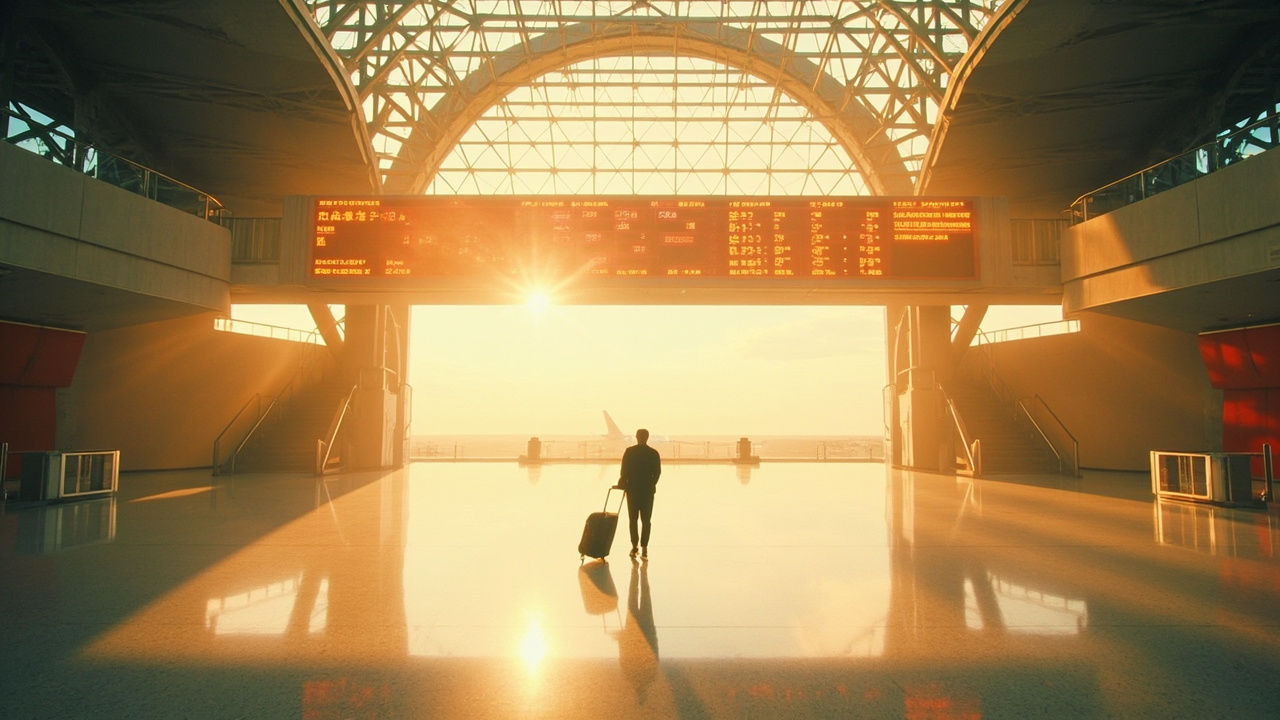
The first time I flew domestically in China, I nearly missed my flight because I didn’t realize you have to scan your passport at a security gate before you even enter the airport terminal building. A security guard with a kind face and zero English mimed the process for me while a line of impatient business travelers formed behind us. That was seven years ago, and I’ve probably taken 60 domestic flights since. I’ve learned the system the hard way so you don’t have to.
China’s domestic air network is one of the most efficient in the world, but it runs on rules that aren’t always obvious to first-time visitors. The good news: flying between Chinese cities is often cheaper than the high-speed rail for long distances, and the airports are modern, clean, and surprisingly easy to navigate once you understand the flow. This guide covers everything from booking tickets to navigating security, what to pack in your carry-on, and how to handle delays when they happen.
Quick answer
Domestic flights in China are the fastest way to cover long distances (over 1,000 km / 620 miles), with typical one-way fares between $80-$200 (CNY 580-1,450) for routes like Beijing to Shanghai or Chengdu to Guangzhou. Book through Chinese platforms like Trip.com or Ctrip for the best prices, arrive at the airport 2 hours before departure, and bring your passport — it’s your boarding pass, ticket, and ID all in one. Most major routes have 10-20 daily flights, so even if you miss one, you can usually rebook within a few hours.
The Short Version
If you only remember five things: book early (prices jump 2-3x within a week of departure), fly instead of taking the train for anything over 1,000 km, use Trip.com or the airline’s WeChat mini-program to book, arrive 2 hours early for domestic flights, and never check a bag if you can avoid it. The checked baggage process in China is slower than anywhere else I’ve experienced, and carry-on is free on all major airlines. Also, download the airline’s app before you fly — most have English versions that let you check in online, which saves you a massive queue at the airport.
How I Picked These
I’ve flown with every major Chinese carrier multiple times: Air China, China Eastern, China Southern, Hainan Airlines, and the budget options like Spring Airlines and Juneyao. I’ve been stranded in Chengdu by fog, had my flight cancelled in Guangzhou due to typhoon warnings, and once spent 6 hours in a holding pattern over Beijing because of air traffic control. I’ve also watched how Chinese business travelers operate — they’re the ones who breeze through security in 10 minutes while I fumbled with my belt and shoes. This guide is built from those experiences, plus conversations with airline staff and frequent flyers who’ve taught me the unwritten rules.
Comparison Table
| Rank | Airline | Best For | Approx Cost (USD) | Time Needed | When to Fly |
|---|---|---|---|---|---|
| 1 | Air China | Full service, international connections | $100-250 (CNY 725-1,810) | 2-3 hrs | Year-round, avoid Chinese holidays |
| 2 | China Eastern | Shanghai hub, good value | $90-220 (CNY 650-1,590) | 2-3 hrs | Shoulder seasons (Apr-May, Sep-Oct) |
| 3 | China Southern | Guangzhou hub, southern routes | $85-200 (CNY 615-1,450) | 2-4 hrs | Winter (less fog than summer) |
| 4 | Hainan Airlines | Best service, 787 fleet | $110-260 (CNY 800-1,880) | 2-4 hrs | Year-round, excellent on-time record |
| 5 | Spring Airlines | Budget, short hops | $40-90 (CNY 290-650) | 1-2 hrs | Off-peak hours only |
| 6 | Juneyao Air | Shanghai-based, decent budget | $50-100 (CNY 360-725) | 1-2 hrs | Weekdays |
Air China — The Flag Carrier That Actually Works
I remember my first Air China flight: the cabin crew served me a meal that was actually edible — braised beef with rice and a surprisingly good vegetable stir-fry. I’d expected airline food, but Air China’s domestic service has improved dramatically since the pandemic. They’re not Singapore Airlines, but they’re reliable, safe, and their on-time performance is consistently above 80%.
Air China operates the most domestic routes of any Chinese carrier, which means if you’re flying between major cities, they probably have a flight. Their hub is Beijing Capital Airport (PEK) and they also fly from Beijing Daxing (PKX). The main advantage: if your international flight is on Air China or Star Alliance, your domestic connection will be protected if something goes wrong.
- 📍 Location: Hubs at Beijing Capital (PEK) and Chengdu Tianfu (TFU)
- 🎫 Entry fee: N/A — but expect $100-250 (CNY 725-1,810) for typical routes
- 🕒 Opening hours: Flights run 6 AM to midnight daily
- 🚕 How to actually get there: At PEK, Terminal 3 is Air China’s home. Take the Airport Express train from Dongzhimen Station (Line 2), which takes about 30 minutes. At TFU, take Metro Line 18 from Chengdu city center.
- 📅 When to visit: Avoid the first and last days of Chinese New Year and National Day (Oct 1-7) — prices triple and flights fill up weeks in advance.
- 💡 Insider tips: Check in online through the Air China app (it has English) 24 hours before departure. You can select seats for free, which isn’t always the case on other Chinese airlines. Also, their frequent flyer program (Phoenix Miles) partners with Star Alliance, so you can earn miles on your United or Lufthansa ticket.
I once sat next to a retired professor from Beijing who was flying to Chengdu to visit his daughter. He insisted on showing me photos of his grandson on his phone for the entire 2.5-hour flight. I didn’t understand a word, but I understood everything.
China Eastern — Shanghai’s Workhorse
China Eastern is the airline I’ve flown most often, mostly because their Shanghai Hongqiao (SHA) hub is so convenient. Unlike Pudong (PVG), which is an hour from the city center, Hongqiao is connected to the metro system and is genuinely 30 minutes from downtown. If you’re flying within the Yangtze River Delta — Shanghai to Nanjing, Hangzhou, or Hefei — China Eastern is your best bet.
Their newer A350s and 787s on trunk routes are comfortable, with decent legroom and in-seat entertainment. The food is hit-or-miss (the noodle options are usually better than the rice dishes), but the crew is professional and the safety record is impeccable. One thing I appreciate: China Eastern’s app has a solid English interface, and you can check in, select seats, and get mobile boarding passes without any hassle.
- 📍 Location: Hubs at Shanghai Hongqiao (SHA) and Shanghai Pudong (PVG)
- 🎫 Entry fee: N/A — typical fares $90-220 (CNY 650-1,590)
- 🕒 Opening hours: Flights from 6:30 AM to 11 PM
- 🚕 How to actually get there: At SHA, take Metro Line 2 or 10 to Hongqiao Airport Terminal 2 Station. At PVG, take the Maglev from Longyang Road Station (Line 2) — it takes 8 minutes and costs about $7 (CNY 50).
- 📅 When to visit: Weekday morning flights are cheapest. Avoid Friday evenings and Sunday afternoons when business travelers and weekend tourists clog the routes.
- 💡 Insider tips: If you’re flying China Eastern between Shanghai and Beijing, check if your ticket includes access to their “Hongqiao Fast Track” — it lets you skip the main security line. Also, their premium economy (called “Super” on their app) is often only $20-30 more than economy and includes priority boarding and extra legroom.
I once watched a China Eastern ground agent help a elderly woman who was clearly confused about her gate. She didn’t rush her, didn’t raise her voice, just patiently walked her to the correct boarding area. It was a small moment, but it told me a lot about how the airline treats passengers who need extra help.
China Southern — The Southern Giant
China Southern is the largest airline in Asia by fleet size, and their Guangzhou Baiyun (CAN) hub is a masterpiece of modern airport design. The terminal is massive but logical, with clear English signage throughout. If you’re flying into Guangzhou and connecting to domestic destinations like Chengdu, Kunming, or Xi’an, China Southern is often your only choice for non-stop service.
Their domestic product is solid: clean planes, professional crew, and a meal service that includes both Chinese and Western options on longer flights. The one thing that sets them apart is their route network — they fly to more Chinese cities than any other carrier, including smaller destinations like Lijiang, Zhangjiajie, and Guilin that are popular with tourists but underserved by other airlines.
- 📍 Location: Hub at Guangzhou Baiyun (CAN), secondary hub at Beijing Daxing (PKX)
- 🎫 Entry fee: N/A — typical fares $85-200 (CNY 615-1,450)
- 🕒 Opening hours: Flights from 6 AM to midnight
- 🚕 How to actually get there: At CAN, take Metro Line 3 to Airport South Station for Terminal 1 or Airport North Station for Terminal 2. At PKX, take the Daxing Airport Express from Caoqiao Station (Line 10).
- 📅 When to visit: Spring (March-May) and autumn (September-November) are best for southern routes. Summer has more thunderstorms and delays.
- 💡 Insider tips: China Southern’s “Sky Pearl” frequent flyer program partners with SkyTeam, so you can earn miles on Delta or Air France flights. Their mobile app has a feature called “Easy Check-in” that lets you use facial recognition at self-service kiosks — you just scan your passport and look at the camera, and you’re checked in.
I flew China Southern from Guangzhou to Chengdu during a thunderstorm warning. The pilot gave a calm, detailed explanation in both Chinese and English about the weather conditions and expected turbulence. It was the most reassuring flight announcement I’ve ever heard on any airline, anywhere.
Hainan Airlines — The Premium Option
Hainan Airlines is the one Chinese carrier that feels genuinely premium. Their 787 Dreamliners on domestic trunk routes have comfortable seats, good entertainment systems, and a meal service that actually tastes like real food. They’re also the only Chinese airline with a 5-star Skytrax rating, which they’ve held since 2011.
Their hub is Beijing Capital (PEK), but they also have significant operations in Haikou, Shenzhen, and Xi’an. The catch: their route network is smaller than the big three, so you can’t fly Hainan everywhere. But if you’re flying between Beijing and Shenzhen, Guangzhou, or Chengdu, it’s worth paying $20-30 more for the experience.
- 📍 Location: Hub at Beijing Capital (PEK), focus cities in Haikou, Shenzhen, Xi’an
- 🎫 Entry fee: N/A — typical fares $110-260 (CNY 800-1,880)
- 🕒 Opening hours: Flights from 7 AM to 11 PM
- 🚕 How to actually get there: At PEK, Hainan uses Terminal 1, which is the smallest and least crowded terminal. Take the Airport Express from Dongzhimen Station and get off at Terminal 1 stop.
- 📅 When to visit: Year-round. Their on-time performance is consistently among the best in China.
- 💡 Insider tips: Hainan’s business class on domestic routes is often only 2-3x the economy fare, compared to 5-10x on other airlines. If you’re flying a route over 2 hours, it’s worth checking the business class fare — the lie-flat seats on their 787s are genuinely comfortable. Also, their lounge at PEK Terminal 1 has a noodle bar where you can order fresh-made dan dan mian.
The Hainan crew once gave me a small gift — a traditional Chinese knot keychain — for no apparent reason. I asked why, and the flight attendant said, “Because you smiled at me.” That’s the kind of service you get on Hainan.
Spring Airlines — Budget Flying, Chinese Style
Spring Airlines is China’s original budget carrier, and flying them is an experience. The seats don’t recline, there’s no free water, and the cabin crew sells snacks and souvenirs during the flight like they’re running a mobile convenience store. But the fares are genuinely cheap — I’ve flown Shanghai to Shenzhen for $40 (CNY 290) including taxes.
The trade-offs are real: they fly from secondary airports (Shanghai Hongqiao’s Terminal 1, which is older and less convenient than Terminal 2), baggage is strictly limited to 7 kg carry-on, and delays are more common because they have tighter turnaround times. But if you’re flexible and packing light, Spring Airlines can save you serious money on short hops.
- 📍 Location: Hubs at Shanghai Hongqiao (SHA) and Shenzhen Bao’an (SZX)
- 🎫 Entry fee: N/A — typical fares $40-90 (CNY 290-650)
- 🕒 Opening hours: Flights from 7 AM to 10 PM
- 🚕 How to actually get there: At SHA, take Metro Line 10 to Terminal 1 Station. At SZX, take Metro Line 11 to Airport Station.
- 📅 When to visit: Book 3-4 weeks in advance for the best prices. Fares increase dramatically within 2 weeks of departure.
- 💡 Insider tips: Spring Airlines charges for everything — seat selection, checked baggage, even printing your boarding pass at the airport. Check in online and use a mobile boarding pass to avoid the $2 (CNY 15) printing fee. Also, their carry-on limit is strictly enforced: if your bag is even slightly over 7 kg, they’ll make you check it and pay $15-30 (CNY 110-220).
I watched a Spring Airlines flight attendant sell an inflight duty-free item to a passenger who clearly didn’t want it. She was charming, persistent, and eventually convinced him to buy a small bottle of Maotai. I couldn’t help but admire her sales skills, even as I declined her offer of a “special discount” on a pashmina scarf.
Juneyao Air — The Budget Carrier That Doesn’t Feel Budget
Juneyao Air is based in Shanghai and operates a mix of budget and full-service flights. Their “Premium Economy” product is genuinely comfortable — wide seats, good food, and a separate cabin that feels more like business class on other airlines. The catch: it’s not always cheap, so you need to compare fares carefully.
Their route network focuses on Shanghai and eastern China, with flights to Beijing, Chengdu, Shenzhen, and a few international destinations like Tokyo and Bangkok. If you’re flying out of Shanghai Hongqiao, Juneyao is worth checking alongside China Eastern — they often have better prices on the same routes.
- 📍 Location: Hub at Shanghai Hongqiao (SHA)
- 🎫 Entry fee: N/A — typical fares $50-100 (CNY 360-725)
- 🕒 Opening hours: Flights from 7 AM to 10 PM
- 🚕 How to actually get there: At SHA, Juneyao uses Terminal 2. Take Metro Line 2 or 10 to Hongqiao Airport Terminal 2 Station.
- 📅 When to visit: Weekday flights are significantly cheaper than weekend flights.
- 💡 Insider tips: Juneyao’s premium economy is often only $20-30 more than regular economy, and it includes 2 free checked bags (23 kg each) and priority boarding. If you’re carrying camera gear or shopping purchases, it’s worth the upgrade. Their app has an English version, but it’s a bit clunky — I’d recommend booking through Trip.com instead.
I once flew Juneyao from Shanghai to Beijing and the flight attendant remembered my name from the boarding pass. She addressed me as “Mr. Michael” throughout the flight, which was a small touch that made the experience feel more personal than any other Chinese airline I’ve flown.
How to Book Domestic Flights in China
Booking domestic flights in China is easier than you might think, but there are some tricks. Trip.com (formerly Ctrip) is the best platform for foreigners — it has a full English interface, accepts international credit cards, and shows prices in USD or your home currency. You can also book directly through airline websites or apps, but their English interfaces can be glitchy and some don’t accept foreign credit cards.
The key thing to know: Chinese airlines release tickets 3-6 months in advance, and prices are lowest 4-6 weeks before departure. Within 2 weeks, prices can double or triple. For popular routes like Beijing-Shanghai (which has 100+ daily flights), you can often find last-minute deals, but for less frequent routes like Shanghai-Lijiang, book early.
- 📍 Location: Online booking platforms
- 🎫 Entry fee: N/A — booking fees are typically included in the fare
- 🕒 Opening hours: 24/7 online booking
- 🚕 How to actually get there: Use Trip.com’s website or app, or download the airline’s official app. For WeChat users, you can also book through the airline’s WeChat mini-program.
- 📅 When to visit: Book 4-6 weeks in advance for the best prices. Avoid booking during Chinese holidays (New Year, National Day, Labor Day) unless you’re flexible on dates.
- 💡 Insider tips: When booking on Trip.com, check the fare rules carefully. Some cheap fares don’t include checked baggage, and the airline will charge you $15-30 (CNY 110-220) at the airport. Also, if you’re flying with a Chinese companion, ask them to book through a Chinese platform like Qunar or Fliggy — prices are often 10-20% lower than international platforms.
I once booked a flight on Trip.com and noticed the price dropped by $15 (CNY 110) the next day. I called customer service and they refunded the difference without any hassle. That’s rare — most platforms won’t do that.
Airport Navigation and Security in China
Chinese airport security is thorough but efficient. The process: check-in (if you have bags), then security screening, then passport control (for international flights only), then boarding. For domestic flights, you don’t need to show your passport at passport control — just at check-in and boarding.
The security screening is similar to what you’d experience in the US or Europe: remove laptops and liquids from your bag, walk through the metal detector, and get a pat-down if you set off the alarm. One difference: Chinese airports have strict rules about power banks (portable chargers) — they must be in your carry-on, not checked baggage, and they’re checked individually at security. Make sure your power bank has the capacity clearly printed on it, or they might confiscate it.
- 📍 Location: All major Chinese airports
- 🎫 Entry fee: N/A
- 🕒 Opening hours: Security opens 2 hours before the first flight and closes after the last flight
- 🚕 How to actually get there: Follow the signs — they’re in both Chinese and English at all major airports
- 📅 When to visit: Arrive 2 hours before domestic flights, 3 hours before international flights
- 💡 Insider tips: If you have a Chinese phone number, you can use the facial recognition fast lanes at many airports. Just scan your passport and look at the camera — no need to talk to anyone. Also, if you’re flying with only carry-on, use the self-service check-in kiosks and go straight to security. You can skip the check-in counter entirely.
I once tried to bring a small Swiss Army knife through security at Beijing Capital Airport. The guard smiled, shook his head, and pointed to a bin full of confiscated items. I’ve learned to check my bags for anything sharp, even if it means paying the checked baggage fee.
Dealing with Delays and Cancellations
Chinese air travel is generally reliable, but delays happen — especially during summer thunderstorms and winter fog. If your flight is delayed, the airline is required to provide meals if the delay exceeds 2 hours, and hotel accommodation if it exceeds 4 hours or occurs overnight. In practice, this means you’ll get a meal voucher or a hotel room, but you might need to ask.
The best way to handle delays: download the airline’s app and enable notifications. You’ll get real-time updates on your flight status, and you can rebook through the app if your flight is cancelled. If you booked through Trip.com, their customer service can also help you rebook — they have English-speaking agents available 24/7.
- 📍 Location: All Chinese airports
- 🎫 Entry fee: N/A
- 🕒 Opening hours: 24/7
- 🚕 How to actually get there: Check the airport’s flight information displays or your airline’s app
- 📅 When to visit: Summer (June-August) has the most delays due to thunderstorms. Winter (December-February) has fog delays in northern cities.
- 💡 Insider tips: If your flight is cancelled, don’t wait in line at the airline counter — use the app to rebook immediately. The best seats and flights go fast. Also, if you have travel insurance, check if it covers flight delays — most policies pay $50-100 (CNY 360-725) for delays over 4 hours.
I once had a flight from Chengdu to Beijing cancelled due to fog. The airline put me on a train instead — a 7-hour high-speed rail journey that was actually more comfortable than flying. They even arranged a taxi from the Beijing West Station to my hotel. It wasn’t what I planned, but it worked out fine.
Baggage Rules and What to Pack
Chinese airlines have specific baggage rules that differ from Western carriers. Most full-service airlines (Air China, China Eastern, China Southern, Hainan) include 1-2 checked bags (23 kg each) in their standard fares. Budget airlines (Spring, Juneyao) charge extra for checked bags, so read the fare rules carefully.
Carry-on rules are stricter than in the US: most Chinese airlines limit carry-on to 7 kg (15 lbs), and they actually weigh your bag at the gate. If it’s overweight, they’ll make you check it — and charge you for the privilege. My advice: pack light, wear your heaviest clothes, and put anything over 7 kg in a checked bag.
- 📍 Location: All Chinese airports
- 🎫 Entry fee: Checked baggage fees vary by airline — budget carriers charge $15-30 (CNY 110-220) per bag
- 🕒 Opening hours: N/A
- 🚕 How to actually get there: N/A
- 📅 When to visit: N/A
- 💡 Insider tips: Power banks (portable chargers) must be in your carry-on, not checked baggage. They’re checked individually at security, so keep them accessible. Also, if you’re bringing gifts for Chinese friends or colleagues, remember that expensive items might be subject to customs duties when you leave China — keep receipts handy.
I once watched a woman at the gate in Chengdu argue with a Spring Airlines agent about her carry-on bag. It was clearly over 7 kg — I could see her struggling to lift it. The agent was patient but firm: check the bag or miss the flight. She checked the bag.
Payment, Connectivity, and Practical Tips
Before you fly domestically in China, make sure you have three things: WeChat Pay or Alipay set up (most airport shops and restaurants don’t accept international credit cards), a VPN installed on your phone (Google, WhatsApp, and many Western websites are blocked), and a Chinese SIM card or international roaming plan. For more details on setting up WeChat Pay and Alipay and getting a SIM card and VPN, check out those guides.
At the airport, you’ll find ATMs that accept international cards, currency exchange counters, and SIM card kiosks in the arrivals hall. Most airport staff speak limited English, so have your flight information written down or saved on your phone. Translation apps like Google Translate (with the VPN) or Apple’s built-in translator can be lifesavers.
- 📍 Location: All major Chinese airports
- 🎫 Entry fee: N/A
- 🕒 Opening hours: Airport services typically operate from 6 AM to midnight
- 🚕 How to actually get there: N/A
- 📅 When to visit: N/A
- 💡 Insider tips: If you’re connecting from an international flight to a domestic flight, you’ll need to go through immigration, collect your bags, and re-check them for the domestic leg. Budget at least 3 hours for this process. Also, if you’re flying out of China, remember that you need to be at the airport 3 hours before your international flight — security and immigration lines can be long.
I once tried to pay for a coffee at Beijing Capital Airport with my international credit card. The barista shook her head and pointed to a WeChat Pay QR code. I’d forgotten to set up Alipay before my trip, so I had to find an ATM. Don’t make my mistake.
FAQ summary
Domestic flights in China are affordable, efficient, and the best option for distances over 1,000 km, with typical fares between $80-$200 (CNY 580-1,450). Book 4-6 weeks in advance through Trip.com or airline apps, arrive 2 hours early, and keep your passport accessible — it’s your ID for check-in, security, and boarding. Full-service airlines like Air China, China Eastern, and Hainan Airlines include checked baggage in standard fares, while budget carriers like Spring Airlines charge extra. Power banks must be in carry-on luggage, and carry-on weight limits are strictly enforced at 7 kg. If you’re connecting from an international flight, budget at least 3 hours for immigration and re-checking bags.
FAQ
Q: Do I need to show my passport for domestic flights in China? A: Yes, your passport is your primary ID for domestic flights. You’ll need it at check-in, security, and boarding. Make sure it’s easily accessible — you’ll show it at least three times before you board.
Q: Can I book domestic flights with an international credit card? A: Yes, through platforms like Trip.com, which accept international cards. Direct bookings on Chinese airline websites can be tricky — some don’t accept foreign cards. Trip.com is the safest bet for international travelers.
Q: How early should I arrive for a domestic flight in China? A: Arrive 2 hours before departure for domestic flights. Security lines can be long, especially at major hubs like Beijing, Shanghai, and Guangzhou. If you’re checking a bag, add an extra 30 minutes.
Q: Is it better to fly or take the high-speed train in China? A: For distances under 1,000 km (620 miles), the train is often more convenient since stations are in city centers. For longer distances, flying is faster and often cheaper. Compare both options before booking — the high-speed rail guide has more details.
Q: What happens if my domestic flight is delayed or cancelled? A: Airlines must provide meals for delays over 2 hours and hotel accommodation for delays over 4 hours or overnight cancellations. Use the airline’s app to rebook immediately if your flight is cancelled — don’t wait in line at the counter.
Q: Can I bring my power bank (portable charger) on a domestic flight in China? A: Yes, but it must be in your carry-on, not checked baggage. Security will inspect it separately, so keep it accessible. Make sure the capacity is clearly printed on the device — if it’s not, they might confiscate it.
Q: Do I need a VPN for domestic flights in China? A: No, you don’t need a VPN to fly domestically, but you’ll want one once you land. Google, WhatsApp, and many Western websites are blocked in China. Set up a VPN before you arrive — see the SIM card and internet guide for recommendations.
The Honest Wrap-up
This guide is for first-time visitors who want to fly between Chinese cities without the stress of figuring everything out on the fly. It’s not for luxury travelers who expect first-class service on every flight — Chinese domestic airlines are efficient, but they’re not Emirates. If you’re flying between Beijing, Shanghai, Chengdu, and Guangzhou, the tips here will save you time, money, and frustration.
If you’re only visiting one or two cities, skip the flights and take the high-speed rail instead — it’s often more convenient and the stations are easier to navigate. But if you’re covering serious distance, like Beijing to Chengdu or Shanghai to Guilin, flying is the way to go.
My final advice: book your flights early, pack light, and embrace the chaos. Chinese airports are overwhelming at first, but they’re also marvels of efficiency once you understand the system. And if you get stuck, remember that most Chinese people are genuinely helpful — even if you don’t speak the same language, a smile and a translation app can get you through anything.
More guides you may like

Top 10 Bridges in China
China's bridges are engineering marvels spanning mountains, rivers, and seas. Here are 10 of the most spectacular, from ancient stone to modern steel.
8 min read

Top 10 Buddhist Sites in China
From the Leshan Giant Buddha to the Dunhuang Caves, these 10 Buddhist sites represent 2,000 years of China's spiritual heritage.
9 min read

Top 10 Day Trips from Beijing You Shouldn't Miss
Beijing is packed with history, but some of China's best experiences are just a few hours away. Here are 10 day trips that will transform your visit.
9 min read

Top 10 Hidden Gems in China Off the Beaten Path
Beyond the Great Wall and Terracotta Warriors, China has incredible hidden destinations few tourists ever reach. Here are 10 underrated gems worth the detour.
9 min read

Top 10 Markets and Shopping Streets in China
From Shanghai's Bund to Beijing's Silk Street - 10 markets where foreigners can haggle, explore, and bring home authentic Chinese goods.
9 min read

Top 10 Museums in China You Shouldn't Miss
China's museums span 5,000 years of civilization. These 10 - from the Palace Museum to Xi'an's terracotta gallery - are unmissable for culture lovers.
9 min read