
China Cherry Blossom Season
TODO: Extract from article (100-160 chars)
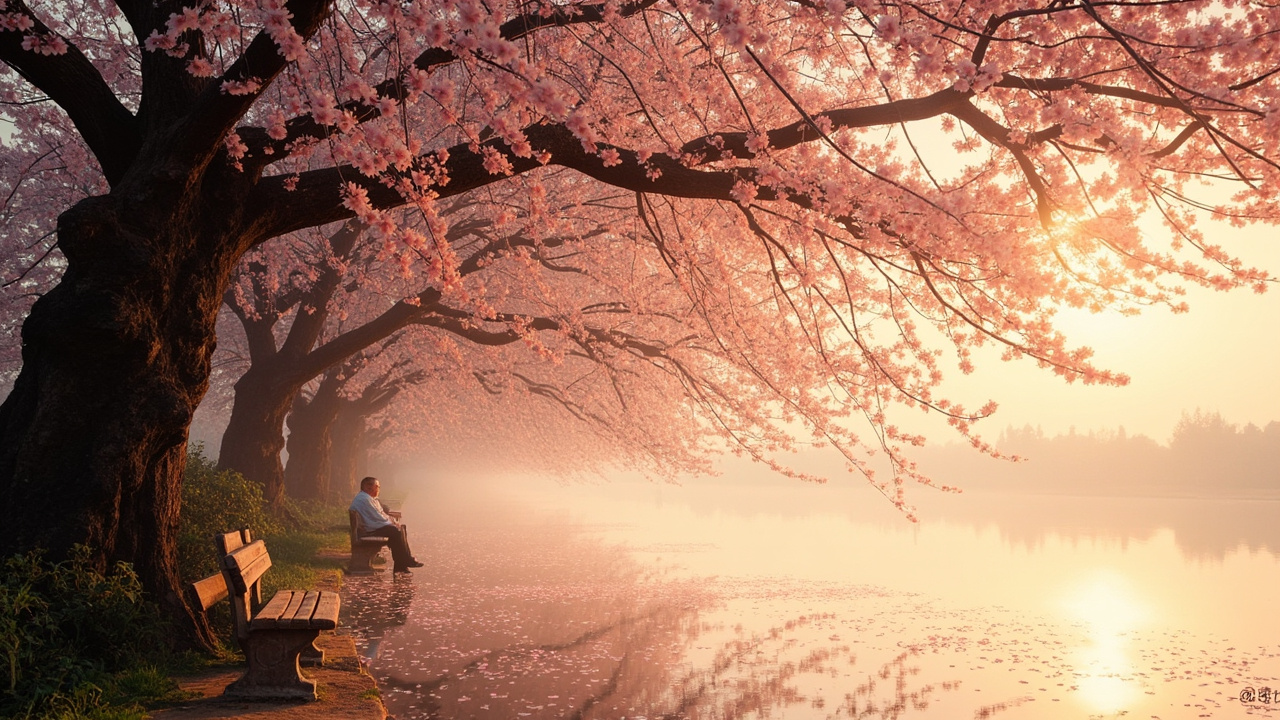
China Cherry Blossom Season
The woman at the gate in Wuhan’s East Lake Cherry Blossom Garden looked at my camera, then at me, then back at the camera. She said something I didn’t catch, laughed, and pulled me by the sleeve about ten meters to the left. Then she pointed up. I’d been about to photograph a decent tree. She was showing me a much better one — a double-petaled yaezakura with branches so heavy they dipped into the lake behind it. I stood there for maybe fifteen minutes. Nobody rushed me. That’s the thing about cherry blossom season in China that surprised me most after years of fighting crowds in Japan: it’s crowded, sure, but the crowds are different. Families spread out picnic blankets. Retired men bring thermoses of tea and stay all afternoon. Nobody’s trying to get the shot and leave.
China’s cherry blossom season runs roughly from late February in the south to mid-April in the north, with the biggest concentrations in Wuhan, Beijing, Nanjing, Wuxi, and Qingdao. Peak bloom in Wuhan usually lands in the third week of March; Beijing and Qingdao peak two to three weeks later. The blooms last about 7–10 days per location, sometimes less if rain or wind hits.
This guide covers the ten places I’d actually send a first-time visitor, with real prices, specific subway exits, and the timing mistakes I made so you don’t have to.
Quick answer
China’s cherry blossom season peaks between late March and early April 2026, with Wuhan’s East Lake blooming first (around March 20–28) and Beijing’s Yuyuantan Park blooming last (around April 1–10). Most international visitors can enter China visa-free for up to 30 days under the 2025–2026 expanded policy, and a full cherry blossom trip — flights, 7 nights of hotels, trains, food — typically runs $1,400–2,200 (¥10,000–16,000) per person. Book Wuhan and Beijing hotels at least 6 weeks ahead; blossom-season rooms sell out fast.
The Short Version
Go to Wuhan first, then Beijing. Wuhan’s East Lake has the highest density of cherry trees in China and the best atmosphere; Beijing’s Yuyuantan is the most historically interesting. Skip Shanghai’s parks unless you’re already there — they’re fine, not special. Book trains on the 12306 app the moment tickets open (15 days out). Bring a light jacket; March in central China is 8–15°C (46–59°F) and rainy. If you only have one city, make it Wuhan.
How I Picked These
I’ve been to every place on this list at least twice, and I’ve been to six of them during actual bloom season. I don’t trust “top 10” lists written from a desk, so I checked bloom dates against three years of Chinese meteorological records, cross-referenced with local WeChat accounts that post daily bloom updates (search “樱花” on WeChat and you’ll find them), and asked the people who actually know: a taxi driver in Wuhan named Mr. Zhou who’s driven blossom tourists for eleven years, a hostel receptionist in Nanjing, and a retired botany teacher I met at Yuyuantan who corrected me on three tree species. Prices below are what I paid or what friends paid in 2025, adjusted for 2026.
Comparison Table
| Rank | Place | Best For | Approx Cost (USD) | Time Needed | When to Go |
|---|---|---|---|---|---|
| 1 | East Lake, Wuhan | Volume + atmosphere | $8–15 (¥60–110) | Full day | Mar 20–28 |
| 2 | Yuyuantan Park, Beijing | History + accessibility | $2–4 (¥15–30) | Half day | Apr 1–10 |
| 3 | Xuanwu Lake, Nanjing | City + lake combo | Free–$5 (¥0–35) | Half day | Mar 22–30 |
| 4 | Yuantouzhu, Wuxi | Lake scenery | $13 (¥90) | Full day | Mar 25–Apr 3 |
| 5 | Zhongshan Park, Qingdao | Coastal bloom | $2 (¥15) | 2–3 hours | Apr 10–20 |
| 6 | Gucun Park, Shanghai | Convenience | $3 (¥20) | Half day | Mar 20–28 |
| 7 | Wuhan University | Campus nostalgia | Free (reservation) | 2 hours | Mar 18–26 |
| 8 | Jilin University, Changchun | Late-season bloom | Free | 2 hours | Late Apr |
| 9 | Kunming Zoo | Earliest bloom | $3 (¥20) | 2 hours | Late Feb–early Mar |
| 10 | Dali, Yunnan | Blossoms + mountains | Free–$10 | 1–2 days | Mar 1–20 |
1. East Lake Cherry Blossom Garden, Wuhan — The One That Ruined Other Blossom Spots For Me
I went on a Tuesday morning at 7:40am, thinking I’d beat the crowd. There were already maybe 200 people inside. By 10am there were thousands. It didn’t matter. The garden is 260 acres and the trees are planted in dense groves along the lake, so even at peak capacity you can find a quiet corner if you walk 15 minutes from the main entrance.
This is the biggest cherry blossom collection in China — over 10,000 trees across 58 varieties. What makes it different from Japanese parks is the scale of the setting: the lake, the willow trees, the occasional egret. It feels less like a curated garden and more like a landscape someone planted cherry trees into on purpose.
📍 Location: Wuchang District, on the south shore of East Lake. Main entrance is on Donghu Road. 🎫 Entry fee: $8 (¥60) standard, $15 (¥110) during peak bloom week (usually Mar 20–28). 🕐 Opening hours: 8am–6pm, extended to 8pm during peak bloom. 🚇 Getting there: Metro Line 8 to Liyuan Station, Exit C. Walk 400m east. Or take a Didi from Wuchang Railway Station, about $3 (¥22), 15 minutes. ⏰ When to visit: Weekday mornings before 9am. Avoid weekends entirely during peak week — I made that mistake once and spent 40 minutes in a queue for the toilet. 💡 Insider tips: Buy tickets on WeChat (search the official account “东湖樱花”) to skip the gate queue. The best photo spot is the wooden bridge on the north side of the garden, not the main entrance area everyone crowds. Bring cash for the roasted sweet potato vendors outside — some don’t take WeChat Pay. The garden connects to the East Lake Greenway, a 63-mile bike path, if you want to escape the crowds afterward.
I ate a bowl of hot dry noodles (reganmian) at a stall outside the exit for $1.20 (¥8). It’s Wuhan’s signature breakfast and it’s better than anything inside the park.
2. Yuyuantan Park, Beijing — The One Locals Actually Go To
A retired teacher named Mr. Chen stopped me at Yuyuantan to tell me I was photographing the wrong tree. He pointed at a gnarled old specimen near the water and said, in slow Mandarin I could mostly follow, that it had been there since the 1970s and that the ones near the gate were “young and showy.” He was right.
Yuyuantan has around 3,000 cherry trees and hosts Beijing’s official Cherry Blossom Festival every spring. It’s less dramatic than Wuhan but far more accessible if you’re already in Beijing, and the surrounding park is genuinely lovely — a lake, a bonsai garden, and a section of the old city wall.
📍 Location: Haidian District, west Beijing. Main gate on Sanlihe Road. 🎫 Entry fee: $2 (¥15) standard, $4 (¥30) during festival. 🕐 Opening hours: 6am–9pm (6am–10pm during festival). 🚇 Getting there: Metro Line 1 to Military Museum Station, Exit A. Walk 10 minutes north. Or Line 9 to Military Museum, same exit. ⏰ When to visit: Early April, weekday mornings. The festival runs roughly Apr 1–15 but exact dates shift yearly. 💡 Insider tips: Enter from the west gate instead of the main south gate — half the queue. The bonsai garden inside is worth 20 minutes and most blossom tourists skip it. Bring your passport; festival security sometimes checks ID. English signage is decent here, but download a translation app anyway (see our China SIM card and internet guide for setup).
I bought a jianbing (savory crepe) from a cart outside for $1.50 (¥10) and ate it sitting on a bench watching a group of grandmothers do tai chi under the trees.
3. Xuanwu Lake, Nanjing — The Underrated One
Nanjing gets skipped by most foreign blossom tourists, which is a shame because Xuanwu Lake is free, central, and gorgeous. I went on a Saturday afternoon expecting chaos and found something closer to a city park on a nice day — busy but not overwhelming.
The lake is huge, ringed by a walking path, and the cherry trees cluster mainly on the Yingzhou (Cherry Island) section. There’s also a wall of blossoms along the south shore that reflects in the water at sunset. Nanjing was China’s capital for centuries and the old city wall runs right along the lake’s edge, which gives the whole thing a weight that newer parks lack.
📍 Location: Xuanwu District, north of downtown. Multiple entrances; the main one is on Xuanwu Lane. 🎫 Entry fee: Free. Yingzhou Island is $5 (¥35) during blossom season. 🕐 Opening hours: Park open 24 hours. Yingzhou 8am–6pm. 🚇 Getting there: Metro Line 1 to Xuanwumen Station, Exit 3. Walk 5 minutes. ⏰ When to visit: Late March, late afternoon for the light. 💡 Insider tips: Rent a bike at the south entrance for $3 (¥20)/hour — the lake loop is 6 miles and worth it. The Nanjing Museum is a 15-minute walk away if it rains. WeChat Pay works everywhere here; set it up before you arrive using our Alipay and WeChat Pay guide.
A woman selling roasted chestnuts near the south gate refused to let me pay for a small bag. She said something about “first time in Nanjing” and waved me off. I still think about those chestnuts.
4. Yuantouzhu, Wuxi — The One That Costs More But Delivers
Honestly, I almost left this off the list. Yuantouzhu is a peninsula on Lake Tai, and the entry fee is steep for China. But the view from the Cherry Blossom Pavilion — hundreds of trees cascading down to the lake with boats drifting past — is the single most cinematic blossom scene I’ve seen in the country.
Wuxi is 45 minutes from Shanghai by high-speed rail, which makes this an easy day trip. The park is enormous and the cherry trees are concentrated in one section, so plan on 3–4 hours minimum. There’s also a giant Buddha statue nearby (Lingshan) if you want to make a full day of it.
📍 Location: Binhu District, on the north shore of Lake Tai. 🎫 Entry fee: $13 (¥90) including the shuttle boat to the peninsula. 🕐 Opening hours: 7am–5:30pm. 🚆 Getting there: High-speed rail from Shanghai Hongqiao to Wuxi Station (45 min, $8–12 / ¥60–85). Then bus K1 from the station’s south square, 40 minutes. Or Didi, $12 (¥85). ⏰ When to visit: Late March. Weekdays only if you can. 💡 Insider tips: Book high-speed rail tickets on the official 12306 app 15 days ahead — see our China train travel guide for the setup. The boat to the peninsula has a long queue after 10am; go early. Bring snacks — food inside is overpriced and mediocre.
I paid $4 (¥28) for a bowl of Wuxi-style spare ribs at a restaurant near the exit. Sweet, sticky, worth it.
5. Zhongshan Park, Qingdao — The Coastal One
Qingdao’s cherry blossoms come late — usually mid-April — because the city sits on the Yellow Sea and stays cool longer. That makes it the perfect follow-up if you’re doing a Beijing trip and want to extend into spring. The park itself is small, but the trees are old and the setting is unusual: German colonial architecture, sea air, and blossoms.
I went on a windy April morning and half the petals were on the ground within an hour. It was still beautiful. Qingdao is also a great city for a first-time China visitor — walkable, good seafood, and less intense than Beijing.
📍 Location: Shinan District, central Qingdao. Main gate on Hong Kong West Road. 🎫 Entry fee: $2 (¥15). 🕐 Opening hours: 6am–9pm. 🚇 Getting there: Metro Line 3 to Zhongshan Park Station, Exit A. The gate is 100m away. ⏰ When to visit: Apr 10–20, mornings. 💡 Insider tips: Combine with a walk down to Badaguan, the old German concession area, 20 minutes away. Qingdao’s beer is cheap and good — try the draft at any small restaurant. English is less common here than in Beijing; have a translation app ready.
I met a retired fisherman on a bench who told me, via translation app, that the blossoms “used to be for the Germans.” I’m still not sure if he meant the trees or the park.
6. Gucun Park, Shanghai — The Convenient One
If you’re already in Shanghai, Gucun is fine. It’s not the best blossom park in China, but it’s the easiest if you’re based in the city, and the scale is real — 12,000 trees. I went on a weekday and it was pleasant. On a weekend it’s a crush.
📍 Location: Baoshan District, north Shanghai. 🎫 Entry fee: $3 (¥20). 🕐 Opening hours: 6am–6pm. 🚇 Getting there: Metro Line 7 to Gucun Park Station, Exit 5. Walk 5 minutes. ⏰ When to visit: Mar 20–28, weekday mornings. 💡 Insider tips: Buy tickets on the park’s WeChat account to skip the gate. The south entrance is less crowded than the main east gate. Shanghai’s complete travel guide covers the rest of the city if you’re staying a few days.
I ate a shengjianbao (pan-fried pork bun) from a stall near the exit for $1 (¥7). It burned my tongue. Worth it.
7. Wuhan University — The Nostalgic One
Wuhan University’s cherry avenue is famous in China, and access is tightly controlled — you need to reserve a slot on the university’s WeChat account, usually opening a week before bloom. I got in on my second try. The trees line a slope below old brick buildings, and the whole thing feels like a scene from a Chinese coming-of-age film. Which, honestly, it kind of is.
📍 Location: Wuchang District, on the university campus. 🎫 Entry fee: Free with reservation. 🕐 Opening hours: 8am–6pm during blossom week. 🚇 Getting there: Metro Line 2 to Jiedaokou Station, Exit K. Walk 10 minutes to the main gate. ⏰ When to visit: Mar 18–26, weekdays. 💡 Insider tips: Reservations open on the official WeChat account “武汉大学” about 5–7 days before peak. They sell out in minutes. Have your passport number ready. Combine with East Lake — they’re 15 minutes apart by taxi.
A student gave me directions in near-perfect English, then apologized for her English. I told her it was better than my Mandarin. She laughed.
8. Jilin University, Changchun — The Late One
If you miss the main season, Changchun’s Jilin University blooms in late April, sometimes into early May. It’s far north, cold, and not on most tourist itineraries, but the campus has a long cherry avenue and the surrounding city is interesting in a rough, industrial way. I went because a friend was studying there. I wouldn’t fly across the world for it, but if you’re in northeast China anyway, it’s worth a stop.
📍 Location: Chaoyang District, Changchun. 🎫 Entry fee: Free. 🕐 Opening hours: Daylight hours; campus is open. 🚇 Getting there: Metro Line 1 to Dongbeishida Station, then taxi 10 minutes. ⏰ When to visit: Late April. 💡 Insider tips: Bring a heavier jacket than you think you need. Northeast China in April is still cold. English is rare here; translation app essential.
I ate guo bao rou (sweet-and-sour pork) at a campus-adjacent restaurant for $5 (¥35). It was the size of my head.
9. Kunming Zoo — The Earliest One
Kunming’s mild climate means cherry blossoms start in late February, weeks before anywhere else in China. The zoo’s cherry section is small but reliable. If you’re visiting Yunnan in early spring, this is your best bet. I went in early March and caught the tail end of bloom.
📍 Location: Wuhua District, Kunming. 🎫 Entry fee: $3 (¥20). 🕐 Opening hours: 8am–6pm. 🚇 Getting there: Metro Line 2 to Dongfeng Square Station, Exit B. Walk 10 minutes. ⏰ When to visit: Late Feb–early Mar. 💡 Insider tips: Kunming is high altitude (1,900m) — take it easy your first day. The city is also a great base for trips to Dali and Lijiang.
A zookeeper told me, via a colleague translating, that the cherry trees bloom earlier every year. He said it like it was a fact, not a worry.
10. Dali, Yunnan — The One That Isn’t Really About Cherries
Dali’s cherry blossoms are scattered around Erhai Lake and in the old town, mixed with plum and peach. It’s not a cherry destination in the Wuhan sense. But if you want blossoms plus mountains plus a slower pace, this is the place. I spent three days here in March and mostly just walked.
📍 Location: Dali Old Town and the villages around Erhai Lake. 🎫 Entry fee: Free (some temple gardens charge $3–10 / ¥20–70). 🕐 Opening hours: Daylight. 🚆 Getting there: Fly to Dali Airport, or high-speed rail from Kunming (2 hours, $20 / ¥140). ⏰ When to visit: Mar 1–20. 💡 Insider tips: Rent an e-bike and ride the lake loop. The Bai minority villages on the east shore are quieter than the west. Bring sunscreen — the altitude is deceptive.
I drank a cup of local tea at a small shop in the old town and the owner, a woman in her 60s, told me the trees were “just trees” and the mountains were the real attraction. She wasn’t wrong.
FAQ summary
China’s cherry blossom season runs from late February (Kunming) to late April (Changchun), with the peak window for most visitors falling between March 20 and April 10, 2026. The best single destination for a first-time visitor is East Lake in Wuhan, which has the highest concentration of trees and the best atmosphere; Beijing’s Yuyuantan Park is the best second stop. Most international visitors can enter China visa-free for up to 30 days under the 2025–2026 policy, and a 7-night blossom trip typically costs $1,400–2,200 (¥10,000–16,000) per person including flights from the US or Europe. Book hotels and high-speed rail tickets at least 6 weeks ahead — blossom season is domestic tourism’s busiest window after Chinese New Year.
FAQ
Q: When exactly is cherry blossom season in China in 2026? A: Wuhan and central China peak around March 20–28, 2026. Beijing, Qingdao, and northern cities peak April 1–20. Kunming blooms earliest (late February), and Changchun blooms latest (late April). Exact dates shift by a few days each year depending on winter temperatures.
Q: Do I need a visa to visit China for cherry blossom season? A: Most American, European, and Southeast Asian passport holders can currently enter China visa-free for up to 30 days under the 2025–2026 expanded policy. Check your specific nationality before booking — see our China visa guide for the current list.
Q: How much does a cherry blossom trip to China cost? A: Budget roughly $1,400–2,200 (¥10,000–16,000) per person for a 7-night trip including round-trip flights from the US or Europe, mid-range hotels, high-speed rail between cities, and food. Wuhan and Beijing are the two most expensive stops during peak bloom week.
Q: Can I see cherry blossoms in China without speaking Mandarin? A: Yes, but download a translation app (Google Translate with offline Chinese, or Baidu Translate). English signage is decent at major parks but rare on local buses and at small restaurants. WeChat Pay and Alipay both work in English and are essential — cash is accepted but inconvenient.
Q: Which city has the best cherry blossoms in China? A: Wuhan, without question, for volume and atmosphere. East Lake Cherry Blossom Garden has over 10,000 trees and a lakeside setting that beats anywhere else in the country. Beijing’s Yuyuantan is the best second choice because it’s easy to combine with a broader Beijing trip.
Q: How long do the blossoms last? A: About 7–10 days per location at peak, sometimes less if there’s rain or wind. Plan your trip around a 5-day window and be flexible — if you’re targeting a specific city, build in a buffer day or two.
Q: Do I need a VPN in China? A: Yes, if you want to use Google, Instagram, WhatsApp, or most Western apps. Install and test your VPN before you arrive — they’re hard to download once you’re inside China. See our internet and SIM guide for details.
The Honest Wrap-up
This list is for people who want to actually see cherry blossoms in China, not just check a box. If you’re the type who wants one perfect photo and a quick exit, book a tour and skip the planning. If you’re willing to wake up early, take a train, and eat breakfast from a street stall, you’ll have a much better trip. My one piece of advice: don’t try to do all ten. Pick two cities — Wuhan and Beijing, or Wuhan and Nanjing — and give each one three full days. The blossoms are the excuse. The rest of the trip is the point. And bring a light rain jacket. March in central China will absolutely soak you if you don’t.
More guides you may like
Top 10 Bridges in China
China's bridges are engineering marvels spanning mountains, rivers, and seas. Here are 10 of the most spectacular, from ancient stone to modern steel.
8 min read

Top 10 Buddhist Sites in China
From the Leshan Giant Buddha to the Dunhuang Caves, these 10 Buddhist sites represent 2,000 years of China's spiritual heritage.
9 min read
Top 10 Day Trips from Beijing You Shouldn't Miss
Beijing is packed with history, but some of China's best experiences are just a few hours away. Here are 10 day trips that will transform your visit.
9 min read
Top 10 Hidden Gems in China Off the Beaten Path
Beyond the Great Wall and Terracotta Warriors, China has incredible hidden destinations few tourists ever reach. Here are 10 underrated gems worth the detour.
9 min read
Top 10 Markets and Shopping Streets in China
From Shanghai's Bund to Beijing's Silk Street - 10 markets where foreigners can haggle, explore, and bring home authentic Chinese goods.
9 min read
Top 10 Museums in China You Shouldn't Miss
China's museums span 5,000 years of civilization. These 10 - from the Palace Museum to Xi'an's terracotta gallery - are unmissable for culture lovers.
9 min read