
Mount Emei Hiking Guide
TODO: Extract from article (100-160 chars)
Mount Emei Hiking Guide
The monkey grabbed my breakfast bun somewhere around the 8-kilometer mark, and honestly, I deserved it. I’d been warned. I’d read the signs. But I was tired, it was drizzling, and I’d left my bag unzipped while I fumbled for a ponytail holder. He came down the railing like he’d done this a thousand times, which he had, and by the time I registered what was happening, my bun was gone and he was already back on the fence, chewing with what I can only describe as smug satisfaction.
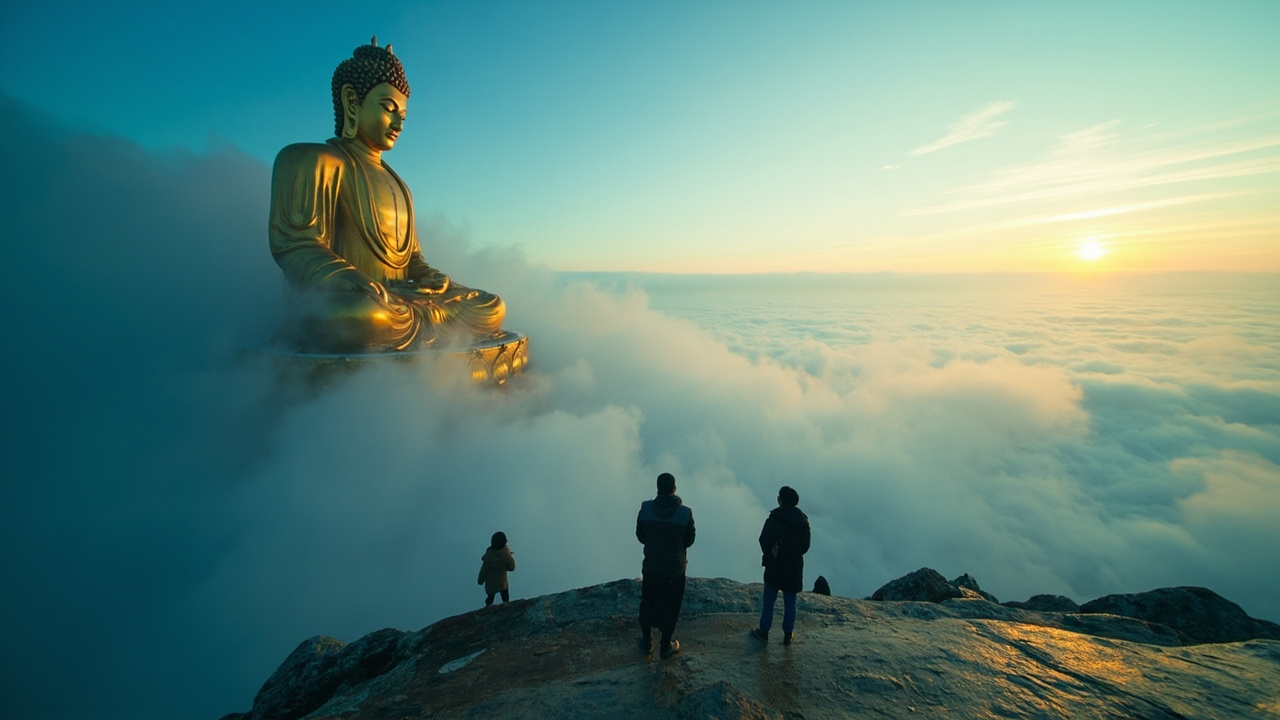
Mount Emei (峨眉山, Éméi Shān) is one of China’s four sacred Buddhist mountains, rising 3,099 meters out of the Sichuan basin about 150 kilometers southwest of Chengdu. It’s a UNESCO World Heritage site, home to a golden summit statue that catches the sunrise like a signal fire, and it’s one of the few major Chinese mountains where you can genuinely hike from bottom to top without needing technical climbing gear. The trails are stone-paved, the temples are real working monasteries, and the monkeys are organized criminals.
This guide is for the first-timer who’s never been to China, doesn’t speak Mandarin, and wants to know exactly what they’re getting into. I’ve hiked Emei twice — once in October, once in April — and I’ve made most of the mistakes you can make. Here’s what I learned.
Quick answer
Mount Emei is a 3,099-meter Buddhist holy mountain in Sichuan, about 2.5 hours from Chengdu by high-speed train, and the full hike from Baoguo Temple to the Golden Summit takes most people 2 days with one overnight stay in a monastery guesthouse. Foreign visitors need a Chinese visa or must qualify for visa-free transit (currently 240 hours for many nationalities entering via Chengdu), and the total cost including transport, entry, cable car, and lodging runs roughly $150–$250 (1,080–1,800 CNY) per person. Best months are April–May and September–October; avoid Chinese public holidays unless you enjoy being in a queue of 10,000 people.
The Short Version
If you only have 90 seconds: take the high-speed train from Chengdu East to Emeishan Station (about 1 hour 20 minutes, $9–$11 / 65–80 CNY). Stay one night in Baoguo Village at the base. Hike Day 1 to Leidongping, sleep at a monastery, then summit at dawn on Day 2. Bring cash, a translation app, and a stick to fend off monkeys. Skip the full hike if you have knee problems — the cable car is not cheating, it’s survival.
How I Picked These
I’ve hiked Emei twice, in different seasons, with different levels of preparation. The first time I was cocky and underpacked. The second time I knew what I was doing. I talked to monks at Baoguo and Wannian temples, shared a dorm room with a Chongqing schoolteacher who gave me her extra blister plasters, and once spent 40 minutes waiting out a thunderstorm in a tea pavilion with a retired couple from Xi’an who insisted I try their vacuum-sealed duck. I’ve also cross-checked everything against the Emei Scenic Area’s official 2026 pricing and the current Chengdu–Emeishan rail schedule. Where I’m unsure, I say so.
Comparison Table
| Rank | Section | Best For | Approx Cost (USD) | Time Needed | When to Go |
|---|---|---|---|---|---|
| 1 | Golden Summit (金顶) | Sunrise, the big payoff | $18 (130 CNY) round-trip cable car | 3–4 hours from Leidongping | Clear mornings, Oct–Nov |
| 2 | Baoguo Temple area | Base camp, easy day | Free to walk, $1.5 (8 CNY) temple | Half day | Any time |
| 3 | Wannian Temple (万年寺) | First-time hikers, shorter route | $1.5 (10 CNY) | 3–5 hours round trip | Spring, autumn |
| 4 | Qingyin Pavilion (清音阁) | Photography, monkeys | Included in entry | 2 hours | Morning |
| 5 | Leidongping (雷洞坪) | Overnight before summit | $12–$20 (85–145 CNY) dorm | Evening arrival | Any |
| 6 | Elephant Bathing Pool (洗象池) | Mid-mountain monastery stay | $10–$15 (70–110 CNY) | Overnight | Apr–Oct |
| 7 | Jiulinggang (九岭岗) | Serious hikers, quiet trails | Free | 4–6 hours | Dry season |
| 8 | Huazang Temple (华藏寺) | Summit prayers, incense | Free with summit ticket | 1 hour | Dawn |
| 9 | Fuhu Temple (伏虎寺) | Solitude, forest walk | $1 (6 CNY) | 2 hours | Weekday mornings |
| 10 | Emeishan City hot springs | Recovery | $15–$30 (110–220 CNY) | 2 hours | After the hike |
Golden Summit — the reason you came, and yes, it’s worth the crowd
I woke up at 4:40 a.m. at Leidongping, put on every layer I owned, and shuffled out into a line of headlamps heading up the last stretch to the cable car. It was 3°C. My breath looked like smoke. Twenty minutes later I was standing above a sea of clouds that stretched to the horizon, and the 48-meter golden Samantabhadra statue was catching the first light like it was plugged into something.
The summit sits at 3,099 meters. On a clear morning you can see the Dadu River valley below and, if you’re very lucky, the distant Gongga Mountain. The “sea of clouds” (云海) effect happens maybe 100–150 days a year, mostly in late autumn and winter. I’ve seen it once in two trips. The other time I saw fog so thick I couldn’t see my own hands.
📍 Location: Summit of Mount Emei, reached via Leidongping cable car station 🎫 Entry fee: Summit entry included in main scenic area ticket ($23 / 160 CNY); cable car $18 (130 CNY) round trip 🕒 Opening hours: Cable car runs 7:00 a.m.–6:00 p.m. (varies seasonally, closes earlier in winter) 🚕 How to get there: From Leidongping, walk 20 minutes uphill to the cable car station, then 3 minutes by cable car ⏰ When to visit: Arrive by 6:30 a.m. for sunrise; weekdays in October are the sweet spot 💡 Insider tips: Buy your cable car ticket the night before at the Leidongping kiosk to skip the morning line. Wear more layers than you think — the temperature drops 6–8°C from the base. There’s a heated waiting room near the summit if you arrive too early. Bring a thermos; the tea at the summit teahouse is $4 (30 CNY) and worth every yuan.
The monk I met at Huazang Temple told me most foreign visitors skip the dawn ceremony inside the temple because they don’t know it exists. It starts around 5:30 a.m. and is open to anyone who shows up quietly.
Baoguo Temple area — where every hike actually begins
Baoguo Temple is the first thing you see when you get off the bus at the mountain base, and most people walk right past it. That’s a mistake. It’s the oldest and largest temple on the mountain, founded in the 16th century, and the courtyard smells like cedar and old incense in a way that no photo captures.
I spent my first afternoon here just sitting on the stone steps, watching pilgrims arrive with their rolling suitcases and their grandmothers. An old woman in a purple fleece asked me — via translation app — where I was from, then insisted I take three tangerines from her bag. I ate them on the steps. They were the best tangerines I’ve ever had.
📍 Location: Baoguo Village, base of Mount Emei, 10 minutes’ walk from the main scenic area entrance 🎫 Entry fee: $1.5 (8 CNY) for the temple; the village itself is free 🕒 Opening hours: 8:00 a.m.–5:30 p.m. daily 🚕 How to get there: From Emeishan Station, take bus 5 or 12 (10 minutes, $0.30 / 2 CNY) or a taxi ($3 / 20 CNY) ⏰ When to visit: Late afternoon, when the tour groups have left and the light goes gold 💡 Insider tips: This is where you buy your scenic area ticket ($23 / 160 CNY, valid 2 days). Set up Alipay or WeChat Pay before you arrive — most vendors here take QR codes but not foreign cards. There’s a left-luggage office at the visitor center for $1.5 (10 CNY) per bag per day. Buy a bamboo walking stick here for $1 (7 CNY); you’ll want it.
The noodle shop across from the temple gate, run by a woman named Mrs. Chen, does a bowl of dan dan mian for $1.2 (8 CNY) that I still think about.
Wannian Temple — the shortcut that isn’t a cop-out
Yes, you can take the cable car up to Wannian Temple and skip the first 8 kilometers of trail. No, you should not feel bad about it. The trail from Baoguo to Wannian is mostly paved road and stairs through forest, and while it’s pretty, it’s also the least interesting section of the mountain.
Wannian Temple itself is worth the trip. It houses a 7.35-meter bronze statue of Samantabhadra riding a white elephant, cast in the 9th century and one of the great Buddhist bronzes in China. The temple courtyard has a 1,000-year-old ginkgo tree that turns yellow in November and drops leaves like coins.
📍 Location: Mid-mountain, reached by cable car from Wannian Parking Lot 🎫 Entry fee: $1.5 (10 CNY) temple entry, cable car $7 (50 CNY) one way 🕒 Opening hours: 6:30 a.m.–6:00 p.m. 🚕 How to get there: From Baoguo, take the shuttle bus to Wannian Parking Lot ($3 / 20 CNY, 30 minutes), then cable car or 40-minute walk up ⏰ When to visit: Early morning to beat the tour buses; November for the ginkgo 💡 Insider tips: The vegetarian lunch at the temple refectory is $3 (20 CNY) and genuinely good — rice, three vegetable dishes, soup. Eat before noon; they close when the food runs out. The walk down from Wannian to Qingyin Pavilion is the prettiest 3 kilometers on the mountain. If it’s raining, the stone steps get slick — take them slowly.
I met a retired German couple here who’d been traveling through China for six weeks and told me Emei was their favorite stop. They’d been to the Great Wall and Beijing already. “Less performance,” the husband said. I knew what he meant.
Qingyin Pavilion — the monkey gauntlet
This is where the monkeys live. Not the cute, distant monkeys of a zoo. These are wild Tibetan macaques, they are large, they have zero fear, and they have learned that tourists carry food.
Qingyin Pavilion sits at the confluence of two streams, with a black-and-white bridge that’s on every Emei postcard. The water is loud. The air is cool. And the monkeys are everywhere, sitting on railings, blocking stairs, and watching you with the flat calculation of a bouncer.
📍 Location: About 5 kilometers up from Wannian, at the junction of the Black Dragon and White Dragon rivers 🎫 Entry fee: Included in main scenic area ticket 🕒 Opening hours: Daylight hours 🚕 How to get there: Walk down from Wannian (1 hour) or up from Wuxiangang parking lot (40 minutes) ⏰ When to visit: Mid-morning, when the light hits the bridge 💡 Insider tips: Do NOT carry visible food. Do NOT make eye contact with a monkey that’s already looking at you. Do NOT try to take a selfie with one. If a monkey grabs your bag, let it go — they’ll drop it once they realize there’s nothing edible. Carry your phone in a zipped pocket. The stick you bought at Baoguo is not for hitting monkeys; it’s for tapping the ground to warn them you’re coming.
I watched a French tourist lose an entire bag of Pringles in about four seconds. He laughed. His girlfriend did not.
Leidongping — the overnight that makes the summit possible
Leidongping is not pretty. It’s a parking lot, a cable car station, a cluster of overpriced hotels, and a lot of fog. But it’s where you sleep if you want to see the sunrise without starting your hike at midnight.
I stayed at a monastery guesthouse here for $15 (110 CNY) — a dorm bed, four to a room, shared bathroom down the hall. The sheets were clean. The heater worked. The monk on duty made me tea when I arrived soaked and shivering, and didn’t charge me for it.
📍 Location: 2,430 meters elevation, end of the shuttle bus road 🎫 Entry fee: N/A 🕒 Opening hours: 24 hours 🚕 How to get there: Shuttle bus from Baoguo ($5 / 35 CNY, 90 minutes) or hike up from Wannian (6–8 hours) ⏰ When to visit: Arrive by 5:00 p.m. to get a bed; the good guesthouses fill up 💡 Insider tips: Book your bed through the Emei Scenic Area WeChat mini-program if you can, or just show up and ask. Prices are negotiable in the off-season. Bring earplugs — dorm rooms are loud. The restaurant next to the cable car station does a hot pot for $12 (85 CNY) that’s exactly what you need after a cold hike. There’s no ATM here; bring cash.
The schoolteacher from Chongqing who shared my dorm told me she hikes Emei every year on her birthday. She was turning 52. She beat me to the summit the next morning by 20 minutes.
Elephant Bathing Pool — the quiet monastery stay
If you’re doing the full 2-day hike from the bottom, this is where you’ll likely spend night one. Elephant Bathing Pool (洗象池) is a working monastery at 2,070 meters, and staying here feels less like a hotel and more like being a guest in someone’s very old, very cold house.
The vegetarian dinner is included with the room — rice, pickled vegetables, tofu, and a soup that tastes like it was made by someone’s grandmother. It’s served at 6:00 p.m. sharp. If you’re late, you don’t eat.
📍 Location: Mid-mountain, on the main hiking trail between Jiulinggang and Leidongping 🎫 Entry fee: $10–$15 (70–110 CNY) for a dorm bed, includes dinner and breakfast 🕒 Opening hours: Check-in from 3:00 p.m. 🚕 How to get there: Only reachable on foot; 4–5 hours up from Wannian ⏰ When to visit: April–October; the monastery closes to guests in deep winter 💡 Insider tips: Bring your own towel and toilet paper. Lights out at 9:00 p.m. The morning chanting starts at 4:30 a.m. — you can attend if you sit quietly at the back. Cash only. The monks don’t speak English, but they’re patient with translation apps.
I made the mistake of arriving at 7:30 p.m. after a slow hike. No dinner. I ate a Snickers bar I’d been saving and went to bed hungry. Don’t be me.
Jiulinggang — the trail most tourists never see
Jiulinggang is a ridge crossing on the old pilgrimage route, and on the day I hiked it, I saw four other people in five hours. Four. On Mount Emei. In October.
The trail here is rougher than the main route — more roots, more mud, fewer handrails. It’s also the most beautiful section of the mountain, winding through old-growth forest with moss-covered stone and the occasional glimpse of the valley below. This is where you understand why people have been walking this mountain for 1,800 years.
📍 Location: Between Wannian Temple and Elephant Bathing Pool, on the old trail 🎫 Entry fee: Free (covered by main scenic area ticket) 🕒 Opening hours: Daylight 🚕 How to get there: On foot only; most hikers reach it 3–4 hours up from Wannian ⏰ When to visit: Dry season, morning start 💡 Insider tips: Download an offline map before you go — signal is spotty. There are two tea stalls along this stretch, both cash-only. If it’s been raining, expect mud; hiking poles help. This is not the trail for sandals.
The tea stall owner at the second stall, an old man with one tooth, poured me a cup of green tea and refused payment. He pointed at my Sichuan map and laughed at something I didn’t understand. I still think about that cup of tea.
Huazang Temple — the summit’s quiet heart
Everyone crowds the golden statue. Almost no one goes inside Huazang Temple, which sits right behind it. That’s their loss.
The temple is small, dim, and warm from the butter lamps. Monks chant here at dawn and dusk. The air smells like juniper and old wood. When I ducked in from the freezing wind, a monk handed me a cushion and gestured to a spot on the floor. I sat for 20 minutes. It was the best part of the trip.
📍 Location: Golden Summit, directly behind the Samantabhadra statue 🎫 Entry fee: Free 🕒 Opening hours: 5:00 a.m.–6:00 p.m. 🚕 How to get there: Same as Golden Summit — cable car from Leidongping ⏰ When to visit: Dawn ceremony at 5:30 a.m., or late afternoon when the day-trippers leave 💡 Insider tips: Remove your hat before entering. Don’t point your feet at the Buddha statues. Photography is allowed but be discreet during chanting. There’s a donation box; $1–$2 (10–15 CNY) is plenty.
Fuhu Temple — the one locals keep to themselves
Fuhu Temple (伏虎寺, “Tiger-Subduing Temple”) is a 20-minute walk from Baoguo, tucked into a forest ravine, and almost no foreign tourists go. It’s a working nunnery, quiet and green, with a famous circular wooden hall and a small pond full of very fat koi.
I went here on my last morning, before catching the train back to Chengdu. I sat on a bench for an hour doing nothing. A nun swept leaves nearby. It was the calmest hour of the entire trip.
📍 Location: 1.5 kilometers from Baoguo Village, up a forest path 🎫 Entry fee: $1 (6 CNY) 🕒 Opening hours: 8:00 a.m.–5:00 p.m. 🚕 How to get there: Walk from Baoguo, follow the signs (in Chinese and English) ⏰ When to visit: Weekday mornings 💡 Insider tips: This is a good warm-up hike if you’re acclimating. The tea served in the side hall is free. Don’t feed the koi — there are signs, and the nuns will scold you (gently).
Emeishan City hot springs — the recovery you’ll need
Nobody talks about this, and I don’t know why. Emeishan City, at the base of the mountain, has several hot spring resorts fed by natural mineral water. After two days of stairs, this is the correct decision.
I went to a mid-range spot near the train station, paid $22 (160 CNY) for three hours, and sat in a 42°C outdoor pool watching steam rise into the pine trees. My legs stopped screaming. I ate a bowl of mapo tofu afterward. It was a perfect evening.
📍 Location: Several resorts in Emeishan City, mostly within 10 minutes of the train station 🎫 Entry fee: $15–$30 (110–220 CNY) depending on the resort 🕒 Opening hours: Usually 10:00 a.m.–11:00 p.m. 🚕 How to get there: Taxi from Baoguo Village ($4 / 30 CNY, 15 minutes) ⏰ When to visit: Evening, after the hike 💡 Insider tips: Bring your own swimsuit — rentals are available but not great. Some resorts have separate men’s and women’s areas; check before you book if you’re traveling as a couple. Book via Dianping or Meituan for discounts.
FAQ summary
Mount Emei is a 2-day hike for most foreign visitors, starting from Baoguo Village and ending at the 3,099-meter Golden Summit, with one night in a monastery or guesthouse at Leidongping or Elephant Bathing Pool. The full cost — train from Chengdu, entry ticket, cable car, lodging, food — runs $150–$250 (1,080–1,800 CNY) per person. You need a Chinese visa or visa-free transit eligibility, cash for small vendors, and a translation app since English is rare outside the main ticket offices. Best months are April–May and September–October; avoid Chinese public holidays.
FAQ
Q: Do I need a visa to visit Mount Emei as a foreigner? A: Yes, unless you qualify for China’s visa-free transit policy, which as of 2026 allows citizens of 54 countries up to 240 hours (10 days) visa-free when entering through Chengdu Tianfu International Airport with an onward ticket. Most visitors fly into Chengdu, spend a few days in the city, then take the train to Emei.
Q: How do I get from Chengdu to Mount Emei? A: Take the high-speed train from Chengdu East Railway Station (成都东站) to Emeishan Station (峨眉山站). The trip takes about 1 hour 20 minutes and costs $9–$11 (65–80 CNY). Trains run roughly every hour from 6:30 a.m. to 8:00 p.m. From Emeishan Station, bus 5 or 12 takes you to Baoguo Village in 10 minutes for $0.30 (2 CNY). See the China train travel guide for booking details.
Q: How long does the full hike take? A: The classic 2-day route from Baoguo to the Golden Summit covers about 30 kilometers of stone stairs and takes 12–16 hours of walking total. Day 1 is typically 8–10 hours to Leidongping or Elephant Bathing Pool; Day 2 is 3–4 hours to the summit. Fit hikers can do it in one very long day, but I don’t recommend it.
Q: Are the monkeys dangerous? A: They’re wild Tibetan macaques and they will grab food, bags, and occasionally phones. Serious bites are rare but happen — don’t feed them, don’t smile at them (bared teeth is a threat signal), and don’t try to pet them. If bitten, wash the wound and go to a hospital in Emeishan City for rabies shots. Keep your bag zipped and your snacks hidden.
Q: Can I pay with Alipay or WeChat Pay on the mountain? A: Yes at hotels, the cable car, and larger restaurants. No at small tea stalls, monastery guesthouses, and mountain-side vendors — those are cash-only. Bring at least $40 (300 CNY) in small bills. Set up Alipay or WeChat Pay before you leave Chengdu; foreign cards work but need verification.
Q: What should I pack? A: Layers (the summit is 10–15°C colder than the base), rain jacket, hiking shoes with grip, a headlamp, cash, a power bank, and a bamboo stick ($1 / 7 CNY, buy at Baoguo). Skip the heavy DSLR unless you really want it — the fog will eat half your shots anyway. Bring a thermos; hot water refills are free at every temple.
Q: Is the cable car worth it, or should I hike the whole way? A: Both. Hike the lower mountain (Baoguo to Wannian to Qingyin Pavilion) for the scenery, then take the cable car from Leidongping to the summit. The final stretch is steep, crowded, and often in cloud — the view is the same whether you walked it or not.
The Honest Wrap-up
This guide is for the traveler who wants to actually walk the mountain, not just Instagram the summit. If you’re looking for a resort vacation, Emei will disappoint you — the beds are hard, the food is plain, and the weather will ruin your plans at least once. If you’re the kind of person who finds that romantic, you’ll love it here.
If you have bad knees, altitude issues, or a tight schedule, do the cable-car version and don’t feel bad about it. Half the pilgrims on this mountain have been taking the easy route for 1,800 years.
One last thing: bring more cash than you think you need, and less luggage than you think you need. The mountain has a way of making both obvious by hour three.
More guides you may like

Top 10 Bridges in China
China's bridges are engineering marvels spanning mountains, rivers, and seas. Here are 10 of the most spectacular, from ancient stone to modern steel.
8 min read

Top 10 Buddhist Sites in China
From the Leshan Giant Buddha to the Dunhuang Caves, these 10 Buddhist sites represent 2,000 years of China's spiritual heritage.
9 min read

Top 10 Day Trips from Beijing You Shouldn't Miss
Beijing is packed with history, but some of China's best experiences are just a few hours away. Here are 10 day trips that will transform your visit.
9 min read

Top 10 Hidden Gems in China Off the Beaten Path
Beyond the Great Wall and Terracotta Warriors, China has incredible hidden destinations few tourists ever reach. Here are 10 underrated gems worth the detour.
9 min read

Top 10 Markets and Shopping Streets in China
From Shanghai's Bund to Beijing's Silk Street - 10 markets where foreigners can haggle, explore, and bring home authentic Chinese goods.
9 min read

Top 10 Museums in China You Shouldn't Miss
China's museums span 5,000 years of civilization. These 10 - from the Palace Museum to Xi'an's terracotta gallery - are unmissable for culture lovers.
9 min read