
China River Cruise Guide
TODO: Extract from article (100-160 chars)
China River Cruise Guide
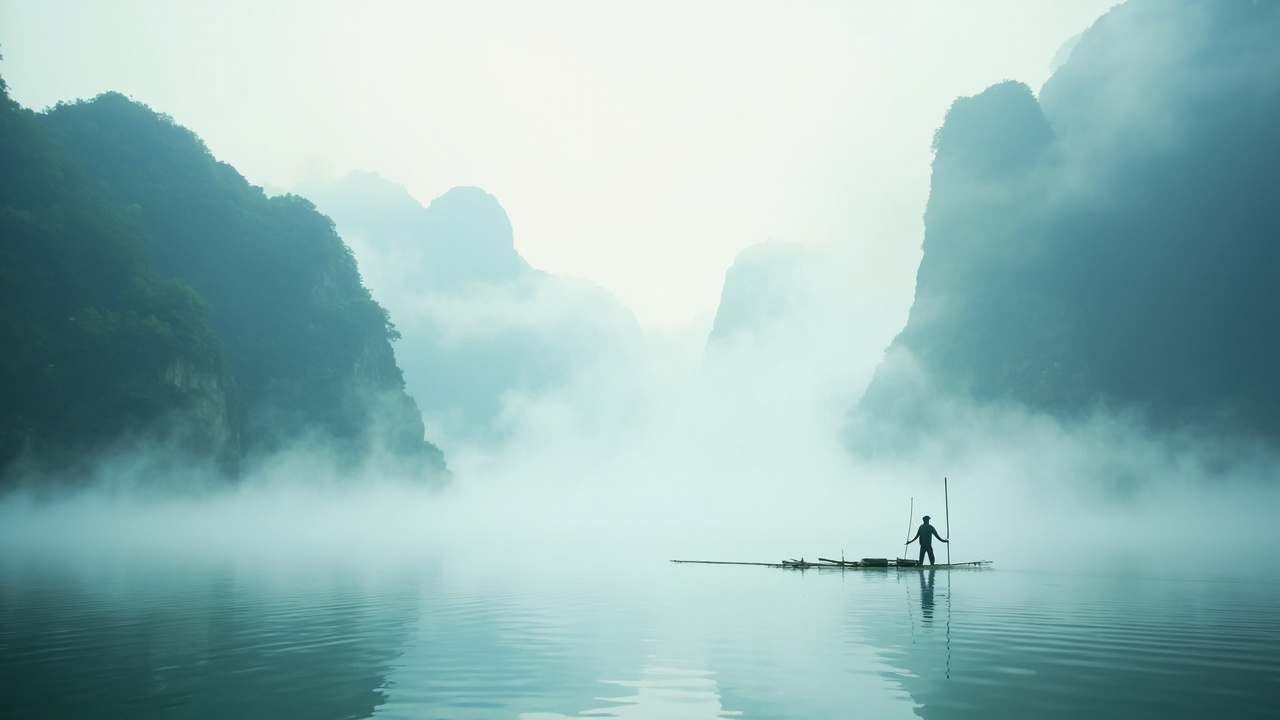
The first thing I noticed was the silence. Not total silence — there was the low thrum of the engine, a crew member hosing down the deck somewhere above me, the distant clang of a bell from shore. But compared to Beijing, where I’d spent the previous week dodging scooters and shouting over construction, the Yangtze at 6 a.m. felt like someone had turned the volume down to 2. I was standing on the top deck of a river ship near the Three Gorges, coffee going cold in my hand, watching mist peel off the water in slow sheets. A cormorant fisherman on a bamboo raft drifted past maybe 40 feet away, doing absolutely nothing, which is apparently how cormorant fishing works when there are no tourists watching.
That was the moment I understood why people book river cruises in China. It’s not the cabins or the buffet. It’s that the country’s biggest, loudest, most overwhelming sights — the gorges, the karst peaks, the rice terraces — look completely different from the water. Slower. Older. More like the paintings.
I’ve now done four China river cruises across three rivers, plus a couple of short ferry hops that don’t really count. I’ve been on the $180-per-night ships and the $900-per-night ones. I’ve eaten mediocre buffet dumplings and one truly great bowl of noodles served by a cook who refused to tell me what was in the broth. This guide is what I wish someone had handed me before my first booking.
Quick answer
The two China river cruises worth planning a trip around are the Yangtze River (Chongqing to Yichang, 3–4 nights, from about $450/¥3,250 per person) through the Three Gorges, and the Li River (Guilin to Yangshuo, 4 hours, about $35–60/¥250–430) through the karst scenery. Most Western tourists can now enter China visa-free for up to 30 days (check your nationality), and both cruises are bookable through Trip.com, Ctrip, or directly with operators like Century Cruises and Victoria Cruises. Best season is April–May and September–October; summer is hot and crowded, winter is cold and hazy.
The Short Version
If you only have time for one: do the Yangtze. It’s the only cruise in China that feels like a proper multi-day journey, and the Three Gorges are genuinely one of the great landscapes on earth. If you’re short on time or hate boats, do the Li River day cruise from Guilin instead — it’s four hours, it’s cheap, and the scenery is arguably prettier. Skip the Pearl River dinner cruises in Guangzhou unless you specifically want to see the Canton Tower lit up at night. They’re fine. They’re just not why you flew to China.
How I Picked These
I’ve sailed all the routes below at least once, most of them between 2023 and 2025, and I re-checked prices and schedules in early 2026. For the Yangtze, I’ve done both directions (Chongqing→Yichang and the reverse) and both a Chinese-language ship and an international one, which are very different experiences. For the Li River, I’ve done the big four-hour tourist boat, the smaller bamboo raft from Xingping, and the local ferry that locals actually use. I talked to cruise directors, a Chongqing-based travel agent named Ms. Zhou who books about 200 Yangtze cruises a year, and a Guilin boat captain who’s been working the Li River for 22 years. Where I’m unsure about a 2026 price, I’ve given a range.
Comparison Table
| Rank | Cruise | Best For | Approx Cost (USD) | Time Needed | When to Go |
|---|---|---|---|---|---|
| 1 | Yangtze River (Three Gorges) | The full experience | $450–1,200 (¥3,250–8,700) | 3–4 nights | Apr–May, Sep–Oct |
| 2 | Li River (Guilin→Yangshuo) | Scenery, photos | $35–60 (¥250–430) | 4 hours | Apr–Oct |
| 3 | Huangpu River (Shanghai) | Night skyline | $15–40 (¥110–290) | 1–2 hours | Year-round |
| 4 | Pearl River (Guangzhou) | Canton Tower views | $12–30 (¥85–215) | 1.5 hours | Oct–Mar |
| 5 | Grand Canal (Hangzhou–Suzhou) | Slow travel, history | $80–200 (¥580–1,450) | 1–2 days | Mar–May, Sep–Nov |
| 6 | Mekong (Yunnan, Jinghong) | Off-the-radar | $60–120 (¥430–870) | 1 day | Nov–Apr |
| 7 | Three Gorges Dam ship lift | Engineering nerds | Included in Yangtze cruises | 40 min | Year-round |
| 8 | West Lake (Hangzhou) | Easy half-day | $10–25 (¥70–180) | 1–2 hours | Mar–May, Sep–Nov |
| 9 | Lijiang River bamboo raft (Xingping) | Budget + intimacy | $25–40 (¥180–290) | 1–2 hours | Apr–Oct |
| 10 | Qiandao Lake (Zhejiang) | Escaping crowds | $30–70 (¥215–500) | Half day | Apr–Jun, Sep–Nov |
1. Yangtze River — The One That Actually Matters
I’ll be honest: I expected the Yangtze cruise to be a tourist trap. Four days on a boat with 300 strangers, buffet meals, a “Captain’s Welcome Gala” — it sounded exhausting. It wasn’t. By the second morning, when we entered Wu Gorge and the cliffs closed in on both sides, I stopped caring about the buffet.
The Three Gorges — Qutang, Wu, and Xiling — are the reason to do this. Qutang is the shortest and most dramatic, maybe 8 km of near-vertical limestone walls that turn the river into a corridor. Wu Gorge is the longest and the one most people photograph. Xiling is the widest and, honestly, the least impressive, but it’s where the dam is, so you get the ship lift experience.
What surprised me most was the shore excursions. The Shennong Stream trip — you transfer to a smaller wooden boat, then to a sampan rowed by Tujia minority boatmen who sing as they row — sounds deeply cheesy on paper. It is a little cheesy. It’s also genuinely beautiful, and the boatmen are not performing; they’re just doing a job that happens to involve singing.
📷 Location: Ships depart from Chaotianmen Dock in Chongqing (渝中区朝天门码头) or from Yichang’s Maoping or Taohuacun docks, depending on direction.
🎫 Entry fee: Cruise prices are all-inclusive of meals and most shore excursions. From $450 (¥3,250) per person for a standard cabin on a Chinese ship, up to $1,200+ (¥8,700+) for a balcony suite on a Western-managed ship like Victoria or Century.
🕒 Opening hours: Departures typically Tuesday, Thursday, and Saturday evenings. Book at least 3 weeks ahead in peak season.
🚇 How to actually get there: Fly or take the high-speed train to Chongqing (see the China train travel guide). From Chongqing North Station, take Metro Line 3 to Lianglukou, transfer to Line 1, get off at Xiaoshizi, Exit 4, then a 10-minute taxi to Chaotianmen. Budget 45 minutes with luggage.
⏰ When to visit: April–May and September–October. July–August is brutally hot and the river runs high and muddy. December–February is cold, foggy, and many ships reduce sailings.
💡 Insider tips: Book a cabin on the port (left) side going downstream for the best gorge views. Bring cash for tips — the crew tip pool is expected, around $10–15/day. The ship’s Wi-Fi is unreliable; get a China SIM card before boarding. English is spoken on international ships but rarely on domestic ones.
The cruise director on my second trip, a woman named Lily from Wuhan, told me the best time to be on deck is 5:30 a.m. on the second morning. She was right.
2. Li River — The Postcard You’ve Already Seen
Every Chinese tourism poster you’ve ever seen was probably taken here. The karst peaks between Guilin and Yangshuo are the ones on the ¥20 note, and yes, they really do look like that.
The standard tourist boat takes about four hours and runs from Guilin’s Zhujiang Pier to Yangshuo. It’s a big boat, maybe 100 passengers, with a top deck that gets crowded the moment anyone spots a photogenic peak. The food onboard is forgettable. The scenery is not.
Here’s my honest take: the four-hour cruise is worth doing once, but the smaller bamboo rafts from Xingping (about 25 km downstream) are the better experience if you have the choice. They’re motorized, hold 4–6 people, and get you much closer to the water. You’ll pay $25–40 (¥180–290) for a 1–2 hour ride, and you’ll see the same peaks without the crowds.
📷 Location: Guilin Zhujiang Pier (桂林竹江码头) for the big boat; Xingping Town (兴坪古镇) for the rafts.
🎫 Entry fee: Big boat $35–60 (¥250–430) depending on class; bamboo raft $25–40 (¥180–290).
🕒 Opening hours: Big boats depart 9:00–11:00 a.m. daily. Rafts run 8:00 a.m.–5:00 p.m.
🚇 How to actually get there: From Guilin city, take bus 9 or a taxi (about 40 minutes, $12/¥85) to Zhujiang Pier. For Xingping, take a bus from Guilin Qintan Bus Station (1.5 hours, $4/¥30) or a taxi ($35/¥250).
⏰ When to visit: April–October. May and September are best. Avoid the first week of October (National Day holiday) — the boats are packed.
💡 Insider tips: Sit on the right side of the boat going downstream. Bring small bills for the raft — drivers rarely have change. The “photo spot” at Nine Horse Fresco Hill is where every tour group stops; skip it and stay on the raft. Yangshuo has better food than Guilin, so plan to eat there.
I once paid ¥80 for a “scenic photo” a raft driver took of me with my own phone. Don’t do that.
3. Huangpu River — Shanghai’s Night Skyline
This is the cruise everyone does on their first night in Shanghai, and I get why. The Bund on one side, Lujiazui’s sci-fi skyline on the other, everything lit up like a motherboard. It’s a 45-minute loop and it costs less than a cocktail at the Peninsula.
Is it a “real” river cruise? No. Is it worth $20? Yes, once. The trick is to take the public ferry instead of the tourist boat if you want to save money — the Jinling East Road ferry costs ¥2 (30 cents) and gives you 80% of the view. The tourist boats have better commentary and go further upriver.
📷 Location: Shiliupu Dock (十六铺码头), near the southern end of the Bund.
🎫 Entry fee: Public ferry ¥2 ($0.30); tourist cruises $15–40 (¥110–290).
🕒 Opening hours: Tourist boats 11:00 a.m.–9:30 p.m.; best after 7:00 p.m. when the lights come on.
🚇 How to actually get there: Metro Line 10 to Yuyuan Garden Station, Exit 1, walk 8 minutes east to Shiliupu.
⏰ When to visit: Any clear night. Avoid weekends if you can — the boats fill up.
💡 Insider tips: The lights go off at 10:00 p.m. sharp. Bring a jacket; the wind on the water is colder than you expect. Skip the dinner cruises — the food is bad and you can’t see anything through the windows.
4. Pearl River — Guangzhou’s Quieter Cousin
I did this one on a whim after a work trip, mostly because I had an evening free and the Canton Tower was glowing across the river like a giant neon thermometer. The cruise itself is fine. The skyline is impressive. But it’s a 90-minute loop and after 30 minutes you’ve seen everything twice.
What makes it worth it: the Cantonese food at the dock. The riverside restaurants near Tianzi Pier serve some of the best dim sum in the city, and you can eat before or after your cruise for less than the onboard dinner.
📷 Location: Tianzi Pier (天字码头), Haizhu District.
🎫 Entry fee: $12–30 (¥85–215), depending on boat class.
🕒 Opening hours: 6:30 p.m.–10:30 p.m. daily.
🚇 How to actually get there: Metro Line 2 to Haizhu Square, Exit A, walk 6 minutes to the pier.
⏰ When to visit: October–March, when the humidity drops.
💡 Insider tips: The best views are from the upper deck, but the lower deck has air conditioning. If it’s summer, take the lower deck. Book through WeChat mini-programs for a 20% discount — set up Alipay or WeChat Pay before you go.
5. Grand Canal — Hangzhou to Suzhou
This is the sleeper hit. The Grand Canal is 2,500 years old and 1,776 km long, and the section between Hangzhou and Suzhou is the most scenic and least touristy of the major Chinese waterways. There are overnight boats, but the day cruises are better — you actually see the water towns, the old bridges, and the rice paddies.
I did this in October 2024 and spent most of the trip on the deck with a thermos of Longjing tea, watching fishermen and the occasional heron. It’s not dramatic. It’s just pleasant, which is a rare thing in Chinese tourism.
📷 Location: Boats depart from Hangzhou’s Wulinmen Pier (武林门码头) and Suzhou’s Nanmen Pier (南门码头).
🎫 Entry fee: Day cruise $80–120 (¥580–870); overnight $150–200 (¥1,090–1,450).
🕒 Opening hours: Day cruises 9:00 a.m.–4:00 p.m.; overnight departs 6:00 p.m.
🚇 How to actually get there: In Hangzhou, Metro Line 1 to Wulin Square, Exit B, walk 5 minutes. In Suzhou, Metro Line 4 to Nanmen, Exit 2.
⏰ When to visit: March–May and September–November. Summer is humid; winter is gray.
💡 Insider tips: The Wuzhen and Xitang water towns are stops on some routes — they’re worth a half-day each. Bring your own snacks; the onboard food is limited. The commentary is in Mandarin only, so a translation app helps.
6. Mekong River (Yunnan) — The One Nobody Talks About
Jinghong, in southern Yunnan near the Myanmar and Laos borders, has a small but real Mekong cruise scene. It’s not the luxury experience of the Yangtze — it’s a longtail boat, a local guide, and a lot of jungle — but it’s the most genuinely foreign-feeling river trip I’ve done in China.
The boats run from Jinghong’s Ganlanba Pier down toward the border, past Dai minority villages and rubber plantations. You’ll see water buffalo, monks in orange robes, and occasionally a Chinese border patrol boat. It’s not for everyone. It’s for people who’ve already done the classics.
📷 Location: Ganlanba Pier (橄榄坝码头), 27 km south of Jinghong.
🎫 Entry fee: $60–120 (¥430–870) for a day trip.
🕒 Opening hours: Departures 8:00 a.m. and 1:00 p.m.
🚇 How to actually get there: Fly to Xishuangbanna Gasa Airport (JHG), then taxi 40 minutes to the pier ($15/¥110).
⏰ When to visit: November–April, the dry season.
💡 Insider tips: Bring mosquito repellent. The border area requires your passport — carry it. English is almost nonexistent; download an offline translation app.
7. Three Gorges Dam Ship Lift — The Engineering Bit
This is technically part of the Yangtze cruise, but it deserves its own entry. The ship lift at the Three Gorges Dam is the largest in the world, and your cruise ship will ride it up or down 113 meters in about 40 minutes. It’s weirdly thrilling. You sit on deck, the whole ship rises vertically inside a giant elevator, and the doors open onto a different water level.
I’m not an engineering person and I still found it mesmerizing. The dam itself is a 20-minute bus ride from the lift and worth a stop.
📷 Location: Sandouping, Yichang, Hubei Province.
🎫 Entry fee: Included in most Yangtze cruises; standalone dam tour $25 (¥180).
🕒 Opening hours: Dam visitor center 8:00 a.m.–5:00 p.m.
🚇 How to actually get there: Only accessible via cruise or organized tour from Yichang.
⏰ When to visit: Year-round, but the lift operates on the cruise schedule.
💡 Insider tips: Get to the top deck early — the best views are from the bow. The dam museum is skippable unless you love infrastructure.
8. West Lake — Hangzhou’s Easy Half-Day
West Lake isn’t a river, but it’s the most famous boat ride in China after the Li River, and it’s worth an afternoon. The lake is ringed by pagodas, causeways, and tea houses, and the boat rides are cheap and pleasant.
The trick is to take a small rowboat (¥150/¥1,090 for up to 6 people, one hour) instead of the big ferries. You’ll go slower, see more, and the boatmen will tell you stories about the lake’s legends — the White Snake, the Leifeng Pagoda, all of it.
📷 Location: West Lake, Hangzhou, Zhejiang Province.
🎫 Entry fee: Lake is free; rowboats $20–30 (¥150–215) per hour; ferries $8 (¥55).
🕒 Opening hours: Boats 7:00 a.m.–6:00 p.m.
🚇 How to actually get there: Metro Line 1 to Longxiangqiao, Exit B, walk 10 minutes to the lake.
⏰ When to visit: March–May (cherry blossoms) or September–November.
💡 Insider tips: Go early. By 10 a.m. the causeways are packed. The tea houses on the west side are quieter and cheaper than the ones near the main entrance.
9. Xingping Bamboo Raft — The Budget Version
I mentioned this under the Li River, but it deserves its own entry because it’s a completely different experience. The rafts are small, motorized, and low to the water. You feel every ripple. The drivers are locals who’ve been doing this for decades.
The best stretch is from Xingping to Nine Horse Fresco Hill, about 40 minutes each way. You’ll pass the exact spot on the ¥20 note, and if you’re lucky, you’ll see cormorant fishermen posing for photos (they’re paid by the tour companies, but they’re also genuinely fishing).
📷 Location: Xingping Town, 25 km from Yangshuo.
🎫 Entry fee: $25–40 (¥180–290) per person.
🕒 Opening hours: 8:00 a.m.–5:00 p.m.
🚇 How to actually get there: Bus from Yangshuo Bus Station (45 minutes, $3/¥20) or taxi ($20/¥145).
⏰ When to visit: April–October, early morning for the best light.
💡 Insider tips: Wear a hat and sunscreen — there’s no shade. Bring cash. The rafts don’t take cards.
10. Qiandao Lake — The Escape
Qiandao Lake (Thousand Island Lake) in Zhejiang is what happens when you flood a mountain range and turn it into a reservoir. The result is 1,078 islands, most of them forested, and a boat system that lets you hop between them. It’s not dramatic like the Three Gorges. It’s peaceful, which is its own kind of luxury.
I went in May 2024 and spent a day on a small tour boat, stopping at three islands. The highlight was a hillside tea plantation where an old woman sold me a bag of local green tea for ¥40 and refused to take a tip.
📷 Location: Chun’an County, Zhejiang Province, about 2.5 hours from Hangzhou.
🎫 Entry fee: Boat tours $30–70 (¥215–500), depending on route.
🕒 Opening hours: Boats 8:00 a.m.–4:00 p.m.
🚇 How to actually get there: High-speed train from Hangzhou East to Qiandao Lake Station (1 hour, $12/¥85), then taxi 20 minutes to the pier.
⏰ When to visit: April–June and September–November.
💡 Insider tips: The big islands are crowded; ask for the smaller routes. The fish head soup at the lakeside restaurants is the local specialty and worth the ¥120.
FAQ summary
The best China river cruise for most first-time visitors is the 3–4 night Yangtze River sailing from Chongqing to Yichang, which costs from about $450 (¥3,250) per person and passes through the Three Gorges. The Li River day cruise from Guilin to Yangshuo ($35–60/¥250–430) is the best short option and the most photogenic. Most Western passport holders can now enter China visa-free for up to 30 days, and cruises can be booked through Trip.com, Ctrip, or directly with operators. Best seasons are April–May and September–October.
FAQ
Q: Do I need a visa to take a China river cruise? A: Most Western passport holders (US, UK, EU, Australia, Canada) can now enter China visa-free for up to 30 days as of 2026, which covers any standard river cruise. Check your specific nationality before booking, and confirm the policy is still in effect — it’s been extended multiple times but could change. See the China visa guide for details.
Q: How much does a Yangtze River cruise cost? A: Expect $450–1,200 (¥3,250–8,700) per person for a 3–4 night cruise, all-inclusive of meals and most shore excursions. Chinese-operated ships are cheaper; Western-managed ships like Victoria and Century cost more but have English-speaking staff and better food.
Q: Is the Yangtze or Li River cruise better? A: They’re different trips. The Yangtze is a multi-day journey through dramatic gorges with shore excursions; the Li River is a 4-hour scenic cruise through karst peaks. If you have 4+ days, do the Yangtze. If you have one day, do the Li River.
Q: Do I need a VPN or SIM card for a China river cruise? A: Yes, get both. Google, WhatsApp, Instagram, and most Western apps are blocked in China. Buy a tourist SIM at the airport or set up an eSIM before you fly, and install a VPN before you arrive (they’re hard to download once you’re in China). Ship Wi-Fi is slow and unreliable.
Q: What’s the best time of year for a China river cruise? A: April–May and September–October. Summer (July–August) is hot, humid, and crowded, and the Yangtze runs high and muddy. Winter (December–February) is cold and foggy, and many ships reduce their schedules.
Q: Can I pay for things on the cruise with a credit card? A: On international ships, yes — most accept Visa and Mastercard. On Chinese ships, no — you’ll need WeChat Pay or Alipay, which you should set up before you arrive. See the China payment guide for setup instructions.
Q: Is English spoken on China river cruises? A: On international ships (Victoria, Century, President), yes — staff and guides speak English. On domestic Chinese ships, rarely. Download an offline translation app like Pleco or Baidu Translate before you go.
The Honest Wrap-up
This guide is for people who want to see China from the water, not just from a tour bus. If you hate boats, get seasick easily, or need constant Wi-Fi, this isn’t your trip — do the Li River day cruise and call it done. If you have 4–5 days and want one of the great travel experiences in Asia, book the Yangtze. Do it in spring or fall. Book a balcony cabin on the port side. Bring a book, a power bank, and low expectations for the buffet. The gorges will do the rest.
One last thing: don’t overplan the shore excursions. The best moments on a river cruise happen when you’re not doing anything — standing on deck at dawn, watching the mist, letting the country slide past. That’s the whole point.
More guides you may like

Top 10 Bridges in China
China's bridges are engineering marvels spanning mountains, rivers, and seas. Here are 10 of the most spectacular, from ancient stone to modern steel.
8 min read

Top 10 Buddhist Sites in China
From the Leshan Giant Buddha to the Dunhuang Caves, these 10 Buddhist sites represent 2,000 years of China's spiritual heritage.
9 min read

Top 10 Day Trips from Beijing You Shouldn't Miss
Beijing is packed with history, but some of China's best experiences are just a few hours away. Here are 10 day trips that will transform your visit.
9 min read

Top 10 Hidden Gems in China Off the Beaten Path
Beyond the Great Wall and Terracotta Warriors, China has incredible hidden destinations few tourists ever reach. Here are 10 underrated gems worth the detour.
9 min read

Top 10 Markets and Shopping Streets in China
From Shanghai's Bund to Beijing's Silk Street - 10 markets where foreigners can haggle, explore, and bring home authentic Chinese goods.
9 min read

Top 10 Museums in China You Shouldn't Miss
China's museums span 5,000 years of civilization. These 10 - from the Palace Museum to Xi'an's terracotta gallery - are unmissable for culture lovers.
9 min read