
China Tea Region Tour
TODO: Extract from article (100-160 chars)
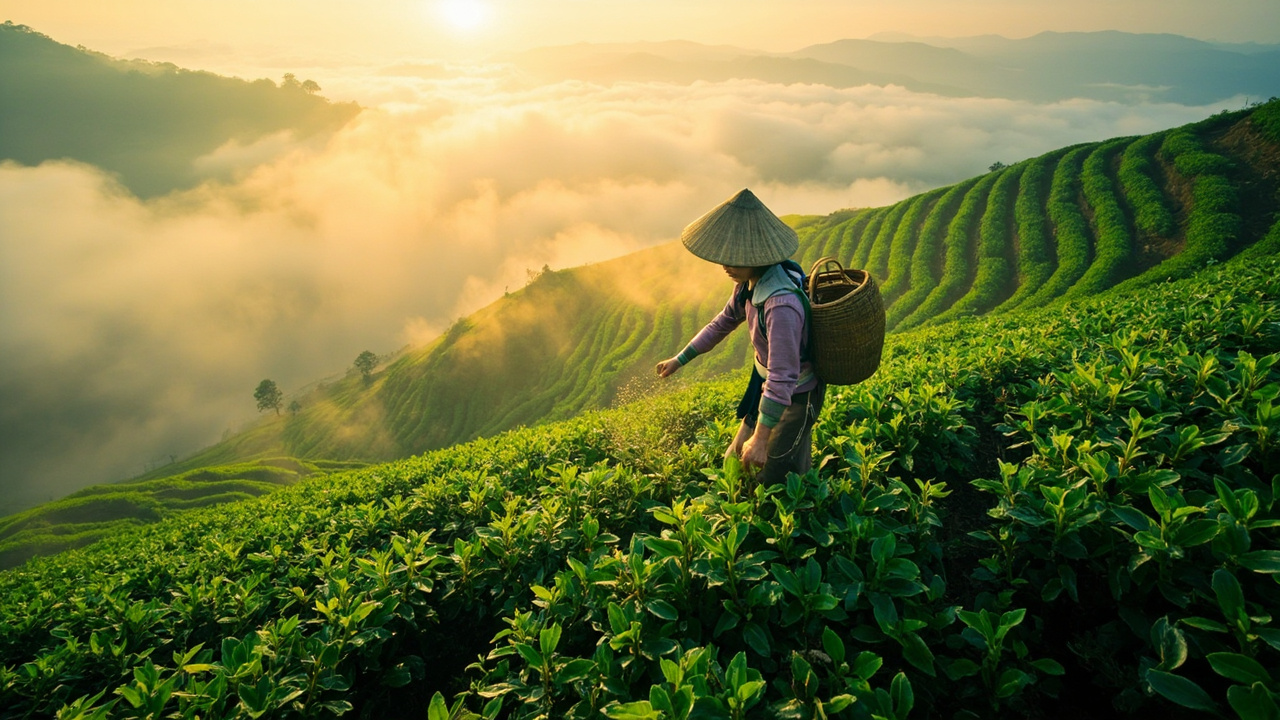
The first time I smelled real Longjing tea, I was standing in a farmer’s kitchen in Meijiawu, just west of Hangzhou, and I thought something had gone wrong with my nose. It smelled like chestnuts. Roasted chestnuts, specifically, the kind you buy from a street cart in winter. The farmer, a woman in her sixties named Chen, laughed at my face and pushed a cup toward me. “Smell again,” she said in Mandarin my phone translated badly. “That’s the wok. That’s what the pan does to the leaf.”
I’d come to China expecting tea to be a beverage. It’s not. It’s a place. It’s a mountain, a harvest calendar, a set of villages where the entire economy revolves around a leaf that gets picked for three weeks a year and argued about for the other forty-nine. Over seven years and more trips than I can count, I’ve drunk tea in a Chengdu teahouse where nobody has moved their chair since 1998, watched a woman in Wuyishan sort leaves by hand for six hours straight, and once paid 400 yuan for a pot of something I’m still not sure was worth it.
This guide covers the ten tea regions in China actually worth building a trip around, with real prices, real transport, and the specific things nobody tells you until you’re already there.
Quick answer
China’s main tea regions are Hangzhou (Longjing green tea), Wuyishan (rock oolong and black tea), Anxi (Tieguanyin oolong), Yunnan’s Pu’er and Xishuangbanna (aged pu’er), Chengdu and Mount Emei (Sichuan green and jasmine), and Huangshan (Keemun black tea). Most Western passport holders can enter China visa-free for up to 30 days in 2026, tea tourism costs roughly $80–$200 per day including transport and lodging, and the best harvest windows are late March to mid-April for green tea and September to October for oolong. You do not need a tour operator — the high-speed rail network connects every region on this list.
The Short Version
If you have ten days and you actually care about tea: fly into Shanghai, take the train to Hangzhou for Longjing, then ride the high-speed rail down to Wuyishan for rock oolong. That’s two regions, two completely different teas, and two completely different landscapes. Skip the famous tea markets in big cities — they’re mostly for tourists and the prices reflect it. Go to the source. Bring cash for small farms and set up Alipay and WeChat Pay before you land, because the tea farmer in the mountains will not have a card reader.
How I Picked These
I’ve visited every region on this list at least twice, most of them during harvest season, and a few of them in the dead of winter when the terraces are brown and the farmers are bored and happy to talk. I picked based on three things: whether the tea itself is genuinely world-class, whether a foreigner with no Mandarin can actually navigate the place, and whether the region gives you something to do besides drink tea. Some famous tea areas didn’t make the cut because they’re a hassle to reach or the experience is basically a gift shop with a view. I also asked a lot of tea shop owners in Beijing and Chengdu which regions they personally travel to, and their answers were more useful than any guidebook.
Comparison Table
| Rank | Place | Best For | Approx Cost (USD) | Time Needed | When to Go |
|---|---|---|---|---|---|
| 1 | Hangzhou / Meijiawu | Longjing green tea, easy first tea trip | $120–180/day | 2–3 days | Late March–mid April |
| 2 | Wuyishan | Rock oolong, dramatic scenery | $100–160/day | 2–3 days | April–May, Sept–Oct |
| 3 | Anxi | Tieguanyin oolong | $90–140/day | 1–2 days | April–May, Oct |
| 4 | Yunnan (Pu’er + Xishuangbanna) | Aged pu’er, ancient tea trees | $80–150/day | 4–6 days | Oct–March |
| 5 | Chengdu | Teahouse culture, jasmine tea | $70–130/day | 2–3 days | Year-round |
| 6 | Mount Emei | Sichuan green tea, mountain temples | $90–150/day | 2 days | April–June |
| 7 | Huangshan | Keemun black tea, mountain scenery | $110–170/day | 2–3 days | April–May, Oct |
| 8 | Suzhou | Biluochun green tea, gardens | $130–190/day | 1–2 days | Late March–April |
| 9 | Chaozhou | Dancong oolong, gongfu tea ritual | $80–130/day | 2 days | Year-round |
| 10 | Taipei / Nantou (Taiwan) | High-mountain oolong | $120–200/day | 3–4 days | May, Nov–Dec |
Hangzhou and Meijiawu 鈥?the Longjing pilgrimage every tea person makes eventually
I got off the bus in Meijiawu at 7am and immediately felt like I’d made a mistake. It was foggy, cold, and the village looked like a strip mall of tea shops. Then I walked ten minutes up the hill and the fog lifted and there were the terraces — row after row of low green bushes cut into the hillside, women in conical hats moving between them with baskets on their backs. That’s the moment it clicked.
Longjing (Dragon Well) is the most famous green tea in China and arguably the most counterfeited. The real thing comes from a small area around West Lake, and the best of it — the pre-Qingming harvest, picked before the April 5 festival — sells for absurd money. You don’t need to buy the most expensive stuff. You need to drink it in the place it grows.
馃搷 Location: Meijiawu village, about 30 minutes west of West Lake in Hangzhou. Also Longjing Village and Shifeng, both nearby.
馃帿 Entry fee: Free to walk the terraces. Tea tastings at farms typically $5–15 (35–100 CNY), often waived if you buy tea.
馃晲 Opening hours: Farms generally open 8am–6pm. Tea shops in the village stay open later.
馃殕 How to actually get there: From Hangzhou East Railway Station, take Metro Line 1 to Longxiangqiao, transfer to Line 4, get off at Shuichengqiao, then bus 27 to Meijiawu. Or just take a Didi (China’s Uber) — about $7 (50 CNY) from West Lake.
鈴?When to visit: Late March to mid-April for the harvest. Go on a weekday morning. Weekends in April are genuinely mobbed with Chinese tourists.
馃挕 Insider tips: The tea sold at the roadside stalls along the main road is often not from Meijiawu — it’s brought in from elsewhere. Walk uphill into the actual village and buy from a farm. Ask to see the wok where they roast it; if they can’t show you one, walk away. And drink the tea before you buy, always.
I bought 100 grams from Chen for 180 yuan and drank it for a year. It was better than anything I’ve bought in a Beijing tea shop for three times the price.
Wuyishan 鈥?where the tea tastes like the mountain it grew on
Wuyishan is the strangest tea region I’ve been to. The tea bushes grow in narrow gorges between these vertical red rock cliffs, and the resulting oolong — called yancha, or “rock tea” — genuinely tastes mineral. People describe it as “rock rhyme.” I thought that was marketing nonsense until I tried it. It’s real. It tastes like wet stone and roasted fruit.
The town itself is small and a bit scruffy, but the scenic area is a UNESCO site with hiking trails, bamboo rafting on the Nine-Bend River, and temples tucked into cliff faces. You can do tea in the morning and hike in the afternoon.
馃搷 Location: Wuyishan City, Fujian Province. The main tea villages are Tianxinyan and Xingcun, both inside the scenic area.
馃帿 Entry fee: Scenic area pass $20–30 (140–210 CNY) for 1–3 days. Tea tastings at farms $8–20 (55–140 CNY).
馃晲 Opening hours: Scenic area 6:30am–6pm. Tea farms by appointment or drop-in during harvest.
馃殕 How to actually get there: Wuyishan North Railway Station has direct high-speed trains from Shanghai (3.5 hours, ~$50/350 CNY) and Hangzhou (2 hours). From the station, take bus K1 or a taxi ($5/35 CNY) to the scenic area. See the China high-speed rail guide for booking tips.
鈴?When to visit: April–May for the spring harvest, September–October for autumn. Summer is brutally hot and humid. Winter is quiet and cheap but the terraces are dormant.
馃挕 Insider tips: The most famous (and expensive) rock teas — Da Hong Pao, Rou Gui, Shui Xian — have wildly varying quality. A “Da Hong Pao” at a tourist shop for $10 is not the real thing. Expect to pay $30+ (200 CNY) per 50g for decent Rou Gui. Ask for a tasting flight before committing. Also: the bamboo raft down the Nine-Bend River is worth the $20 (130 CNY) even if you don’t care about tea.
I met a tea farmer named Wu who’d been working the same plot for 30 years. He poured me six rounds of the same tea and each one tasted different. I still think about that.
Anxi 鈥?the Tieguanyin heartland nobody outside China talks about
Anxi is not a tourist destination. It’s a working tea county in Fujian, and the entire place smells like roasting oolong in spring. If you’re serious about tea, this is where you go to understand what Tieguanyin actually is — because the stuff sold abroad as “Tieguanyin” is usually a pale imitation.
The landscape is steep terraced hills planted with tea bushes, dotted with small villages. There’s not much else to do. That’s the point.
馃搷 Location: Anxi County, Quanzhou prefecture, Fujian. Main tea villages include Xianghua and Gande.
馃帿 Entry fee: Free. Tea tastings $5–15 (35–100 CNY).
馃晲 Opening hours: Farms operate roughly 8am–6pm during harvest.
馃殕 How to actually get there: High-speed rail to Quanzhou (from Xiamen, 30 min; from Shanghai, 5 hours). From Quanzhou station, take a bus or Didi to Anxi — about 1 hour, $10 (70 CNY).
鈴?When to visit: April–May (spring harvest) or October (autumn harvest). Spring Tieguanyin is lighter and more floral; autumn is deeper and more roasted.
馃挕 Insider tips: Tieguanyin comes in “light fragrance” and “strong fragrance” styles. Most Westerners have only had the light version. Ask to try both. The traditional charcoal-roasted style is harder to find but worth seeking out. Bring a translation app — English is essentially nonexistent here.
I got lost in Anxi for two hours because the bus driver dropped me at the wrong village and nobody spoke a word of English. A shop owner eventually drew me a map on a napkin. Best tea of the trip.
Yunnan 鈥?the wild west of Chinese tea
Pu’er is the only tea in China that gets better with age, and Yunnan is where it comes from. The province is enormous, the tea trees are ancient, and the whole scene has a slightly lawless energy — in a good way. You’ll drink tea with ethnic minority farmers, hike to 800-year-old trees, and get offered pressed tea cakes that cost more than your flight.
The two main areas are Pu’er City (the tea hub) and Xishuangbanna (the wilder, more scenic region near the Laos border).
馃搷 Location: Pu’er City and Xishuangbanna, southern Yunnan. Key villages: Jingmai Mountain, Bulang Mountain, Yiwu.
馃帿 Entry fee: Free at most farms. Jingmai Mountain ancient tea forest entry ~$15 (100 CNY).
馃晲 Opening hours: Varies. Most farms welcome visitors during daylight hours.
馃殕 How to actually get there: Fly to Kunming, then either fly or take the new high-speed rail to Xishuangbanna (3.5 hours from Kunming, ~$40/280 CNY). From there, hire a driver — public transport to tea villages is limited.
鈴?When to visit: October–March. The dry season makes mountain roads passable. Spring harvest (March–April) is spectacular but hot.
馃挕 Insider tips: Pu’er pricing is genuinely opaque. A cake that costs $20 in one shop costs $200 in the next, and both might be legitimate. Buy from farms you visit in person, not from markets in Kunming. Ask about the tree age — “ancient tree” (gushu) tea is a real category with real price differences. And be careful with alcohol at the village dinners; the hospitality is intense.
A Bulang farmer named A-Yong served me tea from a tree his grandfather planted. He wouldn’t let me pay for it. I bought two cakes anyway.
Chengdu 鈥?the teahouse capital, where tea is a way of sitting
Chengdu isn’t a tea-growing region in the same way as the others, but it’s the best place in China to understand how tea functions socially. The city has thousands of teahouses, some of them over a century old, and the pace is glacial in the best way. You go, you sit, you get a covered cup of jasmine tea, and you stay for four hours.
The famous People’s Park teahouse is worth one visit for the spectacle — ear cleaners, mahjong, bamboo chairs. But the better ones are in the backstreets.
馃搷 Location: People’s Park (Renmin Gongyuan) for the classic experience. Pengzhen and Anshun for quieter, more local spots.
馃帿 Entry fee: Free to enter teahouses. Tea $3–10 (20–70 CNY) per person, refills usually free.
馃晲 Opening hours: Most teahouses 8am–10pm. People’s Park teahouse opens at 7am.
馃殕 How to actually get there: Chengdu has two main airports and multiple rail stations. From Chengdu East Station, Metro Line 2 to People’s Park station, Exit B. See the Chengdu guide for the full lay of the land.
鈴?When to visit: Year-round. Spring and autumn are most pleasant. Avoid the week of Chinese New Year unless you like crowds.
馃挕 Insider tips: The ear cleaners at People’s Park teahouse are a real service, not a scam — about $5 (35 CNY). Bring small bills. The jasmine tea here is made with green tea base and fresh jasmine flowers, and it’s genuinely excellent. If you want to see how tea is scented, day trips to jasmine farms in the surrounding countryside can be arranged.
I spent an entire afternoon at a teahouse in Pengzhen doing nothing. It was one of the best days of my year.
Mount Emei 鈥?tea at altitude, with monkeys
Mount Emei is one of China’s four sacred Buddhist mountains, and it also produces a green tea called Emei Zhuyeqing (Bamboo Leaf Green). The combination is strange and wonderful — you hike up through cloud forest, pass temples, get harassed by monkeys, and drink tea at the top.
The tea itself is delicate and slightly sweet, best in the spring. The mountain experience is the real draw.
馃搷 Location: Emeishan City, Sichuan Province, about 2 hours from Chengdu by train.
馃帿 Entry fee: Mountain entry $25 (160 CNY). Cable car up to Golden Summit ~$20 (120 CNY) each way.
馃晲 Opening hours: Entry 6am–6:30pm. Temples vary.
馃殕 How to actually get there: High-speed rail from Chengdu to Emeishan Station (1.5 hours, ~$10/65 CNY). From the station, bus 5 or a taxi to the mountain base.
鈴?When to visit: April–June and September–October. Winter is beautiful but cold and icy. Summer weekends are crowded.
馃挕 Insider tips: The monkeys are aggressive and will steal food and bags. Don’t carry visible snacks. The tea sold at the summit is overpriced; buy at the base or in Emeishan town. If you’re not up for the full hike, the cable car plus a short walk gets you to the summit in about 90 minutes.
I watched a monkey steal a woman’s entire bag of oranges. She was not happy. The tea at the bottom was better anyway.
Huangshan 鈥?Keemun black tea and the most photographed mountains in China
Huangshan is famous for its granite peaks and sea-of-clouds vistas, but it’s also the home of Keemun (Qimen) black tea, one of the teas that built the global tea trade. The town of Qimen, about an hour from the mountain, is where it’s grown.
The mountain itself is spectacular but crowded. The tea region is quiet and underrated.
馃搷 Location: Huangshan City and Qimen County, Anhui Province.
馃帿 Entry fee: Huangshan scenic area $30 (190 CNY). Tea farms free to visit.
馃晲 Opening hours: Scenic area 6:30am–4:30pm. Tea farms by arrangement.
馃殕 How to actually get there: High-speed rail to Huangshan North Station (from Shanghai, 3 hours; from Hangzhou, 1.5 hours). From there, buses or taxis to the mountain or to Qimen.
鈴?When to visit: April–May and October for both tea and scenery. Summer is hot and crowded. Winter is cold but the mountain is stunning in snow.
馃挕 Insider tips: Keemun is a black tea with a distinctive smoky-sweet profile. The best grades are “Hao Ya” and “Mao Feng.” Buy from Qimen, not from the tourist shops at the mountain base. And if you’re hiking Huangshan, book your mountain-top hotel months in advance — they sell out.
I drank a Keemun at a farm in Qimen that tasted like cocoa and pine smoke. I’ve been chasing that cup ever since.
Suzhou 鈥?Biluochun and gardens, the refined version
Suzhou is famous for its classical gardens and silk, but it also produces Biluochun, a delicate green tea from the nearby Dongting Mountains. The tea is picked incredibly early — sometimes before the end of March — and the leaves are tiny and curled.
The city itself is one of the most beautiful in China, with canals, gardens, and a slower pace than Shanghai an hour away.
馃搷 Location: Dongting Mountains (Dongshan and Xishan), about an hour from Suzhou city center.
馃帿 Entry fee: Tea farms free. Gardens in Suzhou $10–20 (70–140 CNY) each.
馃晲 Opening hours: Farms 8am–5pm. Gardens typically 7:30am–5:30pm.
馃殕 How to actually get there: High-speed rail from Shanghai to Suzhou (25 minutes, ~$6/40 CNY). From Suzhou, buses or taxis to Dongshan.
鈴?When to visit: Late March to mid-April for Biluochun harvest. Otherwise April–May or September–October for the gardens.
馃挕 Insider tips: Biluochun is often faked with tea from other regions. Buy from Dongshan or Xishan directly. The “fruit fragrance” people describe is real but subtle — don’t expect a flavored tea. And don’t skip the gardens; the Humble Administrator’s Garden is worth the crowd.
I bought 50 grams of Biluochun from a farmer’s wife who apologized for the price. It was $40 (280 CNY). Worth it.
Chaozhou 鈥?the gongfu tea ritual at its source
Chaozhou, in eastern Guangdong, is the spiritual home of gongfu tea — the small-cup, high-leaf-ratio brewing style that’s now trendy worldwide. The local oolong, called Dancong, is intensely aromatic, sometimes tasting like orchids or honey or roasted fruit.
The city is also a food destination, with one of the best regional cuisines in China. Beef balls, oyster omelets, and braised goose.
馃搷 Location: Chaozhou City, Guangdong Province. Phoenix Mountain (Fenghuang Shan) is the main tea region, about an hour away.
馃帿 Entry fee: Free. Tea tastings $5–15 (35–100 CNY).
馃晲 Opening hours: Tea shops and farms roughly 9am–9pm.
馃殕 How to actually get there: High-speed rail to Chaoshan Station (from Guangzhou, 3 hours; from Shenzhen, 2 hours). From there, bus or taxi to Chaozhou.
鈴?When to visit: Year-round. Spring and autumn are most comfortable. The Phoenix Mountain harvest is in April and October.
馃挕 Insider tips: Dancong comes in many “fragrance types” — Mi Lan Xiang (honey orchid), Ya Shi Xiang (duck shit, yes really), and others. Try several before buying. The gongfu brewing method uses a tiny teapot and near-boiling water; watch how locals do it before trying yourself. And eat the food — Chaozhou cuisine is a highlight of any China trip.
I sat in a tea shop for three hours while the owner brewed cup after cup and refused to let me pay. I bought a teapot on the way out.
Taipei and Nantou 鈥?high-mountain oolong, the other China tea tradition
Taiwan is technically a separate destination, but for tea purposes it belongs on this list. The high-mountain oolongs from Nantou and Alishan are among the best in the world — light, floral, and buttery. The tea culture is also more accessible to foreigners than mainland China, with more English signage and a gentler learning curve.
If you’re a first-time tea traveler and you’re nervous about mainland logistics, Taiwan is a good warm-up.
馃搷 Location: Nantou County (Lugu, Shanlinxi) and Chiayi County (Alishan), Taiwan.
馃帿 Entry fee: Free. Tea tastings $5–20 (150–600 TWD).
馃晲 Opening hours: Farms and shops typically 9am–6pm.
馃殕 How to actually get there: Fly to Taipei, then high-speed rail to Taichung (1 hour), then bus or taxi to Nantou. Alishan is reachable by narrow-gauge railway from Chiayi.
鈴?When to visit: May (spring harvest) and November–December (winter harvest). Alishan is cool year-round.
馃挕 Insider tips: Taiwanese oolong is graded by altitude — higher is generally better and more expensive. “Dayuling” and “Lishan” are the prestige names. Buy from farms or reputable shops, not from tourist markets. And take the Alishan sunrise train if you’re there — it’s a separate experience from the tea.
I drank a Lishan oolong at 2,000 meters with clouds rolling past the window. It tasted like butter and orchids. I’ve never found anything quite like it outside Taiwan.
FAQ summary
The best tea regions in China for first-time visitors are Hangzhou (Longjing green tea) and Wuyishan (rock oolong), both easy to reach by high-speed rail from Shanghai. Most Western passport holders can enter China visa-free for up to 30 days in 2026. Budget $80–$200 per day including transport, lodging, and tea purchases. The best harvest windows are late March to mid-April for green tea and September to October for oolong. Set up Alipay or WeChat Pay before you arrive, bring a translation app, and buy tea directly from farms rather than city markets.
FAQ
Q: Do I need a visa to visit China’s tea regions in 2026? A: Most Western passport holders — including US, UK, EU, Australian, and Canadian citizens — can enter China visa-free for up to 30 days under the current policy. Check the visa-free transit and entry guide for the latest rules, since policies have shifted several times. If you’re staying longer or visiting multiple times, a standard tourist visa is still an option.
Q: What’s the best time of year for a tea region tour? A: Late March to mid-April for green teas like Longjing and Biluochun, and September to October for oolong and black teas. Summer is hot and crowded; winter is quiet but the terraces are dormant. If you can only pick one window, go in April — you’ll catch the spring harvest across multiple regions.
Q: How much does a tea region tour cost? A: Budget $80–$200 per day depending on region and comfort level. Hangzhou and Suzhou are pricier ($120–190/day); Yunnan and Chaozhou are cheaper ($80–130/day). This includes mid-range lodging, high-speed rail between regions, meals, and tea tastings. Tea purchases are extra and can range from $20 to several thousand dollars depending on what you buy.
Q: Can I do this trip without speaking Mandarin? A: Yes, but it’s harder outside major cities. Hangzhou, Chengdu, and Taipei are manageable with English and a translation app. Anxi, Qimen, and rural Yunnan are not — download a good offline translation app (Pleco or Baidu Translate) and expect to point at things. Tea farmers are patient and used to communicating through gestures.
Q: Do I need a VPN or a local SIM card? A: Yes to both, ideally. Google, Instagram, WhatsApp, and most Western apps are blocked in mainland China. Set up a VPN before you arrive (it’s harder to install once you’re there) and get a local SIM or eSIM for data. See the China SIM and internet guide for specifics. Taiwan has no such restrictions.
Q: How do I avoid buying fake or overpriced tea? A: Buy from farms you visit in person, taste before you buy, and ask to see where the tea was grown and processed. Avoid tourist markets and shops near major attractions. Prices vary wildly even for the same tea, so get a sense of the range before committing. If a deal seems too good, it probably is.
Q: How do I get between tea regions? A: High-speed rail connects most of them. Hangzhou to Wuyishan is about 2 hours; Shanghai to Huangshan is 3 hours; Chengdu to Emeishan is 1.5 hours. Book tickets through the official Railway 12306 app or Trip.com. For remote regions like Yunnan’s tea mountains, you’ll need a car and driver.
The Honest Wrap-up
This guide is for people who genuinely care about tea and are willing to plan a trip around it. If you just want to drink a cup in a nice teahouse, go to Chengdu and call it a day. If you want to understand where tea comes from and why it tastes the way it does, pick two regions from this list and go deep rather than trying to hit all ten.
It’s not for people who want a resort vacation or who need everything in English. Some of these places are remote, the roads are winding, and the tea farmers will not speak your language. That’s the point.
One last piece of advice: buy less tea than you think you want. You can always order more later, and carrying 5 kilos of pu’er through three airports gets old fast. Buy one thing you love, drink it at home, and remember the mountain.
More guides you may like

Top 10 Bridges in China
China's bridges are engineering marvels spanning mountains, rivers, and seas. Here are 10 of the most spectacular, from ancient stone to modern steel.
8 min read

Top 10 Buddhist Sites in China
From the Leshan Giant Buddha to the Dunhuang Caves, these 10 Buddhist sites represent 2,000 years of China's spiritual heritage.
9 min read

Top 10 Day Trips from Beijing You Shouldn't Miss
Beijing is packed with history, but some of China's best experiences are just a few hours away. Here are 10 day trips that will transform your visit.
9 min read

Top 10 Hidden Gems in China Off the Beaten Path
Beyond the Great Wall and Terracotta Warriors, China has incredible hidden destinations few tourists ever reach. Here are 10 underrated gems worth the detour.
9 min read

Top 10 Markets and Shopping Streets in China
From Shanghai's Bund to Beijing's Silk Street - 10 markets where foreigners can haggle, explore, and bring home authentic Chinese goods.
9 min read

Top 10 Museums in China You Shouldn't Miss
China's museums span 5,000 years of civilization. These 10 - from the Palace Museum to Xi'an's terracotta gallery - are unmissable for culture lovers.
9 min read