
Turpan Travel Guide
TODO: Extract from article (100-160 chars)
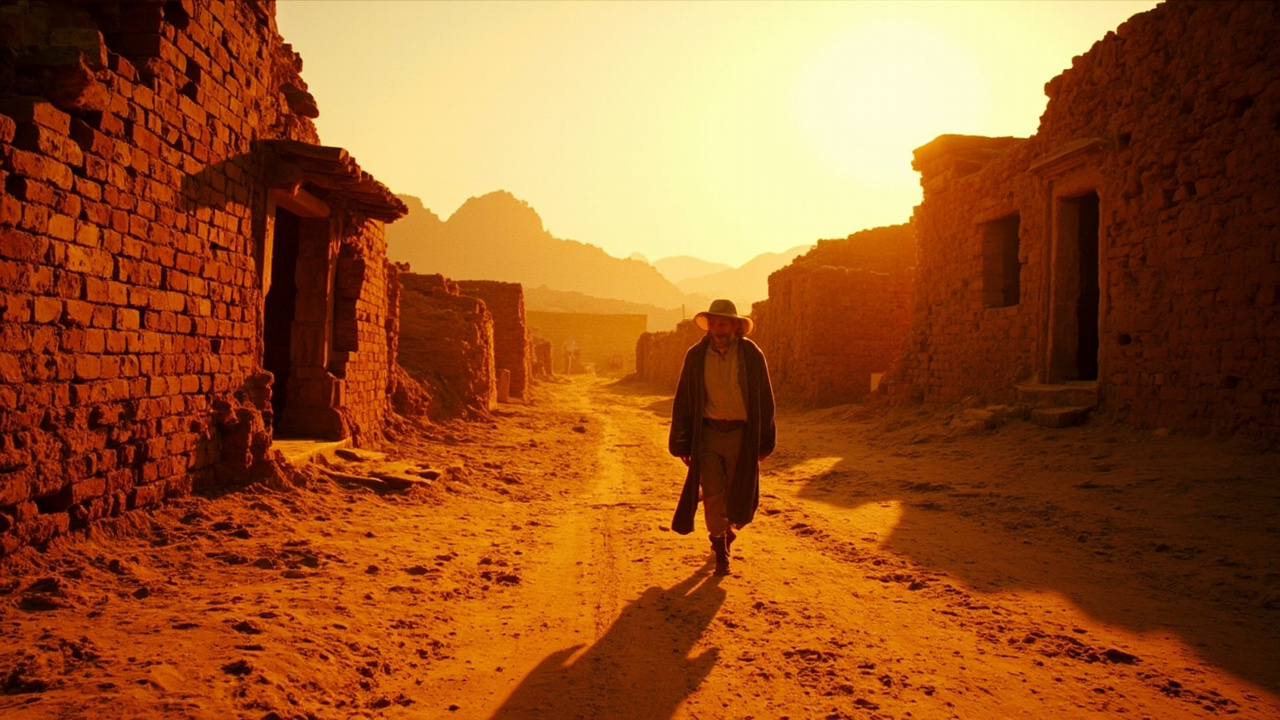
Turpan Travel Guide
The old man at the grape trellis didn’t speak a word of English, and my Mandarin tops out around ordering noodles, so we communicated for ten minutes entirely through hand gestures and a shared appreciation of his grapes. He’d pull one off the vine, hold it up to the light, and grin. Then he’d point at me, point at the grape, and nod like we’d just closed a business deal. It was 41°C in the shade. The grapes were the best I’ve ever eaten. That’s Turpan in a nutshell: brutally hot, unexpectedly sweet, and full of people who are happy you bothered to show up.
Turpan sits in a depression in the middle of the Taklamakan Desert in China’s Xinjiang region — the second-lowest point on Earth, about 154 meters below sea level. It’s a Silk Road city that’s been continuously inhabited for over 2,000 years, and it holds some of the best-preserved ancient ruins in Asia. The catch: most first-time China travelers skip it entirely. They fly Beijing to Xi’an to Chengdu to Shanghai and never look west. That’s a mistake, and this guide is my attempt to fix it.
Here’s what you’ll get: how to actually get to Turpan in 2026, what’s worth your time, what isn’t, how much things cost, and the specific things I wish someone had told me before I showed up in a place where the summer heat genuinely can kill you if you’re careless.
Quick answer
Turpan is a Silk Road oasis city in eastern Xinjiang, China, about 180 km southeast of Urumqi, reachable by high-speed train in roughly 1 hour from Urumqi or 3 hours from Dunhuang. Most international visitors can enter China visa-free for up to 30 days under the 2025-2026 expanded visa-free policy (check your nationality), and Turpan itself needs 2-3 days minimum. Best time to visit is late April to early June or September to mid-October — summer temperatures regularly hit 45°C (113°F) and above.
The Short Version
Come in spring or fall, not summer. Base yourself in Turpan city, take day trips to the ruins, and don’t try to do Xinjiang in a week — it’s bigger than most countries. Budget $60-90 per day (430-650 CNY) for a comfortable mid-range trip including hotels, food, and transport. Bring cash as backup, get WeChat Pay or Alipay working before you arrive, and download a translation app. English is rare here. The ruins are the point. The grapes are the bonus.
How I Picked These
I’ve been through Turpan three times since 2019 — once in July (a mistake), once in October (perfect), and once in late April (also great). I’ve stayed in both the budget guesthouses near the bazaar and the mid-range hotels on the south side of town. I’ve hired the same Uyghur driver, Memet, twice, and he’s the one who told me which ruins are actually worth the drive and which ones tourists get sold on. I’ve eaten my weight in lamb kebabs, hand-pulled noodles, and more varieties of grapes than I knew existed. Everything below comes from those trips, not from a press release.
Comparison Table
| Rank | Place | Best For | Approx Cost (USD) | Time Needed | When to Go |
|---|---|---|---|---|---|
| 1 | Jiaohe Ancient City | Best-preserved Silk Road ruins | $10 (70 CNY) | 2-3 hours | Oct-Apr, early morning |
| 2 | Gaochang Ancient City | Scale and atmosphere | $10 (70 CNY) | 2-3 hours | Oct-Apr, morning |
| 3 | Karez Irrigation System | Engineering geeks, hot days | $6 (40 CNY) | 1 hour | Any, it’s underground |
| 4 | Flaming Mountains | Landscape photography | $6 (40 CNY) | 1-2 hours | Sunset, spring/fall |
| 5 | Grape Valley | Shade, food, Uyghur culture | $8 (55 CNY) | 3-4 hours | Aug-Oct (harvest) |
| 6 | Astana Tombs | History nerds | $6 (40 CNY) | 1 hour | Oct-Apr |
| 7 | Bezeklik Thousand Buddha Caves | Buddhist art, cave murals | $10 (70 CNY) | 2 hours | Spring/fall |
| 8 | Emin Minaret (Sugong Pagoda) | Architecture, easy access | $6 (40 CNY) | 45 min | Late afternoon |
| 9 | Turpan Museum | Mummies, context | Free | 1.5 hours | Any, AC is a plus |
| 10 | Sunday Bazaar / Night Market | Food, people-watching | $10-15 (70-110 CNY) | 2 hours | Evening |
Jiaohe Ancient City — The Ruins That Made Me Rethink the Silk Road
I got to Jiaohe at 8:30 in the morning, before the tour buses, and had the whole place to myself for maybe 20 minutes. The wind was blowing through what used to be a main street, and I could see for what felt like miles across a plateau of packed earth that was once a city of 30,000 people. No reconstruction, no painted-on “authenticity” — just the actual bones of a place abandoned in the 13th century.
Jiaohe is the single best archaeological site I’ve visited in China, and I’ve been to a lot of them. It sits on a natural island between two rivers, which is why it survived — the geography protected it. You walk through the remains of temples, government offices, residential blocks, and a Buddhist monastery. The scale is hard to describe until you’re standing in it.
📍 Location: About 10 km west of Turpan city center, Ya’er Township. 🎫 Entry fee: $10 (70 CNY), includes shuttle bus from the gate to the site. 🕐 Opening hours: 9:00 AM - 8:00 PM in summer, 10:00 AM - 6:30 PM in winter. Last entry 1 hour before close. 🚕 How to actually get there: Taxi from central Turpan, about 20 minutes, $5-7 (35-50 CNY) each way. Or take bus 202 from the main bus station and walk 15 minutes from the stop. I’d just take a taxi and arrange for the driver to wait. ⏰ When to visit: October through April for comfortable temperatures. In summer, go at opening time — by 11 AM the plateau radiates heat like a pizza stone. 💡 Insider tips: Bring more water than you think you need. There’s no shade. Wear a hat and closed shoes — the ground is uneven and dusty. The shuttle bus is included but you can also walk the 2 km in if you want. Photography is allowed everywhere except inside the small museum near the entrance. 🍜 I ate cold noodles with vinegar and chili oil at a tiny shop near the parking lot afterward, and it was exactly what I needed.
Gaochang Ancient City — Bigger, Older, and Somehow Less Crowded
Gaochang is the site most people mean when they say “the ancient city.” It’s older than Jiaohe (founded in the 1st century BC), bigger, and was a major Silk Road hub for over a thousand years. The outer walls are still standing in places, and you can walk through the footprint of what was once a thriving Buddhist center.
Here’s my honest take: Gaochang is impressive, but Jiaohe is more atmospheric. Gaochang feels more like a site you look at; Jiaohe feels like a site you’re inside. That said, the Buddhist temple complex in the center of Gaochang is worth the trip on its own, and the surrounding landscape — Flaming Mountains on one side, green fields on the other — is genuinely striking.
📍 Location: About 40 km east of Turpan, near the Flaming Mountains. 🎫 Entry fee: $10 (70 CNY), plus $2 (15 CNY) for the optional electric cart inside. 🕐 Opening hours: 9:00 AM - 8:00 PM summer, 10:00 AM - 6:00 PM winter. 🚕 How to actually get there: Taxi from Turpan, 45 minutes, $12-15 (85-110 CNY) each way. Most people combine it with Flaming Mountains and Bezeklik in one day — hire a driver for the full loop, about $50-60 (350-430 CNY) for the day. ⏰ When to visit: Same as Jiaohe — spring and fall. Mornings are best. 💡 Insider tips: The site is huge and exposed. There’s a small café near the entrance but nothing inside. Combine this with Flaming Mountains since they’re 15 minutes apart. The electric cart is worth the $2 if it’s hot. If you’re sensitive to dust, bring a mask — the wind kicks up fine earth. 🧭 I got mildly lost trying to find the exit and ended up walking an extra kilometer. Not a disaster, but budget more time than you think.
Karez Irrigation System — The Underground Engineering Marvel
The Karez system is a network of underground canals that brought snowmelt from the Tianshan Mountains to Turpan for over 2,000 years. It’s one of the three great ancient Chinese engineering projects alongside the Great Wall and the Grand Canal, and almost nobody outside China has heard of it.
You visit a preserved section with a museum and a walk-through tunnel. It’s cool down there — literally, around 15°C (59°F) year-round — which makes it a perfect midday stop in summer. The engineering is genuinely mind-blowing: vertical wells every 20-30 meters, connected by gently sloping underground channels, all dug by hand.
📍 Location: Karez Museum, about 3 km southeast of Turpan city center. 🎫 Entry fee: $6 (40 CNY). 🕐 Opening hours: 8:30 AM - 8:00 PM daily, year-round. 🚕 How to actually get there: Taxi from central Turpan, 10 minutes, $3-4 (20-30 CNY). Or walk if you’re staying nearby — it’s a flat, easy walk. ⏰ When to visit: Any time. It’s underground and climate-controlled. Great for the hottest part of the day. 💡 Insider tips: The signage is in Chinese and English, but the English is rough. Read up beforehand. The museum section is small; the tunnel walk is the main event. Bring a light jacket if you’re coming from 40°C outside — the temperature swing is jarring. 💧 I met a retired engineer from Shanghai here who spent 20 minutes explaining the gradient math to me. Best conversation of the trip.
Flaming Mountains — The Landscape That Lives Up to Its Name
The Flaming Mountains (Huoyan Shan) are a ridge of red sandstone that genuinely looks like it’s on fire in late afternoon light. They’re the setting for the classic Chinese novel Journey to the West, and the name isn’t marketing — surface temperatures here have been recorded above 80°C (176°F).
I went at sunset and watched the whole ridge shift from orange to deep red to purple over about 40 minutes. It’s one of those landscapes that photographs don’t quite capture because the scale is so much bigger than a frame.
📍 Location: Along the G30 highway, about 30-50 km east of Turpan. 🎫 Entry fee: $6 (40 CNY) for the main viewing area. The drive-through sections are free. 🕐 Opening hours: 8:00 AM - 8:00 PM summer, 9:00 AM - 7:00 PM winter. 🚕 How to actually get there: Taxi or hired car. There’s no public transport that stops at the viewpoints. Combine with Gaochang and Bezeklik. ⏰ When to visit: Late afternoon, 1-2 hours before sunset. Spring and fall for comfortable temperatures; summer is brutal. 💡 Insider tips: The main viewing platform is fine, but the best photos are from the roadside pull-offs along the highway. Ask your driver to stop. Bring a tripod if you’re serious about sunset shots. There’s a small camel-riding operation near the main entrance — skip it unless you really want the photo. 📸 I paid a local guy $3 (20 CNY) to take my photo, and he framed it better than I would have. Worth it.
Grape Valley — Where Turpan Actually Feels Alive
Grape Valley (Putao Gou) is a green canyon cutting through the Flaming Mountains, and it’s where Turpan’s famous grapes are grown. In August and September, the trellises are heavy with fruit and the whole valley smells sweet. There are Uyghur family restaurants, dancing performances, and shaded walkways that feel 10 degrees cooler than the surrounding desert.
This is the most “touristy” site on this list, and I’m including it anyway because it’s the best place to actually experience Uyghur culture and food in a relaxed setting. The performances are staged, sure, but the food is real and the setting is beautiful.
📍 Location: About 10 km northeast of Turpan, at the western end of Flaming Mountains. 🎫 Entry fee: $8 (55 CNY). 🕐 Opening hours: 8:00 AM - 9:00 PM summer, 9:30 AM - 7:00 PM winter. 🚕 How to actually get there: Taxi from Turpan, 20 minutes, $5-7 (35-50 CNY). Or bus 5 from the city center. ⏰ When to visit: August through October for harvest season. Weekday afternoons are quieter than weekends. 💡 Insider tips: Eat at one of the family restaurants, not the big tourist halls. Look for places with plastic chairs and handwritten menus. The lamb kebabs and hand-pulled noodles here are some of the best in Xinjiang. Bring cash — some smaller places don’t take WeChat Pay. 🍇 A grandmother running one of the stalls gave me a bag of grapes for free after I bought a kebab. She refused payment. I still think about those grapes.
Astana Tombs — The Silk Road’s Forgotten Cemetery
The Astana Tombs are a cluster of over 500 graves dating from the 3rd to 8th centuries, and they contained some of the best-preserved artifacts ever found along the Silk Road — including mummies, textiles, and documents in multiple languages. Most of the best pieces are in the Turpan Museum now, but the tombs themselves are worth seeing.
It’s a quieter, less-visited site, and honestly, that’s part of the appeal. You get the sense of being somewhere that hasn’t been fully packaged for tourists yet.
📍 Location: About 40 km east of Turpan, near Gaochang. 🎫 Entry fee: $6 (40 CNY). 🕐 Opening hours: 9:00 AM - 6:00 PM, closed Mondays in winter. 🚕 How to actually get there: Combine with Gaochang and Flaming Mountains. Taxi from Turpan, 45 minutes, $12-15 (85-110 CNY). ⏰ When to visit: Spring and fall. Mornings. 💡 Insider tips: Photography is restricted inside the tombs — check with the staff. The site is small; 45 minutes is enough. If you’re squeamish about burial sites, skip it. The museum in Turpan has better-preserved artifacts anyway. ⚰️ I went on a Tuesday and was the only visitor. The caretaker followed me around at a respectful distance, which was both eerie and oddly touching.
Bezeklik Thousand Buddha Caves — Buddhist Art in the Desert
Bezeklik is a complex of 57 cave temples carved into a cliff above a river valley, with murals dating from the 5th to 14th centuries. Many of the best murals were removed by German explorers in the early 1900s and are now in Berlin, which is a sore subject locally. What remains is still worth seeing.
The setting alone — caves cut into a cliff, overlooking a green valley, with the Flaming Mountains behind — is worth the trip. The surviving murals are faded but beautiful.
📍 Location: About 50 km northeast of Turpan, in the Mutougou Valley. 🎫 Entry fee: $10 (70 CNY). 🕐 Opening hours: 9:00 AM - 6:00 PM, closed in winter (November-March). 🚕 How to actually get there: Hired car only. About 1 hour from Turpan. Combine with Gaochang and Flaming Mountains. ⏰ When to visit: April through October. Mornings. 💡 Insider tips: No photography inside the caves. The climb up to the caves is steep — wear good shoes. There are no facilities on site; bring water. The drive there through the valley is half the experience. 🖼️ The caretaker pointed out a specific mural detail — a musician playing an instrument I didn’t recognize — and mimed playing it. I still don’t know what it was.
Emin Minaret (Sugong Pagoda) — The One Thing You Can Walk To
Emin Minaret is a 44-meter brick tower built in 1777, and it’s the tallest minaret in China. It’s also the only major site on this list that’s within walking distance of central Turpan, which makes it a great late-afternoon stop.
The brickwork is intricate — different patterns on every band — and the surrounding mosque is still active. It’s a quick visit, but a satisfying one.
📍 Location: About 2 km east of Turpan city center, in the Uyghur neighborhood. 🎫 Entry fee: $6 (40 CNY). 🕐 Opening hours: 8:00 AM - 8:00 PM daily. 🚶 How to actually get there: Walk from central Turpan, 20-25 minutes. Or taxi, $2-3 (15-20 CNY). ⏰ When to visit: Late afternoon, 1-2 hours before sunset, for the best light on the brickwork. 💡 Insider tips: Dress modestly — it’s an active religious site. Women should cover shoulders and knees. The neighborhood around it is worth wandering; it’s the most traditionally Uyghur part of Turpan. 🧱 A kid on a bike circled me three times, laughing, before riding off. I have no idea what that was about.
Turpan Museum — The Air-Conditioned Context You Need
The Turpan Museum is free, air-conditioned, and holds the best artifacts from all the sites on this list — including mummies, Silk Road textiles, and documents in a dozen languages. If you only have one hot afternoon, spend it here.
The mummy section is the highlight. These are some of the best-preserved ancient human remains in the world, and the museum does a good job of contextualizing them without being ghoulish.
📍 Location: Central Turpan, near the main square. 🎫 Entry fee: Free (bring passport for entry). 🕐 Opening hours: 10:00 AM - 6:00 PM, closed Mondays. 🚶 How to actually get there: Walk or short taxi from anywhere central. ⏰ When to visit: Midday, when it’s too hot to be outside. 💡 Insider tips: Bring your passport — you need it to enter. The English signage is decent. The gift shop is small but has good grape-related souvenirs. 🏛️ I spent 20 minutes in front of a 2,000-year-old piece of bread. It looked exactly like a modern bagel.
Sunday Bazaar and Night Market — Where Turpan Eats
The Sunday Bazaar is the traditional market, but the night market near the main square runs every evening and is where you should actually eat. Lamb kebabs, hand-pulled noodles, samsa (baked meat pastries), fresh fruit, and more varieties of grapes than you can name.
This is the best place to eat in Turpan, full stop. It’s cheap, it’s delicious, and it’s where you’ll actually talk to locals.
📍 Location: Central Turpan, near the main square and the bazaar area. 🎫 Entry fee: Free. 🕐 Opening hours: Night market 6:00 PM - midnight, daily. Sunday Bazaar 8:00 AM - 6:00 PM on Sundays. 🚶 How to actually get there: Walk from anywhere central. Taxi if you’re further out. ⏰ When to visit: Evening, around 8:00 PM, when it’s cooled down and everything’s open. 💡 Insider tips: Bring small bills — some vendors don’t take WeChat Pay. Point at what you want; English menus are rare. The lamb kebabs are $0.50-1 (3-7 CNY) each. Try the cold yogurt drink (ayran-style) — it’s the perfect antidote to the heat. 🍢 I ate 12 kebabs in one sitting and regretted nothing.
FAQ summary
Turpan is a 2-3 day destination best visited in spring or fall, reachable by high-speed train from Urumqi in about 1 hour. Most international visitors can enter China visa-free for up to 30 days under current 2025-2026 policies. Budget $60-90 per day (430-650 CNY) for a comfortable mid-range trip. English is rare — download a translation app and set up WeChat Pay or Alipay before you arrive. The top three sites are Jiaohe Ancient City, Gaochang Ancient City, and the Karez Irrigation System, and all three are best visited in the morning.
FAQ
Q: Do I need a visa to visit Turpan in 2026? A: Most international visitors from the US, UK, EU, Australia, and much of Southeast Asia can enter China visa-free for up to 30 days under the expanded 2025-2026 policy. Check your specific nationality, as rules change. If you’re not eligible, apply for a standard tourist visa at least 3-4 weeks in advance.
Q: How do I get to Turpan from Beijing or Shanghai? A: Fly to Urumqi (about 4 hours from Beijing, 5 from Shanghai), then take the high-speed train to Turpan — about 1 hour. Or fly directly to Turpan Jiaohe Airport from a few major Chinese cities. The high-speed rail network is excellent and worth using; see our China train travel guide for booking details.
Q: Is Turpan safe for foreign tourists? A: Yes, Turpan is generally safe. Xinjiang has a heavy security presence, which some travelers find uncomfortable, but violent crime against tourists is rare. Follow local rules, carry your passport, and don’t photograph police or security installations.
Q: What’s the best time of year to visit Turpan? A: Late April to early June and September to mid-October. Summer temperatures regularly exceed 45°C (113°F) and can be dangerous. Winter is cold but the ruins are quiet and atmospheric.
Q: Can I use WeChat Pay or Alipay in Turpan? A: Yes, but set it up before you arrive — it’s much harder to do once you’re in China without a Chinese bank account. See our China payment guide for step-by-step setup. Carry some cash as backup, especially for smaller vendors.
Q: Do I need a VPN in Turpan? A: Yes, if you want to use Google, Instagram, WhatsApp, or most Western apps. Install and test your VPN before you arrive — they’re hard to download once you’re in China. See our China SIM and internet guide for details.
Q: How many days do I need in Turpan? A: Two days minimum, three is better. Day one: Jiaohe, Karez, Emin Minaret, night market. Day two: Gaochang, Flaming Mountains, Astana Tombs, Bezeklik. Day three: Grape Valley, museum, and a slower pace.
The Honest Wrap-up
Turpan isn’t for everyone. If you want five-star hotels, English menus, and a curated Instagram itinerary, this isn’t your trip. If you want to stand in a 2,000-year-old city that’s slowly returning to dust, eat grapes that taste like they were grown specifically for you, and have a conversation with a stranger using nothing but hand gestures, come here.
It’s hot. It’s dusty. The infrastructure is rough around the edges. But it’s one of the few places left in China where you can feel the Silk Road as a physical thing, not a marketing concept. Book the flight. Bring more water than you think you need. And if you’re in Turpan in late summer, find the old man with the grape trellis. He’ll know what to do.
More guides you may like
Top 10 Bridges in China
China's bridges are engineering marvels spanning mountains, rivers, and seas. Here are 10 of the most spectacular, from ancient stone to modern steel.
8 min read

Top 10 Buddhist Sites in China
From the Leshan Giant Buddha to the Dunhuang Caves, these 10 Buddhist sites represent 2,000 years of China's spiritual heritage.
9 min read

Top 10 Day Trips from Beijing You Shouldn't Miss
Beijing is packed with history, but some of China's best experiences are just a few hours away. Here are 10 day trips that will transform your visit.
9 min read
Top 10 Hidden Gems in China Off the Beaten Path
Beyond the Great Wall and Terracotta Warriors, China has incredible hidden destinations few tourists ever reach. Here are 10 underrated gems worth the detour.
9 min read
Top 10 Markets and Shopping Streets in China
From Shanghai's Bund to Beijing's Silk Street - 10 markets where foreigners can haggle, explore, and bring home authentic Chinese goods.
9 min read
Top 10 Museums in China You Shouldn't Miss
China's museums span 5,000 years of civilization. These 10 - from the Palace Museum to Xi'an's terracotta gallery - are unmissable for culture lovers.
9 min read