
West Lake Hangzhou Guide
TODO: Extract from article (100-160 chars)
West Lake Hangzhou Guide
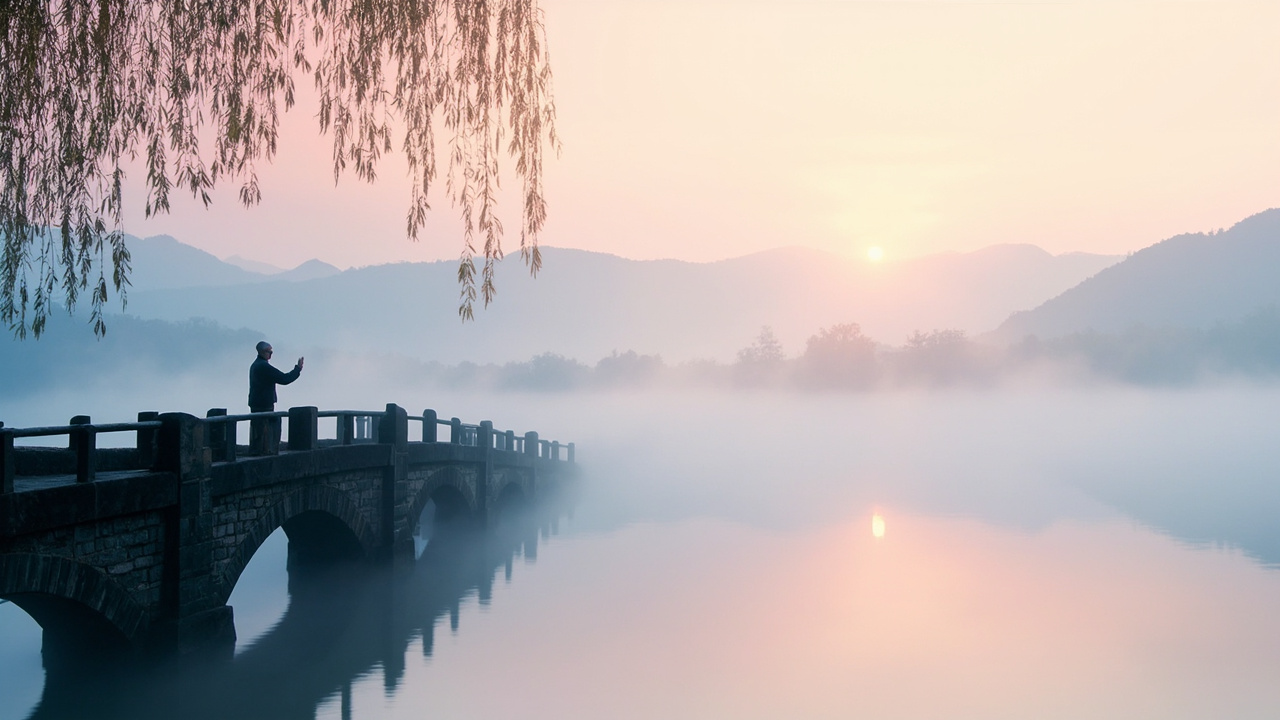
The first thing I noticed wasn’t the lake. It was the sound of a bamboo broom on wet stone at 5:40 in the morning, somewhere off to my left in the dark. I’d gotten off the overnight train from Shanghai half-asleep and walked to the Su Causeway because a hostel receptionist named Wen told me the crowds don’t arrive until eight. She was right. For about ninety minutes I had the whole causeway to myself — just me, a few old men doing tai chi in slow motion, and a woman sweeping willow leaves into a pile the size of a small car. Then the tour buses showed up and West Lake turned into the thing everyone warns you about.
That’s the whole trick to West Lake. It’s genuinely one of the most beautiful places in China, and it’s also one of the most crowded, and the difference between those two experiences is entirely about timing and which side of the lake you’re standing on.
West Lake (西湖, Xī Hú) sits in the middle of Hangzhou, a city of about 12 million people roughly 180 km southwest of Shanghai. It’s free to visit. It’s been written about, painted, and poemed for over a thousand years — it’s the single most depicted landscape in Chinese art history. Marco Polo supposedly called Hangzhou the finest city in the world. He was probably exaggerating, but not by much.
This guide covers the ten places around the lake worth your actual time, how to get between them, what things cost in 2026, and the specific mistakes I made so you don’t repeat them.
Quick answer
West Lake is free to enter and takes 1–2 full days to see properly; the best months are late March–May and September–November. Most Western passport holders can now enter China visa-free for up to 30 days (check the current visa-free transit and entry rules before booking). Hangzhou is 45–60 minutes from Shanghai by high-speed rail, so it works as a day trip — but I’d strongly recommend staying at least one night so you can see the lake before 8am and after 6pm, when it’s actually magical.
The Short Version
If you have one day: arrive early, walk or bike the Su Causeway at sunrise, take a boat to the Three Pools Mirroring the Moon, eat lunch near Hefang Street, and do Lingyin Temple in the afternoon. Skip the evening light show unless you love crowds. If you have two days, add Longjing tea village and the Leifeng Pagoda at sunset. Book your train ticket in advance on the 12306 app or via Trip.com. Set up Alipay or WeChat Pay before you arrive — almost nothing takes cash anymore.
How I Picked These
I’ve been to Hangzhou five times over seven years, in every season except the depths of January. I’ve done the tourist circuit, gotten lost on the wrong side of the lake at night, paid too much for tea from a woman who saw me coming, and once spent three hours sitting on a rock near the Broken Bridge just watching the light change. I talked to a boatman named Chen who’s been rowing the same route for 22 years, and to a tea farmer in Longjing who told me (through a translation app) that most tourists buy the wrong grade. I’ve skipped things that guidebooks love and included things they ignore. This list is what I’d tell a friend.
Comparison Table
| Rank | Place | Best For | Approx Cost (USD) | Time Needed | When to Go |
|---|---|---|---|---|---|
| 1 | Su Causeway (苏堤) | Sunrise walks, photography | Free | 1.5–2 hrs | 5:30–8am, any season |
| 2 | Three Pools Mirroring the Moon (三潭印月) | Boat ride, iconic views | $8–10 (¥55–70) | 1.5 hrs | Mid-morning, weekdays |
| 3 | Lingyin Temple & Feilai Feng (灵隐寺) | Buddhist culture, carvings | $11 + $5 (¥75 + ¥35) | 3 hrs | 7–9am, avoid weekends |
| 4 | Leifeng Pagoda (雷峰塔) | Sunset views over the lake | $6 (¥40) | 1 hr | 1 hr before sunset |
| 5 | Longjing Tea Village (龙井村) | Tea tasting, hillside walks | Free (tea $15–60) | 3–4 hrs | Morning, spring for harvest |
| 6 | Hefang Street (河坊街) | Snacks, souvenirs, people-watching | Free | 1.5 hrs | Evening |
| 7 | Broken Bridge & Bai Causeway (断桥/白堤) | Classic lake views | Free | 1 hr | Early morning |
| 8 | West Lake Impression Show (印象西湖) | Nighttime spectacle | $40–80 (¥280–560) | 1.5 hrs | Nightly, book ahead |
| 9 | China National Tea Museum (中国茶叶博物馆) | Rainy-day backup, tea history | Free | 2 hrs | Any afternoon |
| 10 | Xixi Wetland (西溪湿地) | Escaping the crowds | $11 (¥80) | Half day | Weekday mornings |
Su Causeway at Sunrise — the only way to start
I’m not a morning person. I want that on record. But I’ve now walked the Su Causeway at dawn three separate times, and I’d do it again tomorrow.
The Su Causeway is a 2.8 km raised path running north-south across the lake, built in the 11th century by the poet-governor Su Dongpo (who also, allegedly, invented the pork dish named after him). It’s lined with willow trees and arched stone bridges. At 6am it belongs to old people, joggers, and the occasional confused foreigner like me. By 10am it belongs to everyone.
Why it’s special: This is where you understand why Chinese landscape painting looks the way it does. The mist sits low on the water, the willows droop into frame, and the bridges create these perfect layered compositions. It’s not a coincidence — the painters were painting this.
📍 Location: Runs across the western half of West Lake, from Quyuan Fenghe in the north to Nanshan Road in the south. 🎫 Entry fee: Free. The whole lake is free. 🕒 Opening hours: Always open. It’s a public path. 🚇 How to get there: Metro Line 1 to Longxiangqiao Station, Exit B, then walk west 10 minutes to the southern end. Or take a taxi to “苏堤” and get dropped at the north end near Yuewang Temple. ⏰ When to visit: 5:30–8am, any season. Spring has the willows; autumn has the mist. Summer mornings are humid but still quiet. 💡 Insider tips: The southern end near Huagang Park has fewer people than the northern end. Bring mosquito repellent in summer — the willows breed them. There are no bathrooms on the causeway itself; use the one at the Yuewang Temple entrance before you start. If it’s raining lightly, go anyway — the causeway is at its best in drizzle.
I once watched a man in his seventies do a full tai chi form on one of the arched bridges while a tour group of forty people walked past him without a single one stopping. That’s the energy you’re here for.
Three Pools Mirroring the Moon — the boat ride that’s actually worth it
Every guidebook tells you to take a boat on West Lake. Most of them don’t tell you which one. There are four or five different boat options and they are not equivalent.
The one you want is the public ferry to Xiaoying Island, where the Three Pools Mirroring the Moon sit. It’s the image on the back of the ¥1 note. Three small stone pagodas in the water, each with five holes, designed so that on moonlit nights candles inside create the illusion of many moons.
Why it’s special: It’s the most photographed spot on the lake for a reason. The pagodas are small and oddly humble up close, but the composition — water, island, distant hills — is genuinely beautiful. The boat ride itself gives you the lake from the water, which is a completely different perspective.
📍 Location: Xiaoying Island, in the southern part of West Lake. 🎫 Entry fee: $8–10 (¥55–70) including round-trip ferry. 🕒 Opening hours: 8am–5pm (last boat back around 4:30pm). Closed in typhoon conditions. 🚇 How to get there: Boats leave from several docks. The most convenient is the Huagang Dock, near the south end of the Su Causeway. Metro Line 4 to Shu澄桥 then walk, or just taxi to “花港码头.” ⏰ When to visit: Mid-morning on a weekday. Weekends are chaos. Avoid the 10am–2pm window if you can. 💡 Insider tips: The ticket is round-trip — don’t lose it. You can get off at the island, walk around, and take any return boat. There’s a smaller, cheaper boat option (hand-rowed) that skips the island but is more atmospheric. Bring small bills for snacks on the island. The island has bathrooms, which is rare on the lake.
I paid ¥70 for the ferry and then ¥15 for a lukewarm tea on the island, which I regret slightly. The ferry was worth it.
Lingyin Temple & Feilai Feng — the one place I’d skip on a weekend
Lingyin Temple is one of the ten most important Buddhist temples in China, founded in 328 AD. The Feilai Feng (“Peak Flying From Afar”) grottoes next to it contain over 300 stone carvings from the 10th–14th centuries, some of them genuinely extraordinary.
I went on a Saturday in October once. Never again. The path to the temple was a single-file shuffle of tour groups, selfie sticks, and someone’s grandma who kept elbowing me in the ribs. Go on a Tuesday at 7am and it’s a completely different place.
Why it’s special: The Feilai Feng carvings are the real draw for me — the Laughing Buddha carving is 9 meters tall and has been sitting there since 1000 AD. The temple itself is active, with monks, incense smoke, and the low drone of chanting that you can hear from the courtyard.
📍 Location: Lingyin Road, about 5 km west of the lake, in the hills. 🎫 Entry fee: $11 (¥75) for Feilai Feng scenic area + $5 (¥35) for the temple itself. Total around $16. 🕒 Opening hours: 7am–6pm (last entry 5:30pm). Temple closes at 5pm. 🚇 How to get there: Bus 7 or Y1 from the lake area, or taxi (about $4–6 / ¥30–45 from the lake). Metro Line 3 to Huanglong Sports Center then bus 87. ⏰ When to visit: 7–9am on a weekday. Seriously. The difference is enormous. 💡 Insider tips: Buy the combined ticket at the entrance — you can’t buy the temple ticket separately once you’re inside. Wear shoes you can slip off; some halls require it. There’s a vegetarian restaurant inside the temple complex that’s cheap and good. Don’t photograph monks without asking. The walk from the bus stop to the temple gate is 15 minutes uphill — pace yourself.
A monk I passed near the main hall nodded at me and said “慢慢走” (walk slowly). I think about that more than I should.
Leifeng Pagoda at Sunset — worth the elevator
The original Leifeng Pagoda was built in 975 AD and collapsed in 1924. The current structure, rebuilt in 2002, is a modern pagoda with escalators and an elevator. Purists hate it. I think it’s fine, because what you’re paying for is the view.
Why it’s special: From the top floor, you get a 360-degree view of the entire lake with the city skyline behind it. At sunset, the light hits the water and the whole thing goes gold. It’s the best single viewpoint in Hangzhou.
📍 Location: South shore of West Lake, on Nanshan Road. 🎫 Entry fee: $6 (¥40). 🕒 Opening hours: 8am–8pm (last entry 7:30pm). Extended to 9pm in summer. 🚇 How to get there: Metro Line 4 to Shuichengqiao, Exit B, walk 10 minutes north. Or taxi to “雷峰塔.” ⏰ When to visit: Arrive 45 minutes before sunset. Weekdays are noticeably quieter. 💡 Insider tips: There’s an elevator to the top — take it up, walk down. The pagoda has a small museum on the lower floors with the original foundations. The “Leifeng Pagoda in Evening Glow” is one of the classic Ten Scenes of West Lake; the best view of the pagoda itself (not from it) is from the Su Causeway. Bring a light jacket in spring and autumn — the wind at the top is cold.
I watched a couple get engaged at the top floor at sunset. It was extremely on-the-nose and also very sweet.
Longjing Tea Village — go for the walk, not the tea
Longjing village sits in the hills southwest of the lake, surrounded by terraced tea fields. It’s where Longjing (Dragon Well) tea comes from — the most famous green tea in China.
Here’s my honest take: the tea tasting experience is a trap for tourists. You’ll be quoted ¥300–800 for tea that a local would pay ¥80 for. But the walk through the tea terraces is genuinely one of the best things to do in Hangzhou, and it’s free.
Why it’s special: The terraces are beautiful in a way that feels almost engineered — rows of bright green bushes curving up hillsides, with farmers in conical hats moving between them. In late March and April, it’s harvest season and the whole village smells like fresh-cut grass.
📍 Location: Longjing Road, about 8 km southwest of West Lake. 🎫 Entry fee: Free to walk. Tea tastings vary wildly. 🕒 Opening hours: Always open. Tea houses generally 9am–6pm. 🚇 How to get there: Bus 27 or Y3 from the lake area. Or taxi (about $6–8 / ¥45–60). It’s a 20-minute drive from the lake. ⏰ When to visit: Morning, any season. Spring for the harvest. Avoid weekends in April — it’s packed. 💡 Insider tips: Walk the path from Longjing village to Meijiawu village — it’s about 4 km through the terraces and almost empty on weekdays. Buy tea from the China National Tea Museum shop instead of the village stalls; prices are fixed and quality is reliable. If a woman invites you into her home for tea, she’s going to try to sell you tea. That’s fine, just know it. Bring cash in case card readers are down.
A tea farmer named Mr. Zhou let me try three grades side by side and told me (via translation app) that the expensive stuff is mostly about the picking date, not the taste. I bought the middle grade. It was excellent.
Hefang Street — touristy, and I don’t care
Yes, Hefang Street is a tourist trap. Yes, the souvenirs are mostly junk. Yes, I go every time anyway.
It’s a restored Qing-dynasty shopping street near the southern end of the lake, and it’s where you go in the evening when you want snacks, noise, and the specific pleasure of watching a man make dragon’s beard candy by hand while a crowd films him.
Why it’s special: The food. Not all of it — some of it is terrible. But the good stalls are genuinely good: stinky tofu, beggar’s chicken, lotus root stuffed with sticky rice, and the best tanghulu (candied hawthorn) I’ve had anywhere in China.
📍 Location: Shangcheng District, near Wushan Square. 🎫 Entry fee: Free. 🕒 Opening hours: Stalls open around 10am, best from 5–9pm. 🚇 How to get there: Metro Line 1 to Ding’an Road, Exit C, walk 5 minutes south. ⏰ When to visit: Evening, any day. It’s crowded but that’s part of it. 💡 Insider tips: The best food is on the side alleys, not the main drag. Look for stalls with a line of locals. Don’t buy “silk” or “jade” here — it’s fake. The nearby Southern Song Imperial Street is quieter and has better tea shops. Bring small bills; some stalls don’t take cards.
I ate something labeled “Hangzhou specialty” that turned out to be cold duck tongue. I do not recommend it. The stinky tofu, however, was excellent.
Broken Bridge & Bai Causeway — the classic view, done right
The Broken Bridge isn’t broken. It’s called that because in winter, snow melts on the sunny side first, making the bridge look like it’s split in two. It’s the northern counterpart to the Su Causeway, and it’s the most famous view on the lake.
Why it’s special: This is the view. The one on postcards, in paintings, in every Chinese tourism ad. The bridge, the willows, the distant hills, the pagoda on the far shore. It’s genuinely beautiful and it’s free.
📍 Location: Northern end of West Lake, near Beishan Road. 🎫 Entry fee: Free. 🕒 Opening hours: Always open. 🚇 How to get there: Metro Line 1 to Fengqi Road, Exit B, walk 15 minutes west. Or taxi to “断桥残雪.” ⏰ When to visit: Early morning. By 9am it’s a photo-op queue. 💡 Insider tips: The bridge itself is small and unremarkable — the view is what matters. Walk the full Bai Causeway (1 km) to the Su Causeway for the best lake walk. In winter, if it snows (rare), come immediately — it’s the only time the “broken” effect appears. There’s a Starbucks nearby if you need a warm drink.
I once stood on the Broken Bridge at 6am in February, alone, watching mist roll off the water. It was 2°C and I was underdressed. Worth it.
West Lake Impression Show — expensive, and I’d still go once
This is a Zhang Yimou production — the same director who did the Beijing Olympics opening ceremony. It’s staged on the actual lake, with performers walking on a submerged platform that makes them look like they’re walking on water.
Why it’s special: The staging is genuinely spectacular. The lighting, the music, the way the performers appear and disappear into the mist — it’s a real spectacle. It’s also very expensive and very touristy.
📍 Location: Yuehu Lake, near the Yuewang Temple, northwest corner of West Lake. 🎫 Entry fee: $40–80 (¥280–560) depending on seat. 🕒 Opening hours: Nightly shows, usually 7:30pm and 8:50pm (seasonal). 🚇 How to get there: Taxi to “印象西湖” — it’s not near a metro station. Or bus Y1. ⏰ When to visit: Any night, but book at least a day ahead in peak season. 💡 Insider tips: The cheap seats are fine — the stage is large and elevated. Bring a jacket; it’s cold on the water. The show is cancelled in rain. Buy tickets through Trip.com or your hotel, not from touts. Skip it if you’re on a tight budget — the lake at night is free and almost as atmospheric.
I went once, in 2023. I’m glad I did. I wouldn’t go again.
China National Tea Museum — the rainy-day answer
If it rains (and in Hangzhou, it will), this is where you go. It’s a proper museum about tea, with English signage, a tasting room, and a working tea plantation on the grounds.
Why it’s special: It’s free, it’s quiet, and it actually teaches you something. The exhibits cover tea history, production, and culture across China, and the tasting room lets you try several grades for a small fee.
📍 Location: Longjing Road, next to Longjing village. 🎫 Entry fee: Free. Tastings $3–8 (¥20–55). 🕒 Opening hours: 9am–5pm, closed Mondays. 🚇 How to get there: Bus 27 or Y3, same route as Longjing village. ⏰ When to visit: Rainy afternoons. Weekdays. 💡 Insider tips: The shop sells reliable tea at fixed prices — this is where I buy gifts. The plantation walk behind the museum is short but pretty. There’s a decent teahouse on site. English signage is good, which is rare for smaller Chinese museums.
Xixi Wetland — the escape hatch
Xixi Wetland is a 1,000-year-old wetland park about 5 km west of the lake. It’s where you go when you need a break from crowds.
Why it’s special: It’s quiet. There are boats, birds, old bridges, and almost no foreign tourists. It’s not as beautiful as West Lake, but it’s peaceful in a way the lake rarely is.
📍 Location: Tianmushan Road, west of the city center. 🎫 Entry fee: $11 (¥80). 🕒 Opening hours: 8am–5:30pm (last entry 4:30pm). 🚇 How to get there: Metro Line 5 to Xixi Wetland South, Exit A, then shuttle bus. ⏰ When to visit: Weekday mornings. Spring and autumn. 💡 Insider tips: The park is huge — rent a bike or take the internal shuttle. The east side is more developed; the west side is wilder. Bring snacks; food options are limited. It’s a good half-day trip if you have time.
FAQ summary
West Lake is free to visit and best seen in the early morning or evening to avoid crowds. Most Western visitors can now enter China visa-free for up to 30 days, and Hangzhou is a 45–60 minute high-speed train ride from Shanghai. Budget around $50–100 per day for food, transport, and attractions (excluding accommodation), set up Alipay or WeChat Pay before arrival, and plan at least one full day — ideally two — to see the lake properly.
FAQ
Q: Do I need a visa to visit Hangzhou in 2026? A: Most Western passport holders (US, UK, EU, Australia, Canada, and others) can now enter China visa-free for up to 30 days under the expanded visa-free policy. Check the latest entry rules before booking, as policies change.
Q: How do I get from Shanghai to Hangzhou? A: High-speed trains run every 10–20 minutes from Shanghai Hongqiao Station to Hangzhou East Station, taking 45–60 minutes. Tickets cost $10–20 (¥73–145) and can be booked on the 12306 app or Trip.com. See the China train travel guide for details.
Q: How much does a day at West Lake cost? A: The lake itself is free. A typical day including one boat ride, one paid attraction, lunch, and transport costs $30–50 (¥220–360). Add $15–25 for a nicer dinner.
Q: Is English spoken in Hangzhou? A: Less than in Shanghai or Beijing. Major hotels and attractions have some English signage, but restaurants, taxis, and smaller shops mostly don’t. Download a translation app (Google Translate works with a VPN; Baidu Translate works without) before you arrive.
Q: Do I need a VPN or a local SIM card? A: Yes to both, ideally. Google, Instagram, WhatsApp, and most Western apps are blocked in China. Either get an international roaming plan that bypasses the firewall, or install a VPN before you arrive. A local SIM (China Mobile or China Unicom) is cheap and useful for maps and ride-hailing. See the SIM and internet guide.
Q: How do I pay for things? A: Almost everything runs on Alipay or WeChat Pay. Set up one of them before you arrive and link an international card. Cash is accepted but increasingly awkward. See the payment guide.
Q: What’s the best time of year to visit West Lake? A: Late March–May and September–November. Spring has the tea harvest and willows; autumn has clear skies and fewer tourists than summer. Avoid Chinese public holidays (especially the first week of October) at all costs.
The Honest Wrap-up
This guide is for the traveler who wants to actually see West Lake, not just check it off. If you’re here for two hours on a tour bus, none of this matters — you’ll see the Broken Bridge, take a photo, and leave. That’s fine, but it’s not the lake.
If you have a full day, do the Su Causeway at sunrise, the boat to Three Pools, lunch at Hefang Street, and Lingyin Temple in the afternoon. If you have two days, add Longjing and Leifeng Pagoda at sunset. Stay one night. Wake up early.
One last thing: bring a rain jacket. Hangzhou gets about 1,400 mm of rain a year, and the lake is at its best in light rain. The mist, the wet stone, the willows dripping — that’s the version of West Lake that’s been painted for a thousand years. You just have to be there for it.
More guides you may like
Top 10 Bridges in China
China's bridges are engineering marvels spanning mountains, rivers, and seas. Here are 10 of the most spectacular, from ancient stone to modern steel.
8 min read

Top 10 Buddhist Sites in China
From the Leshan Giant Buddha to the Dunhuang Caves, these 10 Buddhist sites represent 2,000 years of China's spiritual heritage.
9 min read
Top 10 Day Trips from Beijing You Shouldn't Miss
Beijing is packed with history, but some of China's best experiences are just a few hours away. Here are 10 day trips that will transform your visit.
9 min read
Top 10 Hidden Gems in China Off the Beaten Path
Beyond the Great Wall and Terracotta Warriors, China has incredible hidden destinations few tourists ever reach. Here are 10 underrated gems worth the detour.
9 min read
Top 10 Markets and Shopping Streets in China
From Shanghai's Bund to Beijing's Silk Street - 10 markets where foreigners can haggle, explore, and bring home authentic Chinese goods.
9 min read
Top 10 Museums in China You Shouldn't Miss
China's museums span 5,000 years of civilization. These 10 - from the Palace Museum to Xi'an's terracotta gallery - are unmissable for culture lovers.
9 min read