
China Southwest Loop Guide
TODO: Extract from article (100-160 chars)
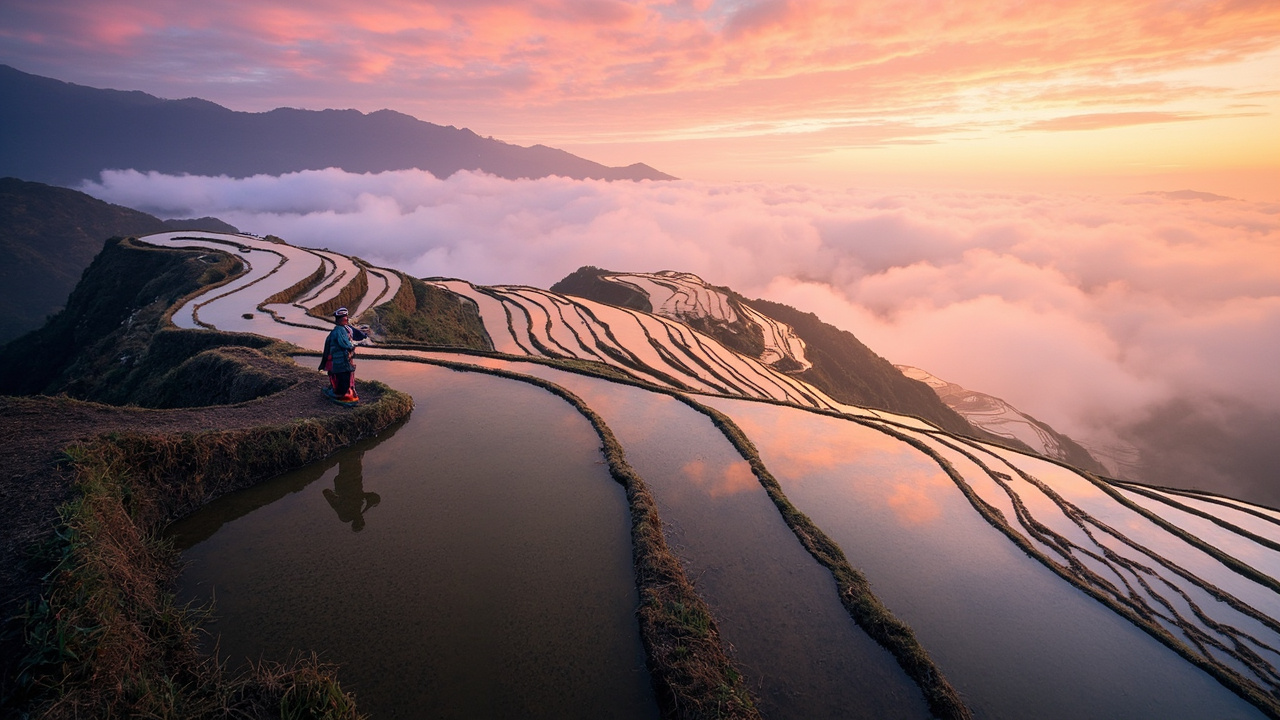
China Southwest Loop Guide
The noodle shop in Dali had three tables and a dog that wouldn’t move. I’d ordered what I thought was one bowl of rice noodles; the owner brought out four plates, a pot of tea, and a bowl of pickled vegetables I hadn’t asked for. I tried to explain in my terrible Mandarin that this was too much. She just laughed, pointed at the dog, and said something I didn’t catch. I paid 18 yuan (about $2.50) and ate until I couldn’t. That’s the southwest.
This region — Yunnan, Sichuan, Guizhou, and the edges of Guangxi — is where China stops feeling like a checklist and starts feeling like a place people actually live. The landscapes are absurd: rice terraces carved into mountainsides over centuries, limestone karst towers rising out of rivers, snow peaks visible from a café table. The food is the best in the country, full stop. And unlike Beijing or Shanghai, you can still wander into a village where nobody speaks English and have a genuinely disorienting, wonderful afternoon.
I’ve done this loop four times now. The first time I got it wrong — too many cities, too much bus time, not enough sitting still. This guide is the version I wish someone had handed me. It covers where to go, how to get between places, what things cost in 2026, and the small stuff that trips up first-timers: which apps you need before you land, where the trains actually leave from, and why you should never book a “day tour” from a guy on the street.
Quick answer
The classic China Southwest Loop runs Kunming → Dali → Lijiang → Shangri-La → back through Chengdu, and takes 14–21 days by high-speed rail and bus. Most Western passport holders can enter China visa-free for up to 30 days in 2026 (check your nationality — the list expanded again in 2025), which covers this entire route comfortably. Budget roughly $70–120 per day per person for mid-range travel including transport, food, and guesthouses.
The Short Version
If you only have two weeks: fly into Kunming, train to Dali, train to Lijiang, then fly to Chengdu. Skip Shangri-La unless you have three extra days and don’t mind altitude. Eat everything. Carry cash for small towns because WeChat Pay sometimes fails on foreign cards. Book trains 5–7 days ahead during holidays. Don’t try to “do” the southwest in ten days — you’ll spend it all in transit.
How I Picked These
I’ve been based in Beijing for seven years and I’ve done this loop four times, most recently in October 2025. I picked these ten spots based on three things: whether I’d go back, whether a first-timer could actually navigate them without a Chinese-speaking friend, and whether they offer something you genuinely can’t get elsewhere. I skipped a few famous places on purpose — I’ll tell you which ones and why. I also asked a Chengdu-based guide named Zhou and a Lijiang guesthouse owner named Mei to sanity-check my transport notes, because schedules in this region change constantly.
Comparison Table
| Rank | Place | Best For | Approx Cost (USD/day) | Time Needed | When to Go |
|---|---|---|---|---|---|
| 1 | Chengdu | Food, pandas, base camp | $80–110 | 3–4 days | Mar–May, Sep–Nov |
| 2 | Dali | Slow travel, lake views | $60–90 | 3–4 days | Mar–Jun, Sep–Nov |
| 3 | Lijiang | Old town, Naxi culture | $70–100 | 2–3 days | Apr–Jun, Sep–Oct |
| 4 | Shangri-La | Tibetan plateau, monasteries | $70–100 | 2–3 days | May–Oct only |
| 5 | Kunming | Gateway city, food markets | $60–85 | 1–2 days | Year-round |
| 6 | Yuanyang | Rice terraces, photography | $50–80 | 2 days | Nov–Mar (water season) |
| 7 | Guiyang | Karst, minority villages | $55–85 | 2 days | Apr–Oct |
| 8 | Leshan | Giant Buddha, day trip | $50–75 | 1 day | Year-round |
| 9 | Xichang | Off-the-radar, lake | $50–75 | 1–2 days | Apr–Oct |
| 10 | Tiger Leaping Gorge | Hiking, scenery | $40–70 | 2 days | Apr–Jun, Sep–Nov |
1. Chengdu — The City That Feeds You
I landed in Chengdu at 11pm on a Tuesday, exhausted, and within forty minutes I was sitting on a plastic stool eating mapo tofu so numbing my lips went numb. That’s Chengdu. It doesn’t care that you’re tired.
This is the best food city in China and I’ll argue that with anyone. The Sichuan pepper here is fresher than what you get exported, the hotpot is a religious experience, and the street food in the Jinli and Kuanzhai Alley areas is genuinely good, not just tourist-trap good. Beyond food, it’s the gateway to pandas, Leshan, and the Tibetan plateau. Most travelers use it as a transit hub and regret it.
📍 Location: Jinjiang District, around Chunxi Road and Taikoo Li 🎫 Entry fee: Pandas $8 (¥55); most temples free 🕒 Opening hours: Panda base 7:30am–6pm (arrive by 8am); most sites 9am–5pm 🚇 How to get there: Fly into Tianfu International (TFU) or Shuangliu (CTU). Metro Line 10 connects both to the center. From the airport, take Line 10 to Taipingyuan, transfer to Line 3. ⏰ When to visit: March–May and September–November. Avoid July–August (hot, humid, crowded) and the first week of October (National Day crush). 💡 Insider tips: Get a China SIM card at the airport before you leave the terminal — it’s cheaper than city stores. Set up Alipay and WeChat Pay before you arrive; almost nobody takes cash. The panda base is best at feeding time (8–9am). Hotpot restaurants charge for the broth base separately — expect $5–8 extra.
I once watched a grandmother at a Chengdu teahouse refill my cup six times without ever making eye contact. That’s hospitality here.
2. Dali — Where Everyone Slows Down
The first time I came to Dali I planned three days. I stayed nine. There’s something about the lake, the mountains behind it, and the fact that nobody seems in a hurry that makes you cancel your onward plans.
Dali splits into the old town (Dali Ancient City) and the newer Xiaguan area, but you want the old town. The Bai minority culture is alive here — you’ll see women in traditional blue-and-white dress, hear the local dialect, and eat food that isn’t trying to please foreigners. The lake, Erhai, is the real draw: rent a scooter or e-bike and ride the 80km loop, stopping at villages along the way.
📍 Location: Dali Ancient City, Yunnan Province 🎫 Entry fee: Old town free; Three Pagodas $11 (¥75); Erhai loop free 🕒 Opening hours: Old town 24/7; Three Pagodas 8am–6pm 🚇 How to get there: High-speed rail from Kunming (2 hours, $20–30/¥145–210) or from Lijiang (1.5 hours). Dali Station is 13km from the old town — take bus 8 or a taxi ($4/¥28). ⏰ When to visit: March–June and September–November. Weekdays are noticeably quieter. Avoid Chinese New Year and the first week of October. 💡 Insider tips: Rent an e-bike ($8/day) instead of a car — the lake road is narrow. The “Foreigner Street” is overpriced; walk two blocks east for real food. Cash still works here more than in big cities. Bring layers; the temperature swings 15°C between day and night.
I met a guesthouse owner named Mei who’d left Shanghai ten years ago and never gone back. She made me breakfast every morning and refused to let me pay for the last one.
3. Lijiang — Beautiful, Crowded, Worth It Anyway
Lijiang’s old town is a UNESCO site and it shows — every alley is a photo, every corner has a shop selling the same yak butter tea. It’s crowded and commercialized. It’s also genuinely beautiful and the Naxi culture underneath is real if you look for it.
The trick is timing. Go early morning (before 9am) or after 8pm when the tour groups have retreated. The cobblestone streets, the canals running through the town, and the views of Jade Dragon Snow Mountain in the distance are worth the crowds. The surrounding villages — Baisha and Shuhe — are quieter and, honestly, more interesting.
📍 Location: Gucheng District, Lijiang, Yunnan 🎫 Entry fee: Old town free; Mu Palace $8 (¥55); Jade Dragon Snow Mountain $15 (¥100) plus cable car $17–30 🕒 Opening hours: Old town 24/7; Mu Palace 8:30am–5:30pm 🚇 How to get there: High-speed rail from Dali (1.5 hours, $15–25/¥100–180). Lijiang Station is 8km from the old town; bus 18 or taxi ($4/¥28). ⏰ When to visit: April–June and September–October. Avoid July–August (rainy) and Chinese holidays. 💡 Insider tips: Stay in Shuhe or Baisha instead of the main old town — quieter, cheaper, still walkable. The “old town maintenance fee” ($8/¥50) is sometimes enforced, sometimes not; don’t pay unless asked. Altitude is 2,400m — take it easy the first day. Jade Dragon Snow Mountain needs advance booking for the cable car.
I paid too much for a “traditional Naxi music” show my first time here. Skip it. The real music is in the small teahouses.
4. Shangri-La — The Real Tibetan Plateau
Shangri-La is at 3,200 meters and it feels like it. The air is thin, the sky is a blue that doesn’t exist at lower elevations, and the Songzanlin Monastery looks like something out of a dream. This is the most culturally distinct place on the loop — Tibetan, not Han Chinese.
It’s also the place most likely to give you altitude sickness. I got a headache the first night and spent it drinking ginger tea in my guesthouse. Worth it. The monastery is the largest Tibetan Buddhist monastery in Yunnan, and the old town (Dukezong) has a giant prayer wheel you can spin with a dozen strangers.
📍 Location: Shangri-La (Zhongdian), Diqing Tibetan Autonomous Prefecture 🎫 Entry fee: Songzanlin Monastery $13 (¥90); Pudacuo National Park $20 (¥138) 🕒 Opening hours: Monastery 7:30am–5:30pm; Pudacuo 8am–4pm 🚇 How to get there: Bus from Lijiang (4 hours, $12–18/¥85–130) or fly into Diqing Shangri-La Airport (DIG). No high-speed rail yet. ⏰ When to visit: May–October only. Winter is brutally cold and many guesthouses close. 💡 Insider tips: Acclimatize in Lijiang for two days first. Drink more water than you think you need. The monastery is best at morning prayer (7–8am). Bring cash — ATMs are unreliable. Don’t rush; the altitude will humble you.
A monk at Songzanlin let me sit in the courtyard for an hour without saying anything. Best hour of the trip.
5. Kunming — Don’t Skip the Gateway
Most travelers fly into Kunming and immediately leave for Dali. That’s a mistake. Kunming is called the “Spring City” for a reason — it’s 20°C year-round, the flowers are always blooming, and the food is a mix of Yunnan, Sichuan, and Southeast Asian influences you won’t find elsewhere.
The highlight is the food. Cross-the-bridge noodles, wild mushroom hotpot (seasonal, September–October), and the flower and bird market are all worth a day. It’s also the best place to buy a SIM card, set up your payment apps, and adjust to China before heading into smaller towns.
📍 Location: Wuhua District, around Green Lake Park 🎫 Entry fee: Green Lake Park free; Yuantong Temple $1 (¥6) 🕒 Opening hours: Parks 6am–10pm; temples 8am–5pm 🚇 How to get there: Fly into Changshui International (KMG). Metro Line 6 connects to the city center in 30 minutes ($1/¥5). ⏰ When to visit: Year-round. September–October for mushroom season. 💡 Insider tips: The wild mushroom market at Zhuanxin is a spectacle — go early. Cross-the-bridge noodles are a ritual; the broth is boiling when it arrives, so add ingredients in order. High-speed rail from Kunming to Dali is the easiest leg of the whole loop.
I bought a bag of dried flowers at the market and the vendor threw in a free handful of something I still can’t identify.
6. Yuanyang — The Terraces That Took 1,300 Years
Yuanyang is a detour — 6 hours by bus from Kunming — and it’s the single most photogenic place in China. The Hani rice terraces here were carved into the mountainside over 1,300 years, and when they’re flooded (November–March), they turn into a mirror that reflects the sky.
I went in February and watched the sunrise from Duoyishu. There were maybe 30 other people, all photographers, all silent. The terraces filled with light from the top down and it took about 20 minutes. Nobody said a word.
📍 Location: Yuanyang County, Honghe Prefecture, Yunnan 🎫 Entry fee: Multi-site ticket $14 (¥100), valid 3 days 🕒 Opening hours: Sunrise/sunset viewing areas open 5am–8pm 🚇 How to get there: Bus from Kunming South Station (6 hours, $18–25/¥130–180). No train. ⏰ When to visit: November–March for flooded terraces; April–September for green. 💡 Insider tips: Stay in Duoyishu or Pugaolao for sunrise access. Bring a tripod. The villages between terraces are Hani and Yi minority — be respectful, ask before photographing people. Cash only in most guesthouses.
A Hani woman sold me a boiled egg for 50 cents and pointed me toward a viewpoint I’d never have found.
7. Guiyang — The Karst Capital Nobody Talks About
Guiyang is the capital of Guizhou, the poorest province in China, and it’s quietly becoming one of the most interesting cities in the southwest. The karst landscape around it is surreal — limestone peaks rising out of nowhere — and the minority villages nearby (Miao, Dong) are less commercialized than Yunnan’s.
The food is the draw: sour fish soup, spicy chicken, and a fermented soybean dish that smells terrible and tastes incredible. It’s also a great base for Huangguoshu Waterfall, one of the largest in Asia.
📍 Location: Guiyang, Guizhou Province 🎫 Entry fee: Huangguoshu Waterfall $25 (¥180); Qingyan Ancient Town $1 (¥10) 🕒 Opening hours: Waterfall 7am–6pm; Qingyan 8am–6pm 🚇 How to get there: High-speed rail from Kunming (2 hours, $20–30/¥145–210) or Chengdu (3 hours). Guiyang North Station is on Metro Line 1. ⏰ When to visit: April–October. Summer is rainy but lush. 💡 Insider tips: English is rare here — have a translation app ready. The sour fish soup is a local specialty; ask for it at any Miao restaurant. Huangguoshu is a day trip; book the train back in advance.
I ordered “spicy” at a Guiyang restaurant and the waiter brought me a glass of milk without being asked. He was right.
8. Leshan — The Buddha in the Cliff
The Leshan Giant Buddha is 71 meters tall, carved into a cliff face over 90 years starting in 713 AD, and it’s the single most impressive man-made thing in the southwest. You can see it from a boat or walk down the staircase beside it — do both if you can.
The boat view is the classic photo. The staircase (which takes you from the head to the toes) is the experience. It’s crowded, narrow, and takes about 2 hours in peak season. Go early.
📍 Location: Leshan, Sichuan Province (2 hours from Chengdu) 🎫 Entry fee: $11 (¥80); boat tour $10 (¥70) 🕒 Opening hours: 7:30am–6:30pm (summer), 8am–5:30pm (winter) 🚇 How to get there: High-speed rail from Chengdu East to Leshan (1 hour, $8–12/¥55–85). Then bus 13 or taxi to the scenic area. ⏰ When to visit: Weekdays, early morning. Avoid weekends and holidays. 💡 Insider tips: Buy the boat ticket first — the line is shorter. The staircase line can be 2+ hours on weekends. Combine with a visit to Emei Shan if you have an extra day. The nearby town has excellent Sichuan food at half Chengdu prices.
A local told me the Buddha’s ears are 7 meters long. I didn’t verify it, but I believe him.
9. Xichang — The Lake Nobody Visits
Xichang is a small city in southern Sichuan on Qionghai Lake, and almost no foreign tourists go there. That’s the appeal. The lake is clean, the mountains behind it are dramatic, and the local Yi minority culture gives it a different feel from the rest of Sichuan.
It’s also a great stop between Chengdu and Yunnan if you’re doing the loop overland. The food is Sichuan but lighter, and the pace is slow.
📍 Location: Xichang, Liangshan Yi Autonomous Prefecture, Sichuan 🎫 Entry fee: Qionghai Lake free; Luoji Mountain $11 (¥80) 🕒 Opening hours: Lake 24/7; mountain 8am–5pm 🚇 How to get there: High-speed rail from Chengdu (3 hours, $25–35/¥180–250) or from Kunming (4 hours). ⏰ When to visit: April–October. The lake is best in spring. 💡 Insider tips: Rent a bike and ride the lake loop (about 30km). The Yi minority restaurants near the lake serve dishes you won’t find elsewhere. English is essentially nonexistent — download offline translation.
I got lost on the lake loop and a farmer pointed me back with a stick. No words exchanged.
10. Tiger Leaping Gorge — The Hike That Earns It
Tiger Leaping Gorge is one of the deepest gorges in the world — 3,900 meters from the Yangtze River to the top of Haba Snow Mountain. The high trail hike is 22km, takes 2 days, and is one of the best things I’ve done in China.
It’s not technical. You don’t need special gear. You need decent shoes, water, and a willingness to sleep in a basic guesthouse halfway. The views are absurd — the river roars below, the mountains tower above, and at night the stars are ridiculous.
📍 Location: Between Lijiang and Shangri-La, Yunnan 🎫 Entry fee: $6 (¥45) 🕒 Opening hours: Trail open 24/7; best started by 8am 🚇 How to get there: Bus from Lijiang (2 hours, $5/¥35) to Qiaotou. The trail starts there. ⏰ When to visit: April–June and September–November. Avoid July–August (rain, landslides). 💡 Insider tips: The “28 bends” section is the hardest part — start early. Guesthouses on the trail are basic but fine ($15–25/night). Don’t do this in flip-flops. Bring cash; there’s no ATM.
I shared a guesthouse dinner with a German couple and a Chinese hiker who taught us a card game I’ve since forgotten.
FAQ summary
The China Southwest Loop is best done over 14–21 days, starting in Kunming and ending in Chengdu, using high-speed rail for the main legs and buses for the smaller stops. Most Western passport holders can enter visa-free for up to 30 days in 2026, which covers the whole route. Budget $70–120 per day for mid-range travel, set up Alipay and WeChat Pay before you arrive, and book trains 5–7 days ahead during holidays. The best seasons are spring (March–June) and autumn (September–November).
FAQ
Q: Do I need a visa for the China Southwest Loop in 2026? A: Most Western passport holders (US, UK, EU, Australia, and others) can enter China visa-free for up to 30 days in 2026 under the expanded unilateral visa-free policy. Check your specific nationality before booking — the list changed several times in 2025. If you’re not eligible, apply for a standard tourist visa at least 3 weeks ahead. See our visa guide for details.
Q: How much does the whole loop cost? A: For 14–21 days, budget $1,200–2,500 per person for mid-range travel (guesthouses, trains, restaurant meals, entry fees). Backpackers can do it for $800–1,200. The biggest variables are internal flights (Chengdu–Kunming is $60–120) and whether you hire private drivers for remote spots.
Q: Can I use my credit card in the southwest? A: Rarely. Alipay and WeChat Pay are accepted almost everywhere, but you need to link an international card before you arrive — see our payment guide. Carry $100–200 in cash (¥700–1,400) for small towns, guesthouses, and markets. ATMs work in cities but are unreliable in Shangri-La and Yuanyang.
Q: Is English spoken on this route? A: In Chengdu, Dali, and Lijiang, yes — at least in hotels and tourist restaurants. In Shangri-La, Yuanyang, Guiyang, and Xichang, almost nobody speaks English. Download a translation app (Google Translate works with a VPN; Pleco is better for Chinese) and learn a few phrases.
Q: Do I need a VPN? A: Yes, if you want to use Google, Instagram, WhatsApp, or most Western news sites. Install it before you arrive — VPN apps are hard to download once you’re in China. See our internet guide for setup instructions.
Q: What’s the best time of year for this loop? A: Spring (March–June) and autumn (September–November). Summer is hot, humid, and rainy in most of the region. Winter is fine for Yunnan but cold and snowy in Shangri-La and the mountains. Avoid Chinese New Year and the first week of October — everything is crowded and prices double.
Q: How do I get between cities? A: High-speed rail covers Kunming–Dali–Lijiang and Chengdu–Leshan–Xichang. Buses fill the gaps (Lijiang–Shangri-La, Kunming–Yuanyang). Flights connect Chengdu and Kunming. Book trains on Trip.com or the official 12306 app — see our high-speed rail guide for how to use it as a foreigner.
The Honest Wrap-up
This loop is for travelers who want to eat well, move slowly, and don’t mind occasionally not understanding what’s happening. It’s not for people who need everything in English, who want a checklist of “must-see” sights, or who get frustrated when the bus is late. If you’re the second type, stick to Beijing and Shanghai — they’re easier and still wonderful. But if you’re the first type, book the flight to Kunming, give yourself three weeks, and don’t overplan. The best parts of my four trips here were the unplanned ones: the noodle shop with the dog, the monk who let me sit, the farmer with the stick. Bring layers, bring cash, bring patience. And eat everything.
More guides you may like

Top 10 Bridges in China
China's bridges are engineering marvels spanning mountains, rivers, and seas. Here are 10 of the most spectacular, from ancient stone to modern steel.
8 min read

Top 10 Buddhist Sites in China
From the Leshan Giant Buddha to the Dunhuang Caves, these 10 Buddhist sites represent 2,000 years of China's spiritual heritage.
9 min read

Top 10 Day Trips from Beijing You Shouldn't Miss
Beijing is packed with history, but some of China's best experiences are just a few hours away. Here are 10 day trips that will transform your visit.
9 min read

Top 10 Hidden Gems in China Off the Beaten Path
Beyond the Great Wall and Terracotta Warriors, China has incredible hidden destinations few tourists ever reach. Here are 10 underrated gems worth the detour.
9 min read

Top 10 Markets and Shopping Streets in China
From Shanghai's Bund to Beijing's Silk Street - 10 markets where foreigners can haggle, explore, and bring home authentic Chinese goods.
9 min read

Top 10 Museums in China You Shouldn't Miss
China's museums span 5,000 years of civilization. These 10 - from the Palace Museum to Xi'an's terracotta gallery - are unmissable for culture lovers.
9 min read