
Things to Do in Lijiang
TODO: Extract from article (100-160 chars)
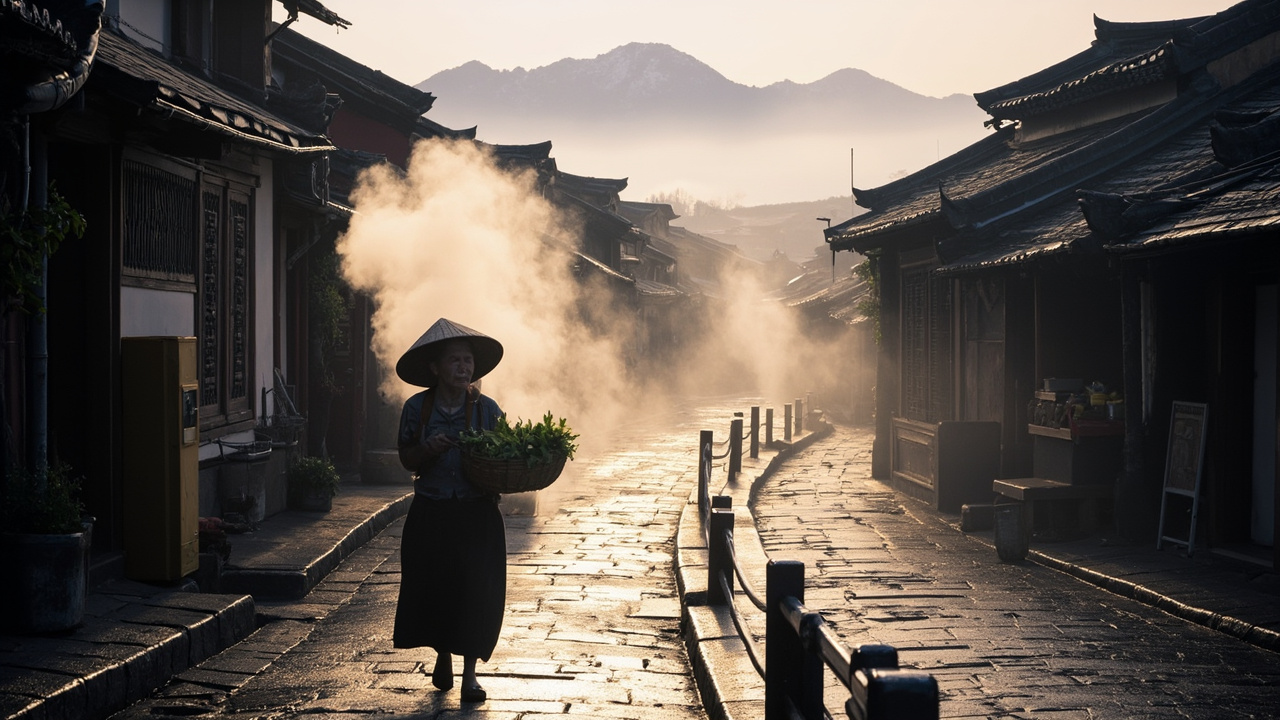
Things to Do in Lijiang
The old Naxi woman grabbed my wrist outside the bakery on Xinyi Street, turned my hand over, and traced a finger along my palm. She said something in Naxi I didn’t catch, then switched to Mandarin: “You walk too fast.” She wasn’t selling anything. She just wanted me to slow down. That was day two of my first trip to Lijiang, and it took me another three visits over seven years to understand what she meant. This town rewards people who stop moving.
Lijiang sits at 2,400 meters (7,900 feet) in Yunnan’s northwest corner, an 800-year-old UNESCO World Heritage site built by the Naxi people around a network of stone canals that still channel snowmelt from Jade Dragon Snow Mountain through every neighborhood. The cobblestones are slick, the altitude is real, and the tourist infrastructure is aggressive. But underneath the selfie sticks and the drum shops, there’s a working town with a living Dongba script, some of the best food in Yunnan, and day trips that will wreck your phone camera in the best way.
This guide covers the ten things actually worth your time, ranked by how much I’d fight you to keep them on your itinerary. I’ve been to Lijiang four times, most recently in late 2025, and I’ve made almost every mistake a first-timer can make here. Here’s what I’d tell a friend.
Quick answer
Lijiang is visa-free for most Western passport holders transiting or visiting China under the 2026 expanded visa-free entry program (up to 30 days for citizens of 50+ countries, including the US, UK, and most of the EU). Plan 3–4 days minimum, budget roughly $60–90 per day (430–650 CNY) for a mid-range trip including lodging, food, and one day tour, and come in April–May or September–October for clear mountain views. The must-do is Old Town at dawn, before the tour groups arrive around 9am.
The Short Version
If you only have 90 seconds: stay inside or within walking distance of Dayan Old Town, wake up at 6:30am to see it empty, spend one full day on Jade Dragon Snow Mountain, one day in Shuhe or Baisha for a slower version of the same magic, and eat every meal you can at a Naxi family restaurant rather than a tourist-strip place. Skip the “romance” bars on Sifang Street. Bring layers — the temperature swings 15°C between noon and midnight.
How I Picked These
I’ve been to Lijiang four times between 2018 and 2025, ranging from a 3-day rushed trip to a 10-day slow stay in a guesthouse near the Black Dragon Pool. I speak enough Mandarin to have real conversations with guesthouse owners, taxi drivers, and the woman who runs the tofu stall I keep going back to. I’ve also dragged three separate groups of first-time China visitors here, which taught me exactly which spots survive jet lag and which don’t. Everything below is somewhere I’ve personally spent at least half a day. If I haven’t been, it’s not on the list.
Comparison Table
| Rank | Place | Best For | Approx Cost (USD) | Time Needed | When to Go |
|---|---|---|---|---|---|
| 1 | Dayan Old Town (at dawn) | First impressions, atmosphere | Free | 2–3 hrs | 6:30–9am any day |
| 2 | Jade Dragon Snow Mountain | Big scenery, cable car | $45–65 (320–470 CNY) | Full day | Clear mornings, Apr–Oct |
| 3 | Black Dragon Pool Park | Photos, quiet, mountain views | $7 (50 CNY) | 1.5 hrs | Early morning |
| 4 | Baisha Ancient Town | Murals, slow pace, food | Free (murals $4/30 CNY) | Half day | Weekday mornings |
| 5 | Shuhe Old Town | Quieter version of Dayan | Free | 3–4 hrs | Late afternoon |
| 6 | Tiger Leaping Gorge | Hiking, dramatic canyon | $7 entry + transport | 1–2 days | Apr–Jun, Sep–Nov |
| 7 | Lijiang Impression Show | Cultural performance | $35–55 (250–400 CNY) | 1.5 hrs | Evening, book ahead |
| 8 | Dongba Culture Museum | Naxi history, script | Free | 1.5 hrs | Rainy afternoons |
| 9 | Yulong Snow Mountain foothills (Blue Moon Valley) | Turquoise lakes, easy walk | Included with mountain ticket | 2 hrs | Same day as JDSM |
| 10 | Lashi Lake | Cycling, birdwatching | $5–10 (35–70 CNY) | Half day | Oct–Mar for birds |
1. Dayan Old Town at Dawn — The Version Tourists Never See
I set my alarm for 6:15am on my last trip, mostly by accident because of jet lag, and walked out of my guesthouse into a version of Lijiang I’d never seen. The canals were steaming. A man was hosing down the cobblestones with water from a bucket. Two old women were carrying vegetables in bamboo baskets toward the morning market, and the only sound was water running through the channels and a single scooter somewhere behind me.
By 9am, the same street is packed shoulder-to-shoulder with tour groups holding flags. By 11am, you can’t walk two meters without someone trying to sell you a flower crown or a drum lesson. The Old Town is genuinely beautiful — 800 years of Naxi architecture, wooden two-story buildings, stone bridges over the canal system — but the experience depends entirely on timing.
The canal system is the thing most people miss. It was designed in the Yuan dynasty so that every household had access to fresh water, with rules about who could wash what where (drinking water upstream, laundry downstream). You can still see the stone dividers.
📍 Location: Dayan Old Town, Gucheng District — the main historic core 🎫 Entry fee: Free to enter; some individual temples charge $3–5 (20–35 CNY) 🕐 Opening hours: Always open; shops generally 9am–10pm 🚶 How to get there: From Lijiang Railway Station, take bus 18 or a taxi ($4–5 / 30–35 CNY, 20 min). From the airport, shuttle bus to Lantian Hotel then 10-min walk. Most guesthouses send someone to meet you at the gate because the cobblestones destroy wheeled luggage. ⏰ When to visit: 6:30–9am, any day. Weekdays are marginally quieter than weekends but honestly the dawn window is the same. 💡 Insider tips: Wear shoes with actual grip — the polished stones are lethal when wet. Get a paper map from your guesthouse because Google Maps is unreliable here and even Amap struggles with the alleys. The “free” tea tastings on the main streets are sales pitches; the ones on side alleys usually aren’t. Bring cash for the tiny noodle stalls that don’t take Alipay or WeChat Pay.
I paid $2 (15 CNY) for a bowl of rice noodles from a woman who’d been running the same stall for 22 years. She told me her grandmother started it. I ate there three mornings in a row.
2. Jade Dragon Snow Mountain — Worth the Altitude Headache
The cable car to Glacier Park tops out at 4,506 meters (14,783 feet), and I watched a guy in flip-flops get carried off by his friends at the upper station. Don’t be that guy. This is a real mountain, not a theme park ride, and the altitude is no joke.
That said, it’s spectacular. The mountain is 5,596 meters (18,360 feet) at its peak and rarely fully visible — locals say you need luck. I’ve seen it cloudless once out of four visits. The cable car ride itself is 10 minutes of increasingly thin air and increasingly absurd views.
The ticket system is confusing. You buy a park entry ticket, then separately a cable car ticket, then a shuttle bus ticket inside the park. In 2026, the whole package runs about $45–65 (320–470 CNY) depending on which cable car you take (the big one to Glacier Park, or the smaller ones to Spruce Meadow or Yak Meadow). Book online in advance through the official WeChat mini-program or through your guesthouse — same-day tickets often sell out in high season.
📍 Location: About 30 km north of Lijiang, Yulong Naxi Autonomous County 🎫 Entry fee: Park entry $14 (100 CNY) + cable car $25–45 (180–320 CNY) + shuttle $3 (20 CNY) 🕐 Opening hours: 7am–6pm, last cable car up around 4pm 🚌 How to get there: Tour buses from the Old Town north gate ($8–12 / 60–85 CNY round trip) or a private driver for the day ($50–70 / 360–500 CNY). No public bus goes all the way. ⏰ When to visit: April–October. Winter is clearer but brutally cold at altitude. Go on the earliest cable car you can book — clouds build by noon. 💡 Insider tips: Buy an oxygen canister in town for $4 (30 CNY), not at the mountain where it’s triple. Rent a down jacket at the base for $7 (50 CNY) even in summer. Take the altitude seriously — if you have heart or lung issues, skip the top station and do Spruce Meadow instead. The Impression Lijiang show at the base is worth pairing with this day.
3. Black Dragon Pool Park — The Postcard Shot
Every photo of Lijiang you’ve ever seen was probably taken here. The classic shot is the five-arch bridge (Suocui Bridge) with Jade Dragon Snow Mountain reflected in the pool behind it. On a clear morning, it’s genuinely one of the best photos you’ll take in China.
I went on a Tuesday at 7:30am and had the bridge to myself for about 15 minutes before a wedding photographer showed up with a couple in full traditional dress. That’s the window. By 9am there are tour buses.
The park itself is a pleasant 30-minute walk with temples, pavilions, and a small Dongba cultural exhibit. The water comes from a spring at the base of Elephant Hill and feeds directly into the Old Town canals — this is where the whole water system starts.
📍 Location: North end of Dayan Old Town, Gucheng District 🎫 Entry fee: $7 (50 CNY); free if you can show a valid Lijiang Old Town maintenance fee receipt (rarely enforced) 🕐 Opening hours: 7am–7pm (until 8pm in summer) 🚶 How to get there: Walk 15 minutes north from the Old Town’s main square (Sifang Street) following the canal upstream. Or taxi to the north gate. ⏰ When to visit: 7–8:30am for the reflection shot. The mountain is only visible on clear days, so check the forecast. 💡 Insider tips: The reflection only works when the water is still — no wind, no rain. Bring a polarizing filter if you shoot. The teahouse inside the park is overpriced but the view from its terrace is worth one $5 (35 CNY) cup of tea. There’s a second, less-photographed pool further up the hill that’s quieter.
4. Baisha Ancient Town — Where the Naxi Actually Live
Baisha is what Dayan was 20 years ago. It’s a smaller Naxi village about 10 km north of Lijiang, and it’s where I’d stay if I came back for a month. There are maybe 20 shops, a handful of guesthouses, and a pace that makes Dayan feel like a shopping mall.
The main draw is the Baisha Murals — 15th–16th century frescoes in a series of small temples that blend Tibetan, Han, and Naxi artistic traditions. They’re faded but remarkable, and the $4 (30 CNY) entry is one of the best-value tickets in the region. The Dr. Ho Feng Foundation nearby (free) does excellent work preserving Naxi culture and has a small museum worth 30 minutes.
What I actually love about Baisha is the food. There’s a Naxi family restaurant near the main square that serves a chicken soup with local herbs that I’ve thought about for years. I don’t remember the name because the sign was in Chinese only. That’s the point.
📍 Location: Baisha Township, about 10 km north of Lijiang Old Town 🎫 Entry fee: Free to walk around; murals $4 (30 CNY) 🕐 Opening hours: Murals 8am–6pm; town always open 🚌 How to get there: Bus 6 from the Old Town north gate ($1 / 5 CNY, 30 min) or a taxi ($8 / 60 CNY). Bikes can be rented in Dayan for $5–8/day. ⏰ When to visit: Weekday mornings. Weekends bring Chinese tour groups from Lijiang. 💡 Insider tips: The embroidery shops here sell work made by local women at fair prices — this is a better place to buy souvenirs than Dayan. Cash is still king in the smaller stalls. The walk between Baisha and Yuhu village (another 3 km north) is lovely and passes through farmland.
5. Shuhe Old Town — The Quieter Sibling
Shuhe is technically part of the Lijiang UNESCO site but feels like a separate town. It’s about 4 km northwest of Dayan, smaller, and noticeably calmer. The same Naxi architecture, the same canals, but a fraction of the crowds.
I’ve stayed in Shuhe twice and would do it again. It’s where you go when you want the aesthetic of Dayan without the sensory assault. There are still shops and bars, but they’re lower-key, and the guesthouses tend to be more atmospheric — courtyards with plum trees, that kind of thing.
The downside is that you’re 4 km from the main action, so you’ll need a bike or a taxi to get into Dayan. That’s actually a feature if you want to sleep.
📍 Location: Shuhe Township, about 4 km northwest of Dayan Old Town 🎫 Entry fee: Free 🕐 Opening hours: Always open; shops 10am–10pm 🚶 How to get there: Taxi from Dayan ($3–4 / 20–30 CNY, 10 min) or rent a bike. There’s also a walking path along the canal. ⏰ When to visit: Late afternoon into evening, when the light hits the wooden buildings. Quieter on weekdays. 💡 Insider tips: The horse-caravan museum here is small but explains the Tea Horse Road trade route that made Lijiang rich. The bar street along the canal is more relaxed than Dayan’s. If you’re sensitive to noise, book a guesthouse away from the main square.
6. Tiger Leaping Gorge — The Best Hike in Yunnan
I did the high trail over two days and it’s still the best hike I’ve done in China. The gorge is 3,900 meters deep at its deepest point, one of the deepest in the world, with the Jinsha River roaring through the bottom. The high trail clings to the cliff face with views that don’t feel real.
You can do it as a day trip from Lijiang (a long, rushed day) or as a 2-day trek staying overnight at one of the guesthouses on the trail. I strongly recommend the overnight. The Naxi Family Guesthouse and the Halfway House are the classic stops — basic rooms, cold beer, and views that justify the whole trip.
The trail is not technical but it’s exposed in places, and the famous “28 Bends” section at the start is a genuine lung-buster. Bring trekking poles if you have knee issues.
📍 Location: About 100 km north of Lijiang, on the road to Shangri-La 🎫 Entry fee: $7 (50 CNY) for the gorge; guesthouses $15–30/night 🕐 Opening hours: Trail accessible year-round; check conditions in rainy season 🚌 How to get there: Bus from Lijiang to Qiaotou ($5 / 35 CNY, 2 hrs), then walk or take a local van to the trailhead. Or book a tour through your guesthouse. ⏰ When to visit: April–June and September–November. Avoid July–August (rain, landslides) and winter (ice on the trail). 💡 Insider tips: Leave your big bag at your Lijiang guesthouse and travel light. The trail is well-marked but signage is in Chinese — download an offline map. Bring cash; there’s no ATM on the trail. The “Tiger Leaping Stone” at the bottom is a tourist trap; the high trail is the real experience.
7. Impression Lijiang Show — Better Than I Expected
I went in with low expectations. Outdoor cultural shows in China can be cheesy, and I’d been burned before. But this one, directed by Zhang Yimou (who did the Beijing Olympics opening ceremony), is genuinely impressive. It’s staged at 3,100 meters at the base of Jade Dragon Snow Mountain, with 500 performers from local ethnic minority groups — Naxi, Bai, Yi, Tibetan, and others.
The show runs about 90 minutes and uses the mountain itself as the backdrop, which is the trick. When the sun sets behind the peaks during the finale, it’s hard not to feel something, even if you’re cynical about this kind of thing.
📍 Location: Ganhaizi Theater, at the base of Jade Dragon Snow Mountain 🎫 Entry fee: $35–55 (250–400 CNY) depending on seat 🕐 Opening hours: Usually 11am and 1:30pm shows; check current schedule 🚌 How to get there: Most people combine this with a Jade Dragon Snow Mountain tour; transport is included in most packages. ⏰ When to visit: Any clear day. The show runs rain or shine, but rain ruins it. 💡 Insider tips: Book through your guesthouse for a small discount. Bring sunscreen — you’re at altitude in direct sun for 90 minutes. The cheaper seats are fine; the theater is small. If you’re prone to altitude sickness, take it easy before the show.
8. Dongba Culture Museum — The Rainy Day Save
Lijiang gets rain, and when it does, you need an indoor option. The Dongba Culture Museum is free, small, and genuinely interesting — it covers the Naxi people’s history, the Dongba script (the only living pictographic writing system in the world), and the Tea Horse Road trade that made this town rich.
The script is the highlight. There are about 1,400 surviving Dongba characters, and the museum has examples with translations. I spent an hour here on a wet afternoon and came out understanding why Lijiang feels different from other Chinese old towns — it’s not Han Chinese, it’s Naxi, and the culture is genuinely distinct.
📍 Location: Near the Black Dragon Pool, north end of Dayan Old Town 🎫 Entry fee: Free 🕐 Opening hours: 9am–5pm, closed Mondays 🚶 How to get there: Walk 10 minutes north from Sifang Street, or combine with a Black Dragon Pool visit. ⏰ When to visit: Rainy afternoons, or when you need a break from the crowds. 💡 Insider tips: The English signage is decent but limited. Use a translation app for the longer panels. The small shop sells Dongba script calligraphy — a genuinely unique souvenir. There’s a quiet courtyard café attached.
9. Blue Moon Valley — The Turquoise Lakes
This is technically part of the Jade Dragon Snow Mountain park, but it deserves its own mention. The valley sits at the base of the mountain and is fed by glacial meltwater that’s an unreal shade of turquoise-blue due to minerals in the water. There are four terraced lakes connected by walkways, with a small waterfall between two of them.
It’s a 2-hour stop, easy walking, and photogenic in a way that feels almost artificial. It’s also crowded — this is one of the most Instagrammed spots in Yunnan, and on a busy day you’ll be sharing every viewpoint with 50 other people.
📍 Location: Within the Jade Dragon Snow Mountain scenic area 🎫 Entry fee: Included with the mountain park ticket 🕐 Opening hours: Same as the mountain park, roughly 7am–6pm 🚌 How to get there: Shuttle bus from the mountain park entrance; most tours include it. ⏰ When to visit: Same day as the mountain, ideally before the tour buses arrive around 10am. 💡 Insider tips: The color is most intense in the morning before the sun gets high. There’s a small Naxi village nearby (Yuhu) that most tours skip — worth adding if you have a private driver. Wear shoes you don’t mind getting splashed.
10. Lashi Lake — Where the Birds Are
Lashi Lake is a wetland reserve about 10 km west of Lijiang, and almost no foreign tourists go there. It’s a migratory bird stopover, and between October and March you can see dozens of species including black-necked cranes, which are endangered and genuinely spectacular.
I rented a bike in Dayan and cycled out there on a clear November morning. It took about an hour each way, mostly flat, through farmland and small Naxi villages. The lake itself is quiet — a few fishermen, a couple of birdwatchers with serious camera gear, and not much else.
📍 Location: Lashi Township, about 10 km west of Lijiang Old Town 🎫 Entry fee: $5–10 (35–70 CNY) depending on which section you enter 🕐 Opening hours: Daylight hours; birdwatching best at dawn 🚲 How to get there: Rent a bike in Dayan ($5–8/day) or take a taxi ($8 / 60 CNY). Some guesthouses arrange birdwatching tours. ⏰ When to visit: October–March for migratory birds. Early morning for the best light and the most activity. 💡 Insider tips: Bring binoculars — you’ll regret not having them. The boat rides on the lake are overpriced and not necessary. There’s a small Naxi restaurant at the entrance that does a good fried river fish.
FAQ summary
The most important things to know: Lijiang is visa-free for most Western passport holders under China’s 2026 visa-free entry program, so you don’t need a visa for stays up to 30 days. Plan 3–4 days minimum, budget $60–90 per day (430–650 CNY), and come in spring or autumn for clear mountain views. Set up Alipay or WeChat Pay before you arrive — many small vendors don’t take cards or cash. The single best thing you can do is wake up early and see the Old Town before 9am.
FAQ
Q: Do I need a visa to visit Lijiang in 2026? A: Most Western passport holders — including US, UK, Canadian, Australian, and most EU citizens — can enter China visa-free for up to 30 days under the expanded 2026 visa-free program. You’ll still need a valid passport with at least 6 months validity and proof of onward travel. Check the current visa rules before booking, as the eligible country list has been expanding.
Q: How do I get to Lijiang from Beijing or Shanghai? A: Fly — it’s the only sensible option. Direct flights from Beijing take about 3.5 hours ($150–250 / 1,080–1,800 CNY), and from Shanghai about 3 hours ($120–200 / 860–1,440 CNY). There’s no high-speed rail to Lijiang yet; the nearest HSR station is Kunming, about 3 hours away by train. See the China train guide if you want to combine Lijiang with a rail trip through Yunnan.
Q: Is Lijiang safe for solo female travelers? A: Yes, very. Violent crime against tourists is rare, and the Old Town is well-lit and busy late into the night. The main annoyances are aggressive vendors and drunk tourists on the bar street. Standard precautions apply — don’t leave drinks unattended, avoid walking alone on unlit side alleys after midnight.
Q: What’s the altitude like and do I need to worry about altitude sickness? A: Lijiang sits at 2,400 meters (7,900 feet), which is high enough that some people feel mild symptoms — headache, shortness of breath, fatigue. Jade Dragon Snow Mountain tops out at 4,506 meters (14,783 feet), where altitude sickness is a real risk. Take it easy on day one, drink water, avoid alcohol, and consider buying an oxygen canister ($4 / 30 CNY) before the mountain trip.
Q: Do I need a VPN or a local SIM card? A: Yes to both, ideally. Google, Instagram, WhatsApp, and most Western apps are blocked in China. Install a reputable VPN before you arrive (they’re hard to download once you’re there), and buy a local SIM card at the airport or a China Unicom store for data. See the China SIM and internet guide for specifics.
Q: What should I eat in Lijiang? A: Naxi cuisine is the thing — try baba (a flatbread, sometimes stuffed with ham or rose jam), cured pork with wild herbs, and the local chicken soup with medicinal herbs. The rice noodles at the morning stalls are excellent and cheap ($2–3 / 15–20 CNY). Skip the restaurants on Sifang Street; walk two blocks off the main square and prices drop by half.
Q: How much English is spoken in Lijiang? A: Less than in Beijing or Shanghai. Guesthouse staff usually speak some English, and larger restaurants have English menus, but most vendors, taxi drivers, and small restaurant owners don’t. Download a translation app with offline Chinese support before you arrive — it’s essential, not optional.
The Honest Wrap-up
This list is for travelers who want to actually experience Lijiang, not just check it off. If you’re looking for a resort-style vacation with English menus everywhere and no altitude, this isn’t your town. If you’re willing to wake up early, get slightly lost in the alleys, and eat food you can’t fully identify, you’ll love it.
One last thing: book your guesthouse inside the Old Town, not outside the gates. The cobblestones are annoying with luggage, but the experience of walking out your door into 800-year-old streets at 7am is the whole point. And bring a real jacket — everyone underestimates the cold at night.
More guides you may like
Top 10 Bridges in China
China's bridges are engineering marvels spanning mountains, rivers, and seas. Here are 10 of the most spectacular, from ancient stone to modern steel.
8 min read

Top 10 Buddhist Sites in China
From the Leshan Giant Buddha to the Dunhuang Caves, these 10 Buddhist sites represent 2,000 years of China's spiritual heritage.
9 min read
Top 10 Day Trips from Beijing You Shouldn't Miss
Beijing is packed with history, but some of China's best experiences are just a few hours away. Here are 10 day trips that will transform your visit.
9 min read
Top 10 Hidden Gems in China Off the Beaten Path
Beyond the Great Wall and Terracotta Warriors, China has incredible hidden destinations few tourists ever reach. Here are 10 underrated gems worth the detour.
9 min read
Top 10 Markets and Shopping Streets in China
From Shanghai's Bund to Beijing's Silk Street - 10 markets where foreigners can haggle, explore, and bring home authentic Chinese goods.
9 min read
Top 10 Museums in China You Shouldn't Miss
China's museums span 5,000 years of civilization. These 10 - from the Palace Museum to Xi'an's terracotta gallery - are unmissable for culture lovers.
9 min read