
Mogao Caves Dunhuang Guide
TODO: Extract from article (100-160 chars)
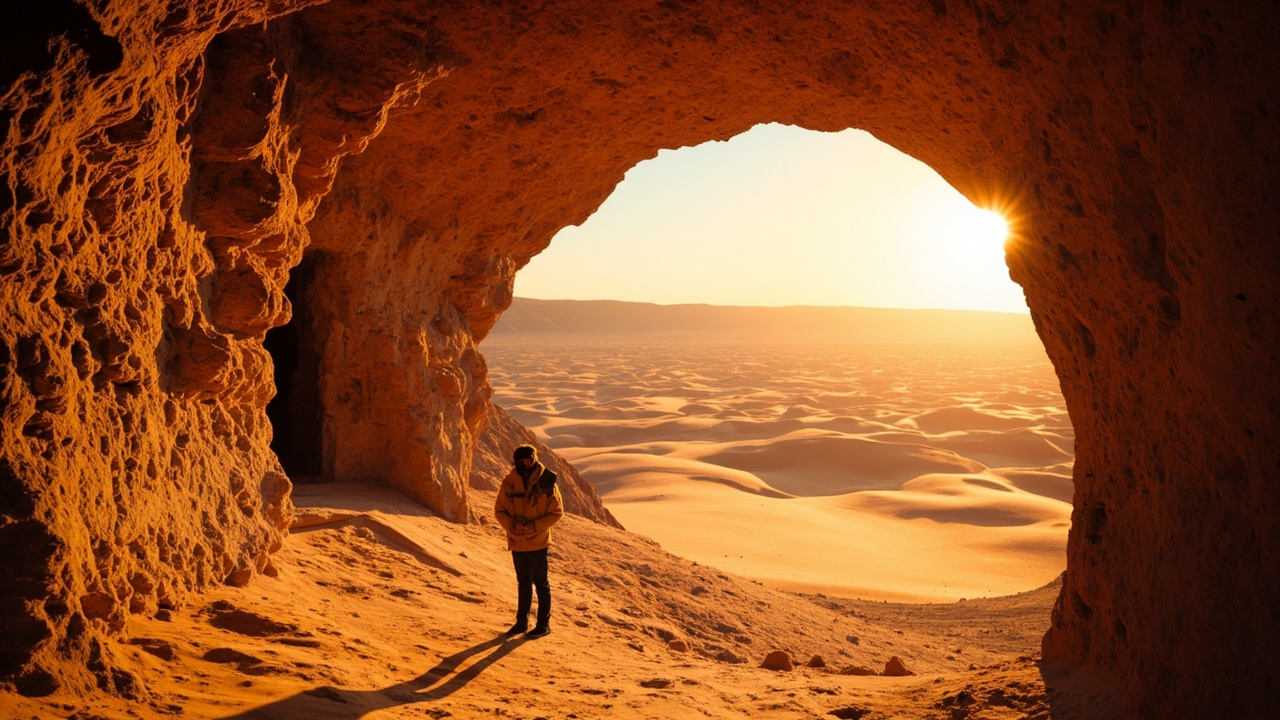
The first thing I noticed inside Cave 96 wasn’t the Buddha. It was the silence. Twenty-odd people were standing in a dim chamber staring up at a 35-meter clay figure, and nobody said a word. You could hear the guard’s radio crackling from the entrance. Then someone’s phone camera shutter clicked, and it felt almost rude.
I’d come to Dunhuang on a whim in October 2023, mostly because a friend in Beijing told me the desert here “does something to your head.” She wasn’t wrong. Mogao isn’t just a cave complex — it’s a 1,600-year conversation between Buddhist monks, Silk Road merchants, Tang dynasty painters, and the occasional bored soldier who scratched his name on a wall in 900 AD. You walk in expecting a museum. You walk out feeling like you interrupted something.
Most first-time visitors to China skip Dunhuang. It’s far — 1,900 km west of Beijing, on the edge of the Gobi — and it doesn’t have the Instagram pull of the Great Wall or Zhangjiajie. That’s exactly why you should go. Mogao Caves (莫高窟, Mògāo Kū) hold 735 caves, 45,000 square meters of murals, and 2,415 painted sculptures. UNESCO listed it in 1987. And since 2023, the site has been running a strict timed-entry system that actually works — if you book correctly.
This guide is what I wish someone had handed me before I went. It covers the caves themselves, the surrounding sites people lump into “Dunhuang,” realistic costs, transport from the nearest hub, and the mistakes I made so you don’t.
Quick answer
Mogao Caves requires a timed reservation booked online (via the official WeChat mini-program or the Mogao official site) at least 3–7 days ahead in peak season (May–October); standard A-ticket costs ¥238 (~$33) and includes a 40-minute film plus a guided tour of 8 caves. The site is 25 km southeast of Dunhuang city, reachable by shuttle bus (¥10, ~$1.40) or taxi (¥60–80, ~$8–11). Most international visitors can now enter China visa-free for up to 30 days under the 2024–2026 expanded policy, and Dunhuang has its own airport (DNH) with direct flights from Beijing, Shanghai, and Xi’an.
The Short Version
Book your Mogao ticket the day you book your flight. Not the week before. The day. Peak-season A-tickets sell out 2–3 weeks ahead. Go in May or late September, not July. Stay two nights minimum — one for Mogao, one for the desert. Bring a buff or mask; the sand gets into everything. And download a VPN before you land, because Google Maps won’t work and Baidu Maps is a puzzle if you can’t read Chinese.
How I Picked These
I’ve been to Dunhuang three times — October 2023, April 2024, and September 2025 — and each trip I’ve dragged along someone who’d never been to China. That’s the lens I used here: what actually confused them, what they loved, what they wished they’d skipped. I talked to the English-speaking guides at Mogao (there are only about a dozen, and they rotate), a Uyghur taxi driver named Yusuf who’s been driving the Dunhuang–Mogao route for 11 years, and the owner of a noodle shop near the Shazhou Night Market who told me which tourist sites locals actually visit. I also cross-checked prices against the official Mogao booking system in early 2026.
Comparison Table
| Rank | Place | Best For | Approx Cost (USD) | Time Needed | When to Go |
|---|---|---|---|---|---|
| 1 | Mogao Caves | Murals, Buddhist art, history | $33 (¥238) A-ticket | 3–4 hrs | May, Sept–Oct |
| 2 | Mingsha Sand Dunes & Crescent Lake | Camel rides, sunset, desert | $17 (¥120) | 2–3 hrs | Late afternoon |
| 3 | Dunhuang Museum | Context before Mogao | Free | 1.5 hrs | Morning |
| 4 | Yumen Pass (Jade Gate) | Silk Road ruins, solitude | $6 (¥40) | Half day | Cool months |
| 5 | Yardang National Geopark | Wind-carved rock formations | $17 (¥120) + shuttle | Full day | Apr–Oct |
| 6 | Western Thousand Buddha Caves | Quieter alternative to Mogao | $8 (¥55) | 2 hrs | Any |
| 7 | Shazhou Night Market | Food, souvenirs, atmosphere | Free entry | 1–2 hrs | After 7pm |
| 8 | Echoing Sand Dunes cable car | Aerial desert views | $8 (¥55) | 30 min | Sunset |
| 9 | Dunhuang Old Town (fake) | Photos, no substance | Free | 30 min | Skip unless bored |
| 10 | Yangguan Pass | Silk Road history, less crowded | $7 (¥50) | Half day | Cool months |
1. Mogao Caves — The Reason You Came
The A-ticket gets you into two short films at the Digital Exhibition Center (one is a 180-degree dome projection that made me a little dizzy), then a shuttle to the actual caves, then a guided tour of 8 caves with an English-speaking guide if you’re lucky enough to snag one. The B-ticket (¥100, ~$14) skips the films and shows you only 4 caves. I’ve done both. Do the A-ticket. The films give you the vocabulary to understand what you’re looking at.
Here’s what nobody tells you: you don’t choose which caves you see. The site rotates them to manage humidity and CO2. On my first visit I got Caves 16, 17 (the famous Library Cave), 96, 130, 148, 237, 249, and 328. On my second visit, a completely different set. The “must-see” Cave 45 with its seven Tang-era bodhisattvas? I’ve still never seen it in person. That’s the deal. You accept it.
The murals are the point, not the statues. Cave 249’s ceiling has a 6th-century painting of flying apsaras and celestial musicians that’s so vivid it looks like it was finished last week. Cave 285, from the Western Wei period, mixes Buddhist, Hindu, and Zoroastrian imagery — evidence of how cosmopolitan the Silk Road actually was.
📍 Location: 25 km southeast of Dunhuang city, Gansu Province
🎟️ Entry fee: ¥238 ($33) A-ticket, ¥100 ($14) B-ticket; English guide included with A-ticket
🕒 Opening hours: 8:00am–6:00pm (May–Oct), 9:00am–5:30pm (Nov–Apr); last entry 1 hour before close
🚕 How to get there: From Dunhuang city, take the green Mogao shuttle from the Silk Road Hotel (¥10, ~$1.40, departs every 30 min) or a taxi (¥60–80, ~$8–11). The Digital Exhibition Center is your first stop — don’t go straight to the caves.
⏰ When to visit: May and late September are ideal. Avoid Chinese public holidays (Oct 1–7, May 1–5). Morning slots have cooler caves and smaller groups.
💡 Insider tips: Book via the official “莫高窟参观预约网” WeChat mini-program or mogao.com.cn — you’ll need your passport number. Bring a light jacket; caves are 10–15°C cooler than outside. No photography inside caves (they’ll confiscate your phone if you try). Set up Alipay or WeChat Pay before you arrive — the ticket office is cashless.
I watched a French couple get turned away at the gate because they’d bought B-tickets thinking they’d upgrade on-site. You can’t. Plan ahead.
2. Mingsha Sand Dunes & Crescent Lake — The Postcard
You’ve seen this image: a crescent-shaped oasis lake surrounded by 200-meter sand dunes, with a pagoda on the far shore. It’s the most photographed spot in Gansu, and yes, it’s crowded. But here’s the thing — the crowds thin out dramatically after 5pm, and the light between 6:30 and 7:30pm in summer is genuinely extraordinary. The sand turns copper, then rose, then violet.
The camel rides are a tourist trap and I loved every minute. ¥100 (~$14) for a 40-minute loop. My camel was named “Little Black” according to the handler, though I suspect every camel is named Little Black. The cable car (¥55, ~$8) gives you a proper aerial view and saves your legs.
📍 Location: 5 km south of Dunhuang city center, at the edge of town
🎟️ Entry fee: ¥120 ($17); camel ride ¥100 ($14) extra; cable car ¥55 ($8)
🕒 Opening hours: 5:00am–9:00pm (summer), 7:30am–7:30pm (winter)
🚕 How to get there: Taxi from downtown is ¥15–20 ($2–3), 10 minutes. Or walk if you’re staying near the night market — it’s about 40 minutes.
⏰ When to visit: Late afternoon, 1.5 hours before sunset. Weekdays are noticeably quieter than weekends.
💡 Insider tips: Rent the orange plastic shoe covers (¥15, ~$2) at the entrance — sand gets into everything. Bring a scarf or buff for the wind. The lake itself is artificial now (they pump water in), but it doesn’t matter when the light is right. Skip the “sand therapy” pit.
I tried to climb to the top of the highest dune barefoot. Made it about two-thirds of the way before my calves gave out. A 12-year-old Chinese girl in flip-flops passed me going up.
3. Dunhuang Museum — Do This First
I almost skipped this. Big mistake on my first trip. The Dunhuang Museum is free, takes 90 minutes, and gives you the historical scaffolding to actually understand Mogao. Without it, the caves are beautiful but abstract. With it, you start noticing details — the evolution of Buddha faces from Gandharan to Tang styles, the shift in donor portraits, the way Persian motifs crept into Chinese painting.
The museum has original artifacts from the Library Cave (Cave 17), including some of the manuscripts Aurel Stein and Paul Pelliot carted off to London and Paris in the early 1900s. There’s a small English-language section, but most labels are Chinese-only. Bring your translation app.
📍 Location: 100 meters east of the Shazhou Night Market, city center
🎟️ Entry fee: Free (bring passport for registration)
🕒 Opening hours: 9:00am–5:00pm, closed Mondays
🚕 How to get there: Walk from most central hotels. Taxis from the train station are ¥20 ($3).
⏰ When to visit: Morning of your Mogao day, or the day before. Avoid Monday.
💡 Insider tips: The museum shop sells excellent reproductions of Mogao murals for ¥50–300 ($7–42). The “Silk Road” room on the second floor is the best part and most tourists skip it. There’s a clean bathroom on the ground floor — use it, because Mogao’s facilities are limited.
The docent on my second visit was a retired art teacher named Mrs. Wang who spent 20 minutes explaining why Cave 220’s mural of the Medicine Buddha is a masterpiece. I understood maybe 60% of it. Still worth it.
4. Yumen Pass (Jade Gate) — The Real Silk Road
Yumen Pass is 90 km northwest of Dunhuang, in the middle of absolutely nothing. It’s a mud-brick gatehouse from the Han dynasty, built around 111 BC, and it’s one of the two most famous passes on the ancient Silk Road (the other is Yangguan). What’s left is a small square structure, crumbling at the edges, surrounded by flat desert.
I went on a cold April morning with a driver named Yusuf. We drove for an hour and a half without seeing another car. When we arrived, there were four other people there. Four. At one of the most historically significant sites in China. That’s the trade-off — Yumen is inconvenient, and that’s exactly why it’s worth it.
📍 Location: 90 km northwest of Dunhuang, Gansu Province 🎟️ Entry fee: ¥40 (~$6), includes shuttle to the gate 🕒 Opening hours: 8:00am–6:00pm (Apr–Oct), 9:00am–5:00pm (Nov–Mar) 🚕 How to get there: No public transport. Hire a car and driver for the day (¥400–600, ~$55–83) — combine with Yardang. Or join a group tour from your hotel (¥200–300, ~$28–42 per person). ⏰ When to visit: April–May or September–October. Summer is brutally hot; winter is freezing and windy. 💡 Insider tips: Bring water and snacks — there’s nothing out here. The “Han Great Wall” section nearby is more impressive than the gate itself. Your driver will want to stop at a jade shop on the way back; politely decline unless you actually want jade. Cell signal is spotty.
Yusuf told me his grandfather used to herd sheep out here in the 1960s. He said the desert “used to be emptier.” I’m not sure what he meant, but I think about it a lot.
5. Yardang National Geopark — Weird Rocks, Big Sky
Yardang is what happens when wind erodes soft rock for a few million years. The result is a landscape of sandstone formations that look like ships, sphinxes, and — according to the Chinese signage — “The Peacock” and “The Lion.” It’s 180 km from Dunhuang, usually combined with Yumen Pass on a full-day trip.
Is it worth the drive? Honestly, it depends. If you’ve been to Utah or Cappadocia, you’ve seen better versions of this. But the scale is different — Yardang is vast, and the shuttle bus takes you through 30 km of formations with stops at four viewpoints. The “Western Sea Fleet” formation at sunset, with the Gobi stretching to the horizon, is genuinely striking.
📍 Location: 180 km northwest of Dunhuang, in the Gobi Desert
🎟️ Entry fee: ¥120 ($17) + shuttle ¥70 ($10)
🕒 Opening hours: 8:30am–6:00pm (Apr–Oct only; closed in winter)
🚕 How to get there: Only via hired car or group tour. Combine with Yumen Pass for a full day.
⏰ When to visit: Late afternoon for the best light. Avoid midday — no shade anywhere.
💡 Insider tips: The shuttle is mandatory and runs every 20 minutes. Bring a windproof layer — the wind out here is relentless. There’s a basic canteen at the entrance with instant noodles and tea; don’t expect more. If you’re prone to motion sickness, sit in the front of the shuttle.
I ate a bowl of instant noodles at the canteen next to a busload of Chinese tourists from Chengdu who insisted on sharing their pickled vegetables with me. Best ¥15 (~$2) I’ve spent.
6. Western Thousand Buddha Caves — The Quiet Alternative
Everyone goes to Mogao. Almost nobody goes to the Western Thousand Buddha Caves (西千佛洞, Xī Qiānfó Dòng), 35 km southwest of Dunhuang along the Dang River. There are 16 surviving caves here, mostly from the Northern Wei and Tang dynasties, and on a weekday afternoon you might be the only visitor.
The caves are smaller and less well-preserved than Mogao, but they have a rawness that Mogao’s polished tour lacks. Cave 7 has a beautiful seated Buddha with original pigment still visible. The site is run by the same authority as Mogao, so your ticket is technically separate but the experience is complementary.
📍 Location: 35 km southwest of Dunhuang, along the Dang River gorge 🎟️ Entry fee: ¥55 (~$8) 🕒 Opening hours: 8:30am–5:30pm (Apr–Oct), 9:00am–5:00pm (Nov–Mar); sometimes closed without notice 🚕 How to get there: Hire a car (¥200–300 round trip, ~$28–42) or ask your hotel to arrange. No public transport. ⏰ When to visit: Any time it’s open. Weekday mornings are emptiest. 💡 Insider tips: Call ahead (the number is on the Dunhuang tourism site) to confirm it’s open — it closes randomly for conservation work. Bring cash; the ticket office doesn’t always have working card readers. The drive along the Dang River is beautiful in autumn.
The caretaker here, an older man named Mr. Li, has worked at the site for 22 years. He showed me a spot on Cave 5’s wall where you can still see a painter’s fingerprint in the plaster. I don’t know if that’s officially true, but I choose to believe it.
7. Shazhou Night Market — Eat Here, Twice
Every Chinese city has a night market. Most are forgettable. Shazhou is not. It’s a long pedestrian street lined with food stalls, and the food is actually good — not just “good for a tourist market.” The lamb skewers (羊肉串, yángròu chuàn) are ¥5 ($0.70) each and grilled over charcoal. The apricot juice (杏皮水, xìngpí shuǐ) is a Dunhuang specialty, cold and slightly sour, ¥8 ($1.10) for a big cup.
I ate here four nights in a row on my last trip. The noodle stall at the north end, run by a woman everyone calls “Auntie Ma,” does a hand-pulled lamb noodle soup (¥25, ~$3.50) that I still think about. She doesn’t speak English, but she’ll point at what you want and smile.
📍 Location: Shazhou Night Market, city center, off Yangguan East Road 🎟️ Entry fee: Free 🕒 Opening hours: 6:00pm–midnight (peak 7:00–10:00pm) 🚕 How to get there: Walk from any central hotel. Taxis drop off at the north entrance. ⏰ When to visit: Any evening. Weekends are busier but more fun. 💡 Insider tips: Bring small bills — many stalls prefer cash or WeChat Pay over cards. The “donkey meat sandwiches” (驴肉黄面, lǘròu huángmiàn) are a Dunhuang specialty; try them even if you’re unsure. Skip the souvenir stalls at the south end; they’re overpriced. The grilled eggplant with garlic is better than it sounds.
Auntie Ma asked me where I was from. When I said “America,” she nodded and said “Obama.” Then she gave me extra noodles.
8. Echoing Sand Dunes Cable Car — A Shortcut with a View
This is a 30-minute add-on to your Mingsha visit, not a standalone destination. The cable car runs from the base of the dunes to a mid-level platform, giving you a proper aerial view of Crescent Lake and the surrounding sandscape. It’s ¥55 (~$8) and saves you a 20-minute uphill slog in soft sand.
I’m including it because most guides don’t mention it, and it’s genuinely useful if you’re short on time or traveling with older family members. The view from the top platform at sunset is the single best photo spot in Dunhuang.
📍 Location: Inside the Mingsha Sand Dunes scenic area
🎟️ Entry fee: ¥55 ($8) round trip
🕒 Opening hours: Same as Mingsha (5:00am–9:00pm summer)
🚕 How to get there: Same as Mingsha — taxi from downtown, ¥15–20 ($2–3)
⏰ When to visit: 30 minutes before sunset
💡 Insider tips: Buy your ticket at the base station, not online. The line moves fast. Sit on the left side going up for the best view of the lake. If you’re afraid of heights, the sand-sledding down is a fun alternative (¥30, ~$4).
9. Dunhuang Old Town — Skip It
I’m including this so you don’t waste an afternoon. Dunhuang “Old Town” is a 2010s reconstruction — a fake Qing-style street built for tourists, with overpriced shops and a few photo ops. There’s no historical substance here. The real old town was demolished decades ago.
If you have an extra half-day and nothing else to do, fine. But you don’t. Go to the Western Thousand Buddha Caves instead, or take a second walk through the night market.
📍 Location: 10 km west of Dunhuang city center 🎟️ Entry fee: Free (individual attractions charge) 🕒 Opening hours: 9:00am–10:00pm 🚕 How to get there: Taxi ¥30 (~$4) ⏰ When to visit: Don’t, unless you’re killing time before a flight 💡 Insider tips: The one thing worth doing here is the “Silk Road” cultural show (¥200–300, ~$28–42), which is cheesy but entertaining. Otherwise, skip.
10. Yangguan Pass — The Other Gate
Yangguan is the southern counterpart to Yumen Pass, 70 km southwest of Dunhuang. It’s slightly more developed as a tourist site — there’s a small museum, a reconstructed gatehouse, and a walking path through the ruins. The original Han dynasty gate is a low earthen mound, less dramatic than Yumen, but the setting is beautiful: the pass sits at the edge of a green oasis, with the desert rising behind it.
I went here on my third trip, mostly because I’d already done everything else. I’m glad I did. It’s quieter than Yumen, and the museum does a better job explaining the Silk Road’s geography. The famous Tang poem “Song of Yangguan” (送元二使安西) is inscribed on a stone here — every Chinese schoolkid knows it, and watching Chinese tourists recite it to each other is genuinely moving.
📍 Location: 70 km southwest of Dunhuang 🎟️ Entry fee: ¥50 (~$7) 🕒 Opening hours: 8:00am–6:00pm (Apr–Oct), 9:00am–5:00pm (Nov–Mar) 🚕 How to get there: Hire a car (¥300–400 round trip, ~$42–55) or join a group tour ⏰ When to visit: Spring or autumn mornings 💡 Insider tips: Combine with Western Thousand Buddha Caves — they’re on the same road. The museum has English signage. Bring a hat; there’s no shade.
FAQ
Q: Do I need a visa to visit Dunhuang in 2026? A: Most international visitors from the US, UK, EU, Australia, and Southeast Asia can enter China visa-free for up to 30 days under the expanded 2024–2026 policy. Check your specific nationality on the official visa-free transit guide — if your country isn’t covered, apply for a standard tourist visa 4–6 weeks ahead.
Q: How far in advance should I book Mogao Caves tickets? A: In peak season (May–October), book 2–3 weeks ahead. In shoulder season (April, November), 3–7 days is usually enough. Tickets release on a rolling basis via the official WeChat mini-program; A-tickets (¥238, ~$33) sell out before B-tickets (¥100, ~$14).
Q: How do I get to Dunhuang from Beijing or Shanghai? A: Direct flights from Beijing (2.5 hrs) and Shanghai (3.5 hrs) to Dunhuang Airport (DNH) run daily. High-speed rail from Lanzhou takes about 7 hours. There’s no direct high-speed train from Beijing — you’d connect through Lanzhou or Xi’an. See the China train guide for booking details.
Q: Is English spoken in Dunhuang? A: Barely. Mogao has a small team of English-speaking guides (request one when booking), but outside the caves you’ll rely on translation apps. Download Pleco or Baidu Translate with offline Chinese before you arrive. Hotel staff at international-brand hotels speak some English; smaller guesthouses usually don’t.
Q: Do I need a VPN or special SIM card? A: Yes, install a VPN before you land — Google, Instagram, and WhatsApp are blocked. A local China Unicom or China Mobile SIM (¥100–200, ~$14–28 for a tourist plan) works fine for data. See the China SIM and internet guide for setup steps.
Q: What’s the best time of year to visit Mogao Caves? A: May and September–October. July–August is crowded and 35°C+ (95°F+). Winter is cold but quiet, and the caves are open year-round. Avoid Chinese national holidays (Oct 1–7, May 1–5, Lunar New Year).
Q: How much should I budget for a 3-day Dunhuang trip? A: Roughly $400–600 per person, excluding flights. That covers 2 nights in a mid-range hotel ($40–70/night), Mogao A-ticket ($33), Mingsha ($17), one full-day desert tour ($55–85), meals ($15–25/day), and local transport.
FAQ summary
The most important things to know: book Mogao tickets 2–3 weeks ahead in peak season via the official WeChat mini-program, and expect to pay ¥238 (~$33) for the A-ticket that includes films and an 8-cave guided tour. Most Western and Southeast Asian visitors can enter China visa-free for 30 days in 2026, but you’ll need a VPN installed before arrival and a translation app for daily navigation. Dunhuang is best visited in May or September–October, requires 2–3 days minimum, and costs roughly $400–600 per person excluding flights.
The Honest Wrap-up
This guide is for travelers who care more about standing in a 1,500-year-old cave than checking off a bucket list. If you want resort pools and English menus, Dunhuang will frustrate you. If you want to eat lamb skewers at a plastic table while a Uyghur grandmother laughs at your chopstick grip, and then wake up the next morning to stare at Tang dynasty paintings that most of the world has never heard of, book the flight.
One last thing: don’t try to do Mogao and Mingsha on the same day. I did it once. You’ll be exhausted and you won’t remember either properly. Give each one its own morning or evening. Dunhuang rewards slowness. That’s the whole point.
More guides you may like

Top 10 Bridges in China
China's bridges are engineering marvels spanning mountains, rivers, and seas. Here are 10 of the most spectacular, from ancient stone to modern steel.
8 min read

Top 10 Buddhist Sites in China
From the Leshan Giant Buddha to the Dunhuang Caves, these 10 Buddhist sites represent 2,000 years of China's spiritual heritage.
9 min read

Top 10 Day Trips from Beijing You Shouldn't Miss
Beijing is packed with history, but some of China's best experiences are just a few hours away. Here are 10 day trips that will transform your visit.
9 min read

Top 10 Hidden Gems in China Off the Beaten Path
Beyond the Great Wall and Terracotta Warriors, China has incredible hidden destinations few tourists ever reach. Here are 10 underrated gems worth the detour.
9 min read

Top 10 Markets and Shopping Streets in China
From Shanghai's Bund to Beijing's Silk Street - 10 markets where foreigners can haggle, explore, and bring home authentic Chinese goods.
9 min read

Top 10 Museums in China You Shouldn't Miss
China's museums span 5,000 years of civilization. These 10 - from the Palace Museum to Xi'an's terracotta gallery - are unmissable for culture lovers.
9 min read