
Sichuan Food Tour China
TODO: Extract from article (100-160 chars)
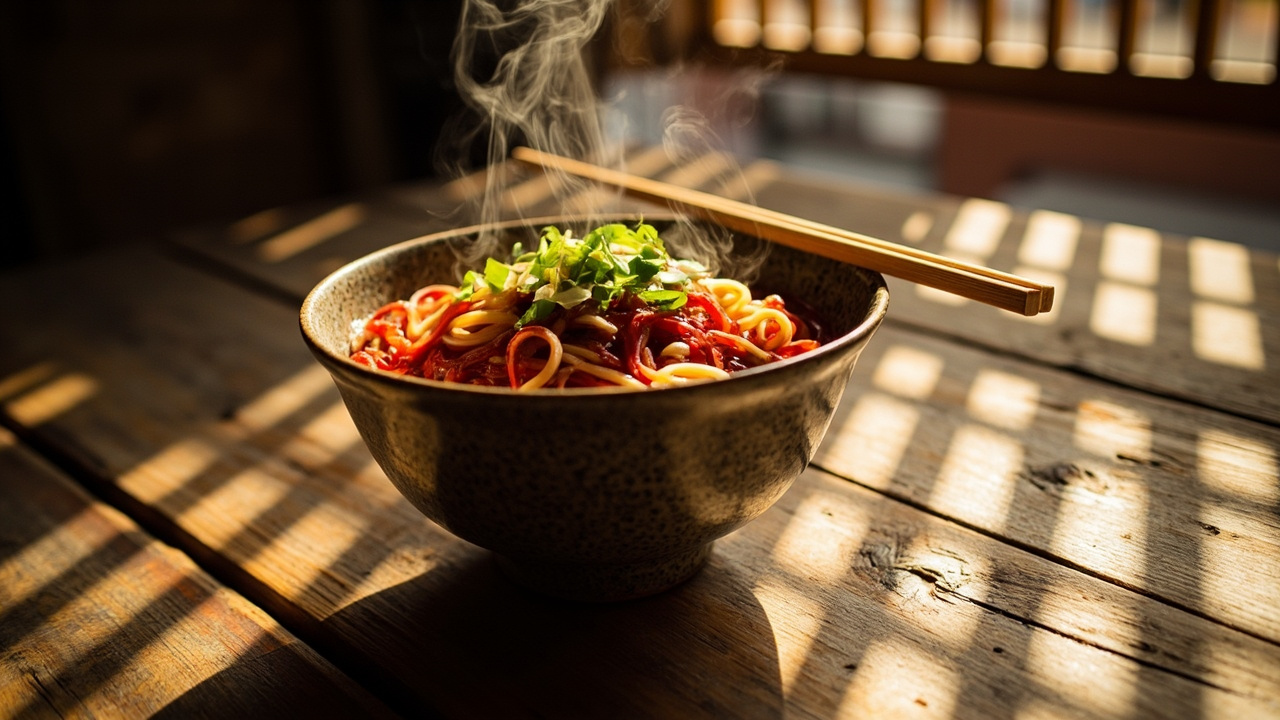
Sichuan Food Tour China
The first thing I noticed in Chengdu wasn’t the spice. It was the smell of huajiao — Sichuan peppercorn — hitting hot oil somewhere down a side alley off Jinli Street. That electric, citrusy tingle in the air. I’d flown in that morning, dropped my bag at a hostel near Chunxi Road, and walked out looking for lunch. Within ten minutes I was sitting on a plastic stool at a stall with no English menu, pointing at whatever the woman next to me was eating. She laughed, nodded, and pushed a bowl of dan dan mian toward me. I ate it too fast and my mouth went numb for twenty minutes. It was the best meal of my first week in China.
That’s the thing about Sichuan. The food isn’t just spicy — it’s ma la, numbing and hot at the same time, a flavor combination that doesn’t really exist anywhere else. And the province that invented it has spent the last two thousand years perfecting how to serve it. You can eat your way across Sichuan for a week and barely scratch the surface.
This guide is for first-timers who want to do a proper food tour — not just hit the tourist restaurants. I’ll cover where to go, what to eat, what it costs, and the small things nobody tells you (like how to order without a menu, or why you should never drink the tea right after a peppercorn dish). Everything below is based on trips I’ve taken over the past few years, plus a lot of conversations with locals who were kind enough to correct my pronunciation and my ordering habits.
Quick answer
A Sichuan food tour in 2026 costs roughly $60–120 per day (¥430–870) for food, transport, and budget-to-midrange lodging, and most Western visitors can enter China visa-free for up to 30 days under the current policy. The best time to go is late March to May or September to November — summers in Chengdu are humid and brutally hot, and the food is better when you can actually enjoy eating outside. Base yourself in Chengdu for 4–5 days, then add a side trip to Leshan or Chongqing if you have time.
The Short Version
If you only have 90 seconds: fly into Chengdu, stay near Chunxi Road or Kuanzhai Alley, and eat at street stalls and chuànchuàn shops rather than hotel restaurants. Learn the words má (numbing) and là (spicy) before you land. Set up Alipay or WeChat Pay before you arrive — most stalls don’t take cash or foreign cards. Budget $15–25 (¥110–180) per person per day for food if you eat like a local. Skip the famous hotpot chains; the tiny places with plastic stools are better.
How I Picked These
I’ve eaten my way through Sichuan on four separate trips since 2019, most recently in early 2026. I didn’t just hit the guidebook spots — I asked taxi drivers where they eat on their days off, followed students into alley restaurants near Sichuan University, and once spent an entire afternoon in a market in Leshan because a vendor wouldn’t let me leave without trying three kinds of pickled vegetables. I’ve also made plenty of mistakes: ordered “medium spicy” at a place where medium meant “bring a towel,” paid triple for a tourist hotpot near Jinli, and once ate something I still can’t identify. The ten places below are the ones I’d send a friend to, ranked by how much they’d actually enjoy them as a first-timer.
Comparison Table
| Rank | Place | Best For | Approx Cost (USD) | Time Needed | When to Go |
|---|---|---|---|---|---|
| 1 | Chengdu street food (Chunxi Rd area) | First-timers, variety | $10–20/day | 2–3 days | Mar–May, Sep–Nov |
| 2 | Chengdu hotpot (local spots) | The signature dish | $15–25/meal | 1 evening | Year-round |
| 3 | Leshan Giant Buddha food street | Day trip + snacks | $40–60 total | 1 day | Apr–Oct |
| 4 | Chongqing hotpot | Serious spice lovers | $20–30/meal | 1–2 days | Oct–Apr |
| 5 | Kuanzhai Alley | Atmosphere + snacks | $15–30 | Half day | Weekday mornings |
| 6 | Jinli Street | Photo-friendly food | $20–40 | 2–3 hours | Early evening |
| 7 | Sichuan University area | Cheap, student food | $8–15/day | 1 day | Weekdays |
| 8 | Dujiangyan + Qingcheng Shan | Food + hiking combo | $50–70 | 1–2 days | Apr–Jun |
| 9 | Chengdu tea houses | Slow afternoons | $5–10 | 2–3 hours | Any sunny day |
| 10 | Pixian douban factory area | Cooking nerds | $30–50 | Half day | Weekdays |
1. Chengdu Street Food — Chunxi Road and the alleys behind it
I got lost behind Chunxi Road on my second day and ended up on a narrow lane where four stalls were packed shoulder-to-shoulder. A woman was frying chuan chuan skewers in a giant wok of chili oil, and a man next to her was pressing dough into flatbreads. I pointed at three things, paid about ¥25 ($3.50), and ate standing up. That’s the real Chengdu.
The area around Chunxi Road Pedestrian Street is touristy in the main drag, but the side streets — especially the ones running west toward Tianfu Square — are where locals actually eat. You’ll find dan dan mian, zhong dumplings, cold liangfen noodles, and grilled skewers everywhere. Prices are low, portions are small, and the whole point is to eat at four or five stalls in one outing.
📍 Location: Jinjiang District, around Chunxi Road Pedestrian Street and the lanes west of it toward Tianfu Square.
🎟️ Entry fee: Free. You pay per dish, usually ¥5–20 ($0.70–2.80) each.
🕒 Opening hours: Most stalls run 10am–10pm, some until midnight. A few close on Mondays.
🚇 How to get there: Take Metro Line 2 or Line 3 to Chunxi Road Station, Exit D. Walk west 5 minutes into the side streets.
⏰ When to visit: Weekday afternoons around 3–5pm are calmest. Evenings are busiest but have the best energy.
💡 Insider tips: Bring small bills or make sure Alipay/WeChat Pay is working — many stalls don’t take cards. Point at what you want; nobody expects you to speak Mandarin. Ask for bú là (not spicy) if you can’t handle heat, but expect a laugh. The tea they hand you is for rinsing your bowl, not drinking — pour it over your chopsticks first.
I once watched a grandmother scold a tourist for eating with the wrong end of his chopsticks. She then showed him how to hold them properly. That’s Chengdu.
2. Chengdu Hotpot — the one meal you can’t skip
The first time I ordered hotpot in Chengdu, I asked for “medium spicy.” The waiter looked at me, looked at my friend, and said something to the kitchen. What came out was a bubbling cauldron of red oil with so many chilies floating in it that I couldn’t see the broth. I ate two bites and had to order a bowl of rice just to survive. Ten years later, I still think about that meal.
Chengdu hotpot is different from Chongqing hotpot — it’s usually a yuanyang pot, split into spicy and mild halves, so you can retreat to the mild side when you need to. The broth is beef tallow-based, loaded with huajiao, dried chilies, and dozens of aromatics. You cook your own ingredients: thin-sliced beef, tripe, tofu skin, potato slices, lotus root, and whatever else you order.
📍 Location: Everywhere, but the best spots are in the residential neighborhoods — Wuhou District, Jinjiang, and around Yulin. Skip the chains near Jinli.
🎟️ Entry fee: No entry. Expect ¥80–180 ($11–25) per person including drinks.
🕒 Opening hours: Most hotpot restaurants open 11am and close around 2am. Peak hours are 6–9pm.
🚇 How to get there: Depends on the spot. For the Yulin area, take Metro Line 3 to Yulin Station, Exit B.
⏰ When to visit: Go on a weekday around 5pm to beat the crowd. Winter is hotpot season — the locals eat it when it’s cold.
💡 Insider tips: Order the yuanyang pot if you’re new. Ask for wēi là (mild) — it’s still spicy. The dipping sauce bar is self-serve; mix sesame oil, garlic, and cilantro, not soy sauce. Don’t drink cold water during the meal; it makes the burn worse. Order a bowl of bingfen (iced jelly) for dessert — it cools your mouth instantly.
The waiter at the place I go to now, a man named Chen, always brings me extra tofu skin without charging. I’ve never asked why. I just accept it.
3. Leshan Giant Buddha Food Street — the day trip with the best snacks
I went to Leshan mainly to see the Giant Buddha, which is genuinely worth the trip. But I stayed an extra four hours because of the food street at the base of the scenic area. There’s a stall selling tián pí yā — sweet-skinned duck — that ruined all other duck for me. I bought half a bird, sat on a wall overlooking the river, and ate it with my hands.
Leshan is a small city about two hours south of Chengdu by high-speed train, and it has its own food culture. The specialties are sweet-skinned duck, bobo ji (cold skewers in chili oil), and a kind of pressed tofu that’s chewier than anything you’ll find in Chengdu. The food street near the Buddha entrance is touristy but still good — the locals eat at the stalls on the side streets just off it.
📍 Location: Shizhong District, Leshan. The food street runs along the road leading to the Giant Buddha scenic area.
🎟️ Entry fee: Buddha scenic area is ¥80 ($11). Food street is free.
🕒 Opening hours: Food stalls run 9am–8pm. The Buddha site opens at 7:30am and closes at 6:30pm (last entry 5:30pm).
🚇 How to get there: Take the high-speed train from Chengdu East Station to Leshan Station (about 1 hour, ¥65/$9). From Leshan Station, take bus 601 or a taxi (¥30/$4) to the Buddha area.
⏰ When to visit: Go on a weekday. Weekends and holidays are packed with domestic tourists. Spring and autumn are best.
💡 Insider tips: Buy the duck from the stall with the longest local queue, not the one with English signs. Bobo ji is sold by weight — ask for ¥20 ($3) worth and you’ll get a good portion. Bring cash as backup; some older vendors still prefer it. The boat tour of the Buddha (¥70/$10) gives you a better view than the walking path and saves your legs.
I met a vendor there named Liu who insisted I try three kinds of pickles before I bought anything. I ended up buying all three.
4. Chongqing Hotpot — for people who think Chengdu is too mild
Chongqing is technically a separate municipality, but it’s only 90 minutes from Chengdu by high-speed train and the food is close enough that it belongs in any Sichuan food tour. The hotpot here is fiercer — no yuanyang split, just pure red oil, and the locals will judge you if you ask for mild. I asked once. The table next to me laughed.
Chongqing hotpot uses beef tallow and a heavier hand with huajiao. The signature ingredient is máodù — beef tripe — which you dip for about 15 seconds and eat while it’s still crunchy. The city itself is built on hills, so you’ll walk up and down stairs to get anywhere, which is a good excuse to eat more.
📍 Location: The best spots are in Yuzhong District, especially around Jiefangbei and the older neighborhoods near the river.
🎟️ Entry fee: No entry. Expect ¥100–200 ($14–28) per person.
🕒 Opening hours: Most hotpot restaurants open 11am and close around 3am. Some stay open 24 hours.
🚇 How to get there: High-speed train from Chengdu East to Chongqing North (about 1.5 hours, ¥154/$21). From Chongqing North, take Metro Line 3 to Jiefangbei.
⏰ When to visit: October through April. Summers here are brutally hot and humid.
💡 Insider tips: Order máodù even if you think you don’t like tripe — it’s the whole point. The dipping sauce is just sesame oil and garlic; don’t add soy sauce. Ask for wēi là if you must, but know that “mild” here still means spicy. Bring tissues — most places don’t provide napkins, only a roll of toilet paper.
A taxi driver in Chongqing told me the best hotpot is always the one with the worst chairs. He was right.
5. Kuanzhai Alley — the tourist version, done well
Kuanzhai Alley is the one place on this list that’s unapologetically touristy, and I’m including it anyway because it’s genuinely pleasant if you go at the right time. It’s three parallel alleys of restored Qing dynasty architecture, filled with tea houses, snack stalls, and small restaurants. The food isn’t the best in Chengdu, but the atmosphere is worth one afternoon.
Go early on a weekday. By 11am it’s packed with tour groups, and by evening it’s a wall of selfie sticks. The snack stalls sell decent má là skewers, dòuhuā (silken tofu), and táng yóu guǒzi (fried dough balls). The tea houses in the wide alley are overpriced but lovely.
📍 Location: Qingyang District, near the intersection of Changshun Street and Jinhe Road.
🎟️ Entry fee: Free to walk. Food and tea cost extra.
🕒 Opening hours: Open 24 hours, but stalls run roughly 9am–10pm.
🚇 How to get there: Metro Line 4 to Kuanzhai Alley Station, Exit B. Walk 2 minutes.
⏰ When to visit: Weekday mornings, 8–10am. Avoid weekends entirely.
💡 Insider tips: The narrow alley (Jing Alley) has the best food stalls; the wide alley is mostly tea houses. Skip the restaurants with English menus and photos of the food — they’re the most expensive. The tea houses charge ¥80–150 ($11–21) per person for a pot; it’s worth it once for the experience.
I paid ¥120 for a pot of tea here once and felt silly about it until I realized I’d been sitting in the same chair for three hours watching people walk by. Worth it.
6. Jinli Street — the photo-friendly food stop
Jinli is the postcard version of Chengdu. Red lanterns, wooden buildings, a stream running through the middle, and food stalls selling everything from rabbit heads to san da pao (the famous “three big bangs” rice cakes). It’s crowded, it’s a bit fake, and I still go every time I’m in the city.
The food here is more expensive than the side streets, but the variety is unmatched. You can try bō bō jī, lóng chāo shǒu (dragon抄手, a kind of wonton), dàn hōng gāo (egg cakes), and a dozen other snacks in one walk. The rabbit heads are a Chengdu specialty — I’ve tried them twice and still can’t decide if I like them.
📍 Location: Wuhou District, next to the Wuhou Shrine.
🎟️ Entry fee: Free. Wuhou Shrine next door is ¥50 ($7).
🕒 Opening hours: Stalls run 9am–10pm daily.
🚇 How to get there: Metro Line 3 to Gaoshengqiao Station, Exit D. Walk 5 minutes west.
⏰ When to visit: Early evening, around 5–6pm, when the lanterns come on but the crowds haven’t peaked.
💡 Insider tips: The rabbit heads are ¥15–20 ($2–3) each — buy one and share it if you’re unsure. The san da pao stall near the entrance is the most famous; the rice cakes are pounded to order and served with brown sugar syrup. Skip the sit-down restaurants here; the stalls are better and cheaper. Bring cash for the smaller vendors.
I watched a tourist drop her rabbit head on the ground and just stand there staring at it. A vendor handed her a new one for free. That’s the kind of place it is.
7. Sichuan University Area — the cheapest, best student food
If you want to eat where locals actually eat, go to the streets around Sichuan University’s Wangjiang campus. The food here is cheap, fast, and unapologetically spicy. I ate three meals a day here for two days and spent less than ¥150 ($21) total.
The area is full of small restaurants, noodle shops, and chuànchuàn stalls catering to students. You’ll find má là tàng (the “numbing spicy hot” soup you build yourself), chāo fàn (fried rice), and dozens of variations on noodles. Nobody speaks English, but everyone is patient with pointing and Google Translate.
📍 Location: Wuhou District, around Wangjiang Road and the streets just south of the campus.
🎟️ Entry fee: Free.
🕒 Opening hours: Most places run 10am–10pm, some later.
🚇 How to get there: Metro Line 3 to Moziqiao Station, Exit A. Walk 5 minutes east toward the campus.
⏰ When to visit: Weekdays during term time. Avoid exam weeks (late December, late June) when the area empties out.
💡 Insider tips: Má là tàng is the best value meal in the city — you fill a bowl with vegetables, tofu, and meat, they weigh it, and you pay by weight (usually ¥1.5–2 per 100g). Look for the stalls with the longest student queues. Bring your own chopsticks if you’re squeamish about the communal ones. Most places only take WeChat Pay or Alipay.
A student there helped me order once and then refused to let me pay for her meal. She said it was “practice for her English.” Her English was already better than my Mandarin.
8. Dujiangyan and Qingcheng Shan — food plus hiking
Dujiangyan is a 2,200-year-old irrigation system that still works, and Qingcheng Shan is the mountain behind it, one of the birthplaces of Taoism. Both are worth a day trip from Chengdu, and both have excellent local food that’s different from the city’s.
The specialty here is lǎo là tāng — a sour, spicy soup with pickled vegetables — and bái guǒ dùn jī (chicken stewed with ginkgo nuts). The mountain restaurants are simple, family-run places that serve whatever’s in season. I ate a bowl of noodles at a stall halfway up Qingcheng Shan that I still think about.
📍 Location: Dujiangyan City, about 60km northwest of Chengdu.
🎟️ Entry fee: Dujiangyan irrigation site ¥80 ($11). Qingcheng Shan front mountain ¥90 ($13), back mountain ¥20 ($3).
🕒 Opening hours: Both sites open 8am–6pm (last entry 5pm).
🚇 How to get there: High-speed train from Chengdu Station to Dujiangyan Station (about 40 minutes, ¥15/$2). From there, bus 101 goes to both sites.
⏰ When to visit: April through June, or September through October. Summer is hot and crowded.
💡 Insider tips: Do Dujiangyan first, then Qingcheng Shan — the mountain is more tiring. The back mountain has fewer tourists and better food stalls. Bring cash for the small restaurants. The lǎo là tāng is sour, not just spicy — it’s a good break from hotpot.
I got lost on the back mountain and ended up at a family restaurant where nobody spoke English. They fed me anyway. I still don’t know what I ate, but it was excellent.
9. Chengdu Tea Houses — the slow food you didn’t know you needed
Chengdu is famous for its tea houses, and they’re not just for drinking tea. They’re for sitting. For hours. For a whole afternoon, if you want. The most famous is Renmin Park’s Heming Teahouse, where locals come to drink jasmine tea, play mahjong, get their ears cleaned (yes, really), and argue about nothing.
The tea itself is good, but the experience is the point. You pay for a pot (¥30–80/$4–11), and you can sit as long as you want. Refills are free. Snacks like sunflower seeds and dried fruit are sold separately. It’s the cheapest way to spend an afternoon in Chengdu.
📍 Location: Heming Teahouse is inside People’s Park, Qingyang District. Other good ones are in Wangjiang Park and along the Jin River.
🎟️ Entry fee: Free to enter the parks. Tea is ¥30–80 ($4–11) per pot.
🕒 Opening hours: Most tea houses open 8am and close around 10pm.
🚇 How to get there: Metro Line 2 to People’s Park Station, Exit B. Walk into the park and follow the signs.
⏰ When to visit: Any sunny afternoon. Weekdays are quieter.
💡 Insider tips: Ear cleaning is a real service — it costs ¥50–100 ($7–14) and involves long tools and a lot of tapping. It’s weird and wonderful. Order jasmine tea (huā chá) if you want the classic experience. Bring a book or a friend; you’ll be there a while. The mahjong tables are open to anyone who asks.
I got my ears cleaned here once and it was one of the strangest, most relaxing 20 minutes of my life.
10. Pixian Douban Factory Area — for the cooking nerds
Pixian douban is the fermented chili bean paste that gives Sichuan food its depth. It’s made in Pixian, a district of Chengdu, and you can visit the factories and the surrounding area. This is not a typical tourist stop, but if you cook at home, it’s fascinating.
The area has small workshops where you can see the paste fermenting in giant ceramic jars, and shops where you can buy it directly. The town itself is quiet and not particularly pretty, but the food is excellent — the local restaurants use the douban in everything.
📍 Location: Pixian District, about 20km northwest of central Chengdu.
🎟️ Entry fee: Factory tours vary; some are free, some charge ¥20–50 ($3–7).
🕒 Opening hours: Most workshops run 9am–5pm, weekdays only.
🚇 How to get there: Metro Line 2 to Xipu Station, then bus or taxi to Pixian (about 30 minutes, ¥30/$4).
⏰ When to visit: Weekdays. This is a working area, not a tourist site.
💡 Insider tips: Buy douban from a small shop, not a supermarket — the quality is better. Ask for hóng yóu dòubàn (red oil douban) if you want the classic version. The local restaurants serve huí guō ròu (twice-cooked pork) that’s better than anything in Chengdu. Bring cash. Don’t expect English anywhere.
I bought a jar of douban here that I carried around China for two weeks. It leaked in my bag. My clothes smelled like chili for a month. Worth it.
FAQ summary
A Sichuan food tour in 2026 is best done from a base in Chengdu, where street food costs $10–20 per day and hotpot meals run $15–25 per person. Most Western visitors can enter China visa-free for up to 30 days, and you’ll need Alipay or WeChat Pay set up before you arrive since most food stalls don’t accept cash or foreign cards. The best seasons are spring (March–May) and autumn (September–November); summers are humid and winters are gray. English is limited outside hotels, so a translation app is essential.
FAQ
Q: Do I need a visa to visit China for a Sichuan food tour in 2026? A: Most Western passport holders can enter China visa-free for up to 30 days under the current policy, which covers a typical food tour. Check your specific nationality before booking, and make sure your passport is valid for at least six months beyond your entry date. If you’re staying longer or your country isn’t covered, apply for a tourist visa in advance.
Q: How much should I budget per day for food in Sichuan? A: If you eat at street stalls and local restaurants, budget $15–25 (¥110–180) per person per day. Hotpot meals run $15–25 (¥110–180) per person including drinks. Fancy restaurants in Chengdu can cost $50+ per person, but they’re not necessary — the best food is cheap.
Q: Can I use cash or credit cards at food stalls? A: Most stalls only accept WeChat Pay or Alipay, so set those up before you arrive. Cash works at some older vendors, but it’s unreliable. Foreign credit cards are accepted at hotels and larger restaurants, not at street stalls. See our payment guide for setup instructions.
Q: Is the food too spicy for foreigners? A: It’s spicy, but manageable. Ask for wēi là (mild) or bú là (not spicy) if you’re worried. The numbing sensation from Sichuan peppercorn is different from chili heat — it’s a tingle, not a burn. Order rice and bingfen (iced jelly) to cool your mouth. Hotpot places usually offer a mild half of the pot.
Q: Do I need a VPN or a local SIM card? A: Yes, if you want to use Google, Instagram, or WhatsApp, you’ll need a VPN installed before you arrive. A local SIM card is cheap and easy to get at the airport or any China Mobile store. See our SIM and internet guide for details.
Q: How do I get from Chengdu to Chongqing or Leshan? A: High-speed trains connect all three cities. Chengdu to Chongqing takes about 1.5 hours (¥154/$21), and Chengdu to Leshan takes about 1 hour (¥65/$9). Book tickets on the 12306 app or at the station. See our train guide for how to book as a foreigner.
Q: Is English widely spoken in Sichuan? A: Not really. Outside of hotels and major tourist sites, English is limited. Download a translation app like Google Translate (with offline Chinese downloaded) or Pleco before you go. Pointing at menus and using pictures works fine. Younger people often speak some English, especially in Chengdu.
The Honest Wrap-up
This guide is for people who want to eat their way through Sichuan, not just see it. If you’re looking for a luxury food tour with English-speaking guides and air-conditioned buses, this isn’t it — though you can find those in Chengdu if you want them. If you’re the kind of traveler who’s happy to sit on a plastic stool, point at a bowl, and figure it out, you’re going to have an incredible time.
One last thing: don’t overplan your meals. The best food I’ve had in Sichuan was never the place I’d read about — it was the stall I stumbled into because I was hungry and it smelled right. Book your flight, set up your payment apps, and trust your nose.
More guides you may like
Top 10 Bridges in China
China's bridges are engineering marvels spanning mountains, rivers, and seas. Here are 10 of the most spectacular, from ancient stone to modern steel.
8 min read

Top 10 Buddhist Sites in China
From the Leshan Giant Buddha to the Dunhuang Caves, these 10 Buddhist sites represent 2,000 years of China's spiritual heritage.
9 min read

Top 10 Day Trips from Beijing You Shouldn't Miss
Beijing is packed with history, but some of China's best experiences are just a few hours away. Here are 10 day trips that will transform your visit.
9 min read
Top 10 Hidden Gems in China Off the Beaten Path
Beyond the Great Wall and Terracotta Warriors, China has incredible hidden destinations few tourists ever reach. Here are 10 underrated gems worth the detour.
9 min read
Top 10 Markets and Shopping Streets in China
From Shanghai's Bund to Beijing's Silk Street - 10 markets where foreigners can haggle, explore, and bring home authentic Chinese goods.
9 min read
Top 10 Museums in China You Shouldn't Miss
China's museums span 5,000 years of civilization. These 10 - from the Palace Museum to Xi'an's terracotta gallery - are unmissable for culture lovers.
9 min read