
China Bike Tour Guide
TODO: Extract from article (100-160 chars)
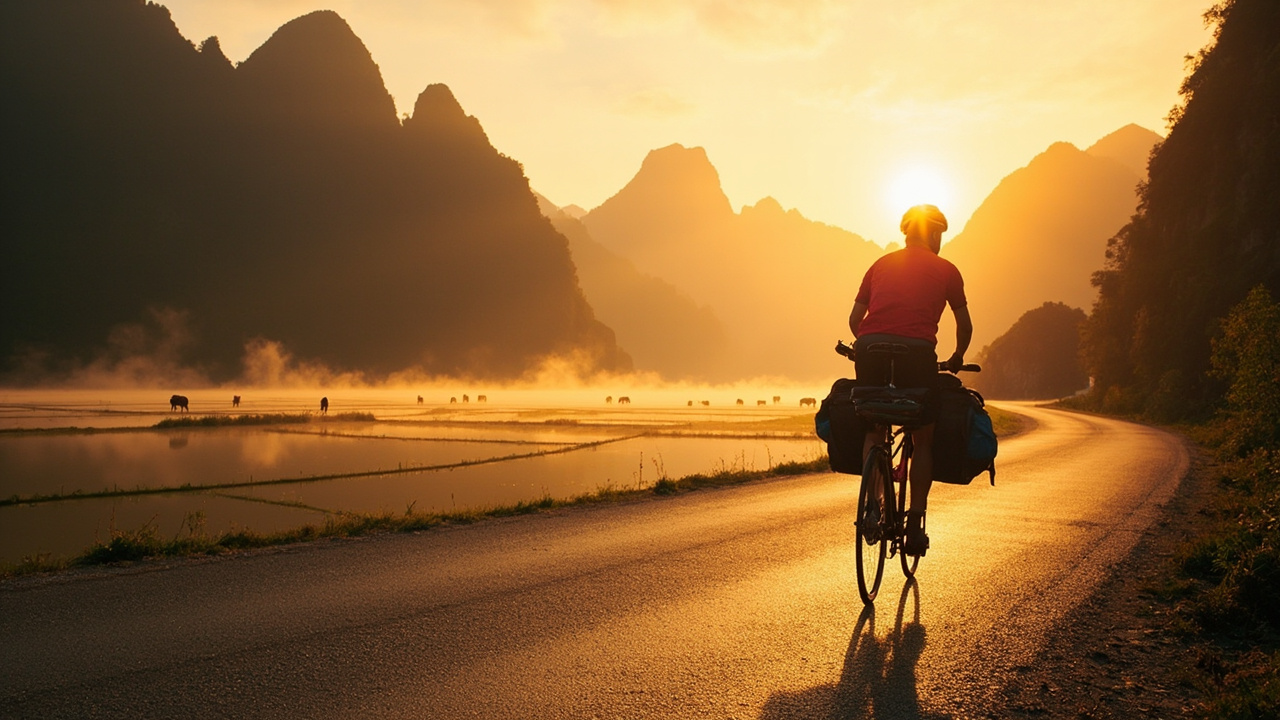
China Bike Tour Guide
The mechanic in Yangshuo tightened the last bolt on my rented Giant, looked at my legs, then at the karst peaks behind me, and said in broken English: “Too many mountains. You will cry.” He wasn’t wrong. I cried somewhere around kilometer 40 on the road toward Xingping, not from pain but from the sheer absurdity of pedaling through a landscape that looked like a Song dynasty scroll had come loose from its frame. A water buffalo watched me from a rice paddy. A grandmother on an e-bike overtook me carrying three live chickens. That was day one of a three-week ride through Guangxi, and it reset everything I thought I knew about cycling in China.
Here’s the thing nobody tells you: China is one of the great cycling countries on earth, and almost no foreign tourists do it. The infrastructure is there. The bikes are cheap to rent. The food is spectacular and costs less than a coffee in Brooklyn. What’s missing is information in English, which is why most visitors stick to the same five cities and never see the terraced hills of Guizhou or the bamboo forests of Anhui. This guide covers ten regions where you can actually ride, with real prices, real logistics, and the specific mistakes I made so you don’t have to repeat them.
Quick answer
China is fully open to American, most European, and Southeast Asian passport holders in 2026, with visa-free entry of 30 days for many nationalities (check your specific country’s status before booking). A supported multi-day bike tour with an English-speaking guide runs $150–$350 per day, while self-supported riding costs $30–$60 per day including bike rental, guesthouses, and meals. The best months are April–May and September–October; avoid July–August in the south (typhoon season plus 38°C heat) and the Lunar New Year period when guesthouses fill up and prices triple.
The Short Version
If you have two weeks and want one unforgettable ride, fly to Guilin and cycle the Li River countryside to Yangshuo, then loop through the rice terraces at Longji. If you have a month, add Yunnan’s Dali–Lijiang corridor and the Tibetan plateau edge around Shangri-La. Skip Shanghai and Beijing for cycling — they’re for trains and dumplings. Bring your own helmet and saddle. Rent everything else.
How I Picked These
I’ve ridden in China on and off since 2019, mostly self-supported with a folding bike and a lot of Google Translate. For this guide I re-visited eight of these ten regions in 2025 and 2026, talked to bike shop owners in Yangshuo, Chengdu, and Dali, and cross-checked rental prices with three different outfitters per region. I also leaned on a WeChat group of about 40 expat cyclists who live in China full-time — they corrected me on several things I’d gotten wrong, including the fact that Kunming’s bike-share system now requires a Chinese ID, which killed one of my planned routes. Where I couldn’t verify a price or a road condition, I’ve said so.
Comparison Table
| Rank | Region | Best For | Approx Cost (USD/day) | Time Needed | When to Go |
|---|---|---|---|---|---|
| 1 | Guangxi (Guilin–Yangshuo) | Karst scenery, first-timers | $35–60 self / $180+ guided | 4–7 days | Apr–May, Sep–Nov |
| 2 | Yunnan (Dali–Lijiang) | Mountain roads, minority villages | $40–70 | 7–10 days | Mar–May, Sep–Oct |
| 3 | Zhejiang (Qiandao Lake) | Lakeside paved paths, easy riding | $30–50 | 3–5 days | Apr–Jun, Sep–Oct |
| 4 | Hainan Island | Winter escape, coastal roads | $40–70 | 7–10 days | Nov–Mar |
| 5 | Sichuan (Chengdu–Qingcheng) | Tea hills, spicy food | $35–55 | 3–5 days | Mar–May, Sep–Nov |
| 6 | Fujian (Xiamen–Tulou) | Hakka roundhouses, coastal | $40–65 | 5–7 days | Oct–Apr |
| 7 | Anhui (Huizhou villages) | Ancient whitewashed towns | $35–55 | 4–6 days | Apr–May, Oct–Nov |
| 8 | Qinghai Lake | High-altitude epic, empty roads | $50–80 | 5–8 days | Jun–Sep |
| 9 | Guizhou (Qiandongnan) | Miao villages, terraced hills | $35–55 | 6–9 days | Apr–Jun, Sep–Oct |
| 10 | Beijing outskirts (Great Wall) | Weekend warrior rides | $30–50 | 2–3 days | Apr–May, Sep–Oct |
1. Guangxi – The Ride That Ruins All Other Rides
I already told you about the water buffalo. What I didn’t mention is that the road from Yangshuo to Xingping, roughly 27 kilometers along the Li River, might be the single best day of cycling in Asia. You pass through villages where old men play xiangqi on stone tables, past bamboo rafts drifting downstream, and up short punchy climbs that open onto views of 300-meter limestone towers rising straight out of the fields.
The reason this region works so well for first-timers is that the terrain is forgiving. You can do 30 kilometers a day and feel accomplished, or push to 80 if you’re fit. Guesthouses are everywhere, most charge $15–$30 (¥110–¥220) a night for a clean room with air conditioning, and every village has a noodle shop where you’ll eat for under $3 (¥20).
📷 Location: Yangshuo County, Guangxi. The classic loop starts in Yangshuo town and runs north along the Yulong River, then east to Xingping.
🎫 Entry fee: Free to ride. Some scenic spots charge $8–$15 (¥60–¥110), including the Xingping viewpoint.
🕒 Opening hours: Roads are always open. Bike rentals typically run 8am–8pm.
🚴 How to actually get there: Fly to Guilin Liangjiang Airport (KWL), take the airport shuttle to Guilin North Railway Station, then a 25-minute high-speed train to Yangshuo Station. From the station, taxis to town cost about $12 (¥85). Rent a bike from any of the shops on West Street for $5–$10 (¥35–¥70) per day.
⏰ When to visit: April–May and September–November. Avoid July–August (brutal heat, afternoon thunderstorms) and the first week of October (National Day crowds).
💡 Insider tips: Bring your own helmet — rental shops rarely stock them in your size. Download Amap (Gaode) instead of Google Maps; it shows bike paths and elevation. Carry small bills because village shops sometimes can’t break a ¥100 note. Set up Alipay or WeChat Pay before you arrive; almost nobody takes cash in the countryside anymore.
I ate a bowl of Guilin rice noodles at a stall in Xingping for ¥8 and it was better than anything I’ve had in a restaurant.
2. Yunnan – Where the Road Goes Up and Keeps Going Up
Yunnan broke me. Not in a bad way, but the Dali-to-Lijiang ride, about 180 kilometers through the Cangshan foothills, has more climbing than the elevation profile suggests. I underestimated it, ran out of water on day two, and was rescued by a truck driver named Chen who pulled over, handed me a bottle of Nongfu Spring, and refused to take money.
What makes Yunnan special is the combination of altitude, minority culture, and food. You’ll ride through Bai and Naxi villages where the architecture is completely different from Han China, eat yak butter tea at 2,500 meters, and finish each day in a town with a proper coffee scene (Dali has better espresso than most American cities).
📷 Location: Dali Old Town to Lijiang Old Town, via Shaxi and Jianchuan.
🎫 Entry fee: Free to ride. Old Town preservation fees are $7–$10 (¥50–¥70) in some areas.
🕒 Opening hours: N/A for roads.
🚴 How to actually get there: Fly to Dali (DLU) or Kunming (KMG), then take the high-speed train to Dali Station (2 hours from Kunming). Rent from Dali Bike Rental near the South Gate for $12–$20 (¥85–¥140) per day for a decent hardtail.
⏰ When to visit: March–May and September–October. Winter is cold at altitude; summer is rainy.
💡 Insider tips: Acclimatize for two days in Dali (1,900m) before climbing toward Lijiang. Bring a real rain jacket — afternoon showers are sudden. Learn “duoshao qian” (how much) and “xiexie” (thanks); English is rare outside hotels. The high-speed rail network connects Dali and Lijiang in 90 minutes if you need a bailout.
A Naxi grandmother in Shaxi taught me to say “thank you” in her language and then insisted I take a bag of walnuts for the road.
3. Zhejiang – The Easy One Nobody Talks About
Qiandao Lake, a man-made reservoir about 150 kilometers southwest of Hangzhou, has a 140-kilometer paved loop that’s almost entirely flat. I rode it in two days and saw maybe four other cyclists. The water is absurdly clear, the islands are forested, and the whole thing feels like a secret.
This is the ride I’d recommend to anyone nervous about Chinese roads. Traffic is light, signage is decent, and there are guesthouses every 20 kilometers. It’s also the easiest region to reach from Shanghai — 90 minutes by high-speed rail to Qiandaohu Station.
📷 Location: Chun’an County, Zhejiang Province.
🎫 Entry fee: Free. Some ferry crossings cost $5–$10 (¥35–¥70).
🕒 Opening hours: N/A.
🚴 How to actually get there: High-speed train from Shanghai Hongqiao to Qiandaohu Station (90 min, $20/¥140). Rent bikes in Chun’an town for $10–$15 (¥70–¥110) per day.
⏰ When to visit: April–June and September–October.
💡 Insider tips: The east side of the lake has better roads than the west. Book guesthouses on Ctrip (English version available). Bring a power bank — charging points are rare. If you’re coming from Shanghai, this is the perfect two-day escape.
I met a retired teacher from Hangzhou on the west shore who rides the loop every weekend and gave me his phone number in case I got lost.
4. Hainan – China’s Winter Cycling Secret
Everyone thinks of Hainan as a beach resort. It’s also got a 600-kilometer coastal ring road with almost no climbing and warm weather when the rest of China is freezing. I rode the eastern half in January, wearing shorts the whole time.
The downside: Hainan is developing fast, and some sections of the coast are now wall-to-wall resorts. Stick to the east coast between Haikou and Sanya for the best combination of scenery and infrastructure.
📷 Location: Eastern coastal route, Haikou to Sanya.
🎫 Entry fee: Free.
🕒 Opening hours: N/A.
🚴 How to actually get there: Fly into Haikou Meilan (HAK) or Sanya Phoenix (SYX). Rental shops in both cities charge $15–$25 (¥110–¥180) per day.
⏰ When to visit: November–March.
💡 Insider tips: Book accommodation ahead during Chinese New Year — prices triple. The highway has a dedicated bike lane in most sections. Bring sunscreen; the UV is no joke even in winter.
A Sanya bike shop owner told me the best road in Hainan is one nobody rides — the inland mountain route through Wuzhishan.
5. Sichuan – Tea Hills and Chili Oil
The ride from Chengdu to Qingcheng Mountain, about 60 kilometers, is the perfect introduction to Sichuan cycling. You start in flat farmland, climb gently into tea terraces, and finish at a Taoist mountain that’s been a pilgrimage site for 2,000 years.
Chengdu itself is flat and bike-friendly, with a growing network of protected lanes. The city’s bike-share system works with Alipay, and you can ride for ¥1.5 per 30 minutes.
📷 Location: Chengdu to Qingchengshan, via Dujiangyan.
🎫 Entry fee: Qingcheng Mountain entry is $12–$15 (¥85–¥110).
🕒 Opening hours: Mountain 8am–6pm.
🚴 How to actually get there: High-speed train from Chengdu North to Qingchengshan Station (40 min, $5/¥35). Rent in Chengdu for $10–$18 (¥70–¥130) per day.
⏰ When to visit: March–May, September–November.
💡 Insider tips: The Chengdu bike scene is genuinely good — check out the Tianfu Greenway. Bring a mask for the rare bad air day. Eat the mapo tofu; you’ve earned it.
I got lost in a tea village outside Dujiangyan and a farmer walked me back to the main road, then gave me a bag of fresh-picked leaves.
6. Fujian – Roundhouses and Coastal Wind
The Hakka tulou, those massive circular earthen buildings in western Fujian, are usually visited by bus tour. Cycling between them is a completely different experience. I rode from Xiamen to Nanjing County over four days, and the moment you leave the coast, the roads empty out.
The terrain is rolling, not flat, so expect 500–800 meters of climbing per day. The reward is riding through villages where people still live in 300-year-old communal buildings and wave at you like you’re the first foreigner they’ve seen in months.
📷 Location: Xiamen to Yongding and Nanjing counties.
🎫 Entry fee: Tulou clusters charge $12–$18 (¥85–¥130).
🕒 Opening hours: 8am–5:30pm.
🚴 How to actually get there: Fly to Xiamen (XMN), rent in the city, then ride west. Or take a train to Longyan and start there.
⏰ When to visit: October–April.
💡 Insider tips: Stay in a tulou guesthouse at least one night — it’s about $25 (¥180) and unforgettable. Bring cash for village entry fees. The coastal wind can be brutal; plan your direction accordingly.
An elderly Hakka woman in Chuxi invited me into her tulou for tea and showed me a photo of her great-grandson in New York.
7. Anhui – Whitewashed Villages and Bamboo Forest
The Huizhou villages of southern Anhui — Hongcun, Xidi, and dozens of smaller ones — are UNESCO sites for good reason. Cycling between them, on quiet roads through bamboo forest and terraced tea, is the best way to see them without the tour buses.
The riding is moderate: 40–60 kilometers a day, with a few climbs. Hongcun itself is small enough to walk, but the roads connecting it to Xidi and the surrounding villages are where the magic is.
📷 Location: Yi County, Huangshan Prefecture.
🎫 Entry fee: Hongcun $15 (¥110), Xidi $15 (¥110).
🕒 Opening hours: 7:30am–5:30pm.
🚴 How to actually get there: High-speed train to Huangshan North Station, then a 1-hour bus to Yi County. Rent in Hongcun for $10–$15 (¥70–¥110) per day.
⏰ When to visit: April–May, October–November.
💡 Insider tips: Stay inside Hongcun after 5pm when day-trippers leave. Bring a headlamp for early rides. The local specialty is stinky mandarin fish — try it once.
I got caught in a downpour outside Xidi and sheltered in a farmer’s shed for an hour while he told me about his son working in Shenzhen.
8. Qinghai Lake – The High-Altitude Epic
At 3,200 meters, Qinghai Lake is not for beginners. But if you’re fit and acclimatized, the 360-kilometer loop around China’s largest lake is one of the great rides in Asia. Empty roads, Tibetan prayer flags, and yaks grazing on the shoulder.
The altitude is real. I got a headache on day one and had to slow down. But the silence, the scale, and the color of the water — deep blue against yellow rapeseed fields in July — make it worth the suffering.
📷 Location: Qinghai Province, loop around the lake.
🎫 Entry fee: Free to ride. Some viewpoints charge $5–$10 (¥35–¥70).
🕒 Opening hours: N/A.
🚴 How to actually get there: Fly to Xining (XNN), then bus or train to Xihai Town (2 hours). Rent in Xining for $20–$30 (¥140–¥220) per day.
⏰ When to visit: June–September only.
💡 Insider tips: Spend two nights in Xining (2,275m) before starting. Bring altitude sickness medication. The wind can hit 60 km/h in the afternoon — ride mornings.
A Tibetan herder near Heimahe poured me a cup of yak milk tea and laughed at my sunburn.
9. Guizhou – The Road Less Ridden
Guizhou is poor, mountainous, and stunning. The Miao and Dong minority villages in Qiandongnan prefecture are connected by winding roads that see almost no foreign cyclists. I rode from Kaili to Zhaoxing over six days and didn’t meet another Westerner the entire time.
The riding is hard — 800–1,200 meters of climbing most days — but the villages, the food (sour fish soup, glutinous rice), and the sheer remoteness make it unforgettable.
📷 Location: Qiandongnan Miao and Dong Autonomous Prefecture.
🎫 Entry fee: Most villages free; some charge $5–$10 (¥35–¥70).
🕒 Opening hours: N/A.
🚴 How to actually get there: High-speed train to Kaili South Station, then start riding. Rent in Kaili for $12–$18 (¥85–¥130) per day.
⏰ When to visit: April–June, September–October.
💡 Insider tips: Learn a few Miao phrases; it goes a long way. Bring wet weather gear. Guesthouses are basic — expect cold showers occasionally.
A Dong grandmother in Zhaoxing taught me to sing a welcome song and then made me repeat it until I got the tones right.
10. Beijing Outskirts – The Great Wall by Bike
You can’t cycle on the Great Wall. But you can cycle to it, and the ride from Beijing to Mutianyu or Jinshanling is genuinely great. I did the Mutianyu route in a day — 75 kilometers each way — and it was one of the most satisfying rides I’ve done in China.
The route leaves the city through Huairou District, climbs into the mountains, and ends at a wall section that’s less crowded than Badaling. You’ll need a decent bike and legs; the climb is 600 meters.
📷 Location: Huairou District, northeast of Beijing.
🎫 Entry fee: Mutianyu $8 (¥60) plus cable car $20 (¥140).
🕒 Opening hours: 7:30am–6pm.
🚴 How to actually get there: Rent in Beijing for $15–$25 (¥110–¥180) per day. Ride north via G101, or take the bus to Huairou and start there.
⏰ When to visit: April–May, September–October.
💡 Insider tips: Avoid weekends — the road fills with tour buses. Bring a SIM card with data because you’ll need maps. Lock your bike at the wall entrance; theft is rare but not unheard of.
I ate a bowl of zhajiangmian at a roadside stall in Huairou and watched the sun set over the wall.
FAQ summary
For most first-time visitors, the easiest and most rewarding China bike tour is the Guilin–Yangshuo loop in Guangxi, which combines spectacular karst scenery with gentle terrain and cheap guesthouses ($15–$30 per night). Visa-free entry is available to many nationalities in 2026, but you must set up Alipay or WeChat Pay before arrival because cash is rarely accepted outside major cities. Budget $30–$60 per day for self-supported riding including bike rental, food, and accommodation, and plan your trip for April–May or September–October to avoid extreme heat and typhoon season.
FAQ
Q: Do I need a visa to cycle in China in 2026? A: Most American, European, and Southeast Asian passport holders can enter China visa-free for up to 30 days in 2026, but the policy varies by nationality and changes frequently. Check the current visa rules or the visa-free transit options before booking. If you’re staying longer than 30 days or planning multi-entry, apply for a tourist visa in advance.
Q: Can I bring my own bike to China? A: Yes, but it’s a hassle. Most airlines charge $100–$200 each way for a bike box, and Chinese customs may inspect it. Unless you’re riding a very specific bike, rent locally — quality rentals cost $10–$30 per day and are widely available in tourist regions.
Q: Is it safe to cycle on Chinese roads? A: In rural tourist regions, yes — traffic is light and drivers are used to cyclists. In big cities, stick to protected bike lanes and avoid rush hour. I’ve ridden thousands of kilometers in China and never felt genuinely unsafe, but I avoid highways and always wear a helmet.
Q: What apps do I need for cycling in China? A: Amap (Gaode) for navigation with bike mode, Google Translate or Baidu Translate for menus and signs, and Alipay or WeChat Pay for everything. You’ll also want a VPN installed before you arrive if you plan to use Google services.
Q: How much does a guided bike tour cost in China? A: Supported tours with English-speaking guides run $150–$350 per person per day, including bike, accommodation, meals, and a support vehicle. Companies like Bike China and China Bike Tours operate in Guangxi, Yunnan, and Sichuan. Self-supported riding costs a fraction of that.
Q: What’s the best month to bike in China? A: April, May, September, and October are ideal across most of the country. Avoid July–August in the south (heat and typhoons) and December–February in the north (freezing). Hainan and Yunnan are good winter options.
Q: Do I need to speak Chinese to bike tour in China? A: You can get by with a translation app and basic phrases, but learning “hello,” “thank you,” “how much,” and “where is the bathroom” will make your trip much smoother. In rural areas, English is rare. In tourist towns like Yangshuo and Dali, enough people speak some English to help.
The Honest Wrap-up
This guide is for people who want to see China from a saddle, not a tour bus window. It’s not for anyone who needs air conditioning, Western toilets, and a Starbucks every 10 kilometers — you’ll be uncomfortable, you’ll get lost, and you’ll eat things you can’t identify. That’s the point. If you’re on the fence, book the flight to Guilin and start with the Yangshuo loop. It’s the gentlest introduction, the scenery is unreal, and if you hate it, you can be back in a hotel with a cocktail in two hours. One last thing: bring a small towel. You’ll sweat more than you expect, and guesthouses rarely provide one.
More guides you may like
Top 10 Bridges in China
China's bridges are engineering marvels spanning mountains, rivers, and seas. Here are 10 of the most spectacular, from ancient stone to modern steel.
8 min read

Top 10 Buddhist Sites in China
From the Leshan Giant Buddha to the Dunhuang Caves, these 10 Buddhist sites represent 2,000 years of China's spiritual heritage.
9 min read
Top 10 Day Trips from Beijing You Shouldn't Miss
Beijing is packed with history, but some of China's best experiences are just a few hours away. Here are 10 day trips that will transform your visit.
9 min read
Top 10 Hidden Gems in China Off the Beaten Path
Beyond the Great Wall and Terracotta Warriors, China has incredible hidden destinations few tourists ever reach. Here are 10 underrated gems worth the detour.
9 min read
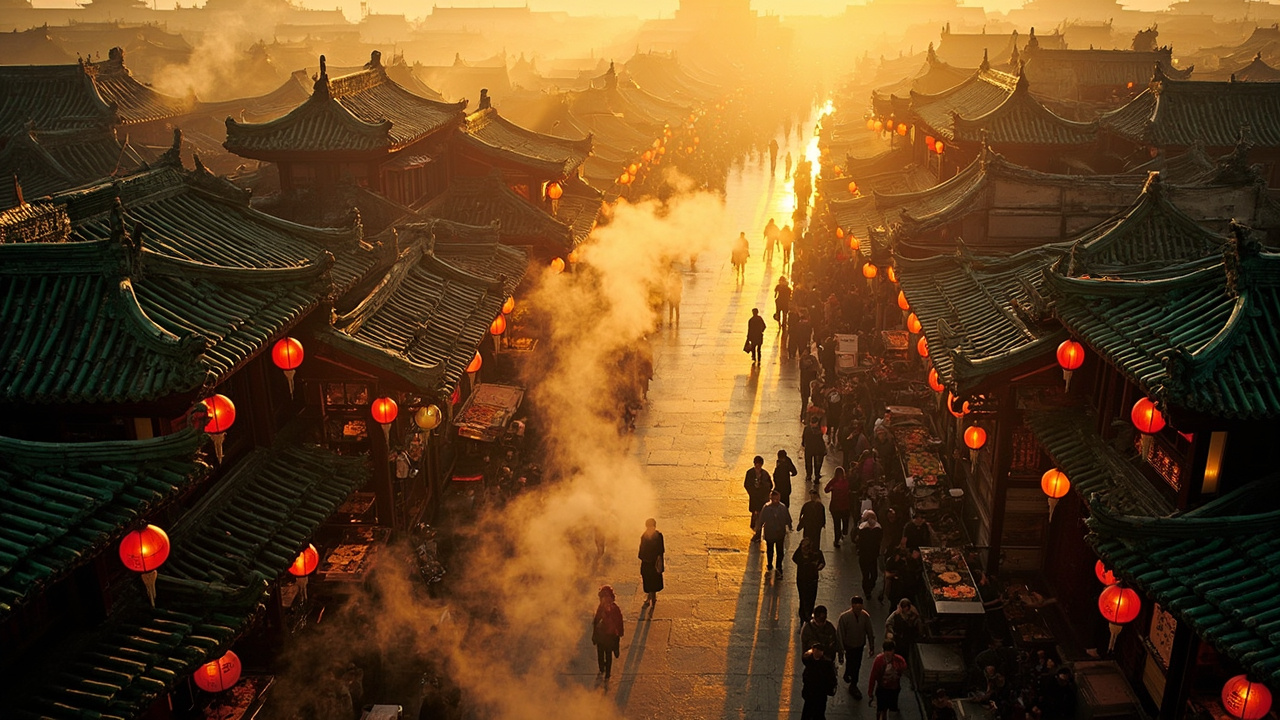
Top 10 Markets and Shopping Streets in China
From Shanghai's Bund to Beijing's Silk Street - 10 markets where foreigners can haggle, explore, and bring home authentic Chinese goods.
9 min read

Top 10 Museums in China You Shouldn't Miss
China's museums span 5,000 years of civilization. These 10 - from the Palace Museum to Xi'an's terracotta gallery - are unmissable for culture lovers.
9 min read