
Temple of Heaven Guide
TODO: Extract from article (100-160 chars)
Temple of Heaven Guide
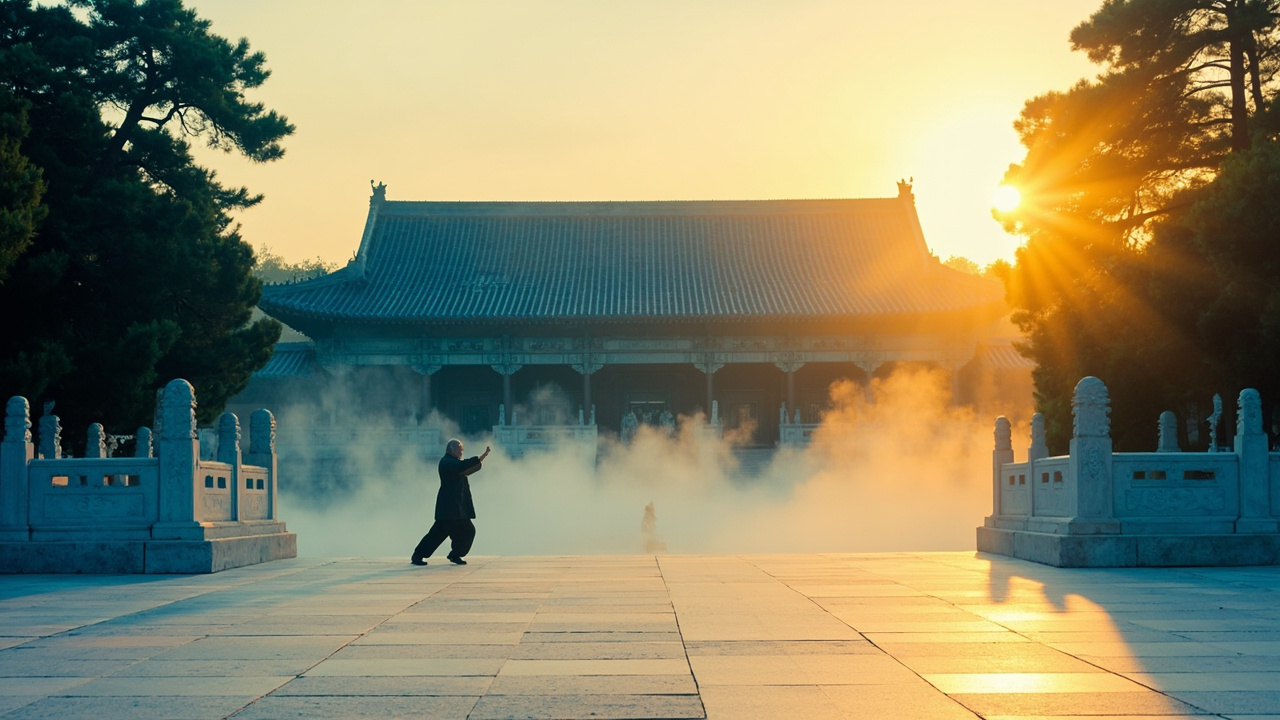
The first thing I noticed wasn’t the temple. It was the sound of a badminton shuttlecock being hit, over and over, somewhere behind me. I’d paid my 34 yuan (about $4.70) at the south gate, walked through a corridor of cypress trees that must be centuries old, and emerged not into a solemn monument but into a full-blown neighborhood park at 7am. Retirees doing tai chi in loose white pants. A man writing calligraphy on the pavement with a mop-sized brush and a bucket of water. Two women in matching pink tracksuits arguing cheerfully about something I couldn’t follow. The actual Temple of Heaven — the round blue-tiled building on every postcard — was still ten minutes north, and honestly, I almost didn’t want to leave this part.
That’s the thing nobody tells you about the Temple of Heaven. It’s not a museum. It’s a 267-hectare park in the middle of Beijing where 4 million people a year come to pray, exercise, sing opera, play cards, and just exist, and the ceremonial buildings are almost a side attraction. The emperors of the Ming and Qing dynasties came here to pray for good harvests for nearly 500 years, and the architecture they left behind is genuinely one of the great achievements of Chinese design. But the park around it is alive in a way that most UNESCO sites aren’t.
This guide is for someone who’s never been to China, is probably slightly nervous about the language barrier, and wants to know exactly how to get there, what it costs, when to go, and what they’ll actually see. I’ve been to the Temple of Heaven maybe nine times over seven years in Beijing, in every season, and I still find new corners. Here’s everything I’d tell a friend.
Quick answer
The Temple of Heaven (Tiantan) is a 267-hectare imperial park in Dongcheng District, Beijing, open daily roughly 6am–10pm (buildings 8am–5:30pm, shorter in winter). The through-ticket costs 34 yuan ($4.70) in peak season and 28 yuan ($3.90) in low season, and the easiest access is Line 5 to Tiantan Dongmen Station, Exit A. Most visitors need 2–3 hours; go at opening time to see locals doing tai chi before the tour groups arrive.
The Short Version
If you only do one thing: enter at the south gate (Zhaohengmen), walk the central axis north through the Circular Mound Altar, then the Imperial Vault, then the Hall of Prayer for Good Harvests. That’s the full ceremonial sequence the emperors walked, and it takes about 90 minutes. Go before 8am. Buy the through-ticket, not the park-only ticket. Skip the weekends if you can. And don’t rush the cypress groves — that’s where the real park is.
How I Picked These
This isn’t a list of ten separate places — the Temple of Heaven is one site, so what follows is ten parts of it, ranked by how much they’re worth your time. I’ve walked every one of them, in January snow and August humidity, and I’ve dragged visiting friends and family through all of it more times than they’d like. I’ve also talked to the regulars: the old men who’ve played chess at the same table for twenty years, the opera singers under the Long Corridor, the woman who sells roasted sweet potatoes near the east gate every winter. Their advice is baked in here. Where I’m unsure about a current price or hour, I’ve said so.
Comparison Table
| Rank | Part of the Site | Best For | Approx Cost (USD) | Time Needed | When to Go |
|---|---|---|---|---|---|
| 1 | Hall of Prayer for Good Harvests | The iconic shot | Included in ticket | 30–40 min | Right at opening |
| 2 | Echo Wall (Imperial Vault) | Acoustic novelty | Included | 15 min | Before 9am |
| 3 | Circular Mound Altar | Imperial history | Included | 20 min | Morning |
| 4 | Long Corridor | Local life | Free with park ticket | 20 min | 7–9am |
| 5 | Cypress Grove | Quiet, shade | Free with park ticket | 30 min | Any time |
| 6 | Seven Star Stones | Rock formations | Free with park ticket | 15 min | Midday |
| 7 | Divine Kitchen | Lesser-known halls | Included | 10 min | Any time |
| 8 | Fasting Palace | Off-the-path history | Included | 15 min | Any time |
| 9 | Rose Garden | Seasonal flowers | Free with park ticket | 15 min | May–June |
| 10 | North Gate area | Exit + food | Free | 10 min | Lunchtime |
Hall of Prayer for Good Harvests — the building you actually came for
I stood under it once in the rain, and the whole structure seemed to glow. The triple-tiered roof is covered in deep blue glazed tiles, and the color is deliberate: blue for heaven. It’s 38 meters tall, built entirely of wood without a single nail, and it sits on a three-tiered marble terrace that you climb via a set of steps worn smooth by five centuries of feet. The building you see today is a 19th-century reconstruction — the original burned down in 1889 after a lightning strike — but it’s a faithful one, and the geometry is the point. Four inner pillars for the four seasons, twelve middle pillars for the months, twelve outer pillars for the traditional Chinese hours of the day. Twenty-eight pillars total, all holding up a roof that weighs hundreds of tons.
📍 Location: Center of the park, north of the Imperial Vault, Dongcheng District.
🎫 Entry fee: Included in the through-ticket (34 yuan / $4.70 peak, 28 yuan / $1.40) low.
🕐 Opening hours: Buildings 8am–5:30pm April–October, 8am–5pm November–March. Park itself opens around 6am and closes around 10pm.
🚇 How to actually get there: Line 5 to Tiantan Dongmen Station, Exit A. Walk west 5 minutes to the east gate. Or Line 8 to Tianqiao Station, Exit C, for the south gate — which is the historically correct way to enter.
⏰ When to visit: First hour after opening. By 9:30am the tour groups arrive and the central axis becomes a slow-moving queue.
💡 Insider tips: The building is best photographed from the south, looking north, with the marble terrace in the foreground. Bring a wide lens or use your phone’s 0.5x. There’s a small side path on the east that gives you an almost-empty angle most people miss. And yes, you can walk up onto the terrace — just don’t touch the pillars.$3.90 low season). Park-only ticket is 15 yuan ($2) peak, 10 yuan (
The first time I came here, I made the mistake of trying to see it at noon in July. Don’t do that.
Echo Wall — where the acoustics are real but the crowds aren’t
The Echo Wall wraps around the Imperial Vault of Heaven, a smaller round building just south of the Hall of Prayer. The wall is smooth, circular, and about 3.7 meters high, and if you stand at one end and whisper, someone at the other end can supposedly hear you. In practice, on a busy day, you’ll hear about forty other people whispering at the same time, which somewhat ruins the effect. But here’s what most tourists don’t know: the acoustics work best when the wall is nearly empty, which means arriving right at opening or on a cold weekday morning.
📍 Location: Between the Circular Mound Altar and the Hall of Prayer, on the central axis. 🎫 Entry fee: Included in the through-ticket. 🕐 Opening hours: Same as the Hall of Prayer, 8am–5:30pm (5pm in winter). 🚇 How to actually get there: It’s on the central axis — you literally can’t miss it walking north from the south gate. ⏰ When to visit: Before 9am, ideally on a weekday. 💡 Insider tips: The “triple sound stone” just south of the vault is another acoustic trick — stand on the first stone and clap, and you’ll hear one echo; second stone, two echoes; third, three. Most people walk right past it.
I once watched a Chinese father patiently explain the echo effect to his daughter for ten minutes, clapping on each stone, and she was completely unimpressed. Fair enough.
Circular Mound Altar — the emptiest important building here
This is the one people skip, and it’s a mistake. The Circular Mound Altar is a three-tiered circular platform of white marble where the emperor actually performed the winter solstice sacrifice — the most important ritual in the imperial calendar. The numbers are all symbolic: the top tier has nine stones in the center, surrounded by rings of 18, 27, and so on, all multiples of nine, because nine was the emperor’s number. The center stone is called the “Heavenly Heart Stone,” and emperors believed their voice carried directly to heaven from that spot.
📍 Location: Southern end of the central axis, just inside the south gate. 🎫 Entry fee: Included in the through-ticket. 🕐 Opening hours: 8am–5:30pm (5pm in winter). 🚇 How to actually get there: Enter the south gate (Line 8, Tianqiao Station, Exit C) and walk straight north — it’s the first major structure. ⏰ When to visit: Early morning, when the light is low and the marble looks almost blue. 💡 Insider tips: Stand on the Heavenly Heart Stone and just be quiet for a minute. Most people don’t. It’s the closest thing to a spiritual experience you’ll get here without a ticket to a ceremony.
I brought a friend from Chicago here who’d never been to Asia, and she stood on that stone for a full two minutes without saying anything. Then she said, “Okay, I get it now.”
Long Corridor — the best free show in Beijing
The Long Corridor is a 350-meter covered walkway that runs along the eastern edge of the central complex, and it’s where the park’s social life happens. On any given morning you’ll find groups singing Peking opera, playing erhu, doing calligraphy, playing cards, dancing, or just sitting and watching. It’s free with the park ticket, which means it’s technically the cheapest entertainment in the city. I’ve spent an hour here more than once and never regretted it.
📍 Location: East side of the central axis, running north–south. 🎫 Entry fee: Free with the park ticket (15 yuan / ~$2 peak). 🕐 Opening hours: Park hours, roughly 6am–10pm. 🚇 How to actually get there: From the east gate (Line 5, Tiantan Dongmen, Exit A), walk west and then south along the corridor. ⏰ When to visit: 7–9am is peak local time. Weekends are busiest but also most entertaining. 💡 Insider tips: Don’t photograph people without asking. A nod and a gesture toward your camera usually gets a smile and a yes. If someone offers you a seat, take it — it’s a genuine invitation, not politeness.
An old man named Wang once tried to teach me a few characters of calligraphy here using a brush and a bucket of water. I was terrible at it. He was very patient.
Cypress Grove — where the park actually breathes
The cypress trees here are the oldest living things in the park, some of them 500+ years old, and the groves on the eastern and western edges are where you go when you want to escape the crowds entirely. It’s quiet, shaded, and smells like resin and dust. There’s a reason the emperors planted cypress specifically: they’re evergreen, they symbolize longevity, and they grow slowly and evenly, which makes them perfect for a ceremonial landscape.
📍 Location: Throughout the park, but densest on the east and west sides. 🎫 Entry fee: Free with the park ticket. 🕐 Opening hours: Park hours. 🚇 How to actually get there: Any gate, then walk off the central axis. ⏰ When to visit: Midday, when everyone else is at the buildings. 💡 Insider tips: The trees are protected — don’t touch them, don’t lean on them, and definitely don’t try to carve anything. There are hidden benches throughout; look for the ones facing away from the paths.
Seven Star Stones — a small detour worth taking
The Seven Star Stones are seven large rocks arranged in a pattern that mirrors the Big Dipper, set in a small garden in the southeast part of the park. They’re not spectacular on their own, but the area around them is quiet and green, and it’s a good place to sit if you need a break from walking. The rocks were placed here in the Ming dynasty and have a slightly mysterious origin story that nobody fully agrees on.
📍 Location: Southeast section of the park. 🎫 Entry fee: Free with the park ticket. 🕐 Opening hours: Park hours. 🚇 How to actually get there: From the south gate, walk east and then north. ⏰ When to visit: Any time. 💡 Insider tips: This is a good spot to sit and drink the tea you brought. There’s a small pavilion nearby.
Divine Kitchen — the part almost nobody sees
The Divine Kitchen is where food for the sacrifices was prepared, and it’s tucked away on the eastern side of the central complex. It’s not glamorous — mostly low buildings and courtyards — but it’s where the ritual actually happened, and it gives you a sense of how much logistical work went into a single imperial ceremony. If you’re interested in how the empire functioned, this is more interesting than the pretty buildings.
📍 Location: East of the Hall of Prayer. 🎫 Entry fee: Included in the through-ticket. 🕐 Opening hours: 8am–5:30pm (5pm in winter). 🚇 How to actually get there: From the Hall of Prayer, walk east. ⏰ When to visit: Any time. 💡 Insider tips: There’s almost never a crowd here. Use it as a break from the central axis.
Fasting Palace — where the emperor slept before the big day
The Fasting Palace is where the emperor spent three days in ritual purification before the winter solstice sacrifice. It’s a walled compound with its own moat, and it’s one of the more peaceful corners of the park. The architecture is more residential than ceremonial, which makes it feel oddly human — you can imagine an emperor pacing here, nervous about the ritual ahead.
📍 Location: Western side of the park. 🎫 Entry fee: Included in the through-ticket. 🕐 Opening hours: 8am–5:30pm (5pm in winter). 🚇 How to actually get there: From the west gate (Line 8, Tianqiao is closer to the south, but the west gate works too). ⏰ When to visit: Any time. 💡 Insider tips: The moat has koi in it. Kids love it.
Rose Garden — the seasonal bonus
The Rose Garden is on the western side of the park and blooms in late May and June. It’s not why you come to the Temple of Heaven, but if you’re here in early summer, it’s a nice 15-minute detour. The rest of the year it’s just a garden.
📍 Location: Western section. 🎫 Entry fee: Free with the park ticket. 🕐 Opening hours: Park hours. 🚇 How to actually get there: From the west gate, walk east. ⏰ When to visit: Late May to mid-June. 💡 Insider tips: Bring a hat. There’s no shade in the garden itself.
North Gate area — where you exit and eat
The north gate is the most convenient exit if you’re heading to the Yonghe Temple or the Drum and Bell Towers afterward, and there’s a cluster of small restaurants and snack stalls just outside. It’s not a destination, but it’s a practical one. The roasted sweet potato vendors here in winter are excellent.
📍 Location: North edge of the park. 🎫 Entry fee: Free. 🕐 Opening hours: Park hours. 🚇 How to actually get there: Line 5 to Tiantan Dongmen, then walk north through the park; or Line 2 to Yonghegong, then walk south. ⏰ When to visit: Lunchtime. 💡 Insider tips: The stall closest to the gate is usually the freshest. Cash is rarely accepted — have Alipay or WeChat Pay set up before you arrive in China.
FAQ summary
The Temple of Heaven is a 267-hectare imperial park in Beijing, open daily from roughly 6am to 10pm, with the main buildings open 8am–5:30pm (5pm in winter). The through-ticket costs 34 yuan ($4.70) in peak season and 28 yuan ($3.90) in low season, and covers all the major buildings. The easiest access is Line 5 to Tiantan Dongmen Station, Exit A, or Line 8 to Tianqiao Station, Exit C for the south gate. Most visitors should plan 2–3 hours and arrive at opening time to see the park’s local life before the tour groups arrive. No special visa is needed beyond your standard China entry — see the visa-free transit guide if you’re passing through.
FAQ
Q: How much does it cost to visit the Temple of Heaven?
A: The through-ticket (which covers the park plus all the main buildings) is 34 yuan ($4.70) in peak season, April 1–October 31, and 28 yuan ($3.90) in low season, November 1–March 31. A park-only ticket is 15 yuan ($2) peak, 10 yuan ($1.40) low, but you can’t enter the Hall of Prayer or the Circular Mound Altar without the through-ticket.
Q: What’s the best time of day to visit? A: Arrive at opening, around 6am for the park or 8am for the buildings. The first two hours are quiet, the light is soft, and you’ll see locals doing tai chi, singing opera, and playing cards before the tour groups arrive around 9:30am. Weekday mornings are noticeably calmer than weekends.
Q: How do I get there by subway? A: Take Line 5 to Tiantan Dongmen Station and use Exit A for the east gate (5-minute walk west). Or take Line 8 to Tianqiao Station and use Exit C for the south gate, which is the historically correct entrance. Both stations have English signage, and you’ll need a working SIM or eSIM to use maps on the go.
Q: Is English spoken at the Temple of Heaven? A: Not much. Signage at the main buildings has English translations, but staff and vendors mostly speak Mandarin only. A translation app like Pleco or Google Translate (with an offline Chinese pack downloaded) will get you through. Pointing at menus and using your phone’s camera translation works fine.
Q: Do I need a VPN to visit the Temple of Heaven? A: You don’t need a VPN to visit the park itself, but if you want to use Google Maps, Gmail, or Instagram while in China, you’ll need one installed before you arrive. WeChat, Alipay, and Didi (the local ride-hailing app) all work without a VPN.
Q: How long should I spend here? A: Two to three hours is right for most visitors. If you want to walk the full central axis, explore the cypress groves, and sit in the Long Corridor for a while, budget four hours. If you’re short on time, 90 minutes covers the three main buildings.
Q: Can I combine the Temple of Heaven with other Beijing sights? A: Yes. The north gate puts you a 20-minute walk from the Yonghe Temple (Lama Temple), and the south gate is close to the Beijing south railway station area. Many visitors pair it with the Forbidden City in the same day, though that’s a lot of walking — see the China high-speed rail guide if you’re planning onward travel.
The Honest Wrap-up
This guide is for the first-timer who wants to see the Temple of Heaven properly without wasting a morning figuring out which gate to use or overpaying for a tour. It’s not for someone who wants a luxury experience — there isn’t one here, and that’s part of the appeal. If you’re the kind of traveler who needs a guide holding a flag, book a tour; if you’re the kind who likes to wander and figure things out, you’ll be fine on your own.
One last thing: don’t schedule the Temple of Heaven as your first stop in Beijing if you’re jet-lagged. It’s a lot of walking on hard stone, and you’ll enjoy it more on day two. Get your payment apps set up the night before, charge your phone, bring water, and go early. The park will still be there at noon, but the version of it you want to see only exists before 9am.
More guides you may like
Top 10 Bridges in China
China's bridges are engineering marvels spanning mountains, rivers, and seas. Here are 10 of the most spectacular, from ancient stone to modern steel.
8 min read

Top 10 Buddhist Sites in China
From the Leshan Giant Buddha to the Dunhuang Caves, these 10 Buddhist sites represent 2,000 years of China's spiritual heritage.
9 min read
Top 10 Day Trips from Beijing You Shouldn't Miss
Beijing is packed with history, but some of China's best experiences are just a few hours away. Here are 10 day trips that will transform your visit.
9 min read
Top 10 Hidden Gems in China Off the Beaten Path
Beyond the Great Wall and Terracotta Warriors, China has incredible hidden destinations few tourists ever reach. Here are 10 underrated gems worth the detour.
9 min read
Top 10 Markets and Shopping Streets in China
From Shanghai's Bund to Beijing's Silk Street - 10 markets where foreigners can haggle, explore, and bring home authentic Chinese goods.
9 min read
Top 10 Museums in China You Shouldn't Miss
China's museums span 5,000 years of civilization. These 10 - from the Palace Museum to Xi'an's terracotta gallery - are unmissable for culture lovers.
9 min read