
Best Street Food in Chengdu
TODO: Extract from article (100-160 chars)
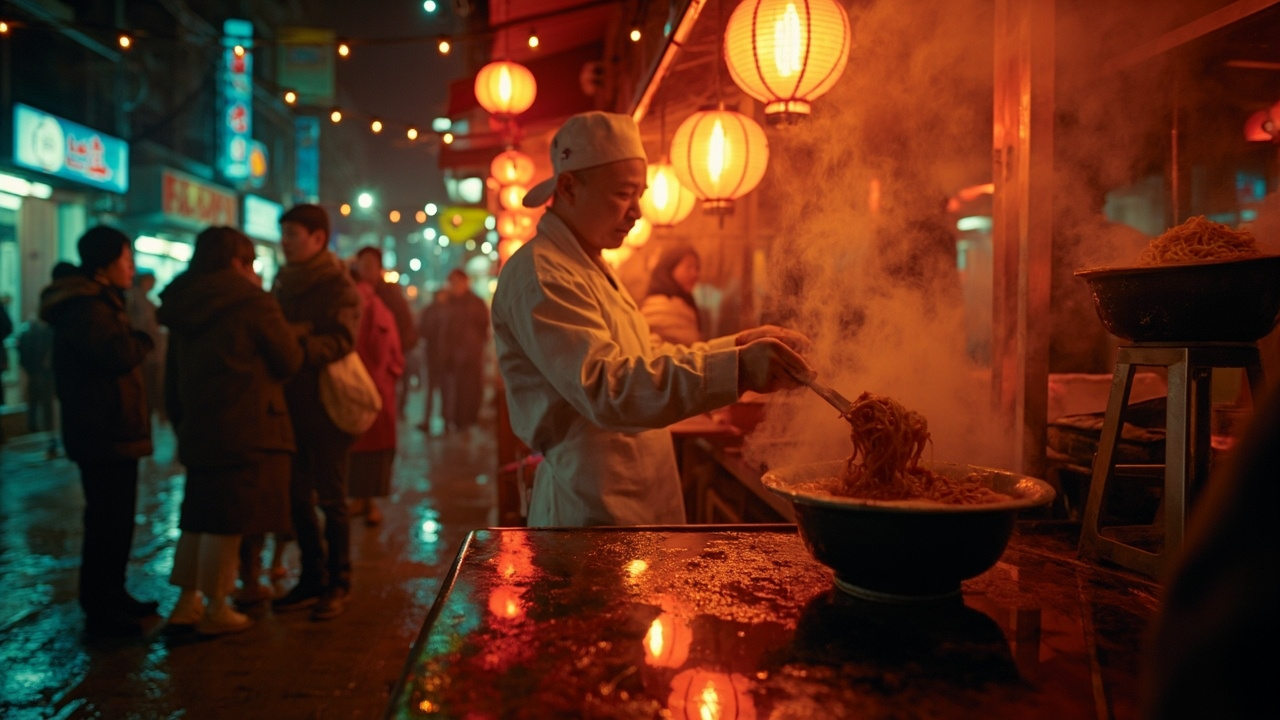
Best Street Food in Chengdu
The woman running the dan dan noodle stall on Kuixinglou Street looked at my bowl, then looked at me, and said something to the customer next to her. He translated: “She says you ate it wrong. You mixed it too fast.” I had, in fact, stirred my noodles the second they hit the table, which apparently destroyed the layering of chili oil, sesame paste, and crushed peanuts that she’d spent thirty years perfecting. She took the bowl back, remade it, and demonstrated the correct technique with her chopsticks. I’ve been chasing that bowl for seven years.
Chengdu is the only Chinese city I’ve returned to more than a dozen times, and it’s almost entirely because of the food. Not the restaurants — the street stalls, the hole-in-the-wall noodle shops, the plastic-stool operations that set up at 6pm and vanish by midnight. This is a city where a grandmother with a single wok can out-cook a hotel kitchen, where the best meal of your trip might cost $2 (14 CNY), and where “spicy” doesn’t mean what you think it means.
This guide is for first-timers who want to eat where locals eat, not where tour groups eat. I’ll tell you what to order, what to skip, and how to avoid the mistakes I made.
Quick answer
The best street food in Chengdu clusters in three walkable neighborhoods: Kuanzhai Alley’s back lanes, Jianshe Road, and the university area around Sichuan University’s Wangjiang campus. Budget $8–15 (55–105 CNY) per person for a full street-food crawl, and go on a weekday evening between 6pm and 9pm when stalls are fully fired up but crowds haven’t peaked. Most vendors take WeChat Pay or Alipay only — set up mobile payment before you arrive, because cash is often refused.
The Short Version
If you eat only three things in Chengdu, make them: dan dan noodles at a stall with no English menu, chuan chuan (skewers you dip in a communal hot pot), and mapo tofu from a place that’s been open longer than you’ve been alive. Skip the tourist-strip versions near Jinli Ancient Street — they’re twice the price and half the flavor. Bring tissues, expect to sit on plastic stools, and don’t ask for “mild” unless you genuinely mean it.
How I Picked These
I’ve eaten at every place on this list at least twice, usually more. Some I found by following crowds of locals at dinnertime. Others came from recommendations by a Chengdu taxi driver named Liu who adopted me on my second trip and still sends me WeChat messages when a new stall opens near his apartment. A few I discovered by getting lost — the best bowl of sweet water noodles I’ve ever had came from a wrong turn near Wenshu Monastery. I’ve excluded anything that’s become a pure tourist trap, anything with a menu in four languages, and anything where the owner visibly sighed when I walked in.
Comparison Table
| Rank | Place | Best For | Approx Cost (USD) | Time Needed | When to Go |
|---|---|---|---|---|---|
| 1 | Kuixinglou Street Noodle Stalls | Dan dan noodles, sweet water noodles | $2–4 (14–28 CNY) | 45 min | Weekday lunch, 11:30am–1pm |
| 2 | Jianshe Road Chuan Chuan Alley | Skewer hot pot, late-night eating | $8–12 (55–85 CNY) | 1.5 hrs | Fri/Sat 7–10pm |
| 3 | Wenshu Monastery Vegetarian Row | Vegetarian, temple snacks | $3–6 (20–40 CNY) | 1 hr | Any day, 10am–2pm |
| 4 | Sichuan University Wangjiang Night Market | Student-priced everything | $5–9 (35–60 CNY) | 1.5 hrs | Weeknights 6–9pm |
| 5 | Kuanzhai Alley Back Lanes | Snacks, photo-friendly stalls | $6–12 (40–85 CNY) | 1 hr | Weekday mornings |
| 6 | Yulin Community Market | Breakfast, local life | $3–5 (20–35 CNY) | 45 min | 7–9am only |
| 7 | Jinli Street (selectively) | Three炮 (san pao), candy art | $4–8 (28–55 CNY) | 45 min | Early morning, avoid weekends |
| 8 | Long Chao Shou Flagship | Wontons, one-dish mastery | $4–7 (28–50 CNY) | 30 min | Weekday 2–4pm |
| 9 | Chen Mapo Tofu (original) | Mapo tofu, sit-down | $8–14 (55–100 CNY) | 1 hr | Lunch, book ahead |
| 10 | Qingyang District Rabbit Head Vendors | Adventurous eating | $2–5 (14–35 CNY) | 20 min | Evening |
Kuixinglou Street Noodle Stalls — Where I Learned to Eat Wrong
Kuixinglou Street runs behind the Chunxi Road shopping district, and at first glance it looks like nothing. Then you notice the steam. Six or seven noodle stalls operate out of what are technically restaurant front rooms, each with a single specialty and a line of locals who’ve been coming for decades.
The dan dan noodles here are the real thing — no soup, just a small bowl of noodles sitting on a pool of chili oil, sesame paste, soy, and minced pork. The correct technique, as the stall owner taught me, is to lift the noodles from the bottom, fold them over, and repeat four or five times. Not stir. Fold. If you mix too aggressively, the sesame paste breaks and you get a greasy mess.
Sweet water noodles (甜水面, tián shuǐ miàn) are the sleeper hit. Thick, chewy noodles with a sweet-savory sauce that’s more garlicky than spicy. Most foreigners skip them because the name sounds like dessert. Don’t.
📍 Location: Kuixinglou Street, Jinjiang District, behind Chunxi Road pedestrian area 🍜 Entry fee: Free to walk; noodles $2–4 (14–28 CNY) per bowl 🕐 Opening hours: Most stalls 10:30am–8pm, some close Sundays 🚇 How to get there: Metro Line 2 or 3 to Chunxi Road Station, Exit C, walk 6 minutes north on Hongxing Road then turn right onto Kuixinglou ⏰ When to visit: Weekday lunch, 11:30am–1pm, when the office crowds come and everything’s freshest 💡 Insider tips: Point at what the person ahead of you ordered — menus are Chinese-only. Bring small bills even if you’re paying by phone, since a few older vendors still prefer cash. Order two bowls; portions are small. The chili here is milder than Jianshe Road, so it’s a good first stop.
I paid $2.80 (20 CNY) for two bowls and a cup of soy milk, and the owner refused a tip.
Jianshe Road Chuan Chuan Alley — The Late-Night Ritual
Jianshe Road is where Chengdu goes when it’s 9pm and nobody wants to cook. The chuan chuan stalls — skewer hot pot — line a stretch of sidewalk about 200 meters long, each with a bubbling pot of broth and hundreds of raw ingredients on sticks.
Here’s how it works: you grab a plastic basket, load it with skewers (meat, vegetables, tofu, quail eggs, tripe), hand it to the vendor, and they cook it in the communal pot. You eat off the skewers, dip in a personal bowl of chili oil and sesame, and pay by counting the sticks at the end. Usually $0.15–0.30 (1–2 CNY) per skewer.
The thing nobody tells you: the broth is shared. If that bothers you, ask for a personal pot (鸳鸯锅, yuānyāng guō) — most stalls will do it for a small extra charge. I didn’t ask my first time and survived fine, but I understand the hesitation.
📍 Location: Jianshe Road, Chenghua District, near the intersection with Yihuan Road 🍢 Entry fee: Free; pay per skewer, roughly $8–12 (55–85 CNY) for a full meal 🕐 Opening hours: 5pm–2am daily, busiest 7–10pm 🚇 How to get there: Metro Line 3 to Jianshe Road Station, Exit A, walk east 3 minutes ⏰ When to visit: Friday or Saturday night, 7–10pm, when the whole street is alive 💡 Insider tips: Count your own skewers before handing them over — mistakes happen. The tripe and beef tendon are the best value. Order a cold beer (啤酒, píjiǔ) to cut the heat. If you have a sensitive stomach, stick to fully cooked items and skip the raw vegetables.
A vendor named Chen recognized me on my fourth visit and started setting aside the beef tendon skewers before I arrived. That’s Chengdu.
Wenshu Monastery Vegetarian Row — The One That Surprised Me
I’m not vegetarian, and I almost skipped this. That would have been a mistake. The row of vegetarian stalls outside Wenshu Monastery has been operating for over a century, and the food is genuinely excellent — not “good for vegetarian” excellent, just good.
The standout is the vegetarian “chicken” made from wheat gluten, seasoned with Sichuan pepper and chili. It tastes nothing like chicken and everything like a masterclass in texture. There’s also a cold noodle dish with sesame and cucumber that’s perfect on a hot day.
📍 Location: Wenshu Yuan Street, Qingyang District, outside the monastery’s south gate 🥢 Entry fee: Free to walk; dishes $3–6 (20–40 CNY) 🕐 Opening hours: 9am–5pm daily, some stalls close for lunch 1:30–2:30pm 🚇 How to get there: Metro Line 1 to Wenshu Monastery Station, Exit K, walk 3 minutes ⏰ When to visit: Weekday morning, 10am–noon, before tour groups arrive 💡 Insider tips: The monastery itself is worth 30 minutes — free entry, quiet courtyards. Buy the sesame cakes to take away; they keep for two days. English is limited here, so have your translation app ready. This is a good stop if you’re temple-hopping and want a break from heavy food.
I ate here with a monk-in-training who explained that the “chicken” recipe dates to the Qing dynasty. He also told me I was holding my chopsticks wrong. He was right.
Sichuan University Wangjiang Night Market — The Cheap One
Every Chinese university has a night market nearby, and Sichuan University’s is one of the best. Prices are student-level, portions are generous, and the food is unpretentious.
The must-try here is 狼牙土豆 (láng yá tǔ dòu) — “wolf tooth potatoes,” wavy-cut fries tossed in chili, cumin, and scallions. They cost about $1.50 (10 CNY) and are dangerously addictive. There’s also a stall selling 冒菜 (mào cài), a single-person hot pot where you pick ingredients and they cook them in spiced broth.
📍 Location: Wangjiang Road, Wuhou District, near Sichuan University’s east gate 🍟 Entry fee: Free; most items $1–3 (7–20 CNY) 🕐 Opening hours: 5:30pm–midnight, most active 6:30–9pm 🚇 How to get there: Metro Line 3 to Moziqiao Station, Exit A, walk 10 minutes south ⏰ When to visit: Weeknight, 6:30–9pm; weekends are packed with students 💡 Insider tips: Bring small bills — some stalls don’t take foreign cards linked to WeChat. The mao cai stall near the north end lets you choose your spice level; ask for 微辣 (wēi là, mildly spicy) if you’re unsure. Skip the bubble tea; get the fresh sugarcane juice instead.
Kuanzhai Alley Back Lanes — The Pretty One
Kuanzhai Alley is Chengdu’s most famous tourist street, and the main drag is exactly what you’d expect: overpriced snacks, souvenir shops, selfie sticks. But the back lanes — the narrow parallel streets behind the main alley — are where locals actually eat.
Look for the stalls with handwritten signs and no English. The 三大炮 (sān dà pào, “three big cannons”) — glutinous rice balls thrown against a board and coated in soybean powder — is a Chengdu classic, and the back-lane version is half the price of the front.
📍 Location: Kuanzhai Alley, Qingyang District, back lanes off the main pedestrian street 🍡 Entry fee: Free; snacks $2–5 (14–35 CNY) 🕐 Opening hours: 10am–10pm daily 🚇 How to get there: Metro Line 4 to Kuanzhai Alley Station, Exit B, walk 2 minutes ⏰ When to visit: Weekday morning, 10am–noon, before the crowds 💡 Insider tips: The front alley is a trap; walk 100 meters past the main entrance to find the real stalls. Bring cash for the san da pao vendor. This is a good area for photos, so come with a charged phone. If you’re short on time, this is skippable in favor of Jianshe Road.
Yulin Community Market — The Breakfast One
Yulin is a residential neighborhood with a morning market that starts at 6:30am and shuts by 9. This is where you go for 锅盔 (guō kuī, stuffed flatbread), 豆浆 (dòu jiāng, fresh soy milk), and 油条 (yóu tiáo, fried dough sticks).
The guo kui here is stuffed with minced pork and baked in a clay oven. It costs about $1.20 (8 CNY) and is the best breakfast in the city, in my opinion. The soy milk is unsweetened by default — ask for 甜 (tián) if you want sugar.
📍 Location: Yulin Community, Wuhou District, off Yulin South Road 🥖 Entry fee: Free; breakfast $3–5 (20–35 CNY) 🕐 Opening hours: 6:30–9am only, daily 🚇 How to get there: Metro Line 3 to Yulin Road Station, Exit B, walk 5 minutes ⏰ When to visit: Weekday, 7–8:30am 💡 Insider tips: Go early — the best vendors sell out by 8:30. This is a locals-only market; expect zero English. Have your translation app ready and be patient. The guo kui is best eaten immediately, standing up.
Jinli Street (Selectively) — The One to Do Right
Jinli is the most touristy street in Chengdu, and 80% of it is a waste of money. But two things are worth it: the san da pao demonstration (the throwing technique is genuinely fun to watch) and the candy-blowing artist who makes sugar sculptures to order.
Go at 8am, before the tour buses. The street is quiet, the vendors are setting up, and you can actually talk to them.
📍 Location: Jinli Street, Wuhou District, next to Wuhou Shrine 🍬 Entry fee: Free; snacks $4–8 (28–55 CNY) 🕐 Opening hours: 8am–11pm daily, but best before 9am 🚇 How to get there: Metro Line 3 to Gaoshengqiao Station, Exit D, walk 8 minutes ⏰ When to visit: Early morning, any day 💡 Insider tips: Skip the “famous” stalls with English signs. The candy artist is near the middle of the street. Combine with a visit to Wuhou Shrine if you’re interested in Three Kingdoms history.
Long Chao Shou — The One-Dish Master
Long Chao Shou is a Chengdu institution dating to 1941, and it does exactly one thing: wontons. The 抄手 (chāo shǒu) here are thin-skinned, filled with pork, and served in a chili oil broth that’s been the same recipe for 80 years.
This is a sit-down restaurant, not a stall, but the prices are still reasonable. A bowl costs about $4 (28 CNY).
📍 Location: Multiple branches; the original is on Chunxi Road, Jinjiang District 🥟 Entry fee: N/A; bowl of wontons $4–7 (28–50 CNY) 🕐 Opening hours: 10am–9pm daily 🚇 How to get there: Metro Line 2 or 3 to Chunxi Road Station, Exit C, walk 4 minutes ⏰ When to visit: Weekday afternoon, 2–4pm, to avoid the lunch rush 💡 Insider tips: Order the 红油抄手 (hóng yóu chāo shǒu, chili oil wontons), not the plain version. The English menu exists but the Chinese menu has more options. This is a good “safe” first meal if you’re nervous about street stalls.
Chen Mapo Tofu — The Sit-Down Classic
Chen Mapo Tofu is the most famous mapo tofu restaurant in the world, and yes, it’s worth it. The original location on Xiyulong Street has been serving since 1862. The tofu is silky, the sauce is numbing (from Sichuan peppercorns), and the heat builds slowly.
A plate costs about $6 (40 CNY). Order rice to cut the spice.
📍 Location: Xiyulong Street, Qingyang District (original branch) 🌶️ Entry fee: N/A; dishes $8–14 (55–100 CNY) per person 🕐 Opening hours: 10am–9:30pm daily 🚇 How to get there: Metro Line 4 to Kuanzhai Alley Station, Exit B, walk 8 minutes ⏰ When to visit: Weekday lunch, 11:30am–1pm; book ahead on weekends 💡 Insider tips: Ask for 微辣 (wēi là, mildly spicy) if you’re not used to Sichuan pepper — the numbing sensation surprises most foreigners. The English menu is accurate. This is a good introduction to real Sichuan cooking before you tackle the stalls.
Qingyang District Rabbit Head Vendors — The Adventurous One
兔头 (tù tóu, rabbit head) is a Chengdu obsession, and the vendors in Qingyang District sell them by the thousands every evening. The heads are braised in chili and five-spice, then eaten with your hands — cheeks first, then the tongue, then the brain.
I avoided this for three trips. Then a friend ordered one for me, and I understood. It’s not for everyone, but it’s a genuine local experience.
📍 Location: Qingyang District, scattered vendors near Wenshu Monastery and Kuanzhai Alley 🐰 Entry fee: N/A; rabbit head $2–5 (14–35 CNY) 🕐 Opening hours: 5pm–midnight, most vendors 🚇 How to get there: Metro Line 1 to Wenshu Monastery Station, Exit K, walk 5 minutes ⏰ When to visit: Evening, 7–10pm 💡 Insider tips: Ask the vendor to show you how to eat it — they’ll demonstrate. Order the 麻辣 (má là) version, not the five-spice. Bring wet wipes. If you’re squeamish, skip this and get the mapo tofu instead.
FAQ summary
The best street food in Chengdu is concentrated in Kuixinglou Street (noodles), Jianshe Road (chuan chuan skewers), and the Sichuan University night market (cheap eats). Expect to spend $8–15 (55–105 CNY) per person for a full crawl, and plan to pay exclusively by WeChat Pay or Alipay — cash is often refused. Most stalls open around 5–6pm and close by midnight; the best time to go is a weekday evening between 6pm and 9pm. English is rare at street stalls, so a translation app is essential, and you’ll need a working Chinese SIM or eSIM plus a VPN if you want to use Google or WhatsApp.
FAQ
Q: Is Chengdu street food safe for foreigners with sensitive stomachs? A: Generally yes, but stick to stalls with high turnover and visible cooking. Avoid raw vegetables and anything sitting out unrefrigerated. If you have a very sensitive stomach, start with sit-down restaurants like Chen Mapo Tofu for two days before hitting the stalls.
Q: How much should I budget for a street food crawl in Chengdu? A: Plan for $8–15 (55–105 CNY) per person for a full evening of eating, including drinks. Individual items range from $1–5 (7–35 CNY). Chuan chuan is the best value — you pay per skewer, usually $0.15–0.30 (1–2 CNY) each.
Q: Do street food vendors in Chengdu accept cash or foreign credit cards? A: Almost never. You’ll need WeChat Pay or Alipay linked to an international card. Set this up before you arrive — see our payment guide for step-by-step instructions. A few older vendors accept cash, but it’s rare.
Q: Do I need a VPN or special SIM card to use my phone in Chengdu? A: Yes, if you want to use Google, WhatsApp, Instagram, or most Western apps. You’ll need a VPN installed before you arrive, plus a Chinese SIM or eSIM. See our SIM and internet guide for current options.
Q: How spicy is Chengdu street food, really? A: Spicier than most foreigners expect, but manageable. “Mild” in Chengdu is still medium-hot by Western standards. Ask for 微辣 (wēi là) if you’re unsure, and always order rice or a cold drink to cut the heat. Sichuan pepper causes a numbing sensation that’s different from chili heat — it surprises most first-timers.
Q: Can I visit Chengdu visa-free in 2026? A: Many nationalities can enter China visa-free for up to 30 days under current policies, and Chengdu is included in the 240-hour transit visa-free program. Check our visa guide for your specific nationality and current rules.
Q: What’s the best neighborhood to stay in for street food access? A: Stay near Chunxi Road (Jinjiang District) for Kuixinglou and Long Chao Shou, or near Jianshe Road (Chenghua District) for chuan chuan. Both are well-connected by metro. See our Chengdu guide for hotel recommendations.
The Honest Wrap-up
This list is for travelers who want to eat where locals eat and don’t mind sitting on plastic stools. If you need air conditioning, English menus, and a fork, this isn’t for you — and that’s fine. Chengdu has excellent sit-down restaurants too.
If you’re booking a flight, my one piece of advice: don’t try to do all ten places in one trip. Pick three, go deep, and let yourself get lost. The best meal I ever had in Chengdu came from a stall I found by accident, on a street I can’t name, run by a woman who didn’t speak a word of English. I still think about it. That’s the trip you want.
More guides you may like

Top 10 Bridges in China
China's bridges are engineering marvels spanning mountains, rivers, and seas. Here are 10 of the most spectacular, from ancient stone to modern steel.
8 min read

Top 10 Buddhist Sites in China
From the Leshan Giant Buddha to the Dunhuang Caves, these 10 Buddhist sites represent 2,000 years of China's spiritual heritage.
9 min read

Top 10 Day Trips from Beijing You Shouldn't Miss
Beijing is packed with history, but some of China's best experiences are just a few hours away. Here are 10 day trips that will transform your visit.
9 min read

Top 10 Hidden Gems in China Off the Beaten Path
Beyond the Great Wall and Terracotta Warriors, China has incredible hidden destinations few tourists ever reach. Here are 10 underrated gems worth the detour.
9 min read

Top 10 Markets and Shopping Streets in China
From Shanghai's Bund to Beijing's Silk Street - 10 markets where foreigners can haggle, explore, and bring home authentic Chinese goods.
9 min read

Top 10 Museums in China You Shouldn't Miss
China's museums span 5,000 years of civilization. These 10 - from the Palace Museum to Xi'an's terracotta gallery - are unmissable for culture lovers.
9 min read