
China Cycling Routes
TODO: Extract from article (100-160 chars)
China Cycling Routes
The mechanic in Dali handed me a wrench and pointed at my rear derailleur. I’d been riding for six days along Erhai Lake, and somewhere around the twentieth kilometer of gravel the chain had started skipping. He didn’t speak English. I didn’t speak enough Mandarin to explain the problem. So we stood there in his shop — tire tubes hanging from the ceiling like sausages, a radio playing something old and scratchy — and fixed it together. Forty minutes. He charged me 15 yuan and refused a tip.
That’s the thing about cycling in China that no brochure tells you. The country is enormous and the roads are often better than you expect, but the real reason to bring a bike is the stuff that happens between the destinations. A grandmother waving you down to fill your water bottle. A noodle shop with no English menu that turns out to serve the best breakfast of your trip. A mountain pass that takes three hours to climb and rewards you with fog rolling through a valley you’ll think about for years.
This guide covers ten routes I’ve actually ridden, from easy lakeside loops to high-altitude passes where you’ll want to check your brakes twice. I’ll give you real prices, real transport logistics, and the honest stuff about which routes are worth your time and which ones you can skip.
Quick answer
The best first-time China cycling routes are the Xi’an city wall (14 km, flat, $6/¥45 bike rental), the Yangshuo countryside loop in Guangxi ($5-8/¥35-55 per day), and the Erhai Lake circuit near Dali (128 km, best done over 2-3 days). Most nationalities can now enter China visa-free for 30 days (check your passport — the list expanded significantly in 2025-2026), and you’ll need Alipay or WeChat Pay set up before you arrive, because almost nobody takes cash anymore. Best cycling season is April-May and September-October.
The Short Version
If you have one week: fly to Guilin, cycle Yangshuo for three days, take the high-speed train to Kunming, then bus to Dali and ride Erhai Lake. If you have two weeks, add the Xi’an wall and a Qinghai Lake segment. Skip anything in July-August unless you enjoy cycling in a sauna. Bring your own helmet — rental shops rarely have them in your size.
How I Picked These
I’ve been based in Beijing since 2019 and I’ve done roughly a dozen multi-day rides across China, plus countless day trips. The routes here are ones I’ve personally ridden at least once, usually with a local friend or a hostel-organized group. I talked to bike shop owners in Chengdu, Dali, and Yangshuo about which routes locals actually ride versus which ones exist only on tourist maps. I’ve also factored in logistics that matter for foreigners: can you rent a decent bike, is there anywhere to sleep, will anyone speak English, and does the route make sense without a support vehicle. A few famous routes got cut because they’re genuinely miserable without a guide or a very high fitness level.
Comparison Table
| Rank | Route | Best For | Approx Cost (USD) | Time Needed | When to Go |
|---|---|---|---|---|---|
| 1 | Yangshuo Countryside | First-timers, scenery | $5-8/day rental | 2-3 days | Apr-May, Sep-Oct |
| 2 | Erhai Lake (Dali) | Multi-day lakeside | $10-15/day | 2-3 days | Mar-Jun, Sep-Nov |
| 3 | Xi’an City Wall | Quick urban ride | $6 (¥45) | 2 hours | Apr-May, Sep-Oct |
| 4 | Qinghai Lake | High altitude challenge | $40-60/day | 4-5 days | Jun-Aug |
| 5 | Hainan Island Coast | Winter escape | $25-40/day | 5-7 days | Nov-Mar |
| 6 | Guilin to Yangshuo | Point-to-point | $15-20/day | 1-2 days | Apr-May, Sep-Oct |
| 7 | Suzhou Water Towns | Flat, cultural | $8-12/day | 1-2 days | Mar-May, Oct-Nov |
| 8 | Chengdu Plain Loop | Food + easy riding | $8-12/day | 1-2 days | Mar-Jun, Sep-Nov |
| 9 | Tiger Leaping Gorge (Yunnan) | Serious climbers | $20-30/day | 2 days | Apr-Jun, Sep-Nov |
| 10 | Beijing Suburbs (Mutianyu) | Great Wall views | $15-25/day | 1 day | Apr-May, Sep-Oct |
1. Yangshuo Countryside — The One Everyone Should Do First
I rented a bike from a shop near West Street for 40 yuan a day, and the woman running it drew me a route on the back of a receipt. She circled three villages and wrote “no cars” next to one. She was right.
The Yulong River valley is why people come here. Karst peaks rise out of rice paddies like teeth, and the roads between them are flat, paved, and mostly empty of traffic. You’ll pass water buffalo standing in fields, farmers in conical hats, and more photo stops than you can reasonably take. The classic loop is about 30 km and takes four or five hours if you stop for lunch, which you should.
What makes it special isn’t any single sight. It’s the density of small moments — a bridge where you watch bamboo rafts float past, a village where someone’s drying chili peppers on a mat, a random temple with an old caretaker who waves you in. The scale is human. You can cover real distance without suffering.
📍 Location: Yangshuo County, Guangxi. Most rentals cluster around West Street (西街) and the roads heading north toward Yulong River.
🎫 Entry fee: Free for the roads. Some scenic spots along the way charge ¥20-60 ($3-8).
🕐 Opening hours: Daylight. Shops rent from around 8am to 7pm.
🚲 How to actually get there: Fly or take the high-speed train to Guilin, then a 1.5-hour bus or 40-minute train to Yangshuo. From the bus station, walk 10 minutes to West Street. Rentals are everywhere.
⏰ When to visit: April-May and September-October. Avoid July-August (brutal heat and crowds) and Chinese New Year (everything closes).
💡 Insider tips: Get a bike with gears even though the terrain is flat — the cheap single-speeds are miserable after two hours. Download an offline map because cell coverage drops in the valleys. Carry cash for small village shops. The “bamboo raft” tourist route on the Yulong is overpriced; skip it and just watch from the bridges.
I ate a bowl of Guilin rice noodles for breakfast every morning at a stall near my hostel. Six yuan. The owner started recognizing me by day three and would add extra peanuts without being asked.
2. Erhai Lake, Dali — The Lakeside Circuit That Earns Its Hype
The first time I rode Erhai, I made the mistake of trying to do the whole 128 km in one day. I finished, but I couldn’t feel my legs and I missed most of the scenery because I was staring at my odometer.
Erhai is a highland lake at about 2,000 meters, ringed by a paved road with a dedicated bike lane for much of the eastern shore. The western side is more developed — villages, cafes, boutique guesthouses — while the east is quieter, with fishing villages and long stretches where the only sound is wind. The classic route goes clockwise from Dali Old Town.
The reason this ranks so high is the combination of infrastructure and atmosphere. You can ride for three hours, stop at a village for lunch, swim (if you’re brave — the water is cold), and find a guesthouse for the night without planning much ahead. The altitude is enough to notice but not enough to hurt if you’re reasonably fit.
📍 Location: Dali, Yunnan Province. Most riders start from Dali Old Town (大理古城) and head north along the west shore.
🎫 Entry fee: Free. Some villages charge small parking fees for bikes (¥5-10).
🕐 Opening hours: Always accessible. Guesthouses along the route operate year-round.
🚲 How to actually get there: Fly to Dali Airport or take a train from Kunming (2 hours). From Dali station, take bus 8 to the Old Town. Bike rentals are ¥50-100 ($7-14) per day.
⏰ When to visit: March-June and September-November. Winter is cold but clear. Summer is rainy season.
💡 Insider tips: The eastern shore road has less traffic and better views — don’t skip it just because the west is more famous. Altitude sickness is rare but possible; take your first day easy. Bring sunscreen; the UV at 2,000m is no joke. Most guesthouses will store your bags if you want to ride without luggage.
The mechanic who fixed my derailleur was named Lao Wang. He’d been repairing bikes in the same spot for thirty years. When I asked if he ever got tired of it, he laughed and said the lake looked different every day.
3. Xi’an City Wall — The Best Two Hours You’ll Spend in Xi’an
You can rent a bike on top of a 600-year-old wall and ride a full loop around a city of 13 million people. That’s the whole pitch, and it’s a good one.
The wall is 14 km around, 12 meters high, and wide enough for several bikes side by side. The surface is uneven in places — original Ming dynasty brick — so you’ll feel every bump. The full loop takes about 90 minutes at a relaxed pace, or two hours if you stop for photos, which you will.
What I love about this ride is the contrast. On one side you’re looking down into the old city — courtyards, temple roofs, laundry hanging on lines. On the other side, glass towers and construction cranes. It’s the whole story of modern China in a single loop. The south gate is the busiest and most photogenic; the north section is quieter and where locals actually exercise.
📍 Location: Xi’an city center. Rentals at the South Gate (永宁门), East Gate, and North Gate.
🎫 Entry fee: Wall admission ¥54 ($8). Bike rental ¥45 ($6) for two hours, ¥90 for a full day. Deposit required.
🕐 Opening hours: South Gate 8am-10pm (summer), 8am-8pm (winter). Other gates close earlier.
🚲 How to actually get there: Take Metro Line 2 to Yongningmen Station, Exit D. The South Gate entrance is right there. Xi’an is 4.5 hours from Beijing by high-speed rail.
⏰ When to visit: Late afternoon on a weekday. Sunset from the wall is excellent, and the crowds thin out after 5pm.
💡 Insider tips: The bikes are single-speed and not great — check your brakes before you ride. Bring your passport for the deposit. The wall gets brutally hot in summer with no shade; go early or late. If you’re nervous about the crowds, start from the North Gate instead.
I did this ride on a Tuesday in October and had entire sections of the wall to myself. An old man doing tai chi near the East Gate nodded at me as I passed. I nodded back. That was the whole interaction.
4. Qinghai Lake — Where the Altitude Is the Point
Qinghai Lake sits at 3,200 meters. The first pedal stroke feels fine. The tenth feels like someone’s sitting on your chest. By the time you’ve climbed the first pass, you understand why this route has a reputation.
The lake is China’s largest, a vast blue expanse ringed by mountains and grassland where yaks graze. The full circuit is about 360 km, usually done over four or five days. Most riders go clockwise, starting from Xining and taking a bus to the lake’s southern shore. The road is paved and well-maintained, with guesthouses and small restaurants every 30-50 km.
This isn’t a route for beginners. The altitude alone will humble you, and the weather changes fast — I got caught in a hailstorm in July. But the reward is scenery that feels genuinely remote, plus the strange satisfaction of riding past Tibetan prayer flags while gasping for oxygen.
📍 Location: Qinghai Province. Most riders start from Heimahe (黑马河) on the south shore or Xihai (西海) on the east.
🎫 Entry fee: Free for the road. Some lakeside viewpoints charge ¥20-50.
🕐 Opening hours: Always accessible. Guesthouses operate May-October.
🚲 How to actually get there: Fly to Xining, then bus (3 hours) to Heimahe. Bike rentals in Xining start at ¥150/day ($21). Many riders bring their own bikes on the train.
⏰ When to visit: June-August only. The rest of the year is too cold and many guesthouses close.
💡 Insider tips: Acclimatize in Xining for two days before starting. Bring rain gear and warm layers even in summer. The wind on the western shore can be brutal — plan shorter days there. Cash is useful; some small shops don’t take mobile payments.
I met a retired teacher from Shanghai on the second day who was doing the loop for the third time. She told me the trick was to eat constantly and never push past 60% effort. I ignored this advice and spent the next morning lying in a guesthouse with a headache.
5. Hainan Island Coast — China’s Winter Cycling Escape
While the rest of China freezes, Hainan stays warm. That’s the entire appeal, and it’s enough.
The island’s east coast has a well-developed cycling route — sometimes called the Hainan Ring Road — that runs from Haikou in the north to Sanya in the south, roughly 300 km. The road hugs the coast for long stretches, passing coconut groves, fishing villages, and resort towns. It’s flat, paved, and has more services than almost any other route in China.
The downside is that Hainan is developed. You’re never truly remote, and some sections are more highway than scenic road. But if you want to ride in January without wearing five layers, this is your option. The surf town of Riyue Bay is a good midpoint stop.
📍 Location: Hainan Province. The classic route runs Haikou → Wenchang → Qionghai → Wanning → Lingshui → Sanya.
🎫 Entry fee: Free. Some beaches and parks charge small fees.
🕐 Opening hours: Year-round. Best riding is early morning and late afternoon to avoid heat.
🚲 How to actually get there: Fly into Haikou or Sanya. Both have bike shops and rentals (¥100-200/day). The high-speed rail also runs the length of the island if you want to skip sections.
⏰ When to visit: November-March. Summer is oppressively hot and humid.
💡 Insider tips: The west coast is less developed and less scenic — stick to the east. Book accommodation ahead during Chinese New Year, when domestic tourists flood the island. Bring a repair kit; bike shops are sparse outside major towns. The seafood in Qionghai is worth a rest day.
I ate a bowl of Hainanese chicken rice in Wenchang that cost 18 yuan and was better than anything I’ve had in a restaurant back home. The woman who served it asked where I was from and then insisted I try the soup too. Free.
6. Guilin to Yangshuo — The Point-to-Point That Earns the Cliché
Everyone says the Li River scenery between Guilin and Yangshuo is the most beautiful in China. Everyone is mostly right.
The classic route follows the river for about 80 km, passing through the same karst landscape that appears on the ¥20 note. You can do it in a day if you’re fit, or split it over two with a night in Xingping. The road is paved and mostly flat, with a few rolling sections. Traffic is light on the back roads; the main highway is less pleasant.
What makes this route work is the sense of progression. You start in a city, ride through farmland, climb a small pass, and descend into a valley that looks like a painting. The villages along the way — especially Xingping — are worth lingering in.
📍 Location: Guangxi Province. Start in Guilin, end in Yangshuo.
🎫 Entry fee: Free. Some viewpoints charge ¥20-60.
🕐 Opening hours: Daylight. Start early to avoid afternoon heat.
🚲 How to actually get there: Fly or train to Guilin. Rent a bike in Guilin (¥80-150/day) and drop it in Yangshuo for a fee, or bring your own on the train.
⏰ When to visit: April-May and September-October. Avoid the rainy season (June-August) when roads flood.
💡 Insider tips: The back roads along the river are far better than the main highway — ask at your hostel for the local route. Xingping is worth a night. The famous “20 yuan view” is a 20-minute walk from town; go at sunrise to avoid tour groups.
I got lost twice on this route and both times ended up somewhere better than where I was trying to go. The second time, I stumbled into a village festival with drums and firecrackers and stayed for two hours.
7. Suzhou Water Towns — Flat, Cultural, and Underrated
Suzhou doesn’t get the cycling attention it deserves. The terrain is flat, the roads are good, and the canals and gardens make for a genuinely pleasant ride.
The classic route links Suzhou with nearby water towns like Tongli and Zhouzhuang, following canal paths and country roads for 40-60 km. You’ll pass through rice paddies, small villages, and old stone bridges. The towns themselves are touristy but charming, especially in the early morning before the buses arrive.
This isn’t a dramatic landscape. It’s gentle, green, and human-scale. If you want a low-stress introduction to cycling in China, this is a good option.
📍 Location: Jiangsu Province. Routes radiate from Suzhou toward Tongli, Zhouzhuang, and Luzhi.
🎫 Entry fee: Free for roads. Water town entry ¥50-100 ($7-14) each.
🕐 Opening hours: Daylight. Towns are open year-round.
🚲 How to actually get there: Suzhou is 30 minutes from Shanghai by high-speed rail. Rentals near the train station and in the old city (¥60-120/day).
⏰ When to visit: March-May and October-November. Summer is hot and humid.
💡 Insider tips: The canal paths are sometimes unpaved — a hybrid or mountain bike is better than a road bike. Tongli is less crowded than Zhouzhuang. Bring mosquito repellent in summer. The Shanghai guide has more on getting to Suzhou.
I rode this route with a friend who grew up in Suzhou. She kept stopping to point out her grandmother’s old neighborhood, which had been converted into a tea house. She hadn’t been back in ten years.
8. Chengdu Plain Loop — Where the Food Is the Destination
Chengdu is a city that takes eating seriously, and the surrounding plain is flat, green, and full of small towns worth riding to for lunch.
The classic loop goes from Chengdu to the ancient town of Luodai (about 25 km), then on to smaller villages and back. The roads are flat and well-marked. You’ll pass through farmland, tea houses, and towns where nobody expects to see a foreigner on a bike.
The riding itself is easy. The point is the stops. Sichuan food in a small town, cooked by someone who’s been making the same dish for forty years, is a different experience from restaurant food in the city. If you’re visiting Chengdu anyway, this is a good half-day add-on.
📍 Location: Sichuan Province. Routes head east and north from Chengdu.
🎫 Entry fee: Free. Luodai Old Town is free to enter.
🕐 Opening hours: Daylight. Start early to beat the heat.
🚲 How to actually get there: Rentals in central Chengdu (¥60-120/day). The high-speed rail connects Chengdu to most major cities.
⏰ When to visit: March-June and September-November. Summer is humid and hot.
💡 Insider tips: Luodai is touristy but the surrounding villages are not. Bring cash for small restaurants. The tea houses along the route are worth stopping at — order a cup and sit for an hour. Learn a few words of Sichuan dialect if you want to make people laugh.
I ate mapo tofu in a village restaurant that was so spicy I had to sit still for ten minutes afterward. The owner brought me a bowl of plain rice and patted my shoulder. I think she was amused.
9. Tiger Leaping Gorge — For People Who Actually Want to Suffer
This isn’t a cycling route in the traditional sense. It’s a hiking trail that some very fit people ride on mountain bikes, and it will destroy you.
The gorge is one of the deepest in the world, with the Jinsha River roaring through it. The high trail climbs steeply, crosses scree slopes, and offers views that justify every drop of sweat. The riding is technical, the exposure is real, and the altitude is significant.
I’m including it because it’s genuinely one of the most spectacular places in China, and for experienced mountain bikers it’s a bucket-list ride. For everyone else, hike it instead.
📍 Location: Yunnan Province, between Lijiang and Shangri-La.
🎫 Entry fee: ¥45-65 ($6-9) depending on section.
🕐 Opening hours: Daylight. The trail is open year-round but dangerous in winter.
🚲 How to actually get there: Bus from Lijiang (2 hours) to the trailhead. Bike rentals in Lijiang (¥150-300/day for mountain bikes).
⏰ When to visit: April-June and September-November. Avoid the rainy season (July-August) when landslides are common.
💡 Insider tips: Don’t attempt this without mountain biking experience. The trail has sections where you’ll be carrying your bike. Bring more water than you think you need. The guesthouses along the trail are basic but friendly.
I hiked this rather than rode it, and I met a German cyclist at the halfway guesthouse who’d been on the trail for two days. He looked exhausted and happy. He said it was the best thing he’d done in ten years of traveling.
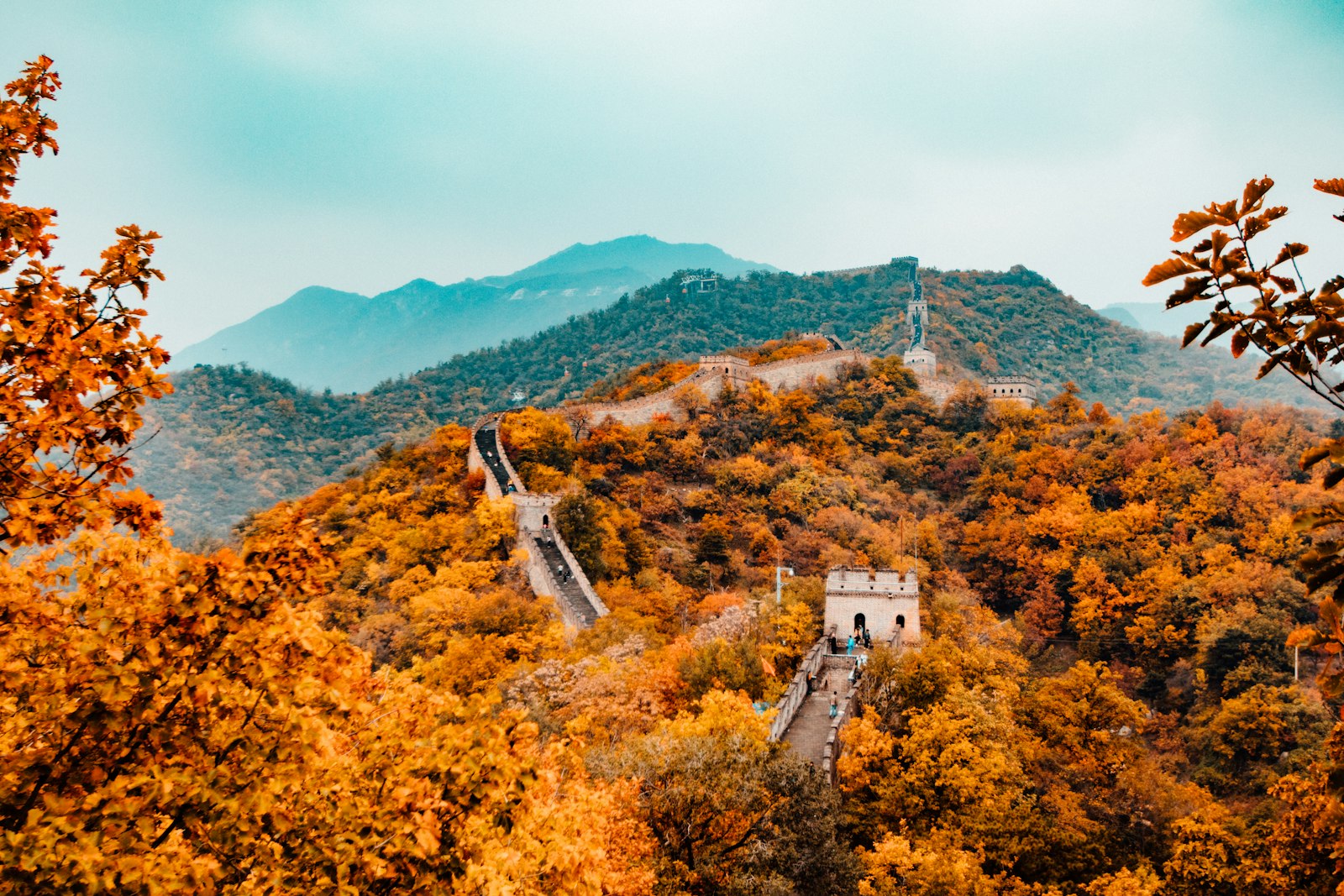
10. Beijing Suburbs to Mutianyu — The Great Wall Without the Crowds
Most people visit the Great Wall by bus. A few cycle there. The ride from Beijing’s northern suburbs to the Mutianyu section takes about four hours and ends with one of the best-preserved stretches of wall in the country.
The route goes through Huairou District, past orchards, small villages, and the kind of suburban sprawl that defines Beijing’s edges. It’s not scenic for the first two hours. But then the mountains appear, and the wall starts snaking along the ridgelines, and you understand why people have been coming here for centuries.
Mutianyu itself is less crowded than Badaling, the section most tourists visit. You can ride to the base, lock your bike, and hike up. The combination of effort and reward feels earned.
📍 Location: Huairou District, about 70 km north of central Beijing.
🎫 Entry fee: Mutianyu ¥45 ($6). Cable car ¥100-140 extra.
🕐 Opening hours: 7:30am-6pm (summer), 8am-5pm (winter).
🚲 How to actually get there: Rent a bike in Beijing (¥100-200/day) or take the Beijing subway to Huairou and ride from there. The ride from central Beijing is long — consider taking a train partway.
⏰ When to visit: April-May and September-October. Weekdays are much quieter.
💡 Insider tips: The road to Mutianyu has some traffic — ride defensively. Bring a lock; you’ll leave your bike at the base. The cable car is worth it if you’re tired. There’s a decent restaurant at the base, but the village food nearby is better.
I did this ride on a clear October day and got to the wall just as the afternoon light hit. An old man selling water at the base asked where I’d come from. When I said Beijing, he laughed and said, “On a bike? You’re crazy.” He gave me a free bottle.
FAQ summary
The best China cycling routes for first-time visitors are Yangshuo (easy, scenic, well-supported), Erhai Lake near Dali (multi-day, lakeside, moderate altitude), and the Xi’an City Wall (short, urban, unforgettable). Most nationalities can currently enter China visa-free for 30 days, but you must have Alipay or WeChat Pay set up before arrival since cash is rarely accepted. Bike rentals range from $5-15 per day for basic bikes to $30-50 for mountain bikes, and the best seasons are April-May and September-October. English is limited outside major tourist areas, so a translation app is essential.
FAQ
Q: Do I need a visa to cycle in China? A: Most nationalities can currently enter China visa-free for 30 days under the expanded 2025-2026 policy, but check your specific passport. If you don’t qualify, apply for a tourist visa at least a month in advance. You’ll need proof of accommodation and onward travel.
Q: Can I rent a bike in China as a foreigner? A: Yes, and it’s easy in tourist areas. Rentals cost $5-15 per day for basic bikes and $20-50 for mountain bikes. You’ll need your passport for the deposit, and most shops don’t provide helmets — bring your own.
Q: Is it safe to cycle on Chinese roads? A: In rural areas and dedicated bike paths, yes. In cities, traffic is chaotic and you need to be defensive. Avoid major highways and rush hours. Most routes in this guide use quiet roads or dedicated lanes.
Q: Do I need a VPN or SIM card? A: Yes to both. Get an eSIM or local SIM on arrival, and install a VPN before you land if you want access to Google, WhatsApp, or Instagram. See our SIM and internet guide for details.
Q: What’s the best time of year for a cycling trip? A: April-May and September-October. Summer is hot and rainy in most of the country, and winter is cold in the north. Hainan and Yunnan are exceptions — they’re good in winter.
Q: How do I pay for things on the road? A: Set up Alipay or WeChat Pay before you arrive, linked to your home bank card. Cash is accepted in some places but increasingly rare. Small village shops may only take cash, so carry ¥200-300 as backup.
Q: Can I bring my own bike to China? A: Yes, but it’s a hassle. Most airlines charge $100-200 each way, and you’ll need to reassemble it on arrival. For trips under two weeks, renting is easier and cheaper.
The Honest Wrap-up
This list is for people who want to see China at 15 km/h instead of 300 km/h. If you’re the kind of traveler who wants air conditioning and a schedule, this isn’t for you — and that’s fine. The routes here reward flexibility, a tolerance for minor discomfort, and a willingness to get lost.
If you’re booking a flight, my one piece of advice is this: don’t overplan. Pick two routes, not five. Give yourself a rest day. Learn to say “where is the bathroom” in Mandarin. And bring a bike lock you actually trust.
The rest will sort itself out. It usually does.
More guides you may like

Top 10 Bridges in China
China's bridges are engineering marvels spanning mountains, rivers, and seas. Here are 10 of the most spectacular, from ancient stone to modern steel.
8 min read

Top 10 Buddhist Sites in China
From the Leshan Giant Buddha to the Dunhuang Caves, these 10 Buddhist sites represent 2,000 years of China's spiritual heritage.
9 min read

Top 10 Day Trips from Beijing You Shouldn't Miss
Beijing is packed with history, but some of China's best experiences are just a few hours away. Here are 10 day trips that will transform your visit.
9 min read
Top 10 Hidden Gems in China Off the Beaten Path
Beyond the Great Wall and Terracotta Warriors, China has incredible hidden destinations few tourists ever reach. Here are 10 underrated gems worth the detour.
9 min read

Top 10 Markets and Shopping Streets in China
From Shanghai's Bund to Beijing's Silk Street - 10 markets where foreigners can haggle, explore, and bring home authentic Chinese goods.
9 min read

Top 10 Museums in China You Shouldn't Miss
China's museums span 5,000 years of civilization. These 10 - from the Palace Museum to Xi'an's terracotta gallery - are unmissable for culture lovers.
9 min read