
Qinghai Travel Guide
TODO: Extract from article (100-160 chars)
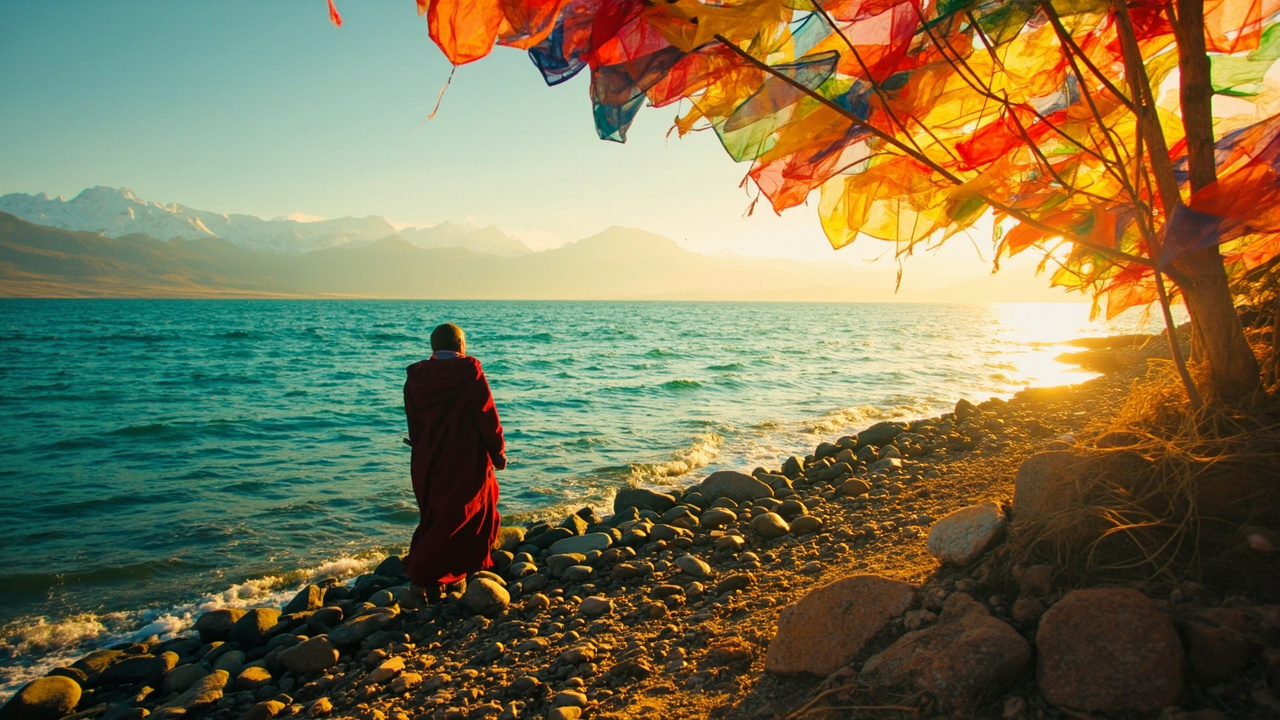
Qinghai Travel Guide
The first thing I noticed was the silence. I’d stepped off the train in Xining at 6:40 in the morning, expecting the usual Chinese station chaos of shouting touts and honking cabs. Instead I got cold, thin air and a sky so blue it looked fake. A man in a gray jacket was eating noodles from a styrofoam bowl on the curb, steam rising straight up because there wasn’t any wind. That was my introduction to the Tibetan Plateau.
Qinghai is the province most first-time China visitors skip, and honestly, that’s their loss. It sits in the country’s northwest, borders Tibet proper, and averages around 3,000 meters (9,800 feet) above sea level. The name means “Blue Sea” in Chinese, after the enormous saltwater lake at its center. What you get here is a landscape that doesn’t look like the China in your head: yaks grazing on green hills, Tibetan monasteries with butter lamps burning, Muslim quarter food stalls in the capital, and a lake so vast it takes three hours to drive along one shore.
I’ve been back to Qinghai three times now, most recently in the summer of 2025. Each trip I’ve met travelers who told me they almost didn’t come because they’d never heard of it. This guide is for them, and for you. It covers where to go, what it costs in 2026, how to get around without speaking Mandarin, and the altitude mistake I made on my first visit that ruined two days.
Quick answer
Qinghai is best visited between June and September, when temperatures in Xining hover around 15-25°C (59-77°F) and the grasslands are green. Most Western passport holders can enter China visa-free for up to 30 days as of 2026, so no separate Qinghai permit is needed for the province itself (unlike Tibet). Budget roughly $60-90 per day (430-650 CNY) including accommodation, transport, and food. The single most important prep: arrive in Xining, sleep one full night, and don’t rush to higher elevations like Qinghai Lake or Yushu on day one.
The Short Version
Come for Qinghai Lake and the Kumbum Monastery. Stay for the Tibetan food, the empty roads, and the feeling of being somewhere most tourists haven’t found yet. Fly into Xining, rent a car or hire a driver, give yourself five to seven days. Skip it if you hate altitude, can’t handle squat toilets, or need English menus everywhere. Bring diamox, layers, and a translation app.
How I Picked These
I’ve spent about five weeks total in Qinghai across three trips, mostly in summer but once in late October when the lake towns were half-shuttered. I traveled by train, by hired car with a local driver named Dorje, and once by a shared minivan that broke down outside Gonghe. I talked to Tibetan monks, Hui Muslim restaurant owners, and a Chengdu couple who’d moved to Xining for the cool summers. I also made mistakes: I once tried to hike at 3,800 meters on my second day and spent the afternoon with a headache so bad I couldn’t open my eyes. Everything below reflects what I actually did, ate, and paid for. Where I’m unsure of a current price, I say so.
Comparison Table
| Rank | Place | Best For | Approx Cost (USD) | Time Needed | When to Go |
|---|---|---|---|---|---|
| 1 | Qinghai Lake (Koko Nor) | The classic view, cycling | $15-40 (110-290 CNY) | 1-2 days | Jun-Sep |
| 2 | Kumbum Monastery (Ta’er Si) | Tibetan Buddhism, butter sculptures | $10 (70 CNY) | Half day | Year-round |
| 3 | Xining | Food, acclimatization, base camp | $50-80/day | 1-2 days | May-Oct |
| 4 | Chaka Salt Lake | Mirror photos, sunset | $8 (60 CNY) | Half day | Jun-Sep |
| 5 | Zhangye Danxia (side trip) | Rainbow rock formations | $10 (75 CNY) | 1 day | May-Oct |
| 6 | Yushu (Jyekundo) | Remote Tibetan culture | $80-120/day | 2-3 days | Jun-Aug |
| 7 | Tongren (Rebgong) | Thangka art, Tibetan villages | $40-60/day | 1-2 days | Jun-Sep |
| 8 | Menyuan | Rapeseed flower fields | $5 (35 CNY) | Half day | Jul |
| 9 | Kanbula National Park | Red cliffs, forest | $8 (60 CNY) | 1 day | May-Oct |
| 10 | Hoh Xil | Wild antelope, true wilderness | Permit required | 2-3 days | Jul-Aug |
1. Qinghai Lake — The Lake That Earns Its Name
I rented a bike in Heimahe town and rode the southern shore for about 12 kilometers before my lungs reminded me I was at 3,200 meters. A Tibetan family was setting up a picnic on the grass, and one of them waved me over and handed me a cup of yak butter tea. It tasted like salty cream. I drank the whole thing because refusing felt rude.
The lake is China’s largest, roughly 4,300 square kilometers, and it genuinely shifts color through the day. In the morning it’s gray-blue, by afternoon it’s a deep indigo, and at sunset the far shore turns pink. The southern route (G109) is the most developed, with viewpoints, horse rides, and photo spots charging small fees. The northern route is quieter and better for driving.
📍 Location: Heimahe (southwest shore) and Erlangjian Scenic Area (south shore) are the main access points, about 150 km west of Xining. 🎫 Entry fee: Erlangjian main gate $15 (110 CNY); smaller roadside viewpoints $3-7 (20-50 CNY). 🕐 Opening hours: Scenic areas roughly 8am-6pm; the lake itself is open access. 🚕 How to get there: Buses from Xining’s Bayi Road Bus Station take about 3 hours to Heimahe. A hired car with driver runs $70-100 (500-700 CNY) per day. ⏰ When to visit: Late June through August. July weekends are packed with domestic tourists; go on a weekday. 💡 Insider tips: The lake is at 3,200m, so don’t plan a big hike your first day. Cash still helps at small family-run stalls. Bring sunscreen, the UV is brutal. The “official” photo spots charge per person, but you can pull over almost anywhere on the north shore for free. I paid a woman named Zhuoma 20 CNY to take a photo with her white yak, and she insisted on adjusting my jacket collar first.
2. Kumbum Monastery — Where the Butter Sculptures Live
I got to Kumbum (Ta’er Si in Chinese) around 9am and the morning chanting was already underway. Dozens of monks in maroon robes sat in the main assembly hall, and the low drone of their voices carried out into the courtyard. I stood at the doorway for maybe ten minutes without moving.
This is one of the six great monasteries of the Gelug school of Tibetan Buddhism, and it’s the birthplace of Tsongkhapa, the school’s founder. The complex is huge, with halls, stupas, and living quarters for hundreds of monks. The famous butter sculptures, made from colored yak butter and displayed during the Lunar New Year festival, are kept in a dedicated hall. They’re smaller than you’d expect and oddly moving.
📍 Location: Lushar Town, about 25 km southwest of central Xining. 🎫 Entry fee: $10 (70 CNY). 🕐 Opening hours: 8am-5pm daily, slightly shorter in winter. 🚕 How to get there: Take bus 3 from Xining’s Xinning Square, or a taxi for about $12 (85 CNY). The ride is 40 minutes. ⏰ When to visit: Weekday mornings for the chanting. Avoid the Lunar New Year unless you want crowds, that’s when the butter sculptures draw thousands. 💡 Insider tips: Photography inside the halls is banned and enforced. Wear long pants and covered shoulders. There’s a kora (circumambulation path) around the whole complex that locals walk clockwise, join them. English signage is limited, so a translation app helps. A young monk named Lobsang pointed me toward a side chapel I would have walked right past, where an old woman was spinning prayer wheels alone.
3. Xining — The City That Feeds You Before the Altitude Does
I ate my best meal in Qinghai on my second night in Xining, at a hole-in-the-wall in the Dongguan Muslim Quarter. Hand-pulled noodles with lamb, a bowl of yogurt with honey, and a skewer of grilled kidney I didn’t order but the owner brought anyway. Total: 42 CNY, about $6.
Xining is where you acclimatize, and it’s a genuinely interesting city in its own right. It’s around 2,260 meters, so high enough to feel but low enough to sleep. The Muslim Quarter (Dongguan) is one of the best food neighborhoods in western China, and the city has a large Tibetan population, so you get both worlds. The Qinghai Provincial Museum is free and worth two hours, especially for the Tibetan and Silk Road collections.
📍 Location: Dongguan Muslim Quarter is in Chengdong District; the museum is on Xiguan Street. 🎫 Entry fee: Museum is free with passport; most food stalls $1-4 (7-30 CNY) per dish. 🕐 Opening hours: Museum 9am-5pm, closed Mondays. Food quarter comes alive after 6pm. 🚕 How to get there: Xining Caojiabao Airport is 30 km east; airport bus to city center is $3 (21 CNY). The high-speed rail station is Xining Station, on Metro Line 1. ⏰ When to visit: June through September for weather. The city is a summer escape for Chinese tourists, so book hotels ahead in July-August. 💡 Insider tips: Set up Alipay or WeChat Pay before you arrive, many small stalls are cashless. Buy a local SIM at the airport if you need data, and sort your VPN before landing. English is rare outside hotels. The noodle shop owner, a Hui man named Ma, wrote his WeChat ID on a napkin and told me to message him next time I was in town.
4. Chaka Salt Lake — The Mirror, With Caveats
Everyone posts the same photo: a person standing on shallow water with the sky perfectly reflected below. It’s real, but only on calm days. My first visit was windy and the “mirror” looked like a choppy gray puddle. I went back the next morning and got the shot.
Chaka is a working salt lake, and the tourism side has been heavily developed since around 2018. There’s a train that takes you out onto the lake, shoe rentals for the salt flats, and a lot of Instagram-minded visitors. It’s worth a half day, not more. The sunset is the best time, when the light goes orange and the salt turns pink.
📍 Location: Chaka Town, about 300 km west of Xining, on the road toward Qinghai Lake’s western end. 🎫 Entry fee: $8 (60 CNY) plus $7 (50 CNY) for the lake train. 🕐 Opening hours: 7am-7pm in summer, shorter in shoulder season. 🚕 How to get there: Most people visit as part of a Qinghai Lake loop by hired car. Public buses from Xining take 4-5 hours. ⏰ When to visit: June to September. Go at sunrise or sunset for the mirror effect and fewer people. 💡 Insider tips: Bring waterproof shoe covers or rent them on-site, the salt will wreck leather shoes. The lake is at 3,050m, so pace yourself. Wind is common, check the forecast. There’s a small Tibetan temple near the entrance worth a quick look. I watched a woman in a red dress spend 40 minutes directing her boyfriend’s phone angle, and I honestly respect the commitment.
5. Zhangye Danxia — The Rainbow Mountains (Technically Gansu, But Do It)
Okay, this one is technically in Gansu province, but almost everyone visits it as an extension of a Qinghai trip, and the high-speed rail makes it easy. I’m including it because skipping it would be a mistake.
The rock formations are striped in red, orange, yellow, and gray, like someone dragged a paintbrush across the hills. They’re best at golden hour, when the colors deepen. There are four viewing platforms connected by shuttle bus, and platform 4 has the classic postcard view. It’s crowded, it’s touristy, and it’s still worth it.
📍 Location: Linze County, about 40 km west of Zhangye city. 🎫 Entry fee: $10 (75 CNY) including shuttle. 🕐 Opening hours: 6am-6pm, extended in summer. 🚕 How to get there: High-speed rail from Xining to Zhangye West takes about 3.5 hours. From Zhangye West Station, buses run to the park in 1 hour. ⏰ When to visit: May to October. Late afternoon is best for light. Avoid Chinese public holidays. 💡 Insider tips: The colors are more saturated after rain, so if you get a wet morning, go that afternoon. Bring water, the platforms involve stairs. The high-speed rail is cheap and comfortable, book via Trip.com or the official 12306 app. A retired teacher from Xi’an told me he’d been to 30 countries and this was still in his top five. I believe him.
6. Yushu — The Real Tibetan Plateau
Yushu is where Qinghai stops feeling like a tourist destination and starts feeling like another world. It’s at 3,700 meters, deep in the south, and it’s majority Tibetan. The 2010 earthquake flattened much of the town, and the rebuilt Jyekundo is modern but the surrounding valleys are ancient.
I spent three days here and barely scratched it. The Mani stones at Xinzhai, the world’s largest collection of carved prayer stones, are staggering. The monasteries in the surrounding hills are active, not staged. The food is proper Tibetan: tsampa, yak meat, butter tea.
📍 Location: Yushu Tibetan Autonomous Prefecture, southern Qinghai, near the Tibet border. 🎫 Entry fee: Most sites free; some monasteries ask for a small donation. 🕐 Opening hours: Varies, monasteries are generally open daylight hours. 🚕 How to get there: Flights from Xining take 1.5 hours (about $80-120 / 570-850 CNY). Buses take 14+ hours. There’s no train. ⏰ When to visit: June to August only. Winter is brutal and many services close. 💡 Insider tips: This is high altitude, don’t come straight from sea level. Some areas near the Tibet border require a permit, check current rules with your hotel. Cash is essential. Very little English is spoken. A monk at a small hillside monastery gave me a handful of dried yak cheese and refused payment. It tasted like smoked leather, and I ate all of it.
7. Tongren (Rebgong) — The Thangka Capital
Tongren, called Rebgong in Tibetan, is the center of thangka painting, the intricate scroll paintings you see in Tibetan monasteries. There are workshops everywhere, and you can watch artists work with brushes so fine they’re basically single hairs.
I bought a small thangka here for 400 CNY and the artist, a woman in her thirties, explained each symbol in it for twenty minutes. That conversation was worth more than the painting. The surrounding villages, especially Wutun, are known for their distinctive art styles.
📍 Location: Tongren County, about 180 km southeast of Xining. 🎫 Entry fee: Most workshops and monasteries free; some ask for donations. 🕐 Opening hours: Workshops generally 9am-6pm. 🚕 How to get there: Bus from Xining takes about 3.5 hours. A hired car is faster and lets you stop at villages. ⏰ When to visit: June to September. The Tibetan New Year (Losar) in February-March is spectacular but cold. 💡 Insider tips: Ask before photographing artists at work. Prices for thangkas vary wildly, a small one runs $30-80 (210-570 CNY), larger pieces thousands. Bring cash. A teenage apprentice named Tashi showed me how to grind mineral pigments, and I got blue powder all over my hands.
8. Menyuan — The Yellow Fields
For about three weeks in July, the fields around Menyuan turn solid yellow with rapeseed flowers. It’s a short window, and it’s spectacular. The flowers stretch to the horizon with mountains behind them, and the whole valley smells sweet.
I timed my 2025 trip to hit this and got lucky. The fields are working farmland, so you can’t just walk anywhere, but there are designated viewing areas and small paths. The nearby Qilian Mountains make a good backdrop for photos.
📍 Location: Menyuan Hui Autonomous County, about 150 km north of Xining. 🎫 Entry fee: Viewing areas $5 (35 CNY). 🕐 Opening hours: Daylight hours, roughly 8am-7pm. 🚕 How to get there: High-speed rail from Xining to Menyuan takes about 40 minutes. ⏰ When to visit: The last two weeks of July. Exact timing shifts yearly, check locally. 💡 Insider tips: Weekdays are far less crowded. Bring a hat, there’s no shade. Combine with a trip to the Qilian Mountains if you have time. I met a photographer from Shanghai who’d come five years running. He said the flowers peak for exactly nine days, and no one knows which nine until they arrive.
9. Kanbula National Park — Red Cliffs and Quiet
Kanbula is the Qinghai destination almost no foreign tourist knows about. It’s a national park with red sandstone cliffs, forest, and a reservoir, and on the day I visited, I saw maybe fifteen other people.
The drive through the park is the main attraction, with viewpoints over the cliffs and the green water below. There’s a small Tibetan village inside the park and a monastery on a hilltop. It’s peaceful in a way that Qinghai Lake no longer is.
📍 Location: Jianzha County, about 130 km southeast of Xining. 🎫 Entry fee: $8 (60 CNY). 🕐 Opening hours: 8am-6pm, shorter in winter. 🚕 How to get there: Hired car from Xining takes about 2.5 hours. No convenient public transport. ⏰ When to visit: May to October. Autumn colors in late September are excellent. 💡 Insider tips: You’ll need a car or driver, there’s no shuttle system. Bring your own food, options inside are limited. The light is best in the late afternoon. A park ranger named Li pointed out a pair of eagles circling the cliffs and told me they nest there every year.
10. Hoh Xil — The Wilderness You Probably Can’t Visit
Hoh Xil is a UNESCO World Heritage site, a vast high-altitude steppe at 4,500+ meters, home to Tibetan antelope, wild yaks, and almost no people. It’s one of the last true wilderness areas in Asia. It’s also essentially closed to independent tourism, and that’s a good thing.
You can drive through parts of it on the Qinghai-Tibet Highway, and you might see antelope from the road. But entering the core reserve requires special permits that are rarely granted to foreigners. I’m including it because it’s part of what makes Qinghai special, not because you should plan a trip here.
📍 Location: The Qinghai-Tibet Plateau, between Yushu and Golmud. 🎫 Entry fee: N/A, access is restricted. 🕐 Opening hours: N/A. 🚕 How to get there: The Qinghai-Tibet Railway and Highway pass through the edges. The train from Xining to Lhasa crosses this region. ⏰ When to visit: July-August if you’re on the train, for the best chance of seeing wildlife from the window. 💡 Insider tips: If you take the Xining-Lhasa train, sit on the right side going south for the best views. Altitude on the train reaches 5,000m, so acclimatize first. This route requires a Tibet permit, arranged in advance. The train attendant told me most passengers sleep through the best scenery. I stayed awake and saw three antelope at dawn.
FAQ summary
The most important things to know before visiting Qinghai: first, most Western passport holders can enter China visa-free for up to 30 days in 2026, and Qinghai itself requires no special permit (unlike Tibet). Second, altitude is the biggest practical risk, Xining sits at 2,260 meters and Qinghai Lake at 3,200 meters, so build in a rest day and consider diamox. Third, the best window is June through September, with July offering rapeseed flowers in Menyuan and warm weather everywhere. Budget $60-90 per day, set up Alipay or WeChat Pay before arrival, and expect limited English outside major hotels.
FAQ
Q: Do I need a visa or permit to visit Qinghai? A: As of 2026, most Western passport holders can enter China visa-free for up to 30 days, which covers Qinghai. Unlike Tibet, Qinghai does not require a separate travel permit for foreign tourists. Check your specific nationality’s current status before booking, as policies change.
Q: How do I deal with the altitude? A: Fly into Xining (2,260m) and spend at least one full night there before going higher. Drink more water than you think you need, avoid alcohol the first two days, and consider bringing diamox (acetazolamide), available by prescription at home. Symptoms like headache and breathlessness are normal for 24-48 hours; chest pain or confusion means descend immediately.
Q: What’s the best time of year to visit? A: June through September. July is the peak, with rapeseed flowers in Menyuan and warm temperatures across the province. Winter is cold and many services close, especially around Qinghai Lake. If you want fewer crowds, late June or early September are excellent.
Q: How much does a Qinghai trip cost per day? A: Budget $60-90 per day (430-650 CNY) for a mid-range trip, covering a guesthouse or 3-star hotel, local meals, and shared transport. Hired cars with drivers run $70-100 per day and are the best way to see multiple sites. Flights from major Chinese cities to Xining range from $60-200 depending on origin.
Q: Can I get around without speaking Mandarin? A: Yes, but it takes planning. Download a translation app like Pleco or Baidu Translate with offline Chinese. Set up Alipay or WeChat Pay before arrival. Outside Xining, English is rare, so have your hotel address written in Chinese and use ride-hailing apps (DiDi) where available.
Q: Do I need a VPN or local SIM? A: Yes, install a VPN before you land if you want access to Google, WhatsApp, or Instagram. Buy a local SIM at Xining airport or a China Unicom store for data (about $15-25 for a tourist plan). International roaming works but is expensive.
Q: Is Qinghai safe for solo travelers? A: Very safe. Violent crime is rare, and solo female travelers report few issues. The main risks are altitude sickness, long drives on remote roads, and getting stranded without cash or phone signal. Share your itinerary with someone and carry a power bank.
The Honest Wrap-up
This guide is for travelers who want China beyond the Great Wall and Shanghai skyline, who don’t mind a bit of discomfort for something genuinely different. It’s not for anyone who needs English menus, Western toilets, or a Starbucks on every corner. If that’s you, stick to Beijing or Chengdu, both excellent, both easier.
My final advice: book the flight, but don’t over-plan. Qinghai rewards slow travel. Give yourself one unplanned day in Xining to eat and wander, and let the rest of the trip breathe. The lake will still be there tomorrow.
More guides you may like
Top 10 Bridges in China
China's bridges are engineering marvels spanning mountains, rivers, and seas. Here are 10 of the most spectacular, from ancient stone to modern steel.
8 min read

Top 10 Buddhist Sites in China
From the Leshan Giant Buddha to the Dunhuang Caves, these 10 Buddhist sites represent 2,000 years of China's spiritual heritage.
9 min read
Top 10 Day Trips from Beijing You Shouldn't Miss
Beijing is packed with history, but some of China's best experiences are just a few hours away. Here are 10 day trips that will transform your visit.
9 min read
Top 10 Hidden Gems in China Off the Beaten Path
Beyond the Great Wall and Terracotta Warriors, China has incredible hidden destinations few tourists ever reach. Here are 10 underrated gems worth the detour.
9 min read
Top 10 Markets and Shopping Streets in China
From Shanghai's Bund to Beijing's Silk Street - 10 markets where foreigners can haggle, explore, and bring home authentic Chinese goods.
9 min read
Top 10 Museums in China You Shouldn't Miss
China's museums span 5,000 years of civilization. These 10 - from the Palace Museum to Xi'an's terracotta gallery - are unmissable for culture lovers.
9 min read