
Best Malls in China
TODO: Extract from article (100-160 chars)
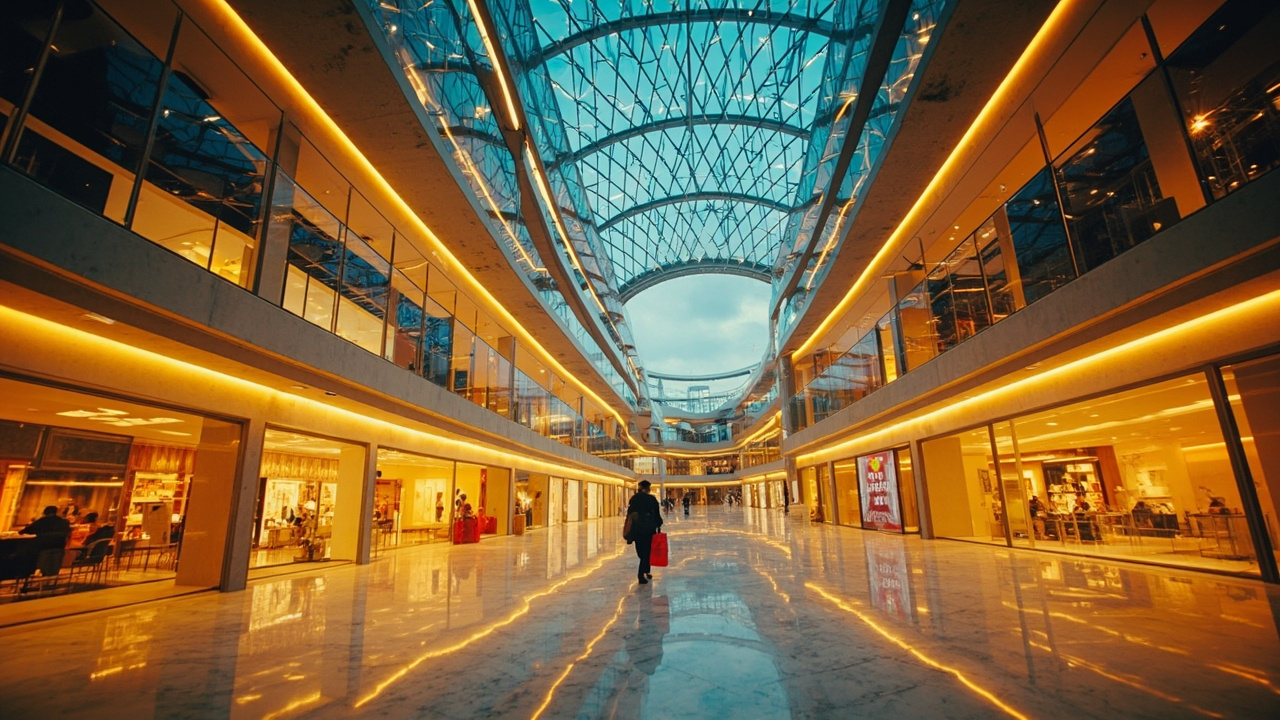
Best Malls in China
I was standing on the fifth floor of a mall in Guangzhou, watching a man in a full suit bowl a perfect strike while his girlfriend filmed him on her phone. Behind them, a wall of LED screens played a K-pop music video. Below us, three floors down, someone was buying a $4,000 handbag. This was not what I expected from a shopping mall in China.
Here’s the thing nobody tells you before your first trip: Chinese malls aren’t just places to buy stuff. They’re climate-controlled cities. They have ice rinks, aquariums, rooftop gardens, indoor waterfalls, and food courts that would embarrass most Western restaurant districts. On a 95°F (35°C) Shanghai afternoon or a freezing Beijing morning, they become the most comfortable place you can legally be.
For a first-time visitor, this matters more than you’d think. You’ll need somewhere to escape the weather, somewhere to eat when you can’t read the menu, somewhere to buy a SIM card or a phone charger at 9pm. Chinese malls solve all of that. They also happen to be genuinely spectacular, in a way that makes American malls look like sad parking lots with a Cinnabon.
This guide covers the ten malls actually worth your time as a tourist — not the ones with the most luxury brands, but the ones that will make you text your friends back home. I’ve been to all of them. Some more than once. One of them, embarrassingly, four times in a single week.
Quick answer
The best malls in China for tourists are: Global Harbor in Shanghai (biggest, most over-the-top), SKP in Beijing (best luxury shopping), and MixC in Shenzhen (best for tech and food). All are free to enter, open roughly 10am–10pm daily, and reachable directly by metro. Most tourists should visit one mega-mall per city — you don’t need more than that, and you’ll want the time for actual sightseeing.
The Short Version
If you only have time for one: go to Global Harbor in Shanghai. It’s absurd in the best way — a fake European palace with a real ice rink and a rooftop Ferris wheel. If you’re in Beijing, SKP is the serious luxury option and the basement food hall alone justifies the trip. Skip any mall that looks like a normal Western mall. You didn’t fly 12 hours for an H&M.
How I Picked These
I’ve lived in Beijing for seven years and traveled through China more than 40 times. Every mall on this list, I’ve walked through personally — usually more than once, often dragging a reluctant friend or a taxi driver who insisted on showing me “the real one.”
I talked to locals about which malls they actually go to (not the ones in tourist brochures), paid attention to which ones survived the pandemic-era retail shakeout, and eliminated anything that felt like a generic Western import. I also weighted heavily for one thing: can a foreigner with no Mandarin and a phone full of translation apps actually enjoy this place? If the answer was no, it’s not here.
Comparison Table
| Rank | Mall | Best For | Approx Cost (USD) | Time Needed | When to Go |
|---|---|---|---|---|---|
| 1 | Global Harbor (Shanghai) | Scale, spectacle, families | Free entry; $15–40 (¥110–290) for activities | 3–4 hours | Weekday afternoon |
| 2 | SKP (Beijing) | Luxury shopping, food hall | Free entry; $30–200+ (¥220–1,450+) | 2–3 hours | Weekday morning |
| 3 | MixC (Shenzhen) | Tech, dining, modern design | Free entry; $20–60 (¥145–435) | 2–3 hours | Weekday evening |
| 4 | Taikoo Li (Chengdu) | Open-air design, people-watching | Free entry; $15–50 (¥110–360) | 2–3 hours | Late afternoon |
| 5 | K11 Musea (Hong Kong) | Art, architecture, harbor views | Free entry; $25–80 (¥180–580) | 2–3 hours | Weekday |
| 6 | Grandview Mall (Guangzhou) | Aquarium, family activities | $20–45 (¥145–325) | 3–4 hours | Weekday |
| 7 | IFS (Chengdu) | Luxury, rooftop panda statue | Free entry; $20–100+ (¥145–725+) | 2 hours | Evening |
| 8 | Nanjing Deji Plaza (Nanjing) | High-end shopping, central location | Free entry; $20–150+ (¥145–1,090+) | 2 hours | Weekday |
| 9 | Joy City (Beijing) | Youth culture, streetwear, food | Free entry; $10–40 (¥75–290) | 2 hours | Weekend evening |
| 10 | The MixC Hangzhou | Design, dining, riverside location | Free entry; $15–50 (¥110–360) | 2 hours | Weekday |
Global Harbor (Shanghai) — The One That Feels Like a Fever Dream
The first time I walked into Global Harbor, I genuinely stopped in the middle of the entrance and just stared. A friend who’d been living in Shanghai for three years laughed at me. “Yeah,” she said. “It’s a lot.”
It is a lot. Global Harbor is one of the largest malls in the world by floor area — roughly 3.5 million square feet — and it’s designed to look like a European palace that got into a fight with a Las Vegas casino and lost. There’s a fake Venetian canal. There’s a 200-foot-tall indoor waterfall. There’s an ice rink on the fourth floor where actual competitive skaters train. On the roof, there’s a Ferris wheel with views over the Putuo district.
Why it’s special: most malls try to be pleasant. Global Harbor tries to be unforgettable, and it succeeds through sheer excess. You will not find anything like this in the West. The scale is genuinely disorienting — I got lost twice on my first visit and had to ask a security guard for directions to the exit.
📍 Location: Putuo District, 3300 Zhongshan North Road. About 15 minutes by taxi from Jing’an Temple.
🎟️ Entry fee: Free to enter. Ice rink is around $15 (¥110) per hour. Ferris wheel is about $8 (¥60).
🕐 Opening hours: 10am–10pm daily. Some restaurants stay open until 11pm.
🚇 How to actually get there: Take Metro Line 3 or 4 to Jinshajiang Road Station, Exit 4. Walk about 8 minutes north. You’ll see it — it’s enormous. Alternatively, Line 13 to Daduhe Road, Exit 2.
⏰ When to visit: Weekday afternoons are calmest. Weekends are packed with families and the ice rink gets crowded. Avoid Chinese public holidays entirely.
💡 Insider tips: The basement food court is genuinely good and cheap — expect $5–8 (¥35–60) for a full meal. Download the mall’s mini-program on WeChat for a floor map in English, because the physical signage is mostly Chinese. The Ferris wheel is best at sunset. Bring your passport if you want to buy anything expensive — tax refund paperwork requires it.
I once watched a grandfather teach his grandson to skate here for two hours while I ate noodles on a bench nearby. Neither of them fell once. I fell twice just walking to the bench.
SKP (Beijing) — Where Serious Money Goes to Shop
A taxi driver named Liu once asked me where I was going. When I said SKP, he nodded slowly and said, in Mandarin, “Ah, the expensive one.” He wasn’t wrong.
SKP in Beijing’s Chaoyang District is consistently ranked among the highest-revenue department stores in the world — it reportedly does more annual sales than Harrods. It’s not a place for bargains. It’s a place to see how the other half shops in China, and to eat extremely well in the basement.
Why it’s special: the luxury floor is genuinely impressive — every major brand you can name, plus a few you can’t. But the real draw for tourists is the food hall in the basement (SKP-S, the adjacent building, has an even better one). It’s a curated collection of high-end Chinese and international restaurants in a food-court format, and the quality is absurd for the price point. You can eat a proper Sichuan meal for $12 (¥85) here.
📍 Location: Chaoyang District, 87 Jianguo Road. SKP-S is next door at 86 Jianguo Road.
🎟️ Entry fee: Free.
🕐 Opening hours: 10am–10pm daily.
🚇 How to actually get there: Take Metro Line 1 or 10 to Guomao Station, Exit A. Walk east about 5 minutes. SKP is on your right.
⏰ When to visit: Weekday mornings are quietest. Weekends get busy with shoppers, but the food hall is manageable.
💡 Insider tips: The tax refund counter is on the 5th floor — you need your passport and receipts totaling over ¥500. SKP-S has an art installation on every floor; it’s worth a walk-through even if you’re not buying. The basement food hall has English menus at most stalls. Avoid the first weekend of the month — that’s when new luxury drops happen and it’s chaos.
I once made the mistake of trying to buy a coat here without checking the price first. It was $3,200 (¥23,000). I put it back very carefully.
MixC (Shenzhen) — The Future of Shopping
Shenzhen’s MixC feels like what malls will look like in 2040. It’s all glass, greenery, and quiet efficiency. The first time I walked in, I thought I’d accidentally entered a tech campus.
Why it’s special: Shenzhen is China’s tech capital, and MixC reflects that. There’s a whole floor dedicated to electronics and gadgets, with brands you’ve never heard of selling things you didn’t know existed. The dining options are excellent — Shenzhen has a huge migrant population, so you get authentic regional Chinese food from all over the country. And the design is genuinely beautiful, with indoor gardens and natural light everywhere.
📍 Location: Luohu District, 1881 Bao’an South Road. Near the Shenzhen border crossing with Hong Kong.
🎟️ Entry fee: Free.
🕐 Opening hours: 10am–10pm daily.
🚇 How to actually get there: Take Metro Line 1 to Grand Theater Station, Exit A. Walk 3 minutes. Or Line 2 to Luohu, then a short taxi.
⏰ When to visit: Weekday evenings are ideal — the after-work crowd is lively but not overwhelming.
💡 Insider tips: The electronics floor is great for buying a cheap universal adapter or a backup phone charger. Prices are fixed here, unlike at Huaqiangbei market nearby. The basement supermarket (Ole’) has excellent imported snacks if you’re missing home food. Most staff speak at least some English here — Shenzhen is the most foreigner-friendly city in mainland China for this.
I once spent 40 minutes in the electronics section trying to explain to a shop assistant that I wanted a cable that worked with a 2015 MacBook. We eventually figured it out through a translation app and a lot of pointing.
Taikoo Li (Chengdu) — The Open-Air One That Actually Works
I’ll be honest: I usually hate open-air “lifestyle” malls. They’re hot in summer, cold in winter, and always feel like they’re trying too hard. Taikoo Li in Chengdu is the exception.
Why it’s special: it’s built around a restored Buddhist monastery (Daci Temple), and the contrast between ancient temple roofs and glass storefronts is genuinely striking rather than gimmicky. The design respects the site. It’s also the best place in Chengdu for people-watching — this is a city that takes leisure seriously, and you’ll see it here. Locals sit at the tea houses for hours.
📍 Location: Jinjiang District, near Chunxi Road. The temple is at the center.
🎟️ Entry fee: Free. Temple entry is also free.
🕐 Opening hours: Shops 10am–10pm; temple 8am–5pm.
🚇 How to actually get there: Metro Line 2 or 3 to Chunxi Road Station, Exit D. Walk 5 minutes.
⏰ When to visit: Late afternoon into evening. The lighting is best around 5–7pm, and the tea houses are liveliest then.
💡 Insider tips: The temple is real and active — be respectful, don’t take photos of people praying. The tea houses here are more expensive than elsewhere in Chengdu but the setting is worth it once. The Apple Store here is one of the most photographed in China. Chengdu is also where you’ll want to try hotpot — there’s a good one in the basement level.
I once sat at a tea house here for three hours doing nothing. A local man at the next table did the same thing. We nodded at each other when we both left. It was one of the best afternoons of that trip.
K11 Musea (Hong Kong) — The Art Mall
K11 Musea on the Tsim Sha Tsui waterfront is technically in Hong Kong, which has its own visa rules — check your eligibility before assuming you can hop over. But if you’re already in Hong Kong, it’s the most interesting mall in the city.
Why it’s special: it’s designed as a museum that happens to sell things. Every floor has curated art, and the architecture is genuinely beautiful — a vertical garden on the facade, harbor views from the upper floors, and a rooftop garden that’s free to visit. The food options are excellent and range from cheap to very expensive.
📍 Location: Tsim Sha Tsui, Victoria Dockside, 18 Salisbury Road.
🎟️ Entry fee: Free.
🕐 Opening hours: 10am–10pm daily.
🚇 How to actually get there: MTR Tsim Sha Tsui Station, Exit J. Follow signs for Victoria Dockside. About 5 minutes’ walk.
⏰ When to visit: Weekday afternoons. Weekends are busy with locals.
💡 Insider tips: The rooftop garden is free and has the best harbor views of any mall in Hong Kong. The basement food hall is excellent and cheaper than the restaurants upstairs. Hong Kong uses a different payment system — Octopus card is essential, though Alipay and WeChat Pay work at most places now.
I once ate a $6 (HK$47) bowl of noodles here that was better than a $60 meal I’d had the night before. That’s Hong Kong for you.
Grandview Mall (Guangzhou) — The One With the Aquarium
Grandview Mall in Guangzhou has a full aquarium inside it. Not a small tank — a real aquarium with sharks, rays, and a walk-through tunnel. This is the kind of thing that sounds like a gimmick until you’re standing in it.
Why it’s special: it’s the most family-friendly mall on this list. If you’re traveling with kids, this is your best bet in southern China. The aquarium is genuinely good, the food court is enormous, and there’s an ice rink and a cinema. It’s also right next to Tianhe Sports Center, so you can combine it with other activities.
📍 Location: Tianhe District, 228 Tianhe Road.
🎟️ Entry fee: Mall is free. Aquarium is about $20 (¥145) for adults, $13 (¥95) for kids.
🕐 Opening hours: Mall 10am–10pm; aquarium 10am–9pm.
🚇 How to actually get there: Metro Line 1 or 3 to Tianhe Sports Center Station, Exit D3. Walk 3 minutes.
⏰ When to visit: Weekday mornings for the aquarium — it gets crowded with school groups after 11am.
💡 Insider tips: Buy aquarium tickets online through WeChat or Alipay for a small discount. The food court on the top floor has the best variety. Guangzhou is humid year-round — this is a great place to escape the heat in summer.
I once watched a toddler press his face against the shark tank for 20 straight minutes. His mother gave up trying to move him and just sat down.
IFS (Chengdu) — The Panda on the Roof
The IFS in Chengdu is famous for one thing: a giant panda sculpture climbing the side of the building. It’s become the most photographed spot in the city.
Why it’s special: beyond the panda, IFS is a serious luxury mall with excellent dining. The rooftop garden has views over central Chengdu, and the food options range from high-end Chinese to international. It’s also centrally located, so it’s easy to combine with other Chengdu sights.
📍 Location: Jinjiang District, 1 Hongxing Road Section 3.
🎟️ Entry fee: Free.
🕐 Opening hours: 10am–10pm daily.
🚇 How to actually get there: Metro Line 2 or 3 to Chunxi Road Station, Exit D. Walk 3 minutes.
⏰ When to visit: Evening, when the panda is lit up and the rooftop is pleasant.
💡 Insider tips: The panda photo spot is on the 7th floor rooftop — go early or late to avoid crowds. The food court in the basement is good and cheap. Chengdu is very foreigner-friendly; you’ll find English menus at most places here.
I once waited 15 minutes to get a photo of the panda without anyone in the frame. I failed. There were always at least three people posing.
Nanjing Deji Plaza — The Local Favorite
Deji Plaza in Nanjing is where locals actually shop. It’s not as flashy as the Shanghai or Beijing options, but it’s central, well-designed, and has excellent food.
Why it’s special: it’s the best mall in Nanjing, and Nanjing is often overlooked by foreign tourists. The mall is right in the city center, near the Xinjiekou metro hub, and it’s a good place to spend an afternoon if you’re between sights. The luxury floor is serious, and the food options are strong.
📍 Location: Xuanwu District, 18 Zhongshan Road. Xinjiekou area.
🎟️ Entry fee: Free.
🕐 Opening hours: 10am–10pm daily.
🚇 How to actually get there: Metro Line 1 or 2 to Xinjiekou Station, Exit 7. Walk 2 minutes.
⏰ When to visit: Weekday afternoons.
💡 Insider tips: Xinjiekou is the biggest metro interchange in Nanjing — it has 24 exits, so pay attention to which one you need. The food court is on the top floor. Nanjing is a great city to base yourself in for exploring eastern China by train — check the high-speed rail guide for routes.
I once got lost in Xinjiekou station for 20 minutes. It’s the size of a small airport.
Joy City (Beijing) — Where Young Beijing Hangs Out
Joy City in Beijing’s Chaoyang District is the mall for streetwear, youth culture, and cheap eats. It’s not luxury — it’s where 20-somethings go on weekends.
Why it’s special: it has a genuinely good selection of Chinese streetwear brands you won’t find in the West, plus a huge food court and a cinema. The vibe is energetic and unpretentious. It’s also near Sanlitun, so you can combine it with a night out.
📍 Location: Chaoyang District, 101 Chaoyang North Road.
🎟️ Entry fee: Free.
🕐 Opening hours: 10am–10pm daily.
🚇 How to actually get there: Metro Line 6 to Qingnianlu Station, Exit A. Walk 5 minutes.
⏰ When to visit: Weekend evenings for the full experience.
💡 Insider tips: The streetwear floor is on the 3rd level — brands like Li-Ning and Anta have flagship stores here. The food court is cheap and good. If you want to buy a Chinese SIM card, this area has several China Mobile and China Unicom stores nearby — see the SIM card guide for details.
I once bought a pair of sneakers here for $40 (¥290) that I still wear three years later.
The MixC Hangzhou — The One by the River
Hangzhou’s MixC is newer and quieter than the Shenzhen version, but it’s beautifully designed and sits near the Qiantang River. It’s a good stop if you’re in Hangzhou for West Lake.
Why it’s special: the design is clean and modern, with good natural light and a strong dining selection. It’s less crowded than the Shanghai or Beijing malls, which makes it a more relaxed experience. The riverside location means you can walk along the water afterward.
📍 Location: Jianggan District, near the Qiantang River.
🎟️ Entry fee: Free.
🕐 Opening hours: 10am–10pm daily.
🚇 How to actually get there: Metro Line 4 to Citizen Center Station, Exit D. Walk 5 minutes.
⏰ When to visit: Weekday afternoons or early evening.
💡 Insider tips: Hangzhou is a great day trip from Shanghai by high-speed train — about 45 minutes. The mall is a good place to eat before or after visiting West Lake. Most payment here is via Alipay or WeChat Pay, so set those up before you arrive.
I once ate a bowl of Hangzhou noodles here that cost $4 (¥30) and was better than most meals I’ve had in expensive restaurants.
FAQ summary
The best malls in China for tourists are Global Harbor in Shanghai (biggest and most spectacular), SKP in Beijing (best luxury and food hall), and MixC in Shenzhen (best for tech and modern design). All are free to enter, open roughly 10am–10pm daily, and reachable directly by metro. Most foreign visitors should plan to visit one major mall per city — they’re best used as weather-proof breaks between sightseeing, not as primary destinations. Set up Alipay or WeChat Pay before you arrive, as most mall vendors no longer accept cash or foreign cards.
FAQ
Q: Do I need a visa to visit China in 2026? A: It depends on your nationality. As of 2026, citizens of many European countries, Australia, and several Southeast Asian nations can enter China visa-free for up to 30 days. US and UK citizens still need a visa unless transiting. Check the visa guide for current rules.
Q: Can I pay with a foreign credit card at Chinese malls? A: Rarely. Most vendors only accept Alipay or WeChat Pay, which you can link to a foreign Visa or Mastercard. Set these up before you arrive — see the payment guide. Some luxury stores at SKP and IFS accept international cards, but don’t count on it.
Q: Do I need a VPN to use the internet in China? A: Yes, if you want to use Google, Instagram, WhatsApp, or most Western apps. Install a VPN before you arrive — they’re hard to download once you’re in China. You’ll also need a local SIM card or eSIM for data. See the SIM card guide.
Q: Is English spoken at these malls? A: At luxury malls like SKP and IFS, some staff speak basic English. At most other malls, expect to use a translation app. Download Pleco or Baidu Translate before your trip. Signage is usually bilingual at major malls, but smaller stores are Chinese-only.
Q: What’s the best mall for families with kids? A: Grandview Mall in Guangzhou is the best for families — it has a full aquarium, an ice rink, and a huge food court. Global Harbor in Shanghai is also good for kids, with the ice rink and Ferris wheel.
Q: Are these malls open on public holidays? A: Yes, but they’re extremely crowded during Chinese New Year, Golden Week (early October), and other major holidays. Avoid these periods if you can. Weekday mornings are always the calmest time.
Q: How much should I budget for a mall visit? A: Entry is free at all of these malls. Budget $15–40 (¥110–290) if you want to do an activity like the ice rink or aquarium, and $5–15 (¥35–110) for a meal at the food court. Luxury shopping is obviously separate.
The Honest Wrap-up
This list is for travelers who want to see a side of China that isn’t in the guidebooks — the everyday spectacle of how 1.4 billion people shop, eat, and hang out. It’s not for people who hate crowds, or who think malls are inherently boring. If that’s you, skip this article entirely and go hike Huangshan instead.
One last piece of advice: don’t try to do more than one mall per city. They’re all impressive, but they’re also all malls. The magic is in the contrast — spending a morning at the Forbidden City and an afternoon eating noodles in a basement food court is the real China experience. Book the flight. Bring a power bank. Set up Alipay before you land.
More guides you may like
Top 10 Bridges in China
China's bridges are engineering marvels spanning mountains, rivers, and seas. Here are 10 of the most spectacular, from ancient stone to modern steel.
8 min read

Top 10 Buddhist Sites in China
From the Leshan Giant Buddha to the Dunhuang Caves, these 10 Buddhist sites represent 2,000 years of China's spiritual heritage.
9 min read
Top 10 Day Trips from Beijing You Shouldn't Miss
Beijing is packed with history, but some of China's best experiences are just a few hours away. Here are 10 day trips that will transform your visit.
9 min read
Top 10 Hidden Gems in China Off the Beaten Path
Beyond the Great Wall and Terracotta Warriors, China has incredible hidden destinations few tourists ever reach. Here are 10 underrated gems worth the detour.
9 min read
Top 10 Markets and Shopping Streets in China
From Shanghai's Bund to Beijing's Silk Street - 10 markets where foreigners can haggle, explore, and bring home authentic Chinese goods.
9 min read
Top 10 Museums in China You Shouldn't Miss
China's museums span 5,000 years of civilization. These 10 - from the Palace Museum to Xi'an's terracotta gallery - are unmissable for culture lovers.
9 min read