
Best Noodles in China
TODO: Extract from article (100-160 chars)
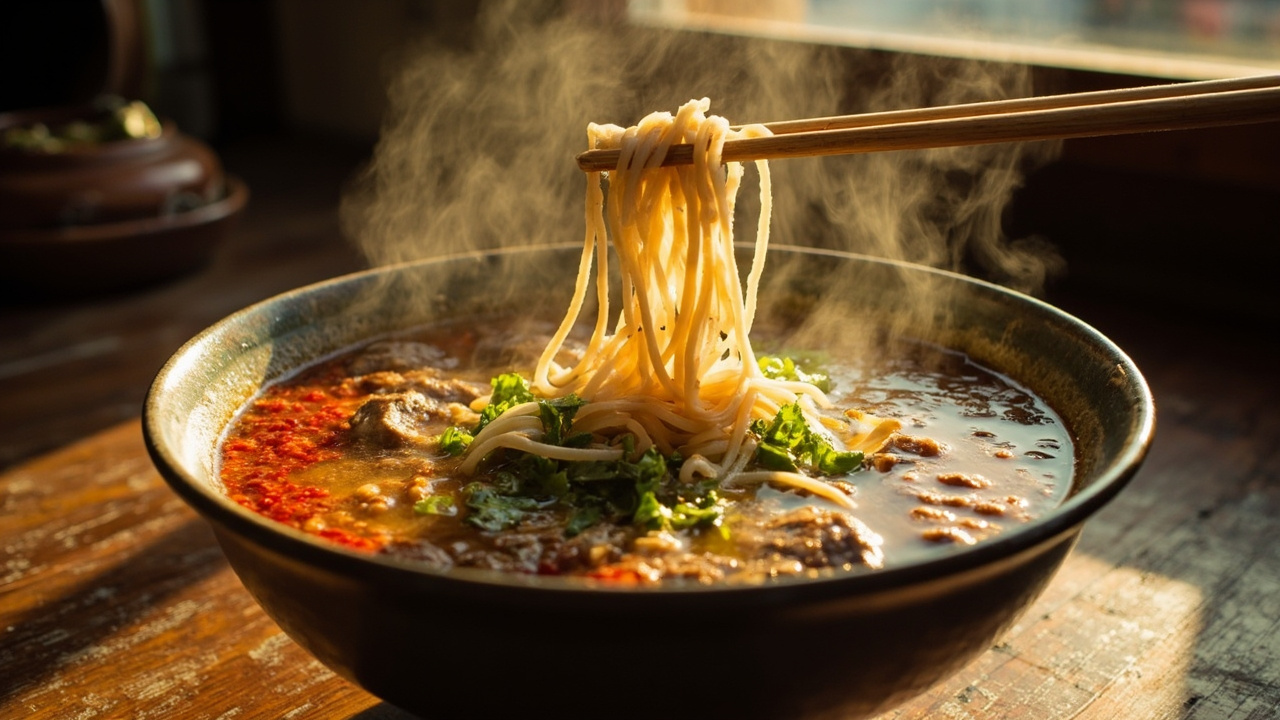
Best Noodles in China
I was standing on a sidewalk in Lanzhou at 7:15 in the morning, still jet-lagged, watching a man in a white cap pull a rope of dough into threads so thin they looked like thread. He slapped it against the counter twice, dropped it into boiling water, and forty seconds later handed me a bowl for 8 yuan. I ate it standing up, hunched over, and I remember thinking: I have been eating the wrong noodles my entire life.
That was seven years ago. Since then I’ve eaten noodles in maybe thirty Chinese cities, sometimes three bowls in a day, once four. I’ve had noodles that cost 4 yuan from a plastic stool on a curb and noodles that cost 380 yuan in a room with white tablecloths. The expensive ones were almost never better.
Here’s what nobody tells first-time visitors: “Chinese noodles” isn’t a cuisine. It’s a dozen cuisines that happen to share a shape. A bowl of Lanzhou beef noodles has almost nothing in common with a bowl of Wuhan hot dry noodles, which has almost nothing in common with Cantonese wonton mein. Different wheat, different water, different technique, different philosophy of what a bowl should do to you.
This guide is the ten bowls I’d send a friend to eat, in the order I’d send them. I’ll tell you what each one actually is, what it costs, how to order it when nobody speaks English, and which ones are worth a detour.
Quick answer
The best noodles in China are regional, not national: Lanzhou beef noodles (hand-pulled, clear beef broth, ~$1.20/8 CNY), Wuhan hot dry noodles (sesame paste, no soup, ~$0.85/6 CNY), Xi’an biangbiang noodles (wide as a belt, chili oil, ~$2.80/20 CNY), and Cantonese wonton noodles (shrimp wontons, thin egg noodles, ~$4.20/30 CNY). Most bowls cost $1–5 (7–35 CNY) and are eaten at breakfast or lunch, not dinner. If you’re American, British, or from most of Southeast Asia, you can currently enter China visa-free for up to 30 days (check your specific passport — the visa-free transit rules change often), and you’ll need Alipay or WeChat Pay set up before you land, because almost no noodle shop takes cash cards.
The Short Version
If you do nothing else: eat a bowl of Lanzhou beef noodles on your first morning in China. It costs about a dollar, it’s everywhere, and it will recalibrate what you think noodles can be. Then eat hot dry noodles in Wuhan, biangbiang in Xi’an, and wonton mein in Guangzhou. Skip the hotel breakfast. The best noodle shops close by 2pm and the good ones sell out. Learn the phrase “yī wǎn” (one bowl) and point.
How I Picked These
I didn’t use a listicle. I ate. Over seven years and roughly forty trips around the country, I kept a note on my phone with every bowl I liked, where it was, and what it cost. Some of these are famous shops with lines down the block. Some are stalls I found because a taxi driver pulled over and said “eat here.” I cross-checked each one against what locals told me — I always ask, “Where do you eat noodles?” — and I threw out anything that was only good because I was hungry. A few famous places didn’t make it. A few anonymous ones did.
Comparison Table
| Rank | Place | Best For | Approx Cost (USD) | Time Needed | When to Go |
|---|---|---|---|---|---|
| 1 | Lanzhou beef noodles (Lanzhou/anywhere) | First bowl, breakfast | $1.20 (8 CNY) | 20 min | 7–9am |
| 2 | Wuhan hot dry noodles | Sesame lovers, breakfast | $0.85 (6 CNY) | 15 min | 6:30–9am |
| 3 | Xi’an biangbiang noodles | Big flavors, photos | $2.80 (20 CNY) | 30 min | Lunch |
| 4 | Cantonese wonton noodles (Guangzhou) | Light, refined broth | $4.20 (30 CNY) | 30 min | Lunch |
| 5 | Chongqing xiaomian | Chili addicts | $1.40 (10 CNY) | 20 min | Breakfast |
| 6 | Beijing zhajiangmian | Cold-weather comfort | $3.50 (25 CNY) | 30 min | Lunch |
| 7 | Kunming crossing-the-bridge noodles | Theater, ritual | $5.60 (40 CNY) | 45 min | Lunch |
| 8 | Shanxi knife-cut noodles (Taiyuan) | Chewy texture | $2.10 (15 CNY) | 30 min | Lunch |
| 9 | Shanghai scallion oil noodles | Simple, cheap | $2.80 (20 CNY) | 20 min | Lunch |
| 10 | Chengdu dan dan noodles | Snack-sized punch | $1.40 (10 CNY) | 15 min | Any time |
1. Lanzhou Beef Noodles — The Bowl That Starts Everything
The first time I ordered one, I didn’t know there was a system. I just said “beef noodles” and got whatever. Then a man next to me, maybe sixty, watched me eat for a minute and said in careful English: “You must say thin, or wide, or very thin. Otherwise they decide.” He was right. Lanzhou noodle shops let you choose your noodle width, and it changes the bowl.
Why it’s special: the broth is beef bone and radish, simmered for hours, and it’s clear — not muddy, not heavy. The beef is sliced paper-thin. The chili oil on top is optional and you add it yourself. What makes it great is the pull: the noodles are made to order, stretched by hand in front of you, and they have a slight chew that machine noodles never get. It’s also the most democratic food in China. Everyone eats it. Bankers, students, delivery drivers, me.
📍 Location: Everywhere, but the best are in Gansu province. In Lanzhou, head to the Chengguan district around Zhangye Road. In Beijing, look for “Lanzhou” or “Xibei” in the shop name. 🍜 Entry fee: $1.20 (8 CNY) for a small bowl, $1.80 (12 CNY) with extra beef. 🕐 Opening hours: Most open 6:30am, close by 2pm or when the broth runs out. Some reopen for dinner. 🚇 How to get there: In Lanzhou, take Metro Line 1 to Xiguan station, Exit B, walk 3 minutes north. In any other city, search “兰州牛肉面” on Amap. ⏰ When to visit: Morning. Before 9am. The broth is freshest and the shop is loudest. 💡 Insider tips: Say “xì” (thin), “èr xì” (medium), or “kuān” (wide) when you order. Ask for “duō là” (more chili) or “bù là” (no chili). Don’t add vinegar until you’ve tasted the broth plain. The tea is free — pour it yourself. A woman at the counter in Lanzhou once refused to let me pay for a second bowl because I’d said “hǎo chī” (delicious) with what she called a “funny accent.”
2. Wuhan Hot Dry Noodles — Breakfast, No Soup, All Attitude
Wuhan at 7am is a city of people walking and eating at the same time. The bowl in their hands is hot dry noodles — reganmian — and it’s not a soup. It’s noodles tossed in sesame paste, soy, chili oil, and a little pickled vegetable, and it’s meant to be eaten fast, before it clumps.
Why it’s special: this is the most Wuhan food there is, and locals are fiercely protective of it. The sesame paste is the whole point — thick, nutty, slightly bitter in a good way. The noodles are alkaline, which gives them a springy bite. It’s a breakfast food, which throws a lot of foreigners, but once you eat one at 7am you understand: it’s cheap fuel that tastes like something.
📍 Location: Everywhere in Wuhan, but the classic neighborhoods are Hankou (around Jianghan Road) and Wuchang (around Hubu Alley). 🍜 Entry fee: $0.85 (6 CNY) for a small bowl, $1.40 (10 CNY) large. 🕐 Opening hours: 6am–10am mostly. Some shops stay open till noon. Almost none serve it at dinner. 🚇 How to get there: Wuhan Metro Line 2 to Jianghan Road station, Exit C, then walk into the side streets. Hubu Alley is near Wuchang station, Exit A. ⏰ When to visit: Weekday morning, 7–8am. Weekends the good stalls have 20-minute lines. 💡 Insider tips: Mix it immediately — don’t let it sit. Add the pickled beans and the chili oil at the table. Locals eat it standing. If you want soup, order huntun (wontons) on the side. Bring tissues; there are rarely napkins. I made the mistake of asking for a spoon my first time. The woman behind the counter looked at me like I’d asked for a fork to eat pizza.
3. Xi’an Biangbiang Noodles — The Ones You Photograph
You’ll see the character before you see the noodles. Biáng is one of the most complicated Chinese characters in existence — 58 strokes, no one agrees on the spelling — and the noodles named after it are wide, flat, and about as long as your forearm. They arrive in a bowl with chili oil, garlic, vinegar, and a little pork.
Why it’s special: the texture is the thing. These noodles are hand-slapped against the counter (that’s the biang sound), and they come out thick in the middle and thin at the edges. The chili oil in Xi’an is different from Sichuan chili oil — less numbing, more aromatic, almost smoky. It’s a bowl that rewards chewing.
📍 Location: Muslim Quarter (Huimin Jie) in Xi’an, but honestly the best ones are in the side alleys off Beiyuanmen Street. 🍜 Entry fee: $2.80 (20 CNY) for a standard bowl, $4.20 (30 CNY) with extra toppings. 🕐 Opening hours: 10am–9pm, but the best shops close when they sell out, often by 7pm. 🚇 How to get there: Xi’an Metro Line 2 to Zhonglou (Bell Tower) station, Exit B, walk west into the Muslim Quarter. ⏰ When to visit: Lunch, 11:30am–1pm. Dinner is more crowded and the noodles are sometimes pre-made. 💡 Insider tips: Ask for “yóu pō là zi” (oil-splashed chili) on the side if you’re nervous about heat. The vinegar is your friend — add a splash. Don’t wear white. The noodle is meant to be slurped, not cut. A shop owner named Mr. Ma in the Muslim Quarter told me, through a translation app, that his family had made the same noodles for four generations and that he’d never eaten a bowl anywhere else.
4. Cantonese Wonton Noodles — The Refined One
Guangzhou is where Chinese noodles get quiet. A bowl of wonton mein here is small, precise, and almost delicate — thin egg noodles, a clear shrimp-and-pork broth, and four or five wontons with whole shrimp inside. It’s the opposite of a Lanzhou bowl in every way.
Why it’s special: the broth is made with dried flounder and shrimp shells, and it tastes like the sea without being fishy. The noodles are alkaline and springy. The wontons are the star — you can see the shrimp through the wrapper. This is a bowl that respects restraint, and after a week of chili oil it’s a relief.
📍 Location: Guangzhou, especially the old neighborhoods of Liwan district. Look for shops with “云吞面” on the sign. 🍜 Entry fee: $4.20 (30 CNY) for a standard bowl, $6.30 (45 CNY) at the famous spots. 🕐 Opening hours: 7am–10pm, some until midnight. 🚇 How to get there: Guangzhou Metro Line 1 to Changshou Road station, Exit B, walk 5 minutes into the alleys. ⏰ When to visit: Lunch, or late evening after 9pm when the crowds thin. 💡 Insider tips: The vinegar here is red, not black — it’s for the wontons, not the noodles. Ask for “hóng cù” if it’s not on the table. The noodles are meant to be eaten with a spoon and chopsticks together. Don’t add chili unless you want to offend someone. I once watched an elderly man in Guangzhou eat three bowls in a row, then order a fourth to take home for his wife. He said, in Cantonese, “She can’t walk here anymore, so I bring it to her.”
5. Chongqing Xiaomian — The Breakfast That Hurts
Chongqing wakes up to chili. Xiaomian means “small noodles,” and they’re served in a bowl with chili oil, sesame paste, pickled vegetables, and a little pork, and they will absolutely make your mouth tingle before 8am.
Why it’s special: this is the most intense breakfast in China. The chili is numbing (Sichuan peppercorn) and the sesame paste cools it slightly, but not enough. Locals eat it in five minutes flat, standing or squatting on the sidewalk. It’s not a bowl you linger over.
📍 Location: Everywhere in Chongqing, but the best are in Yuzhong district near Jiefangbei. 🍜 Entry fee: $1.40 (10 CNY) for a small bowl, $2.10 (15 CNY) large. 🕐 Opening hours: 6am–11am mostly. Some shops do it all day but it’s not the same. 🚇 How to get there: Chongqing Metro Line 2 to Jiaochangkou station, Exit 5, walk into the side streets. ⏰ When to visit: 7–9am, weekday. The good stalls are gone by 10. 💡 Insider tips: Say “wēi là” (mild) if you’re not used to Sichuan heat — it’s still spicy. The vinegar cuts the oil. Order a bowl of soy milk on the side. Don’t try to eat it slowly; it gets worse. A woman running a stall near Jiefangbei once handed me a second bowl for free because I finished the first one without crying. “You did better than my son,” she said.
6. Beijing Zhajiangmian — The Cold-Weather Bowl
Beijing’s contribution to the noodle canon is zhajiangmian — thick wheat noodles with a fermented soybean paste, pork, and a pile of raw vegetables (cucumber, radish, bean sprouts) on top. It’s not pretty. It’s not subtle. It’s exactly what you want in January.
Why it’s special: the sauce is the whole thing — salty, funky, slightly sweet, and it clings to the noodles. The vegetables add crunch and coolness. It’s a bowl that feels like a meal, not a snack, and it’s one of the few Chinese noodles that’s genuinely better in winter.
📍 Location: Old Beijing neighborhoods — Dongcheng and Xicheng districts. Look for “炸酱面” on the sign. 🍜 Entry fee: $3.50 (25 CNY) for a standard bowl, $5.60 (40 CNY) at the tourist spots. 🕐 Opening hours: 10am–9pm. 🚇 How to get there: Beijing Metro Line 5 to Zhangzizhong Road station, Exit A, walk 5 minutes. Or Line 2 to Yonghegong, Exit C. ⏰ When to visit: Lunch, any weekday. Winter is best. Avoid the tourist-facing shops near the Great Wall day-trip crowds. 💡 Insider tips: Mix everything together before your first bite. The paste is strong — start with half. Ask for “miàn mǎ” (more noodles) if you’re hungry; it’s usually free. The garlic is raw and strong; chew gum after. A cab driver in Beijing, Mr. Liu, told me his grandmother made zhajiangmian every Sunday and that no restaurant in the city had ever gotten it right. He then drove me to a shop he swore was close.
7. Kunming Crossing-the-Bridge Noodles — The Ritual
This is the most theatrical bowl in China. In Kunming, guoqiao mixian arrives as a tray: a bowl of near-boiling broth, a plate of raw ingredients (thin-sliced pork, quail egg, vegetables), and a bowl of rice noodles. You add them in order, and the broth cooks everything in front of you.
Why it’s special: it’s a performance, and it’s also genuinely delicious — the broth is chicken and pork, rich but clear, and the raw ingredients cook in seconds. It’s the only bowl on this list where the eating is a process, not just a meal.
📍 Location: Kunming, especially around Nanping Street and the old town. 🍜 Entry fee: $5.60 (40 CNY) for the classic set, $8.40 (60 CNY) for the deluxe. 🕐 Opening hours: 10am–9pm. 🚇 How to get there: Kunming Metro Line 1 or 2 to Dongfeng Square station, Exit A, walk 5 minutes. ⏰ When to visit: Lunch, 12–1:30pm. It’s a sit-down meal, not a quick stop. 💡 Insider tips: Add the quail egg first, then the meat, then the vegetables, then the noodles — in that order. Don’t stir too fast or the broth cools. The chili is on the side; add it last. The broth is dangerously hot — wait 30 seconds. I once added everything at once and a waiter gently corrected me, then stood there until I did it right. He was not being rude. He was being Kunming.
8. Shanxi Knife-Cut Noodles — The Chewy One
Taiyuan, in Shanxi province, is where Chinese noodles get serious about texture. Daoxiaomian are cut from a block of dough with a knife, directly into boiling water, and they come out thick, irregular, and incredibly chewy.
Why it’s special: the chew. These noodles fight back. They’re served with a tomato-egg sauce or a pork broth, and the texture is the point — they’re not about the sauce, they’re about the bite. If you’ve only had soft noodles, this is a different experience.
📍 Location: Taiyuan, especially the old city and around Yingze Street. 🍜 Entry fee: $2.10 (15 CNY) for a standard bowl. 🕐 Opening hours: 10am–8pm. 🚇 How to get there: Taiyuan Metro Line 2 to Dabeimen station, Exit C, walk 5 minutes. ⏰ When to visit: Lunch, weekday. It’s a local lunch spot, not a tourist one. 💡 Insider tips: Ask for “xī hóng shì” (tomato) or “ròu” (meat) sauce. The vinegar here is local and excellent. The noodles are heavy — one bowl is enough. Bring cash as backup; some small shops are slow with QR codes. A shop owner in Taiyuan, a woman in her fifties, told me she’d been cutting noodles for thirty years and could do it with her eyes closed. She then did it with her eyes closed.
9. Shanghai Scallion Oil Noodles — The Simple One
Shanghai’s cong you ban mian is the cheapest, simplest bowl on this list: noodles, scallion oil, soy sauce, a little sugar. That’s it. And it’s perfect.
Why it’s special: it’s a lesson in restraint. The scallions are fried slowly until they’re almost black, and the oil takes on a deep, sweet, oniony flavor. There’s no meat, no chili, no broth. Just noodles and oil and soy. It costs less than a coffee in most cities.
📍 Location: Old Shanghai, especially the lanes off Huaihai Road and in the French Concession. 🍜 Entry fee: $2.80 (20 CNY) for a standard bowl, $4.20 (30 CNY) with pork. 🕐 Opening hours: 10am–9pm. 🚇 How to get there: Shanghai Metro Line 1 to South Huangpi Road station, Exit 1, walk into the lanes. ⏰ When to visit: Lunch, weekday. It’s a quick bowl, not a destination meal. 💡 Insider tips: Ask for “cōng yóu bàn miàn” and nothing else. Add a little vinegar if you want. The best shops are tiny and have no English menu — use a translation app. Don’t expect to be full; order a side of dumplings. I once ate this bowl three days in a row in Shanghai because it cost 20 yuan and I was tired of spending money. On the third day the owner nodded at me like I was a regular.
10. Chengdu Dan Dan Noodles — The Snack
Chengdu’s dan dan mian is small, cheap, and dangerous. It’s a bowl of thin noodles with chili oil, Sichuan peppercorn, preserved vegetables, and a little minced pork, and it’s meant to be a snack, not a meal.
Why it’s special: the numbing. This is the bowl that teaches you what má means — the tingle that isn’t quite spicy, isn’t quite electric, and stays with you for a minute after each bite. It’s the most Sichuan thing you can eat in Sichuan.
📍 Location: Chengdu, especially around Jinli and in the old neighborhoods of Qingyang district. 🍜 Entry fee: $1.40 (10 CNY) for a small bowl, $2.10 (15 CNY) large. 🕐 Opening hours: 8am–9pm. 🚇 How to get there: Chengdu Metro Line 2 to Tonghuimen station, Exit A, walk 5 minutes. ⏰ When to visit: Any time, but mid-afternoon is when the shops are quiet. 💡 Insider tips: Mix it thoroughly before eating. Ask for “wēi là” if you’re not used to Sichuan heat. The vinegar on the table is important — use it. One bowl is a snack; two is a meal. Order a bowl of huntun on the side. A waiter in Chengdu once told me, in English he’d clearly practiced, “This is not food. This is a test.”
FAQ summary
The best noodles in China are regional, not national, and most bowls cost $1–5 (7–35 CNY). Lanzhou beef noodles are the essential first bowl; Wuhan hot dry noodles, Xi’an biangbiang, and Cantonese wonton noodles are the other three you shouldn’t miss. Noodles are usually breakfast or lunch food, not dinner, and the best shops close by 2pm or sell out. You’ll need Alipay or WeChat Pay set up before you arrive, since almost no noodle shop takes foreign cards, and you should check your passport’s current visa-free eligibility before booking.
FAQ
Q: Do I need a visa to visit China for noodles in 2026? A: It depends on your passport. As of 2026, citizens of the US, UK, most of the EU, Australia, and much of Southeast Asia can enter China visa-free for up to 30 days for tourism. Check the current visa-free rules before booking, because the list changes.
Q: How much does a bowl of noodles cost in China? A: Between $0.85 and $6.30 (6–45 CNY) for almost every bowl on this list. Lanzhou beef noodles are around $1.20 (8 CNY), Wuhan hot dry noodles around $0.85 (6 CNY), and the fanciest Cantonese wonton noodles around $6.30 (45 CNY). Budget $5–10 (35–70 CNY) per day if you eat noodles for two meals.
Q: Can I pay with cash or a foreign credit card at noodle shops? A: Almost never. You need Alipay or WeChat Pay linked to a foreign card before you arrive. Set it up at home, test it, and keep a small amount of cash (200–300 CNY) as backup for tiny shops.
Q: Do I need a VPN or a local SIM card? A: Yes, for most travelers. Google, Instagram, WhatsApp, and many Western apps are blocked in China. Either buy a China SIM card at the airport or set up a VPN before you land — VPN apps are hard to download once you’re inside.
Q: Is English spoken at noodle shops? A: Rarely. Menus are in Chinese, and staff usually don’t speak English. Download a translation app with offline Chinese, learn “yī wǎn” (one bowl) and “duō shǎo qián” (how much), and point at what you want. It works fine.
Q: What’s the best city for a noodle-focused trip? A: If you only have one city, pick Xi’an — it has biangbiang, plus a dense food scene and easy transport. If you have a week, do Lanzhou → Xi’an → Wuhan → Guangzhou by high-speed rail, which covers four of the ten bowls on this list.
Q: Are any of these noodles vegetarian or safe for non-pork eaters? A: Shanghai scallion oil noodles are vegetarian by default. Most others use pork or beef broth. You can ask for “bù yào ròu” (no meat) but the broth is usually already made with meat. If you keep halal, look for “清真” (qingzhen) signs, which mark Muslim-owned restaurants.
The Honest Wrap-up
This list is for the traveler who wants to eat like a local, not the traveler who wants a white tablecloth. If you’re looking for a curated tasting menu with English descriptions, this isn’t your guide — and honestly, you’re missing the point. The best noodles in China cost less than a coffee, come in a bowl you hold with both hands, and are eaten standing up next to someone who’s been eating them their whole life. My advice: book the flight, set up Alipay before you go, and eat your first bowl before 9am on day one. Everything after that will make more sense.
More guides you may like

Top 10 Bridges in China
China's bridges are engineering marvels spanning mountains, rivers, and seas. Here are 10 of the most spectacular, from ancient stone to modern steel.
8 min read

Top 10 Buddhist Sites in China
From the Leshan Giant Buddha to the Dunhuang Caves, these 10 Buddhist sites represent 2,000 years of China's spiritual heritage.
9 min read

Top 10 Day Trips from Beijing You Shouldn't Miss
Beijing is packed with history, but some of China's best experiences are just a few hours away. Here are 10 day trips that will transform your visit.
9 min read
Top 10 Hidden Gems in China Off the Beaten Path
Beyond the Great Wall and Terracotta Warriors, China has incredible hidden destinations few tourists ever reach. Here are 10 underrated gems worth the detour.
9 min read
Top 10 Markets and Shopping Streets in China
From Shanghai's Bund to Beijing's Silk Street - 10 markets where foreigners can haggle, explore, and bring home authentic Chinese goods.
9 min read
Top 10 Museums in China You Shouldn't Miss
China's museums span 5,000 years of civilization. These 10 - from the Palace Museum to Xi'an's terracotta gallery - are unmissable for culture lovers.
9 min read