
Getting Around China by Bus
TODO: Extract from article (100-160 chars)
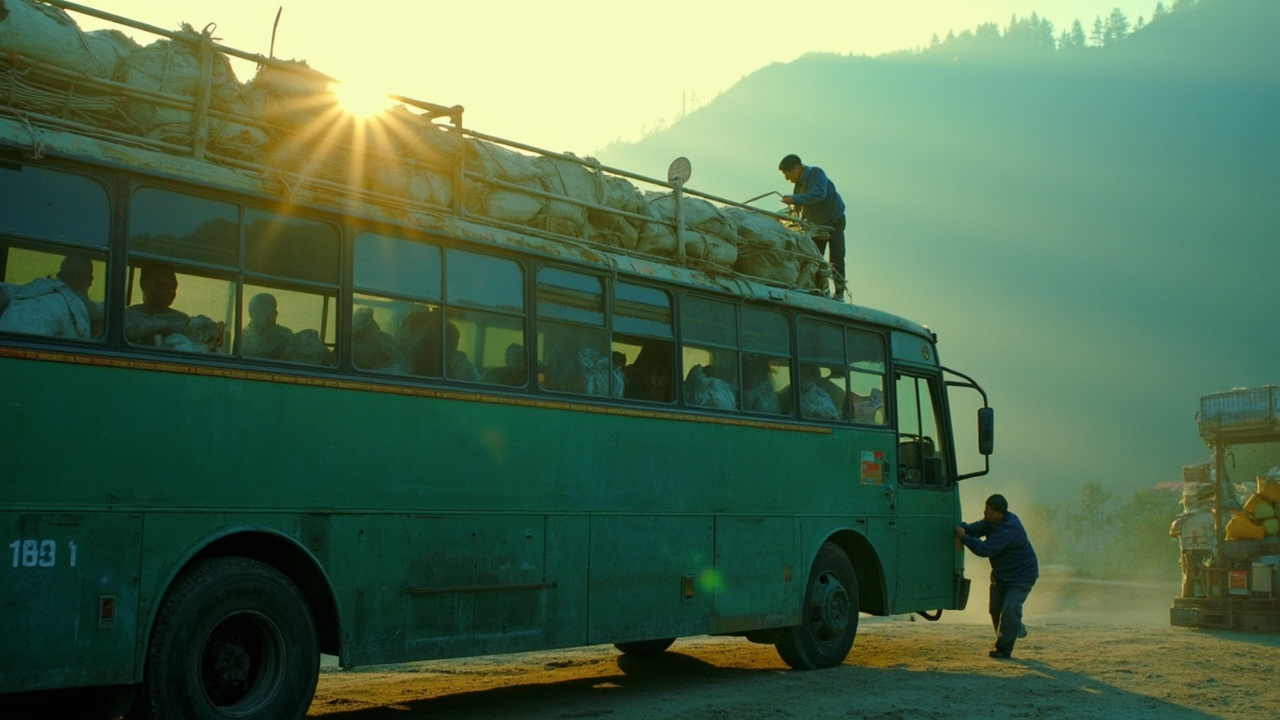
Getting Around China by Bus
The bus station in Dali smelled like diesel and fried dough. A woman with a cardboard box of baby chicks sat next to me on a plastic chair, and every few minutes one of them would poke its head through a hole she’d punched in the lid. I had a ticket to Shaxi in my hand, bought ten minutes earlier for 40 yuan, and I had no idea if I was in the right line. A guy in a blue vest pointed at my ticket, then at a bus idling by gate 3, and said “zou ba” — go on. That was it. No announcement, no English, no departure board I could read. I got on, and four hours later I was in a stone village in the mountains that most tourists never see.
That’s the thing about buses in China. They go everywhere the trains don’t, they’re absurdly cheap, and they will absolutely leave you standing in a parking lot if you don’t understand the system. But once you do understand it, buses open up a version of China that the high-speed rail network just skips over — the small towns, the mountain villages, the county-level places where nobody speaks English and the noodle shop has been run by the same family for thirty years.
This guide is for first-timers who’ve never set foot in China. I’ll cover how to buy tickets, what the stations are actually like, when to take a bus instead of a train, and the specific mistakes I made so you don’t have to.
Quick answer
China’s long-distance bus network (长途汽车, chángtú qìchē) covers roughly 90% of towns that high-speed rail misses, with intercity fares typically $3–$15 (¥20–¥110) for 2–5 hour journeys. Buses are the cheapest and most flexible way to reach rural areas, but tickets are rarely sold online in English — you’ll buy them at the station counter or through the Chinese app 携程 (Ctrip) using a translation tool. For most first-time visitors, buses make sense for short regional hops and mountain destinations; for anything over 500 km, take the high-speed rail instead.
The short version
Take buses for the last leg, not the whole trip. Trains are faster, cleaner, and easier to book in English. Buses win when you’re going somewhere the train doesn’t — a village, a trailhead, a county town. Buy tickets at the station the day before, bring your passport, arrive 30 minutes early, and screenshot your destination in Chinese characters. Don’t expect English. Do expect to pay less than a sandwich back home.
How I picked these
I’ve taken maybe 60 long-distance buses in China over seven years, plus countless city buses and a few sleeper coaches I’d rather forget. The routes below are ones I’ve actually ridden, or ones I’ve sent friends on and gotten detailed reports back. I’ve also cross-checked current 2026 fares against the Ctrip app and asked drivers and station staff where I could. I’m not listing every scenic bus route in the country — I’m listing the ones where the bus is genuinely the right choice, not just a cheaper alternative to a train you should have taken.
Comparison table
| Rank | Route / Region | Best For | Approx Cost (USD) | Time Needed | When to Go |
|---|---|---|---|---|---|
| 1 | Lijiang → Shaxi (Yunnan) | Mountain villages, old tea horse road | $6 (¥45) | 3.5–4 hrs | Oct–Nov, Mar–Apr |
| 2 | Chengdu → Jiuzhaigou | National park access | $18 (¥130) | 8–9 hrs | Sep–Oct |
| 3 | Guilin → Yangshuo → Xingping | Karst scenery, river towns | $4–$6 (¥30–45) | 1.5–2 hrs | Apr–May, Sep–Oct |
| 4 | Xi’an → Huashan | Mountain hiking | $5 (¥35) | 2 hrs | Apr–Jun, Sep–Oct |
| 5 | Kunming → Yuanyang Rice Terraces | Terraced landscapes, photography | $14 (¥100) | 6–7 hrs | Nov–Mar (water season) |
| 6 | Zhangjiajie city → Wulingyuan | Avatar mountains | $2 (¥15) | 45 min | Apr–May, Sep–Nov |
| 7 | Lhasa → Shigatse (Tibet) | Tibetan plateau, monasteries | $10 (¥70) | 5–6 hrs | May–Sep |
| 8 | Xiahe → Langmusi (Gansu) | Tibetan grasslands, monasteries | $6 (¥45) | 3 hrs | Jun–Sep |
| 9 | Dali → Weishan Old Town | Hui Muslim architecture, quiet old town | $5 (¥35) | 2.5 hrs | Year-round |
| 10 | Hohhot → Xilamuren Grassland | Grassland, yurt stays | $4 (¥30) | 2 hrs | Jul–Aug |
1. Lijiang to Shaxi — the bus that made me rethink Yunnan
I bought my ticket at Lijiang’s long-distance bus station (丽江客运站) at 7:40 a.m., and the woman behind the counter slid it across without looking up. 45 yuan. The bus was a 22-seater with plastic seat covers and a TV playing a Jackie Chan movie at full volume for the entire trip. We wound through pine forests, stopped twice for bathroom breaks at roadside restaurants where a bowl of rice noodles cost 8 yuan, and pulled into Shaxi at 11:20.
Shaxi is the reason to take this bus. It’s a Ming-dynasty market town on the old tea horse road, half-restored, half-still-falling-apart, and there’s a Friday market that draws Yi and Bai minority traders from the surrounding mountains. The main square, Sideng Square, has a 600-year-old theater stage and a couple of guesthouses in converted courtyard homes. I paid 180 yuan a night for a room with a wood-burning stove and a view of the mountains.
📷 Location: Shaxi is in Jianchuan County, about 100 km southwest of Lijiang, Yunnan Province. 🎟️ Entry fee: Free to enter the old town. Some temples charge ¥10–20. 🕒 Opening hours: Town is always open. Friday market runs roughly 8 a.m.–2 p.m. 🚌 How to get there: Buses leave Lijiang Bus Station (丽江客运站, near the old town’s south gate) roughly every 2 hours from 7:30 a.m. to 3 p.m. Buy at the counter with your passport. Arrive 30 minutes early; the bus leaves on the minute. ⏰ When to visit: October–November for clear skies and dry trails. Avoid Chinese New Year (late Jan/early Feb) unless you want crowds. 💡 Insider tips: Screenshot “沙溪” in Chinese — the driver won’t recognize the English name. Bring small bills; there’s no ATM in the old town. The Friday market is cash-only for most stalls. If you’re prone to motion sickness, sit near the front — the last hour is switchbacks.
The bowl of cold rice noodles I ate at a stall in Sideng Square, with a grandmother who kept refilling my tea without asking, is still the best meal I’ve had in Yunnan.
2. Chengdu to Jiuzhaigou — the long haul that’s worth it
Eight hours on a bus is a lot. I did this route in 2023 and spent the last two hours watching the road climb into the mountains, past Tibetan villages with prayer flags strung across the valley, and I stopped caring about the seat.
Jiuzhaigou (九寨沟) is a valley of turquoise lakes and waterfalls in northern Sichuan, and the bus is the only realistic way to get there unless you fly into a tiny airport that’s often fogged in. The park itself is a UNESCO site, and the lakes really are that color — calcium carbonate in the water does something that no photo filter can replicate.
📷 Location: Jiuzhaigou County, Aba Prefecture, Sichuan. The bus drops you at the park entrance. 🎟️ Entry fee: ¥190 ($27) peak season (Apr 1–Nov 15), ¥80 off-season, plus ¥90 for the internal shuttle bus. 🕒 Opening hours: 7 a.m.–6 p.m. peak season, 8:30 a.m.–5 p.m. off-season. 🚌 How to get there: Buses leave Chengdu Chadianzi Bus Station (茶店子客运站, Metro Line 2 to Chadianzi) at 7 a.m. and 8 a.m. daily. ¥130–150. Buy the day before at the station or via Ctrip. ⏰ When to visit: Late September to late October for autumn colors. Avoid the first week of October (National Day holiday) — the park caps daily visitors and tickets sell out weeks ahead. 💡 Insider tips: Book your park ticket online in advance through the official WeChat mini-program. Bring cash for the bus; the card reader often “doesn’t work.” Altitude is 2,000–3,100 m — take it slow the first day. There’s no ATM inside the park.
I sat next to a Chengdu university student who spent the whole ride teaching me Sichuan dialect phrases, then refused to let me pay for her lunch at the rest stop.
3. Guilin to Yangshuo to Xingping — the karst hop
This is the one bus route in China I’d tell anyone to take, even people who hate buses. It’s short, cheap, and the scenery out the window is the reason you came to Guangxi.
The bus from Guilin’s Qintan Bus Station (琴潭汽车站) to Yangshuo takes about 90 minutes and costs ¥30. From Yangshuo, local minibuses run to Xingping (兴坪) every 20 minutes for ¥8, and Xingping is where the 20-yuan note view actually is — the bend in the Li River with the karst peaks behind it. I’ve been three times and it still stops me.
📷 Location: Yangshuo County, Guangxi. Xingping is 25 km downstream from Yangshuo town. 🎟️ Entry fee: Free. Li River cruises cost ¥210–¥450 depending on boat class. 🕒 Opening hours: N/A — it’s a town. 🚌 How to get there: Guilin Qintan Bus Station → Yangshuo (¥30, 90 min). Yangshuo bus station → Xingping (¥8, 45 min). From Guilin, you can also take the high-speed rail to Yangshuo Station (35 min, ¥27) and then a shuttle. ⏰ When to visit: April–May and September–October. July–August is hot and crowded with domestic tourists. 💡 Insider tips: Skip the big Li River cruise from Guilin — take the local ferry from Xingping to Nine Horse Hill instead (¥60, 1 hour). Rent a bike in Yangshuo for ¥30/day. The best viewpoint in Xingping is up Laozhai Hill, a 30-minute climb, free.
A woman selling pomelos from a cart near the Xingping dock gave me one for free when I asked how to say “delicious” in Chinese. I still don’t know if I said it right.
4. Xi’an to Huashan — the mountain bus
Xi’an is a city most first-timers hit, and Huashan (华山) is the mountain they should add. It’s one of China’s five sacred Taoist peaks, with a knife-edge ridge and plank walkways bolted to the cliff face. The bus from Xi’an North Railway Station takes 2 hours and costs ¥35.
I’ll be honest: I’m not a fan of the cable car crowds at Huashan. But the bus ride there, through the Wei River valley with the Qinling Mountains rising ahead, is worth the ticket on its own. If you’re already doing the Xi’an terracotta warriors, this is a natural day trip.
📷 Location: Huayin City, Shaanxi Province, about 120 km east of Xi’an. 🎟️ Entry fee: ¥160 ($23) peak season, ¥100 off-season. Cable cars ¥80–¥140 each way. 🕒 Opening hours: 7 a.m.–7 p.m. peak season, 9 a.m.–5 p.m. off-season. 🚌 How to get there: Buses leave Xi’an North Railway Station (西安北站) east square every 30 min from 7 a.m. to 7 p.m. ¥35. Or take the high-speed train to Huashan North (30 min, ¥55) and a shuttle. ⏰ When to visit: April–June and September–October. Avoid weekends and Chinese holidays — the cable car queue can hit 3 hours. 💡 Insider tips: If you want to climb the plank walk, rent the safety harness (¥30) — it’s not optional. Bring gloves; the chains are cold. The mountain gets genuinely cold at the summit even in summer. There’s a night climb option if you want sunrise, but only if you’re fit.
I made the mistake of wearing sneakers with no grip. Slipped twice on the wet stone steps. Buy proper shoes before you go.
5. Kunming to Yuanyang — the terraces bus
Six hours on a bus that climbs from Kunming’s 1,900 m plateau up to Yuanyang’s 1,700 m terraced valleys, and the whole time you’re watching the landscape fold into itself. The rice terraces at Yuanyang (元阳梯田) are a UNESCO site, carved into the mountains by the Hani people over 1,300 years.
The bus from Kunming’s South Bus Station (南部客运站) leaves at 10 a.m. and 7 p.m. daily, ¥100–120. It’s a long ride, but the alternative is a 6-hour train to Jianshui plus another 3-hour bus, so the direct bus wins.
📷 Location: Yuanyang County, Honghe Prefecture, Yunnan. Main viewing areas are Duoyishu, Bada, and Laohuzui. 🎟️ Entry fee: ¥100 ($14) for a multi-day pass covering all viewing platforms. 🕒 Opening hours: Platforms open 6 a.m.–7 p.m. 🚌 How to get there: Kunming South Bus Station → Yuanyang Xinjie Town (¥100–120, 6–7 hrs). From Xinjie, local minibuses to the viewing areas cost ¥5–15. ⏰ When to visit: November–March, when the terraces are flooded and reflect the sky. December–January is peak — sunrise at Duoyishu is packed. 💡 Insider tips: Stay in Duoyishu village, not Xinjie town, so you can walk to the sunrise viewpoint. Bring warm layers — mornings are 5°C even in winter. The sunrise at Duoyishu is genuinely worth the 5 a.m. alarm. Cash only at most guesthouses.
I shared a sunrise platform with a retired photographer from Guangzhou who’d been coming every year for 12 years. He told me which platform to skip (Bada) and he was right.
6. Zhangjiajie to Wulingyuan — the short shuttle
This is barely a bus ride — 45 minutes, ¥15 — but it’s the one that gets you to the Avatar mountains. Wulingyuan Scenic Area is the sandstone pillar forest that inspired the floating mountains in the film, and the park entrance is in Wulingyuan town, not Zhangjiajie city.
The city bus station (张家界中心汽车站) runs shuttles every 10 minutes from 6 a.m. to 7 p.m. You can also take bus #4 from Zhangjiajie Railway Station. Easy.
📷 Location: Wulingyuan District, Zhangjiajie, Hunan Province. 🎟️ Entry fee: ¥228 ($32) for a 4-day park pass. Cable cars and the Bailong Elevator cost extra (¥65–¥76 each). 🕒 Opening hours: 7 a.m.–6 p.m. (varies seasonally). 🚌 How to get there: Zhangjiajie Central Bus Station → Wulingyuan (¥15, 45 min, every 10 min). From the train station, bus #4 goes directly. ⏰ When to visit: April–May and September–November. Avoid July–August (hot, crowded) and the first week of October. 💡 Insider tips: Stay in Wulingyuan town, not Zhangjiajie city — you’ll save 2 hours of commuting daily. The Bailong Elevator has a 90-minute queue on weekends; go before 8 a.m. Buy your park ticket online through the official WeChat mini-program. Bring your passport — it’s your ticket.
I got lost on the trails for 3 hours and ended up at a viewpoint with no one else on it. Best accident of the trip.
7. Lhasa to Shigatse — the plateau bus
Tibet is a different trip entirely — you need a permit, a guide for most areas, and you can’t just show up. But once you’re in Lhasa, the bus to Shigatse (日喀则) is a 5–6 hour ride across the plateau, past Yamdrok Lake if you take the southern route, and it costs ¥70.
The bus leaves Lhasa’s West Bus Station (拉萨西郊客运站) at 8 a.m. and 9 a.m. You’ll need your passport and Tibet permit. The scenery is the point: nomad tents, yaks, and the Himalayas on the horizon.
📷 Location: Shigatse (Xigazê), Tibet Autonomous Region. 🎟️ Entry fee: Tashilhunpo Monastery ¥80 ($11). Most of the city is free. 🕒 Opening hours: Monastery 9 a.m.–5 p.m., closed some afternoons. 🚌 How to get there: Lhasa West Bus Station → Shigatse (¥70, 5–6 hrs). Bring your permit and passport. ⏰ When to visit: May–September. Winter is brutally cold and many guesthouses close. 💡 Insider tips: Acclimatize in Lhasa for at least 3 days before this bus. Bring snacks — there’s one rest stop. The southern route past Yamdrok Lake is more scenic but not always available; ask at the station. Cash only for the bus ticket.
A Tibetan family on the bus shared their butter tea with me. I pretended to like it. I did not like it.
8. Xiahe to Langmusi — the grassland bus
Xiahe (夏河) is a Tibetan town in Gansu with the Labrang Monastery, one of the six great monasteries of the Gelug school. Langmusi (郎木寺) is a smaller town 3 hours south, straddling the Gansu-Sichuan border, with two monasteries and a sky burial site. The bus between them costs ¥45 and runs once a day at 2 p.m.
I took this bus in July and spent the whole ride with my face against the window. Grasslands, yaks, nomad camps, prayer flags on every pass. It’s the kind of landscape that makes you forget you’re on a bus with no air conditioning.
📷 Location: Xiahe and Langmusi, Gannan Tibetan Autonomous Prefecture, Gansu. 🎟️ Entry fee: Labrang Monastery ¥40 ($6). Langmusi monasteries ¥30 each. 🕒 Opening hours: Monasteries 8 a.m.–6 p.m. 🚌 How to get there: Xiahe Bus Station → Langmusi (¥45, 3 hrs, 2 p.m. daily). From Lanzhou, buses to Xiahe take 4 hrs (¥75). ⏰ When to visit: June–September. Winter is cold and many businesses close. 💡 Insider tips: The sky burial site near Langmusi is not a tourist attraction — do not go unless invited. Bring cash; there’s no ATM in Langmusi. Altitude is 3,000 m+, so take it slow. The monastery morning prayer at Labrang is open to visitors and worth the 6 a.m. alarm.
I met a monk at Labrang who’d been studying English for two years and wanted to practice. We talked for an hour. He gave me a prayer flag.
9. Dali to Weishan — the quiet old town
Everyone goes to Dali. Almost nobody goes to Weishan (巍山), 2.5 hours south, which is a Hui Muslim old town with a 600-year-old mosque and almost no foreign tourists. The bus costs ¥35 and leaves from Dali’s Xiaguan bus station every hour.
Weishan is what Dali was 20 years ago. Cobblestone streets, old men playing cards in teahouses, a night market with grilled goat cheese and rose-flavored pastries. I stayed two nights and saw one other Westerner.
📷 Location: Weishan Yi and Hui Autonomous County, Dali Prefecture, Yunnan. 🎟️ Entry fee: Free. Weibao Mountain (巍宝山) Taoist temples ¥50. 🕒 Opening hours: Town always open. Temples 8 a.m.–5 p.m. 🚌 How to get there: Dali Xiaguan Bus Station (下关客运站) → Weishan (¥35, 2.5 hrs, hourly from 7 a.m.). ⏰ When to visit: Year-round. The Torch Festival (late July) is spectacular but crowded. 💡 Insider tips: The night market on Gongchen Tower street starts around 6 p.m. Try the rose cakes (鲜花饼) fresh from the oven. Most guesthouses are in converted courtyard homes and cost ¥100–180. Cash is easier than cards here.
The owner of my guesthouse, a Hui woman named Ma, made me breakfast every morning and refused to let me pay for it.
10. Hohhot to Xilamuren Grassland — the yurt bus
Last one, and it’s the most touristy on this list. Xilamuren (希拉穆仁) is a grassland area 2 hours north of Hohhot, Inner Mongolia, and the bus is mostly full of Chinese tourists going to yurt camps. But the grassland itself, especially at sunset, is worth the trip.
The bus leaves Hohhot’s long-distance bus station at 8 a.m. and 2 p.m., ¥30. You’ll be dropped at the grassland entrance, where a fleet of yurt camps will compete for your business.
📷 Location: Xilamuren Grassland, Baotou Prefecture, Inner Mongolia. 🎟️ Entry fee: Grassland entry ¥30. Yurt stays ¥200–500 per person including meals. 🕒 Opening hours: N/A — it’s open grassland. 🚌 How to get there: Hohhot Long-Distance Bus Station → Xilamuren (¥30, 2 hrs, 8 a.m. and 2 p.m.). ⏰ When to visit: July–August, when the grass is green and the nights are warm enough for yurt camping. 💡 Insider tips: Book your yurt camp through Ctrip before you go — the ones at the bus stop are overpriced. Bring a headlamp; yurts have no electricity at night. The horseback riding is ¥100/hour and the horses are calm. Skip the “traditional Mongolian show” — it’s a tourist trap.
I watched the sunset from a hill above my yurt camp with a family from Baotou who shared their milk tea and dried beef. Nobody spoke English. We communicated with gestures and it was one of the best evenings of the trip.
FAQ summary
Long-distance buses in China are the cheapest way to reach rural and mountain destinations that high-speed rail doesn’t serve, with typical fares of $3–$15 (¥20–¥110) for 2–5 hour journeys. Tickets are bought at the station counter with your passport or through the Chinese Ctrip app; English is rarely available, so screenshot your destination in Chinese characters. For any trip over 500 km, take the train instead — it’s faster, more comfortable, and easier to book. Buses are best used for the last leg of a journey, not the whole trip.
FAQ
Q: Do I need to speak Chinese to take a bus in China? A: No, but you need your destination written in Chinese characters. Screenshot it before you go, or use a translation app to show the ticket counter. Station staff and drivers almost never speak English, and announcements are in Mandarin only.
Q: How do I buy a bus ticket as a foreigner? A: Go to the station ticket counter with your passport and your destination written in Chinese. You can also book through the Ctrip app (携程) in English, but you’ll still need to collect a paper ticket at the station. Arrive 30 minutes early.
Q: Are Chinese long-distance buses safe? A: Yes, generally. Drivers are professional and routes are well-maintained. The main risks are motion sickness on mountain roads and petty theft at busy stations — keep your bag on your lap, not in the overhead rack.
Q: Can I pay for bus tickets with Alipay or WeChat Pay? A: Sometimes, but not reliably. Many station counters only accept cash or Chinese bank cards. Bring ¥200–300 in small bills as backup, and set up Alipay or WeChat Pay before you arrive for everything else.
Q: Do I need a VPN to use the internet on buses? A: You need a VPN for Google, WhatsApp, and Instagram anywhere in China, including on buses. Download and test it before you arrive — see our SIM card and internet guide for setup. Bus Wi-Fi is rare and unreliable.
Q: What’s the difference between a long-distance bus station and a city bus station? A: Long-distance stations (长途汽车站, chángtú qìchē zhàn) serve intercity routes and are usually near the train station or on the city outskirts. City bus stations serve local routes within a city. Ask your hotel which one you need — the names are similar in Chinese.
Q: How far in advance should I buy bus tickets? A: For most routes, the day before is fine. For popular scenic routes (Jiuzhaigou, Yuanyang, Huashan) during Chinese holidays, buy 3–5 days ahead or you’ll be standing. National Day (Oct 1–7) and Spring Festival (late Jan/early Feb) sell out completely.
The honest wrap-up
This guide is for travelers who want to see the parts of China that don’t have a train station. If you’re doing Beijing–Shanghai–Xi’an–Chengdu and nothing else, you probably won’t need a long-distance bus at all — the high-speed rail network covers that route perfectly. But if you want the mountain villages, the terraces, the grasslands, and the small towns where you’ll be the only foreigner on the bus, this is how you get there.
One last thing: don’t over-plan your bus routes. Buy the ticket the day before, show up early, and let the ride be part of the trip. The best moments I’ve had in China happened on buses — the monk who wanted to practice English, the grandmother who refilled my tea, the student who taught me Sichuan dialect. You don’t get those on a plane.
More guides you may like

Top 10 Bridges in China
China's bridges are engineering marvels spanning mountains, rivers, and seas. Here are 10 of the most spectacular, from ancient stone to modern steel.
8 min read

Top 10 Buddhist Sites in China
From the Leshan Giant Buddha to the Dunhuang Caves, these 10 Buddhist sites represent 2,000 years of China's spiritual heritage.
9 min read

Top 10 Day Trips from Beijing You Shouldn't Miss
Beijing is packed with history, but some of China's best experiences are just a few hours away. Here are 10 day trips that will transform your visit.
9 min read

Top 10 Hidden Gems in China Off the Beaten Path
Beyond the Great Wall and Terracotta Warriors, China has incredible hidden destinations few tourists ever reach. Here are 10 underrated gems worth the detour.
9 min read

Top 10 Markets and Shopping Streets in China
From Shanghai's Bund to Beijing's Silk Street - 10 markets where foreigners can haggle, explore, and bring home authentic Chinese goods.
9 min read

Top 10 Museums in China You Shouldn't Miss
China's museums span 5,000 years of civilization. These 10 - from the Palace Museum to Xi'an's terracotta gallery - are unmissable for culture lovers.
9 min read