
Heilongjiang Travel Guide
TODO: Extract from article (100-160 chars)
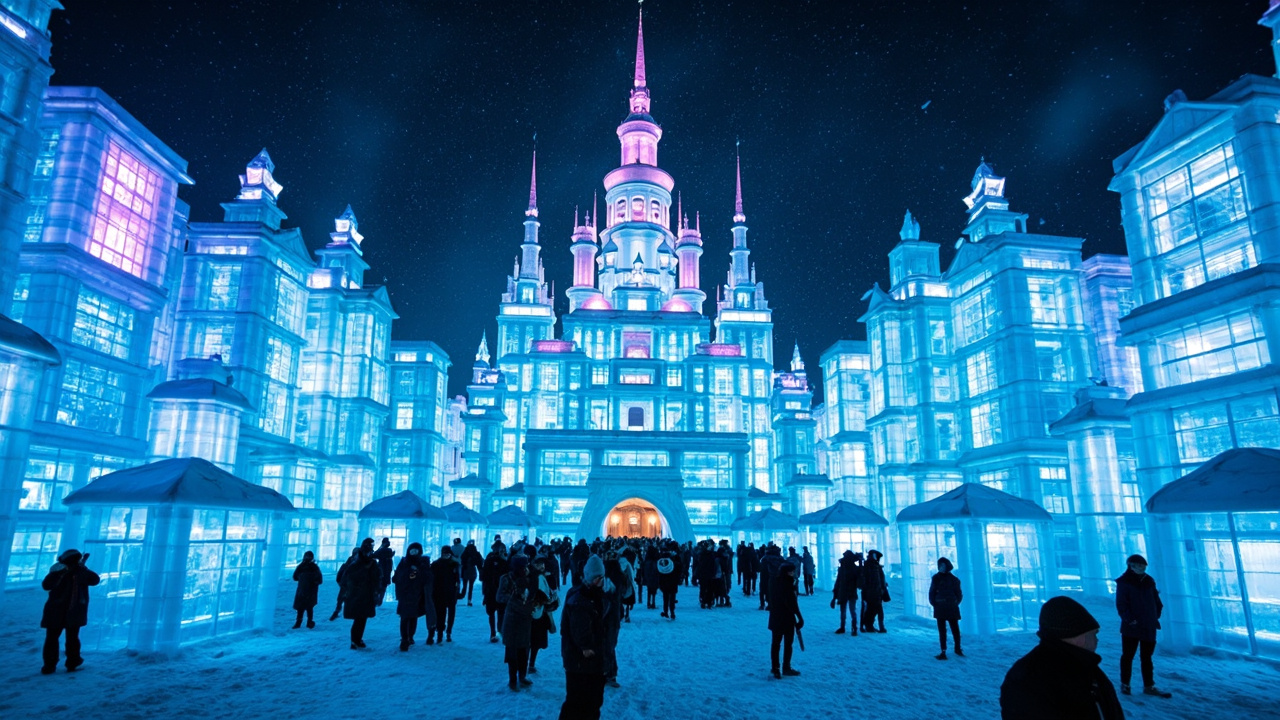
Heilongjiang Travel Guide
The first thing I noticed in Harbin was the steam. It rolled off the dumpling stalls on Central Street in thick white columns, freezing almost instantly into a kind of fog that hung at shoulder height. It was -28°C (-18°F) and my phone had already died twice. A woman in a floor-length mink coat sold me a paper cup of hot soy milk for 3 yuan and pointed at my bare face like I’d insulted her family. “Mask,” she said. “Your face will crack.” She was right.
Heilongjiang is China’s northernmost province, a 460,000-square-kilometer wedge of birch forest, frozen rivers, and Russian-influenced cities that most Western tourists skip entirely. That’s a mistake. This is where you find the Ice and Snow World that’s bigger than any winter festival in Europe, a Baroque-and-Byzantine cityscape in Harbin that looks nothing like the rest of China, and the kind of silence you only get in a forest at -35°C. It’s also the easiest place in China to feel like you’ve actually left China — Russian is on the signs, the bread is dark rye, and the architecture is straight out of St. Petersburg.
This guide covers the ten places worth your time, how to get between them, what things cost in 2026, and the specific mistakes I made so you don’t repeat them.
Quick answer
Heilongjiang is visa-free for most American, European, and Southeast Asian passport holders under China’s 240-hour (10-day) transit policy, and citizens of 30+ countries can now enter visa-free for up to 30 days under the 2025-2026 expanded unilateral scheme. The best time to visit is January to early February for the Harbin Ice Festival, or late June to August for the cooler forests and Russian-flavored border towns. Budget roughly $80–150 per day (580–1,090 CNY) including hotels, food, and transport, and fly into Harbin Taiping International Airport (HRB), which has direct flights from Beijing, Shanghai, Seoul, Tokyo, and Moscow.
The Short Version
Come in January. Fly to Harbin. Spend three days on the Ice Festival, Central Street, and the Russian cathedral. Then take the high-speed train to either Yabuli for skiing or Mohe for the coldest train ride of your life. Skip summer unless you specifically want forests — the province is at its best when it’s brutally cold. Bring more layers than you think you need, install Alipay before you land, and accept that your phone will die constantly.
How I Picked These
I’ve been to Heilongjiang four times — twice in winter, twice in summer — and I’ve made most of the classic first-timer mistakes: underestimating the cold, booking the wrong train, showing up at Ice World at 4pm when the sun sets at 3:45. The ten places below are the ones I’d send a friend to, ranked by how much they justify the trip. I’ve left out a few famous spots (Sun Island’s snow sculpture park is fine but skippable if you’re short on time) and included a couple most guides ignore. Prices are 2026 estimates based on what I paid or what locals told me this year.
Comparison Table
| Rank | Place | Best For | Approx Cost (USD) | Time Needed | When to Go |
|---|---|---|---|---|---|
| 1 | Harbin | Ice Festival, Russian architecture | $400–700 total | 3–4 days | Jan–early Feb |
| 2 | Yabuli | Skiing, winter resorts | $250–500 | 2–3 days | Dec–Mar |
| 3 | Mohe | Northernmost point, aurora | $300–450 | 3 days | Dec–Feb |
| 4 | Snow Town (Xuexiang) | Snow-covered village | $200–350 | 2 days | Dec–Feb |
| 5 | Qiqihar | Red-crowned cranes, BBQ | $150–250 | 2 days | May–Sep |
| 6 | Wudalianchi | Volcanic lakes, hot springs | $200–300 | 2 days | Jun–Sep |
| 7 | Jingpo Lake | Waterfall, crater forest | $180–280 | 2 days | Jun–Sep |
| 8 | Zhalong Nature Reserve | Birdwatching, wetlands | $120–200 | 1–2 days | Apr–Sep |
| 9 | Suifenhe | Russian border town | $150–250 | 1–2 days | May–Oct |
| 10 | Heihe | Russia views, Blagoveshchensk | $180–300 | 2 days | Jun–Sep |
Harbin 鈥?The City That Doesn’t Feel Like China
I landed in Harbin at 11pm in January and the pilot announced it was -31°C outside. Half the plane laughed. The other half, the Chinese passengers, pulled on second coats before the doors opened. Walking from the jet bridge to the terminal, my eyelashes froze together.
Harbin is the reason most people come to Heilongjiang, and it earns it. The city was built by Russian engineers in the late 1800s around the China Eastern Railway, and the architecture still reflects it: onion domes, pastel Baroque facades, cobblestone streets. Central Street (Zhongyang Dajie) is the spine of it all, a pedestrian avenue that runs 1.4km from the Songhua River to the main shopping district. In winter it’s lit with thousands of tiny bulbs and lined with ice sculptures the size of cars.
The Ice and Snow World, on the north bank of the Songhua, is the main event. It’s a 600,000-square-meter park of full-scale buildings made of ice blocks pulled from the river, lit from inside with colored LEDs. Tickets run about $45 (330 CNY) for adults, $25 (180 CNY) for kids. It opens around 11am but doesn’t get good until 4pm when the lights come on. Go on a weekday if you can — weekends in January are shoulder-to-shoulder.
馃搷 Location: Daoli District (Central Street, Ice World), Daowai District (older Chinese quarter) 馃帿 Entry fee: Ice World $45 (330 CNY); St. Sophia Cathedral $3 (20 CNY); Central Street free 馃晲 Opening hours: Ice World 11am–9:30pm (Dec 20–Feb 28); cathedral 8:30am–6pm 馃殕 How to get there: Fly into HRB, take Airport Bus Line 3 to Central Street (50 min, $3/20 CNY). For Ice World, take Metro Line 2 to Bingxue Dajie Station, Exit 3. 鈴?When to visit: January for the festival. Avoid Chinese New Year week (late Jan/early Feb) — prices triple. 馃挕 Insider tips: Buy a heat pack belt from any convenience store (10 CNY) — it goes around your phone and keeps it alive. The Russian restaurant on Central Street called Modern is a tourist trap; walk two blocks to Huamei Western Restaurant instead. Taxis refuse meters in winter; use Didi in the app. I ate borscht and black bread at a tiny place near the cathedral and the owner, a 70-year-old woman named Liu, told me her grandmother was Russian. She wouldn’t let me pay.
Yabuli 鈥?China’s Ski Scene, Honestly Assessed
Yabuli is where Chinese skiers go, and it’s the biggest ski resort in the country. I’m going to be honest: if you’ve skied in the Alps or Colorado, the terrain here will underwhelm you. The vertical is modest, the snow is often machine-made, and the lift lines on weekends are rough. But if you’ve never skied in Asia, or you want a reason to be in the mountains in winter without the Ice Festival crowds, it’s worth two days.
The resort has three main areas: Sun Mountain (the biggest), Erlong Mountain, and the Club Med side. Sun Mountain has the longest runs, around 5km, and the best snow. Lift tickets run about $60 (430 CNY) per day, rentals another $30 (220 CNY). Club Med Yabuli is the only all-inclusive option and it’s expensive — $400+ per night in peak season — but it includes meals, ski passes, and English-speaking staff.
馃搷 Location: Shangzhi County, about 190km southeast of Harbin 馃帿 Entry fee: Lift pass $60 (430 CNY)/day; ski rental $30 (220 CNY) 馃晲 Opening hours: 8:30am–4:30pm, late November to late March 馃殕 How to get there: High-speed train from Harbin to Yabuli West Station (1h 15min, $12/85 CNY), then resort shuttle (30 min, free with lift ticket) 鈴?When to visit: January and February for best snow. Weekdays only if you can manage it. 馃挕 Insider tips: Book ski gear in Harbin before you go — rental quality at the resort is hit or miss. The resort restaurants are overpriced; the village at the base has better noodles for a third of the price. Bring your own goggles; the ones for rent are scratched. I fell on a blue run and a 12-year-old Chinese kid stopped to help me up, then skied off without a word.
Mohe 鈥?The Coldest Train Ride You’ll Ever Take
Mohe is China’s northernmost city, a small town of 80,000 people on the edge of the Siberian taiga. Getting there is half the point: the K7039 train from Harbin takes 20 hours and passes through some of the emptiest landscape in the country. In winter, the windows frost over from the inside and you can’t see anything for hours. It’s a strange, meditative experience.
The town itself is small — you can walk the main strip in 20 minutes. The draw is Arctic Village (Beiji Cun), a themed village on the Amur River where you can stand on the frozen river and look at Russia across the ice. In summer, this is where you go for the midnight sun. In winter, temperatures hit -40°C and the sky occasionally shows aurora — not reliably, but it happens.
馃搷 Location: Mohe County, 1,200km north of Harbin 馃帿 Entry fee: Arctic Village $10 (70 CNY); most of the town is free 馃晲 Opening hours: Arctic Village 8am–6pm; the river viewpoint is always open 馃殕 How to get there: Overnight train K7039 from Harbin Station (20h, $40–70/280–500 CNY soft sleeper), or fly into Mohe Gulian Airport (OHE) from Harbin (2h, $120/850 CNY) 鈴?When to visit: December–February for aurora and extreme cold; June–July for midnight sun 馃挕 Insider tips: The train sells out weeks in advance in winter — book through Trip.com or the official 12306 app. Bring a thermos; the train has hot water but no cups. The “northernmost” post office sells postcards you can mail from China’s top of the map. I paid 80 yuan for a bowl of reindeer stew at a restaurant with no menu and no English, and it was the best meal of the trip.
Snow Town (Xuexiang) 鈥?Beautiful, and a Bit of a Tourist Trap
Snow Town is a village in the Changbai Mountains where heavy snowfall covers the wooden houses in two-meter drifts that look like something out of a storybook. It’s genuinely beautiful. It’s also genuinely crowded, overpriced, and full of tour groups. I have mixed feelings.
The village is small — maybe 100 buildings — and the snow is real, not manufactured. The photos you’ve seen are accurate. But entry is $20 (150 CNY) per person, hotels inside the village run $150–400 per night in peak season (for basic rooms), and the food is mediocre and expensive. If you go, stay one night, see it at sunrise before the buses arrive, and leave.
馃搷 Location: Hailin City, Mudanjiang Prefecture, near the Changbai range 馃帿 Entry fee: $20 (150 CNY) 馃晲 Opening hours: 24 hours, but the village is best 7–9am 馃殕 How to get there: High-speed train from Harbin to Mudanjiang (3h, $25/180 CNY), then bus or taxi to Snow Town (2h, $15/100 CNY) 鈴?When to visit: Late December to mid-February. Avoid weekends and Chinese holidays. 馃挕 Insider tips: Book accommodation at least a month ahead in January. Bring cash — some guesthouses don’t take WeChat Pay. The “snow mushrooms” photo spot is at the top of the village; go at 7am before the crowds. A guesthouse owner told me she’d had 400 guests the previous weekend and had slept four hours total.
Qiqihar 鈥?Where the Cranes Live
Qiqihar is an industrial city most tourists skip, but it’s home to the Zhalong Nature Reserve, one of the most important wetlands in Asia and the main breeding ground for red-crowned cranes. If you care about birds at all, this is a pilgrimage.
The reserve is 30km southeast of the city, a 2,100-square-kilometer marshland where around 300 wild cranes live alongside hundreds of other species. There’s a captive breeding center with daily release flights at 10:30am and 2:30pm — the cranes fly in a loop over the marsh and it’s genuinely spectacular. Entry is $10 (70 CNY).
馃搷 Location: Zhalong Reserve, 30km southeast of Qiqihar city center 馃帿 Entry fee: $10 (70 CNY) 馃晲 Opening hours: 8am–4pm, April–October 馃殕 How to get there: Fly or take high-speed train from Harbin to Qiqihar (1h 40min, $18/130 CNY), then taxi to the reserve ($15/100 CNY) 鈴?When to visit: May–September, morning flights are best 馃挕 Insider tips: The release flights are the only reason to come — time your visit around them. Bring binoculars. The city itself has excellent northeastern BBQ; ask your taxi driver where to go. I watched a crane take off, circle twice, and land exactly where it started, and a Chinese family next to me applauded.
Wudalianchi 鈥?Volcanoes, Lakes, and Hot Springs
Wudalianchi means “Five Connected Lakes,” and it’s a volcanic landscape formed by eruptions 300 years ago that dammed a river into five lakes. The black lava fields are still visible, the water is mineral-heavy, and the hot springs are supposed to cure everything from eczema to gout. I can’t vouch for the medical claims, but the setting is strange and beautiful.
The main sites are Laoheishan (Old Black Mountain), a dormant volcano you can climb in about 90 minutes, and the surrounding lava fields. Entry to the scenic area is $15 (110 CNY). The hot spring resorts in the town range from basic ($40/night) to fancy ($200/night).
馃搷 Location: Wudalianchi City, 400km north of Harbin 馃帿 Entry fee: $15 (110 CNY) for the scenic area 馃晲 Opening hours: 7am–6pm, May–October 馃殕 How to get there: Train from Harbin to Bei’an (4h, $15/110 CNY), then bus to Wudalianchi (1h, $5/35 CNY) 鈴?When to visit: July–September for warm weather and swimmable lakes 馃挕 Insider tips: The hot springs are the real draw; book a resort with private pools. Bring your own towel. The local mineral water is sold everywhere and tastes like sulfur — try it once. I drank a cup of the mineral water and immediately understood why the town’s nickname is “the place where even the water has opinions.”
Jingpo Lake 鈥?The Waterfall in the Forest
Jingpo Lake is China’s largest alpine lava-dammed lake, formed by the same volcanic activity that created Wudalianchi. It’s surrounded by forest and the main attraction is the Diaoshuilou Waterfall, a 40-meter-wide cascade that freezes solid in winter. In summer, the lake is calm and green; in winter, it’s a sheet of ice you can walk on.
The lake is 45km from Mudanjiang, and the waterfall is a short walk from the main entrance. Entry is $15 (110 CNY). There’s a small boat tour of the lake for another $10 (70 CNY).
馃搷 Location: Ning’an City, 45km from Mudanjiang 馃帿 Entry fee: $15 (110 CNY); boat tour $10 (70 CNY) 馃晲 Opening hours: 7am–5pm, May–October; winter access varies 馃殕 How to get there: Train from Harbin to Mudanjiang (3h, $25/180 CNY), then bus to Jingpo Lake (1h, $5/35 CNY) 鈴?When to visit: July–September for the lake; January for the frozen waterfall 馃挕 Insider tips: Combine with Snow Town — they’re both in the Mudanjiang area. The waterfall viewpoint gets crowded at midday; go early. I walked onto the frozen lake in January and heard the ice boom under my feet like distant thunder.
Zhalong Nature Reserve 鈥?The Birdwatcher’s Detour
Zhalong is technically part of the Qiqihar entry above, but it deserves its own note because it’s the single best reason to visit the region if you’re a birder. The reserve protects 2,100 square kilometers of marshland and is home to 296 bird species, including six of the world’s 15 crane species.
馃搷 Location: 30km southeast of Qiqihar 馃帿 Entry fee: $10 (70 CNY) 馃晲 Opening hours: 8am–4pm, April–October 馃殕 How to get there: Taxi from Qiqihar city center ($15/100 CNY) 鈴?When to visit: May and September for migration 馃挕 Insider tips: The reserve is best in early morning. Bring a telephoto lens — the cranes are far from the viewing platforms. A retired Dutch couple I met there had come specifically for the cranes and had been to 40 countries doing the same thing.
Suifenhe 鈥?The Russian Border Town
Suifenhe sits on the Russian border, and it feels more Russian than Chinese. The signs are in both languages, the shops sell matryoshka dolls and vodka, and the border crossing to Pogranichny is a 20-minute walk from the town center. Most tourists come for a day trip to say they’ve been to the border, but the town has a strange, faded charm.
馃搷 Location: Suifenhe City, on the Russian border 馃帿 Entry fee: Free (border crossing requires visa) 馃晲 Opening hours: Town is always open; border crossing 9am–5pm 馃殕 How to get there: High-speed train from Harbin to Suifenhe (4h, $35/250 CNY) 鈴?When to visit: May–October 馃挕 Insider tips: You need a Russian visa to cross; if you don’t have one, the border observation deck is enough. The Russian market is fun but overpriced. I bought a Soviet-era watch from a stall for $20 and it stopped working the next day.
Heihe 鈥?Looking at Russia Across the River
Heihe is the other main border town, facing Blagoveshchensk across the Amur River. The view of the Russian city from the Chinese side is the main attraction — you can see the golden domes of the Russian churches from the riverbank. There’s a border market, a Russian-style street, and a cable car that crosses the river (you need a visa to actually cross).
馃搷 Location: Heihe City, on the Amur River 馃帿 Entry fee: Free; cable car $10 (70 CNY) one way 馃晲 Opening hours: Cable car 9am–5pm 馃殕 How to get there: Fly from Harbin to Heihe (1h 30min, $100/700 CNY) or train (12h, $30/220 CNY) 鈴?When to visit: June–September 馃挕 Insider tips: The riverbank at sunset is the best spot. The Russian street has decent borscht. Bring your passport even if you’re not crossing — you may need it for the cable car. I stood on the riverbank and watched a Russian ferry dock on the far side, and it felt like being at the edge of two worlds.
FAQ summary
Heilongjiang is visa-free for most Western and Southeast Asian passport holders under China’s 240-hour transit policy and the 2025-2026 expanded 30-day unilateral visa-free scheme. The best time to visit is January for the Harbin Ice Festival, with a 3-4 day Harbin stay plus side trips to Yabuli or Mohe; summer (June-August) suits forest and border-town travel. Budget $80-150 per day, fly into Harbin Taiping (HRB), install Alipay or WeChat Pay before arrival, and expect temperatures from -35°C in winter to 28°C in summer.
FAQ
Q: Do I need a visa to visit Heilongjiang in 2026? A: Most American, European, and Southeast Asian passport holders can enter visa-free for up to 30 days under China’s 2025-2026 expanded unilateral scheme, or 240 hours (10 days) under the transit policy if you’re passing through to a third country. Check the current visa rules before booking, since the eligible-country list changes.
Q: What’s the best time to visit Harbin for the Ice Festival? A: The Ice and Snow World runs from around December 20 to late February, but the best window is January 5 to February 5 — the sculptures are fully built and the lights are on. Avoid Chinese New Year week (late January or early February, depending on the lunar calendar), when hotel prices triple and the park is packed.
Q: How cold does it actually get in Heilongjiang in winter? A: Harbin averages -18°C (0°F) in January, with nights dropping to -30°C (-22°F). Mohe regularly hits -40°C (-40°F). You need a down jacket rated to at least -30°C, thermal base layers, insulated boots, and a face covering. Your phone will die in minutes if you don’t keep it warm.
Q: Can I use Alipay or WeChat Pay in Heilongjiang? A: Yes, both work everywhere in the province, including small shops and taxis. Set up Alipay or WeChat Pay with your international card before you arrive — the setup requires a passport and can be fiddly. Cash is rarely needed but useful in rural areas.
Q: Is English spoken in Heilongjiang? A: Not much. Harbin has some English signage at major attractions and hotels, but outside the tourist core you’ll need a translation app. Download a Chinese offline pack for Google Translate or Pleco before you go. Younger people in Harbin often speak some English; older people and rural areas generally don’t.
Q: Do I need a VPN or a local SIM card? A: Yes to both, ideally. Google, Instagram, WhatsApp, and most Western apps are blocked in China. Either buy an international eSIM that routes around the firewall before you arrive, or install a VPN before you land (they can’t be downloaded once you’re inside). For a local SIM, China Unicom and China Mobile sell tourist SIMs at Harbin airport — see our China SIM and internet guide for details.
Q: How do I get from Harbin to the other places in Heilongjiang? A: High-speed rail connects Harbin to Yabuli (1h 15min), Mudanjiang (3h), Qiqihar (1h 40min), and Suifenhe (4h). For Mohe and Heihe, flying is faster (1.5-2h) but trains are cheaper. Book through the official 12306 app or Trip.com; see our China train guide for how the system works.
The Honest Wrap-up
This list is for travelers who want to see a part of China that doesn’t look like the China they’ve seen in photos — who are willing to be cold, deal with a language barrier, and eat food they can’t identify. It’s not for people who want a comfortable resort vacation or who can’t handle -25°C. If you’re on the fence, go in January and give it four days. The Ice Festival is worth the trip on its own, and everything else is a bonus. One last thing: bring a real winter coat, not the one you wear in Chicago. Heilongjiang cold is a different animal, and it doesn’t care how tough you think you are.
More guides you may like

Top 10 Bridges in China
China's bridges are engineering marvels spanning mountains, rivers, and seas. Here are 10 of the most spectacular, from ancient stone to modern steel.
8 min read

Top 10 Buddhist Sites in China
From the Leshan Giant Buddha to the Dunhuang Caves, these 10 Buddhist sites represent 2,000 years of China's spiritual heritage.
9 min read

Top 10 Day Trips from Beijing You Shouldn't Miss
Beijing is packed with history, but some of China's best experiences are just a few hours away. Here are 10 day trips that will transform your visit.
9 min read

Top 10 Hidden Gems in China Off the Beaten Path
Beyond the Great Wall and Terracotta Warriors, China has incredible hidden destinations few tourists ever reach. Here are 10 underrated gems worth the detour.
9 min read

Top 10 Markets and Shopping Streets in China
From Shanghai's Bund to Beijing's Silk Street - 10 markets where foreigners can haggle, explore, and bring home authentic Chinese goods.
9 min read

Top 10 Museums in China You Shouldn't Miss
China's museums span 5,000 years of civilization. These 10 - from the Palace Museum to Xi'an's terracotta gallery - are unmissable for culture lovers.
9 min read