
Shanxi Travel Guide
TODO: Extract from article (100-160 chars)
Shanxi Travel Guide
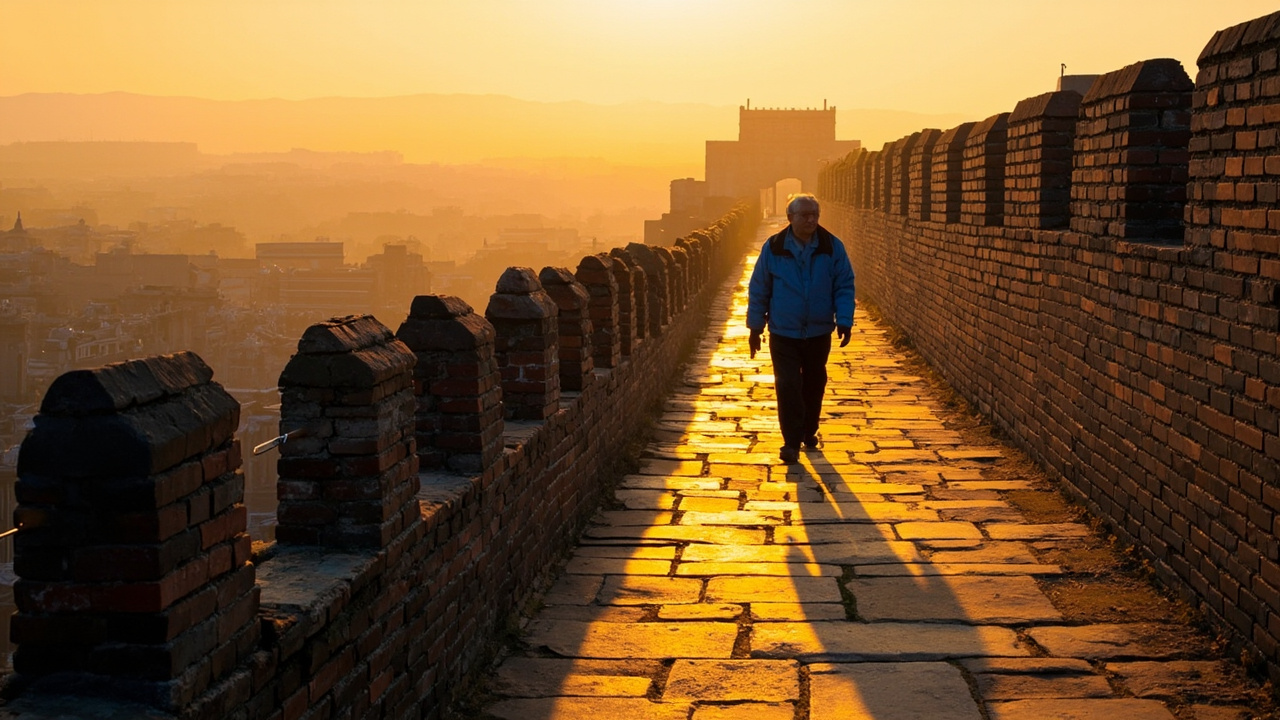
The first thing I noticed in Pingyao was the smell of vinegar. Not the sharp, throat-clearing kind you get in a supermarket back home — this was softer, almost sweet, drifting out of open shop doors along Ming-Qing Street where wooden barrels sat fermenting in the sun. An old man was ladling it into plastic bottles for a customer, and neither of them looked up when I walked past. That’s Shanxi for you. It doesn’t perform for tourists the way some Chinese provinces do. It just keeps doing what it’s been doing for a thousand years and lets you catch up.
Shanxi sits in north-central China, west of the Taihang Mountains, and most first-timers skip it entirely. That’s a mistake. This is where you find the oldest surviving wooden buildings in China, entire walled cities that never got torn down, and Buddhist grottoes carved into cliff faces before Europe had finished the Dark Ages. It’s also where the country’s banking system was basically invented — the first Chinese draft banks, or piaohao, opened here in the 1820s.
What you won’t find is much English. Outside of Pingyao’s main tourist street and the Datong Yungang Grottoes, you’ll be relying on a translation app and pointing. That’s part of the appeal, honestly. But it means you need to plan a little more carefully than you would for Beijing or Shanghai.
This guide covers the ten places in Shanxi worth building a trip around, with real directions, real prices, and the stuff I wish someone had told me before my first visit.
Quick answer
Shanxi is best visited between April and October, with September and October offering the clearest skies and most comfortable temperatures (15-25°C / 59-77°F). Most international visitors can enter China visa-free for up to 30 days under the 2025-2026 expanded policy, and Shanxi’s high-speed rail connects Datong, Taiyuan, and Pingyao in under 4 hours total. Budget roughly $60-90 per day (430-650 CNY) for mid-range travel including hotels, food, and entry tickets.
The Short Version
Come for Pingyao and the Yungang Grottoes. Stay an extra two days for the Hanging Temple and one of the lesser-known courtyard-house towns. Skip the coal museums. Bring a translation app, download offline maps, and set up Alipay or WeChat Pay before you land — cash is technically accepted but nobody wants to deal with it. Three to five days is the sweet spot. A week lets you slow down.
How I Picked These
I’ve been through Shanxi four times since 2019, most recently in October 2025. I’ve taken the high-speed rail from Beijing to Datong, the slow train from Taiyuan to Pingyao, and a very questionable shared taxi between two temple sites that I would not recommend. The places below are the ones I’d send a friend to without hesitation, ranked roughly by how much they justify the detour. I’ve cross-checked prices with hostel receptionists, taxi drivers, and one very patient ticket clerk in Pingyao who corrected my pronunciation of Pingyao gucheng about six times.
Comparison Table
| Rank | Place | Best For | Approx Cost (USD) | Time Needed | When to Go |
|---|---|---|---|---|---|
| 1 | Pingyao Ancient City | Walled city atmosphere, photography | $15-25 (110-180 CNY) | 2 days | Apr-Oct |
| 2 | Yungang Grottoes (Datong) | Buddhist cave art, history | $18 (120 CNY) | Half day | May-Oct |
| 3 | Hanging Temple (Hengshan) | Architecture, vertigo | $18 (125 CNY) | 3-4 hours | Apr-Oct |
| 4 | Wutai Mountain | Pilgrimage, mountain hiking | $20 (135 CNY) + transport | 2-3 days | Jun-Sep |
| 5 | Qiao Family Compound | Courtyard architecture | $8 (58 CNY) | 2-3 hours | Year-round |
| 6 | Jinci Temple (Taiyuan) | Gardens, Song dynasty halls | $11 (80 CNY) | 3 hours | Apr-Oct |
| 7 | Wang Family Compound | Scale, film history | $8 (55 CNY) | 3 hours | Year-round |
| 8 | Yingxian Wooden Pagoda | Engineering, off-the-path | $7 (50 CNY) | 1-2 hours | May-Oct |
| 9 | Mount Heng (Hengshan) | Hiking, Taoist temples | $7 (50 CNY) | Half day | May-Oct |
| 10 | Shanxi Museum (Taiyuan) | Context before you go | Free | 2-3 hours | Year-round |
Pingyao Ancient City — The Walled Town That Actually Feels Lived-In
I got lost in Pingyao on my first night and ended up in a residential alley with no lanterns, no signs, and a woman hanging laundry on a line strung between two Ming dynasty walls. She pointed me back toward the main street without a word. That’s the thing about Pingyao — 30,000 people still live inside the walls. It’s not a museum set.
Why it’s special: This is one of the best-preserved walled cities in China, with 6 km of intact Ming-era ramparts you can walk on. The streets inside are laid out in a grid that hasn’t changed since the 14th century. It’s touristy on Ming-Qing Street, yes, but turn down any side alley and you’re in someone’s actual neighborhood.
📍 Location: Pingyao County, Jinzhong. The ancient city is the whole walled area; the train station is 1.5 km northeast.
🎫 Entry fee: The city itself is free to walk into. A combined ticket for 22 attractions inside the walls costs about $17 (125 CNY), valid 3 days. The city wall alone is included in that.
🕐 Opening hours: City wall 8am-6pm (shorter hours in winter, roughly 8am-5pm). Most courtyard houses 8am-7pm in summer.
🚕 How to actually get there: High-speed rail from Beijing West to Pingyao takes about 3.5 hours (around $40/280 CNY second class). From Taiyuan, it’s 30 minutes. From the station, take bus 108 or a taxi ($3/20 CNY) to the north gate.
⏰ When to visit: September and October are ideal. Avoid Chinese New Year (late Jan/early Feb 2026) unless you want crowds and doubled hotel prices. Weekday mornings before 9am are magical.
💡 Insider tips: Stay inside the walls — it’s worth the extra $10-15 a night for the atmosphere. The city wall walk is best at sunset from the south gate. Cash is nearly useless here; set up Alipay before arrival. Bring a VPN if you need Google Maps — it doesn’t work otherwise.
The bowl of daoxiaomian (knife-cut noodles) I ate at a tiny shop near the Confucian Temple cost $1.40 (10 CNY) and was better than anything I had on the main drag.
Yungang Grottoes — 51,000 Buddhas in a Cliff
The scale doesn’t hit you until you’re standing under the 17-meter seated Buddha in Cave 20, looking up at a face that’s been staring back since 460 AD. I stood there for maybe ten minutes without moving. A school group pushed past me, all of them on phones, and I felt briefly ancient.
Why it’s special: These are among the finest Buddhist cave carvings in the world, carved over roughly 60 years during the Northern Wei dynasty. There are 252 caves and niches and over 51,000 statues. The fusion of Indian, Central Asian, and Chinese styles here is unlike anything else in the country.
📍 Location: 16 km west of Datong city center, Yungang Town.
🎫 Entry fee: About $18 (120 CNY) in peak season, $14 (90 CNY) in low season. Includes shuttle from the visitor center.
🕐 Opening hours: 8:30am-5:20pm (April-Oct), 8:30am-4:50pm (Nov-March). Closed Mondays in winter.
🚕 How to actually get there: From Datong, bus 3 runs from the train station directly to the grottoes (about 40 minutes, $0.40/3 CNY). Taxis cost around $8 (55 CNY). If you’re coming by high-speed rail from Beijing, Datong South Station is the arrival point — it’s about 30 minutes by taxi to the grottoes.
⏰ When to visit: Go early. Doors open at 8:30 and the first hour is dramatically quieter. October has the best light for photos.
💡 Insider tips: The site is huge — wear good shoes. Caves 5, 6, and 20 are the must-sees; Cave 6 is fully enclosed and has incredible painted reliefs. Photography without flash is allowed. English signage is decent here, better than most Shanxi sites.
I met a retired teacher from Xi’an named Mr. Chen who insisted on walking me through Cave 5 and explaining the jataka tales. My Mandarin is bad. His English was worse. We managed.
Hanging Temple — The Monastery Glued to a Cliff
You’ve seen the photos. They don’t prepare you for the actual thing, which is a 1,500-year-old wooden temple pinned to a vertical cliff face 75 meters above the ground, held up by beams that are mostly decorative. The real support is a series of horizontal timbers driven into the rock.
Why it’s special: Built around 491 AD, this is the only surviving temple in China that combines Buddhism, Taoism, and Confucianism under one roof. The walkways are narrow, the stairs are steep, and there’s a moment near the top where you’re standing on a plank above a very long drop. It’s genuinely thrilling.
📍 Location: About 65 km southeast of Datong, near Hunyuan County, at the foot of Mount Heng.
🎫 Entry fee: $18 (125 CNY) for the temple itself; another $2 (15 CNY) for the scenic area entrance.
🕐 Opening hours: 8am-6pm (May-Oct), 8:30am-5pm (Nov-Apr).
🚕 How to actually get there: From Datong, take a bus to Hunyuan ($3/20 CNY, 1.5 hours) then a local taxi ($6/40 CNY). Or book a day tour from Datong for around $35-45 including transport and both Hanging Temple and Mount Heng.
⏰ When to visit: Weekday mornings. Weekends in summer are packed and the walkways get bottlenecked. Avoid rainy days — the wooden stairs get slick.
💡 Insider tips: There’s a strict one-way flow through the temple; you can’t turn back. If you’re seriously afraid of heights, the ground-level halls are still worth seeing. Bring small bills for the Hunyuan bus — no card readers. The site is often paired with Mount Heng in a single day, which is doable but tiring.
I paid too much for a taxi from Hunyuan because I didn’t know the local rate. Lesson learned: agree on the price before you get in.
Wutai Mountain — Where Pilgrims Actually Go
Wutai is not a tourist site. It’s an active pilgrimage destination, one of the four sacred Buddhist mountains of China, and the home of Manjushri in Buddhist cosmology. When I visited in July, I watched a monk in gray robes do full prostrations up 108 stone steps while a crowd of lay pilgrims chanted behind him. Nobody was filming.
Why it’s special: There are over 50 monasteries scattered across five flat-topped peaks (the name means “Five-Terrace Mountain”). The altitude ranges from 1,700 to 3,000 meters, so it’s cool even in summer. The mix of Tibetan and Han Buddhist traditions here is unusual and beautiful.
📍 Location: Wutai County, about 230 km northeast of Taiyuan, near the Hebei border.
🎫 Entry fee: About $20 (135 CNY) for the scenic area. Individual temples charge $1-5 each.
🕐 Opening hours: Most monasteries 7am-6pm. The scenic area is open year-round but many temples close in deep winter.
🚕 How to actually get there: High-speed rail from Taiyuan to Xinzhou West (40 min, $12/85 CNY), then a 2-hour bus to Taiyuan. Or direct buses from Taiyuan’s East Bus Station (4 hours, $15/105 CNY). From Beijing, there are overnight trains to Wutai Shan station.
⏰ When to visit: June through September. It snows from October, and many facilities shut by November.
💡 Insider tips: Bring layers — even in July, mornings at 2,000 meters are cold. The vegetarian meals at monastery dining halls are cheap ($2-3) and surprisingly good. Cash is useful here; not every temple takes mobile payments. English is rare; download an offline translation pack.
The nun at Tayuan Temple gave me a small bag of dried fruit and refused payment. I still think about it.
Qiao Family Compound — The Courtyard House That Started My Obsession
I almost skipped this one. I’m glad I didn’t. The Qiao compound is a 6,000-square-meter maze of interconnected courtyards, 313 rooms in total, built by a wealthy merchant family over several generations starting in 1756. It’s the setting for Zhang Yimou’s Raise the Red Lantern, which is why most Chinese visitors know it.
Why it’s special: This is the best introduction to Shanxi’s merchant-class architecture, which is distinct from anything in Beijing or the south. The decorative brick carvings, the symmetrical layout, the way light moves through the courtyards — it’s a masterclass in pre-modern Chinese domestic design.
📍 Location: Qiaojiabao Village, Qi County, about 55 km south of Taiyuan.
🎫 Entry fee: $8 (58 CNY).
🕐 Opening hours: 8am-6pm (Mar-Nov), 8am-5pm (Dec-Feb).
🚕 How to actually get there: From Taiyuan, buses leave from Jianshe South Road station to Qi County (1 hour, $4/28 CNY), then a short taxi to the compound. Or take a day tour from Pingyao, which is closer.
⏰ When to visit: Weekday mornings. It’s on the standard Pingyao day-tour circuit, so weekends get crowded.
💡 Insider tips: The compound is often combined with the Wang Family Compound, which is bigger but less atmospheric. If you only have time for one, pick Qiao. Bring cash for the small village vendors outside. There’s a decent noodle shop 200 meters from the entrance.
I bought a hand-painted fan from a woman outside for $3 (20 CNY). She threw in a second one for free when I complimented her brushwork.
Jinci Temple — Taiyuan’s Underrated Garden
Most people use Taiyuan as a transit hub and never leave the train station. That’s a mistake. Jinci, about 25 km southwest of the city, is a 1,500-year-old temple complex built around a natural spring, with some of the finest Song dynasty architecture in China.
Why it’s special: The Sacred Lady Hall (圣母殿) dates to 1023 and contains 43 painted clay sculptures of Song-era court figures. The oldest cypress tree on site is estimated at 3,000 years. The whole complex is a slow, shaded walk along water channels and bridges.
📍 Location: Jinci Town, Jinyuan District, Taiyuan.
🎫 Entry fee: $11 (80 CNY) peak, $9 (65 CNY) low season.
🕐 Opening hours: 8am-6pm (Apr-Oct), 8am-5pm (Nov-Mar).
🚕 How to actually get there: Bus 308 or 856 from Taiyuan city center (about 45 minutes, $0.40/3 CNY). Taxi is around $8 (55 CNY).
⏰ When to visit: Spring (April-May) when the gardens are green, or October for autumn color. Weekday afternoons are quiet.
💡 Insider tips: The teahouse inside the complex is a genuinely nice place to sit for an hour. Bring a translation app — signage is mostly Chinese. Combine with the Shanxi Museum in the morning for a full day of context.
Wang Family Compound — Bigger, Quieter, Less Famous
The Wang compound is roughly four times the size of Qiao’s, with 1,238 rooms across five castles and a street running through the middle. It’s less visited, which makes it more pleasant to walk through, but it lacks the intimacy of Qiao.
Why it’s special: If you want to understand the sheer wealth of Shanxi’s merchant families in the Qing dynasty, this is the place. The scale is almost absurd. The defensive architecture — walls, watchtowers, hidden passages — speaks to a time when merchant families needed to protect what they’d built.
📍 Location: Jingsheng Town, Lingshi County, about 35 km from Pingyao.
🎫 Entry fee: $8 (55 CNY).
🕐 Opening hours: 8am-6:30pm (Apr-Oct), 8am-5:30pm (Nov-Mar).
🚕 How to actually get there: From Pingyao, buses run to Lingshi (45 min, $2/15 CNY), then a local taxi. Day tours from Pingyao cost around $25-30 including transport and both compounds.
⏰ When to visit: Any season, but spring and autumn are best. Weekdays only if you can manage it.
💡 Insider tips: There’s a lot of walking and stairs. Wear proper shoes. The on-site restaurant is mediocre — eat before or after. If you’re doing both Qiao and Wang in one day, start with Wang.
Yingxian Wooden Pagoda — The One Nobody Talks About
This is the oldest and tallest surviving wooden pagoda in the world, built in 1056, and it’s genuinely off the tourist radar. I had the whole structure to myself for 20 minutes on a Tuesday morning in October.
Why it’s special: It’s 67 meters tall, entirely wood, and has survived 30+ earthquakes over nearly a thousand years. The engineering is staggering. You can’t climb it anymore — the interior is closed for preservation — but walking around the base and looking up is worth the trip.
📍 Location: Yingxian County, about 70 km south of Datong.
🎫 Entry fee: $7 (50 CNY).
🕐 Opening hours: 8am-6pm (May-Oct), 8:30am-5pm (Nov-Apr).
🚕 How to actually get there: Bus from Datong to Yingxian (1.5 hours, $4/28 CNY), then a 10-minute walk from the bus station. Or hire a car for the day from Datong ($50-60).
⏰ When to visit: Any clear day. Morning light hits the pagoda beautifully.
💡 Insider tips: There’s almost no English signage. Read up beforehand. The small temple next door is also worth 20 minutes. Combine with a Datong day trip if you have a car.
Mount Heng — The Other Hengshan
Not to be confused with the more famous Hengshan in Hunan, this is the northern Hengshan, one of the Five Great Mountains of Taoism. It’s right next to the Hanging Temple, so most people do both in a day.
Why it’s special: The hike to the summit takes about 90 minutes and passes through a series of Taoist temples built into the rock. The views from the top over the surrounding valley are excellent on a clear day.
📍 Location: Hunyuan County, 4 km from the Hanging Temple.
🎫 Entry fee: $7 (50 CNY) for the scenic area, plus $2-3 per temple.
🕐 Opening hours: 7:30am-6pm (Apr-Oct), 8am-5pm (Nov-Mar).
🚕 How to actually get there: Same as Hanging Temple — bus from Datong to Hunyuan, then taxi.
⏰ When to visit: May-October. Avoid summer weekends.
💡 Insider tips: The cable car ($10/70 CNY) saves an hour of climbing but skips the best temples. Bring water — there’s very little on the mountain. The trail can be icy in early spring.
Shanxi Museum — Do This First
I know, I know. A museum as the last entry. But if you’re going to spend a week in Shanxi, spend two hours here first. The collection covers the entire history of the province, from the Western Zhou bronzes through the Northern Wei Buddhist period to the merchant dynasties.
Why it’s special: It’s free, it’s well-organized, and it gives you the context to understand everything else you’ll see. The bronzes and the Buddhist sculpture galleries are the highlights.
📍 Location: Binhe West Road, Taiyuan, near the Fen River.
🎫 Entry fee: Free (bring passport for registration).
🕐 Opening hours: 9am-5pm, closed Mondays.
🚕 How to actually get there: Metro Line 2 to Changfeng Street, Exit A, then 10-minute walk. Or taxi from anywhere central ($3-4).
⏰ When to visit: Any weekday. Weekends get busy with school groups.
💡 Insider tips: English audio guide is available for around $4 (30 CNY). The museum shop has genuinely good reproductions of Shanxi artifacts. Book your free ticket in advance via the museum’s WeChat account — walk-ins sometimes get turned away on busy days.
FAQ summary
Shanxi is best visited April through October, with September and October offering the best weather and clearest skies. Most international visitors can enter China visa-free for up to 30 days under the current policy, and high-speed rail connects the main sites (Datong, Taiyuan, Pingyao) in under 4 hours total. Budget $60-90 per day for mid-range travel, set up Alipay or WeChat Pay before arrival, and expect limited English outside major tourist sites — a translation app is essential.
FAQ
Q: Do I need a visa to visit Shanxi in 2026? A: Most international visitors from the US, UK, EU, Australia, and much of Southeast Asia can enter China visa-free for up to 30 days under the expanded 2025-2026 policy. Check your specific nationality before booking — the list changes. If you’re not eligible, apply for a standard tourist visa at least 4-6 weeks in advance.
Q: How do I get to Shanxi from Beijing? A: High-speed rail from Beijing West to Datong takes about 1 hour 45 minutes (around $25/175 CNY), and to Taiyuan about 3 hours ($30/210 CNY). Trains run frequently throughout the day. Book via the official Railway 12306 app or Trip.com. See our China train travel guide for the full booking process.
Q: Is English widely spoken in Shanxi? A: No. Outside of Pingyao’s main tourist street and the Yungang Grottoes, English is rare. Download a translation app with offline Chinese before you go — Google Translate works but needs a VPN, while Baidu Translate works without one. Hotel staff at international chains usually speak some English.
Q: What’s the best time of year to visit Shanxi? A: September and October are ideal — clear skies, comfortable temperatures (15-25°C / 59-77°F), and manageable crowds. April and May are also good. Avoid July and August if you can (hot and crowded), and skip Chinese New Year unless you specifically want the festival atmosphere.
Q: How much does a trip to Shanxi cost per day? A: Mid-range travelers should budget $60-90 per day (430-650 CNY), covering a decent hotel ($30-50), three meals ($15-25), entry tickets ($10-20), and local transport ($5-10). Budget travelers can get by on $35-45 per day using hostels and street food. High-speed rail between cities adds $15-40 per leg.
Q: Do I need a SIM card or VPN in Shanxi? A: Yes, get a Chinese SIM card or eSIM on arrival — see our China SIM and internet guide for the details. A VPN is essential if you want to use Google, Instagram, or WhatsApp; install and test it before you land, because VPN sites are blocked inside China.
Q: Can I pay with cash or do I need Alipay/WeChat Pay? A: Cash is technically accepted everywhere, but in practice many small vendors, taxis, and even some ticket counters prefer or only accept mobile payment. Set up Alipay or WeChat Pay with an international card before you arrive. It takes 15 minutes and saves hours of hassle.
The Honest Wrap-up
Shanxi isn’t for everyone. If you want five-star hotels, English menus, and Instagram-ready everything, go to Shanghai or Chengdu instead. Shanxi rewards travelers who are willing to point at menus, get slightly lost, and stand in front of a 1,500-year-old building without a selfie stick. It’s for people who’ve already done the Beijing-Xi’an-Shanghai loop and want something that feels less processed.
My advice if you’re about to book: give it five days minimum, start in Datong, end in Pingyao, and don’t over-schedule. The best moments I’ve had in Shanxi were the unplanned ones — the vinegar shop, the retired teacher, the nun with the dried fruit. Leave room for those.
More guides you may like
Top 10 Bridges in China
China's bridges are engineering marvels spanning mountains, rivers, and seas. Here are 10 of the most spectacular, from ancient stone to modern steel.
8 min read

Top 10 Buddhist Sites in China
From the Leshan Giant Buddha to the Dunhuang Caves, these 10 Buddhist sites represent 2,000 years of China's spiritual heritage.
9 min read
Top 10 Day Trips from Beijing You Shouldn't Miss
Beijing is packed with history, but some of China's best experiences are just a few hours away. Here are 10 day trips that will transform your visit.
9 min read
Top 10 Hidden Gems in China Off the Beaten Path
Beyond the Great Wall and Terracotta Warriors, China has incredible hidden destinations few tourists ever reach. Here are 10 underrated gems worth the detour.
9 min read
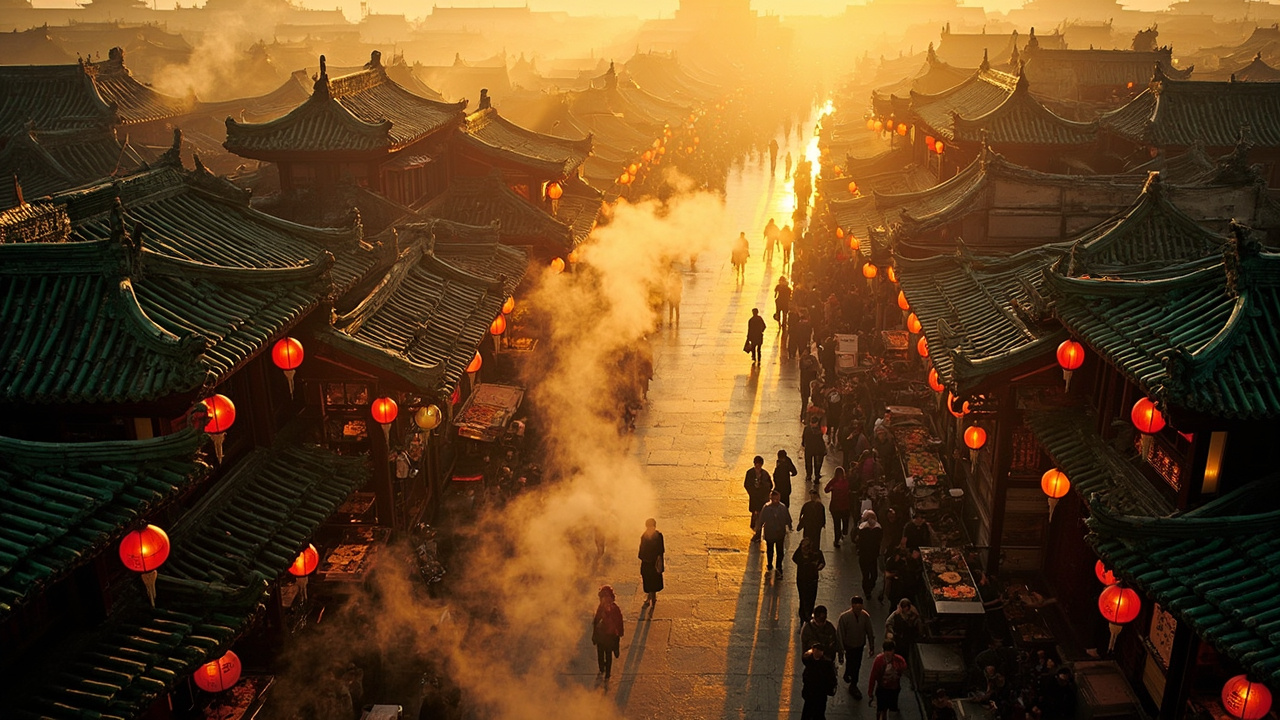
Top 10 Markets and Shopping Streets in China
From Shanghai's Bund to Beijing's Silk Street - 10 markets where foreigners can haggle, explore, and bring home authentic Chinese goods.
9 min read
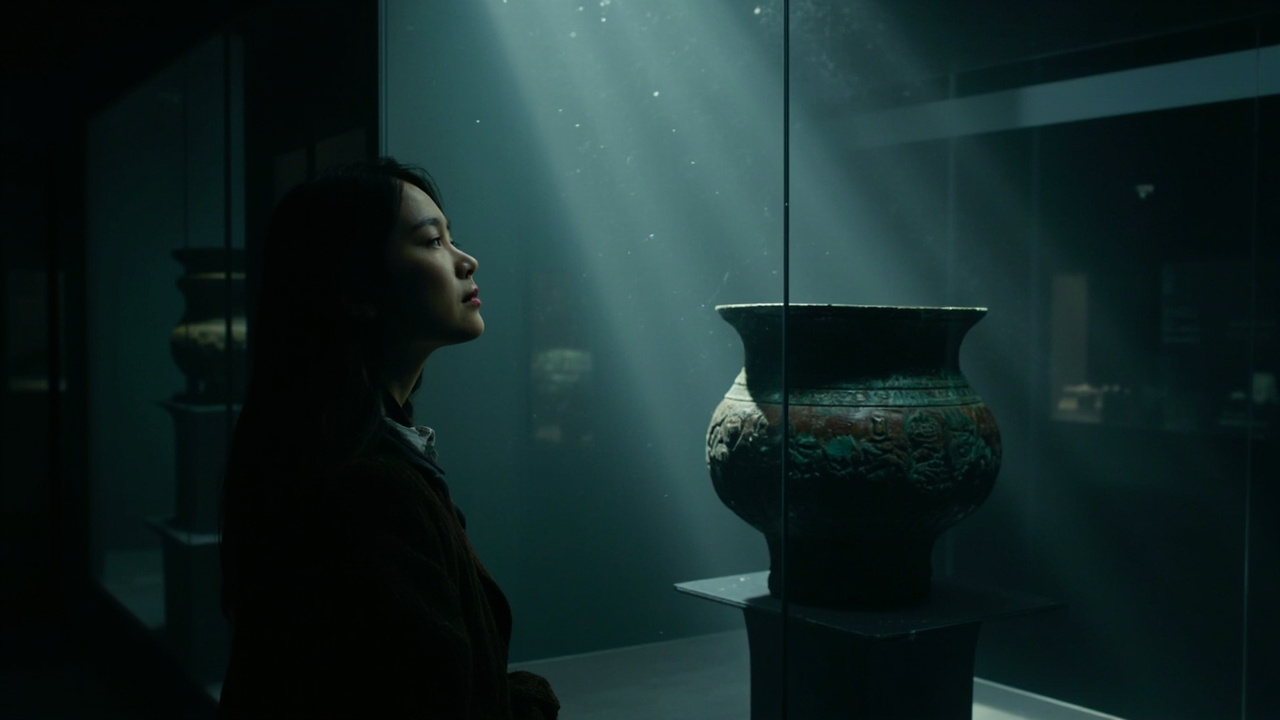
Top 10 Museums in China You Shouldn't Miss
China's museums span 5,000 years of civilization. These 10 - from the Palace Museum to Xi'an's terracotta gallery - are unmissable for culture lovers.
9 min read