
Chinese New Year Travel Tips
TODO: Extract from article (100-160 chars)
Chinese New Year Travel Tips
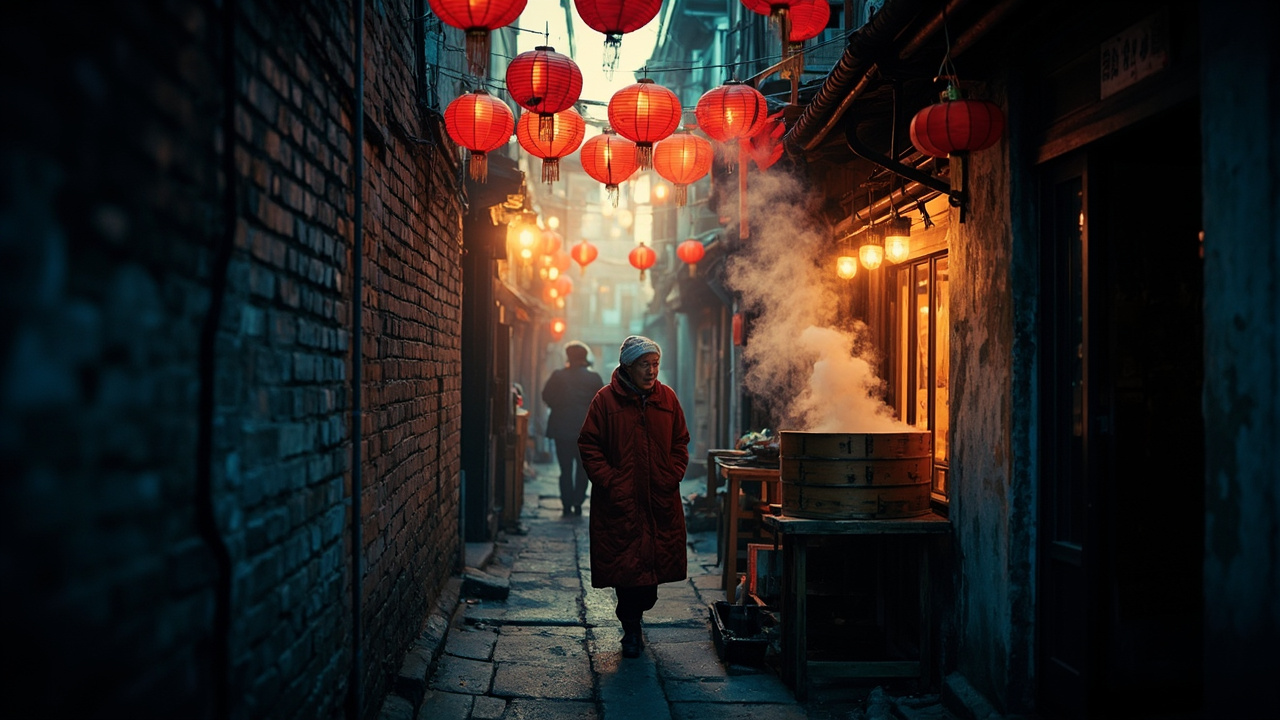
The first thing I noticed was the silence. I landed in Beijing on the second day of Spring Festival 2019, walked out of Capital Airport Terminal 3 expecting the usual crush of taxis and touts, and found… nothing. Empty roads. A driver named Liu who charged me a flat 200 RMB because “no meter today, friend, it’s New Year.” We drove past Tiananmen on a six-lane road with maybe four other cars on it. I’d been in Beijing six months by then and had never seen anything like it.
That’s the thing nobody tells you about Chinese New Year. It’s not just a holiday. It’s a full-scale logistical event that rearranges the entire country for roughly three weeks. Trains sell out 60 days in advance. Restaurant staff vanish to their home provinces. Half of Beijing goes to sleep while Chengdu, Xi’an, and every ancestral village in Henan wakes up.
I’ve now spent four Spring Festivals in China, and I’ve made every mistake in the book: booked a train ticket too late, showed up at a closed museum, eaten instant noodles on New Year’s Eve because every restaurant within walking distance had a “closed for family reunion” sign taped to the door. This guide is what I wish someone had handed me before that first trip. It covers what actually happens on the ground, where to go, what to book, and how to enjoy a country that’s simultaneously shutting down and throwing its biggest party of the year.
Quick answer
Chinese New Year 2026 (Year of the Horse) falls on February 17, with the official public holiday running roughly February 15–21 and travel chaos stretching from about February 10 to March 5. If you’re a first-time visitor, the two best strategies are: (1) go to a major city like Beijing, Shanghai, or Chengdu where you’ll find temple fairs, lantern festivals, and enough open restaurants to eat well, or (2) go to a smaller city or village where you’ll see the “real” celebration but need to plan every meal and transport leg in advance. Most foreign visitors can enter China visa-free for up to 30 days under the current policy (check your nationality), and you should set up Alipay or WeChat Pay before you fly, because cash is nearly dead here.
The Short Version
Book trains and flights 45–60 days out. Expect half of Beijing and Shanghai to be closed for 3–5 days around the actual New Year date. Temple fairs in big cities are the safest bet for first-timers. Small towns are more magical but logistically brutal. Bring a VPN installed before you land, download a translation app, and don’t plan anything important for Day 1 of the new year itself. If you only have one shot at this, go to Beijing or Xi’an.
How I Picked These
I’ve spent Spring Festival in Beijing (twice), Chengdu, and a village outside Kaifeng in Henan. I’ve also done the reverse: skipped China during CNY and watched from Hong Kong while friends sent me photos of empty Shanghai streets. The ten entries below are a mix of places I’ve personally been during the holiday and places I’ve vetted through Chinese friends, hostel staff, and a Chengdu taxi driver named Wei who spent 40 minutes explaining why I should go to Zigong instead of Chongqing (he was right). I’ve prioritized places where a foreigner with no Mandarin can actually function during the holiday, because that’s the real bottleneck. Cost estimates are 2026 figures based on my own spending and current listings.
Comparison Table
| Rank | Place | Best For | Approx Cost (USD) | Time Needed | When to Go |
|---|---|---|---|---|---|
| 1 | Beijing | Temple fairs, first-timers | $80–150/day | 4–5 days | Feb 15–21 |
| 2 | Xi’an | Ancient wall lanterns, food | $60–110/day | 3 days | Feb 14–20 |
| 3 | Chengdu | Lantern Festival, pandas | $55–100/day | 3–4 days | Feb 17–24 |
| 4 | Shanghai | Yu Garden lights, easy logistics | $90–160/day | 3 days | Feb 15–22 |
| 5 | Harbin | Ice festival (pre-CNY) | $70–130/day | 3 days | Jan 5–Feb 10 |
| 6 | Pingyao | Old town atmosphere | $50–90/day | 2 days | Feb 15–20 |
| 7 | Hong Kong | Biggest CNY parade | $120–200/day | 3 days | Feb 16–19 |
| 8 | Kaifeng | Folk traditions, cheap | $40–70/day | 2 days | Feb 16–20 |
| 9 | Guangzhou | Flower markets | $70–120/day | 2–3 days | Feb 14–17 |
| 10 | Taipei | Lantern Festival, easy entry | $80–140/day | 3 days | Feb 15–22 |
Beijing – Where the Whole City Goes Quiet, Then Explodes
I spent my first CNY Eve in a hutong apartment in Dongcheng with a family I’d met through a language exchange. At 11:50 PM we went up to the roof. At midnight, the entire city lit up. Not fireworks in the distance — fireworks everywhere, from every direction, so loud you could feel it in your chest. It went on for 45 minutes. The next morning, the streets were covered in red paper and the air smelled like gunpowder and dumpling steam.
Beijing is the best first-timer destination during CNY because it has the biggest, most organized temple fairs (庙会) in the country. Ditan Park and Longtan Lake both host massive ones with food stalls, acrobats, sugar-figure makers, and enough crowd management that you won’t get crushed. The city is quiet in a way you’ll never see otherwise — you can photograph the Forbidden City moat with no one in frame. But restaurants in tourist areas shut hard for 3–5 days around Feb 17, so plan meals around hotel breakfasts and the temple fairs themselves.
📍 Location: Dongcheng and Xicheng districts for the fairs; hutongs around Nanluoguxiang for atmosphere.
🎟️ Entry fee: Temple fairs $1.50–4 (10–30 RMB). Forbidden City $8.50 (60 RMB) — book online, it sells out.
🕐 Opening hours: Temple fairs typically 9 AM–5 PM, running Feb 15–21. Forbidden City closed Mondays.
🚕 How to get there: Take Subway Line 5 to Yonghegong (Lama Temple), Exit B, walk 8 minutes north to Ditan Park. For Longtan Lake, Line 5 to Tiantan Dongmen, Exit A.
⏰ When to visit: Go to temple fairs on weekday mornings before 11 AM. Avoid the first two days of the new year if you hate crowds.
💡 Insider tips: Download Didi (China’s Uber) before you arrive — taxis are scarce and surge-priced. Most ATMs work but many shops only take Alipay or WeChat Pay. Bring small red envelopes (hongbao) if you want to tip or gift.
The dumplings I ate at a Ditan Park stall — pork and cabbage, 8 RMB for six — were better than anything I’ve had in a Beijing restaurant.
Xi’an – Lanterns on a 600-Year-Old Wall
The first time I saw the Xi’an city wall lit up for Spring Festival, I actually stopped walking. The entire 14-kilometer loop was strung with red lanterns, and the South Gate (Yongningmen) had a light installation that took up the whole plaza. I stood there for ten minutes just watching families take photos.
Xi’an does CNY better than almost anywhere because the old city is compact and walkable, the Muslim Quarter stays open through the holiday (unlike most of Beijing), and the food is cheap and excellent. The Bell Tower and Drum Tower get full light shows every night. The Muslim Quarter’s snack street is packed but functional — you can eat your way through for under $15 a day.
📍 Location: Beilin District, inside the city wall. Muslim Quarter is near the Drum Tower.
🎟️ Entry fee: City wall $7.50 (54 RMB). Bell Tower $4 (30 RMB). Muslim Quarter free.
🕐 Opening hours: Wall 8 AM–10 PM (later during CNY). Muslim Quarter 10 AM–10 PM daily, no closures.
🚕 How to get there: High-speed rail from Beijing West to Xi’an North takes 4.5 hours. From Xi’an North, take Metro Line 2 to Yongningmen Station, Exit D — you’re at the South Gate.
⏰ When to visit: Lanterns go up around Feb 10 and stay through the Lantern Festival on March 3. Evenings after 7 PM are best.
💡 Insider tips: Buy your wall ticket at the South Gate, not the smaller gates — the bike rental is also there. The Muslim Quarter’s “yangrou paomo” (lamb soup with torn bread) is the dish to try, around $4. Most vendors take WeChat Pay only.
A woman selling roujiamo (Chinese “hamburger”) near the Drum Tower refused to let me pay because I’d helped her pick up a dropped bag. I ate two.
Chengdu – Pandas, Hotpot, and the Real Lantern Festival
Chengdu during CNY is a different animal from Beijing. The city doesn’t shut down as hard, the food scene stays alive, and the Lantern Festival at the end of the holiday (March 3, 2026) is genuinely spectacular. I went in 2023 and spent an evening at the Chengdu Research Base of Giant Panda Breeding on the second day of the new year — the pandas were completely unbothered by the holiday, which was oddly comforting.
The real draw is the food. Chengdu hotpot restaurants mostly stay open through CNY because the owners are local. My favorite meal of the whole trip was at a hole-in-the-wall in Jinjiang District where I paid $12 for two people and left with my mouth on fire.
📍 Location: Jinjiang and Qingyang districts for food; Panda Base is in Chenghua District, north of the city.
🎟️ Entry fee: Panda Base $8 (55 RMB). Jinli Ancient Street free. Wuhou Shrine $7 (50 RMB).
🕐 Opening hours: Panda Base 7:30 AM–6 PM, no holiday closures. Jinli 24 hours.
🚕 How to get there: Fly into Chengdu Tianfu International (TFU). From downtown, Metro Line 3 to Panda Avenue Station, then a 10-minute walk. For Jinli, Metro Line 3 to Gaoshengqiao, Exit D.
⏰ When to visit: Pandas are most active 8–10 AM. Go on a weekday if you can — weekends during CNY are brutal.
💡 Insider tips: Chengdu’s high-speed rail connections to Chongqing and Xi’an are excellent if you want to combine cities. Hotpot restaurants charge per-person for the broth base, not per pot — ask before ordering. Most staff speak zero English, so have a translation app ready.
A Chengdu taxi driver named Wei spent 40 minutes telling me I should skip Chongqing and go to Zigong for the lantern festival instead. I didn’t listen. I regret it.
Shanghai – The Easiest CNY for Foreigners
Shanghai is where I’d send my parents if they wanted to visit China during Spring Festival. It’s the most foreigner-friendly city in the country, the Yu Garden lantern festival is genuinely beautiful, and enough restaurants and bars stay open that you won’t starve. The downside: it’s also the most expensive, and the tourist areas (the Bund, Nanjing Road) get absolutely slammed.
I spent CNY 2022 in Shanghai and the highlight was walking the Bund at 7 AM on New Year’s Day — completely empty, fog rolling off the Huangpu, the Pudong skyline half-invisible. By 10 AM it was a mob scene.
📍 Location: Huangpu District for Yu Garden and the Bund; Jing’an for restaurants that stay open.
🎟️ Entry fee: Yu Garden $6 (40 RMB), lantern festival included. The Bund free.
🕐 Opening hours: Yu Garden 8:30 AM–5 PM, extended to 9 PM during the lantern festival (Feb 10–Mar 3).
🚕 How to get there: Metro Line 10 to Yuyuan Garden Station, Exit 1. For the Bund, Line 2 or 10 to East Nanjing Road, Exit 7.
⏰ When to visit: Yu Garden lanterns are best after 6 PM. The Bund is best before 8 AM.
💡 Insider tips: Shanghai’s complete travel guide has more on non-holiday logistics. During CNY, book restaurant reservations a week ahead — even casual places fill up. The Shanghai Metro runs normally through the holiday, which is not true in every city.
I made the mistake of trying to eat at a famous xiaolongbao place on Nanjing Road on Day 2 of the new year. Two-hour wait. I went to a 7-Eleven instead.
Harbin – Ice Festival, But Go Before the Holiday
Harbin’s Ice and Snow Festival is technically not a Spring Festival event — it runs from early January through late February — but it’s the single most impressive winter spectacle in China and worth building a trip around. I went in January 2024 and the scale is absurd: full-size buildings made of ice blocks, lit from inside, spread across 600,000 square meters.
The catch: by the time CNY hits (Feb 17), the festival is winding down and some sculptures are melting. Go in January or early February if you can.
📍 Location: Songbei District, across the Songhua River from downtown Harbin.
🎟️ Entry fee: $45 (330 RMB) for the main Ice and Snow World. Snow Sculpture Art Expo $40 (290 RMB).
🕐 Opening hours: 11 AM–9:30 PM, with lights on after 4 PM.
🚕 How to get there: Fly into Harbin Taiping International. From downtown, take the special festival shuttle bus from the Flood Control Monument, or Didi (about $8).
⏰ When to visit: January 5–February 10 is the sweet spot. Dress for -25°C (-13°F).
💡 Insider tips: Rent a heavy coat and boots at the entrance for $15 — you’ll need them. Hand warmers are sold everywhere for $1. The night lights are the whole point, so go after 4 PM. Book accommodation 2 months out.
I lasted 90 minutes before my phone died from the cold. Bring a power bank that stays in an inside pocket.
Pingyao – The Old Town That Feels Like a Movie Set
Pingyao is a fully walled Ming-dynasty city in Shanxi, about 3 hours by high-speed rail from Beijing. During CNY it goes full traditional: red lanterns on every eave, paper cuttings on every window, and a lantern festival that feels genuinely old rather than staged.
I went in 2020, right before everything shut down, and it was the most atmospheric place I’ve been in China during the holiday. The catch is that Pingyao is small — maybe 50,000 residents — and the tourist infrastructure thins out fast during CNY. Book your hotel and any restaurant reservations before you arrive.
📍 Location: Pingyao Ancient City, Shanxi Province, about 700 km southwest of Beijing.
🎟️ Entry fee: $18 (125 RMB) for the combined ticket covering 20+ sites. Valid 3 days.
🕐 Opening hours: 8 AM–6 PM for most sites, extended during the lantern festival.
🚕 How to get there: High-speed rail from Beijing West to Pingyao Gucheng Station, 3 hours, about $40. From the station, taxi to the old town is $3.
⏰ When to visit: Feb 15–20 for peak atmosphere. Weekdays are noticeably quieter.
💡 Insider tips: Stay inside the walls, not outside — the atmosphere is the whole point. The “Pingyao beef” (平遥牛肉) is the local specialty, sliced cold, about $5 a plate. English is rare; download a translation app.
An old man running a paper-cutting stall gave me a rabbit design for free because 2023 was the Year of the Rabbit. I still have it.
Hong Kong – The Biggest CNY Parade in the World
Hong Kong does CNY differently from the mainland. The city doesn’t shut down — it ramps up. The Cathay Pacific International Chinese New Year Night Parade on the first day of the new year draws hundreds of thousands of spectators, and the fireworks over Victoria Harbour on Day 2 are the biggest I’ve seen anywhere.
I went in 2018 and the energy was overwhelming in a good way. Hong Kong also has the advantage of being easy for foreigners: English is widely spoken, the MTR runs normally, and you don’t need a VPN.
📍 Location: Tsim Sha Tsui for the parade and fireworks; Central for the flower market.
🎟️ Entry fee: Parade free (grandstand seats $60–120). Fireworks free from the waterfront.
🕐 Opening hours: Parade starts 8 PM on Day 1. Fireworks 8 PM on Day 2.
🚕 How to get there: Fly into HKG, take the Airport Express to Kowloon Station ($14), then walk or taxi to Tsim Sha Tsui.
⏰ When to visit: Feb 16–19, 2026. Book hotels 3 months out — prices triple.
💡 Insider tips: The Victoria Harbour waterfront fills up 3 hours before fireworks — bring a mat and snacks. The flower market in Victoria Park is worth a morning. Hong Kong uses its own currency (HKD), but Alipay and WeChat Pay work in most places.
I watched the fireworks from a rooftop bar in Tsim Sha Tsui and paid $30 for a beer. Worth it.
Kaifeng – Folk Traditions Without the Crowds
Kaifeng is a small city in Henan, about 30 minutes by high-speed rail from Zhengzhou. It was the capital of the Song dynasty and still has a strong folk culture — especially around CNY, when the city puts on traditional performances, temple fairs, and a lantern festival that’s smaller but more authentic than Beijing’s.
I went in 2023 with a Chinese friend whose grandmother lived there. We ate at her family’s table on New Year’s Eve: 12 dishes, most of them I couldn’t name, all of them delicious. That’s the kind of experience Kaifeng offers if you’re willing to go off the tourist trail.
📍 Location: Longting District for the main temple fairs; Gulou District for food streets.
🎟️ Entry fee: Most temple fairs $2–5 (15–35 RMB). Qingming Riverside Landscape Garden $17 (120 RMB).
🕐 Opening hours: 8 AM–6 PM, extended to 9 PM during the lantern festival.
🚕 How to get there: High-speed rail from Zhengzhou East to Kaifeng North, 25 minutes, $8. From the station, taxi to Longting is $4.
⏰ When to visit: Feb 16–20. Avoid Day 1 of the new year itself — everything is closed for family time.
💡 Insider tips: Kaifeng’s night market on Gulou Square is the best food market I’ve been to in China. Try the soup dumplings (灌汤包) — they’re the local specialty. Very little English; bring a translation app.
My friend’s grandmother insisted I take a jar of her homemade chili oil home. It did not survive the flight.
Guangzhou – Flower Markets and Cantonese Food
Guangzhou’s CNY tradition is the flower market (花市), which runs for three days before New Year’s Eve. Whole streets turn into temporary markets selling peach blossoms, kumquat trees, and orchids. It’s less famous internationally than Beijing’s temple fairs but arguably more beautiful.
I went in 2019 and spent an entire evening just walking through the Yuexiu flower market. The Cantonese food scene also stays open through the holiday — dim sum restaurants in Guangzhou don’t close, which is a huge advantage if you’re a food-focused traveler.
📍 Location: Yuexiu, Liwan, and Haizhu districts for the main flower markets.
🎟️ Entry fee: Free.
🕐 Opening hours: Flower markets run Feb 14–17, 9 AM–midnight.
🚕 How to get there: Fly into Guangzhou Baiyun. Metro Line 1 to Gongyuanqian Station for the Yuexiu market.
⏰ When to visit: Feb 14–16, evenings after 7 PM.
💡 Insider tips: Buy a kumquat tree for your hotel room — it’s considered good luck. Dim sum restaurants open at 6 AM and fill up by 8. Cantonese is the local language; Mandarin works but English is hit-or-miss.
I bought a small peach blossom branch for $3 and carried it around for three days. It made the trip feel lucky.
Taipei – Lantern Festival Without the Visa Hassle
Taipei is technically not mainland China, but it’s the easiest CNY destination for many foreign visitors because entry rules are simpler and English is more widely spoken. The Taipei Lantern Festival runs for two weeks and the main display at Xinyi District is genuinely impressive.
I went in 2020 and the atmosphere was relaxed compared to the mainland — less intense, more family-friendly. The night markets stay open through the holiday, which solves the food problem entirely.
📍 Location: Xinyi District for the main lantern display; Dihua Street for traditional CNY goods.
🎟️ Entry fee: Free.
🕐 Opening hours: Lantern Festival runs Feb 14–Mar 3, lights on 5:30–11 PM.
🚕 How to get there: Fly into TPE, take the MRT Airport Line to Taipei Main Station, then MRT to Taipei 101/World Trade Center Station.
⏰ When to visit: Feb 16–22. The Lantern Festival peak is Mar 1–3.
💡 Insider tips: Taipei’s night markets (Shilin, Raohe) stay open through CNY. The Dihua Street CNY market is worth a morning. Taiwan uses its own currency (TWD), but credit cards work widely.
A vendor at Raohe Night Market gave me a free pepper bun because I looked confused. It was the best thing I ate all week.
FAQ summary
Chinese New Year 2026 falls on February 17, with the public holiday running approximately February 15–21 and travel disruption from about February 10 to March 5. Most foreign visitors can enter China visa-free for up to 30 days depending on nationality, but you must set up Alipay or WeChat Pay before arrival because cash is rarely accepted. The two best strategies for first-timers are visiting a major city (Beijing, Shanghai, Chengdu) for temple fairs and lantern festivals with reliable logistics, or a smaller city (Kaifeng, Pingyao) for authentic traditions with more planning required. Book trains and flights 45–60 days in advance, install a VPN before you land, and expect many restaurants and shops to close for 3–5 days around the actual New Year date.
FAQ
Q: Is it a good idea to visit China during Chinese New Year as a first-timer? A: Yes, if you plan carefully. The upside is unmatched atmosphere — temple fairs, lantern festivals, fireworks, and a country in full celebration mode. The downside is that transport sells out weeks ahead and many restaurants close for 3–5 days around February 17. Stick to major cities for your first CNY trip.
Q: Do I need a visa to visit China during Chinese New Year 2026? A: Most foreign visitors from Europe, Southeast Asia, and many other countries can enter visa-free for up to 30 days under the current policy — check your specific nationality before booking. Americans currently need a visa unless transiting under the 240-hour visa-free transit rule. Apply at least 4 weeks ahead if you need one.
Q: How far in advance should I book trains and flights for Chinese New Year? A: Book high-speed rail tickets exactly 60 days before your travel date — they sell out within hours for popular routes like Beijing–Xi’an and Shanghai–Chengdu. Flights should be booked 45–60 days out for reasonable prices; last-minute CNY flights can cost 3x normal fares.
Q: Will restaurants and shops be open during Chinese New Year? A: In major cities like Beijing, Shanghai, and Chengdu, most tourist-area restaurants and convenience stores stay open, though many local places close for 3–5 days around February 17. In smaller cities, expect widespread closures. Hotel breakfasts and temple fair food stalls are reliable backups.
Q: Do I need a VPN and a local SIM card for China during CNY? A: Yes — install a VPN before you land, because most VPN providers are blocked in China and you can’t download them once you’re there. For phone service, either get a China SIM card at the airport or use an eSIM from Airalo or Holafly. WeChat and Alipay both work fine without a VPN.
Q: What should I wear and pack for Chinese New Year in China? A: Northern cities (Beijing, Harbin, Xi’an) will be cold — 0°C to -20°C — so bring a heavy coat, thermal layers, and gloves. Southern cities (Guangzhou, Hong Kong, Taipei) are mild, 15–22°C. Bring red clothing if you want to fit in — it’s the color of luck and you’ll see it everywhere.
Q: Is English widely spoken during Chinese New Year? A: In Beijing, Shanghai, and Hong Kong, yes — especially in hotels and tourist areas. In smaller cities and during the holiday when many English-speaking staff are away, expect very little English. Download a translation app like Pleco or Baidu Translate before you go.
The Honest Wrap-up
This guide is for the traveler who wants to see China at its most Chinese — the fireworks, the family reunions, the food, the chaos. It’s not for someone who wants a smooth, predictable vacation where every restaurant is open and every train runs on time. If that’s you, come in April or October instead.
If you’re going for it, my one piece of advice is this: book your first two nights in a hotel with a 24-hour front desk and a confirmed restaurant, and don’t plan anything ambitious for Day 1 of the new year itself. Let the country show you what it does. The silence on the streets that first morning is part of the experience. So is the noise that follows.
More guides you may like
Top 10 Bridges in China
China's bridges are engineering marvels spanning mountains, rivers, and seas. Here are 10 of the most spectacular, from ancient stone to modern steel.
8 min read

Top 10 Buddhist Sites in China
From the Leshan Giant Buddha to the Dunhuang Caves, these 10 Buddhist sites represent 2,000 years of China's spiritual heritage.
9 min read
Top 10 Day Trips from Beijing You Shouldn't Miss
Beijing is packed with history, but some of China's best experiences are just a few hours away. Here are 10 day trips that will transform your visit.
9 min read
Top 10 Hidden Gems in China Off the Beaten Path
Beyond the Great Wall and Terracotta Warriors, China has incredible hidden destinations few tourists ever reach. Here are 10 underrated gems worth the detour.
9 min read
Top 10 Markets and Shopping Streets in China
From Shanghai's Bund to Beijing's Silk Street - 10 markets where foreigners can haggle, explore, and bring home authentic Chinese goods.
9 min read
Top 10 Museums in China You Shouldn't Miss
China's museums span 5,000 years of civilization. These 10 - from the Palace Museum to Xi'an's terracotta gallery - are unmissable for culture lovers.
9 min read