
China Time Zones Guide
TODO: Extract from article (100-160 chars)
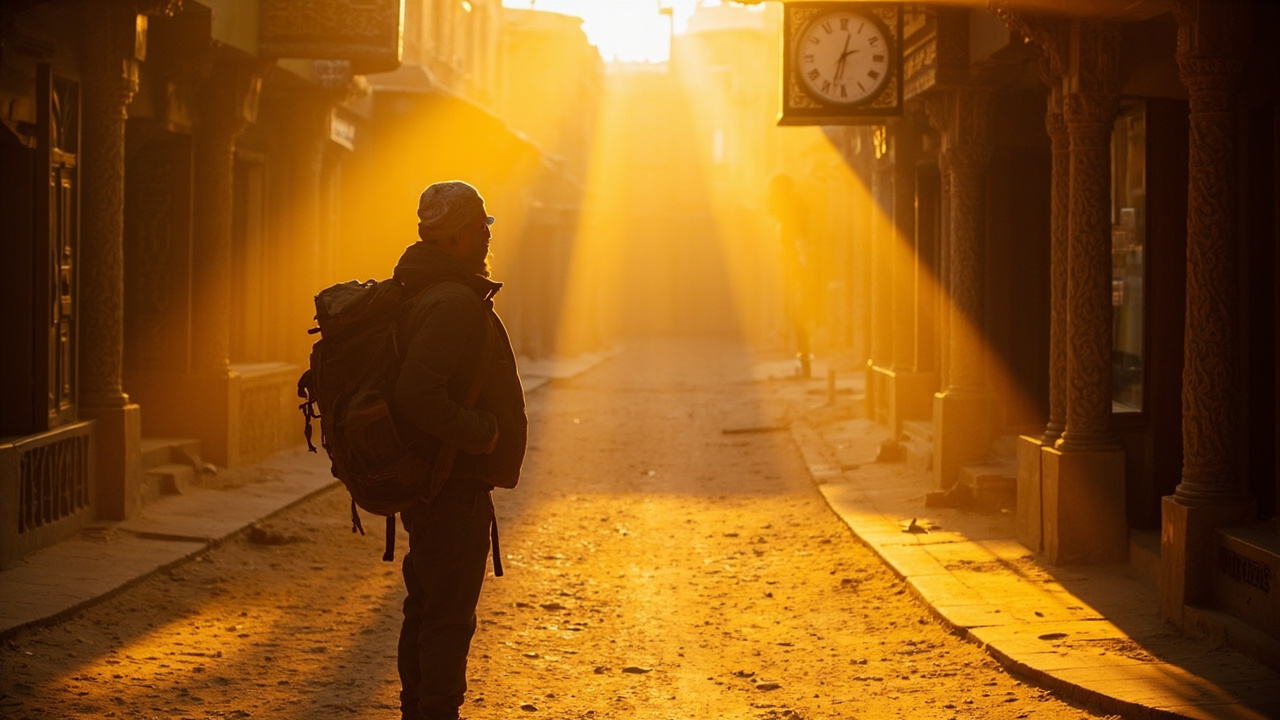
China Time Zones Guide
I was sitting in a noodle shop in Kashgar, watching the clock on the wall say 9 PM while the sun was still blazing over the Pamir foothills outside. My phone said 21:00. The shop owner’s watch said 21:00. But his daughter was getting ready for school, because for her it was 7 AM. Nobody in that room thought this was strange except me.
That’s the thing about China time that catches almost every first-timer off guard. The country spans roughly the same longitudinal distance as the continental United States, from the Pacific coast to the western deserts. The US splits that into four time zones. China uses one. Officially, the entire country runs on Beijing Time, UTC+8, from the Russian border down to the South China Sea.
I’ve been living in Beijing for seven years and I’ve crossed this country more than 40 times, and the time zone thing still trips me up every time I go west. This guide is what I wish someone had told me before my first trip to Xinjiang, when I showed up for a 10 AM meeting that everyone else thought was at noon.
Quick answer
All of China officially uses a single time zone: Beijing Time (UTC+8), which is the same as Singapore, Perth, and Kuala Lumpur. There is no daylight saving time anywhere in China, ever. In the far western regions like Xinjiang and Tibet, locals often run on an unofficial “Xinjiang Time” (UTC+6) for daily life, so a 10 AM appointment there might mean 10 AM Beijing Time or 10 AM local time, and you need to confirm which. For tourists, the practical rule is simple: your phone, your train tickets, and your flights all run on Beijing Time, so trust your phone and ask “Beijing time or local time?” whenever someone gives you a schedule in the west.
The Short Version
China has one official time zone, UTC+8, no daylight saving. If you’re visiting Beijing, Shanghai, Xi’an, Chengdu, or anywhere in the east, you’ll never notice anything unusual. If you’re going to Xinjiang, Tibet, or western Yunnan, expect the sun to rise at 9 or 10 AM, dinner at 10 PM, and locals quietly using a two-hour-earlier clock for their personal lives. Your train and plane tickets are always Beijing Time. Confirm before you assume.
How I Picked These
This isn’t a list of places to visit, it’s a list of the time zone situations you’ll actually run into as a tourist, ranked by how likely they are to confuse you and how much they matter for your trip. I’ve flown into Urumqi at midnight local time and watched the airport café serve dinner. I’ve missed a bus in Lhasa because I assumed “8 AM” meant the same thing to me as it did to the driver. I’ve sat in Chengdu with friends who didn’t realize Xinjiang had its own unofficial clock until I explained it over hotpot. Everything here comes from those trips, plus a lot of conversations with hotel receptionists, taxi drivers, and one very patient Uyghur tour guide named Adil who finally made the whole system click for me.
Comparison Table
| Rank | Situation | Best For | Approx Cost (USD) | Time Needed | When to Go |
|---|---|---|---|---|---|
| 1 | Eastern China (Beijing, Shanghai) | First-timers, no time confusion | $0 | N/A | Any season |
| 2 | Xinjiang (Urumqi, Kashgar) | Desert, Silk Road, culture shock | $0 | 5-10 days | May-Oct |
| 3 | Tibet (Lhasa) | High-altitude monasteries | $0 | 7-10 days | Apr-Oct |
| 4 | Western Yunnan (Dali, Lijiang) | Old towns, slow travel | $0 | 5-7 days | Mar-Nov |
| 5 | Inner Mongolia (Hohhot) | Grasslands, nomad culture | $0 | 4-6 days | Jun-Sep |
| 6 | Sichuan (Chengdu) | Pandas, food, gateway west | $0 | 4-6 days | Mar-Jun, Sep-Nov |
| 7 | Gansu (Dunhuang) | Mogao Caves, dunes | $0 | 3-5 days | May-Oct |
| 8 | Qinghai (Xining) | Tibetan plateau lakes | $0 | 4-6 days | Jun-Sep |
| 9 | Heilongjiang (Harbin) | Ice festival, Russian border | $0 | 3-4 days | Dec-Feb |
| 10 | Hainan (Sanya) | Beaches, warm winter | $0 | 5-7 days | Nov-Mar |
1. Beijing Time 鈥?The One Clock That Rules Everything
The first time I landed in Beijing, I set my watch to the arrival board and never thought about it again for three years. That’s how little the time zone issue matters in the east.
Beijing Time is UTC+8. It’s the same clock as Singapore, Kuala Lumpur, Perth, Manila, and Taipei. If you’re flying from any of those places, you won’t change your watch at all. If you’re coming from London (UTC+0), you’ll jump forward 8 hours. From New York (UTC-5), it’s 13 hours ahead. From Los Angeles (UTC-8), 16 hours ahead. Jet lag going east is worse than going west, so budget two or three days to adjust.
China abolished daylight saving time in 1991 and has never brought it back. That means no spring-forward confusion, no missed trains because your phone auto-adjusted, no “is it really 3 AM?” moments. It’s genuinely one of the simplest time systems in the world for travelers, as long as you stay in the eastern half of the country.
One thing worth knowing: the Chinese workday is roughly 9 AM to 6 PM, with a long lunch break from noon to 2 PM in many government offices and smaller businesses. Trains, planes, and long-distance buses all run on Beijing Time, always. When you book a high-speed rail ticket, the departure time on your confirmation is Beijing Time, no exceptions.
馃搷 Location: Nationwide, but most relevant in Beijing, Shanghai, Guangzhou, Shenzhen, Xi’an, Chengdu, and all eastern provinces 馃帿 Entry fee: Free, it’s just a clock 馃晲 Opening hours: 24/7 馃殕 How to actually get there: Fly into Beijing Capital (PEK) or Daxing (PKX), Shanghai Pudong (PVG) or Hongqiao (SHA), or any major eastern hub 鈴?When to visit: Any time of year 馃挕 Insider tips for foreign visitors: Your phone will auto-adjust to Beijing Time the moment you land, so don’t fight it. Download a world clock app before you fly so you can track home time without doing math. If you’re booking anything by phone with a Chinese-speaking friend, always confirm “Beijing time, right?” because even within China, people sometimes say “local time” out of habit. I once watched a German tourist in the Beijing airport argue with a gate agent because his watch said 6 AM and the board said 6 AM, but he’d set his watch to Berlin time on the plane. He missed the flight.
2. Xinjiang Time 鈥?The Two-Clock Province
This is the one that will actually mess with your head. Xinjiang is China’s westernmost region, bordering eight countries, and geographically it sits closer to UTC+5 or UTC+6 than UTC+8. The Chinese government runs the whole province on Beijing Time for official purposes, but locals, especially Uyghur communities, run their daily lives on “Xinjiang Time,” which is two hours behind Beijing.
So a shop might open at 10 AM Beijing Time, which is 8 AM Xinjiang Time, and the owner will tell you it opens at 8. A wedding might start at 9 PM Beijing Time, which feels like 7 PM locally, and everyone shows up at what feels like dusk. Restaurants serve dinner at 10 or 11 PM Beijing Time. Kids go to school at what is technically 9 AM Beijing Time but feels like 7 AM.
I once booked a tour in Kashgar for “10 AM” and showed up at 10 AM Beijing Time, only to find the guide had meant 10 AM Xinjiang Time, which was noon Beijing Time. I waited two hours in a tea house drinking salted milk tea, which honestly wasn’t a bad way to spend a morning.
馃搷 Location: All of Xinjiang, especially Urumqi, Kashgar, Turpan, and Hotan 馃帿 Entry fee: Free 馃晲 Opening hours: Varies wildly, always confirm which clock 馃殕 How to actually get there: Fly into Urumqi Diwopu International (URC) from Beijing (4.5 hours), Shanghai (5.5 hours), or Chengdu (4 hours). Trains from Beijing take about 30 hours. 鈴?When to visit: May to October, best in September for the grapes and cooler weather 馃挕 Insider tips for foreign visitors: Always ask “Beijing time or Xinjiang time?” when someone gives you a schedule. Your phone will show Beijing Time, so set a second clock manually if you’re staying more than a few days. Uyghur-run businesses almost always use Xinjiang Time. Han Chinese-run businesses and anything government-related use Beijing Time. If you’re confused, show them your phone and ask them to point at the number they mean. Adil, my guide in Kashgar, told me the trick is to just show up two hours early to everything and drink tea until someone else arrives.
3. Tibet 鈥?Where the Sun Rises at 9 AM
Lhasa sits at roughly the same longitude as Dhaka, Bangladesh, which is UTC+6. But Tibet runs on Beijing Time, so in winter the sun doesn’t rise until almost 9 AM and doesn’t set until nearly 8 PM. In summer, sunrise is around 7 AM and sunset is past 9 PM.
For tourists, this is actually kind of wonderful. You can sleep in, have a leisurely breakfast, and still catch the morning light on the Potala Palace. But it also means that if you’re doing a day trip to a monastery that closes at 5 PM, you’ve got a shorter window than you’d think.
The bigger issue is altitude, not time. Lhasa is at 3,650 meters (12,000 feet), and most people need a full day to acclimatize before doing anything strenuous. Combine jet lag with altitude sickness and you’ve got a recipe for a rough first 48 hours. My advice: arrive, sleep, drink water, don’t schedule anything for day one.
馃搷 Location: Lhasa, Shigatse, and the wider Tibetan Autonomous Region 馃帿 Entry fee: Potala Palace is about $28 (200 CNY), Jokhang Temple about $12 (85 CNY) 馃晲 Opening hours: Most monasteries 9 AM to 4 PM Beijing Time, Potala Palace requires timed entry booked in advance 馃殕 How to actually get there: Fly into Lhasa Gonggar (LXA) from Chengdu (2.5 hours) or Xi’an (3 hours). The Qinghai-Tibet Railway from Xining takes about 21 hours and is worth doing once for the scenery. Foreigners need a Tibet Travel Permit arranged through a licensed agency. 鈴?When to visit: April to October. Winter is cold but crowds are thin. 馃挕 Insider tips for foreign visitors: You cannot enter Tibet independently as a foreigner, you must book through an agency. Bring cash because ATMs are unreliable outside Lhasa. The Alipay and WeChat Pay setup works in Lhasa but not in smaller towns. Download an offline map before you go. And yes, you’ll want a VPN if you need Google Maps or Gmail, but check the SIM card and internet guide before you fly. I met a British couple in a Lhasa guesthouse who’d scheduled a 6 AM departure for a Everest Base Camp trip and were shocked when their driver showed up at 8. He’d meant 6 AM Beijing Time, which was 8 AM local solar time, and nobody had clarified.
4. Western Yunnan 鈥?The Soft Version of the Same Problem
Dali and Lijiang sit at roughly UTC+7 geographically, so they’re only one hour off Beijing Time in solar terms. Not enough to cause the two-clock chaos of Xinjiang, but enough that sunrise is noticeably late and sunset is noticeably late.
What this means practically: in Dali in winter, the sun doesn’t come up until almost 8 AM and sets around 7 PM. In summer, sunrise is around 6:30 AM and sunset is past 8:30 PM. The old towns are gorgeous at dusk, so plan your evenings around the late light.
Yunnan is also where I first noticed how much the time zone thing affects food culture. In Dali, dinner starts around 8 PM and restaurants are still full at 10. In Beijing, most kitchens close by 9:30. If you’re coming from the east and expecting an early dinner, you’ll be eating alone.
馃搷 Location: Dali Old Town, Lijiang Old Town, Shangri-La 馃帿 Entry fee: Dali Old Town is free, Lijiang Old Town is free (some attractions charge $5-$15 / 35-100 CNY) 馃晲 Opening hours: Shops 10 AM to 10 PM Beijing Time, restaurants later 馃殕 How to actually get there: Fly into Dali (DLU) or Lijiang (LJG) from Kunming (1 hour) or Chengdu (1.5 hours). High-speed rail from Kunming to Dali takes 2 hours. 鈴?When to visit: March to November, best in April-May and September-October 馃挕 Insider tips for foreign visitors: The Bai and Naxi minority communities here keep their own schedules, and many small shops open whenever the owner feels like it. Don’t plan a tight itinerary. Bring layers because the temperature swings 15掳C between day and night. English is limited outside the main tourist streets, so have a translation app ready. A Naxi woman in Lijiang once told me she opens her shop “when the sun hits the roof,” which turned out to mean about 10:30 AM Beijing Time.
5. Inner Mongolia 鈥?Grasslands on Beijing Time
Hohhot and the surrounding grasslands run on Beijing Time, no confusion. But the latitude is high enough that summer days are long and winter days are short. In June, the sun sets around 8 PM. In December, it’s dark by 5 PM.
The grasslands themselves are a different kind of time experience. Nomad families don’t run on clocks at all, they run on the animals. You’ll eat when the herders eat, sleep when it gets dark, and wake up when the yaks start moving. It’s a nice break from schedule anxiety.
馃搷 Location: Hohhot, Xilamuren Grassland, Huitengxile Grassland 馃帿 Entry fee: Grassland access varies, roughly $7-$20 (50-140 CNY) per person for some areas 馃晲 Opening hours: Grassland camps run 24/7 in season, most closed November to April 馃殕 How to actually get there: Fly into Hohhot Baita (HET) from Beijing (1.5 hours) or take a high-speed train from Beijing (2.5 hours) 鈴?When to visit: June to September, best in July for the Naadam Festival 馃挕 Insider tips for foreign visitors: Bring cash for grassland homestays because signal is spotty. The temperature drops to near freezing at night even in summer. If you’re staying with a herder family, don’t expect Wi-Fi or a schedule. I once ate breakfast at 5 AM with a herder family because the sheep had decided it was morning.
6. Sichuan 鈥?The Gateway That Runs on Beijing Time
Chengdu is the launchpad for most western China trips, and it runs cleanly on Beijing Time. But it’s also where I’ve seen the most confused tourists, because people fly in from the east, adjust to Chengdu time, then fly to Xinjiang and get blindsided.
Chengdu itself has a lovely late-night culture. Hotpot restaurants are packed at 11 PM. Teahouses in People’s Park fill up by 9 AM. The city runs on its own rhythm, but it’s the same clock as Beijing.
馃搷 Location: Chengdu, Leshan, Emeishan 馃帿 Entry fee: Panda Base is about $8 (55 CNY), Leshan Buddha about $12 (80 CNY) 馃晲 Opening hours: Panda Base 7:30 AM to 6 PM Beijing Time, best before 9 AM when pandas are active 馃殕 How to actually get there: Fly into Chengdu Tianfu (TFU) or Shuangliu (CTU). High-speed rail from Xi’an takes 3 hours, from Chongqing 1.5 hours. 鈴?When to visit: March to June and September to November 馃挕 Insider tips for foreign visitors: Get to the pandas early, they sleep through the afternoon. Chengdu is where you should set up Alipay and WeChat Pay if you haven’t already, because smaller western towns rely on it heavily. English is decent in tourist areas but limited elsewhere. A Chengdu taxi driver once told me he doesn’t understand why foreigners think China has multiple time zones, “we’re one country, one clock,” he said, then drove me to a hotpot place that didn’t close until 4 AM.
7. Gansu and Dunhuang 鈥?The Silk Road Clock
Dunhuang sits at UTC+6 geographically, so it’s two hours off solar time from Beijing. The city runs on Beijing Time officially, but the tourism industry has quietly adapted. The famous Mingsha Sand Dunes are best visited at sunset, which in summer is around 9 PM Beijing Time. The night market doesn’t really get going until 10 PM.
This is one of those places where the late sunset is a gift. You can spend the whole day at the Mogao Caves, have dinner, and still catch the dunes at golden hour. In winter, the sun sets around 6 PM and everything shuts down earlier.
馃搷 Location: Dunhuang, Gansu Province 馃帿 Entry fee: Mogao Caves about $34 (238 CNY) for foreign visitors, Mingsha Dunes about $17 (120 CNY) 馃晲 Opening hours: Mogao Caves 8 AM to 6 PM Beijing Time, dunes open until sunset 馃殕 How to actually get there: Fly into Dunhuang (DNH) from Xi’an (2 hours) or Lanzhou (1.5 hours). High-speed rail from Lanzhou takes about 7 hours. 鈴?When to visit: May to October, best in September 馃挕 Insider tips for foreign visitors: Book Mogao Caves tickets at least a week in advance, they sell out. Bring a headlamp for the caves. The dunes are best at sunset, which is very late in summer. Camel rides cost about $14 (100 CNY). I watched a French photographer sprint up a dune at 8:30 PM to catch the light, and he made it with ten minutes to spare.
8. Qinghai 鈥?Plateau Time
Xining and the Qinghai Lake area run on Beijing Time, but the altitude (2,275 meters / 7,460 feet in Xining, higher at the lake) means you’ll feel the time differently. Days feel longer because you’re moving slower. The lake itself is best at sunrise, which in summer is around 6:30 AM Beijing Time.
馃搷 Location: Xining, Qinghai Lake, Chaka Salt Lake 馃帿 Entry fee: Qinghai Lake about $14 (100 CNY), Chaka Salt Lake about $8 (60 CNY) 馃晲 Opening hours: Most sites 8 AM to 6 PM Beijing Time 馃殕 How to actually get there: Fly into Xining Caojiabao (XNN) from Beijing (2.5 hours) or take the high-speed rail from Lanzhou (1 hour) 鈴?When to visit: June to September 馃挕 Insider tips for foreign visitors: Altitude sickness is real here, take it slow on day one. Bring sunscreen, the UV at altitude is brutal. The lake is stunning but crowded in July and August. A Tibetan vendor at the lake sold me a prayer flag for $3 (20 CNY) and told me to hang it “when the wind is right,” which I’m still not sure I understood.
9. Harbin 鈥?The Early Sunset
Harbin is far northeast, at UTC+8 but high latitude. In winter, the sun sets around 4 PM. The Ice and Snow Festival is best visited after dark anyway, so this works in your favor. But if you’re planning a day of sightseeing, you’ve got a short window.
馃搷 Location: Harbin, Heilongjiang Province 馃帿 Entry fee: Ice and Snow World about $45 (330 CNY), Saint Sophia Cathedral about $3 (20 CNY) 馃晲 Opening hours: Ice festival 11 AM to 9 PM Beijing Time, cathedral 8:30 AM to 6 PM 馃殕 How to actually get there: Fly into Harbin Taiping (HRB) from Beijing (2 hours) or take the high-speed rail (4.5 hours) 鈴?When to visit: December to February for the ice festival 馃挕 Insider tips for foreign visitors: Bring serious winter gear, it hits -30掳C. Hand warmers are essential. The ice festival is best after 5 PM when the lights come on. Book hotels months in advance for festival season. I met a Brazilian couple in Harbin who had no idea the sun set at 4 PM and had planned a full day of outdoor activities. They ended up at a hotpot restaurant by 5 PM, which honestly was the right call.
10. Hainan 鈥?The Tropical Clock
Sanya runs on Beijing Time and sits at a low latitude, so the days are consistent year-round: sunrise around 6:30 AM, sunset around 6:30 PM. The only time-related thing to know is that Hainan is a beach destination, so the schedule revolves around sun and tides, not clocks.
馃搷 Location: Sanya, Haikou 馃帿 Entry fee: Most beaches free, Yalong Bay about $8 (60 CNY) for some sections 馃晲 Opening hours: Beaches 24/7, most resorts have their own schedules 馃殕 How to actually get there: Fly into Sanya Phoenix (SYX) from Beijing (4 hours) or Shanghai (3 hours) 鈴?When to visit: November to March, when the rest of China is freezing 馃挕 Insider tips for foreign visitors: Hainan is visa-free for many nationalities, check the visa-free transit rules before you book. English is decent in resorts but limited elsewhere. The sun is strong, bring reef-safe sunscreen. A Sanya lifeguard told me the best time to swim is 7 AM, before the tour groups arrive and the water gets choppy.
FAQ summary
China uses a single official time zone, Beijing Time (UTC+8), with no daylight saving time anywhere in the country. In far western regions like Xinjiang and Tibet, locals often use an unofficial “Xinjiang Time” (UTC+6) for daily life, so you should always confirm whether a given schedule refers to Beijing Time or local time. All train, plane, and bus tickets in China run on Beijing Time, so your phone is the most reliable clock you have. For most first-time tourists visiting eastern China, the time zone issue never comes up, but if you’re heading west of Chengdu, expect late sunrises, late dinners, and occasional two-clock confusion.
FAQ
Q: Does China really only have one time zone? A: Yes. Since 1949, the entire country has officially run on Beijing Time (UTC+8), even though it spans five geographic time zones’ worth of longitude. The only exception is the unofficial “Xinjiang Time” used by many locals in the far west, which is two hours behind Beijing.
Q: What is Xinjiang Time and should I use it? A: Xinjiang Time is UTC+6, two hours behind Beijing Time, and it’s used informally by many Uyghur and local communities in Xinjiang for daily life. As a tourist, you should default to Beijing Time for all bookings, but ask “Beijing time or Xinjiang time?” whenever someone gives you a schedule.
Q: Does China have daylight saving time? A: No. China abolished daylight saving time in 1991 and has not used it since. Your phone will not auto-adjust for DST anywhere in China.
Q: Will my phone automatically switch to Beijing Time when I land? A: Yes, if your phone is set to automatic time zone. It will jump to UTC+8 the moment you connect to a Chinese network. If you want to track home time, add a second clock manually in your phone’s clock app.
Q: What time do trains and flights in China use? A: All trains, flights, and long-distance buses in China use Beijing Time, without exception. Your ticket, your boarding pass, and the departure board all show Beijing Time. This is true even in Xinjiang and Tibet.
Q: Do I need a VPN to check the time in China? A: No, your phone’s clock works fine without a VPN. But if you want to use Google Maps, Gmail, or WhatsApp while you’re there, you’ll need a VPN set up before you arrive. See the SIM card and internet guide for details.
Q: Why does the sun rise so late in western China? A: Because western China is geographically several time zones west of Beijing but runs on Beijing Time anyway. In Kashgar, the sun can rise at 10 AM Beijing Time in winter. Locals just adjust their schedules, sleeping later and eating dinner at 10 or 11 PM.
The Honest Wrap-up
This guide is for anyone planning a trip that goes west of Chengdu, or anyone who’s ever looked at a China map and wondered why the whole country shares one clock. If you’re only visiting Beijing, Shanghai, Xi’an, and Chengdu, you can skim this and forget it. If you’re going to Xinjiang, Tibet, or anywhere on the Silk Road, read it twice and screenshot the FAQ.
The one piece of advice I’d give a friend about to book a flight: set your phone to Beijing Time the moment you land and never second-guess it. Then, whenever a local gives you a time, ask “Beijing time or local time?” It’s a five-second question that will save you hours of confusion. And if you do end up two hours early somewhere, order tea and enjoy the wait. That’s how I’ve met some of the best people on my trips.
More guides you may like
Top 10 Bridges in China
China's bridges are engineering marvels spanning mountains, rivers, and seas. Here are 10 of the most spectacular, from ancient stone to modern steel.
8 min read

Top 10 Buddhist Sites in China
From the Leshan Giant Buddha to the Dunhuang Caves, these 10 Buddhist sites represent 2,000 years of China's spiritual heritage.
9 min read
Top 10 Day Trips from Beijing You Shouldn't Miss
Beijing is packed with history, but some of China's best experiences are just a few hours away. Here are 10 day trips that will transform your visit.
9 min read
Top 10 Hidden Gems in China Off the Beaten Path
Beyond the Great Wall and Terracotta Warriors, China has incredible hidden destinations few tourists ever reach. Here are 10 underrated gems worth the detour.
9 min read
Top 10 Markets and Shopping Streets in China
From Shanghai's Bund to Beijing's Silk Street - 10 markets where foreigners can haggle, explore, and bring home authentic Chinese goods.
9 min read
Top 10 Museums in China You Shouldn't Miss
China's museums span 5,000 years of civilization. These 10 - from the Palace Museum to Xi'an's terracotta gallery - are unmissable for culture lovers.
9 min read