
Dunhuang Travel Guide
TODO: Extract from article (100-160 chars)
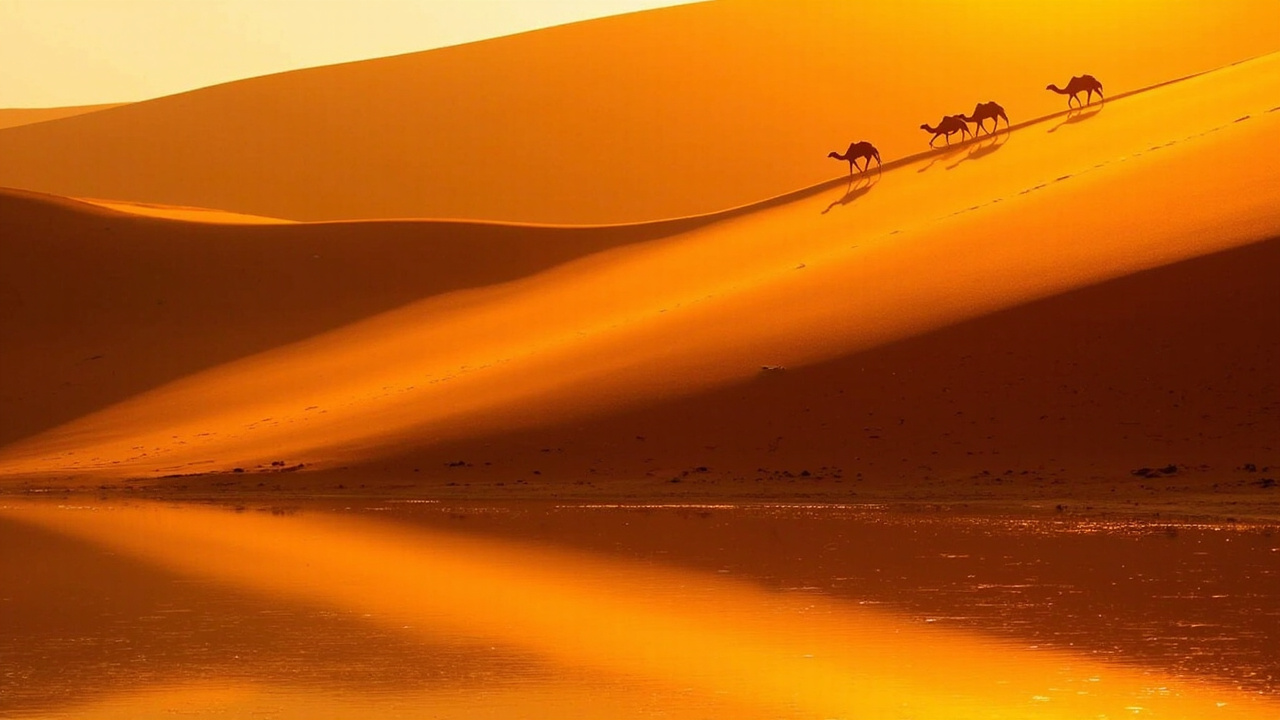
Dunhuang Travel Guide
The first thing I noticed was the sand. Not the dunes themselves — I’d seen photos — but the way it gets into everything. My socks. My camera bag. The folds of my wallet. I’d come to Dunhuang on the overnight train from Lanzhou, stepped off at 7am into air so dry it felt like breathing through a straw, and by noon I was sitting at a tiny noodle shop near the night market watching a woman pull dough while her husband shouted at a delivery scooter driver who’d parked in the wrong spot. That’s Dunhuang. You come for the Mogao Caves, you stay for everything else.
Dunhuang sits at the western edge of the Hexi Corridor in Gansu Province, a Silk Road oasis town that was once one of the most cosmopolitan places on earth. Traders, monks, and envoys passed through here for over a thousand years, leaving behind cave temples, Buddhist manuscripts, and a strange, layered history that includes a British-Hungarian archaeologist named Aurel Stein who carted off thousands of scrolls in 1907. The town itself is small — about 200,000 people — and you can walk most of the interesting parts in a day. But the surrounding desert, the caves, and the strange saltwater lake nearby will keep you busy for three or four.
This guide covers where to go, what to skip, how to get around without a tour group, and the specific things I wish someone had told me before I went. I’ve been to Dunhuang twice, in 2023 and again in 2025, and the second trip was better because I knew what I was doing. Here’s what I learned.
Quick answer
Dunhuang is best visited between May and October, with September and early October being ideal — warm days, cool nights, and the Mogao Caves fully open. Most foreign visitors can enter China visa-free for up to 30 days under the 2025–2026 expanded visa-free policy (check your nationality), and Dunhuang is easily reached by high-speed rail from Lanzhou (about 6 hours) or by direct flights from Beijing, Shanghai, and Xi’an. Budget around $80–120 (580–870 CNY) per day for accommodation, food, transport, and one major attraction. The Mogao Caves require advance booking through the official WeChat mini-program, often 2–4 weeks ahead in peak season.
The Short Version
If you only have 90 seconds: book Mogao Caves tickets the moment your dates are firm — they sell out. Stay near the Shazhou Night Market so you can walk to dinner. Skip the organized tour buses if you can; the local bus to the Mogao Caves is cheap and easy. Bring a buff or scarf for the sand, and set up Alipay or WeChat Pay before you arrive, because almost nothing here takes cash anymore. Two full days is the minimum. Three is better.
How I Picked These
I’m not ranking Dunhuang’s attractions by TripAdvisor reviews. I’m ranking them by what I’d tell a friend to actually do with limited time. I visited Mogao twice — once on a rushed group tour, once on my own with a 3-hour slot — and the difference was enormous. I talked to a night market vendor named Ma Li who’s been selling apricot juice there for eleven years, and she told me which stalls are run by locals versus which are franchised. I got lost on the way to the Western Thousand Buddha Caves and ended up sharing a taxi with a retired teacher from Xi’an who insisted on paying. I also made the mistake of visiting Mingsha Shan at noon in July and nearly cooked myself. These entries reflect all of that.
Comparison Table
| Rank | Place | Best For | Approx Cost (USD) | Time Needed | When to Go |
|---|---|---|---|---|---|
| 1 | Mogao Caves | History, art, the reason you came | $33 (238 CNY) | 3–4 hours | Morning, May–Oct |
| 2 | Mingsha Shan & Crescent Lake | Dunes, camel rides, sunset | $17 (120 CNY) | 2–3 hours | Late afternoon |
| 3 | Shazhou Night Market | Food, people-watching | Free entry | 1–2 hours | After 7pm |
| 4 | Yumen Pass & Han Great Wall | Remote desert history | $6 (40 CNY) | Half day | Morning |
| 5 | Yardang National Geopark | Weird rock formations | $17 (120 CNY) | Half day | Sunrise or sunset |
| 6 | Western Thousand Buddha Caves | Quieter caves, fewer crowds | $8 (55 CNY) | 2 hours | Morning |
| 7 | Dunhuang Museum | Context before Mogao | Free | 1.5 hours | Any day except Mon |
| 8 | Echoing Sand Dunes (separate dune area) | Sandboarding, quieter | $8 (55 CNY) | 1–2 hours | Afternoon |
| 9 | Yangguan Pass | Silk Road frontier | $7 (50 CNY) | 2 hours | Morning |
| 10 | Dunhuang Old Town (replica street) | Photos, souvenirs | Free | 1 hour | Evening |
Mogao Caves — The Reason You Booked the Flight
I cried in Cave 45. Not dramatically — just a few tears that I wiped away before the guide noticed. The Tang dynasty sculptures in there are over 1,200 years old, and the paint on the walls is still vivid enough that you can see the individual brushstrokes on the Bodhisattva’s robe. The guide’s flashlight swept across a row of musicians painted in the 8th century, and one of them was playing an instrument that no longer exists. I stood there for maybe ninety seconds, and I still think about it.
Why it’s special: Mogao is 492 caves carved into a cliff face over roughly a thousand years, from the 4th to the 14th century. Only about 8–10 caves are open to the public at any time, rotating to protect the art. You don’t choose which ones you see — the site assigns you a group and a guide. The standard ticket gets you two films at the visitor center, a bus to the caves, and about 75 minutes inside with a guide. The English tours are limited; if you don’t speak Mandarin, book the English slot when you reserve.
📍 Location: About 25 km southeast of Dunhuang city, in the desert. The visitor center is on the way, not at the caves themselves.
🎫 Entry fee: $33 (238 CNY) for the standard A ticket. The B ticket ($14 / 100 CNY) skips the films and gets you fewer caves. Emergency tickets exist but are limited.
🕐 Opening hours: 8am–6pm in peak season (May–Oct), 9am–5pm off-season. Closed for maintenance on some winter days.
🚕 How to actually get there: Take the green Dunhuang city bus #12 from the Silk Road Hotel stop (near the night market) — it runs every 30 minutes and costs $0.40 (3 CNY). Or take a taxi for about $7 (50 CNY) one way. The bus drops you at the digital visitor center, where you watch the films and then board the shuttle.
⏰ When to visit: Book the 8:30am or 9am slot. By 11am the caves are hot and crowded, and the guides are rushed. Avoid Chinese public holidays entirely.
💡 Insider tips: Bring a small flashlight — the guide’s beam moves fast and you’ll want to see details. No photos inside the caves, and they enforce it. Wear socks you don’t mind ruining; you’ll be walking on sand between caves. The digital films at the visitor center are actually worth watching — the 360-degree dome film gives you a virtual tour of caves that are permanently closed.
The mistake I made: I booked a group tour my first time and spent more time waiting for the group to reassemble than actually looking at anything. Book independently.
Mingsha Shan and Crescent Lake — The Postcard, and It Earns It
Everyone takes the same photo here: the crescent-shaped lake with the dunes rising behind it, usually at sunset with a camel silhouette in the foreground. I rolled my eyes at the idea. Then I climbed to the top of the dune at 6pm and sat down, and the light went gold, and the whole thing made sense. The lake has survived for two thousand years despite being surrounded by desert, which is genuinely strange and beautiful.
Why it’s special: This is the classic Dunhuang image, and unlike most classic images, it holds up in person. The dunes are about 250 meters high and you can climb them (slowly — the sand gives way under every step). Camel rides are available and cost about $14 (100 CNY) for a 40-minute loop. The lake itself is small and you can walk around it in 15 minutes.
📍 Location: Directly south of Dunhuang city, about 5 km from the night market. You can see the dunes from town.
🎫 Entry fee: $17 (120 CNY), which includes the dune area and the lake. Camel rides, sandboarding, and the sightseeing buggy cost extra.
🕐 Opening hours: 5am–9pm in summer (people go for sunrise), 7:30am–7:30pm in winter.
🚕 How to actually get there: Take bus #3 from the Dunhuang Hotel stop, or just walk — it’s a 50-minute walk from the night market and the dunes get bigger as you approach. Taxis are $3–4 (20–30 CNY).
⏰ When to visit: Go at 5:30pm in summer, 3pm in winter. Avoid midday entirely — the sand surface can hit 60°C and there’s no shade. Weekdays are noticeably quieter than weekends.
💡 Insider tips: Rent the orange shoe covers at the entrance ($2 / 15 CNY) — they keep sand out of your shoes and you’ll be grateful. Bring more water than you think you need; the vendors inside charge triple. If you want the classic photo without camels, walk to the far side of the lake where the crowd thins out. The camel ride is fun but the animals look tired by late afternoon — go early if you care about that.
I met a photographer from Chengdu named Zhou who’d been coming here every year for a decade. He told me the best light is actually 20 minutes after sunset, when everyone else has left.
Shazhou Night Market — Where You’ll Eat Every Night
Ma Li has been selling apricot juice from the same stall for eleven years. I asked her what tourists always get wrong, and she said, “They eat at the first stall they see. The good ones are in the middle.” She pointed me toward a lamb skewer stand three rows back, and she was right.
Why it’s special: This is Dunhuang’s social center. It’s a long pedestrian street lined with food stalls, and it stays busy until midnight in summer. The food is a mix of Gansu and Xinjiang styles — lamb skewers, hand-pulled noodles, apricot juice, donkey meat sandwiches, and a local specialty called “yellow noodles” (huang mian) that’s cold, chewy, and served with garlic water. It’s not a tourist trap in the way that night markets in Beijing or Shanghai can be; locals eat here too.
📍 Location: Shazhou Night Market, central Dunhuang, a 5-minute walk from most hotels.
🎫 Entry fee: Free.
🕐 Opening hours: Roughly 6pm to midnight, every night. Quieter in winter.
🚕 How to actually get there: You’re probably already near it. If not, any taxi in town will know “Shazhou Yeshi.”
⏰ When to visit: 7:30–9pm is peak. Go at 6:30 for easier seating, or after 10 for a calmer vibe.
💡 Insider tips: Cash is nearly useless here — have Alipay or WeChat Pay set up. Prices are usually marked, but you can politely ask for a small discount if you’re buying multiple items from one stall. The lamb skewers are priced per skewer, usually $0.40–0.70 (3–5 CNY) each. Don’t eat at the stalls with photo menus in English — those are the franchised ones.
The food I tried: cold yellow noodles with garlic water and a side of lamb skewers. I ate it three nights in a row.
Yumen Pass and the Han Great Wall — The Real Edge of the World
The wind at Yumen Pass is relentless. I stood on a small earthen platform that was once a frontier gate, looking out at absolute nothing — flat gravel desert stretching to a horizon so far away it looked painted on. This was the westernmost gate of the Han dynasty, the place where merchants leaving China proper were said to look back one last time.
Why it’s special: This isn’t the Great Wall you’re picturing. It’s a series of low earthen ramparts and a single gate, maybe 2,000 years old, slowly melting back into the desert. There’s almost nothing here, and that’s the point. It’s about 90 km northwest of Dunhuang, and the drive out is part of the experience — you pass salt flats, a few abandoned watchtowers, and not much else.
📍 Location: Yumen Pass Scenic Area, about 90 km northwest of Dunhuang.
🎫 Entry fee: $6 (40 CNY) for the pass, plus $6 (40 CNY) for the Han Great Wall site nearby. A combined ticket is available.
🕐 Opening hours: 8am–6pm, May–Oct; shorter hours in winter.
🚕 How to actually get there: You really need a car or a tour. A taxi round-trip from Dunhuang runs about $60–80 (430–580 CNY) including waiting time. Many travelers share a car — ask at your hostel. There’s no public bus.
⏰ When to visit: Morning, before the heat and the tour buses. The site is exposed with almost no shade.
💡 Insider tips: Bring a windproof jacket even in summer — the wind is constant. There’s a small museum at the Han Great Wall site that’s worth 20 minutes. Toilets are basic. If you’re prone to dust irritation, bring eye drops.
The person I met: A retired teacher from Xi’an named Wang who shared my taxi and refused to let me pay my half. He said, “You came all this way. This is my country. Let me.”
Yardang National Geopark — The Weirdest Landscape in China
I got to Yardang at 6am for sunrise and spent the first twenty minutes just laughing. The rock formations look like a fleet of ships, or a city, or a herd of animals — depending on the light. The wind has been carving this place for millions of years, and the result is genuinely alien.
Why it’s special: Yardang is a geological park with wind-eroded rock formations spread across about 400 square km. You drive through it on a shuttle bus with a few stops. The “Sphinx” formation is the famous one, but the whole landscape is the attraction. It’s about 180 km from Dunhuang, so it’s a full-day trip combined with Yumen Pass.
📍 Location: Yardang National Geopark, about 180 km northwest of Dunhuang.
🎫 Entry fee: $17 (120 CNY) plus $10 (70 CNY) for the shuttle bus inside the park.
🕐 Opening hours: 6am–7pm in summer, 8am–6pm in winter.
🚕 How to actually get there: Only by car or tour. Most travelers combine it with Yumen Pass in a single day trip. Shared cars from hostels cost about $40–60 (290–430 CNY) per person.
⏰ When to visit: Sunrise or sunset. Midday light flattens everything and the heat is brutal.
💡 Insider tips: The shuttle stops are fixed and you can’t wander freely — this is a protected area. Bring a mask or buff; the wind kicks up fine dust. The park is at high altitude (about 1,800m), so don’t overexert.
Western Thousand Buddha Caves — The Quiet Alternative
If Mogao is a museum, the Western Thousand Buddha Caves are a ruin. Many of the statues are headless — looted in the early 20th century — and the caves are smaller and less restored. I liked it more, honestly. There were maybe six other visitors the morning I went.
Why it’s special: These caves are about 35 km southwest of Dunhuang, carved from the 5th century onward. They’re less famous and less protected, which means you can get closer to the art and spend more time. The setting is a dry riverbed with a small stream, and the walk from the parking area is pretty.
📍 Location: About 35 km southwest of Dunhuang, near the Dang River.
🎫 Entry fee: $8 (55 CNY).
🕐 Opening hours: 8:30am–5:30pm, May–Oct; reduced hours off-season.
🚕 How to actually get there: Taxi from Dunhuang is about $15–20 (110–145 CNY) one way. No public bus.
⏰ When to visit: Morning, any day. It’s rarely crowded.
💡 Insider tips: The caves here are less regulated — you can sometimes photograph with permission, but ask first. Bring cash as a backup; the ticket office occasionally has card reader issues.
Dunhuang Museum — Do This First
I always say to visit the museum before the caves, and I mean it. The Dunhuang Museum gives you the historical context — the Silk Road trade routes, the manuscript discoveries, the Stein expedition — that makes Mogao comprehensible. Without it, the caves are beautiful but confusing.
Why it’s special: It’s a modern, well-curated museum with English signage on most exhibits. The collection includes Silk Road artifacts, Buddhist sculptures, and a good section on the famous Library Cave (Cave 17), where tens of thousands of manuscripts were found in 1900.
📍 Location: Central Dunhuang, about a 15-minute walk from the night market.
🎫 Entry fee: Free, but you need to book a slot via the museum’s WeChat account.
🕐 Opening hours: 9am–5pm, closed Mondays.
🚕 How to actually get there: Walk or take a short taxi. Any driver knows it.
⏰ When to visit: Any open day, but go before Mogao.
💡 Insider tips: Bring your passport — they check it at entry. The English audio guide is worth the small fee.
Echoing Sand Dunes — Quieter Than Mingsha Shan
This is a separate dune area from Mingsha Shan, and it’s less famous, less crowded, and honestly just as beautiful. I went on a whim and ended up staying for two hours.
Why it’s special: Sandboarding, quieter dunes, and a different angle on the desert. The “echoing” name comes from the sound the sand makes when it slides.
📍 Location: About 6 km east of Dunhuang city.
🎫 Entry fee: $8 (55 CNY).
🕐 Opening hours: 8am–7pm, May–Oct.
🚕 How to actually get there: Taxi, about $4 (30 CNY).
⏰ When to visit: Late afternoon.
💡 Insider tips: The sandboarding is included in the ticket. Bring a bandana.
Yangguan Pass — The Other Frontier Gate
Yangguan is the southern counterpart to Yumen Pass, and it’s closer to Dunhuang — about 70 km. The site includes a reconstructed gate, a small museum, and a viewpoint over the desert. It’s less dramatic than Yumen but easier to reach.
Why it’s special: This was the gateway to the southern Silk Road route, toward Tibet and India. The landscape is softer here, with a river valley.
📍 Location: About 70 km southwest of Dunhuang.
🎫 Entry fee: $7 (50 CNY).
🕐 Opening hours: 8am–6pm, May–Oct.
🚕 How to actually get there: Car or taxi, about $50 (360 CNY) round-trip.
⏰ When to visit: Morning.
💡 Insider tips: Combine with the Western Thousand Buddha Caves — they’re on the same route.
Dunhuang Old Town — Skip It Unless You Want Photos
I’ll be honest: this is a reconstructed street built for tourists. It’s fine for a quick walk and some photos, but there’s no history here. The food is overpriced and mediocre. Go if you’re killing time before a train.
Why it’s special: It isn’t, really. But the architecture is pretty at dusk.
📍 Location: Central Dunhuang.
🎫 Entry fee: Free.
🕐 Opening hours: Always open, but shops close around 10pm.
🚕 How to actually get there: Walk.
⏰ When to visit: Evening.
💡 Insider tips: Don’t eat here. Walk to the night market instead.
FAQ summary
The most important things to know before visiting Dunhuang: book Mogao Caves tickets 2–4 weeks in advance through the official WeChat mini-program, as they sell out in peak season; most foreign visitors can enter China visa-free for up to 30 days under the 2025–2026 policy, but verify your nationality; and budget $80–120 (580–870 CNY) per day including one major attraction. Dunhuang is easily reached by high-speed rail from Lanzhou (6 hours) or direct flights from Beijing, Shanghai, and Xi’an. Set up Alipay or WeChat Pay before arrival — cash is rarely accepted. Best months are May–June and September–October.
FAQ
Q: Do I need a visa to visit Dunhuang? A: Most passport holders from the US, UK, EU, Australia, and much of Southeast Asia can enter China visa-free for up to 30 days under the expanded 2025–2026 policy. Check the current list before booking, and confirm your specific nationality’s status — the rules change. If you’re not eligible, apply for a standard tourist visa in advance.
Q: How do I book Mogao Caves tickets? A: Through the official “莫高窟参观预约网” WeChat mini-program or the official website (mgk.dha.ac.cn). You’ll need your passport number. Book 2–4 weeks ahead in peak season (May–Oct). English-language tours are limited — select that option when booking. Standard A ticket is $33 (238 CNY).
Q: How do I get to Dunhuang from Beijing or Shanghai? A: Direct flights from Beijing take about 3.5 hours and cost $120–250 (870–1,800 CNY) round-trip. From Shanghai, about 4.5 hours. By train, take the high-speed rail to Lanzhou or Jiayuguan, then a connecting train to Dunhuang — total travel time is 10–14 hours. Flying is much easier.
Q: Is English widely spoken in Dunhuang? A: No. Outside of major hotels and the Mogao Caves visitor center, English is rare. Download a translation app (Google Translate works with a VPN; Pleco is good for Chinese) and learn a few basic phrases. Pointing at menus and using Alipay’s built-in translation works fine.
Q: Do I need a VPN or a local SIM card in Dunhuang? A: Yes for VPN — Google, Instagram, WhatsApp, and most Western apps are blocked without one. Set up your VPN before you arrive. For connectivity, a local SIM card from China Mobile or China Unicom is cheap and reliable; buy at the airport in Beijing or Shanghai before flying to Dunhuang.
Q: What’s the best time of year to visit Dunhuang? A: May–June and September–October. July and August are hot (35°C+) and crowded with domestic tourists. Winter is cold but the caves are quieter and hotel prices drop. Avoid Chinese public holidays — the first week of October and the Lunar New Year period are extremely busy.
Q: How many days do I need in Dunhuang? A: Two full days minimum — one for Mogao Caves and the museum, one for Mingsha Shan and the night market. Three days lets you add Yumen Pass, Yardang, or the Western Thousand Buddha Caves. Four days is comfortable.
The Honest Wrap-up
This guide is for travelers who want to see the Silk Road without a tour group, who don’t mind figuring out a bus schedule, and who are willing to book things in advance. It’s not for people who want everything arranged for them — Dunhuang rewards a little effort. If you’re the kind of traveler who needs English menus and a concierge, you’ll be frustrated here. If you’re willing to point at food and eat what comes, you’ll have a great time.
One last thing: book the Mogao Caves first, then build your trip around it. Everything else in Dunhuang can be figured out on the ground. The caves can’t.
More guides you may like

Top 10 Bridges in China
China's bridges are engineering marvels spanning mountains, rivers, and seas. Here are 10 of the most spectacular, from ancient stone to modern steel.
8 min read

Top 10 Buddhist Sites in China
From the Leshan Giant Buddha to the Dunhuang Caves, these 10 Buddhist sites represent 2,000 years of China's spiritual heritage.
9 min read
Top 10 Day Trips from Beijing You Shouldn't Miss
Beijing is packed with history, but some of China's best experiences are just a few hours away. Here are 10 day trips that will transform your visit.
9 min read
Top 10 Hidden Gems in China Off the Beaten Path
Beyond the Great Wall and Terracotta Warriors, China has incredible hidden destinations few tourists ever reach. Here are 10 underrated gems worth the detour.
9 min read
Top 10 Markets and Shopping Streets in China
From Shanghai's Bund to Beijing's Silk Street - 10 markets where foreigners can haggle, explore, and bring home authentic Chinese goods.
9 min read
Top 10 Museums in China You Shouldn't Miss
China's museums span 5,000 years of civilization. These 10 - from the Palace Museum to Xi'an's terracotta gallery - are unmissable for culture lovers.
9 min read