
China Night Markets Guide
TODO: Extract from article (100-160 chars)
China Night Markets Guide
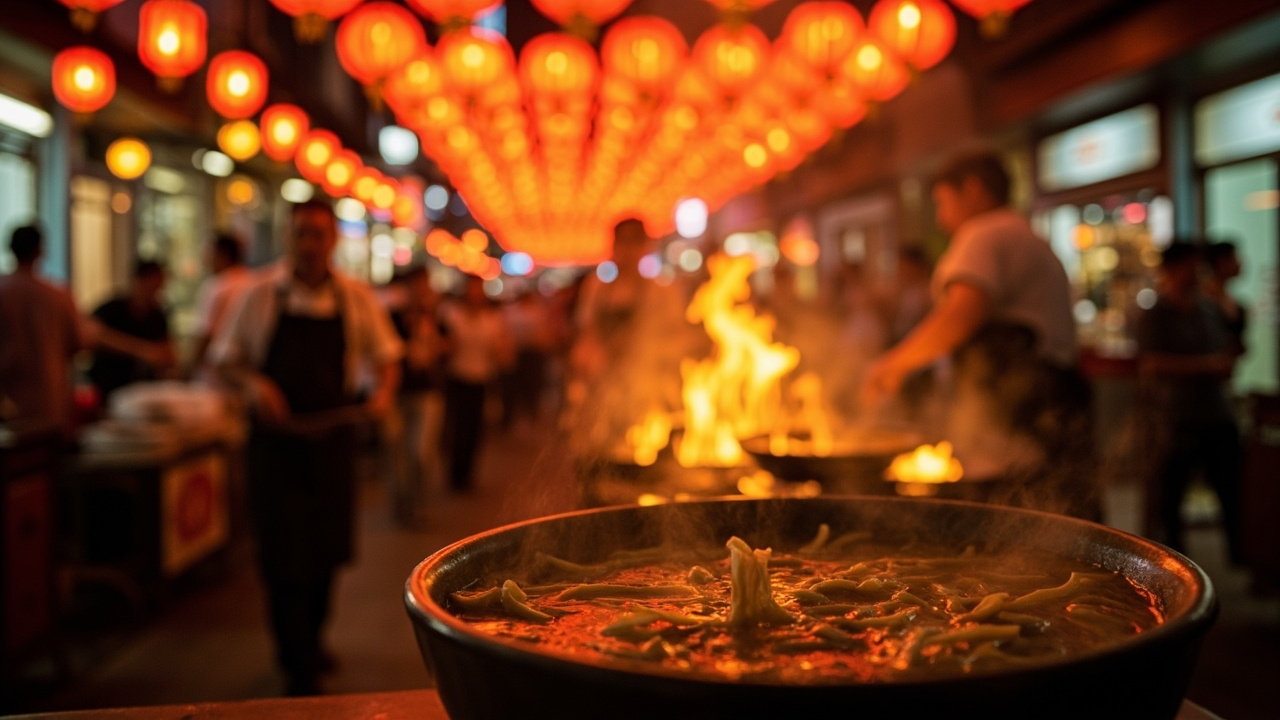
The first thing I noticed in Kaifeng wasn’t the food. It was the noise. A hundred woks hitting a hundred burners at once, a sound like distant applause that never stops. I’d been in China three weeks by then and thought I understood street food. Then a woman handed me a bowl of soup with a plastic spoon and pointed at a plastic stool barely wide enough for one buttock, and I sat there for forty minutes watching the whole thing unfold around me. Nobody spoke English. Nobody needed to.
Night markets are the closest thing China has to a universal welcome. They exist in every city, from the tourist-heavy lanes of Xi’an to the residential blocks of Chengdu where nobody’s selling you anything except dinner. They’re cheap, they’re loud, they’re occasionally confusing, and they’re the single best way to understand how this country actually eats when nobody’s performing for a camera. If you only have one free evening in any Chinese city, skip the bar. Go find the market.
This guide covers ten markets I’ve actually eaten at, with real prices, real directions, and the specific things I wish someone had told me before my first trip. It’s written for first-timers — people who’ve never used WeChat Pay, who don’t read Chinese, who are worried about getting scammed or getting sick. All valid concerns. All manageable.
Quick answer
China’s best night markets are concentrated in Xi’an, Chengdu, Kaifeng, Taipei, and Guangzhou, and most are free to enter with food costing $1–5 (¥7–35) per dish. Bring cash as backup but set up Alipay or WeChat Pay before you arrive — many stalls no longer accept paper money. Peak season is April–May and September–October; summer markets are brutally hot and humid, and northern markets partially shut down in January.
The Short Version
If you have 90 seconds: go to Xi’an’s Muslim Quarter first. It’s the most accessible, has the most English signage, and the food is genuinely excellent. Then Chengdu for the atmosphere, Kaifeng for the history, and Taipei if you can add a Taiwan leg. Skip the “famous” night markets in Shanghai — they’re overpriced and mostly aimed at tour groups. Bring wet wipes, a translation app, and an empty stomach. Don’t eat at the first stall you see; walk the whole street first.
How I Picked These
I’ve been based in Beijing since 2019 and have eaten my way through roughly 40 Chinese cities. Every market on this list, I’ve visited at least twice — once as a clueless tourist and once as someone who knew what he was doing. I talked to stall owners, asked hotel staff where they actually eat, and cross-checked with local friends who grew up in each city. I’ve deliberately excluded markets that are purely tourist traps (looking at you, Nanjing Road) and included a couple that are harder to reach but worth the effort. Prices are from late 2025 and early 2026 visits; expect 5–10% inflation by the time you read this.
Comparison Table
| Rank | Market | Best For | Approx Cost (USD) | Time Needed | When to Go |
|---|---|---|---|---|---|
| 1 | Muslim Quarter, Xi’an | First-timers, variety | $8–15 (¥55–105) | 2–3 hrs | Sep–Nov, weeknights |
| 2 | Jinli, Chengdu | Atmosphere, photos | $10–18 (¥70–125) | 2 hrs | Mar–May, any night |
| 3 | Drum Tower Night Market, Kaifeng | History, authenticity | $6–12 (¥40–85) | 2 hrs | Apr–Oct |
| 4 | Shilin Night Market, Taipei | Best food overall | $10–20 (¥70–140) | 3 hrs | Oct–Apr |
| 5 | Qingping Market, Guangzhou | Adventurous eaters | $8–15 (¥55–105) | 2 hrs | Nov–Feb |
| 6 | Wangfujing Snack Street, Beijing | Convenience | $15–25 (¥105–175) | 1 hr | Skip summer |
| 7 | Hubin Night Market, Hangzhou | Couples, scenery | $10–18 (¥70–125) | 2 hrs | Apr–Jun |
| 8 | Zhongyang Street, Harbin | Winter novelty | $8–15 (¥55–105) | 2 hrs | Dec–Feb only |
| 9 | Guangxiao Road, Chongqing | Spice lovers | $7–14 (¥50–100) | 2 hrs | Oct–Apr |
| 10 | Dongmen Night Market, Tainan | Old-school Taiwan | $8–16 (¥55–110) | 2 hrs | Nov–Mar |
1. Muslim Quarter, Xi’an — The One You’ve Heard About, and It’s Actually Good
I got lost here on my first visit. Turned down what I thought was a side alley and ended up in a residential courtyard where an old man was grilling lamb skewers on a homemade brazier for his neighbors. He waved me over, handed me three skewers, and refused payment. That’s the Muslim Quarter most tourists never see — five meters off the main drag.
The main street itself is a 500-meter stretch of controlled chaos. Lamb skewers, biangbiang noodles, roujiamo (often called a Chinese hamburger), persimmon cakes, and about forty varieties of dried fruit. It’s busy, it’s loud, and yes, it’s touristy — but unlike Shanghai’s fake markets, the food here is genuinely what locals eat. Xi’an has one of China’s largest Hui Muslim populations, and this neighborhood has been their commercial heart for over a thousand years.
📷 Location: Lianhu District, just west of the Drum Tower. The main drag runs north from the Drum Tower to the Great Mosque. 🎟️ Entry fee: Free. Individual dishes $1–4 (¥7–28). 🕐 Opening hours: Roughly 10am–11pm daily, but the real action is 6pm–10pm. Some stalls close on Fridays for prayers. 🚇 How to get there: Take Metro Line 2 to Zhonglou Station, Exit B. Walk west 300 meters — you’ll smell it before you see it. ⏰ When to visit: September through November is ideal. Weeknights are noticeably calmer than weekends. Avoid Chinese public holidays entirely. 💡 Insider tips: Bring small bills — some older vendors still prefer cash. The lamb skewers are priced per skewer (usually ¥10 for 3), not per portion. If a vendor hands you something to try “for free,” it’s not free — politely decline unless you want to buy. The best food is on the side alleys, not the main street. 🍢 I tried the yangrou paomo (lamb soup with torn bread) at a stall with no English sign and no menu — just pointed at what the guy next to me was eating. Best $3 I spent in China.
2. Jinli Ancient Street, Chengdu — Where the Atmosphere Does the Heavy Lifting
Chengdu doesn’t rush. I learned this on my second night in the city, sitting at a Jinli tea house while a man next to me spent forty-five minutes on a single cup of jasmine tea. Nobody was waiting for his table. Nobody cared. That’s the pace here.
Jinli is technically a reconstructed Qing-dynasty street, which purists will tell you makes it “fake.” Ignore them. What matters is that the food is real, the setting is gorgeous (red lanterns, wooden eaves, a small canal running through it), and the vendors are genuinely from Sichuan. You’ll find mapo tofu, dan dan noodles, rabbit heads (yes, really), and a dozen varieties of chuanchuan — skewers you cook yourself in a communal pot of broth.
It’s more expensive than a residential market, but you’re paying for the setting. Come with a group, order widely, share everything.
📷 Location: Wuhou District, adjacent to the Wuhou Shrine. The street runs about 350 meters. 🎟️ Entry fee: Free. Dishes $1.50–5 (¥10–35). 🕐 Opening hours: 9am–10pm daily, busiest 7pm–9pm. 🚇 How to get there: Metro Line 3 to Gaoshengqiao Station, Exit D. Walk 10 minutes west, following signs to Wuhou Shrine. ⏰ When to visit: March–May for mild weather. Summer is humid and packed. Winter is quieter but some outdoor stalls close. 💡 Insider tips: The chuanchuan stalls charge by the skewer at the end — keep your sticks. Rabbit head is a Chengdu specialty but genuinely an acquired taste; try a bite before committing. The tea houses here are worth the ¥30–50 ($4–7) for the experience alone. English menus are common but translation apps still help. 🍵 A tea house owner named Mr. Chen let me sit for two hours without ordering a second cup. When I tried to tip him, he looked genuinely confused.
3. Drum Tower Night Market, Kaifeng — The One That Feels Like Time Travel
Kaifeng was China’s capital a thousand years ago, and the night market here has been running, in one form or another, since the Song Dynasty. That’s not marketing copy — there are written records from the 1100s describing this exact market. Standing in it at 9pm, with steam rising off a hundred soup pots and the Drum Tower lit up behind you, it’s not hard to imagine you’ve slipped a few centuries.
This is a working-class market. Prices are low, English is rare, and the food is unapologetically regional. Henan cuisine is heavy on lamb, wheat noodles, and soups — think dumplings, hulatang (peppery beef soup), and guan tang bao (soup dumplings the size of your fist). It’s not the most Instagram-friendly market on this list, and that’s exactly why I love it.
📷 Location: Gulou District, centered on the plaza around the Drum Tower. 🎟️ Entry fee: Free. Dishes $0.70–3 (¥5–20). 🕐 Opening hours: 6pm–midnight, daily. Some stalls close in heavy rain. 🚇 How to get there: Kaifeng has no metro. From Kaifeng North Railway Station, take bus 1 or a taxi ($2–3 / ¥15–20) to Gulou Square. ⏰ When to visit: April–October. Winter is cold and the market thins out significantly. 💡 Insider tips: Almost nobody speaks English here — download a translation app with offline Chinese before you come. Cash is more accepted here than in bigger cities. The soup dumplings are eaten with a straw; ask a vendor to show you. Kaifeng is 30 minutes from Zhengzhou by high-speed rail, making it an easy day trip. 🥟 I burned the roof of my mouth on a soup dumpling because I didn’t wait. Every local at the table laughed. Fair enough.
4. Shilin Night Market, Taipei — The Best Food on This List, Full Stop
I’ll be blunt: if you can only go to one market on this entire list, go to Shilin. Taipei’s night market culture is the most refined in the Chinese-speaking world, and Shilin is its flagship. The food is cleaner, the stalls are better organized, and the variety is unmatched.
You’ll find oyster omelets, stinky tofu (try it once), giant fried chicken cutlets, beef noodle soup, shaved ice, and about two hundred other things. The market is split into two sections — the food stalls are underground, the shopping and games are above ground. It’s a maze, and getting lost is part of the fun.
Taiwan is technically a separate visa regime from mainland China, so check your entry requirements carefully. Americans and most Europeans get 90 days visa-free.
📷 Location: Shilin District, centered on the intersection of Wenlin Road and Jihe Road. 🎟️ Entry fee: Free. Dishes $1.50–5 (¥10–35). 🕐 Opening hours: 4pm–midnight daily, busiest 7pm–10pm. 🚇 How to get there: Taipei Metro Tamsui-Xinyi Line to Jiantan Station, Exit 1. The market is directly in front of you. ⏰ When to visit: October–April. Summer is hot and crowded. Weeknights are noticeably calmer. 💡 Insider tips: Bring cash — many stalls don’t take cards or mobile pay. The underground food court is air-conditioned and less chaotic. Try the “coffin bread” (a thick toast bowl filled with chowder) — it sounds weird and it’s delicious. Trash bins are scarce; vendors will take your trash if you buy from them. 🍗 I watched a teenage girl eat an entire fried chicken cutlet the size of her head in under ten minutes. I have never been more impressed.
5. Qingping Market, Guangzhou — For People Who Actually Want to Be Surprised
This is not a beginner’s market. Qingping is where Guangzhou actually shops — for herbs, dried seafood, live turtles, and things I genuinely could not identify. It’s partially a day market, but the evening food stalls are the draw. Cantonese cuisine is China’s most refined, and the street-level version here is exceptional.
Come here if you’re a confident eater. The snake soup stalls, the live seafood tanks, the dried sea cucumber vendors — this is the real thing, not a performance. It’s also one of the few markets where you’ll hear Cantonese more than Mandarin.
📷 Location: Liwan District, along Qingping Road near the Pearl River. 🎟️ Entry fee: Free. Dishes $1–4 (¥7–28). 🕐 Opening hours: Day market 6am–6pm, food stalls until 10pm. 🚇 How to get there: Metro Line 6 to Cultural Park Station, Exit B. Walk 5 minutes north. ⏰ When to visit: November–February. Summer is unbearable. 💡 Insider tips: Bring hand sanitizer. Don’t photograph vendors without asking — some get genuinely upset. The congee stalls open early and are the safest bet for a first meal. Cash is still widely used here. 🐢 I asked a vendor what a particular dried item was. He said “medicine” and walked away. I still don’t know.
6. Wangfujing Snack Street, Beijing — Convenient, Overpriced, and Honestly Fine
I have a complicated relationship with Wangfujing. It’s a five-minute walk from my old apartment, so I’ve eaten here maybe thirty times. It’s not the best market in Beijing — that would be Gui Street in Chaoyang — but it’s the most accessible for tourists, and the food is better than its reputation suggests.
Yes, the scorpion skewers are a gimmick. Yes, the prices are 30–50% higher than a residential market. But the lamb skewers are good, the dumplings are solid, and the location is unbeatable if you’re already shopping on Wangfujing Street. Treat it as a convenient option, not a destination.
📷 Location: Dongcheng District, off Wangfujing Street. 🎟️ Entry fee: Free. Dishes $2–8 (¥15–55). 🕐 Opening hours: 10am–10pm daily. 🚇 How to get there: Metro Line 1 to Wangfujing Station, Exit A. Walk 2 minutes north. ⏰ When to visit: Spring and fall. Summer is packed with tour groups. 💡 Insider tips: Skip the scorpions and starfish — they’re for photos, not eating. The dumpling stalls at the south end are the best value. If you want a real Beijing market, take a taxi to Gui Street instead. Read my Beijing guide for more context on the city. 🥟 I once paid ¥60 ($8) for six dumplings here. I knew better. I was hungry.
7. Hubin Night Market, Hangzhou — The One for Couples and Slow Evenings
Hangzhou’s West Lake is the most romantic place in China, and the night market along Hubin Road leans into that. It’s smaller than the others on this list, more curated, and honestly a bit less interesting if you’re here purely for food. But if you want a slow evening — a walk by the lake, a few snacks, a cup of Longjing tea — this is lovely.
The food skews toward Zhejiang cuisine: freshwater fish, sweet-savory braises, and excellent pastries. It’s not a place to eat a full meal. It’s a place to graze.
📷 Location: Shangcheng District, along Hubin Road on the east side of West Lake. 🎟️ Entry fee: Free. Dishes $1.50–5 (¥10–35). 🕐 Opening hours: 5pm–10pm, weather dependent. 🚇 How to get there: Metro Line 1 to Longxiangqiao Station, Exit B. Walk 5 minutes west to the lake. ⏰ When to visit: April–June. Autumn is also lovely. Avoid summer weekends. 💡 Insider tips: The market is small — combine it with a lake walk. Tea houses here are expensive; buy tea at a supermarket instead. English is fairly common in this area. 🍂 A woman selling roasted chestnuts gave me an extra handful “for the cold.” It wasn’t cold. I didn’t argue.
8. Zhongyang Street, Harbin — Only Worth It in Winter
Harbin’s night market is a seasonal curiosity. In summer, it’s a pleasant pedestrian street with mediocre food. In winter, when it’s -20°C and your eyelashes are freezing, it becomes something else entirely — a defiant, slightly absurd celebration of eating outdoors in conditions that should be illegal.
Come for the frozen pear skewers (bingtanghulu made with frozen pears instead of hawthorn), the Russian-influenced sausages, and the hot milk tea. Come for the experience, not the cuisine.
📷 Location: Daoli District, Zhongyang Dajie pedestrian street. 🎟️ Entry fee: Free. Dishes $1–4 (¥7–28). 🕐 Opening hours: 10am–9pm, shorter in deep winter. 🚇 How to get there: Metro Line 2 to Zhongyang Dajie Station, Exit 1. ⏰ When to visit: December–February only. Seriously. 💡 Insider tips: Dress in layers — you’ll be standing outside for hours. The ice sculptures nearby are worth combining with a market visit. Bring cash; phone batteries die fast in the cold. 🍐 The frozen pear skewer is genuinely good. I was skeptical. I was wrong.
9. Guangxiao Road, Chongqing — For People Who Think They Like Spicy Food
Chongqing doesn’t do mild. I learned this the hard way at a hotpot stall on Guangxiao Road, where I confidently ordered “medium spice” and spent the next hour sweating through my shirt while locals watched with amusement. This is the real deal — Sichuan peppercorns that numb your mouth, chili oil that stains everything, and a pace of eating that assumes you know what you’re doing.
The market itself is a working neighborhood street, not a tourist attraction. Prices are low, English is rare, and the food is extraordinary if you can handle it.
📷 Location: Yuzhong District, near the Jiaochangkou metro area. 🎟️ Entry fee: Free. Dishes $0.70–3 (¥5–20). 🕐 Opening hours: 5pm–midnight. 🚇 How to get there: Metro Line 2 to Jiaochangkou Station, Exit 2. Walk 8 minutes south. ⏰ When to visit: October–April. Summer is brutal. 💡 Insider tips: “Medium spice” means “very spicy” — ask for “wei la” (微辣) if you want mild. Order a bowl of plain rice to reset your palate. Bring tissues; you’ll need them. 🌶️ I cried. Not from sadness. From capsaicin.
10. Dongmen Night Market, Tainan — The Old-School Version
Tainan is Taiwan’s oldest city, and Dongmen feels like it. It’s smaller than Shilin, less polished, and more interesting for it. The stalls here have been run by the same families for generations, and the food reflects that — danzai noodles, coffin bread, milkfish soup, and shrimp rolls that are worth the trip alone.
This is where I’d send someone who’s already been to Taipei and wants to go deeper. It’s not flashy. It’s just very, very good.
📷 Location: East District, along Dongmen Road. 🎟️ Entry fee: Free. Dishes $1–4 (¥7–28). 🕐 Opening hours: 5pm–midnight. 🚇 How to get there: Tainan has no metro. Take a taxi from Tainan Station ($3–5 / ¥20–35) or bus 2. ⏰ When to visit: November–March. 💡 Insider tips: Try the milkfish soup — it’s a Tainan specialty you won’t find elsewhere. Cash only at most stalls. The market is small; combine it with a visit to the nearby Confucius Temple. 🍜 The danzai noodles here ruined all other noodles for me. I’m not exaggerating.
FAQ summary
The best night markets in China for first-time visitors are Xi’an’s Muslim Quarter (most accessible), Taipei’s Shilin (best food), and Chengdu’s Jinli (best atmosphere). Budget $10–20 (¥70–140) per person for a full evening of eating, and always bring cash as backup even if you’ve set up Alipay or WeChat Pay. Most markets run 5pm–midnight, are free to enter, and are busiest on weekend evenings and during Chinese public holidays — go on a weeknight if you can. English is limited outside major tourist areas, so download an offline translation app before you go.
FAQ
Q: Are China’s night markets safe for foreign tourists? A: Yes, overwhelmingly. Violent crime is rare, and market areas are usually well-lit and busy. The main risks are pickpocketing in crowded areas and food hygiene if you have a sensitive stomach. Keep your phone in a front pocket, don’t flash large amounts of cash, and stick to stalls with high turnover (busy = fresh).
Q: Do night markets accept Alipay or WeChat Pay? A: Most do, but not all. Set up Alipay or WeChat Pay before you arrive, and carry ¥200–300 ($28–42) in cash as backup. Older vendors and smaller stalls often prefer cash, and some rural markets are cash-only.
Q: What if I don’t speak Chinese? A: You’ll manage. Point at what you want, use a translation app (Pleco or Google Translate with offline Chinese downloaded), and learn three phrases: “duo shao qian” (how much), “zhe ge” (this one), and “xie xie” (thank you). In Xi’an, Taipei, and Beijing’s Wangfujing, English menus are common.
Q: How much should I budget for a night market dinner? A: $10–20 (¥70–140) per person gets you a full meal with drinks at most markets. Xi’an and Kaifeng are on the cheaper end ($6–12); Taipei and Shanghai are pricier ($15–25). Budget extra if you want to try lots of small dishes.
Q: Is the food hygienic? A: Generally yes, with caveats. Choose stalls with long lines (high turnover means fresh food), avoid anything sitting out uncovered, and skip raw or undercooked items if you have a sensitive stomach. Bring hand sanitizer and don’t drink tap water. Most travelers eat street food for a week straight without issues.
Q: Do I need a VPN to use my phone at night markets? A: Yes, if you want to use Google, Instagram, WhatsApp, or Gmail. Download a VPN before you arrive (they’re hard to install once you’re in China) and set up a local SIM or eSIM. See my China SIM and internet guide for details.
Q: What’s the best time of year to visit China’s night markets? A: April–May and September–October. Summer is hot, humid, and crowded; winter shuts down northern markets entirely. Southern markets (Guangzhou, Taipei, Tainan) are comfortable year-round but best in winter.
The Honest Wrap-up
This list is for people who want to eat their way through China, not people who want a curated dining experience with a wine list. If you’re the kind of traveler who needs air conditioning and English menus, stick to Xi’an and Taipei. If you’re willing to sit on a plastic stool and point at things, the whole country opens up.
One last piece of advice: don’t plan your night market visits too tightly. The best meal I’ve had in seven years in China was at a stall I found by accident, at 11pm, in a city I wasn’t supposed to be in. Book the flight. Bring cash. Walk slowly. Eat everything.
More guides you may like

Top 10 Bridges in China
China's bridges are engineering marvels spanning mountains, rivers, and seas. Here are 10 of the most spectacular, from ancient stone to modern steel.
8 min read

Top 10 Buddhist Sites in China
From the Leshan Giant Buddha to the Dunhuang Caves, these 10 Buddhist sites represent 2,000 years of China's spiritual heritage.
9 min read

Top 10 Day Trips from Beijing You Shouldn't Miss
Beijing is packed with history, but some of China's best experiences are just a few hours away. Here are 10 day trips that will transform your visit.
9 min read

Top 10 Hidden Gems in China Off the Beaten Path
Beyond the Great Wall and Terracotta Warriors, China has incredible hidden destinations few tourists ever reach. Here are 10 underrated gems worth the detour.
9 min read

Top 10 Markets and Shopping Streets in China
From Shanghai's Bund to Beijing's Silk Street - 10 markets where foreigners can haggle, explore, and bring home authentic Chinese goods.
9 min read

Top 10 Museums in China You Shouldn't Miss
China's museums span 5,000 years of civilization. These 10 - from the Palace Museum to Xi'an's terracotta gallery - are unmissable for culture lovers.
9 min read