
Double Ninth Festival China
TODO: Extract from article (100-160 chars)
Double Ninth Festival China
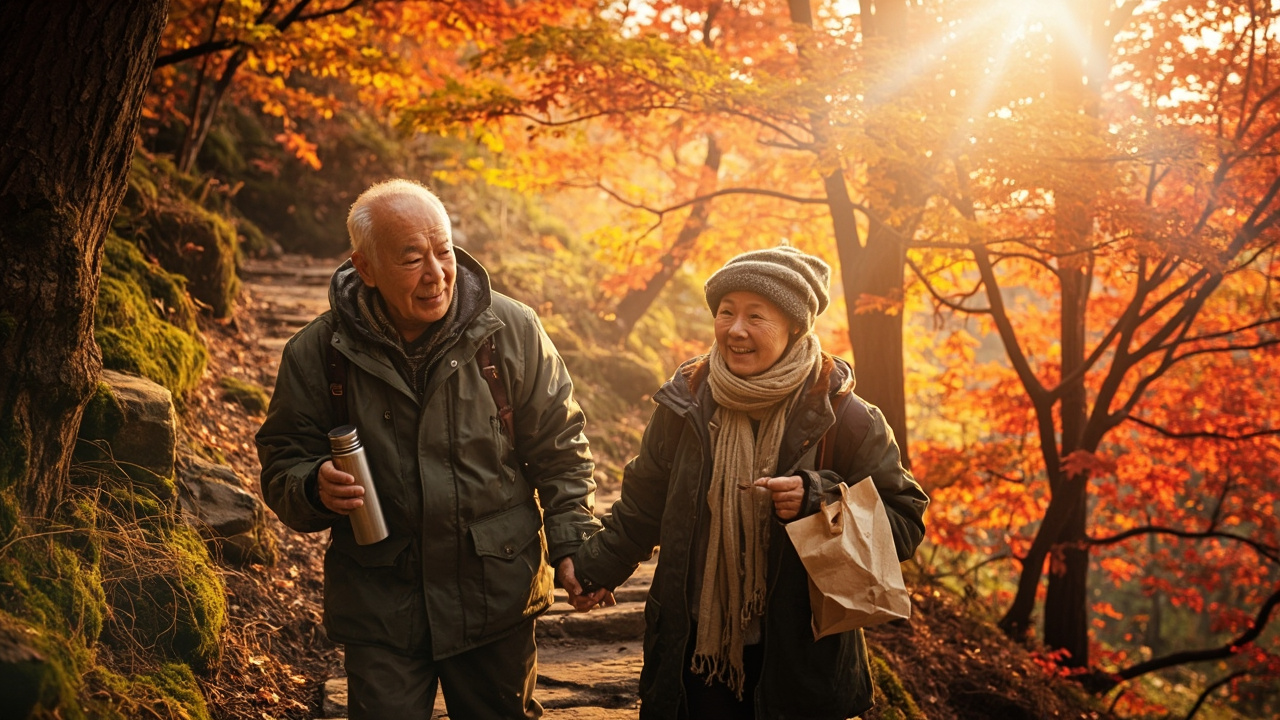
The old man on Xiangshan had a thermos of chrysanthemum tea and absolutely no intention of sharing it. I’d hiked up from the north gate on a gray October morning, thinking I’d beat the crowds, and instead found myself in a slow-moving river of Beijing grandparents in matching windbreakers, all of them heading uphill with the same quiet determination. One woman stopped to point at my sneakers and shake her head. Wrong shoes. She was right.
That was my first Double Ninth, back in 2019. I’d booked the trip without knowing the date existed, and stumbled into a national holiday I’d never heard of. Nine-nine, they call it — chongyang — the ninth day of the ninth lunar month. In Chinese, “nine” sounds like “long-lasting,” so the whole day is basically a giant excuse to climb a hill, drink tea, and call your parents. It’s been celebrated for over two thousand years, and it’s still going strong.
Here’s the thing most guidebooks won’t tell you: Double Ninth isn’t a public holiday. Nobody gets the day off. That’s exactly what makes it good. You get the rituals and the crowds and the chrysanthemum wine without the Spring Festival chaos or the Golden Week price spikes. This guide is for anyone who wants to plan a trip around it — or who just happens to be in China on the right day and doesn’t want to waste it.
Quick answer
The Double Ninth Festival (重阳节, Chóngyáng Jié) falls on the ninth day of the ninth lunar month — in 2026, that’s October 18. It is not a public holiday, so shops, trains, and museums run normally, but mountains, temples, and parks fill up fast with locals doing the traditional climb. Most visitors can enter China visa-free for up to 30 days under the current visa-free transit and entry policies, and the best places to experience the festival are Beijing’s Xiangshan, Xi’an’s Cuihua Mountain, and any city with a decent hill and a chrysanthemum garden.
The Short Version
If you only remember one thing: climb something on October 18, 2026, and bring cash for tea. The festival is about altitude, chrysanthemums, and family. Go early (before 8am), go on a weekday if you can, and don’t expect any official events — the celebration is decentralized and happens in parks, temples, and on mountainsides. Skip it if you hate crowds and hills. Otherwise, it’s one of the most genuinely local days you can have in China.
How I Picked These
I’ve been in China for seven Double Ninth festivals now, and I’ve spent three of them climbing the wrong mountain. The first year I did Xiangshan in Beijing because it’s famous. The second year I tried to do it in Shanghai and discovered the city is, regrettably, extremely flat. Since then I’ve made a point of asking locals where they go — taxi drivers, hostel receptionists, the woman who runs the noodle shop near my old apartment in Chengdu. Every place on this list comes from either a personal visit or a recommendation I followed up on. I’ve noted where I got it wrong, because that’s usually more useful than where I got it right.
Comparison Table
| Rank | Place | Best For | Approx Cost (USD) | Time Needed | When to Go |
|---|---|---|---|---|---|
| 1 | Xiangshan, Beijing | Classic festival atmosphere | $2–5 ($15–35 CNY) | Half day | Mid-to-late Oct, weekday |
| 2 | Cuihua Mountain, Xi’an | Hiking + fewer tourists | $12–18 ($85–130 CNY) | Full day | Late Oct |
| 3 | Yellow Crane Tower, Wuhan | River views + poetry history | $10 ($70 CNY) | 3–4 hours | Late Oct, clear days |
| 4 | Mount Qingcheng, Chengdu | Taoist temples + mist | $12 ($85 CNY) | Full day | Oct, avoid weekends |
| 5 | Purple Mountain, Nanjing | Chrysanthemum displays | Free–$10 | Half day | Late Oct–early Nov |
| 6 | West Lake hills, Hangzhou | Tea + easy walking | Free | Half day | Weekday mornings |
| 7 | Baiyun Mountain, Guangzhou | Southern-style festival | $1–3 ($5–20 CNY) | Half day | Late Oct, cooler |
| 8 | Longji Terraces, Guilin | Rice terraces + minority culture | $11 ($80 CNY) | 1–2 days | Late Sept–Oct |
| 9 | Kaifeng chrysanthemum festival | Flower shows + Song dynasty history | $8–15 | 1–2 days | Oct–Nov |
| 10 | Any local park | Authentic, free, unplanned | Free | 1–2 hours | Anytime that day |
1. Xiangshan (Fragrant Hills), Beijing — The One Everyone Does, And For Good Reason
I’ve climbed Xiangshan four times now, and the fourth time was the only one where I actually enjoyed it. The trick is going on a Tuesday, not a Saturday, and starting before 7:30am. On my first attempt I arrived at 10am on a festival Saturday and spent forty minutes in a queue for a cable car I didn’t even want to ride.
Xiangshan is the default Double Ninth destination for Beijingers, which means it’s both the best and the most crowded option. The red leaves peak around late October, so if the festival falls early that month you’ll get color without the full autumn crush. The temples scattered up the slope — Biyun Temple, Xianglu Temple — are where the actual ritual happens. People burn incense, drink chrysanthemum tea from thermoses, and take photos of their grandparents.
📍 Location: Haidian District, northwest Beijing, about 20km from the city center. 🎟️ Entry fee: $2–5 ($15–35 CNY) depending on season; cable car extra at around $14 ($100 CNY) one-way. 🕐 Opening hours: 6am–7pm in summer, 6am–6pm in winter. No closed days. 🚇 How to get there: Take Beijing’s Subway Line 10 to Bagou Station, Exit A, then transfer to the Xijiao Line (西郊线) to Xiangshan Station. From the station it’s a 10-minute walk to the east gate. The Xijiao Line is a tram, not a subway, and it fills up fast on festival days. ⏰ When to visit: Late October for the leaves. Weekday mornings before 8am. Avoid the weekend entirely if you value your sanity. 💡 Insider tips: Bring your own tea and snacks — the vendors at the top charge triple. Wear actual hiking shoes, not sneakers. Buy your ticket in advance through the WeChat mini-program “香山公园” (Xiangshan Park) to skip the gate queue. The north gate is less crowded than the east gate but a longer walk to the summit. 🍜 One thing I ate: A bag of roasted chestnuts from a vendor near the east gate, still hot, that I ate too fast and burned my tongue on. Worth it.
2. Cuihua Mountain, Xi’an — The One Locals Keep Quiet About
A taxi driver named Liu told me about Cuihua on the way back from the Terracotta Warriors. “Everyone goes to Huashan,” he said, “but Huashan on Double Ninth is a nightmare. Cuihua is better.” He was right, and I’ve been slightly annoyed at him ever since for not telling me sooner.
Cuihua Mountain sits about 20km southeast of Xi’an and is part of the Qinling range. It’s a landslide-formed landscape, which means the rocks look like they were dropped there by a giant, and the hiking is genuinely interesting rather than just steep. The festival here is quieter — mostly Xi’an families, not tour groups — and the chrysanthemum displays at the base are modest but sincere.
📍 Location: Chang’an District, about 20km southeast of Xi’an city center. 🎟️ Entry fee: $12–18 ($85–130 CNY) including the shuttle bus to the trailhead. 🕐 Opening hours: 8am–6pm daily, shorter in winter (8:30am–5pm). 🚌 How to get there: From Xi’an, take Bus 905 from the South Bus Station to Cuihua Mountain. The ride is about 90 minutes. Alternatively, a Didi from the city center costs around $15–20 ($100–140 CNY). ⏰ When to visit: Late October. Go on a weekday. The mountain gets cold at the top even in October — bring a layer. 💡 Insider tips: The shuttle bus is mandatory and included in your ticket. Cash is still useful at the small stalls near the entrance. English signage is limited, so have a translation app ready. The “ice cave” (冰洞) near the top is a fun detour but genuinely freezing — don’t go in wearing shorts. 🥾 One mistake I made: I wore trail runners with no grip and slid down a wet rock face in front of a group of schoolchildren. They laughed. I deserved it.
3. Yellow Crane Tower, Wuhan — Poetry, Rivers, and a Very Rebuilt Pagoda
The current Yellow Crane Tower is not the original. It’s not even the second or third rebuild. The thing has been destroyed and reconstructed something like a dozen times over 1,800 years, and the version standing today was built in 1985. I say this not to be a buzzkill but because knowing it changes how you experience the place. You’re not looking at history. You’re looking at a very sincere act of collective memory.
That said, on Double Ninth it works. The tower sits on Snake Hill overlooking the Yangtze, and the festival crowds here are a mix of tourists and locals who come specifically because of the poem — Li Bai wrote about this tower, and every Chinese schoolkid knows the lines. The view from the top is genuinely good, especially in late October when the river haze lifts in the afternoon.
📍 Location: Wuchang District, on Snake Hill beside the Yangtze River. 🎟️ Entry fee: $10 ($70 CNY) for the tower and surrounding park. 🕐 Opening hours: 8am–6pm (last entry 5:30pm). Open daily. 🚇 How to get there: Wuhan Metro Line 4 to Fuxing Road Station, Exit A, then a 10-minute walk. Or Line 2 to Zhongnan Road and walk 15 minutes. ⏰ When to visit: Late October, mid-afternoon for the clearest river views. Weekdays are noticeably calmer. 💡 Insider tips: The elevator to the top has a long queue — take the stairs, it’s only five floors. The park around the tower is free and honestly nicer than the tower itself. Bring your passport for ticket purchase. Wuhan’s payment apps work everywhere here, but small vendors still prefer cash. 📜 One thing I learned: A retired teacher explained the Li Bai poem to me line by line for twenty minutes. I understood maybe half. It was still the best part of the day.
4. Mount Qingcheng, Chengdu — Where the Festival Gets Quiet
Mount Qingcheng is one of the birthplaces of Taoism, and on Double Ninth it does something the other mountains on this list don’t: it gets quieter. Most of the festival crowd goes to Qingcheng’s front mountain, which is the developed, cable-car, temple-every-200-meters version. The back mountain is a proper hike through forest, and on festival day it’s almost empty.
I went with a hostel receptionist from Chengdu named Wei, who grew up in Dujiangyan and had never actually done the back mountain. We got lost twice, found a tiny temple with no name and one monk, and ate instant noodles at a stall that only accepted cash. It was one of the best days I’ve had in China.
📍 Location: Dujiangyan, about 60km northwest of Chengdu. 🎟️ Entry fee: $12 ($85 CNY) for the front mountain, $3 ($20 CNY) for the back mountain. 🕐 Opening hours: 8am–6pm (front), 8am–5pm (back). 🚄 How to get there: High-speed train from Chengdu North Station to Qingchengshan Station, about 40 minutes, around $2 ($15 CNY). From the station, shuttle buses run to both mountains. See the China train guide for booking details. ⏰ When to visit: October is ideal — cool, misty, and green. Avoid weekends if you’re doing the front mountain. 💡 Insider tips: The back mountain trail is poorly marked; download an offline map. Bring cash for the noodle stalls. The Taoist temples accept donations but not cards. Wear shoes with grip — the stone steps get slick. 🍜 One thing I ate: A bowl of dan dan noodles at a stall near the trailhead that cost $1.50 and was better than anything I ate in central Chengdu.
5. Purple Mountain, Nanjing — The Chrysanthemum Capital
Nanjing takes chrysanthemums more seriously than any other city I’ve visited. The annual display on Purple Mountain (Zijin Shan) is genuinely impressive — thousands of plants arranged into shapes, some of them taller than me — and it runs through October and into November, so you don’t have to hit the exact festival date to enjoy it.
The mountain itself is a sprawling park with the Ming Xiaoling Mausoleum, Sun Yat-sen’s Mausoleum, and a bunch of smaller temples. On Double Ninth, locals climb the main path to the Sun Yat-sen Mausoleum and then picnic on the lawns. It’s a low-key, family-friendly version of the festival, and if you’re traveling with kids or grandparents, this is the one I’d pick.
📍 Location: Xuanwu District, eastern edge of Nanjing. 🎟️ Entry fee: Free to enter the mountain area; individual sites charge $3–10 ($20–70 CNY). 🕐 Opening hours: Park open 24 hours; sites generally 8:30am–5pm. 🚇 How to get there: Nanjing Metro Line 2 to Muxuyuan Station, Exit 1, then walk or take the sightseeing shuttle. ⏰ When to visit: Late October for peak chrysanthemums. Weekday mornings are best. 💡 Insider tips: The shuttle bus between sites is worth the small fee. Bring your own water — vendors are sparse on the upper paths. The Ming Xiaoling area is much quieter than the Sun Yat-sen Mausoleum and, in my opinion, more interesting. 🌼 One thing I noticed: An elderly couple arranging a picnic of mooncakes and tea on a bench, completely ignoring the crowds around them. That’s the festival, really.
6. West Lake Hills, Hangzhou — The Easy Version
Hangzhou’s West Lake is flat, which makes it a strange Double Ninth destination, but the hills around it are not. The trail up to Baochu Pagoda is short, steep, and gives you the whole lake spread out below. On festival day, locals do this in the morning and then spend the afternoon drinking tea in the villages on the south side.
I’m including this because it’s the most accessible option on the list. If you’re not a hiker, if you’re traveling with someone who can’t do a full mountain, or if you just want a gentle version of the ritual, this is it. The tea culture around West Lake is also genuinely good — Longjing tea is grown here, and the festival is a fine excuse to drink a lot of it.
📍 Location: Xihu District, around West Lake. 🎟️ Entry fee: Free for the lake and trails; tea houses charge $5–15 per person. 🕐 Opening hours: Trails open 24 hours; tea houses typically 9am–9pm. 🚇 How to get there: Hangzhou Metro Line 1 to Longxiangqiao Station, Exit B, then walk 10 minutes to the lake. ⏰ When to visit: October mornings, before the tour buses arrive around 10am. 💡 Insider tips: The Baochu Pagoda trail starts near the north shore and takes about 30 minutes up. Longjing Village tea is expensive but the experience is worth doing once. Avoid the boat tours — the trails are better. 🍵 One thing I drank: A cup of pre-rain Longjing that cost $12 and tasted like grass and money. I’d do it again.
7. Baiyun Mountain, Guangzhou — The Southern Take
Guangzhou does Double Ninth differently. The festival here is more about the climb itself — Baiyun Mountain is the city’s collective backyard, and on the ninth day of the ninth month it fills up from 5am with people doing the walk in the cool morning air. There’s less chrysanthemum ceremony and more sweat.
I went in 2023 and was struck by how young the crowd was. In Beijing, Xiangshan on Double Ninth is mostly retirees. In Guangzhou, it’s students, office workers, families with small kids. The festival is the same, but the culture around it is different, and that’s worth seeing.
📍 Location: Baiyun District, northern Guangzhou. 🎟️ Entry fee: $1–3 ($5–20 CNY) depending on entrance. 🕐 Opening hours: 6am–9pm (some gates close earlier). 🚇 How to get there: Guangzhou Metro Line 2 to Baiyun Park Station, Exit B, then walk to the south gate. ⏰ When to visit: Early morning, any day in October. The heat is brutal by 11am. 💡 Insider tips: The cable car saves time but the walk is the point. Bring more water than you think you need. The south gate is the busiest; the west gate is quieter. Dim sum after, always. 🥟 One thing I ate: A full dim sum breakfast at a restaurant near the metro station afterward, which cost $8 and ruined me for all other breakfasts.
8. Longji Rice Terraces, Guilin — The One That Isn’t Really About the Festival
Longji isn’t a Double Ninth destination in the traditional sense — it’s a rice terrace landscape in Guangxi, home to Zhuang and Yao minority communities. But October is harvest season, the terraces are golden, and the festival falls right in the middle of it. If you want to spend Double Ninth somewhere that feels genuinely different from a city park, this is it.
The climb here is between villages, not up a single mountain, and the views are the best on this list by a wide margin. I stayed two nights in Ping’an village and did the walk to Dazhai on the festival day itself. Almost no one was doing anything festival-related, which was fine. The landscape did the work.
📍 Location: Longsheng County, about 2 hours from Guilin. 🎟️ Entry fee: $11 ($80 CNY) for the scenic area, valid for multiple days. 🕐 Opening hours: 24 hours; ticket offices 7am–6pm. 🚌 How to get there: Bus from Guilin Qintan Bus Station to Longsheng, then a local shuttle to Ping’an or Dazhai. Total travel time around 3 hours. ⏰ When to visit: Late September to mid-October for golden terraces. Avoid the National Day holiday week (Oct 1–7) at all costs. 💡 Insider tips: Stay overnight — day-trippers miss the best light. Cash is essential in the villages. The Yao women who offer to let down their hair for photos expect payment; agree on a price first. 🌾 One thing I saw: Sunrise over the terraces with mist sitting in the valleys, and not another foreigner in sight. That’s rare in China.
9. Kaifeng Chrysanthemum Festival — The City That Goes All In
Kaifeng, in Henan province, hosts the largest chrysanthemum festival in China, and it overlaps with Double Ninth. The whole city decorates — streets, parks, temple grounds — and the displays are on a scale that makes Nanjing’s look modest. If you care about flowers, this is the one.
The city itself is worth a day anyway. It was the capital of the Northern Song dynasty, and there’s a reconstructed Song-style street (Qingming Riverside Landscape Garden) that’s touristy but fun. The festival runs from mid-October to mid-November, so you have flexibility.
📍 Location: Various parks across Kaifeng, Henan province. 🎟️ Entry fee: $8–15 ($55–105 CNY) depending on which parks you visit. 🕐 Opening hours: Parks generally 8am–6pm. 🚄 How to get there: High-speed train from Zhengzhou (30 minutes) or direct trains from Beijing (4 hours). Kaifeng North Station is the high-speed stop. ⏰ When to visit: Mid-to-late October for peak blooms. Weekdays. 💡 Insider tips: The main displays are at Longting Park and Qingming Riverside Garden. Buy a combined ticket if you’re doing multiple parks. English is limited — bring a translation app. 🌼 One thing I did: Spent an hour photographing a single chrysanthemum the size of a dinner plate. No regrets.
10. Any Local Park — The Real Answer
Here’s the honest version: the best Double Ninth experience I’ve had was in a park in Chengdu with no name I can remember, where a group of retirees were doing tai chi, a man was selling chrysanthemum tea from a thermos, and nobody was performing anything for tourists. It cost nothing. It took an hour. It was perfect.
If you’re in China on October 18, 2026, and you don’t want to plan a whole trip around a mountain, just go to the nearest park in the morning. Watch. Drink tea. Climb whatever hill is there. That’s the festival.
📍 Location: Literally any city park. 🎟️ Entry fee: Free. 🕐 Opening hours: Usually 6am–9pm. 🚇 How to get there: Wherever you are. ⏰ When to visit: Morning, ideally before 9am. 💡 Insider tips: Bring cash for tea vendors. Don’t photograph people without asking. If someone offers you tea, say yes. 🍵 One thing I learned: The festival isn’t really about the mountain. It’s about the climb.
FAQ summary
The Double Ninth Festival in 2026 falls on October 18 and is not a public holiday, so transport and businesses run normally. The main tradition is climbing a mountain or hill, drinking chrysanthemum tea, and spending time with family — the best places to experience it are Xiangshan in Beijing, Cuihua Mountain in Xi’an, and Purple Mountain in Nanjing. Most international visitors can enter China visa-free for up to 30 days, and no special tickets or bookings are required for the festival itself, though mountain parks get crowded and early arrival is essential.
FAQ
Q: When is the Double Ninth Festival in 2026? A: October 18, 2026, which is the ninth day of the ninth lunar month. It’s a single-day festival, not a holiday period, so you only need to plan around that one date.
Q: Do I need a visa to visit China for the Double Ninth Festival? A: Most passport holders from the US, UK, EU, and many Southeast Asian countries can enter China visa-free for up to 30 days under current 2026 policies. Check the latest rules before booking, as eligibility varies by nationality.
Q: Is Double Ninth a public holiday in China? A: No. Unlike Spring Festival or National Day, Double Ninth is not a public holiday, so offices, shops, trains, and museums operate normally. This actually makes it a good time to travel — no Golden Week crowds.
Q: What should I actually do on Double Ninth as a tourist? A: Climb a hill or mountain in the morning, drink chrysanthemum tea, and eat something local. The festival is decentralized — there are no official events — so the experience is whatever you make of it.
Q: Do I need to book mountain tickets in advance? A: For popular spots like Xiangshan in Beijing, yes — use the park’s WeChat mini-program to reserve. For smaller mountains, walk-up tickets are usually fine, but bring cash as a backup.
Q: Is English spoken at these places? A: Limited. Major sites have some English signage, but staff rarely speak it. Download a translation app (Pleco or Baidu Translate) and have your hotel address written in Chinese.
Q: What about payments and internet? A: Set up Alipay or WeChat Pay before you arrive — see the payment guide for the full walkthrough. You’ll also need a SIM card or eSIM and a VPN installed before you land, since Google and WhatsApp are blocked.
The Honest Wrap-up
This list is for travelers who want to see a real Chinese holiday, not a staged one. If you’re looking for fireworks, parades, and official events, Double Ninth will disappoint you — it’s a quiet, family-oriented day, and the celebration is whatever people make of it in their local park. If you’re the kind of person who enjoys wandering into something you didn’t plan for, this is your festival.
One last thing: don’t overthink it. Book the flight, set up your payment apps, and on October 18, climb something. Bring tea. Wear better shoes than I did.
More guides you may like

Top 10 Bridges in China
China's bridges are engineering marvels spanning mountains, rivers, and seas. Here are 10 of the most spectacular, from ancient stone to modern steel.
8 min read

Top 10 Buddhist Sites in China
From the Leshan Giant Buddha to the Dunhuang Caves, these 10 Buddhist sites represent 2,000 years of China's spiritual heritage.
9 min read
Top 10 Day Trips from Beijing You Shouldn't Miss
Beijing is packed with history, but some of China's best experiences are just a few hours away. Here are 10 day trips that will transform your visit.
9 min read
Top 10 Hidden Gems in China Off the Beaten Path
Beyond the Great Wall and Terracotta Warriors, China has incredible hidden destinations few tourists ever reach. Here are 10 underrated gems worth the detour.
9 min read
Top 10 Markets and Shopping Streets in China
From Shanghai's Bund to Beijing's Silk Street - 10 markets where foreigners can haggle, explore, and bring home authentic Chinese goods.
9 min read
Top 10 Museums in China You Shouldn't Miss
China's museums span 5,000 years of civilization. These 10 - from the Palace Museum to Xi'an's terracotta gallery - are unmissable for culture lovers.
9 min read