
China Traditional Crafts Guide
TODO: Extract from article (100-160 chars)
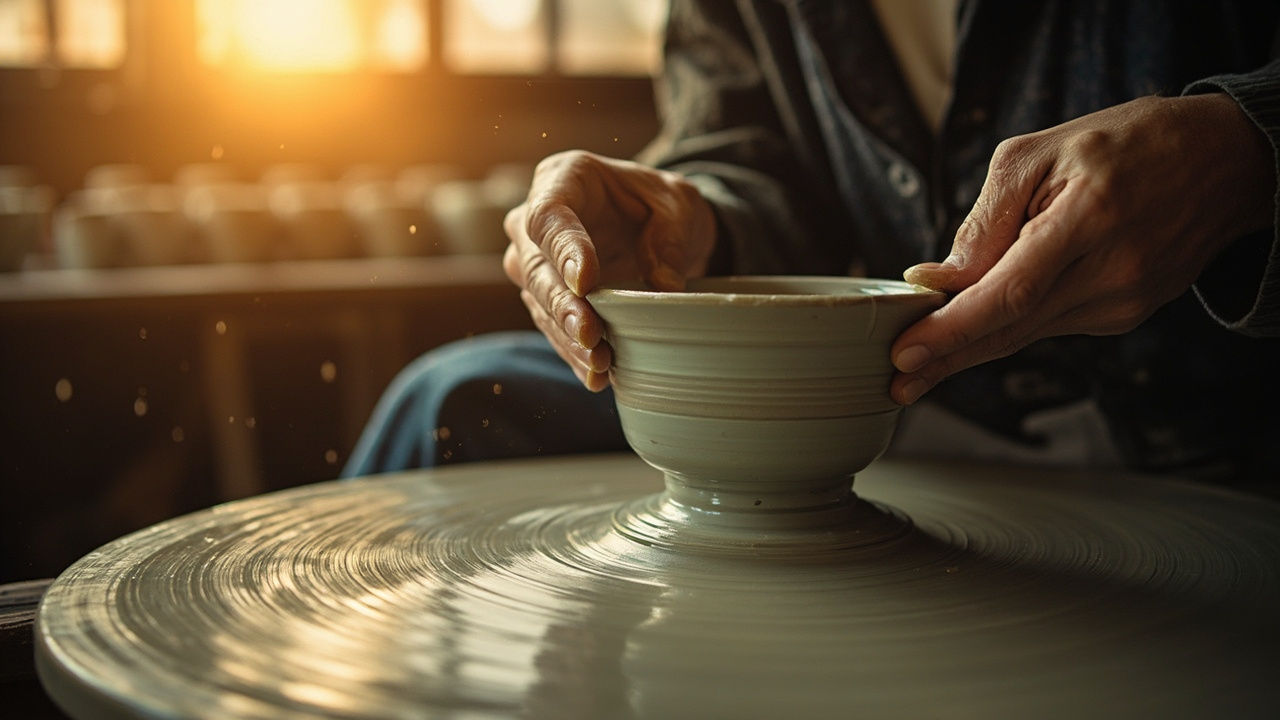
China Traditional Crafts Guide
The first time I watched a man blow a glass dragon out of a lump of molten sugar, I was standing in a crowd of about forty people on a side street off Nanluoguxiang in Beijing, and I had no idea what I was looking at. He worked with his hands close to his face, pulling a thin amber thread of sugar through the air, and the dragon appeared in maybe ninety seconds. Then he handed it to a kid for 15 yuan and started another one. I stood there for three rounds.
That’s the thing about traditional crafts in China. They’re not behind museum glass. They’re on street corners, in converted factories, in village workshops two hours from the nearest train station, and the people doing them are usually happy to let you watch for as long as you want.
This guide covers ten craft traditions you can actually see, touch, and sometimes try yourself as a tourist in 2026. Some are famous (porcelain, silk). Some you’ve probably never heard of (Huizhou ink, Yunnan tie-dye). I’ve been to all ten, most of them more than once, and I’ve made a lot of mistakes along the way — overpaying, showing up on the wrong day, buying a “handmade” teapot that turned out to be factory-pressed. I’ll tell you what I’d do differently.
Quick answer
China’s most accessible traditional crafts for tourists are porcelain in Jingdezhen (Jiangxi), silk weaving in Suzhou, cloisonné in Beijing, and tie-dye in Dali (Yunnan) — all reachable by high-speed rail from major hubs. Most workshops charge 50–200 yuan ($7–28) for a hands-on session, and many studios let you watch for free. Spring (March–May) and autumn (September–November) are the best seasons; summer heat makes un-air-conditioned workshops brutal. Bring Alipay or WeChat Pay set up before you arrive — many small studios don’t take foreign cards.
The short version
If you only have time for one craft experience, go to Jingdezhen. It’s the porcelain capital of the world, it’s cheap, it’s walkable, and you can throw a pot on a wheel for less than the price of lunch in Shanghai. Skip the tourist-trap “craft markets” in Beijing’s Wangfujing — they’re 90% factory goods. Buy directly from workshops, not from hotel gift shops. And if someone offers you a “500-year-old technique” for 30 yuan, they’re lying.
How I picked these
I’ve spent seven years in China and made roughly forty trips outside Beijing, and I started paying attention to crafts after buying a fake cloisonné vase in 2019 that I’m still annoyed about. Since then I’ve visited workshops in Jingdezhen, Suzhou, Dali, Chengdu, Xi’an, and a half-dozen smaller towns, mostly by asking hotel staff and taxi drivers where the actual craftspeople work, not where tourists go. I’ve taken classes, watched masters at their benches, and gotten politely kicked out of a few studios for taking photos. Everything below is somewhere I’ve personally been, and the prices are what I paid or what I was quoted in early 2026.
Comparison table
| Rank | Place | Best For | Approx Cost (USD) | Time Needed | When to Go |
|---|---|---|---|---|---|
| 1 | Jingdezhen, Jiangxi | Porcelain, hands-on pottery | $7–28 per class | 2–3 days | Apr–May, Sep–Oct |
| 2 | Suzhou, Jiangsu | Silk weaving, embroidery | $10–40 | 1–2 days | Mar–May, Oct–Nov |
| 3 | Beijing | Cloisonné, sugar figurines | Free–$20 | Half day | Apr–May, Sep–Oct |
| 4 | Dali, Yunnan | Tie-dye (Bai minority) | $5–15 | 1 day | Year-round, best Oct–Apr |
| 5 | Xi’an, Shaanxi | Shadow puppets, paper-cutting | $3–15 | Half day | Apr–May, Sep–Oct |
| 6 | Chengdu, Sichuan | Shu embroidery, bamboo weaving | $8–25 | 1 day | Mar–Apr, Sep–Nov |
| 7 | Huangshan, Anhui | Huizhou ink, inkstones | $15–60 | 1–2 days | Apr–May, Oct–Nov |
| 8 | Wuzhen, Zhejiang | Indigo dyeing, blue calico | $5–20 | 1 day | Apr–May, Sep–Oct |
| 9 | Kashgar, Xinjiang | Uyghur carpet weaving, copper | $10–50 | 1–2 days | May–Jun, Sep–Oct |
| 10 | Quanzhou, Fujian | Dehua porcelain, puppetry | $8–30 | 1–2 days | Mar–May, Oct–Dec |
Jingdezhen — the town that’s been making porcelain for 1,700 years
I got off the train in Jingdezhen at 6 a.m. and the first thing I noticed was the air — it’s slightly chalky, like someone’s been sanding drywall somewhere nearby. That’s the kaolin dust. This town has been firing porcelain since the Han dynasty, and the whole place still smells faintly of clay and woodsmoke.
What makes Jingdezhen different from every other “craft town” in China is that it’s a working city, not a tourist attraction. There are maybe 100,000 people involved in ceramics here, from miners digging kaolin out of the hills to artists glazing $5,000 vases in converted state factories. You can walk into a random alley and find a guy who’s been throwing pots for thirty years and will let you try for free if you buy a cup.
📍 Location: Taoxichuan (陶溪川) creative district is the easiest entry point for tourists, but the real action is in the old Sculpture Factory (雕塑瓷厂) area, about 15 minutes south by taxi.
🎫 Entry fee: Taoxichuan is free. Individual workshops charge 50–200 yuan ($7–28) for a 1–2 hour class.
🕒 Opening hours: Most studios open 9 a.m.–6 p.m.; Taoxichuan stays open until 10 p.m. on weekends. Many workshops close Mondays.
🚕 How to get there: Fly into Jingdezhen Luojia Airport (JDZ) or take the high-speed rail from Shanghai (4.5 hours) or Hangzhou (3 hours). From the train station, taxi to Taoxichuan is about 20 yuan ($3). Tell the driver “Taoxichuan” — they’ll know.
⏰ When to visit: April–May and September–October. Summer is brutally hot and the studios have no AC. Weekdays are quieter; the Saturday morning market at the Sculpture Factory is worth planning around.
💡 Insider tips: The Saturday “creative market” at the Sculpture Factory is where young artists sell direct — prices are 30–50% lower than Taoxichuan shops. Bring cash for small vendors; many don’t take foreign cards. If you want to ship a piece home, ask the studio to pack it — they do this constantly and know how to survive China Post. English is limited outside the main tourist areas, so have a translation app ready.
I bought a small celadon teacup from a woman named Zhou who ran a stall at the Saturday market. She charged me 80 yuan and threw in a second cup for free because I’d sat and watched her glaze for twenty minutes.
Suzhou — where silk is still made the slow way
Suzhou’s silk industry is 2,500 years old, and the weird thing is that it’s still partly done by hand. I visited a workshop near the Suzhou Silk Museum where four women were working a single loom — one throwing the shuttle, one pulling threads, two watching for flaws — and they were making maybe 20 centimeters of brocade a day.
The city has two versions of silk tourism. There’s the polished version at the Silk Museum and the No. 1 Silk Factory, where you get a guided tour and a gift shop. And there’s the real version, in the small workshops in the Pingjiang Road area, where you can watch weavers for free and buy directly.
📍 Location: Suzhou Silk Museum is at 2001 Renmin Road. The best small workshops are off Pingjiang Road in the old town, especially along Daxin Bridge Lane.
🎫 Entry fee: Silk Museum is free (closed Mondays). Embroidery classes at the Suzhou Embroidery Research Institute run 150–300 yuan ($21–42).
🕒 Opening hours: Museum 9 a.m.–5 p.m., Tuesday–Sunday. Workshops vary; most open 10 a.m.–6 p.m.
🚄 How to get there: High-speed rail from Shanghai Hongqiao to Suzhou takes 25 minutes. From Suzhou Station, take Metro Line 4 to San Yuan Fang, Exit 2, then walk 8 minutes east toward Pingjiang Road.
⏰ When to visit: March–May or October–November. Avoid July–August. Mornings are best for watching weavers before the tour groups arrive around 10:30.
💡 Insider tips: Real Suzhou embroidery uses silk thread so fine it’s almost invisible — if you can see individual stitches from a meter away, it’s machine-made. The Suzhou Embroidery Research Institute on Jingde Road sells genuine hand-embroidered pieces starting around 400 yuan ($56). Pingjiang Road gets crowded after 6 p.m.; go early. Most weavers don’t speak English, but they’re used to tourists watching.
I made the mistake of buying “silk” scarves at a Pingjiang Road souvenir shop for 50 yuan each. They were polyester. The real ones at the institute started at 200 yuan and felt completely different — cool, heavy, slightly rough.
Beijing — cloisonné, sugar dragons, and the craft street nobody tells you about
Everyone goes to the Great Wall and the Forbidden City. Almost nobody goes to the cloisonné factory in the Fengtai district, which is a shame because it’s one of the few places in China where you can watch a 600-year-old imperial craft being made by hand, start to finish.
Cloisonné (景泰蓝, jǐngtàilán) involves bending copper wire into patterns, filling the gaps with colored enamel paste, firing it, polishing it, and gilding it — a single vase takes about three weeks. The Beijing Enamel Factory lets you walk the full production line for free.
📍 Location: Beijing Enamel Factory, 10 Anlelin Road, Fengtai District. Sugar figurine vendors cluster around Nanluoguxiang and Houhai in Dongcheng.
🎫 Entry fee: Enamel Factory is free. Sugar figurines cost 15–30 yuan ($2–4) each.
🕒 Opening hours: Enamel Factory 8:30 a.m.–4:30 p.m., Monday–Saturday. Street vendors generally appear after 10 a.m.
🚇 How to get there: For the Enamel Factory, take Metro Line 5 to Puhuangyu, Exit B, then walk 10 minutes north. For sugar figurines, take Line 6 or 8 to Nanluoguxiang, Exit E.
⏰ When to visit: April–May or September–October. The Enamel Factory is quiet on weekday mornings. Nanluoguxiang is unbearable on weekends — go on a Tuesday.
💡 Insider tips: The Enamel Factory’s showroom sells genuine pieces starting around 300 yuan ($42) for small items — much cheaper than the tourist shops near the Forbidden City. Sugar figurine vendors will make whatever animal you point at; a dragon costs more than a rabbit. Don’t buy cloisonné from Wangfujing — it’s almost all factory-made in Hebei. If you’re here on a visa-free transit stop, both of these fit easily into a single day.
The sugar figurine guy I watched most recently was named Liu, and he’d been doing it for 22 years. He told me through a translation app that his father did it too, and that he makes more money now than his father ever did, because of tourists like me standing around filming.
Dali — tie-dye with the Bai minority in Yunnan
Dali’s old town is overrun with tourists, but 20 minutes out, in the village of Zhoucheng, Bai minority families still dye cloth the way they have for centuries — with indigo plants, wax resist, and cold mountain water. I spent an afternoon with a woman named Yang who let me tie and dye my own scarf, which turned out badly, and she laughed at me for ten minutes.
The process is genuinely beautiful to watch. You tie the white cloth with thread, dip it in the indigo vat, let it oxidize from yellow-green to deep blue in the air, then untie it to reveal the pattern. Every piece is different.
📍 Location: Zhoucheng village, about 23 km north of Dali Old Town. Buses leave from the north gate of the old town every 30 minutes.
🎫 Entry fee: Free to walk around. Dyeing workshops charge 40–100 yuan ($6–14) for a hands-on session including materials.
🕒 Opening hours: Most family workshops run 9 a.m.–6 p.m. daily, though many close during the Lunar New Year period.
🚌 How to get there: From Dali Old Town north gate, take the local bus toward Zhoucheng (about 40 minutes, 8 yuan). Or hire a driver for the day for around 200 yuan ($28).
⏰ When to visit: October–April is dry season and best for dyeing (the cloth dries faster). Avoid the June–August rainy season.
💡 Insider tips: Buy from the family workshops, not the shops in Dali Old Town — the same scarf costs three times as much in town. Indigo dye will stain your hands for a day; wear dark clothes. The Bai women in Zhoucheng are used to foreign visitors but speak almost no English. Bring cash — many workshops don’t take digital payment.
Yang charged me 60 yuan for the workshop and then refused to let me pay for the scarf I’d made, which was lopsided and ugly. I still have it.
Xi’an — shadow puppets and paper-cutting in the old Muslim Quarter
Xi’an’s Muslim Quarter is mostly about food, but tucked into the side alleys you’ll find shadow puppet makers and paper-cutting artists who’ve been at it for decades. The shadow puppets here are made from donkey hide, which is stretched, dried, carved, and painted — a single puppet takes about a week.
I watched a man named Ma carve a puppet’s face for forty minutes. He used maybe six different knives, each one thinner than the last, and he didn’t look up once.
📍 Location: The lanes off Beiyuanmen Street in the Muslim Quarter, near the Great Mosque.
🎫 Entry fee: Free to watch. Puppets cost 50–300 yuan ($7–42) depending on size and detail. Paper-cutting pieces start at 20 yuan.
🕒 Opening hours: Most shops open 10 a.m.–9 p.m. daily; the quarter is liveliest after 6 p.m.
🚇 How to get there: Metro Line 2 to Zhonglou (Bell Tower), Exit A, then walk 5 minutes northwest into the Muslim Quarter.
⏰ When to visit: April–May or September–October. The quarter is packed on weekend evenings; go on a weekday afternoon.
💡 Insider tips: Real donkey-hide puppets are translucent when held to light — plastic ones aren’t. Ask to see the puppet against a lamp before buying. Paper-cutting artists often sell small pieces for 20–30 yuan that make excellent lightweight souvenirs. The Muslim Quarter is a Chengdu-style food scene in miniature — eat your way through it while you shop.
Ma told me he’d been carving for 31 years and that his son had gone to university in Beijing and wasn’t coming back to take over the business. He said it without any obvious sadness, just as a fact.
Chengdu — Shu embroidery and bamboo weaving in the teahouse city
Chengdu is famous for pandas and hotpot, but it also has one of China’s four great embroidery traditions — Shu embroidery, which uses silk thread so fine that a single finished piece can take a master two years. The Chengdu Shu Brocade and Embroidery Museum is the easiest place to see it, but the real workshops are in the Anjing town area, about 40 minutes out.
I took a beginner’s class in Chengdu proper and spent three hours making what was supposed to be a small flower and turned out looking like a bruise. The teacher, a woman in her sixties, was very patient.
📍 Location: Shu Brocade and Embroidery Museum, 18 Caotang East Road. Beginner classes are offered at several studios in the Wide and Narrow Alleys area.
🎫 Entry fee: Museum is free. Classes run 80–200 yuan ($11–28) for 2–3 hours.
🕒 Opening hours: Museum 9 a.m.–5 p.m., closed Mondays. Studios vary; most run 10 a.m.–7 p.m.
🚇 How to get there: Metro Line 4 to Caotang North Road, Exit B, then walk 6 minutes. For Wide and Narrow Alleys, Line 4 to Kuanzhai Alley, Exit B.
⏰ When to visit: March–April or September–November. Chengdu is humid year-round; spring and fall are the only comfortable seasons.
💡 Insider tips: Shu embroidery uses split silk threads — a single thread can be divided into 16 strands. If a piece looks like it was made with regular thread, it’s not Shu embroidery. The museum’s gift shop is surprisingly good value. Chengdu is also the best city in China for eating — plan a full day around food and crafts.
My teacher told me her mother had also taught embroidery, and that she now teaches mostly foreign tourists because young Chinese people aren’t interested. She said this matter-of-factly, then went back to fixing my terrible flower.
Huangshan — Huizhou ink and inkstones in the misty mountains
Most people go to Huangshan for the mountains. I went for the ink. The Huizhou region has been making ink sticks and inkstones for over a thousand years, and the old town of Shexian (now called Huizhou Ancient City) still has working workshops where you can watch the whole process.
Ink-making is slow and smells incredible — pine soot, glue, musk, and a dozen other ingredients mixed into a paste, pressed into molds, and dried for months. A good ink stick takes a year to make. An inkstone — the carved stone you grind the ink on — can take a master carver three weeks.
📍 Location: Huizhou Ancient City (Shexian), about 30 km from Huangshan city center. The main ink workshops cluster along Doushan Street.
🎫 Entry fee: Ancient City entry is 80 yuan ($11). Individual workshops are free to visit; ink sticks start at 100 yuan ($14), inkstones at 300 yuan ($42).
🕒 Opening hours: 8 a.m.–5:30 p.m. daily; some workshops close for lunch 12–1:30 p.m.
🚄 How to get there: High-speed rail from Shanghai or Hangzhou to Huangshan North Station (2.5–3 hours), then bus or taxi to Shexian (30 minutes, about 50 yuan).
⏰ When to visit: April–May or October–November. Summer is humid and the ink-drying rooms get sticky.
💡 Insider tips: Real Huizhou ink sticks have a faint pine smell and a slight sheen. Cheap ones smell like glue. Inkstones should feel cool and smooth; tap them lightly — they should ring. The Ancient City is quieter than most Chinese tourist towns; stay overnight if you can. Bring cash for workshops.
An old carver named Chen showed me an inkstone he’d been working on for 19 days. He said he’d sell it for 4,000 yuan ($560). I didn’t buy it, and I’ve regretted it since.
Wuzhen — indigo dyeing in a water town that’s actually worth it
Wuzhen is one of the few “ancient water towns” near Shanghai that hasn’t been completely Disneyfied. It’s still touristy, but the indigo dyeing workshops in the Fanglu area are real, and the hanging blue cloth drying in the sun is one of the most photographed scenes in eastern China for a reason.
The dyeing here uses the same indigo process as Dali, but the aesthetic is different — Wuzhen’s blue calico is more geometric, more restrained. You can watch the whole process and buy finished cloth directly from the workshop.
📍 Location: Wuzhen Water Town, Fanglu area (the western scenic zone). About 130 km from Shanghai.
🎫 Entry fee: West Scenic Zone entry is 150 yuan ($21). Dyeing demonstrations are included.
🕒 Opening hours: 9 a.m.–10 p.m. daily; the dyeing workshop closes around 5 p.m.
🚄 How to get there: High-speed rail from Shanghai Hongqiao to Tongxiang (40 minutes), then a 20-minute taxi to Wuzhen (about 60 yuan). Or direct buses from Shanghai South Bus Station.
⏰ When to visit: April–May or September–October. Weekdays are much quieter. The dyeing yard is best photographed in late afternoon light.
💡 Insider tips: Stay overnight inside the scenic zone if you can afford it — the town is magical after the day-trippers leave. The dyeing workshop sells cloth by the meter; a 2-meter piece is about 120 yuan ($17). Skip the “silk” shops in the East Scenic Zone — they’re mostly polyester.
I bought a length of indigo cloth here that I later had made into a shirt in Shanghai for 200 yuan. Total cost: about $50. Worth every yuan.
Kashgar — Uyghur carpet weaving and copper work in far-west Xinjiang
Kashgar is a different China. The old town is Uyghur, the language on the signs is Arabic script, and the crafts are Central Asian rather than Han Chinese. Carpet weaving here uses wool from local sheep and natural dyes — pomegranate rind for yellow, walnut husk for brown, indigo for blue.
I spent a morning in a carpet workshop watching three women knot a rug by hand. A 2x3 meter carpet takes them about four months. The copper workshops in the old town are also worth a visit — they hammer out teapots, bowls, and trays using techniques that haven’t changed in centuries.
📍 Location: Kashgar Old Town, especially around the Sunday Bazaar area and the carpet workshops on Aizirete Road.
🎫 Entry fee: Old Town entry is free. Carpet workshops are free to visit; a small hand-knotted rug starts around 1,500 yuan ($210).
🕒 Opening hours: 10 a.m.–8 p.m. daily, though many workshops close for Friday prayers.
✈️ How to get there: Fly into Kashgar Airport (KHG) from Urumqi (2 hours) or Beijing (5 hours). From the airport, taxi to the old town is about 30 yuan.
⏰ When to visit: May–June or September–October. Summer is hot and dusty; winter is cold.
💡 Insider tips: Real hand-knotted carpets have slightly irregular knots on the back — machine-made ones are perfectly uniform. Prices are negotiable but not by much; these are working artisans, not souvenir shops. Xinjiang has different security procedures than the rest of China — carry your passport at all times. English is rare; download an offline translation app.
The woman who showed me her workshop was named Gulnur. She spoke enough English to tell me her family had been weaving for five generations. She didn’t try to sell me anything, which I appreciated.
Quanzhou — Dehua porcelain and puppet theater in Fujian
Quanzhou is one of China’s forgotten great cities — it was the starting point of the Maritime Silk Road, and Marco Polo supposedly sailed home from here. The nearby town of Dehua has been making white porcelain since the Ming dynasty, and the “blanc de chine” pieces from Dehua are in museums worldwide.
I visited a small family workshop in Dehua where a father and son were making porcelain Guanyin figures. The son, who was maybe 25, told me he’d studied design in Xiamen and come back to take over the family business. He was the first young craftsman I met in China who’d chosen the trade rather than inherited it reluctantly.
📍 Location: Dehua County, about 1.5 hours from Quanzhou by bus. In Quanzhou city, the Marionette Theater is on Tongzheng Road.
🎫 Entry fee: Dehua workshops are free to visit; a small hand-made figure starts around 200 yuan ($28). Puppet shows are 30–80 yuan ($4–11).
🕒 Opening hours: Workshops 9 a.m.–6 p.m.; puppet shows usually 7:30 p.m. on weekends.
🚄 How to get there: High-speed rail from Xiamen to Quanzhou (30 minutes). From Quanzhou station, bus to Dehua takes about 1.5 hours.
⏰ When to visit: March–May or October–December. Quanzhou is hot and humid in summer.
💡 Insider tips: Dehua porcelain is famous for its creamy white color and translucent walls — hold a piece up to light; you should see your fingers through it. The Quanzhou puppet theater is one of the best in China and almost nobody goes. Buy tickets at the door. This is a good add-on if you’re doing a Fujian or Shanghai trip.
The son in Dehua told me his father had wanted him to become a doctor. He became a porcelain maker instead. He seemed happy about it.
FAQ summary
China’s traditional crafts are best experienced in Jingdezhen (porcelain), Suzhou (silk), and Dali (tie-dye) — all reachable by high-speed rail and all offering hands-on workshops for under $30. Most workshops are free to watch, and buying directly from artisans is 30–50% cheaper than buying from tourist shops. Bring Alipay or WeChat Pay set up before you arrive, since many small studios don’t accept foreign cards, and download a translation app because English is rare outside major tourist areas.
FAQ
Q: Do I need to speak Chinese to visit these workshops? A: No, but it helps to have a translation app. Most craftspeople in tourist areas can handle basic transactions, and in places like Jingdezhen and Suzhou some younger artisans speak a little English. For anything more complex — like custom orders or shipping — you’ll want a translation app or a Chinese-speaking friend.
Q: How much should I expect to spend on a hands-on craft class? A: Between 50 and 300 yuan ($7–42), depending on the craft and duration. Pottery in Jingdezhen is cheapest (50–150 yuan), embroidery and cloisonné classes are more expensive (150–300 yuan). Materials are usually included.
Q: Can I ship crafts home, and how much does it cost? A: Yes, and most workshops will help. Porcelain is the trickiest — expect to pay 200–500 yuan ($28–70) for careful packing and international shipping to the US or Europe, and 3–6 weeks for delivery. Silk, paper, and small items can go in your luggage.
Q: Are these crafts authentic, or are they made in factories? A: Both exist, and it’s often hard to tell. Real hand-made pieces usually have small irregularities — slightly uneven stitches, faint tool marks, subtle variations in color. If everything in a shop looks identical, it’s factory-made. Buy from workshops where you can watch the process.
Q: What’s the best single city for a craft-focused trip? A: Jingdezhen. It has the highest concentration of working craftspeople, the cheapest hands-on classes, and a genuine craft culture rather than a tourist performance. Two or three days there will give you more than a week in most other cities.
Q: Do I need a visa to visit these places in 2026? A: Many nationalities can now enter China visa-free for up to 30 days, and 240-hour visa-free transit is available for 55 countries. Check the current visa rules before booking, since policies have changed several times in the past two years.
Q: Is it safe to travel to Xinjiang (Kashgar) as a foreign tourist? A: Yes, but expect more security checks than elsewhere in China. Carry your passport at all times, avoid photographing police or government buildings, and be aware that some areas require permits. The old town of Kashgar is welcoming to foreign visitors and the crafts are genuinely worth the trip.
The honest wrap-up
This guide is for travelers who want to see how things are actually made, not just buy them. If you’re the kind of person who’s happy with a museum and a gift shop, you can skip most of this — the tourist-facing versions of these crafts are fine, just less interesting. If you’re willing to take a bus to a village, sit on a stool for an hour, and watch someone work, this is your list.
One last thing: buy something. Not because you need it, but because the craftspeople here are mostly older, and their kids are mostly not taking over. Every purchase is a small vote for the craft continuing. A 60-yuan scarf from a Bai dyer in Zhoucheng does more for the tradition than a 600-yuan “heritage experience” at a hotel.
Book the flight. Go in spring. Bring cash.
More guides you may like

Top 10 Bridges in China
China's bridges are engineering marvels spanning mountains, rivers, and seas. Here are 10 of the most spectacular, from ancient stone to modern steel.
8 min read

Top 10 Buddhist Sites in China
From the Leshan Giant Buddha to the Dunhuang Caves, these 10 Buddhist sites represent 2,000 years of China's spiritual heritage.
9 min read

Top 10 Day Trips from Beijing You Shouldn't Miss
Beijing is packed with history, but some of China's best experiences are just a few hours away. Here are 10 day trips that will transform your visit.
9 min read

Top 10 Hidden Gems in China Off the Beaten Path
Beyond the Great Wall and Terracotta Warriors, China has incredible hidden destinations few tourists ever reach. Here are 10 underrated gems worth the detour.
9 min read

Top 10 Markets and Shopping Streets in China
From Shanghai's Bund to Beijing's Silk Street - 10 markets where foreigners can haggle, explore, and bring home authentic Chinese goods.
9 min read

Top 10 Museums in China You Shouldn't Miss
China's museums span 5,000 years of civilization. These 10 - from the Palace Museum to Xi'an's terracotta gallery - are unmissable for culture lovers.
9 min read