
China Wild Panda Sanctuaries
The first time I saw a panda in the wild-ish, I was standing on a wet wooden boardwalk in the hills above Wolong, and I'd been there for two hours already.…
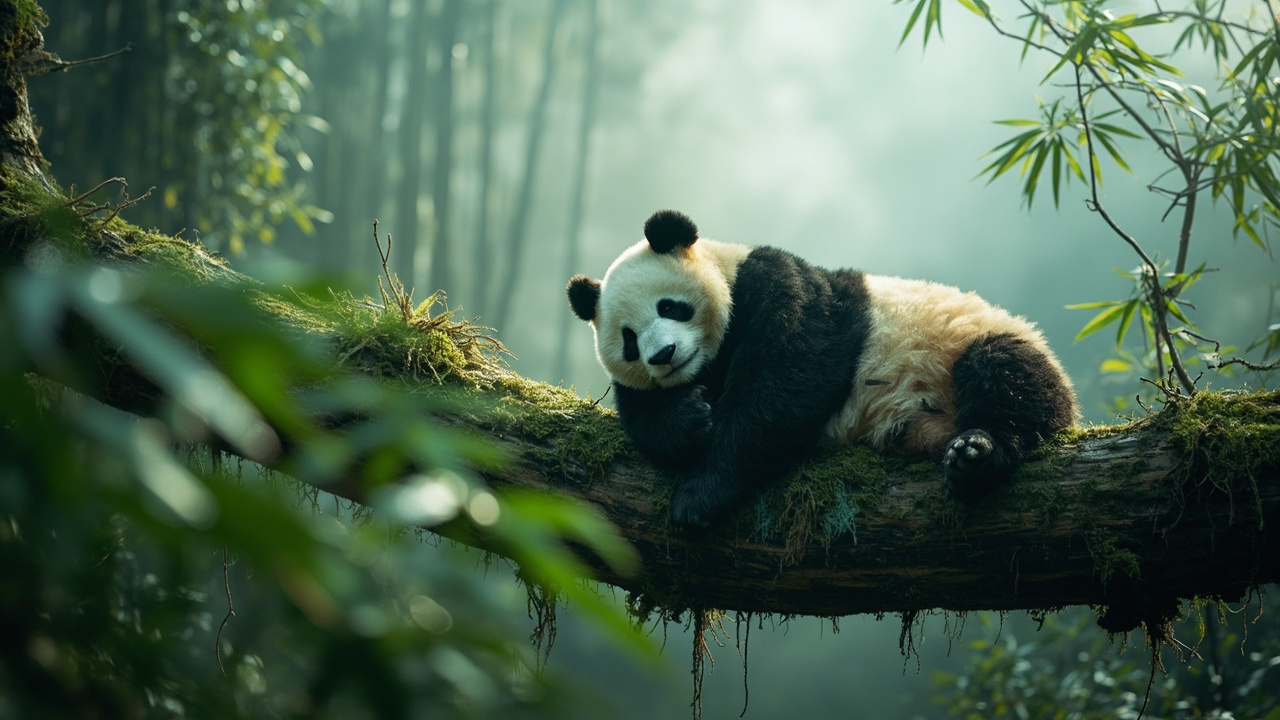
China Wild Panda Sanctuaries
The first time I saw a panda in the wild-ish, I was standing on a wet wooden boardwalk in the hills above Wolong, and I’d been there for two hours already. Nothing. Just bamboo, fog, and the sound of my own breathing. Then a rustle about thirty meters uphill, and a black-and-white shape the size of a small refrigerator hauled itself onto a branch and went straight back to sleep. That was it. That was the whole show. And I stood there grinning like an idiot for another twenty minutes.
That’s the thing nobody tells you about panda sanctuaries in China. The pandas are real animals, not animatronics. They sleep 12 to 16 hours a day. They eat bamboo that has almost no calories, so they spend most of their waking hours chewing. If you come expecting a zoo-style guaranteed photo op, you’ll be disappointed. If you come understanding that you’re visiting a conservation facility in the mountains, you’ll have one of the best days of your trip.
I’ve been to six of these places over seven years living in Beijing. Some are world-class research bases. Some are tourist traps with a panda on the sign. This guide sorts them out.
Quick answer
The best wild panda sanctuaries in China are in Sichuan and Shaanxi provinces, and the top three for foreign visitors are the Chengdu Research Base of Giant Panda Breeding (day trip from Chengdu), the China Conservation and Research Center at Bifengxia near Ya’an, and the Foping National Nature Reserve in Shaanxi (the only place with a realistic chance of seeing a truly wild panda). Entry fees run $8–$20 (CNY 55–140) for the breeding bases and are usually free or permit-only for the true nature reserves. Best season is March–May and September–November; summer is hot and crowded, winter is quiet but many outdoor viewing areas close.
The Short Version
If you have one day in Chengdu, go to the Chengdu base at 7:30am, before the tour buses. If you have three days and actually care about pandas, go to Bifengxia instead — fewer people, more space, and the pandas look less bored. If you want the real wild thing, book Foping in Shaanxi and accept that you probably won’t see one. The panda experience in China is not about guarantees. It’s about patience and altitude.
How I Picked These
I’ve visited every place on this list at least once, most of them twice, and two of them (Wolong and Bifengxia) three times. I’ve talked to keepers, to the woman who runs the noodle stand outside the Chengdu base’s north gate, and to a ranger at Foping who has seen wild pandas 14 times in 20 years and told me I was “unlikely, but not impossible.” I’ve also been to two places that didn’t make the list because they’re basically panda-themed gift shops with one sad enclosure. My criteria: real conservation work, decent animal welfare, and something a foreign visitor can actually reach without a private car and a translator.
Comparison Table
| Rank | Place | Best For | Approx Cost (USD) | Time Needed | When to Go |
|---|---|---|---|---|---|
| 1 | Chengdu Research Base | First-timers, easy access | $8 (CNY 55) | Half day | Mar–May, Sep–Nov |
| 2 | Bifengxia Panda Base | Fewer crowds, real forest | $18 (CNY 130) | Full day | Apr–Jun, Sep–Oct |
| 3 | Wolong Shenshuping | Mountain scenery, semi-wild | $14 (CNY 100) | Full day | May–Oct |
| 4 | Foping Nature Reserve | Actual wild pandas | Permit only | 2–3 days | Apr–May, Oct |
| 5 | Dujiangyan Panda Base | Volunteering programs | $10 (CNY 70) | Half day | Year-round |
| 6 | Chengdu Panda Valley | Quieter alternative | $9 (CNY 65) | Half day | Mar–Nov |
| 7 | Beijing Zoo Panda House | If you’re already in Beijing | $2 (CNY 15) | 1 hour | Year-round |
| 8 | Shanghai Wild Animal Park | Families with kids | $20 (CNY 140) | Half day | Apr–Oct |
| 9 | Tangjiahe Reserve | Serious wildlife watchers | Permit only | 2 days | Apr–Jun |
| 10 | Chongqing Zoo | Stopover option | $4 (CNY 30) | 2 hours | Year-round |
Chengdu Research Base of Giant Panda Breeding — The One Everyone Goes To, For Good Reason
I got there at 7:15am on a Tuesday in April, and there were already 200 people in line. By 9am there were 4,000. This is not a hidden gem. It is the most-visited panda facility on earth, and it earns that status because the pandas here are active, well-fed, and the enclosures are genuinely good.
The base sits on 357 hectares of hillside in Chenghua District, about 10 km north of central Chengdu. There are over 200 pandas on site, including cubs in the nursery (the nursery viewing window is the single most photographed spot in Sichuan). The “Panda Kindergarten” where 6–18 month old cubs tumble around is genuinely delightful, and I say that as someone who is allergic to cute.
📍 Location: Chenghua District, Chengdu, about 10 km northeast of Tianfu Square. 🎫 Entry fee: $8 (CNY 55) for adults; $4 (CNY 30) for students with ID. The panda museum inside is free. 🕒 Opening hours: 7:30am–6:00pm March–October; 8:00am–5:00pm November–February. Last entry 1 hour before close. 🚕 How to actually get there: Take Metro Line 3 to Panda Avenue Station (熊猫大道站), Exit B, then walk 10 minutes north. Or take a DiDi from Chunxi Road for about $5 (CNY 35), 25 minutes. ⏰ When to visit: Arrive by 7:30am. Pandas are most active 7:30–10:00am during feeding. Weekdays are noticeably quieter than weekends. Avoid Chinese public holidays entirely. 💡 Insider tips: Buy tickets in advance on the official WeChat mini-program (search “成都大熊猫繁育研究基地”) — the ticket line at the gate can take 40 minutes. Bring your passport; it’s required for entry. The electric shuttle inside ($2 / CNY 15) saves you a 20-minute uphill walk to the nursery. Skip the panda-themed restaurant at the exit — the noodles outside the north gate are better and half the price. I once watched a keeper hand-feed a cub with a bottle while a French tourist next to me whispered “c’est magnifique” about eleven times. He wasn’t wrong.
Bifengxia Panda Base — Where the Pandas Actually Have Room
Bifengxia is what the Chengdu base would be if you moved it into a real forest and removed 80% of the tourists. It’s part of the China Conservation and Research Center, tucked into a gorge about 150 km west of Chengdu near the town of Ya’an. The pandas here live in large hillside enclosures surrounded by actual bamboo forest, and on a quiet morning you can hear them crunching from 50 meters away.
The base was built after the 2008 Wenchuan earthquake damaged the original Wolong facility, and it now houses around 60 pandas, including many of the ones you’ve seen in viral videos. The walk between enclosures is steep and takes about 2 hours if you do the full loop. There’s also a separate “wild training” area where cubs are prepared for eventual release, which you can view from a distance.
📍 Location: Bifengxia Town, Ya’an, Sichuan, about 150 km west of Chengdu. 🎫 Entry fee: $18 (CNY 130) including the Bifengxia Scenic Area. The panda base is inside the scenic area, so one ticket covers both. 🕒 Opening hours: 8:30am–5:00pm daily, year-round. Last entry 4:00pm. 🚌 How to actually get there: From Chengdu Xinnanmen Bus Station, take a bus to Ya’an ($8 / CNY 55, 2 hours), then a local bus or DiDi to Bifengxia ($5 / CNY 35, 40 minutes). Or book a day tour from Chengdu for about $45 (CNY 320) including transport and entry. ⏰ When to visit: April–June and September–October. Go on a weekday. The scenic area gets crowded on weekends with Chengdu families. 💡 Insider tips: Wear real hiking shoes — the paths are wet and steep. Bring your own water; the vendors inside charge triple. The panda base is at the top of the gorge, so take the shuttle up and walk down. English signage is limited; download a translation app before you go. If you want to volunteer (feeding, cleaning enclosures), book at least 2 weeks ahead through the official website — it’s $100 (CNY 720) for a half day and worth it. The ranger I talked to here, a guy named Zhou, told me he’d been working with pandas for 11 years and had been bitten exactly once. “They’re not aggressive,” he said. “They’re just very strong and very lazy.”
Wolong Shenshuping Base — The Mountain One
Wolong is the original panda research center, founded in 1963, and the Shenshuping base is its post-earthquake rebuild. It sits at 1,700 meters in the Qionglai Mountains, and the drive there from Chengdu through the Min River valley is half the experience — terraced hillsides, Tibetan villages, and the occasional yak.
The base itself houses about 70 pandas in large semi-wild enclosures built into the hillside. Because of the altitude and the surrounding forest, this feels less like a zoo and more like a research station that happens to have visitors. On my last visit, I watched a sub-adult panda climb a 15-meter tree in about 90 seconds, then fall asleep in the fork of a branch. The keepers just shrugged.
📍 Location: Shenshuping, Wolong National Nature Reserve, Wenchuan County, about 130 km northwest of Chengdu. 🎫 Entry fee: $14 (CNY 100) adults; $7 (CNY 50) students and seniors over 60. 🕒 Opening hours: 9:00am–5:00pm daily, but outdoor enclosures close in heavy snow (December–February). 🚗 How to actually get there: No public transport direct. Either join a day tour from Chengdu ($50 / CNY 360) or hire a car ($120 / CNY 860 round trip). The drive takes 3 hours each way on winding mountain roads. ⏰ When to visit: May–October. Late autumn is best — the mountains turn gold and the crowds thin out. Winter access is unpredictable. 💡 Insider tips: The altitude is real — 1,700m isn’t extreme but you’ll feel it on the stairs. Bring layers; it’s 8–10°C cooler than Chengdu. The on-site restaurant is mediocre; eat before you go. Cash is occasionally needed for the parking lot vendors, though WeChat Pay works almost everywhere. If you’re prone to motion sickness, take something before the drive. I made the mistake of wearing sneakers here in October after rain. The wooden walkways were slick as ice. A Chinese tourist grabbed my arm to steady me and then laughed at me for ten minutes. Fair.
Foping National Nature Reserve — The Only Place You Might See a Wild Panda
I need to be honest with you: your odds of seeing a wild giant panda at Foping are maybe 5–10% on a 3-day visit. That’s not a sales pitch. That’s the reality of a 350-square-km reserve with roughly 130 wild pandas, dense bamboo forest, and no guarantees.
But Foping is the real thing. It’s in the Qinling Mountains of Shaanxi province, about 4 hours by high-speed rail from Xi’an, and it’s one of the few places where the Qinling panda subspecies (slightly smaller, browner, with a rounder face) still lives wild. The reserve has a small visitor center, a few research trails, and a permit system that keeps numbers low. You’ll need a guide, and you’ll need to be fit — the trails climb steeply through bamboo that’s often taller than you are.
📍 Location: Foping County, Hanzhong, Shaanxi Province, in the Qinling Mountains. 🎫 Entry fee: No standard ticket. Permits are arranged through the reserve office or a licensed local guide, roughly $60–$120 (CNY 430–860) per person per day including guide. 🕒 Opening hours: Not a fixed-hours attraction. Access is by permit and guide only, generally April–October. 🚄 How to actually get there: High-speed rail from Xi’an North Station to Foping Station takes about 1 hour 20 minutes ($15 / CNY 110). From the station, arrange pickup with your guide — the reserve is 40 minutes by car. ⏰ When to visit: April–May and October. Spring has fresh bamboo shoots and active pandas; autumn has clear skies and better visibility through the forest. 💡 Insider tips: Book your guide at least 3 weeks ahead through the Foping reserve office or a Shaanxi-based wildlife tour operator. Bring binoculars — you’ll need them. Wear muted colors; bright jackets spook wildlife. There’s almost no English spoken here; a translation app is essential. The nearest decent hotel is in Foping town, 40 minutes away. My guide, a woman named Li, had seen wild pandas 14 times in 20 years. She told me the trick is to listen for the sound of bamboo snapping — pandas break stalks loudly when they feed. I heard it once, at dusk, and never saw the animal. Still counts.
Dujiangyan Panda Base — The Volunteering One
Dujiangyan is the panda base you go to if you want to actually do something, not just look. It’s a smaller facility about an hour from Chengdu by high-speed rail, and it runs a well-organized volunteer program where you spend a half day cleaning enclosures, preparing bamboo, and (if you’re lucky) helping with a feeding.
The base houses around 30 pandas, mostly adults and sub-adults. It’s less scenic than Wolong or Bifengxia, but the volunteer program is the most accessible in China for foreign visitors, and the staff speak enough English to get you through the day. The pandas here are noticeably more relaxed around people than at the Chengdu base, probably because they see fewer of them.
📍 Location: Qingchengshan Town, Dujiangyan, about 60 km northwest of Chengdu. 🎫 Entry fee: $10 (CNY 70) for general admission. Volunteer program is $100 (CNY 720) for a half day, including lunch and a certificate. 🕒 Opening hours: 8:30am–5:00pm daily. Volunteer sessions run 9:00am–1:00pm. 🚄 How to actually get there: High-speed rail from Chengdu Station to Qingchengshan Station takes 40 minutes ($4 / CNY 30). From the station, take a taxi ($3 / CNY 20, 10 minutes). ⏰ When to visit: Year-round, but spring and autumn are most comfortable. Volunteer slots fill up fast in summer. 💡 Insider tips: Book the volunteer program at least 10 days ahead through the official WeChat account. Wear clothes you don’t mind getting dirty — you will get dirty. Bring a change of shirt. The lunch provided is basic but fine. If you’re squeamish about animal poop, this isn’t for you. The keeper who supervised my session, a young guy named Wang, told me he’d applied to work here three times before getting hired. “Everyone wants this job,” he said. “You have to really want it.”
Chengdu Panda Valley — The Quieter Alternative
Panda Valley is the newest major panda facility, opened in 2021 in the hills west of Chengdu, and it’s designed as a “semi-wild” environment where pandas roam larger enclosures with less human contact. It’s less famous than the main Chengdu base, which means fewer people and a calmer experience.
The trade-off: you’ll see fewer pandas, and they’ll often be further away. But the ones you do see behave more naturally — climbing, foraging, interacting with each other. On my visit, I watched two sub-adults wrestle for 20 minutes while a third watched from a tree like a bored teenager.
📍 Location: Dujiangyan, about 50 km west of Chengdu, adjacent to the Dujiangyan Panda Base. 🎫 Entry fee: $9 (CNY 65) adults; $5 (CNY 35) students. 🕒 Opening hours: 9:00am–5:00pm, closed Mondays. 🚗 How to actually get there: DiDi from Chengdu takes about 1 hour ($15 / CNY 110). Or high-speed rail to Dujiangyan Station, then a 15-minute taxi. ⏰ When to visit: March–November. Weekday mornings are quietest. 💡 Insider tips: Combine with the Dujiangyan Panda Base in one day if you’re efficient. Bring a zoom lens or binoculars. The visitor center has decent English signage. Food options are limited; eat in Dujiangyan town. I went here on a rainy Tuesday and had an entire viewing platform to myself for 40 minutes. That never happens at the main Chengdu base.
Beijing Zoo Panda House — If You’re Already in Beijing
Look, if you’re in Beijing and you have a free afternoon, the panda house at Beijing Zoo is fine. It’s not a sanctuary, it’s a zoo exhibit, and the pandas are in a much smaller space than at any Sichuan facility. But it’s $2 (CNY 15), it’s on Metro Line 4, and the pandas are genuinely there.
I went once, in 2021, mostly because a friend was visiting and wanted to see pandas without flying to Chengdu. We spent 40 minutes. The pandas were asleep. The crowd was loud. We left and got dumplings.
📍 Location: Xicheng District, Beijing, inside Beijing Zoo. Metro Line 4, Beijing Zoo Station (动物园站), Exit B. 🎫 Entry fee: $2 (CNY 15) for the zoo; panda house included. 🕒 Opening hours: 7:30am–6:00pm April–October; 7:30am–5:00pm November–March. 🚇 How to actually get there: Metro Line 4 to Beijing Zoo Station, Exit B. Walk 3 minutes. ⏰ When to visit: Weekday mornings. Avoid weekends and holidays. 💡 Insider tips: Go early — the pandas are fed around 8:30am and are more active. The zoo itself is large and worth a couple of hours if you have time. English signage is decent. Skip the panda souvenirs; they’re overpriced. My friend, who had never seen a panda, was thrilled. I was less thrilled. Set expectations accordingly.
Shanghai Wild Animal Park — The Family One
Shanghai Wild Animal Park is not primarily a panda facility, but it has a decent panda exhibit and it’s the best option if you’re in Shanghai with kids and can’t get to Sichuan. The park is in Pudong, about 35 km from the city center, and it’s a proper full-day outing with safari buses, walking trails, and a surprisingly good panda house.
The pandas here are loaned from Sichuan and rotate every few years. The exhibit is modern and the viewing is good, but it’s a zoo, not a sanctuary. If you’re a serious panda person, this is a stopgap, not a destination.
📍 Location: Nanhui, Pudong New Area, Shanghai, about 35 km southeast of the Bund. 🎫 Entry fee: $20 (CNY 140) adults; $10 (CNY 70) children under 1.4m. 🕒 Opening hours: 8:30am–5:00pm daily, extended to 6:00pm in summer. 🚇 How to actually get there: Metro Line 16 to Wild Animal Park Station (野生动物园站), then a 10-minute shuttle bus. ⏰ When to visit: April–October. Weekdays are much quieter. 💡 Insider tips: Buy tickets online to skip the line. The safari bus costs extra ($6 / CNY 45) and is worth it. Bring your own snacks — food inside is expensive. English signage is good. I took my nephew here in 2023. He was 6 and more excited about the giraffes than the pandas. Kids, man.
Tangjiahe National Nature Reserve — For Serious Wildlife Watchers
Tangjiahe is not a panda-first destination, but it’s one of the best places in China to see wild giant pandas, takin, golden monkeys, and other wildlife in a genuinely wild setting. It’s in northern Sichuan, near the Gansu border, and it requires more planning than any other place on this list.
The reserve covers 400 square km of mixed forest and has a small research station with basic lodging. You’ll need a permit, a guide, and a tolerance for rough conditions. In exchange, you get access to some of the least-visited panda habitat in China.
📍 Location: Qingchuan County, Guangyuan, northern Sichuan. 🎫 Entry fee: Permit only, roughly $80–$150 (CNY 580–1,080) per person per day including guide and lodging. 🕒 Opening hours: Permit-based, April–October only. 🚗 How to actually get there: Fly or train to Guangyuan, then a 3-hour drive to the reserve. Arrange everything through a licensed wildlife tour operator. ⏰ When to visit: April–June. Spring is best for wildlife activity. 💡 Insider tips: Book at least a month ahead. Bring serious hiking gear and a good camera. English is essentially nonexistent here. This is not a casual trip. I haven’t been to Tangjiahe yet — it’s on my list for next spring. A photographer friend who went in 2024 said it was the most remote place he’d been in China, and he’s been to Tibet three times.
Chongqing Zoo — The Stopover Option
Chongqing Zoo has pandas, and if you’re passing through Chongqing on a Yangtze River cruise or a Sichuan loop, it’s a reasonable 2-hour stop. The panda house is older and smaller than the Sichuan facilities, but the pandas are well cared for and the zoo itself is a pleasant green space in the middle of a very dense city.
📍 Location: Jiulongpo District, Chongqing. Metro Line 2, Zoo Station (动物园站), Exit B. 🎫 Entry fee: $4 (CNY 30) adults; $2 (CNY 15) children. 🕒 Opening hours: 8:00am–6:00pm daily. 🚇 How to actually get there: Metro Line 2 to Zoo Station, Exit B. Walk 5 minutes. ⏰ When to visit: Weekday mornings. Chongqing summers are brutally hot — avoid July and August. 💡 Insider tips: Combine with a visit to nearby Ciqikou Old Town. The zoo is hilly; wear comfortable shoes. English signage is limited. I stopped here on a 2022 trip and spent 90 minutes. The pandas were eating. It was fine.
FAQ summary
For most first-time visitors, the Chengdu Research Base of Giant Panda Breeding is the best choice — it’s the easiest to reach, has the most pandas, and costs under $10 (CNY 55). If you want fewer crowds and a more natural setting, go to Bifengxia near Ya’an instead. If you want a genuine chance (not a guarantee) of seeing a wild panda, Foping National Nature Reserve in Shaanxi is the only realistic option, and it requires a permit, a guide, and 2–3 days. Entry fees range from $2 (CNY 15) at Beijing Zoo to $150 (CNY 1,080) per day for a guided wild-panda trek. Best seasons are spring (March–May) and autumn (September–November). Bring your passport for entry, set up WeChat Pay or Alipay before you go, and download a translation app — English is limited outside the major Chengdu facilities.
FAQ
Q: Do I need a visa to visit panda sanctuaries in China? A: It depends on your nationality. As of 2026, citizens of many European countries, Australia, and several Asian nations can enter China visa-free for up to 30 days. Americans and Canadians still need a visa unless transiting under the 240-hour visa-free transit policy. Check the current visa rules before booking.
Q: What’s the best time of year to see pandas in China? A: Spring (March–May) and autumn (September–November) are best. Pandas are most active in cool weather, and the facilities are less crowded. Summer is hot and busy, and winter closes many outdoor viewing areas at higher-altitude bases like Wolong.
Q: How much does it cost to visit a panda sanctuary? A: Entry fees range from $2 (CNY 15) at Beijing Zoo to $20 (CNY 140) at Shanghai Wild Animal Park. The Chengdu base is $8 (CNY 55). Guided wild-panda treks at Foping or Tangjiahe run $60–$150 (CNY 430–1,080) per person per day. Budget another $10–$20 for transport.
Q: Can I actually see a wild panda? A: Realistically, only at Foping National Nature Reserve in Shaanxi or Tangjiahe in northern Sichuan, and even there your odds are 5–10% on a 3-day visit. Wild pandas are solitary, well-camouflaged, and live in dense bamboo forest. Most “wild panda” tours are actually visits to semi-wild enclosures.
Q: Do I need to book panda sanctuary tickets in advance? A: Yes, for the Chengdu base and Bifengxia, especially in peak season. Book through the official WeChat mini-program at least 1–2 days ahead. Volunteer programs at Dujiangyan need 10 days’ notice. Foping and Tangjiahe permits need 3–4 weeks.
Q: Is English spoken at panda sanctuaries? A: At the Chengdu base and Bifengxia, basic English signage and some English-speaking staff exist. Everywhere else, English is limited. Download a translation app (Baidu Translate or Google Translate with offline Chinese) before you go. Learn a few phrases like “熊猫在哪里?” (where is the panda?).
Q: How do I pay for things at panda sanctuaries? A: WeChat Pay and Alipay work almost everywhere, including ticket counters and gift shops. Set them up before you arrive — see our payment guide. Carry a small amount of cash ($20–$30 / CNY 150–220) for parking lot vendors and rural areas. A Chinese SIM card is useful for booking tickets on the spot.
The Honest Wrap-up
This list is for people who actually want to see pandas, not just check a box. If you’re the kind of traveler who wants a guaranteed photo op in 45 minutes, book the Chengdu base, go at 7:30am, and you’ll be done by lunch. That’s a perfectly good trip.
If you’re the kind of traveler who wants to understand why these animals are so hard to protect, and you’re willing to spend three days in a mountain reserve with a 10% chance of seeing one, go to Foping. That’s a different trip, and honestly, a better one.
One last thing: bring binoculars. Even at the breeding bases, the good stuff happens 20 meters away, and your phone camera won’t cut it. I learned that the hard way in Wolong, staring at a blurry black-and-white blob that I’m pretty sure was a panda.
More guides you may like
Top 10 Bridges in China
China's bridges are engineering marvels spanning mountains, rivers, and seas. Here are 10 of the most spectacular, from ancient stone to modern steel.
8 min read

Top 10 Buddhist Sites in China
From the Leshan Giant Buddha to the Dunhuang Caves, these 10 Buddhist sites represent 2,000 years of China's spiritual heritage.
9 min read

Top 10 Day Trips from Beijing You Shouldn't Miss
Beijing is packed with history, but some of China's best experiences are just a few hours away. Here are 10 day trips that will transform your visit.
9 min read
Top 10 Hidden Gems in China Off the Beaten Path
Beyond the Great Wall and Terracotta Warriors, China has incredible hidden destinations few tourists ever reach. Here are 10 underrated gems worth the detour.
9 min read

Top 10 Markets and Shopping Streets in China
From Shanghai's Bund to Beijing's Silk Street - 10 markets where foreigners can haggle, explore, and bring home authentic Chinese goods.
9 min read
Top 10 Museums in China You Shouldn't Miss
China's museums span 5,000 years of civilization. These 10 - from the Palace Museum to Xi'an's terracotta gallery - are unmissable for culture lovers.
9 min read