
Things to Do in Suzhou
TODO: Extract from article (100-160 chars)
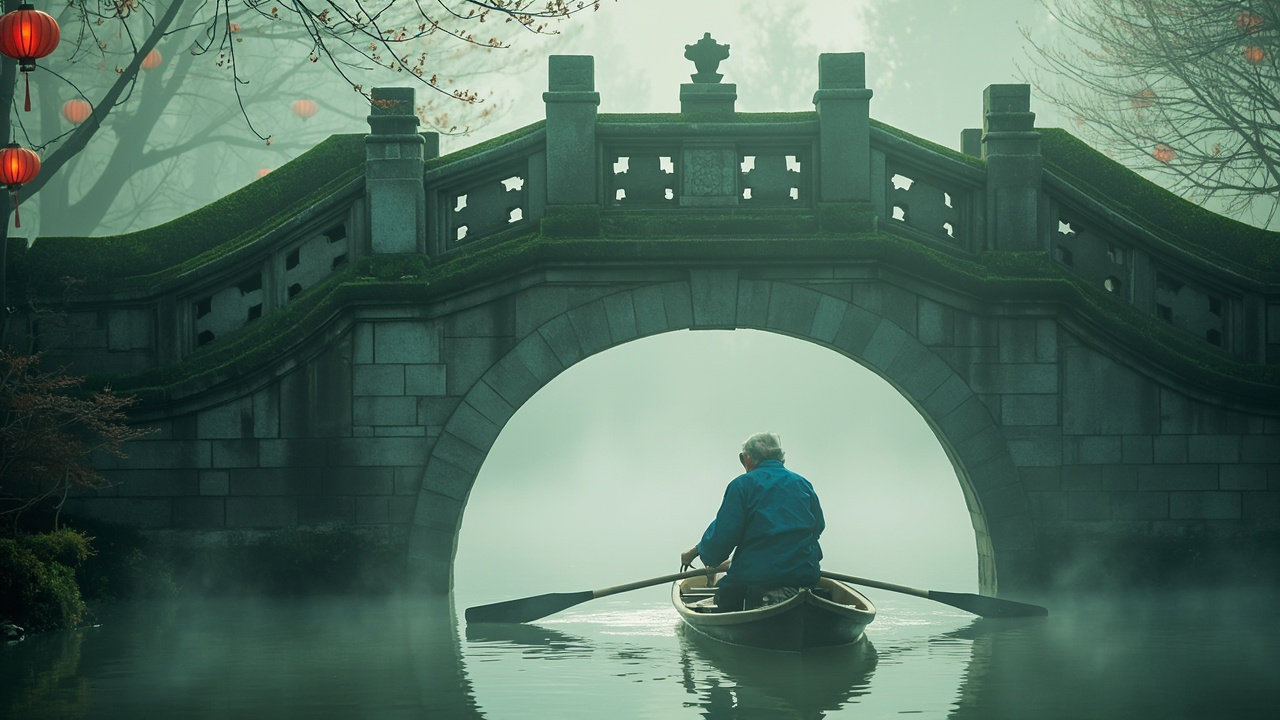
Things to Do in Suzhou
The old man at the Pingjiang Road teahouse didn’t look up when I sat down. He just slid a cup of biluochun toward me, poured hot water from a thermos, and went back to his newspaper. It was 7 a.m., the canals outside were still gray with mist, and I realized I’d been walking for an hour trying to find a “real” Suzhou experience when it had been sitting at this plastic table the whole time. That’s the thing about this city. Everyone arrives expecting the gardens — and the gardens are genuinely extraordinary — but the version of Suzhou that stays with you is the one that happens between them: the wet stone, the soup dumplings, the grandmothers doing tai chi at 6:30 in the morning while a delivery scooter nearly clips them.
Suzhou sits about 30 minutes from Shanghai by high-speed rail, which means most tourists treat it as a day trip. That’s a mistake. The city has 2,500 years of history, nine UNESCO-listed classical gardens, and a canal network that once made Marco Polo call it the “Venice of the East” (he was being generous to Venice, honestly). It’s also where China’s silk trade ran for centuries, and where the best hand-pulled noodles in the Yangtze Delta cost about $1.50.
This guide covers the ten things actually worth your time, with real prices, real directions, and the stuff I wish someone had told me before my first visit in 2019.
Quick answer
The top things to do in Suzhou are the classical gardens (Humble Administrator’s Garden and Master of the Nets are the two best), Pingjiang Road and the canal district at dusk, Tiger Hill, and a half-day trip to Tongli or Zhouzhuang water town. Most nationalities can now enter China visa-free for up to 30 days (check the current visa-free transit rules since policies shifted again in 2025), and Suzhou is 23–30 minutes from Shanghai Hongqiao by high-speed rail for about $5–7 (CNY 35–50). Budget $60–90 per day including one paid garden, meals, and transport.
The Short Version
If you have one day: Humble Administrator’s Garden at opening (7:30 a.m.), lunch on Pingjiang Road, Master of the Nets in the afternoon, Tiger Hill before closing, dinner at Songhelou. If you have two days, add Tongli water town and a silk museum. Skip the Silk Museum if you’re short on time — it’s fine but the gardens matter more. Bring cash backup because some small vendors still don’t take foreign cards, though Alipay and WeChat Pay work almost everywhere once you’re set up.
How I Picked These
I’ve been to Suzhou six times since 2019, most recently in October 2025. I’ve stayed in the old town, in the industrial park (don’t — it’s just offices), and once in a hostel near the train station that I would not recommend to anyone. I picked these ten by walking them, eating at them, and asking the people who actually live there — a taxi driver named Chen who grew up in the Pingjiang district, a hostel receptionist who told me which gardens to skip, and a noodle shop owner who refused to let me pay for a second bowl. I’ve also made plenty of mistakes: I once paid triple for a “private garden tour” that was just a guy with a selfie stick. Everything below is the version I’d give a friend.
Comparison Table
| Rank | Place | Best For | Approx Cost (USD) | Time Needed | When to Go |
|---|---|---|---|---|---|
| 1 | Humble Administrator’s Garden | First-time garden visit | $10 (CNY 70) | 2–3 hrs | Weekday morning |
| 2 | Pingjiang Road & Canals | Atmosphere, food, photos | Free | 2–4 hrs | Late afternoon/dusk |
| 3 | Master of the Nets Garden | Smaller, quieter gardens | $5 (CNY 40) | 1.5 hrs | Weekday afternoon |
| 4 | Tiger Hill | History, the leaning pagoda | $8 (CNY 60) | 2 hrs | Morning |
| 5 | Tongli Water Town | Canal town day trip | $15 (CNY 100) | Half day | Weekday |
| 6 | Suzhou Museum | Architecture (I.M. Pei) | Free | 1.5 hrs | Book ahead |
| 7 | Lingering Garden | Garden design nerds | $8 (CNY 55) | 1.5 hrs | Morning |
| 8 | Shantang Street | Evening stroll, snacks | Free | 2 hrs | After dark |
| 9 | Hanshan Temple | Buddhist history, bells | $3 (CNY 20) | 1 hr | Early morning |
| 10 | Silk Museum | Textile history | Free | 1 hr | Rainy days |
Humble Administrator’s Garden — The One You’ve Seen in Photos
I got there at 7:25 a.m. on a Tuesday in October, and there were already 40 people at the gate. By 9 a.m. there were maybe 800. This is the most famous garden in China, and it earns the reputation, but you have to game the timing or you’ll spend your visit shuffling behind a tour group holding a flag.
The garden dates to 1509, built by a retired government official named Wang Xianchen who apparently had a lot of time and money. It’s 5.2 hectares spread across three sections, and the eastern section is the one most people skip — which is exactly why you should do it first while everyone else crowds the central pavilions. The bonsai garden in the west is small but genuinely beautiful.
What makes it special isn’t any single building. It’s the way the paths keep revealing new framed views — a moon gate here, a reflection pond there, a corridor that turns and suddenly you’re looking at a rockery that looks like a mountain. Chinese garden design is about controlled sightlines, and this is the masterclass.
📍 Location: Gusu District, 178 Northeast Street (东北街178号) 🎟️ Entry fee: $10 (CNY 70) peak season, $7 (CNY 50) off-season. Free for kids under 1.4m. 🕐 Opening hours: 7:30 a.m.–5:30 p.m. (last entry 5 p.m.), daily. Extended to 9 p.m. during summer. 🚕 How to actually get there: Take Metro Line 4 to Beisita Station, Exit 3, walk 8 minutes north. Or taxi from the old town for about $2 (CNY 15). ⏰ When to visit: Weekday mornings, ideally right at opening. Avoid weekends entirely if you can. April–May and September–October are best; summer is brutally humid. 💡 Insider tips: Buy tickets on the official WeChat mini-program the night before — the gate queue for on-site tickets can be 30+ minutes. The teahouse inside is overpriced but the view from the second floor is worth one cup. Bring mosquito repellent in summer; the ponds breed them.
I met a retired teacher from Nanjing there who told me she’d visited 14 times and still found new details. I believe her.
Pingjiang Road & the Canal District — Where Suzhou Actually Lives
Pingjiang Road is the tourist version of Suzhou, and yes, it’s crowded. But walk five minutes off it in any direction and you’re in the real thing: narrow alleys, laundry hanging from second-floor windows, old men playing xiangqi on a folding table, a woman selling fresh tofu from a cart. The canal runs parallel to the main street, and the stone bridges are genuinely 800 years old.
Come at dusk. The lanterns come on around 6 p.m., the tour groups thin out by 7, and the reflections on the water turn the whole street amber. I sat on a bridge for 40 minutes one evening just watching boats go under it.
The food here is hit-or-miss. Skip the “traditional Suzhou snack” stalls near the entrance — they’re selling frozen dumplings at 3x the price. Walk to the northern end where locals actually eat, and look for the shops with handwritten signs and no English menus.
📍 Location: Pingjiang Road, Gusu District (parallel to Lindun Road) 🎟️ Entry fee: Free 🕐 Opening hours: Always open; shops 9 a.m.–10 p.m. 🚕 How to actually get there: Metro Line 1 to Lindun Road Station, Exit 2, walk 3 minutes. Or Line 4 to San Yuan Fang, Exit 1. ⏰ When to visit: Late afternoon into evening. Weekday evenings are noticeably calmer than weekends. 💡 Insider tips: The Kunqu Opera Museum (free) has short performances most afternoons — check the schedule at the door. Rent a boat for a 20-minute canal ride for about $20 (CNY 140) per boat, not per person. Bring small bills for street food; some vendors don’t take WeChat Pay.
I ate a bowl of wonton soup here for $1.40 (CNY 10) that was better than anything I had in Shanghai for five times the price.
Master of the Nets Garden — The Quiet Alternative
If Humble Administrator’s is the blockbuster, Master of the Nets is the art film. It’s less than a tenth the size — about 0.5 hectares — and it’s the one I’d recommend if you only have time for one garden and want to actually feel something instead of just checking a box.
The garden was built in 1140 during the Southern Song dynasty, then rebuilt in 1785 by a retired official named Song Zongyuan. It’s laid out around a central pond with pavilions on all four sides, and the trick is that every window and doorway frames a different view. There’s a famous “borrowed scenery” technique where the garden visually incorporates a distant pagoda that isn’t actually inside the walls.
I went on a Wednesday afternoon in November and had entire courtyards to myself. That’s rare.
📍 Location: Gusu District, 11 Kuojiatou Alley (阔家头巷11号) 🎟️ Entry fee: $5 (CNY 40) day, $13 (CNY 90) for the evening performance 🕐 Opening hours: 7:30 a.m.–5 p.m. day; evening performances 7:30–9 p.m. (March–November only) 🚕 How to actually get there: Metro Line 4 to San Yuan Fang, Exit 2, walk 10 minutes south. It’s down a small alley — follow the signs. ⏰ When to visit: Weekday afternoons. The evening Kunqu opera performances are lovely but touristy and overpriced. 💡 Insider tips: The night performance includes traditional music and opera in different pavilions, but it’s $13 (CNY 90) and mostly aimed at tour groups. The daytime visit is the better value. Combine with a walk to the nearby Canglang Pavilion (also a garden, also cheap).
A woman selling tickets told me most foreigners skip this one and I genuinely don’t understand why.
Tiger Hill — The Leaning Pagoda and a 2,500-Year-Old Story
Tiger Hill is technically a 36-meter hill with a 1,000-year-old pagoda on top that leans about 3.5 degrees — more than the Leaning Tower of Pisa, though nobody seems to mention that. The story goes that the hill is the burial site of King Helü of Wu, who died in 496 BC, and that a white tiger appeared on the hill three days after his burial. Hence the name.
The pagoda (Yunyan Pagoda) was built in 961 AD and has been leaning since at least the Ming dynasty. You can’t go inside it anymore — structural concerns — but walking around the base is worth the trip.
The rest of the hill is a pleasant park with bonsai displays, tea houses, and a lot of Chinese tourists taking photos with the pagoda at an angle that makes it look like they’re holding it up. It’s a cliché and I did it too.
📍 Location: Gusu District, 8 Shanmen Inner Road (山门内8号) 🎟️ Entry fee: $8 (CNY 60) peak, $6 (CNY 45) off-season 🕐 Opening hours: 7:30 a.m.–5:30 p.m. daily 🚕 How to actually get there: Metro Line 4 to Suzhou Amusement Land Station is closest, but honestly a taxi from the old town is easier — about $3 (CNY 20). ⏰ When to visit: Morning, before the tour buses arrive around 10 a.m. Autumn is best. 💡 Insider tips: The tea house at the top has a view over the whole city and a pot of local green tea costs $4 (CNY 28) — worth it. The bonsai garden near the entrance is free with your ticket and most people walk right past it.
I got lost on the way down and ended up at a small temple where a monk was sweeping. He pointed me toward the exit without a word. Best part of the visit.
Tongli Water Town — The Canal Town That’s Actually Worth It
There are several water towns near Suzhou and they range from “charming” to “Disneyland with canals.” Tongli is the one I’d recommend. It’s about 30 minutes by bus or 20 by taxi from central Suzhou, and while it’s touristy, it’s still a functioning town where people live and work.
The town has 49 stone bridges, a network of canals, and the Retreat & Reflection Garden (a UNESCO site) which is genuinely beautiful. The main streets are packed with souvenir shops, but walk 10 minutes in any direction and you’re in residential alleys where old women are washing vegetables in the canal water.
I went on a Tuesday in April and it was manageable. I’ve heard weekends in summer are unbearable.
📍 Location: Wujiang District, about 18 km southeast of Suzhou 🎟️ Entry fee: $15 (CNY 100) for the combined ticket including all attractions 🕐 Opening hours: 7:30 a.m.–5:30 p.m. daily 🚕 How to actually get there: Bus 725 from Suzhou South Bus Station, or a taxi for about $12 (CNY 85). Metro Line 4 to Tongli Station, then a 10-minute walk. ⏰ When to visit: Weekday mornings. Spring and autumn. 💡 Insider tips: The combined ticket is worth it if you want to see the gardens, but if you just want to walk the canals you can enter the town for free through the side entrances. The boat rides are $15 (CNY 100) per boat for 20 minutes. Eat before you go — the restaurants inside are overpriced.
I had a bowl of river shrimp here that I still think about.
Suzhou Museum — I.M. Pei’s Last Major Work
The Suzhou Museum is free, which is remarkable given that it was designed by I.M. Pei (the Louvre pyramid guy) and completed in 2006, just a few years before he died. The building itself is the main attraction — a modern interpretation of Suzhou garden architecture with white walls, gray tiles, and a central courtyard with a rock garden and a pond.
The collection is decent — mostly ceramics, calligraphy, and silk — but honestly the building is the point. Pei grew up in Suzhou and designed this as a kind of homecoming.
📍 Location: Gusu District, 204 Northeast Street (next to Humble Administrator’s Garden) 🎟️ Entry fee: Free (reservation required) 🕐 Opening hours: 9 a.m.–5 p.m., closed Mondays 🚕 How to actually get there: Same as Humble Administrator’s Garden — Metro Line 4 to Beisita, Exit 3. ⏰ When to visit: Weekday mornings. Book your free slot on the official WeChat account at least a day ahead. 💡 Insider tips: The museum shop is genuinely good for gifts. The café in the courtyard is a nice place to rest between gardens. Combine with Humble Administrator’s Garden next door — do the museum first, then the garden, since the garden gets crowded later.
I spent 20 minutes just sitting in the courtyard watching the light change.
Lingering Garden — For the Garden Nerds
Lingering Garden is the other big classical garden, and it’s the one I’d recommend if you’ve already seen Humble Administrator’s and want more. It’s smaller (2.3 hectares) but arguably more intricate — the rockeries are famous, and the layout is a masterclass in the “borrowed scenery” technique.
It’s less crowded than Humble Administrator’s, which alone makes it worth the visit.
📍 Location: Gusu District, 338 Liuyuan Road 🎟️ Entry fee: $8 (CNY 55) peak, $6 (CNY 45) off-season 🕐 Opening hours: 7:30 a.m.–5 p.m. daily 🚕 How to actually get there: Metro Line 2 to Shilu Station, Exit 3, walk 10 minutes. ⏰ When to visit: Mornings, weekdays. 💡 Insider tips: The bonsai garden section is small but excellent. The teahouse inside is a good rest stop. If you’re doing multiple gardens, buy the combined ticket — it saves about 20%.
Shantang Street — The Evening Stroll
Shantang Street runs along a canal from Changmen Gate to Tiger Hill, and it’s the best place in Suzhou for an evening walk. The street is about 3.5 km long, lined with shops, teahouses, and restaurants, and the canal is lit with lanterns after dark.
It’s touristy, but in a pleasant way — less crowded than Pingjiang Road and more local-feeling. The snack shops here are better and cheaper.
📍 Location: Gusu District, Shantang Street (山塘街) 🎟️ Entry fee: Free 🕐 Opening hours: Always open; shops until 10 p.m. 🚕 How to actually get there: Metro Line 2 to Shantang Street Station, Exit 3. ⏰ When to visit: After dark, any day. 💡 Insider tips: The boat ride along the canal is $10 (CNY 70) and takes about 20 minutes — better value than the Pingjiang Road boats. The street food here is genuinely good; try the sweet osmanthus cakes and the fried tofu.
Hanshan Temple — The Bell That Inspired a Poem
Hanshan Temple is famous in China because of a Tang dynasty poem by Zhang Ji about a traveler hearing the temple bell at midnight. Every Chinese schoolkid learns it. The temple itself is small but atmospheric, with a bell tower and a collection of Buddhist statues.
It’s not the most impressive temple in China, but it’s a peaceful stop and the poem connection is genuinely interesting.
📍 Location: Gusu District, 24 Hanshan Temple Lane 🎟️ Entry fee: $3 (CNY 20) 🕐 Opening hours: 7:30 a.m.–5 p.m. daily 🚕 How to actually get there: Metro Line 4 to Hanshan Temple Station, Exit 2, walk 5 minutes. ⏰ When to visit: Early morning, when the monks are chanting. 💡 Insider tips: The bell-ringing on New Year’s Eve is a big event but extremely crowded. The temple is close to Tiger Hill — combine them.
Silk Museum — For a Rainy Day
Suzhou has been China’s silk capital for over 2,000 years, and the Silk Museum (not the “Suzhou Silk Museum” tourist trap near the train station — the actual one on Renmin Road) is a genuinely good free museum. It covers the history of silk production, has working looms, and a small live silkworm display.
It’s not a must-see, but if you have a rainy afternoon or you’re interested in textiles, it’s worth an hour.
📍 Location: Gusu District, 2001 Renmin Road 🎟️ Entry fee: Free 🕐 Opening hours: 9 a.m.–5 p.m., closed Mondays 🚕 How to actually get there: Metro Line 4 to Renmin Road Station, Exit 1. ⏰ When to visit: Rainy days, weekday afternoons. 💡 Insider tips: The gift shop sells real silk scarves at reasonable prices — better than the tourist markets. The live silkworm room is small but fascinating.
FAQ summary
Suzhou is best visited as a 1–2 day stop from Shanghai, reachable by high-speed rail in 23–30 minutes for about $5–7 (CNY 35–50). Most foreign visitors can enter China visa-free for up to 30 days as of 2025, but policies change — verify before booking. The must-sees are Humble Administrator’s Garden, Pingjiang Road, and Tiger Hill; budget $60–90 per day including one paid garden, meals, and transport. Set up Alipay or WeChat Pay before arrival, since many small vendors don’t accept foreign cards, and download a translation app — English is limited outside major hotels and tourist sites.
FAQ
Q: Do I need a visa to visit Suzhou? A: Most nationalities (including US, UK, EU, Australia, and much of Southeast Asia) can enter China visa-free for up to 30 days as of 2025, and Suzhou is included. Policies have changed multiple times in the last two years, so check the latest visa-free rules before booking. If your nationality isn’t covered, apply for a standard tourist visa at least 3 weeks ahead.
Q: How do I get from Shanghai to Suzhou? A: High-speed trains run every 10–20 minutes from Shanghai Hongqiao or Shanghai Station to Suzhou Station or Suzhou North. The trip takes 23–30 minutes and costs $5–7 (CNY 35–50). Book on the 12306 app or Trip.com; you’ll need your passport number. See the China train guide for the full process.
Q: Is one day in Suzhou enough? A: One day covers the highlights — Humble Administrator’s Garden, Pingjiang Road, Master of the Nets, and Tiger Hill — if you start early. Two days is much better, and lets you add Tongli water town and a slower pace. Three days and you’ll actually relax.
Q: What’s the best time of year to visit Suzhou? A: April–May and September–October are ideal — mild temperatures, low humidity, and the gardens at their best. Summer (June–August) is hot and humid with afternoon thunderstorms. Winter is cold and gray but crowds are minimal and gardens have a quiet beauty.
Q: Do I need a VPN or SIM card in Suzhou? A: Yes, if you want to use Google, Instagram, WhatsApp, or most Western apps — they’re blocked in mainland China. Set up a VPN before you arrive, since downloading one after you’re in China is difficult. For phone service, buy a tourist SIM at Shanghai Pudong or Hongqiao airport, or use an eSIM like Airalo. See the SIM and internet guide for details.
Q: How much does a day in Suzhou cost? A: Budget $60–90 per day for a mid-range traveler: $10 for one paid garden, $15–25 for meals, $5–10 for transport, and $20–40 for accommodation if you’re staying overnight. You can do it for under $40 if you stick to free attractions and street food.
Q: Is English widely spoken in Suzhou? A: Not really. Hotel staff at international chains speak some English, and major attractions have English signage, but taxis, restaurants, and shops mostly operate in Mandarin. Download a translation app (Google Translate with offline Chinese, or Baidu Translate) and have your hotel address written in Chinese characters.
The Honest Wrap-up
This list is for the traveler who wants to actually see Suzhou, not just photograph it. If you’re looking for a checklist to tick off in six hours before catching a train back to Shanghai, do Humble Administrator’s Garden and Pingjiang Road and call it a day. But if you have two days, slow down. Sit in a teahouse for an hour. Get lost in the alleys off Pingjiang Road. Eat the wontons from the shop with no English sign. The gardens are why you came, but the city between them is why you’ll want to come back. One last thing: book your train tickets the day before, not the morning of. I learned that the hard way.
More guides you may like

Top 10 Bridges in China
China's bridges are engineering marvels spanning mountains, rivers, and seas. Here are 10 of the most spectacular, from ancient stone to modern steel.
8 min read

Top 10 Buddhist Sites in China
From the Leshan Giant Buddha to the Dunhuang Caves, these 10 Buddhist sites represent 2,000 years of China's spiritual heritage.
9 min read

Top 10 Day Trips from Beijing You Shouldn't Miss
Beijing is packed with history, but some of China's best experiences are just a few hours away. Here are 10 day trips that will transform your visit.
9 min read

Top 10 Hidden Gems in China Off the Beaten Path
Beyond the Great Wall and Terracotta Warriors, China has incredible hidden destinations few tourists ever reach. Here are 10 underrated gems worth the detour.
9 min read

Top 10 Markets and Shopping Streets in China
From Shanghai's Bund to Beijing's Silk Street - 10 markets where foreigners can haggle, explore, and bring home authentic Chinese goods.
9 min read

Top 10 Museums in China You Shouldn't Miss
China's museums span 5,000 years of civilization. These 10 - from the Palace Museum to Xi'an's terracotta gallery - are unmissable for culture lovers.
9 min read