
Harbin Ice Festival Travel Guide
Harbin Ice Festival Travel Guide
Harbin Ice Festival Travel Guide
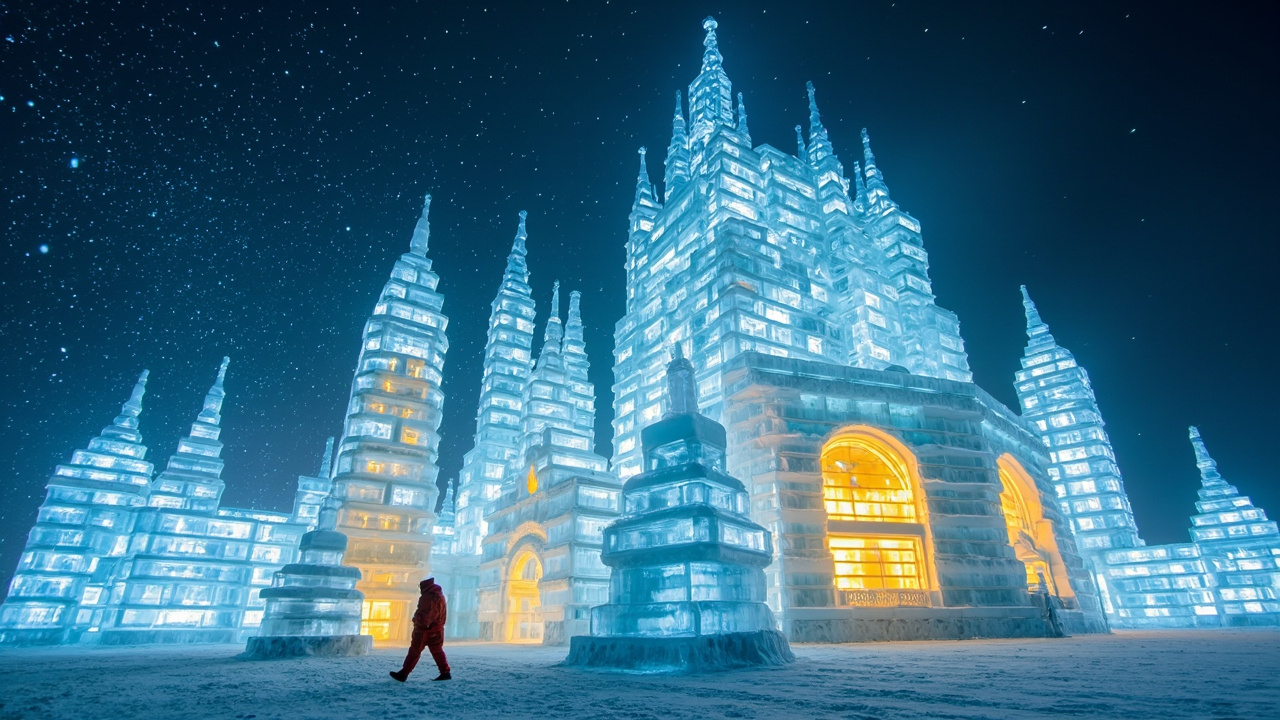
The first thing I noticed wasn’t the cold. It was the sound. At 10pm on a January night in Harbin, standing in the middle of Ice and Snow World, I could hear my own breath crystallize against the inside of my scarf. Minus 29°C (-20°F). The buildings around me were glowing blue and gold, three stories tall, carved entirely from blocks of Songhua River ice. A kid next to me licked a wall on a dare and his tongue stuck. His mother laughed. Nobody panicked. That’s Harbin in a nutshell.
I’ve been to the Harbin International Ice and Snow Festival four times now — 2019, 2022, 2024, and again this past January. Every trip I’ve learned something new, usually the hard way. The first year I wore sneakers. The second year I booked a hotel in the wrong district and spent 90 minutes each way on buses. The third year I finally figured out the rhythm of the city.
This isn’t a place you visit casually. It’s a commitment. But if you’re reading this, you’re probably already curious, and I want to save you the mistakes I made. This guide covers the festival itself, the surrounding attractions worth your time, where to eat, how to stay warm without looking like the Michelin Man, and the specific logistics that trip-planning blogs gloss over. Everything here is based on my own trips and conversations with locals — drivers, hotel staff, a noodle shop owner named Auntie Zhang who’s been feeding frozen tourists for 20 years.
By the end you’ll know whether Harbin is worth the flight, when to go, what to skip, and how to actually enjoy -25°C instead of just surviving it.
Quick answer
The Harbin Ice and Snow Festival runs roughly from late December through late February each year, with the official opening around January 5. The headline attraction, Ice and Snow World, costs about $45 USD (¥328 CNY) for adults and is best visited after 4pm when the ice sculptures light up. Most Western passport holders can enter China visa-free for up to 30 days as of 2026, and Harbin is served by direct high-speed trains from Beijing (about 5 hours) and flights from most major Chinese cities.
The Short Version
Go in mid-January. Book Ice and Snow World tickets online before you fly. Stay near Central Street (Zhongyang Dajie) so you can walk to dinner without freezing. Bring more layers than you think you need — the cold here is not a joke, it’s a personality. Skip the ice swimming unless you’re genuinely curious. Two full days is enough for the festival itself; three if you want to see the Siberian Tiger Park and the Russian architecture properly.
How I Picked These
I’ve been to Harbin four times across six years, always in winter, always during the festival window. I’ve stayed in five different hotels, eaten at maybe 40 restaurants, and once paid a taxi driver 200 yuan to drive me around for three hours while I asked him questions about the city. Some of the entries below are obvious (Ice and Snow World, Sun Island). Others are places I found by getting lost or by asking the receptionist at my hostel what she did on her days off. I’ve cross-checked prices with the official 2026 festival website and with staff on the ground. Where I’m unsure, I say so. This isn’t a sponsored list — nobody paid to be here.
Comparison Table
| Rank | Place | Best For | Approx Cost (USD) | Time Needed | When to Go |
|---|---|---|---|---|---|
| 1 | Ice and Snow World | The main event, night photography | $45 (¥328) | 4-5 hours | After 4pm, weekday |
| 2 | Sun Island Snow Sculpture Expo | Daytime, families, huge sculptures | $30 (¥220) | 3 hours | Midday, sunny days |
| 3 | Central Street (Zhongyang Dajie) | Food, architecture, people-watching | Free | 2-3 hours | Evening |
| 4 | St. Sophia Cathedral | Photos, history, indoor warmth | $3 (¥20) | 1 hour | Morning |
| 5 | Songhua River frozen activities | Ice slides, sledding, local vibe | Free to $15 | 2 hours | Afternoon |
| 6 | Siberian Tiger Park | Wildlife, slightly unsettling | $15 (¥110) | 2 hours | Morning |
| 7 | Zhaolin Park Ice Lantern Show | Smaller, older, charming | $20 (¥150) | 2 hours | Evening |
| 8 | Harbin Ice Swimming (Songhua) | Bragging rights | Free | 30 min | Midday, weekends |
| 9 | Russian Orthodox Cemetery | History nerds, quiet | Free | 45 min | Any daylight |
| 10 | Guogeli Street | Local food, no tourists | Free | 1-2 hours | Lunch or dinner |
Ice and Snow World — the reason you’re actually here
I’ll be honest: the first time I walked through the gates, I felt a little cheated. It was 3pm, still light out, and the ice buildings looked like giant grey blocks. Then the sun went down. The lights came on. Everything turned into a different planet.
This is the festival’s flagship, built fresh every year on a 600,000-square-meter site across the river from the city. The scale is genuinely hard to describe — some structures are 40 meters tall, made from ice blocks pulled out of the Songhua River and carved by teams from across China and Russia. There are ice castles, ice slides, an ice bar, and a giant snow sculpture of whatever theme they picked that year (2026’s theme is “Dream of the Ice City,” which honestly sounds like every year’s theme).
Why it’s special: nowhere else on earth builds a temporary city out of frozen river water and then lights it from inside. The craftsmanship is real. The temperature keeps everything sharp and glowing. And because it’s rebuilt annually, no two years look the same.
📍 Location: Songbei District, north bank of the Songhua River, about 30 minutes from Central Street. 🎿 Entry fee: $45 USD (¥328 CNY) for adults. Kids under 1.2m free. Night tickets sometimes cost slightly more. 🕒 Opening hours: Typically 11am to 9:30pm, with last entry around 8pm. Officially opens January 5 but often soft-opens in late December. 🚕 How to actually get there: Take Metro Line 2 to Ice and Snow World Station, Exit 3, then walk 8 minutes following the crowds. Taxis from Central Street cost about $8-10 (¥60-75) and take 25-30 minutes in light traffic. ⏰ When to visit: Go on a weekday if you can. Weekends in January are packed with domestic tour groups. Arrive around 3:30pm so you see it in daylight and then watch the lights come on. 💡 Insider tips: Buy tickets through the official WeChat mini-program or Trip.com — the on-site queue can be 40 minutes in the cold. Wear your warmest boots; the ground is packed ice and you’ll be standing for hours. There’s a heated rest area near the main entrance but it fills up fast. Bring a power bank — phone batteries die in 20 minutes at these temperatures. Set up Alipay or WeChat Pay before you arrive; almost nothing here takes cash.
I watched a Russian tourist in a fur hat try to film a TikTok and his phone shut down mid-sentence. He swore in three languages. I gave him my hand warmer.
Sun Island Snow Sculpture Expo — the daytime counterpart
Most people do Ice and Snow World at night and sleep in the next morning. That’s a mistake. Sun Island is the daytime half of the festival and it’s arguably more impressive in pure craft terms.
The snow sculptures here are enormous — some 30 meters tall, carved from compacted artificial snow, and they hold detail that ice can’t. Faces, fur textures, the folds of a robe. In 2024 they had a full-size replica of a Tang dynasty palace gate. I stood in front of it for ten minutes.
Why it’s special: snow carving is a different discipline than ice carving, and the artists here are working with a material that’s more forgiving but also more fragile. The result is sculptures that feel almost soft. It’s also far less crowded than Ice and Snow World, and there’s something peaceful about walking through it in the afternoon sun.
📍 Location: Sun Island Scenic Area, north bank of the Songhua, adjacent to Ice and Snow World. 🎿 Entry fee: $30 USD (¥220 CNY). Combined tickets with Ice and Snow World sometimes available for around $65 (¥470). 🕒 Opening hours: 9am to 5pm, weather permitting. Closes earlier if it snows heavily. 🚕 How to actually get there: Metro Line 2 to Sun Island Station, Exit 2, then a 10-minute walk. Or take the cable car across the river from near Central Street for about $8 (¥55) — worth doing once for the view. ⏰ When to visit: Midday, ideally on a clear day. The sun makes the snow sculptures glow. Weekday mornings are quietest. 💡 Insider tips: The site is exposed — no trees, no windbreaks. Wind chill here is brutal. Bring ski goggles if you have them. There’s a small indoor café near the exit where you can thaw out; the hot chocolate is overpriced but worth it. Don’t bother with the horse-drawn sled rides; they’re slow and the animals look tired.
A local photographer told me the best light for snow sculptures is between 1pm and 2:30pm in January. He was right.
Central Street (Zhongyang Dajie) — where you’ll actually spend your evenings
This is the pedestrian street every Harbin guide mentions, and yes, it’s touristy. It’s also genuinely lovely, especially at night when the European-style buildings are lit up and the whole street smells like grilled sausage and hot sugar.
The architecture is Russian-influenced — Harbin had a large Russian population in the early 20th century, and the buildings along this 1.4km stretch date from that era. Some are restored, some are original. The famous Modern Hotel (Moderne Hotel) at number 89 is where I had my first bowl of borscht in China, which is a sentence I never expected to write.
Why it’s special: it’s the easiest place in the city to just exist. You can walk, eat, buy a fur hat you’ll never wear again, and warm up in a café every 200 meters. It’s also the best place to try Harbin red sausage (hongchang), which is smoked, garlicky, and sold everywhere.
📍 Location: Daoli District, runs from Jingwei Street to the Songhua River. 🎿 Entry fee: Free. 🕒 Opening hours: Always open, but shops run roughly 9am to 10pm. 🚕 How to actually get there: Metro Line 2 to Central Street Station, Exit 1. You’ll surface directly onto the street. ⏰ When to visit: Evening, around 6-8pm. Weekend nights are chaotic; weekday nights are pleasant. 💡 Insider tips: The food stalls near the river end are cheaper than the ones near the metro. Try the frozen pears (dongli) — they’re a Harbin specialty and taste like sorbet. The Modern Hotel’s ground-floor bakery sells decent bread. Skip the “Russian” restaurants with English menus and photo placards out front; they’re overpriced. Cash is accepted at most shops here, unlike at the festival sites.
I bought a fake ushanka here for $12 (¥85). It kept my ears warm for three winters. Worth it.
St. Sophia Cathedral — the photo everyone takes
You’ve seen this building. It’s the onion-domed Russian Orthodox cathedral that appears on every Harbin postcard. It’s now a museum, not an active church, and the interior is mostly photos and historical displays.
I’ll be blunt: the inside isn’t worth much. The outside is worth 20 minutes of your time, especially in the late afternoon when the light hits the red brick.
Why it’s special: it’s a reminder that Harbin was built by the Russian Empire as a railway town in the late 1890s, and the architecture still carries that DNA. Standing in front of it in -20°C, watching tourists from Shanghai take selfies, you get a sense of how strange and layered this city’s history is.
📍 Location: Daoli District, near the intersection of Toulong Street and Zhaolin Street, a 10-minute walk from Central Street. 🎿 Entry fee: $3 USD (¥20 CNY) for the museum. The square outside is free. 🕒 Opening hours: 8:30am to 6pm, closed Mondays. 🚕 How to actually get there: From Central Street, walk north 10 minutes. Or Metro Line 2 to Museum Station, Exit 3, then 8 minutes on foot. ⏰ When to visit: Late afternoon for the light. Avoid midday weekends when tour buses arrive. 💡 Insider tips: The square in front is a popular spot for professional photos — you can rent a Russian-style fur coat and hat from vendors for about $5 (¥35). The nearby Sofia Square has a heated underground shopping area if you need to thaw. Don’t pay for the “guided tour” inside; it’s a recorded audio guide in broken English.
Songhua River frozen activities — the local version of the festival
The river freezes solid in December and stays frozen until March. Locals treat it as a public park. There are ice slides, sledding hills, ice bumper cars, and old men ice fishing with hand drills.
This is the part of Harbin that doesn’t make it into the festival brochures, and it’s my favorite. It’s cheap, it’s chaotic, and it’s real.
Why it’s special: you’re standing on a river. That never stops being weird. The activities are mostly aimed at Chinese families, so you’ll be the only foreigner there, which is its own kind of fun. The ice slides are genuinely fast.
📍 Location: The stretch of the Songhua between the Flood Control Monument and the Sun Island cable car station. 🎿 Entry fee: Free to walk on the river. Individual activities cost $2-15 (¥15-110). 🕒 Opening hours: Daylight hours, roughly 9am to 4:30pm. 🚕 How to actually get there: From Central Street, walk north to the river — about 15 minutes. You’ll see the crowds. ⏰ When to visit: Weekend afternoons are liveliest. Midday is warmest. 💡 Insider tips: The ice is thick enough to walk on, but stay away from the edges near the bridges where currents run. Rent a sled for $3 (¥20) and join the kids. There are heated tents along the shore selling hot drinks for $1-2. Don’t try the ice swimming unless you’ve done cold-water swimming before — the shock is real.
I watched a 70-year-old man in a speedo dive into a hole cut in the ice. He came out grinning. I did not join him.
Siberian Tiger Park — the uncomfortable one
I have mixed feelings about this place. It’s a breeding center for Siberian tigers, and it also functions as a zoo where you ride through in a bus and watch tigers from behind wire. Some of the tigers look healthy. Some look bored. The park also sells live chickens and goats for visitors to feed to the tigers, which is a thing that happens.
Why it’s special: if you care about tiger conservation, the breeding program has genuinely helped the species. If you’re squeamish about captive animals, this will bother you. I went once and I’m not sure I’d go again.
📍 Location: Songbei District, about 20 minutes north of Ice and Snow World. 🎿 Entry fee: $15 USD (¥110 CNY) for the bus tour. Animal feeding costs extra. 🕒 Opening hours: 8:30am to 4:30pm. 🚕 How to actually get there: Taxi from Central Street costs about $12 (¥85). No direct metro. ⏰ When to visit: Morning, when the tigers are more active. Avoid weekends. 💡 Insider tips: The bus tour is the only way to see the tigers; walking paths are limited. Don’t buy the live animal feeding option unless you really want that experience. Bring your passport — they check it at the gate. There’s a small tiger cub petting area that I’d skip; the cubs look stressed.
Zhaolin Park Ice Lantern Show — the older, quieter festival
Before Ice and Snow World existed, this was the festival. Zhaolin Park has been hosting ice lantern displays since 1963, and it still does, on a much smaller scale.
Why it’s special: it’s the original. The ice lanterns here are more traditional — smaller, more intricate, often shaped like animals or flowers. It’s cheaper, less crowded, and takes an hour instead of a full evening. If you’re short on time or energy, this is a good substitute for the big show.
📍 Location: Daoli District, a 15-minute walk from Central Street. 🎿 Entry fee: $20 USD (¥150 CNY). 🕒 Opening hours: 1pm to 9pm, roughly. 🚕 How to actually get there: Metro Line 2 to Central Street Station, then walk 15 minutes east. ⏰ When to visit: Evening, but earlier than Ice and Snow World — 6pm is fine. 💡 Insider tips: The park is small, so don’t expect to spend more than 90 minutes. There’s a tea house inside where you can warm up. Photos here are easier than at Ice and Snow World because there are fewer people.
Harbin Ice Swimming — for the genuinely brave
Every winter, a group of Harbin locals cuts a hole in the Songhua River and swims in it. They do this for fun. Some of them are in their 70s. There’s a small viewing area where you can watch.
Why it’s special: it’s a genuine local tradition, not a tourist show. The swimmers are mostly retired people who’ve been doing it for decades. Watching them is oddly moving.
📍 Location: Near the Flood Control Monument on the south bank. 🎿 Entry fee: Free to watch. 🕒 Opening hours: Midday on weekends, weather permitting. 🚕 How to actually get there: Walk north from Central Street to the river. ⏰ When to visit: Weekend midday, January and February. 💡 Insider tips: Don’t try this unless you’re an experienced cold-water swimmer. The water is around 0°C (32°F) and the air can be -25°C. If you want to try, ask the swimmers first — they’re friendly and will tell you honestly whether you should.
Russian Orthodox Cemetery — the quiet one
This is a small cemetery on the outskirts of the city where Russian settlers and their descendants are buried. It’s not a tourist attraction in any conventional sense. It’s just a place.
Why it’s special: it’s a reminder of how many Russians lived and died here. The headstones are in Cyrillic, some dating to the 1920s. It’s peaceful and slightly melancholy.
📍 Location: Nangang District, about 30 minutes by taxi from Central Street. 🎿 Entry fee: Free. 🕒 Opening hours: Daylight hours. 🚕 How to actually get there: Taxi only. About $15 (¥110) each way. ⏰ When to visit: Any clear day. 💡 Insider tips: There’s no signage in English. Bring a translation app. Combine this with a trip to Guogeli Street for lunch.
Guogeli Street — where locals actually eat
This is a residential street in Nangang District with a cluster of small restaurants, bakeries, and food stalls. Almost no tourists. Almost no English. Excellent food.
Why it’s special: this is what Harbin eats when it’s not performing for visitors. Russian-influenced bakeries, dumpling shops, barbecue stalls, and a few Korean places. Cheap and good.
📍 Location: Nangang District, near the Harbin Institute of Technology. 🎿 Entry fee: Free. 🕒 Opening hours: Restaurants open roughly 10am to 9pm. 🚕 How to actually get there: Metro Line 1 to Harbin Institute of Technology Station, Exit 2, then walk 5 minutes. ⏰ When to visit: Lunch or early dinner. 💡 Insider tips: The bakery at the corner of Guogeli and Gongjian Street sells fresh bread for $1 (¥7). The dumpling shop two doors down has no English menu — point at what other people are eating. Bring cash; some places don’t take WeChat Pay.
I ate a bowl of beef noodles here for $3 (¥22) that was better than anything I had on Central Street.
FAQ summary
The Harbin Ice Festival runs from late December to late February, with the best window being mid-January. Ice and Snow World is the main attraction and costs about $45 USD (¥328 CNY), best visited after 4pm on a weekday. Most Western tourists can enter China visa-free for up to 30 days in 2026, and Harbin is reachable by direct high-speed train from Beijing in about 5 hours. You need serious winter gear — temperatures regularly hit -25°C (-13°F) — and you should set up Alipay or WeChat Pay before arrival, since many vendors no longer accept cash. Two to three days is enough to see the festival and the main city sights.
FAQ
Q: Do I need a visa to visit Harbin in 2026? A: Most Western passport holders (US, UK, EU, Australia, Canada, and others) can enter China visa-free for up to 30 days as of 2026. Check the latest rules before booking, since policies have changed several times in recent years. If you’re not eligible, apply for a standard tourist visa at least a month in advance.
Q: How cold does it actually get in Harbin? A: January averages around -18°C to -25°C (0°F to -13°F), with wind chill making it feel colder. Nighttime at Ice and Snow World can hit -30°C (-22°F). You need a proper down jacket, thermal base layers, insulated boots, and a face covering.
Q: How do I get to Harbin from Beijing? A: High-speed trains run from Beijing Chaoyang Station to Harbin West Station in about 5 hours, costing roughly $80-120 (¥580-870) for second class. Flights take 2 hours and cost $100-200 (¥720-1,450) depending on how early you book.
Q: Is English spoken in Harbin? A: Not much. Hotel staff at international chains usually speak some English, but restaurants, taxis, and festival staff mostly don’t. Download a translation app (Baidu Translate works offline) and learn a few basic phrases.
Q: Do I need a VPN in Harbin? A: Yes, if you want to use Google, Instagram, WhatsApp, or most Western apps. Install and test your VPN before you arrive — they’re hard to download once you’re in China. See our China SIM card and internet guide for setup details.
Q: How do I pay for things at the festival? A: Almost everything runs on Alipay or WeChat Pay. Set these up before you fly — see our China payment apps guide. Cash is accepted at some Central Street shops but not at festival ticket counters.
Q: Is the Harbin Ice Festival worth it for a first-time China trip? A: If you’re already planning to visit Beijing or Shanghai, Harbin is a worthwhile 2-3 day add-on. If it’s your only stop in China, you’ll miss the broader context of the country. Pair it with a bigger city.
The Honest Wrap-up
This guide is for people who are genuinely willing to be cold for 48 hours in exchange for something they’ll remember for years. It’s not for people who want a comfortable resort vacation or who hate winter. If you’re on the fence, book the trip — the discomfort is temporary and the experience isn’t. My one piece of advice: don’t try to do everything. Pick Ice and Snow World, Sun Island, and one evening on Central Street. Everything else is bonus. And bring hand warmers. Lots of them.
More guides you may like

Top 10 Bridges in China
China's bridges are engineering marvels spanning mountains, rivers, and seas. Here are 10 of the most spectacular, from ancient stone to modern steel.
8 min read

Top 10 Buddhist Sites in China
From the Leshan Giant Buddha to the Dunhuang Caves, these 10 Buddhist sites represent 2,000 years of China's spiritual heritage.
9 min read

Top 10 Day Trips from Beijing You Shouldn't Miss
Beijing is packed with history, but some of China's best experiences are just a few hours away. Here are 10 day trips that will transform your visit.
9 min read

Top 10 Hidden Gems in China Off the Beaten Path
Beyond the Great Wall and Terracotta Warriors, China has incredible hidden destinations few tourists ever reach. Here are 10 underrated gems worth the detour.
9 min read

Top 10 Markets and Shopping Streets in China
From Shanghai's Bund to Beijing's Silk Street - 10 markets where foreigners can haggle, explore, and bring home authentic Chinese goods.
9 min read

Top 10 Museums in China You Shouldn't Miss
China's museums span 5,000 years of civilization. These 10 - from the Palace Museum to Xi'an's terracotta gallery - are unmissable for culture lovers.
9 min read