
Yangshuo Travel Guide
The woman at the noodle stall on West Street didn't look up when I sat down. She just dropped a fistful of rice noodles into boiling water, added a spoon of…
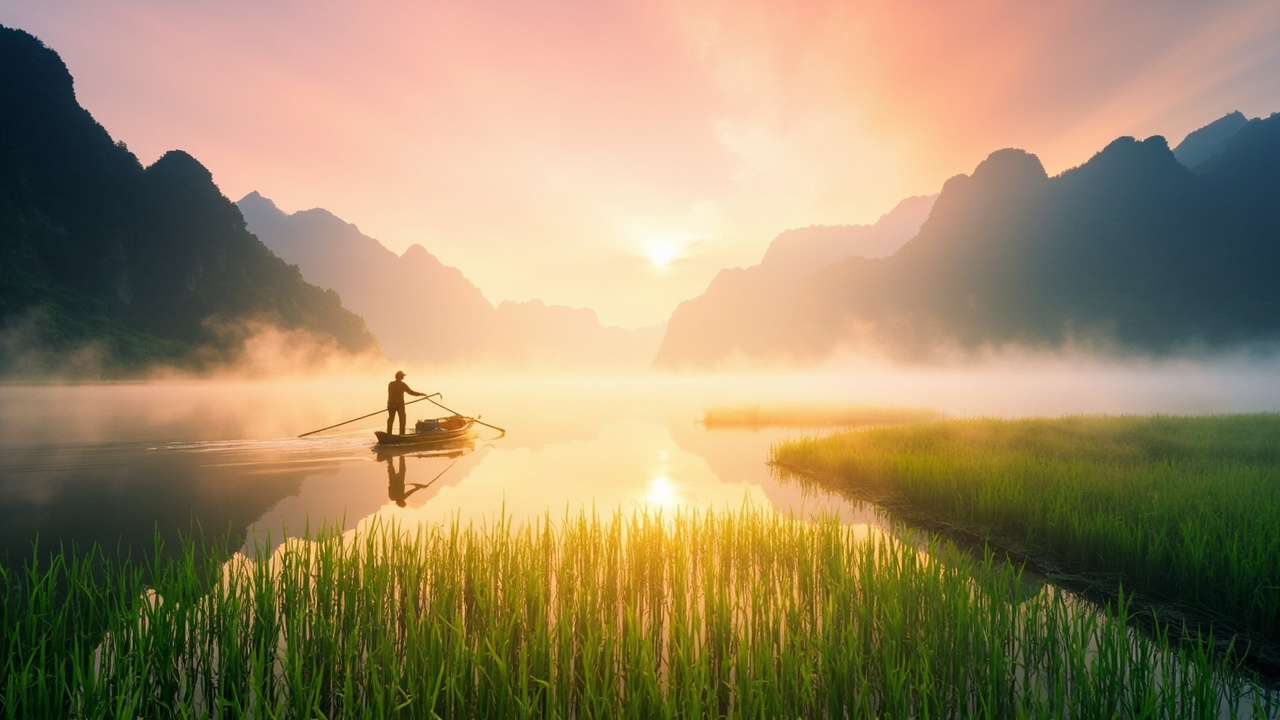
Yangshuo Travel Guide
The woman at the noodle stall on West Street didn’t look up when I sat down. She just dropped a fistful of rice noodles into boiling water, added a spoon of pickled beans, and slid the bowl across the counter. I ate it standing up for 8 yuan (about $1.10). That was my first morning in Yangshuo, and it set the tone for the next five days: nobody here is trying to impress you, and that’s exactly the point.
Yangshuo sits in Guangxi province, about 65 km (40 miles) south of Guilin, wedged between the Li River and a cluster of limestone karst peaks that look like something out of a scroll painting. It’s been on the backpacker circuit since the 1980s, which means it’s more developed than most Chinese countryside towns. But step 20 minutes outside the center and you’re in rice paddies with water buffalo and old men smoking pipes on stone bridges.
This guide covers the 10 places I’d actually send a first-time visitor to — not the ones that look best on Instagram, but the ones that made me stay an extra three days. I’ve been to Yangshuo four times over seven years, most recently in spring 2026, and I’ve made plenty of mistakes along the way so you don’t have to.
Quick answer
Yangshuo is best visited between April and June or September and November, when temperatures sit around 20–28°C (68–82°F) and the karst hills are green rather than hazy. Most nationalities can now enter China visa-free for up to 30 days (check the current visa-free transit rules before booking), and a comfortable 4-day trip costs roughly $250–400 per person excluding flights. The single most important practical tip: set up Alipay or WeChat Pay before you arrive, because almost nothing in Yangshuo accepts foreign credit cards.
The Short Version
If you only have 90 seconds: base yourself in Yangshuo town, not Guilin. Rent an e-bike for 50–80 yuan ($7–11) a day and ride the Yulong River loop. Do the Li River cruise once, from Guilin to Yangshuo, and never again. Skip the big shows unless you love crowds. Eat at street stalls, not hotel restaurants. Bring cash for small vendors and a translation app for everything else. Three days minimum, five if you can.
How I Picked These
I’ve been coming to Yangshuo since 2019, and I’ve stayed in everything from a 60-yuan hostel dorm to a 1,200-yuan boutique hotel overlooking the Yulong. For this guide, I revisited every spot in March 2026, talked to the e-bike rental guy who’s been on the same corner for 11 years, and asked a local guide named Wei which places she’d actually take her own family. I cut anything that felt like a tourist trap even if it’s famous, and I included a couple of spots that barely show up in English-language guides. Prices are what I paid or was quoted in 2026.
Comparison Table
| Rank | Place | Best For | Approx Cost (USD) | Time Needed | When to Go |
|---|---|---|---|---|---|
| 1 | Yulong River e-bike loop | Scenery, freedom | $8–12 | Half day | Apr–Jun, Sep–Nov |
| 2 | Li River cruise (Guilin–Yangshuo) | First-timers, photos | $30–55 | 4–5 hours | Year-round (best Apr–Oct) |
| 3 | Xingping Old Town | Photography, 20-yuan note view | Free–$3 | 3–4 hours | Weekday mornings |
| 4 | Moon Hill | Hiking, panoramic views | $2–3 | 2 hours | Early morning |
| 5 | West Street | Nightlife, food | Free | Evening | Any night |
| 6 | Xianggong Hill | Sunrise photography | $8 | 1.5 hours | Sep–Nov |
| 7 | Silver Cave | Rainy days, families | $12 | 2 hours | Any |
| 8 | Fuli Old Town | Fan painting, quiet | Free | 2 hours | Weekday |
| 9 | Impression Sanjie Liu | Big-budget show | $30–60 | 1.5 hours | Apr–Oct |
| 10 | Yangshuo cooking class | Food, culture | $30–45 | 3–4 hours | Any |
1. Yulong River E-Bike Loop — The Thing You’ll Remember Most
The first time I rode the Yulong loop, I got lost within 20 minutes and ended up on a dirt path between two rice paddies with a water buffalo blocking the way. I sat there for ten minutes waiting for it to move. Best ten minutes of the trip.
The Yulong is the smaller, quieter sister of the Li River, and the loop around it is the single best thing to do in Yangshuo. You ride past karst peaks, through villages where farmers are still working with hand tools, and over stone bridges that are 400 years old. It’s flat, well-marked, and takes 4–6 hours at a relaxed pace.
📷 Location: Rentals cluster around West Street and the bus station. The classic loop starts at Gongnong Bridge and ends near Chaoyang Wharf.
🎫 Entry fee: Free. E-bike rental 50–80 yuan ($7–11) per day; deposit usually 200–500 yuan.
🕐 Opening hours: Rentals open 7am–7pm; ride anytime in daylight.
🚲 How to actually get there: From West Street, walk 5 minutes north to Pantao Road. Multiple rental shops. Ask for a “Yulong loop map” — most give you a paper one with English labels.
⏰ When to visit: Early morning (7–9am) for empty roads and mist. Avoid weekends if you can; Chinese tour groups flood the bridges.
💡 Insider tips: Bring your passport for the rental deposit. Download an offline map — signal drops in the valleys. Wear a helmet even if locals don’t. Carry small bills for the bamboo raft crossings (30–50 yuan) if you want to shortcut a section.
I ate lunch at a family restaurant in Jiuxian village — braised river fish and stir-fried pumpkin shoots — and the grandmother running it refused to let me pay for the tea.
2. Li River Cruise — Do It Once, Do It Right
Everyone told me the Li River cruise was overrated. Everyone was half right. The 4-hour boat from Guilin to Yangshuo passes some of the most photographed scenery in China, and yes, you share it with 200 other tourists on your boat alone. But the landscape genuinely delivers.
The trick is which boat you book. The standard 4-star boats (210–280 yuan, $30–40) have open upper decks and decent lunch. The 3-star boats are cheaper but crowded and the windows are grimy. Skip the “luxury” 5-star unless someone else is paying.
📷 Location: Departs from Zhujiang Wharf in Guilin, arrives at Yangshuo Wharf.
🎫 Entry fee: 210–380 yuan ($30–55) depending on boat class; hotel pickup extra.
🕐 Opening hours: Departures 9am–11am daily; book a day ahead in high season.
🚤 How to actually get there: Book through your hostel or on Trip.com. Bus transfer from Guilin hotels to the wharf is usually included.
⏰ When to visit: April–October for green hills. November–March can be foggy and cold; the boats still run but views are hit-or-miss.
💡 Insider tips: Sit on the right side going downstream for the best views. Bring your own snacks — the onboard “snack bar” is a rip-off. The boat drops you at Yangshuo Wharf, which is 1 km from town; a shuttle or taxi is 20–30 yuan.
A German couple I met on the boat had booked the 5-star and spent the whole trip inside because the deck was “too sunny.” Don’t be them.
3. Xingping Old Town — The View on the 20-Yuan Note
I pulled a 20-yuan note out of my pocket at the viewpoint and held it up against the actual landscape. It matched. That’s the kind of thing that sounds cheesy until you’re standing there doing it.
Xingping is a small Ming-era town 25 km (15 miles) upstream from Yangshuo, and the viewpoint behind it is the exact scene printed on the back of the 20-yuan note. The town itself is quiet, with old wooden houses, a few guesthouses, and a riverside promenade where fishermen still use cormorants (mostly for photos now, but the birds are real).
📷 Location: Xingping town, Yangshuo County; the viewpoint is a 20-minute walk from the old town.
🎫 Entry fee: Free to enter town; the viewpoint is free; some guesthouses charge 5–10 yuan for roof access.
🕐 Opening hours: Always open.
🚌 How to actually get there: From Yangshuo bus station, take the Xingping minibus (8 yuan, 45 minutes). Or cycle — it’s a beautiful 2-hour ride.
⏰ When to visit: Weekday mornings before 10am. By noon the viewpoint is packed with tour groups.
💡 Insider tips: Stay overnight if you can — the town empties at 5pm and you get it to yourself. The best food is at the tiny stalls near the pier, not the riverside restaurants. Bring cash; most vendors don’t take cards.
I paid 15 yuan for a bowl of Guilin rice noodles here that was better than anything I ate in Guilin itself.
4. Moon Hill — Short Hike, Big Payoff
Moon Hill is a karst peak with a natural arch at the top that looks like a crescent moon punched through the rock. The hike up is 800 stone steps, takes about 40 minutes if you’re reasonably fit, and will absolutely wreck your calves if you’re not.
I did it at 7am on a Tuesday and had the summit to myself for 20 minutes. By the time I came down, three tour buses had arrived.
📷 Location: 8 km south of Yangshuo town, on the road to Gaotian.
🎫 Entry fee: 15–20 yuan ($2–3).
🕐 Opening hours: 7am–6pm.
🚲 How to actually get there: E-bike or bicycle (30 minutes from town), or a taxi for 40–50 yuan. Look for the “Moon Hill” sign on the main road.
⏰ When to visit: Early morning. Sunset is also good but you’ll be walking down in the dark.
💡 Insider tips: Bring water — there’s nothing at the top. The “vendors” at the base selling drinks charge triple. Wear shoes with grip; the steps get slick after rain.
An old woman at the bottom tried to sell me a “lucky stone” for 50 yuan. I said no. She laughed and gave me a free one anyway.
5. West Street — Loud, Touristy, and Worth One Night
West Street is the beating, chaotic, slightly obnoxious heart of Yangshuo. It’s a pedestrian street lined with bars, souvenir shops, and restaurants with English menus. It’s not authentic. It’s not quiet. But it’s fun for one evening, and some of the food is genuinely good.
The trick is to walk it once for the vibe, then eat on the side streets. The best beer fish (a local specialty — freshwater fish cooked with beer, tomatoes, and chilies) is at the small family places one block off West Street, where a whole fish costs 60–90 yuan ($8–13) instead of 180.
📷 Location: Central Yangshuo, running north from the Li River.
🎫 Entry fee: Free.
🕐 Opening hours: Shops 10am–11pm; bars until 2am.
🚶 How to actually get there: You’ll walk into it. It’s the center of town.
⏰ When to visit: Evening, but eat before 7pm to avoid the crush.
💡 Insider tips: Ignore anyone who approaches you in English offering “a special tour.” Agree on prices before ordering seafood. The German bakery at the north end does a decent breakfast if you need a break from noodles.
I watched a British guy try to haggle a 30-yuan beer down to 20. The bartender just walked away. Don’t do that.
6. Xianggong Hill — Sunrise, If You Can Get Up
Xianggong Hill is the classic Yangshuo sunrise shot: a bend in the Li River framed by karst peaks, with mist rolling between them. It’s a 15-minute climb up stone steps to a series of viewing platforms.
The catch: you need to be there by 5:30am, and you need clear-ish weather. I went twice. The first time was pure fog. The second time was one of the best sunrises I’ve seen in China.
📷 Location: Near Xingping, about 25 km from Yangshuo town.
🎫 Entry fee: 50 yuan ($7–8).
🕐 Opening hours: Open from 4:30am for sunrise; closes at sunset.
🚗 How to actually get there: Hire a driver (150–200 yuan round trip) or stay overnight in Xingping and take a 10-minute taxi.
⏰ When to visit: September–November for the clearest skies. Avoid July–August (hazy and hot).
💡 Insider tips: Bring a headlamp for the stairs. The platforms fill up — arrive by 5am for a front-row spot. There’s a small tea stand at the top charging 20 yuan for hot water; worth it.
The photographer next to me had been waiting four mornings for a clear sky. He got it that day. I’ve never seen a grown man so happy.
7. Silver Cave — The Rainy-Day Backup
Silver Cave is a big limestone cave system with colored lights, underground pools, and stalactites that look like melted candles. It’s kitschy, it’s crowded, and it’s genuinely impressive if you’ve never been in a cave this size.
I went on a rainy afternoon when every outdoor plan was dead. It saved the day.
📷 Location: About 18 km south of Yangshuo, on the road to Lipu.
🎫 Entry fee: 80–90 yuan ($11–13).
🕐 Opening hours: 8am–5:30pm.
🚌 How to actually get there: Taxi or e-bike. Buses from Yangshuo bus station run hourly.
⏰ When to visit: Rainy days, or when you need a break from heat.
💡 Insider tips: The lighting is dramatic but terrible for photos — bring a fast lens or just enjoy it. The walk through takes about 90 minutes. Ignore the “photo spot” upsells.
A Chinese family behind me spent the whole tour trying to get their toddler to look at the camera instead of the cave. The kid was right.
8. Fuli Old Town — The Quiet One
Fuli is a small riverside town 8 km east of Yangshuo, known for painted paper fans and almost nothing else. That’s the appeal. There’s one main street, a few workshops, and a riverbank where old men play cards.
I bought a hand-painted fan for 40 yuan from a woman who’d been making them for 30 years. She showed me how the brush strokes work. I understood maybe 20% of what she said.
📷 Location: Fuli town, 8 km east of Yangshuo.
🎫 Entry fee: Free.
🕐 Opening hours: Town always open; fan workshops roughly 9am–5pm.
🚲 How to actually get there: E-bike (30 minutes) or a 30-yuan taxi.
⏰ When to visit: Weekday mornings. The market is busiest on 2nd, 5th, and 8th days of the lunar month.
💡 Insider tips: Bring cash for the workshops. Most artisans don’t use WeChat Pay. The riverside noodle stall is excellent and costs 10 yuan.
9. Impression Sanjie Liu — Big, Loud, and Actually Good
I was ready to hate this. A 600-performer outdoor show directed by Zhang Yimou, staged on the Li River with the karst hills as a backdrop? Sounded like a tourist trap.
It wasn’t. The scale is genuinely stunning, especially the section where hundreds of performers with lit costumes move across the water in near-darkness. It’s not subtle, but it’s not supposed to be.
📷 Location: Sanjie Liu Theatre, 1 km west of Yangshuo town.
🎫 Entry fee: 200–680 yuan ($30–95) depending on seating.
🕐 Opening hours: Shows at 8pm and 9:30pm, weather permitting.
🚶 How to actually get there: 15-minute walk from West Street, or a 15-yuan taxi.
⏰ When to visit: April–October. Shows cancel in heavy rain.
💡 Insider tips: Mid-tier seats (around 320 yuan) are the sweet spot. Bring a light jacket — it gets cold by the river. Skip if you’re exhausted; it’s long.
10. Cooking Class — The Best Souvenir Is a Recipe
On my third trip, I finally took a cooking class. We made beer fish, stuffed snails, and a cold cucumber dish, in a courtyard kitchen with a local chef named Lily who spoke enough English to be funny and enough Chinese to be brutal about my knife skills.
It’s the kind of thing that sounds like a tourist activity and turns out to be the most useful two hours of the trip.
📷 Location: Several schools around West Street and in the villages; I used Yangshuo Cooking School.
🎫 Entry fee: 220–320 yuan ($30–45) including market tour and lunch.
🕐 Opening hours: Morning (9am) and afternoon (2pm) sessions.
🚶 How to actually get there: Most schools pick you up from your hotel.
⏰ When to visit: Any day; book 1–2 days ahead in high season.
💡 Insider tips: Do the market tour version — you’ll learn what to buy and how to ask for it. Bring a notebook. Ask for recipes in English; most schools email them.
FAQ summary
Yangshuo is a small town in Guangxi, about 65 km south of Guilin, best reached by high-speed train to Yangshuo Station (from Guilin, 30 minutes; from Guangzhou, 2.5 hours) or by the 4-hour Li River cruise. Most foreign visitors can enter China visa-free for up to 30 days in 2026, but you must set up Alipay or WeChat Pay before arrival because foreign cards are rarely accepted. A comfortable 4-day trip costs around $250–400 per person excluding international flights, and the best months are April–June and September–November.
FAQ
Q: Do I need a visa to visit Yangshuo in 2026? A: Most nationalities (including US, UK, EU, Australia, and much of Southeast Asia) can enter China visa-free for up to 30 days as of 2026. Check the latest visa-free rules before booking, since policies change.
Q: How do I get to Yangshuo from Guilin? A: The fastest way is the high-speed train from Guilin West Station to Yangshuo Station, about 30 minutes and 30–50 yuan ($4–7). The scenic option is the Li River cruise, 4–5 hours and 210–380 yuan. Buses from Guilin bus station take about 90 minutes.
Q: Can I use my credit card in Yangshuo? A: Almost never. Set up Alipay or WeChat Pay before you arrive and link your foreign card. Carry 200–500 yuan in cash for small vendors, e-bike deposits, and market stalls.
Q: How many days do I need in Yangshuo? A: Three days minimum to see the highlights without rushing. Five days if you want to do the Yulong loop, a cooking class, and a day trip to Xingping without feeling squeezed.
Q: Do I need a VPN in Yangshuo? A: Yes, if you want to use Google, Instagram, WhatsApp, or Gmail. Install and test your VPN before you land — see our China SIM and internet guide for setup details.
Q: Is English widely spoken? A: In West Street and hotels, yes. Everywhere else, no. Download a translation app with offline Chinese — Google Translate works if your VPN is on; Pleco is a good backup.
Q: What’s the best time of year to visit? A: April–June and September–November. Summer (July–August) is hot, humid, and crowded. Winter is quiet but often foggy, which ruins the karst views.
The Honest Wrap-up
This guide is for the traveler who wants scenery, food, and a bit of chaos, and who’s willing to rent an e-bike and get slightly lost. It’s not for someone who wants a polished resort experience or who can’t handle squat toilets and translation apps. If that’s you, stay in Guilin and do a day trip.
One last thing: don’t overplan Yangshuo. The best moments happen when you take a wrong turn on the Yulong loop, stop at a random village stall, and end up talking to a farmer about his water buffalo for 20 minutes. Book your first two nights, then figure out the rest when you’re there.
More guides you may like

Top 10 Bridges in China
China's bridges are engineering marvels spanning mountains, rivers, and seas. Here are 10 of the most spectacular, from ancient stone to modern steel.
8 min read

Top 10 Buddhist Sites in China
From the Leshan Giant Buddha to the Dunhuang Caves, these 10 Buddhist sites represent 2,000 years of China's spiritual heritage.
9 min read

Top 10 Day Trips from Beijing You Shouldn't Miss
Beijing is packed with history, but some of China's best experiences are just a few hours away. Here are 10 day trips that will transform your visit.
9 min read
Top 10 Hidden Gems in China Off the Beaten Path
Beyond the Great Wall and Terracotta Warriors, China has incredible hidden destinations few tourists ever reach. Here are 10 underrated gems worth the detour.
9 min read

Top 10 Markets and Shopping Streets in China
From Shanghai's Bund to Beijing's Silk Street - 10 markets where foreigners can haggle, explore, and bring home authentic Chinese goods.
9 min read
Top 10 Museums in China You Shouldn't Miss
China's museums span 5,000 years of civilization. These 10 - from the Palace Museum to Xi'an's terracotta gallery - are unmissable for culture lovers.
9 min read