
China Travel Cost Calculator
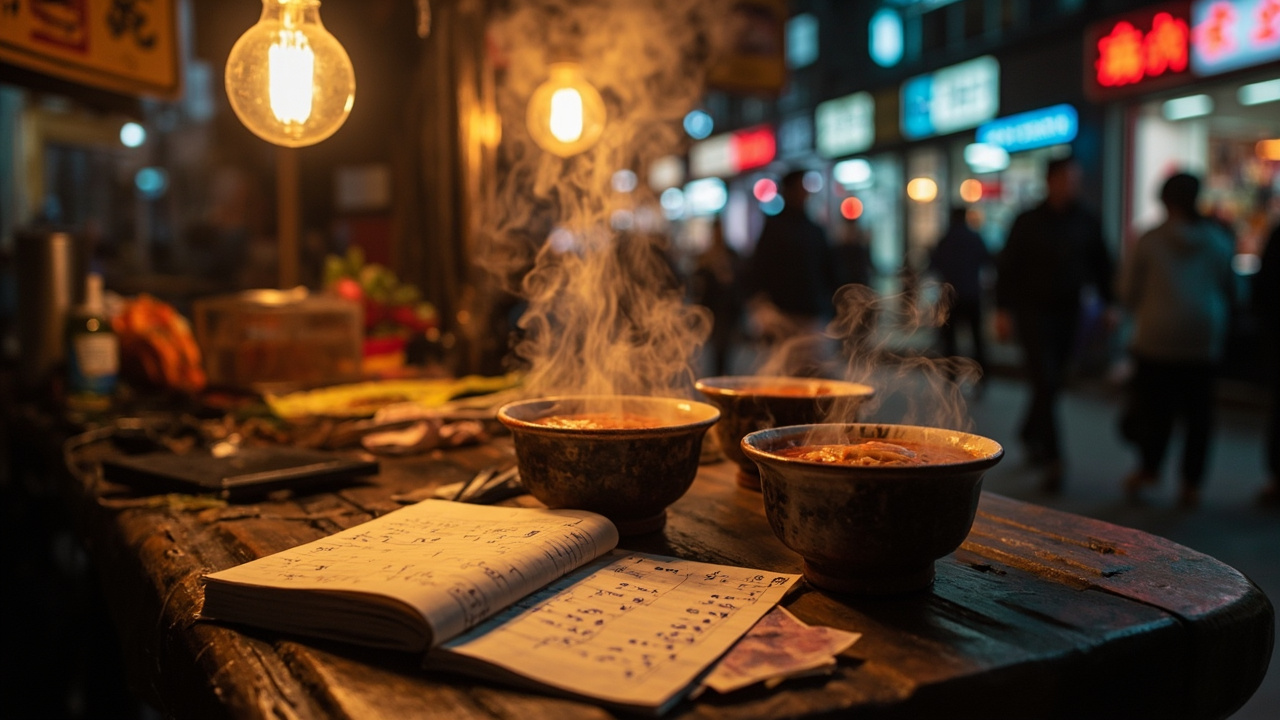
I still remember sitting on a plastic stool outside a noodle shop in Chengdu, doing math on a napkin. My bowl of dan dan noodles cost 12 yuan. The taxi from…
China Travel Cost Calculator
I still remember sitting on a plastic stool outside a noodle shop in Chengdu, doing math on a napkin. My bowl of dan dan noodles cost 12 yuan. The taxi from the airport had cost 60. The hostel bed was 55. I’d been in China for four days and had spent less than I’d budgeted for a single night in Tokyo. A woman at the next table watched me scribbling and laughed. “You’re counting money,” she said in slow English. “Don’t. Just eat.”
She was right, but she was also wrong. You do need to count money in China, because the range is enormous. I’ve had days here that cost $18 and days that cost $400, and both were in the same city. The difference wasn’t luxury versus budget. It was knowing which costs are fixed, which are negotiable, and which are traps set specifically for people who haven’t done their homework.
That’s what this calculator is. Not a list of places to visit — you can find those anywhere. This is a breakdown of what a trip to China actually costs in 2026, city by city and category by category, based on seven years of living here and forty-plus trips across the country. I’ve paid too much for train tickets, eaten $2 meals that were better than $80 ones, and learned the hard way that a “free” attraction can cost you half a day in a queue.
By the end you’ll be able to build a real budget for your own trip, down to the taxi fare from the airport.
Quick answer
A comfortable mid-range trip to China costs roughly $80–$150 per person per day (about 580–1,080 CNY), including accommodation, food, transport, and attractions — but a budget traveler can do it on $40–$60 (290–430 CNY) and a luxury traveler will spend $300+ (2,160+ CNY). The single biggest variable is accommodation, followed by intercity transport; food and local transit are cheap almost everywhere. Most Western passport holders currently enter China visa-free for up to 30 days, which saves $140+ (1,000 CNY) on a tourist visa.
The Short Version
If you only read one paragraph: China is cheaper than you think for food and transport, and more expensive than you think for hotels and trains. Budget $50/day if you’re staying in hostels and eating street food, $120/day for a comfortable hotel and restaurant meals, and $250+/day if you want five-star and high-speed rail in business class. Bring a VPN and set up Alipay before you land — cash is nearly extinct.
How I Picked These
Everything here comes from money I actually spent. I’ve kept rough budgets for every trip since 2019, and I cross-checked the 2026 numbers against what friends paid on recent visits — a couple from Berlin who did two weeks in October, a solo traveler from Manila who did ten days in March, and my own trips to Beijing, Shanghai, and Chengdu this year. Where prices swing a lot (hotels, mainly), I give ranges rather than pretending there’s one number. I’ve flagged anything I’m unsure about instead of inventing a figure.
Comparison Table
| Rank | City / Region | Best For | Approx Cost (USD/day) | Time Needed | When to Go |
|---|---|---|---|---|---|
| 1 | Beijing | First-timers, history | $90–160 | 4–5 days | Apr–May, Sep–Oct |
| 2 | Shanghai | Modern China, food | $110–200 | 3–4 days | Mar–May, Oct–Nov |
| 3 | Chengdu | Food, pandas, pace | $60–110 | 3 days | Mar–Jun, Sep–Nov |
| 4 | Xi’an | Terracotta Army | $70–120 | 2–3 days | Apr–May, Sep–Oct |
| 5 | Guilin / Yangshuo | Landscape, cycling | $55–100 | 3–4 days | Apr–Oct |
| 6 | Zhangjiajie | Mountains, hiking | $65–120 | 3 days | Apr–Jun, Sep–Nov |
| 7 | Yunnan (Dali/Lijiang) | Slow travel, villages | $50–95 | 5–7 days | Mar–Jun, Sep–Nov |
| 8 | Hong Kong | City break, shopping | $150–280 | 3–4 days | Oct–Dec |
| 9 | Harbin | Winter, ice festival | $70–130 | 2–3 days | Dec–Feb only |
| 10 | Tibet (Lhasa) | Bucket-list, culture | $130–220 | 5–7 days | May–Oct |
Beijing — Where Your Budget Gets Tested First
The first thing I noticed in Beijing wasn’t the Forbidden City. It was the price of a hotel room near it. A basic double room within walking distance of Tiananmen in April runs $90–140 (650–1,000 CNY), and that’s for a three-star with a hard bed and a kettle. Move two subway stops out and the same room drops to $55 (400 CNY). That gap is the whole game in Beijing.
The city is genuinely expensive for accommodation and genuinely cheap for everything else. A bowl of zhajiangmian near the Drum Tower costs $1.50 (11 CNY). The subway is a flat $0.40–$1 (3–7 CNY) depending on distance. The Forbidden City entry is $8.50 (60 CNY) in peak season. So you can have a $140 day or a $50 day in the same city, and the only thing that changed was where you slept.
📍 Location: Dongcheng district for the classic sights; Chaoyang for modern hotels and better value.
🎫 Entry fee: Forbidden City $8.50 (60 CNY) peak, $5.50 (40 CNY) off-peak. Temple of Heaven $4 (30 CNY). Great Wall at Mutianyu $6 (45 CNY) plus $20 (140 CNY) round-trip cable car.
🕒 Opening hours: Forbidden City 8:30am–5pm, closed Mondays. Book online in advance — tickets sell out days ahead in spring and autumn.
🚇 How to get there: From Beijing Capital Airport, take the Airport Express to Dongzhimen ($3.50 / 25 CNY), then Line 2. From Daxing Airport, the new express line runs to Caoqiao in 20 minutes.
⏰ When to visit: Late April and October are ideal. Avoid the first week of October (National Day) — prices triple and the Wall is a queue.
💡 Insider tips: Buy a Yikatong transit card or load the subway onto Alipay. Skip the Wangfujing snack street — it’s a tourist trap. The Great Wall at Mutianyu is worth the extra cost over Badaling. Learn to say “bú yào” (don’t want) for touts.
I once paid $22 for a “tea ceremony” near the Forbidden City that turned out to be a scam. Walk away from anyone who invites you in for tea.
Shanghai — Where the Money Goes Fast
Shanghai is the most expensive mainland city for a tourist, and it doesn’t apologize for it. My last hotel there, a decent four-star in Jing’an, was $160 (1,150 CNY) a night. The same standard in Chengdu would be $70. But the food scene is worth every yuan, and the metro is so good you barely need taxis.
What surprised me is how much you can still save. The Bund is free. The Yu Garden is $6 (45 CNY). A bowl of xiaolongbao at a local shop is $3 (22 CNY), while the famous tourist version at a fancy restaurant is $25. The city rewards people who walk one block off the main drag.
📍 Location: Jing’an for central comfort; the Former French Concession for character; Pudong for skyline views.
🎫 Entry fee: Shanghai Tower observation deck $26 (180 CNY). Yu Garden $6 (45 CNY). Most museums free.
🕒 Opening hours: Shanghai Museum 9am–5pm, closed Mondays, free but book ahead.
🚇 How to get there: From Pudong Airport, Maglev to Longyang Road ($7 / 50 CNY, 8 minutes) then Line 2. From Hongqiao, Line 2 or 10 straight into the center.
⏰ When to visit: October and November are perfect. Avoid Chinese New Year and the first week of May.
💡 Insider tips: The Maglev only hits 300 km/h outside peak hours now — don’t expect the 430 km/h ride. Get a metro day pass if you’re moving a lot. The Bund is best at 6am, empty and pink. Set up WeChat Pay before you arrive; some small vendors only take it.
A taxi driver named Liu drove me from Hongqiao to Jing’an and refused a tip, then insisted I try his thermos of jasmine tea.
Chengdu — The Best Value in China
Chengdu is where I send every friend who asks “where should I go if I want China to be cheap and delicious?” A hostel bed is $12–18 (90–130 CNY). A hotel is $45 (330 CNY). A full meal at a hole-in-the-wall is $2–4 (15–30 CNY). And the city is genuinely relaxed in a way Beijing and Shanghai are not.
The pandas are the draw, but the food is the reason to stay. I spent a week there once and ate hotpot four times, each at a different price point, and the $8 one was the best. The city also has excellent coffee now, which it didn’t five years ago.
📍 Location: Chunxi Road for central; Wuhou district for quieter stays near the panda base.
🎫 Entry fee: Chengdu Panda Base $8 (55 CNY). Wuhou Shrine $7 (50 CNY). Jinli Street free.
🕒 Opening hours: Panda Base 7:30am–6pm; go at opening or the pandas sleep.
🚇 How to get there: From Tianfu Airport, Line 18 to Chengdu South Railway Station, then Line 1. From Shuangliu, Line 10.
⏰ When to visit: March to June and September to November. Summer is humid and crowded.
💡 Insider tips: Go to the panda base by 7:30am — by 10 they’re asleep. Book high-speed rail tickets 2 weeks ahead via the 12306 app. Hotpot is priced per skewer, so watch the sticks. English is limited; have a translation app ready.
I once ordered “medium spicy” hotpot and cried at the table while the waiter brought me extra napkins, smiling.
Xi’an — Two Days, One Big Ticket
Xi’an is the cheapest major tourist city in China if you ignore the Terracotta Army ticket. A hotel near the Bell Tower is $40–70 (290–500 CNY). Street food in the Muslim Quarter is $1–3 per item. The city wall is $8 (54 CNY) to walk, and renting a bike on top is another $6.
The Terracotta Army itself is $17 (120 CNY) and worth every cent, but it’s 40 km out of town and the transport adds up. Budget half a day and $25 total including the bus.
📍 Location: Beilin district near the Bell Tower for walkability.
🎫 Entry fee: Terracotta Army $17 (120 CNY). City Wall $8 (54 CNY). Big Wild Goose Pagoda $7 (50 CNY).
🕒 Opening hours: Terracotta Army 8:30am–6pm, no rest day. Go early.
🚇 How to get there: From Xianyang Airport, the Airport Intercity line to North Station, then Metro Line 2. To the Terracotta Army, take Line 9 to Huaqingchi then bus 602, or a tourist bus from the train station.
⏰ When to visit: April–May and September–October. Summer is brutally hot.
💡 Insider tips: The Terracotta Army has three pits — start with Pit 1, the big one, then the smaller ones. Hire a guide at the entrance for $15; without context it’s just statues. The Muslim Quarter is best after 7pm.
A vendor in the Muslim Quarter handed me a free sample of roujiamo and then refused to sell me one because she said I’d already eaten enough.
Guilin and Yangshuo — Landscape on a Budget
The karst hills around Guilin are the China you’ve seen on the back of a 20-yuan note, and they’re surprisingly affordable once you’re there. A guesthouse in Yangshuo is $25–45 (180–330 CNY). A bike rental is $3 a day. A bamboo raft down the Yulong River is $25 (180 CNY) and lasts two hours.
The trick is getting there. Flights from Beijing or Shanghai can be $150–300, but the high-speed rail from Guangzhou is $30. Once you’re in, it’s one of the cheapest places in the country.
📍 Location: Yangshuo town for the scenery; Guilin city for transport links.
🎫 Entry fee: Li River cruise $35–60 (250–430 CNY) depending on class. Yulong River raft $25 (180 CNY). Most viewpoints free.
🕒 Opening hours: Cruises depart 9am–11am. Rafts run daylight hours.
🚇 How to get there: Fly to Guilin Liangjiang Airport, then bus to Yangshuo (1.5 hours, $4). Or high-speed rail to Guilin North, then bus.
⏰ When to visit: April to October. Avoid the May and October holidays.
💡 Insider tips: Skip the big Li River cruise and do the Yulong River raft instead — cheaper and prettier. Rent an e-bike, not a bicycle, if you’re not fit. Bring cash for small vendors.
I got hopelessly lost on an e-bike outside Yangshuo and ended up at a farmer’s house drinking tea while he pointed me back to town.
Zhangjiajie — The Avatar Mountains, Priced Fairly
Zhangjiajie is the inspiration for the floating mountains in Avatar, and it’s priced like a national park rather than a theme park. The main ticket is $32 (228 CNY) for four days, which is remarkable value. A hotel in Wulingyuan town is $35–60 (250–430 CNY). Food is cheap.
The catch is the lifts and cable cars, which add up fast. The Bailong Elevator is $10 (72 CNY) each way. The Tianmen Mountain cable car is $40 (280 CNY) round trip. Budget $60 extra for a two-day visit just on vertical transport.
📍 Location: Wulingyuan district, right at the park entrance.
🎫 Entry fee: Zhangjiajie National Forest Park $32 (228 CNY), valid 4 days. Tianmen Mountain $40 (280 CNY) including cable car.
🕒 Opening hours: Park 7am–6pm. Tianmen 8am–4pm.
🚇 How to get there: Fly to Zhangjiajie Hehua Airport, then bus 4 to the city, then bus to Wulingyuan. Or high-speed rail to Zhangjiajie West, then shuttle.
⏰ When to visit: April–June and September–November. Winter is icy; summer is foggy and crowded.
💡 Insider tips: Stay in Wulingyuan, not Zhangjiajie city — you save an hour each way. The park is huge; pick two areas, not five. Bring your passport for ticket checks.
I made the mistake of trying to “do” the whole park in one day and ended up limping back to my hotel at dusk, having seen maybe a third of it.
Yunnan — Slow Travel, Low Cost
Dali and Lijiang in Yunnan are where Chinese travelers go to slow down, and they’re cheap in a way that feels almost accidental. A guesthouse in Dali’s old town is $20–40 (150–290 CNY). A bowl of rice noodles is $1.50. A day renting a scooter is $8.
The altitude (Dali is at 1,900m, Lijiang at 2,400m) is the hidden cost — you’ll feel tired the first day and should budget for it. But the food, the weather, and the pace make it my favorite region for a long stay.
📍 Location: Dali Old Town and Lijiang Old Town for atmosphere; both have quieter outskirts.
🎫 Entry fee: Most old towns free. Jade Dragon Snow Mountain $15 (100 CNY) plus cable car $18 (120 CNY). Three Pagodas $11 (75 CNY).
🕒 Opening hours: Attractions 8am–6pm. Old towns always open.
🚇 How to get there: Fly to Dali or Lijiang airport, or high-speed rail from Kunming (2 hours, $20).
⏰ When to visit: March–June and September–November. Winter is cold at altitude.
💡 Insider tips: Take it easy on day one at altitude. The “old town maintenance fee” in Lijiang is $7 (50 CNY) and sometimes checked. Bai and Naxi minority food is the highlight — try the rose cakes.
A Naxi woman in Lijiang taught me three words of her language and then gave me a free cup of yak butter tea, which I did not enjoy but drank anyway.
Hong Kong — The Expensive Exception
Hong Kong is not cheap, and pretending otherwise does nobody any favors. A decent hotel is $150–250 (1,170–1,950 HKD). A bowl of noodles is $8. A taxi across the harbor is $15. But it’s also the easiest place in China for a first-timer — English is everywhere, the MTR is flawless, and you don’t need a VPN.
I treat Hong Kong as a soft landing. Spend two days here to get your bearings, then cross into the mainland.
📍 Location: Tsim Sha Tsui for views; Central for business; Mong Kok for markets.
🎫 Entry fee: Victoria Peak Tram $11 (88 HKD) round trip. Most museums free on Wednesdays.
🕒 Opening hours: Attractions 10am–6pm. Markets run late.
🚇 How to get there: From the airport, the Airport Express to Central is $14 (115 HKD), 24 minutes. Or bus A21 for $4.50.
⏰ When to visit: October–December. Avoid summer (typhoons, humidity).
💡 Insider tips: Get an Octopus card at the airport. The Star Ferry is $0.50 and the best value in the city. Mainland payment apps don’t work here — bring a card.
A taxi driver in Kowloon spent twenty minutes explaining why he’d never leave Hong Kong, then charged me exactly the meter and wished me luck in “the mainland.”
Harbin — Winter Only, Worth It
Harbin exists as a tourist destination for about six weeks a year, and outside that window there’s no reason to go. The Ice and Snow Festival runs from late December to late February, and the city is genuinely magical then. A hotel is $50–90 (360–650 CNY). The festival ticket is $45 (330 CNY) for the main park.
It’s also brutally cold — minus 25°C is normal. Budget for proper gear, which is the real cost. A decent down jacket and boots will set you back $200 if you don’t own them.
📍 Location: Daoli district near Central Street for the festival.
🎫 Entry fee: Ice and Snow World $45 (330 CNY). Sun Island Snow Sculpture $35 (250 CNY).
🕒 Opening hours: Festival parks 11am–9pm. Best after dark when lit.
🚇 How to get there: Fly to Harbin Taiping Airport, then airport bus 3 to Central Street. Or high-speed rail from Beijing (5 hours).
⏰ When to visit: Late December to mid-February only.
💡 Insider tips: Wear more layers than you think you need. Hand warmers are essential. The festival is best on a weekday. Book hotels months ahead.
I watched a man from Guangzhou, in a thin coat, last about forty minutes before retreating to a café and ordering three hot chocolates.
Tibet — The Most Expensive and Most Regulated
Tibet is the one place on this list where cost is secondary to permission. Foreigners need a permit, a guide, and a fixed itinerary, and you can’t travel independently. A 5-day Lhasa tour starts around $650 (4,700 CNY) per person including permit, guide, and transport. Flights from Chengdu are $200–350.
The altitude (Lhasa is at 3,650m) means your first day is a write-off. Budget for it.
📍 Location: Lhasa old town around Barkhor Street.
🎫 Entry fee: Potala Palace $28 (200 CNY). Jokhang Temple $12 (85 CNY).
🕒 Opening hours: Potala 9am–4pm, timed entry, book ahead.
🚇 How to get there: Fly to Lhasa Gonggar, or take the Qinghai-Tibet railway from Xining (21 hours, spectacular).
⏰ When to visit: May–October. Winter is possible but cold and some routes close.
💡 Insider tips: Arrange the permit through a licensed agency at least 15 days ahead. Don’t fly in and go straight to the Potala — acclimatize first. Bring your own medication; pharmacies are limited.
Our guide, Tashi, told me the altitude would humble me, and it did — I spent my first afternoon in bed with a headache and a cup of sweet tea.
FAQ summary
The most important takeaways: a mid-range trip to China costs about $80–150 per person per day, with accommodation and intercity trains as the two biggest variables; food and local transport are cheap almost everywhere and rarely exceed $20/day combined; and most Western passport holders currently enter visa-free for up to 30 days, saving the cost of a tourist visa. Budget travelers can manage on $40–60/day, while luxury travelers should plan on $300+. Set up Alipay or WeChat Pay before arrival, since cash and foreign cards are accepted in fewer and fewer places.
FAQ
Q: How much does a 10-day trip to China cost in 2026? A: For a mid-range traveler, expect $800–1,500 (5,800–10,800 CNY) total including flights from the US or Europe, or $400–700 excluding flights. Budget travelers can do 10 days for $400–600 on the ground. The biggest swing factors are hotel standard and whether you take high-speed rail or budget flights between cities.
Q: Do I need a visa to visit China in 2026? A: Most Western passport holders currently enter visa-free for up to 30 days, and there’s also a 240-hour visa-free transit policy for many nationalities. Check the latest rules before booking, since policies change. If you don’t qualify, a tourist visa costs around $140 (1,000 CNY).
Q: Is China expensive for food? A: No — food is one of the cheapest parts of a China trip. Street food and local restaurants run $2–5 per meal, and even in Beijing or Shanghai you can eat well for $8–12. Western restaurants and hotel dining are where costs jump to $25–60 per person.
Q: How much is a high-speed train in China? A: A second-class ticket from Beijing to Shanghai is about $80 (553 CNY), Beijing to Xi’an is $75 (515 CNY), and Shanghai to Hangzhou is $11 (73 CNY). Book via the 12306 app or Trip.com, and reserve 1–2 weeks ahead for popular routes.
Q: Can I use my credit card in China? A: Rarely. Most vendors only accept Alipay or WeChat Pay, both of which you can link to a foreign card. Set them up before you arrive. Carry a small amount of cash for emergencies, but expect to use your phone for almost everything.
Q: What’s the cheapest way to travel between Chinese cities? A: Overnight sleeper trains are the cheapest for long distances, often $20–40 (150–290 CNY). High-speed rail is faster but costs more. Budget airlines like Spring Airlines can be cheap if booked early, but add baggage fees.
Q: How much should I budget per day in China? A: Budget travelers: $40–60/day. Mid-range: $80–150/day. Luxury: $300+/day. These include accommodation, food, local transport, and attractions, but not international flights or intercity travel.
The Honest Wrap-up
This guide is for the person who wants a real number, not a vibe. If you’re the kind of traveler who books a five-star hotel and doesn’t look at prices, some of this will feel irrelevant — you’ll spend $400 a day and enjoy it. If you’re on a tight budget and willing to eat where the locals eat, China will surprise you with how far your money goes.
My one piece of advice before you book: don’t optimize for the cheapest possible trip. Optimize for the trip you’ll actually enjoy. Spend the extra $30 on the hotel near the subway. Take the high-speed train instead of the overnight bus. Buy the panda ticket. The money you save by cutting corners rarely feels worth it once you’re there.
And set up Alipay before you land. Seriously.
More guides you may like
Top 10 Bridges in China
China's bridges are engineering marvels spanning mountains, rivers, and seas. Here are 10 of the most spectacular, from ancient stone to modern steel.
8 min read

Top 10 Buddhist Sites in China
From the Leshan Giant Buddha to the Dunhuang Caves, these 10 Buddhist sites represent 2,000 years of China's spiritual heritage.
9 min read
Top 10 Day Trips from Beijing You Shouldn't Miss
Beijing is packed with history, but some of China's best experiences are just a few hours away. Here are 10 day trips that will transform your visit.
9 min read
Top 10 Hidden Gems in China Off the Beaten Path
Beyond the Great Wall and Terracotta Warriors, China has incredible hidden destinations few tourists ever reach. Here are 10 underrated gems worth the detour.
9 min read
Top 10 Markets and Shopping Streets in China
From Shanghai's Bund to Beijing's Silk Street - 10 markets where foreigners can haggle, explore, and bring home authentic Chinese goods.
9 min read
Top 10 Museums in China You Shouldn't Miss
China's museums span 5,000 years of civilization. These 10 - from the Palace Museum to Xi'an's terracotta gallery - are unmissable for culture lovers.
9 min read