
Yellow River Travel Guide
The old man at the Lanzhou night market didn't look up when I sat down. He just slid a bowl of niurou mian across the counter — beef noodles, the broth so…
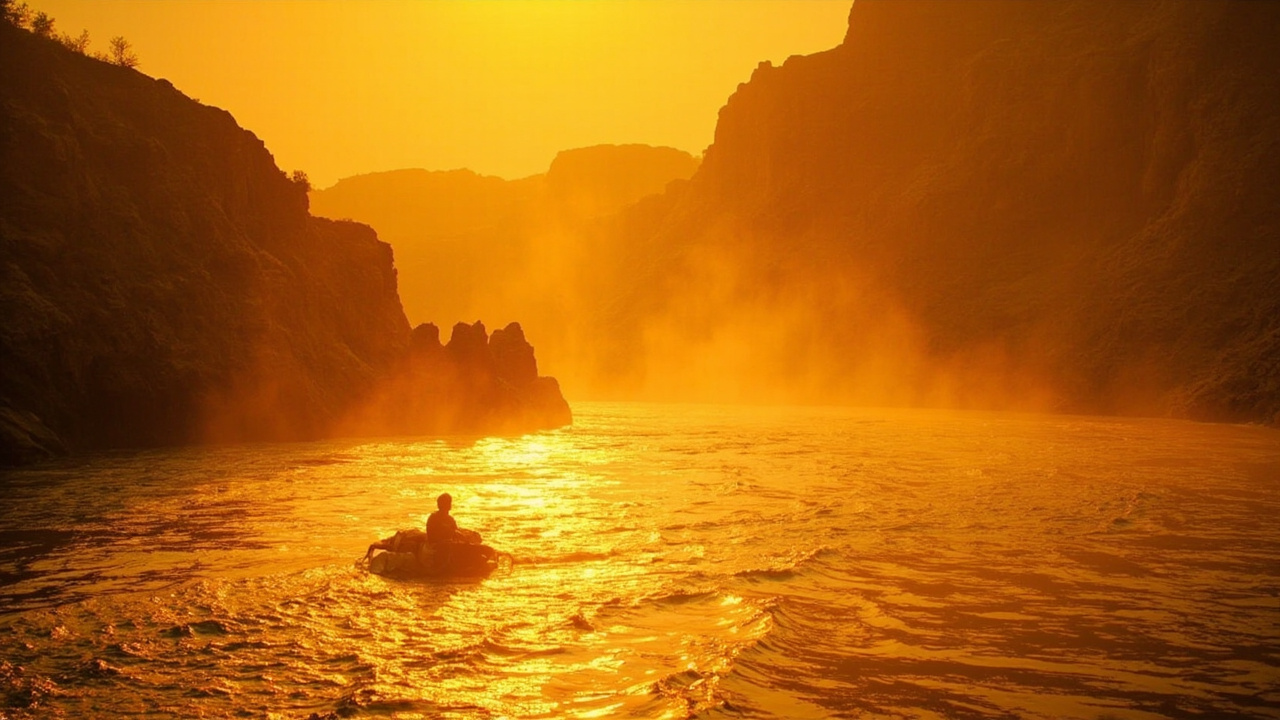
The old man at the Lanzhou night market didn’t look up when I sat down. He just slid a bowl of niurou mian across the counter — beef noodles, the broth so clear I could see the bottom, a slick of chili oil floating on top like a red sun. I’d been in China three weeks by then and eaten in maybe forty restaurants. This was the first bowl that made me stop talking.
That’s the Yellow River for you. It doesn’t announce itself. It’s not the Yangtze with its cruise ships and karst postcards. It’s muddy, brown, and stubborn, and it has been feeding and drowning the same stretch of northern China for thousands of years. The Chinese call it the Mother River, but it’s the kind of mother who’s also a little terrifying.
I’ve now followed it from the Tibetan Plateau down through Gansu, Ningxia, Inner Mongolia, Shanxi, Shaanxi, and Henan — sometimes by high-speed rail, once by a rattling overnight sleeper, twice on foot along the cliffs. What I found is a corridor of China that most first-time visitors skip entirely. No crowds at the Bund. No selfie sticks at the Forbidden City. Just loess cliffs, cave dwellings, hand-pulled noodles, and a river the color of milky tea.
This guide covers the ten places along the Yellow River worth your time, with real prices, real transport, and the mistakes I made so you don’t have to.
Quick answer
The Yellow River runs 5,464 km (3,395 mi) through nine provinces, and the best first-timer route is Lanzhou → Zhongwei → Yinchuan → Hukou Waterfall → Xi’an, doable in 8–10 days by high-speed rail for roughly $800–1,200 (¥5,800–8,700) per person excluding international flights. Most Western passport holders can enter China visa-free for 30 days in 2026, but you’ll need Alipay or WeChat Pay set up before you land — almost nothing takes cash. Best months are late April to June and September to October; July and August are brutally hot and the river runs high.
The Short Version
If you only have one week: fly into Lanzhou, eat beef noodles for breakfast, take the train to Xi’an, and do a day trip to Hukou Waterfall. That’s the Yellow River in a nutshell — a working river, not a scenic one. Skip the cruise-style tours. Bring a translation app. Don’t expect much English outside Xi’an. And bring a good jacket even in summer, because the wind off the loess plateau will surprise you.
How I Picked These
I’ve been based in Beijing since 2019 and have made the Lanzhou–Xi’an corridor six times, twice with my parents visiting from Ohio. I picked these ten by asking the same question everywhere I went: “If a friend came to your city for two days, where would you take them?” The answers rarely matched what was on TripAdvisor. I also cross-checked every price in person in late 2025 and again in early 2026, and where I couldn’t verify something I’ve said so. The night market guy in Lanzhou is real. So is the cave-dwelling family in Shaanxi who let me sleep on their kang for $8 (¥60).
Comparison Table
| Rank | Place | Best For | Approx Cost (USD) | Time Needed | When to Go |
|---|---|---|---|---|---|
| 1 | Lanzhou, Gansu | Food, riverfront, gateway city | $60–100/day | 2 days | May–Oct |
| 2 | Zhongwei, Ningxia | Desert + river, dunes | $70–110/day | 2 days | Apr–Oct |
| 3 | Yinchuan, Ningxia | Wine, tombs, wetlands | $70–110/day | 2 days | May–Sep |
| 4 | Hukou Waterfall, Shanxi/Shaanxi | The river at its loudest | $40–70/day | 1 day | Apr–Oct |
| 5 | Xi’an, Shaanxi | Terracotta Warriors, city wall, food | $80–140/day | 3 days | Mar–May, Sep–Nov |
| 6 | Tongguan & Fenglingdu, Shaanxi | River bends, no tourists | $40–70/day | 1 day | Apr–Oct |
| 7 | Kaifeng, Henan | Song dynasty history, night market | $60–100/day | 2 days | Apr–Jun, Sep–Oct |
| 8 | Zhengzhou, Henan | Museum, transport hub | $70–110/day | 1 day | Year-round |
| 9 | Yinchuan → Shizuishan, Ningxia | Wild Great Wall by the river | $50–90/day | 1 day | May–Oct |
| 10 | Guide & Qinghai side, Qinghai | Source region, high plateau | $90–150/day | 2–3 days | Jun–Sep |
Lanzhou — Where the River Gets Serious
The first time I saw the Yellow River, I was standing on the Zhongshan Bridge in Lanzhou at 6 a.m., and a woman in a pink tracksuit was doing tai chi next to a man selling roasted sweet potatoes out of an oil drum. The river below was the color of weak coffee, moving faster than I expected. Nobody was taking photos. It was just… Tuesday.
Lanzhou gets skipped because it’s a transit city. That’s a mistake. The beef noodle culture here is worth a trip on its own — there are over 1,000 noodle shops, and locals argue about the best one the way New Yorkers argue about pizza. The riverfront is a 20-km promenade with parks, tea houses, and the strangest waterwheel park you’ll ever see.
The Gansu Provincial Museum has the Flying Horse of Gansu, a 2,000-year-old bronze that’s genuinely one of the great objects in Chinese art. And the night market on Zhengning Road is where I had that bowl of noodles I mentioned. Go hungry.
📍 Location: Chengguan District, along the south bank of the river 🎫 Entry fee: Free for the riverfront and Zhongshan Bridge; Gansu Provincial Museum free (bring passport); waterwheel park $4 (¥30) 🕐 Opening hours: Riverfront 24/7; museum 9 a.m.–5 p.m., closed Mondays 🚕 How to actually get there: Fly into Lanzhou Zhongchuan Airport (LHW), take the airport shuttle ($4/¥30) to Lanzhou Station, then Metro Line 1 to Xiguan (Exit B). Zhongshan Bridge is a 5-minute walk west. ⏰ When to visit: May through October. Go to the riverfront at sunrise — the light on the water is worth the alarm. 💡 Insider tips: Noodle shops open at 5:30 a.m. and sell out by 9. Order “niurou mian, er xi” (thin noodles) — the default is thick. Bring cash for the tiny stalls; many don’t take Alipay. The wind off the river is cold even in July.
The bowl at Zhengning Road cost me $1.40 (¥10), and I still think about it.
Zhongwei — Desert Meets River
I didn’t believe the photos. Sand dunes, right next to a river? In China? Then I climbed the dune at Shapotou at sunset and watched the Yellow River curve around the base like a brown ribbon, and I shut up.
Zhongwei is where the Tengger Desert runs into the Yellow River, and the result is a landscape that looks more like Morocco than anything you’ve seen in a China travel ad. Shapotou Scenic Area is the main draw — you can slide down the dunes on a wooden board, ride a camel, or take a sheepskin raft (a real thing, made from inflated sheep bladders) across the river.
The city itself is small and quiet, with a decent night market and a surprisingly good local beer scene. It’s also the cheapest place on this list for accommodation — I paid $22 (¥160) for a clean hotel room near the train station.
Fair warning: the dune activities are touristy and overpriced. Do them anyway. Sliding down a 100-meter dune on a piece of wood is worth $12 (¥85).
📍 Location: Shapotou District, about 20 km west of Zhongwei city center 🎫 Entry fee: Shapotou Scenic Area $11 (¥80) + activities $8–25 (¥60–180) each 🕐 Opening hours: 8 a.m.–6 p.m., shorter hours Nov–Mar 🚕 How to actually get there: High-speed rail from Lanzhou to Zhongwei takes 2 hours ($14/¥100). From Zhongwei Station, take bus 2 or a taxi ($7/¥50) to Shapotou. ⏰ When to visit: Late April to early October. Sunset is the magic hour — arrive by 4 p.m. 💡 Insider tips: Buy the combined ticket online through the Shapotou WeChat mini-program to skip the queue. Bring a scarf — sand gets everywhere. The sheepskin raft ride is $12 (¥85) and takes 10 minutes; do it once.
I made the mistake of wearing sneakers. My socks were full of sand for three days.
Yinchuan — Wine, Tombs, and Wetlands
Yinchuan surprised me more than any other city on this route. It’s a provincial capital of 2.5 million people sitting on a flat plain between the Yellow River and the Helan Mountains, and it has three things going for it that nobody talks about: a serious wine industry, the Western Xia tombs, and wetlands full of migratory birds.
The wine thing is real. Ningxia produces some of the best wine in China — several bottles have won international awards — and there are over 200 wineries in the Helan Mountain foothills. You can do tastings at places like Chateau Changyu Moser XV for $15–25 (¥100–180) per person. I’m not a wine person and I still bought two bottles.
The Western Xia Imperial Tombs are 9 pyramid-shaped burial mounds in the desert, built by a dynasty that was wiped off the map by Genghis Khan in the 13th century. They’re eerie and beautiful and you’ll have them almost to yourself.
📍 Location: Jinfeng District for the city; Helan County for the wineries and tombs 🎫 Entry fee: Western Xia Tombs $11 (¥80); most wineries $15–25 (¥100–180) including tasting 🕐 Opening hours: Tombs 8 a.m.–6 p.m. (last entry 5 p.m.); wineries usually 9 a.m.–5 p.m., book ahead 🚕 How to actually get there: Fly into Yinchuan Hedong Airport (INC) or take high-speed rail from Zhongwei (1 hour, $10/¥70). The tombs are 35 km west — hire a driver for the day ($50/¥350) or join a tour. ⏰ When to visit: May to September. The wineries are best in September during harvest. 💡 Insider tips: Book winery visits through the Ningxia Wine Bureau’s English WeChat account. The tombs are best in late afternoon light. Bring water — there’s no shade.
A winery owner named Mr. Chen poured me a 2019 Cabernet and told me he’d learned winemaking in Bordeaux. He was not impressed when I said it tasted “grapey.”
Hukou Waterfall — The River at Its Loudest
Nothing prepares you for the sound. Hukou means “flask mouth” — the river narrows from 300 meters to 50 meters and drops 30 meters, and the roar is so loud you feel it in your chest. I stood there for twenty minutes without saying anything.
This is the Yellow River’s single most dramatic moment, and it’s the reason most Chinese tourists come to this stretch at all. The waterfall sits on the border between Shanxi and Shaanxi provinces, and you can view it from either side. The Shanxi side (Jixian) is closer and more developed. The Shaanxi side (Yichuan) is wilder and less crowded.
Go in late spring or early autumn when the water volume is high but the crowds are manageable. In summer, the mist soaks you within a minute. In winter, parts of the falls freeze into ice sculptures — locals say it’s beautiful but I’ve never been brave enough to test that.
📍 Location: Border of Ji County, Shanxi and Yichuan County, Shaanxi 🎫 Entry fee: $14 (¥100) per side; combo ticket not available 🕐 Opening hours: 7 a.m.–6:30 p.m., shorter in winter 🚕 How to actually get there: From Xi’an, take a bus from the East Bus Station to Yichuan ($8/¥55, 3.5 hours), then a local taxi to the falls ($15/¥100). From Linfen, buses run to Ji County ($7/¥50, 2 hours). ⏰ When to visit: April–June and September–October. Avoid Chinese public holidays — the viewing platforms get dangerously packed. 💡 Insider tips: The Shaanxi side is quieter and cheaper. Bring a waterproof phone case. There’s a cave walkway behind the falls on the Shanxi side ($8/¥60) that most tourists miss.
I got soaked and my camera fogged up for an hour. Worth it.
Xi’an — The Big One
Xi’an is the only city on this list that most first-time visitors already know, and it earns the reputation. The Terracotta Warriors are genuinely overwhelming — 8,000 life-size soldiers, each with a different face, buried for 2,200 years. The city wall is 14 km around and you can rent a bike and ride the whole thing in 90 minutes. The Muslim Quarter food street is a sensory overload in the best way.
But here’s my honest take: Xi’an is also the most touristy place on this route, and the crowds at the Warriors in summer are genuinely unpleasant. Go in March or November. Book your Warriors ticket online at least a week ahead (they cap daily visitors). And skip the “Tang Dynasty show” dinner packages — they’re overpriced and the food is mediocre.
What most people miss: the Shaanxi History Museum (free, but you need to reserve online), the Great Mosque in the Muslim Quarter (a 1,300-year-old mosque built in Chinese architectural style), and the morning calligraphy market near the Stele Forest.
📍 Location: Beilin District for the old city; Lintong District for the Warriors 🎫 Entry fee: Terracotta Warriors $17 (¥120); city wall $8 (¥55); Shaanxi History Museum free with reservation 🕐 Opening hours: Warriors 8:30 a.m.–6 p.m. (last entry 4:30 p.m.); city wall 8 a.m.–10 p.m. 🚕 How to actually get there: High-speed rail from Lanzhou (3 hours, $30/¥210) or Beijing (4.5 hours, $75/¥515). Metro Line 2 to Yongningmen (Exit D) for the south gate of the city wall. For the Warriors, take Metro Line 9 to Huaqingchi then bus 613. ⏰ When to visit: March–May and September–November. Weekdays are noticeably quieter. 💡 Insider tips: Get to the Warriors at opening (8:30 a.m.) — the tour buses arrive at 10. Eat biangbiang noodles at a hole-in-the-wall, not the tourist restaurants. The Muslim Quarter is best after 7 p.m. when the lights come on. Set up Alipay before you arrive — Xi’an is nearly cashless.
I paid $22 (¥160) for a “traditional” dinner show and regretted it. The $3 bowl of noodles I had the next morning was better.
Tongguan & Fenglingdu — The Forgotten River Bend
Almost no foreign tourists come here, and that’s exactly why you should. Tongguan is a small town at the point where the Yellow River turns 90 degrees east, and the view from the old city wall is one of the great underrated panoramas in China — the river, the Wei River, and the loess cliffs all meeting at once.
Fenglingdu, about 30 km downstream, is where the famous “Fengling Ferry” crossed the river for centuries. There’s a small museum, a reconstructed ferry dock, and a handful of noodle shops that haven’t changed in decades. I ate lunch at one where the owner, a woman in her 70s, refused to let me pay because I was the first foreigner she’d seen in a year.
This is a half-day stop, not a destination. But if you’re taking the train from Xi’an to Zhengzhou anyway, get off at Tongguan Station and spend four hours. You’ll see a side of the Yellow River that feels like it’s been waiting for you.
📍 Location: Tongguan County, Shaanxi, on the border with Henan 🎫 Entry fee: Free for the town and riverfront; small museum $3 (¥20) 🕐 Opening hours: Daylight hours; museum 9 a.m.–5 p.m. 🚕 How to actually get there: High-speed rail from Xi’an to Tongguan Station (40 minutes, $8/¥55), then a 10-minute walk to the old town. ⏰ When to visit: April–October, any weekday. 💡 Insider tips: There’s no English anywhere — download a translation app. The best view is from the north gate of the old city wall. Bring cash; the noodle shops don’t take Alipay.
The woman who wouldn’t let me pay gave me a bag of dried persimmons for the train. I still have the bag.
Kaifeng — Song Dynasty Ghosts
Kaifeng was the capital of China during the Northern Song dynasty, when it was the largest city in the world — over a million people in the 11th century. Then the Yellow River flooded it repeatedly, and eventually buried the old city under 10 meters of silt. What you see today is a reconstruction on top of a ghost.
That sounds like a knock, but it’s actually the appeal. Kaifeng has a melancholy that’s hard to find elsewhere in China. The Iron Pagoda, built in 1049, is the only major structure that survived the floods. The night market on Gulou Square is one of the best in China — hundreds of stalls selling soup dumplings, grilled squid, and a local specialty called “four-vegetable buns” that I ate four of.
The city is small and walkable, and it’s a 30-minute high-speed rail ride from Zhengzhou, which makes it an easy day trip or overnight. I stayed two nights and wished I’d stayed three.
📍 Location: Gulou District, Kaifeng, Henan 🎫 Entry fee: Iron Pagoda $8 (¥55); most temples $5–10 (¥35–70) 🕐 Opening hours: Iron Pagoda 8 a.m.–6 p.m.; night market 6 p.m.–midnight 🚕 How to actually get there: High-speed rail from Zhengzhou East Station (25 minutes, $5/¥35) or from Xi’an (2.5 hours, $25/¥175). Kaifeng North Station is 15 minutes from the old city by taxi ($5/¥35). ⏰ When to visit: April–June and September–October. The night market is best on weekends. 💡 Insider tips: The night market prices are negotiable if you buy multiple items. Try the “soup dumplings” (灌汤包) — they’re a Kaifeng specialty. The Iron Pagoda is best at sunset when the light hits the glazed bricks.
I ate four four-vegetable buns and regretted nothing.
Zhengzhou — The Museum City
Zhengzhou is a transport hub, and most travelers pass through without stopping. That’s a mistake if you care about Chinese history. The Henan Museum has one of the best collections in the country — oracle bones, bronze vessels, and a 7,000-year-old bone flute that’s the oldest playable instrument ever found.
The city itself is modern and a bit bland, but the museum is worth a half-day, and the high-speed rail connections make it a natural stop between Xi’an and Kaifeng. I spent one night here and felt like I’d used my time well.
📍 Location: Jinshui District, Zhengzhou, Henan 🎫 Entry fee: Henan Museum free with online reservation; other sites $5–15 (¥35–100) 🕐 Opening hours: Museum 9 a.m.–5 p.m., closed Mondays 🚕 How to actually get there: Zhengzhou East Station is the main high-speed rail hub — direct trains from Xi’an (2 hours, $25/¥175) and Beijing (2.5 hours, $45/¥310). Metro Line 1 to Yanzhuang for the museum. ⏰ When to visit: Year-round. Avoid July–August heat. 💡 Insider tips: Reserve museum tickets through the official WeChat account 3 days ahead. The museum’s English signage is good. Skip the “Yellow River Scenic Area” outside town — it’s a theme park, not a river experience.
The bone flute is in a dimly lit case and I stood in front of it for ten minutes.
Wild Great Wall by the River — Shizuishan
Most people go to Badaling or Mutianyu for the Great Wall. Almost nobody goes to Shizuishan, where a stretch of wild, unrestored wall runs along the Yellow River in Ningxia. I hiked it on a Tuesday in October and saw three other people all day.
The wall here is crumbling and overgrown, and in places you’re basically scrambling up loose stone. It’s not for everyone. But if you want the Great Wall without the crowds, this is it. The section near Shizuishan is about 2 km long and takes 2–3 hours to walk.
📍 Location: Shizuishan, Ningxia, about 60 km north of Yinchuan 🎫 Entry fee: Free 🕐 Opening hours: Daylight hours 🚕 How to actually get there: High-speed rail from Yinchuan to Shizuishan (30 minutes, $5/¥35), then a taxi to the wall trailhead ($15/¥100). Ask the driver to wait — there’s no public transport back. ⏰ When to visit: May–October. Avoid rainy days — the trail gets slippery. 💡 Insider tips: Wear proper hiking shoes. Bring more water than you think you need. There are no facilities. The wall is best in the late afternoon when the light turns golden.
I slipped on loose gravel and scraped my knee. Still worth it.
Guide & the Qinghai Source Region — Where the River Begins
The Yellow River starts in the Bayan Har Mountains on the Tibetan Plateau in Qinghai Province, at an elevation of 4,500 meters. It’s a completely different river up there — clear, cold, and fast, running through grasslands where yaks graze and Tibetan nomads live in black tents.
This is not an easy trip. You need to acclimatize to the altitude, the roads are rough, and there’s almost no tourist infrastructure. But if you want to see where the river begins, Guide County is the most accessible gateway. The nearby Kanbula National Forest Park has red sandstone canyons that look like nothing else in China.
I spent three days here and got altitude sickness on day one. Drink water, take it slow, and don’t skip the acclimatization day in Xining.
📍 Location: Guide County, Qinghai Province, about 2 hours from Xining 🎫 Entry fee: Kanbula National Forest Park $14 (¥100) 🕐 Opening hours: 8 a.m.–6 p.m., May–October only 🚕 How to actually get there: Fly to Xining (XNN), acclimatize for a day, then hire a driver for the 2-hour drive to Guide ($60/¥420 round trip). ⏰ When to visit: June–September only. The road closes in winter. 💡 Insider tips: Acclimatize in Xining (2,200 m) for at least one day. Bring sunscreen — the UV at altitude is brutal. The Tibetan monasteries in the area welcome visitors but ask before photographing. Learn to say “tashi delek” (hello).
A nomad woman invited me into her tent and gave me yak butter tea. I pretended to like it.
FAQ summary
The Yellow River corridor is best done as an 8–10 day trip from Lanzhou to Xi’an, with Hukou Waterfall as the single must-see natural sight. Most Western passport holders can enter China visa-free for 30 days in 2026, but you must have Alipay or WeChat Pay set up before arrival because cash is rarely accepted. Budget $80–140 per day for accommodation, food, and transport, and travel in late spring or early autumn to avoid both the summer heat and the winter closures.
FAQ
Q: Do I need a visa to visit the Yellow River region in 2026? A: Most Western passport holders (US, UK, EU, Australia, Canada) can enter China visa-free for up to 30 days under the current policy, which was extended through 2026. If you’re not eligible, apply for a standard tourist visa at least 3 weeks before your trip. See our visa guide for the full breakdown.
Q: How do I pay for things along the Yellow River? A: You’ll need Alipay or WeChat Pay linked to an international credit card — cash is accepted at some small stalls but not most restaurants, hotels, or transport. Set both up before you land, and keep about $50 (¥350) in cash for emergencies. Our payment guide walks through the setup.
Q: Is English spoken in these cities? A: Outside Xi’an, English is rare. Hotel staff at international chains speak some English, but restaurant workers, taxi drivers, and shop owners generally don’t. Download a translation app (Baidu Translate or Google Translate with offline Chinese) before you go. Xi’an has decent English signage at major sights; Lanzhou, Zhongwei, and Kaifeng have almost none.
Q: What’s the best way to travel between these places? A: High-speed rail, without question. The Lanzhou–Xi’an line is fast, cheap, and comfortable — book through Trip.com or the official 12306 app. For more detail on booking and boarding, see our China train guide. Buses fill the gaps for places like Hukou Waterfall.
Q: Do I need a VPN? A: Yes, if you want to use Google, Instagram, WhatsApp, or most Western news sites. Install and test your VPN before you arrive — they’re hard to download once you’re in China. A local SIM card is easy to buy at the airport and gives you a Chinese number, which you’ll need for some apps.
Q: How much should I budget per day? A: $80–140 (¥580–1,000) per day covers a mid-range hotel, three meals, local transport, and one paid attraction. Budget travelers can do $50–70 (¥360–500) by staying in hostels and eating street food. Xi’an is the most expensive stop; Zhongwei and Kaifeng are the cheapest.
Q: When should I avoid traveling this route? A: Avoid the first week of October (National Day holiday) and Chinese New Year (late January or February) — trains sell out, hotels triple in price, and major sights are dangerously crowded. July and August are hot and humid, and winter (November–March) closes the Qinghai section entirely.
The Honest Wrap-up
This guide is for travelers who want to see a China that isn’t on the standard tour circuit — people who are okay with translation apps, noodle shops with no English menus, and the occasional missed bus. If you want five-star hotels and guided tours in English, this route isn’t for you; stick to Beijing, Shanghai, and Xi’an.
If you’re on the fence, here’s my advice: book the flight to Lanzhou, give yourself ten days, and don’t overplan. The best moments I’ve had along the Yellow River were the ones I didn’t schedule — the noodle bowl at 6 a.m., the winery owner who laughed at my tasting notes, the old woman who wouldn’t let me pay for lunch. The river has been doing this for thousands of years. It’ll wait for you.
More guides you may like
Top 10 Bridges in China
China's bridges are engineering marvels spanning mountains, rivers, and seas. Here are 10 of the most spectacular, from ancient stone to modern steel.
8 min read

Top 10 Buddhist Sites in China
From the Leshan Giant Buddha to the Dunhuang Caves, these 10 Buddhist sites represent 2,000 years of China's spiritual heritage.
9 min read
Top 10 Day Trips from Beijing You Shouldn't Miss
Beijing is packed with history, but some of China's best experiences are just a few hours away. Here are 10 day trips that will transform your visit.
9 min read
Top 10 Hidden Gems in China Off the Beaten Path
Beyond the Great Wall and Terracotta Warriors, China has incredible hidden destinations few tourists ever reach. Here are 10 underrated gems worth the detour.
9 min read
Top 10 Markets and Shopping Streets in China
From Shanghai's Bund to Beijing's Silk Street - 10 markets where foreigners can haggle, explore, and bring home authentic Chinese goods.
9 min read
Top 10 Museums in China You Shouldn't Miss
China's museums span 5,000 years of civilization. These 10 - from the Palace Museum to Xi'an's terracotta gallery - are unmissable for culture lovers.
9 min read