
China Beer and Breweries Guide
The first time I ordered a beer in China, I was sitting on a plastic stool outside a noodle shop in Chengdu, and the bottle arrived warm. Not cold. Warm.…
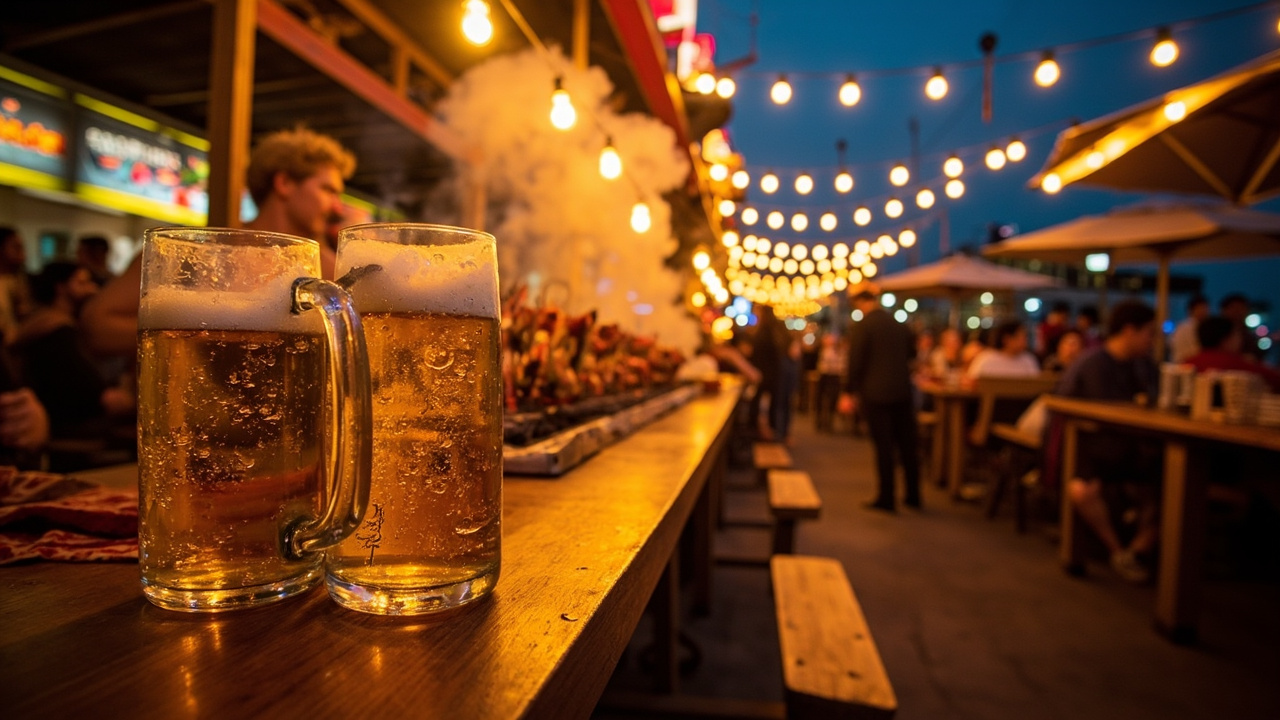
China Beer and Breweries Guide
The first time I ordered a beer in China, I was sitting on a plastic stool outside a noodle shop in Chengdu, and the bottle arrived warm. Not cold. Warm. The owner shrugged when I asked about ice, pointed at his forehead like I was the one with the problem, and went back to his wok. I drank it anyway. It was a Tsingtao, it cost about 60 cents, and it was exactly what I needed after eight hours on a hard-sleeper train.
That’s the thing nobody tells you about beer in China. It’s everywhere, it’s cheap, and most of it is designed to be drunk fast and cold-ish alongside food. But underneath that everyday lager culture, something has shifted hard in the last decade. Craft breweries have popped up in Beijing hutongs, Shanghai warehouse districts, and even in Kunming and Xi’an. Some are genuinely world-class. Others are a foreigner’s passion project that never quite found an audience.
I’ve spent seven years here and drunk my way through most of it, sometimes on purpose, sometimes because it was the only thing open at 11pm. This guide covers both ends: the big industrial lagers you’ll see on every menu, and the small breweries worth planning a day around. I’ll tell you what to drink, where to find it, what it costs, and which places I’d skip.
Quick answer
China’s beer scene splits into two worlds: cheap industrial lagers (Tsingtao, Snow, Yanjing) at $0.50–1.50 (¥4–10) per bottle anywhere, and a fast-growing craft scene with taprooms in Beijing, Shanghai, Chengdu, and Qingdao charging $4–8 (¥30–60) a pint. Most nationalities can now enter China visa-free for up to 30 days, so a beer-focused trip is genuinely doable on short notice. The best single city for beer is Qingdao in summer, where the annual International Beer Festival runs through late August.
The Short Version
If you only remember one thing: drink the local lager with local food, and save your craft beer money for Beijing and Shanghai. Tsingtao in Qingdao tastes different (fresher, less skunky) than the export version. Snow Beer is the world’s best-selling beer by volume and tastes like almost nothing, which is the point. Don’t chase rare bottles. Chase cold ones and good company.
How I Picked These
I didn’t use a listicle from 2019. I went to these places, usually more than once, and I talked to the people pouring. Some entries come from a single great night. Others are places I’ve returned to over years and watched change. I asked bartenders where they drink, I asked taxi drivers what beer they buy at the corner store, and I made mistakes — like showing up to a brewery on a Monday when it was closed. Where I’m unsure about a current price or hour, I say so. Craft beer in China moves fast; a place that was great in 2023 may have closed by 2026. Always check Dianping (the Chinese Yelp) before you go.
Comparison Table
| Rank | Place | Best For | Approx Cost (USD) | Time Needed | When to Go |
|---|---|---|---|---|---|
| 1 | Qingdao | Lager pilgrimage + festival | $40–80/day | 2–3 days | Jul–Sep |
| 2 | Beijing (hutongs) | Craft taprooms + atmosphere | $50–90/day | 2–3 days | Apr–May, Sep–Oct |
| 3 | Shanghai | Biggest craft selection | $60–110/day | 2–3 days | Mar–May, Oct–Nov |
| 4 | Chengdu | Beer + Sichuan food pairing | $40–70/day | 2 days | Mar–Apr, Sep–Nov |
| 5 | Xi’an | Craft near the Muslim Quarter | $35–60/day | 1–2 days | Apr–May, Sep–Oct |
| 6 | Kunming | Emerging scene, cheap | $30–55/day | 1–2 days | Year-round |
| 7 | Harbin | Cold-climate lagers + ice festival | $35–65/day | 1–2 days | Jan (festival) |
| 8 | Guangzhou | Cantonese food + beer | $45–80/day | 1–2 days | Oct–Dec |
| 9 | Shenzhen | Modern taprooms | $55–95/day | 1–2 days | Oct–Dec |
| 10 | Dali | Backpacker beer culture | $25–45/day | 2–3 days | Mar–May, Sep–Nov |
Qingdao — Where the Beer Is Actually a Religion
I once watched a man in Qingdao pour beer from a plastic bag into a glass on a street corner at 9am. Nobody looked at him twice. That’s Qingdao.
This is the city that made Chinese beer famous, and the Tsingtao Brewery here was founded by German settlers in 1903. The beer you drink in Qingdao is often days old, not months, and it tastes noticeably cleaner and maltier than the export bottles you get back home. The whole city treats beer like a civic institution. There’s a Beer Street (登州路啤酒街) lined with open-air halls where you buy beer by the liter from kegs and eat grilled squid.
The Tsingtao Brewery Museum is worth two hours even if you don’t care about beer — it’s a genuinely good museum about colonial-era industry. But the real move is the summer International Beer Festival, held in the Laoshan district, where dozens of tents pour beer from China and abroad. It’s loud, slightly chaotic, and fantastic.
📍 Location: Shinan District for the old town and Beer Street; Laoshan District for the festival
🍺 Entry fee: Brewery Museum ¥60 (~$8); Beer Festival ¥20–30 ($3–4) entry, beer extra
🕒 Opening hours: Museum 8:30am–5:30pm daily; Beer Street venues open late afternoon to midnight
🚕 How to actually get there: Fly into Qingdao Jiaodong International Airport, take Metro Line 8 to Qingdao North Railway Station, then Line 3 to Taidong or Zhongshan Road. Beer Street is a 10-minute walk from Taidong Station, Exit A.
⏰ When to visit: Late July through August for the festival. Weekday afternoons are calmer.
💡 Insider tips: Buy beer in a plastic bag from corner shops — it’s the local way and costs about $0.70 (¥5) a bag. Bring cash for small vendors. English is limited outside hotels, so have your translation app ready.
The grilled clams and cold beer at a Beer Street stall, eaten standing up, was one of the best meals of my year.
Beijing — Hutongs, Taprooms, and the Craft Capital
Beijing is where Chinese craft beer actually started, and it still has the deepest scene. I spent a Saturday afternoon in 2023 hopping between three taprooms in the Gulou area and met a brewer from Oregon who’d been here since 2011.
Great Leap Brewing is the original — it opened in a hutong courtyard in 2010 and is still the benchmark. Their Honey Ma Gold uses Sichuan peppercorn and local honey, and it’s the beer I’d hand a skeptic. Jing-A is the other big name, with a taproom near Workers’ Stadium and a bigger space in Sanlitun. Their Flying Fist IPA is a solid, bitter, West Coast-style beer that stands up to anything.
What makes Beijing special is the geography. You can drink a hazy IPA in a converted courtyard, walk five minutes, and be eating lamb skewers from a street cart for a dollar. The scene is walkable in the Gulou and Dongcheng areas, which is rare in a city this size.
📍 Location: Gulou/Dongcheng for hutongs; Sanlitun for bigger venues 🍺 Entry fee: Free to enter taprooms; pints $5–8 (¥35–60) 🕒 Opening hours: Most taprooms 4pm–midnight; some open at noon on weekends 🚕 How to actually get there: Take Metro Line 2 or 8 to Gulou Dajie Station, Exit G, then walk east into the hutongs. For Sanlitun, Line 10 to Tuanjiehu, Exit A. ⏰ When to visit: April–May and September–October. Avoid the July heat and the Spring Festival week when many places close. 💡 Insider tips: Set up Alipay or WeChat Pay before you arrive — many taprooms are cashless. Get a local SIM or eSIM for maps, since Google Maps is unreliable here. Check opening days on Dianping; small taprooms often close Mondays. A bartender at Great Leap told me the best beer in Beijing is whatever’s coldest after a 40-degree summer day, and I’ve never argued with that.
Shanghai — The Biggest Selection in the Country
Shanghai has more craft beer per square mile than any city in China, and it’s not close. The scene clusters around Jing’an and the former French Concession, plus a warehouse district on the Suzhou Creek that’s become a brewery hub.
Boxing Cat Brewery was one of the first, opening in 2008, and their Sucker Punch IPA is a Shanghai institution. Liquid Laundry, on the same street, does a rotating tap list that’s usually excellent. For sheer variety, go to one of the big taproom chains like The Brew or a bottle shop in Jing’an that stocks 200+ Chinese and imported beers.
The city’s advantage is density and English-friendliness. You can do a full beer crawl on foot in the French Concession, and most bartenders speak enough English to help you. It’s also the easiest place to find imported European and American beer if you’re homesick.
📍 Location: Jing’an and Huangpu districts; Suzhou Creek warehouses 🍺 Entry fee: Free entry; pints $6–9 (¥45–65) 🕒 Opening hours: Most 5pm–1am; weekend brunch spots open earlier 🚕 How to actually get there: Metro Line 2 or 7 to Jing’an Temple Station, Exit 5, then walk west. For the French Concession, Line 1 or 10 to South Shaanxi Road. ⏰ When to visit: March–May and October–November. Summer is humid and brutal. 💡 Insider tips: Many bars add a 10% service charge — check the bill. Tipping isn’t expected. Bring your passport for ID at bigger venues. The metro stops around 11pm, so plan your last drink accordingly. I once paid $11 for a pint in Shanghai and $1.50 for the same style in Chengdu two days later. Location is everything.
Chengdu — Beer With Sichuan Food, Which Changes Everything
Chengdu taught me that beer is a food-pairing tool, not a standalone experience. A cold, slightly sweet lager against mapo tofu and numbing peppercorns is a revelation.
The craft scene here is smaller but warmer than Beijing or Shanghai. The Beer Nest, tucked in a lane near the Wenshu Monastery area, is a tiny taproom with a rotating local list and a crowd that actually talks to strangers. Jiubi Brewing is the local favorite, with a taproom that feels like a neighborhood living room.
What I love about Chengdu is the pace. Nobody’s rushing. You order a flight, someone brings peanuts, and two hours disappear. The beer is good, not always great, but the setting makes it memorable.
📍 Location: Jinjiang and Qingyang districts 🍺 Entry fee: Free entry; pints $3–6 (¥20–45) 🕒 Opening hours: 6pm–midnight typical; some close one weekday 🚕 How to actually get there: Metro Line 4 to Wenshu Monastery Station, Exit B, then walk 5 minutes. For central taprooms, Line 2 or 3 to Chunxi Road. ⏰ When to visit: March–April and September–November. Chengdu summers are hot and humid. 💡 Insider tips: Pair beer with hotpot only if you enjoy suffering — the spice overwhelms most IPAs. Order a light lager instead. Most taprooms are cashless, so set up mobile payment. English is limited; point at the tap list. A local at The Beer Nest insisted I try a sour with my dan dan noodles, and he was right.
Xi’an — Craft Beer Near the Muslim Quarter
Xi’an surprised me. I expected terracotta warriors and lamb skewers, not a decent craft scene, but the Muslim Quarter area has a handful of small taprooms that cater to both tourists and locals.
The best is a small place near the South Gate that pours a local wheat beer brewed with local ingredients. It’s not going to win awards, but drinking a cold wheat beer after a day at the Terracotta Army is exactly right. The Muslim Quarter itself is a beer-and-skewer paradise in the evenings, though the beer there is mostly standard lager.
Xi’an is also a good base if you’re doing the high-speed rail route between Beijing and Chengdu — it’s a natural stop, and one night here is enough for the beer.
📍 Location: Beilin District, near South Gate and the Muslim Quarter 🍺 Entry fee: Free entry; pints $3–5 (¥20–35) 🕒 Opening hours: 5pm–midnight; Muslim Quarter stalls until late 🚕 How to actually get there: Metro Line 2 to Yongningmen Station, Exit D, then walk into the Muslim Quarter. The South Gate is a 5-minute walk. ⏰ When to visit: April–May and September–October. Summer is hot and crowded. 💡 Insider tips: The Muslim Quarter gets packed after 7pm — go early for a seat. Bring small cash for street stalls. Beer at tourist stalls is overpriced; walk one block off the main drag. I made the mistake of ordering an IPA with cumin lamb skewers. The hops and the spice fought each other. Get a lager.
Kunming — The Scene Nobody Talks About
Kunming is where I’d go if I wanted to drink cheap, interesting beer in a city with perfect weather and almost no foreign tourists. The scene is young, and that’s the appeal.
There’s a cluster of small breweries in the Wenlin Street area near the universities, catering to students and a growing local craft crowd. Prices are the lowest of any major city on this list — a pint for $2.50 (¥18) is normal. The beers lean experimental: local fruit sours, tea-infused ales, and rice lagers.
It’s not polished. Some places are basically a counter and three stools. But if you like finding things before everyone else does, Kunming is your city.
📍 Location: Wuhua District, Wenlin Street area 🍺 Entry fee: Free entry; pints $2–4 (¥15–30) 🕒 Opening hours: 6pm–midnight, irregular 🚕 How to actually get there: Metro Line 2 to Dongfeng Square, then a short taxi to Wenlin Street. Or Line 3 to Panlong District. ⏰ When to visit: Year-round — Kunming’s climate is mild all year. Spring is best. 💡 Insider tips: Bring a translation app; English is rare here. Cash is more accepted than in big cities. Check hours on Dianping — places open and close fast. A student at a Wenlin Street taproom poured me a pu’er tea ale that tasted like nothing I’d had before, in a good way.
Harbin — Cold Beer in a Cold City
Harbin in January is minus 20 Celsius, and people still drink beer outside. That tells you something about the local attitude.
Harbin Beer is the local brand, and it’s a clean, slightly sweet lager that pairs perfectly with the city’s Russian-influenced food — sausage, bread, and heavy stews. The Ice Festival in January draws huge crowds, and there are beer tents and indoor halls near the main ice park.
The craft scene is small but real, with a couple of taprooms near Central Street (中央大街). It’s not a beer destination on its own, but if you’re coming for the Ice Festival, you’ll drink well.
📍 Location: Daoli District, near Central Street 🍺 Entry fee: Ice Festival ~$45 (¥330); taprooms free entry 🕒 Opening hours: Festival 11am–9pm; taprooms evening only 🚕 How to actually get there: Fly to Harbin Taiping Airport, take the airport bus to Central Street, or Metro Line 2 to Central Street Station. ⏰ When to visit: January for the Ice Festival. Otherwise summer is pleasant, winter is brutal. 💡 Insider tips: Beer freezes if you leave it outside too long — drink fast. Layer up; the cold is serious. Indoor beer halls are warmer and cheaper than festival tents. I watched a man in a fur hat drink three beers outside in minus 18 degrees and never once shiver.
Guangzhou — Cantonese Food and Cold Beer
Guangzhou doesn’t get credit for its beer, but it should, because the food here is the best pairing partner in China. Dim sum, roast goose, and a cold lager is a combination that beats most fancy beer dinners I’ve had.
The craft scene is smaller than Shanghai’s but growing, with taprooms in the Tianhe and Yuexiu districts. The local favorite is a light, crisp lager brewed to match Cantonese food, and it works.
What makes Guangzhou worth a stop is the eating. You’ll drink beer at a dai pai dong (open-air food stall) at 10pm surrounded by families, and it’ll cost you $4 for beer and food combined.
📍 Location: Tianhe and Yuexiu districts 🍺 Entry fee: Free entry; pints $3–6 (¥20–45) 🕒 Opening hours: Taprooms 6pm–1am; food stalls until 2am 🚕 How to actually get there: Metro Line 1 or 3 to Tiyu Xilu Station, Exit D, for Tianhe taprooms. ⏰ When to visit: October–December. Summer is hot and wet. 💡 Insider tips: Order beer with roast goose at a proper restaurant — it’s a local classic. Cash is fine at food stalls. English is more common here than in most Chinese cities. A stall owner in Guangzhou refused to let me pay for my second beer, saying it was “for the guest.”
Shenzhen — Modern Taprooms in a Modern City
Shenzhen is China’s tech city, and its beer scene reflects that — clean, modern, and a bit expensive. The taprooms here look like San Francisco or Singapore, with polished interiors and English menus.
The best cluster is in the Nanshan district, near the tech campuses, where young professionals drink after work. There’s also a growing scene in the OCT Loft arts district, which is worth a visit for the atmosphere alone.
Shenzhen isn’t a beer pilgrimage. It’s a place where you’ll find a good pint easily if you’re already here for business or a Hong Kong border crossing.
📍 Location: Nanshan and OCT Loft, Nanshan District 🍺 Entry fee: Free entry; pints $5–8 (¥35–60) 🕒 Opening hours: 5pm–1am 🚕 How to actually get there: Metro Line 1 to OCT Station, Exit A, for OCT Loft. Line 1 or 11 for Nanshan. ⏰ When to visit: October–December. Avoid summer humidity. 💡 Insider tips: Prices are closer to Western levels here. Many venues are cashless. It’s an easy day trip from Hong Kong via the Futian checkpoint. I paid $9 for a pint in Shenzhen and $2.50 for a better one in Kunming the next week. That’s China.
Dali — Backpacker Beer Culture by a Lake
Dali is where China’s backpacker scene lives, and the beer culture matches: cheap, social, and slightly aimless in the best way.
The old town is full of small bars and guesthouses where travelers and Chinese tourists mix over $2 beers. The local craft scene is tiny, but the atmosphere is the draw — you drink on a rooftop overlooking the Cangshan mountains and the whole thing costs less than a coffee in Shanghai.
It’s not a beer destination in the technical sense. It’s a place to slow down, and beer is the excuse.
📍 Location: Dali Old Town, Yunnan Province 🍺 Entry fee: Free entry; beers $1.50–3 (¥10–20) 🕒 Opening hours: Bars open late afternoon until whenever 🚕 How to actually get there: Fly to Dali Airport or take a train from Kunming (about 2 hours by high-speed rail). From the station, a taxi to the old town takes 30 minutes. ⏰ When to visit: March–May and September–November. Summer is rainy. 💡 Insider tips: Prices are negotiable at some guesthouse bars. Bring cash for smaller spots. The altitude is mild but real — pace yourself. I met a Chinese couple in Dali who’d quit their Shanghai jobs to open a bar. They poured me a beer and told me they’d never been happier.
FAQ summary
China’s beer scene is split between ultra-cheap industrial lagers ($0.50–1.50 / ¥4–10) available everywhere and a growing craft scene ($3–9 / ¥20–65 a pint) concentrated in Beijing, Shanghai, Chengdu, and Qingdao. Qingdao in summer is the single best beer destination thanks to the International Beer Festival and the freshest Tsingtao you’ll ever drink. Most visitors can now enter China visa-free for up to 30 days, and mobile payment via Alipay or WeChat Pay is essential since many taprooms are cashless. English is limited outside major cities, so a translation app is worth having.
FAQ
Q: Do I need a visa to visit China for a beer trip in 2026? A: Most nationalities, including US, UK, and EU citizens, can now enter China visa-free for up to 30 days under the expanded 2026 policy. Check the latest rules before booking, since the list changes. If you’re only transiting, the 240-hour visa-free transit also applies at major hubs like Beijing and Shanghai.
Q: How much does beer cost in China? A: Industrial lagers cost $0.50–1.50 (¥4–10) at convenience stores and restaurants. Craft pints run $3–6 (¥20–45) in Chengdu and Kunming, and $6–9 (¥45–65) in Shanghai and Shenzhen. A full beer-focused day including food is roughly $40–90 depending on the city.
Q: Can I pay for beer with a credit card? A: Rarely. Most taprooms and nearly all street stalls are cashless via Alipay or WeChat Pay. Set these up before you arrive — you can link an international card. Carry a small amount of cash for older vendors.
Q: Do I need a VPN to use Google or Instagram in China? A: Yes, if you want Google Maps, Gmail, Instagram, or WhatsApp. Install and test a VPN before you fly, since downloads are blocked once you’re inside. Alternatively, get a tourist eSIM that routes traffic outside the firewall.
Q: Is English spoken at breweries? A: In Beijing and Shanghai taprooms, usually enough to order and chat. In Chengdu, Kunming, Xi’an, and Dali, expect limited English — a translation app is essential. Menus at craft bars often have English, but street stalls won’t.
Q: What’s the best time of year for a China beer trip? A: Late August for the Qingdao International Beer Festival, and April–May or September–October for Beijing, Shanghai, and Chengdu. Avoid the July heat in the south and the Spring Festival week, when many small venues close.
Q: Is it safe to drink beer in China as a solo traveler? A: Yes, China is generally very safe, including at night. Standard precautions apply — watch your drink in crowded festival settings, and don’t leave your bag unattended. Public drunkenness is frowned upon, so pace yourself.
The Honest Wrap-up
This guide is for the traveler who wants to drink where locals drink, not the person chasing a tick-list of famous breweries. If you’re looking for a Michelin-style beer tour with reservations and tasting notes, China will frustrate you — the good stuff is often in a courtyard with plastic chairs and no website. If you’re the kind of person who’s happy to point at a tap, hand over your phone to pay, and see what happens, you’ll love it here. My one piece of advice: don’t overplan. Pick two cities, drink the local lager with the local food, and let one night go longer than you meant it to. That’s where the good stories come from.
More guides you may like
Top 10 Bridges in China
China's bridges are engineering marvels spanning mountains, rivers, and seas. Here are 10 of the most spectacular, from ancient stone to modern steel.
8 min read

Top 10 Buddhist Sites in China
From the Leshan Giant Buddha to the Dunhuang Caves, these 10 Buddhist sites represent 2,000 years of China's spiritual heritage.
9 min read

Top 10 Day Trips from Beijing You Shouldn't Miss
Beijing is packed with history, but some of China's best experiences are just a few hours away. Here are 10 day trips that will transform your visit.
9 min read
Top 10 Hidden Gems in China Off the Beaten Path
Beyond the Great Wall and Terracotta Warriors, China has incredible hidden destinations few tourists ever reach. Here are 10 underrated gems worth the detour.
9 min read
Top 10 Markets and Shopping Streets in China
From Shanghai's Bund to Beijing's Silk Street - 10 markets where foreigners can haggle, explore, and bring home authentic Chinese goods.
9 min read
Top 10 Museums in China You Shouldn't Miss
China's museums span 5,000 years of civilization. These 10 - from the Palace Museum to Xi'an's terracotta gallery - are unmissable for culture lovers.
9 min read