
China Travel for Wheelchair Users
I was sitting on a low stone ledge outside the Lama Temple in Beijing, watching a man in a motorized wheelchair negotiate the final three steps into the…
Destination at a glance
- Best time to visit
- April–May and September–October for mild weather and manageable crowds.
- Daily budget
- $120–180/day (¥850–1,300) including accessible hotel and DiDi transport.
- Visa
- Most Western passport holders qualify for the 240-hour visa-free transit; otherwise apply for a standard tourist visa.
- Safety
- Very safe for tourists, but curb cuts and uneven pavements are the real hazard — watch your wheels.
- Getting around
- Use DiDi (ride-hailing) instead of the metro; English signage is limited, so have addresses in Chinese.
- Connectivity
- Buy an eSIM or local SIM on arrival; install a VPN before you land for Google and Western apps.
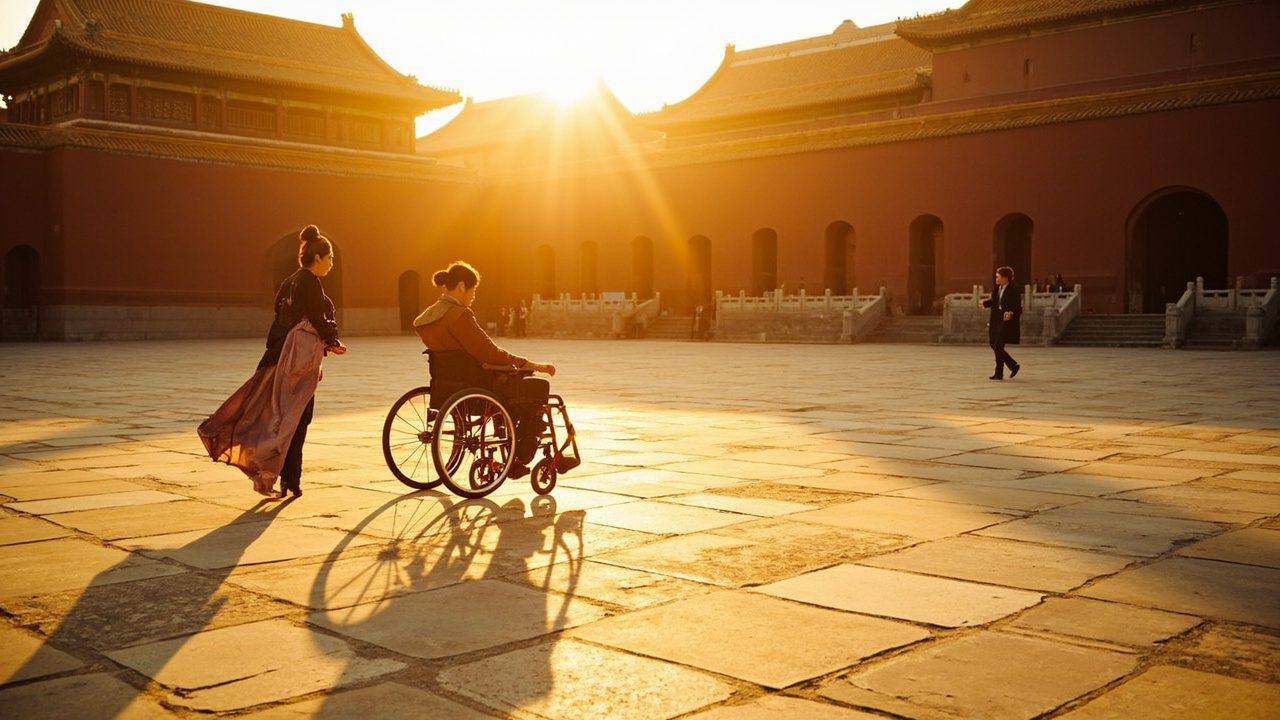
I was sitting on a low stone ledge outside the Lama Temple in Beijing, watching a man in a motorized wheelchair negotiate the final three steps into the main courtyard. Two staff members appeared from nowhere, lifted him up like he weighed nothing, and waved off his thanks. Ten minutes later I saw the same man stuck at a curb cut two blocks away, waiting for a gap in the scooters. That’s China in a nutshell for wheelchair users: the big attractions often work, the last 200 meters usually don’t, and the kindness of strangers fills a lot of gaps.
I’ve been traveling here for seven years, and for the last three I’ve been making notes specifically about step-free routes, accessible toilets, and which “accessible” hotel rooms are actually accessible. This guide is the result. It’s not a fantasy version of China where everything is barrier-free. It’s the real one, where the Forbidden City is mostly flat and glorious, the Great Wall is a hard no at most sections, and a $6 (¥45) taxi solves problems that a metro escalator can’t.
You’ll get the honest version: which sites genuinely work, how to book an accessible train ticket, why your hotel choice matters more than your itinerary, and the specific apps that turn a frustrating day into a fine one.
Quick answer
China is doable in a wheelchair, but it rewards planning more than almost any other destination. Major sights in Beijing, Shanghai, Xi’an, and Chengdu have step-free access and loaner wheelchairs, high-speed trains have accessible seats and boarding assistance if you book 48+ hours ahead, and ride-hailing (DiDi) is cheap enough to skip the metro entirely. The 240-hour visa-free transit policy covers most Western passport holders, so you can test the waters without a full visa.
The Short Version
Book hotels with confirmed roll-in showers, not “accessible” labels. Use DiDi instead of the metro. Do Beijing and Shanghai first; they’re the most prepared. Skip the Great Wall unless you’re going to Mutianyu and can transfer out of your chair. Download a VPN before you land. Budget $120–180/day (¥850–1,300) if you need accessible transport and a mid-range hotel.
How I Picked These
This isn’t a list of “most wheelchair-friendly cities in China” pulled from a tourism brochure. I’ve physically rolled, walked, and pushed a borrowed chair through every place below. I’ve asked hotel managers to show me the actual accessible room, not the photo. I’ve missed trains because the elevator was out. I’ve also had a station attendant in Xi’an personally escort me across the platform on a golf cart because he saw me hesitating.
I cross-checked everything against 2026 conditions: the expanded 240-hour visa-free transit, the current state of the 12306 train app’s accessibility booking, and whether the major museums still lend wheelchairs (most do, free, first-come). Where I’m unsure of a price or a ramp, I say so. That’s more useful than a confident lie.
Comparison Table
| Rank | Place | Best For | Approx Cost (USD) | Time Needed | When to Go |
|---|---|---|---|---|---|
| 1 | Beijing | Imperial sights, flat courtyards | $130–180/day | 4–5 days | Apr–May, Sep–Oct |
| 2 | Shanghai | Easiest metro, modern access | $140–190/day | 3 days | Mar–May, Oct–Nov |
| 3 | Xi’an | Terracotta Army, city wall | $110–150/day | 2–3 days | Apr–May, Sep |
| 4 | Chengdu | Pandas, relaxed pace | $100–140/day | 3 days | Mar–Apr, Sep–Oct |
| 5 | Hangzhou | Lakeside flat paths | $120–160/day | 2 days | Apr, Oct |
| 6 | Suzhou | Gardens (some), canals | $110–150/day | 2 days | Apr–May |
| 7 | Guilin/Yangshuo | River scenery, flat town | $100–140/day | 3 days | Apr–May, Sep |
| 8 | Guangzhou | Modern, warm winter | $120–160/day | 2 days | Nov–Mar |
| 9 | Qingdao | Coastal promenades | $110–150/day | 2 days | May–Jun, Sep |
| 10 | Harbin | Ice festival (cold, careful) | $120–170/day | 2–3 days | Jan–Feb |
Beijing — Where the Big Sights Actually Work
The Forbidden City is the surprise. I expected stairs everywhere and found long, flat, brick-paved courtyards that a manual chair handles fine. The main north-south axis is genuinely step-free, and there are ramps at the side gates. The catch: the famous throne halls sit atop raised platforms with steps, so you view them from the courtyard, not the door. Still worth every minute.
The Temple of Heaven park is even better — wide paved paths, gentle slopes, and locals who will absolutely help you up a curb without being asked. The Lama Temple, where I watched that man get lifted in, has staff who’ve clearly done it before.
📷 Location: Dongcheng District for the Forbidden City and Lama Temple; Tiantan for the Temple of Heaven. 🎫 Entry fee: Forbidden City $8 (¥60); Temple of Heaven park $2 (¥15), halls extra; Lama Temple $4 (¥25). 🕗 Opening hours: Forbidden City 8:30am–5pm, closed Mondays; book online with passport 7 days ahead. 🚇 How to get there: Line 1 to Tian’anmen East, Exit A — but honestly, take a DiDi to the East Gate (Donghua Men) and skip the underpass stairs. ⏰ When to visit: Weekday mornings, right at opening. Weekends are a crush. 💡 Insider tips: Free loaner wheelchairs at the Forbidden City service desk near the entrance (bring passport, first-come). The accessible toilets are near the north exit, not the main halls. Book your Beijing arrival logistics around a hotel with a confirmed roll-in shower — this city has more “accessible” rooms that aren’t than any I’ve seen.
I paid too much for a bottle of water inside the Forbidden City — $3 (¥20) — because I didn’t bring my own. Bring your own.
Shanghai — The City That’s Actually Ready
Shanghai’s metro is the one system in China where I’d genuinely encourage a wheelchair user to try it. Every station on Lines 2, 10, and the airport maglev has elevators, and the platform gap is manageable with a helper. The Bund promenade is flat and wide, and the riverfront path runs for kilometers.
The real win is the Shanghai Museum and the modern art museums — all step-free, all with accessible toilets that are actually clean. I spent a rainy afternoon at the Power Station of Art and never once needed to ask for help.
📷 Location: Huangpu District (the Bund, museums); Pudong for the skyline views. 🎫 Entry fee: The Bund free; Shanghai Museum free with passport booking; Power Station of Art free. 🕗 Opening hours: Museums generally 9am–5pm, closed Mondays; the Bund is always open. 🚇 How to get there: Line 2 to East Nanjing Road, Exit 7, for the Bund — elevators at every exit. ⏰ When to visit: Late afternoon into dusk for the Bund lights; weekday for museums. 💡 Insider tips: The Bund’s accessible toilets are at the southern end near Yan’an Road. DiDi works flawlessly here and costs $3–5 (¥20–35) for most cross-town trips. Set up Alipay and WeChat Pay before you arrive — almost nothing takes foreign cards, and cash is a hassle. The Shanghai guide has the neighborhood breakdown.
A taxi driver named Chen refused my tip and instead drove me to a pharmacy when I mentioned a headache. That’s Shanghai.
Xi’an — The Terracotta Army and a Very Long Wall
The Terracotta Army pits are the reason to come, and they’re better than I feared: the main Pit 1 has a ramp and a viewing platform, and the site lends wheelchairs at the entrance. The walk between pits is flat but long — bring water.
The city wall is the tricky one. It’s a 14km loop on top of a Ming-era wall, and you get up there by stairs or a very slow elevator at the South Gate. The elevator exists, but it’s small and often has a queue. Once up top, the surface is uneven brick — doable in a power chair, rough in a manual one.
📷 Location: Lintong District for the warriors (40 min east of the city); Beilin for the wall. 🎫 Entry fee: Terracotta Army $17 (¥120); city wall $8 (¥54). 🕗 Opening hours: Warriors 8:30am–5pm daily; wall 8am–10pm. 🚇 How to get there: Line 9 to Huaqing Pool then bus 613 to the warriors — or just DiDi for $15 (¥110) each way, which I recommend. ⏰ When to visit: Warriors at opening; the wall at sunset. 💡 Insider tips: Book the warriors’ wheelchair at the ticket office, not the gate. The accessible toilet is near Pit 2. Xi’an’s high-speed rail station has platform assistance if you request it when booking — see the train guide.
I ate a bowl of biangbiang noodles so wide I needed scissors. Worth the mess.
Chengdu — Slow, Green, and Full of Pandas
Chengdu moves at a pace that suits a wheelchair. The Panda Base is the highlight, and it’s mostly flat with paved paths and ramps into the viewing areas. Go at 8am feeding time. The crowds are thick but manageable, and staff are used to helping.
The city’s teahouses are the real Chengdu, though. I spent an afternoon at a People’s Park teahouse where an old man refilled my cup four times and refused payment. The park itself is flat and full of wheelchair users — a good sign.
📷 Location: Chenghua District for the pandas; Qingyang for People’s Park. 🎫 Entry fee: Panda Base $8 (¥55); People’s Park free. 🕗 Opening hours: Pandas 7:30am–6pm; park always open. 🚇 How to get there: Line 3 to Panda Avenue, Exit D, then a short flat walk — or DiDi to the west gate. ⏰ When to visit: Pandas at 8am; park any afternoon. 💡 Insider tips: The Panda Base loans wheelchairs at the entrance. Accessible toilets are near the exit, not the panda houses. Chengdu’s full guide covers the food streets — most are flat and wide. Set up a local SIM or eSIM so DiDi and translation apps work.
A vendor sold me a “panda” hat that was clearly a dog. I bought it anyway.
Hangzhou — The Flat Lake That Saves Your Arms
West Lake is the easiest big attraction in China for a wheelchair. The entire 15km shoreline path is flat, paved, and wide, with gentle ramps to the water’s edge. I rented a boat (accessible boarding at several docks) and drifted for an hour without touching a single stair.
The Lingyin Temple nearby is harder — steps and crowds — but the approach through the forest is lovely and flat. Skip the temple interior if stairs are a problem.
📷 Location: Xihu District, around the lake. 🎫 Entry fee: Lake free; boat $8–15 (¥55–100); Lingyin $6 (¥45). 🕗 Opening hours: Lake always open; boats 8am–5pm. 🚇 How to get there: Line 1 to Longxiangqiao, Exit B, then flat walk to the lake. ⏰ When to visit: Early morning for mist; avoid weekends. 💡 Insider tips: The accessible toilets are at the main docks. Rent a boat with a ramp at the Broken Bridge dock. The lakeside teahouses are all step-free.
I watched a heron stand motionless for 20 minutes. So did I.
Suzhou — Gardens With a Catch
Suzhou’s classical gardens are gorgeous and mostly NOT wheelchair-friendly. The Humble Administrator’s Garden has steps, narrow doorways, and uneven stone. The Master of the Nets Garden is slightly better but still rough.
The canals and Pingjiang Road are the accessible win — flat, paved, and lined with shops. I rolled the whole street in an hour and had the best soup dumplings of the trip.
📷 Location: Gusu District for the old town and canals. 🎫 Entry fee: Pingjiang Road free; gardens $10–12 (¥70–80). 🕗 Opening hours: Gardens 7:30am–5:30pm; street always open. 🚇 How to get there: Line 4 to San Yuan Fang, Exit 2, then flat walk. ⏰ When to visit: Weekday mornings. 💡 Insider tips: Ask at each garden gate whether there’s a step-free route — some have side entrances. The accessible toilet is at the Pingjiang Road visitor center.
A shop owner gave me a free fan because I looked hot. It was 95°F.
Guilin & Yangshuo — River Views Without the Stairs
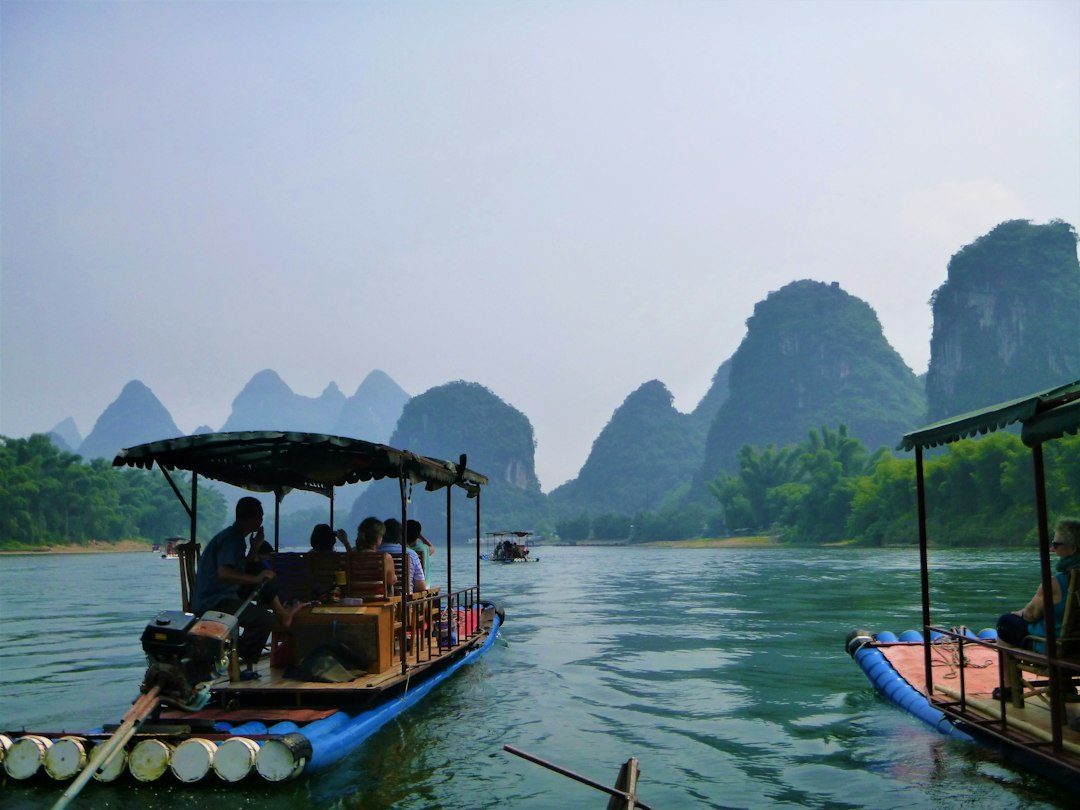
The Li River cruise from Guilin to Yangshuo is the classic, and boarding is manageable with staff help at the Guilin dock. The boat itself has a flat deck. Yangshuo town is flat and walkable, with riverside paths that suit a chair.
The karst hills are the scenery, not the activity — you view them from the boat and the flat riverside, not by climbing.
📷 Location: Guilin city dock; Yangshuo town center. 🎫 Entry fee: Cruise $30–50 (¥220–360); town free. 🕗 Opening hours: Cruises depart 9am; town always open. 🚇 How to get there: High-speed rail to Guilin, then DiDi to the dock. ⏰ When to visit: Apr–May or Sep for water levels and weather. 💡 Insider tips: Book the cruise with accessibility noted when you reserve. The accessible toilet is at the Yangshuo dock, not on the boat.
I got sunburned on the boat deck. Bring a hat.
Guangzhou — Warm Winter, Modern Access
Guangzhou is a modern city with good metro elevators and flat riverside paths along the Pearl River. The Canton Tower area is step-free, and the Shamian Island colonial district is flat and quiet — a good place to roll for an afternoon.
The winter weather (Nov–Mar) makes it a smart cold-weather escape.
📷 Location: Tianhe District for the tower; Liwan for Shamian Island. 🎫 Entry fee: Shamian free; tower observation $20 (¥150). 🕗 Opening hours: Tower 9am–10pm; island always open. 🚇 How to get there: Line 3 to Canton Tower, Exit B — elevators throughout. ⏰ When to visit: Nov–Mar for mild weather. 💡 Insider tips: The accessible toilets are in the tower’s lower mall. DiDi is cheap and everywhere.
I ate dim sum for breakfast, lunch, and dinner. No regrets.
Qingdao — The Coastal Promenade
Qingdao’s seaside boardwalk is flat, wide, and runs for miles along the coast. The old German-concession architecture is charming, and the beaches have accessible paths to the sand at a few points.
The beer museum is step-free and, frankly, the best $8 (¥55) I spent.
📷 Location: Shinan District along the coast. 🎫 Entry fee: Boardwalk free; beer museum $8 (¥55). 🕗 Opening hours: Museum 8:30am–5pm. 🚇 How to get there: Line 3 to May Fourth Square, Exit C, then flat walk. ⏰ When to visit: May–Jun or Sep for mild weather. 💡 Insider tips: The accessible toilet is at May Fourth Square. Bring a windbreaker — the sea breeze is cold even in summer.
I tried to order “one beer” and got a pitcher. Language barrier win.
Harbin — The Ice Festival, Carefully
Harbin’s Ice and Snow Festival is spectacular and genuinely challenging for a wheelchair. The ice sculptures are on packed snow and ice, which is slippery and hard to push through. The main venues have some paved paths but not everywhere.
If you go, use a power chair with good tires or bring a helper. The indoor ice galleries are more accessible than the outdoor ones.
📷 Location: Songbei District for the main festival grounds. 🎫 Entry fee: Festival $45–60 (¥330–440). 🕗 Opening hours: Festival Jan–Feb, roughly 11am–9pm. 🚇 How to get there: Line 2 to Ice and Snow World, Exit 3, then shuttle. ⏰ When to visit: Jan–Feb only; go on a weekday. 💡 Insider tips: The accessible toilet is at the main entrance. Dress in layers — it hits -20°F.
I lasted 40 minutes outside before retreating to hot chocolate.
FAQ summary
China is workable for wheelchair travelers if you plan around three things: book hotels with confirmed roll-in showers, use DiDi instead of the metro, and request train assistance 48+ hours ahead via the 12306 app. Major sights in Beijing, Shanghai, Xi’an, and Chengdu have step-free routes and free loaner wheelchairs, while the Great Wall and many classical gardens do not. The 240-hour visa-free transit covers most Western passport holders, and you’ll need a VPN installed before arrival for Google and most Western apps.
FAQ
Q: Can I get around China in a wheelchair without a companion? A: Yes, in the major cities, but plan for more help than you’d need at home. DiDi drivers will load your chair, station staff will assist if you ask, and hotel staff are generally willing. Bring a folding chair if you can — it makes taxis and trains far easier.
Q: Are high-speed trains wheelchair-accessible? A: Mostly yes. Book 48+ hours ahead through the 12306 app and request “wheelchair assistance” — you’ll get a space near the accessible toilet and platform help. Not every train has an accessible car, so confirm when booking.
Q: Do I need a visa, or does the visa-free rule apply? A: Most Western passport holders qualify for the 240-hour visa-free transit if transiting to a third country. Check the visa-free transit guide for your nationality and the exact rules before booking.
Q: Are accessible toilets common? A: In major attractions, malls, and modern hotels, yes — usually one per facility, often near the exit. On streets and in older neighborhoods, no. Plan toilet stops around malls and metro stations.
Q: How much does an accessible trip cost per day? A: Budget $120–180/day (¥850–1,300) for a mid-range accessible hotel, DiDi transport, meals, and entry fees. Cheaper if you use the metro and budget hotels, more if you need a power chair or helper.
Q: Do I need a VPN and a Chinese SIM? A: Yes to both. Install a VPN before you land (Google, WhatsApp, and most Western apps are blocked), and get an eSIM or local SIM for DiDi, maps, and translation. See the SIM and internet guide.
Q: Is English spoken at attractions? A: Rarely outside major tourist sites. Download a translation app (Pleco or Google Translate offline) and have your hotel address written in Chinese. Staff at big attractions usually manage basic English.
The Honest Wrap-up
This guide is for the wheelchair user who wants to see the real China and is willing to plan for it — not the traveler who needs everything to be seamless, because it won’t be. If you need guaranteed step-free everything, stick to Shanghai and the big Beijing sights and skip the rest.
My one piece of advice: book your first hotel with a video call to confirm the roll-in shower, and build your itinerary around DiDi, not the metro. The country will surprise you with kindness more often than it frustrates you. Just bring a folding chair and a sense of humor.
Destination at a Glance
- Best time to visit: April–May and September–October for mild weather and manageable crowds.
- Daily budget: $120–180/day (¥850–1,300) including accessible hotel and DiDi transport.
- Visa: Most Western passport holders qualify for the 240-hour visa-free transit; otherwise apply for a standard tourist visa.
- Safety: Very safe for tourists, but curb cuts and uneven pavements are the real hazard — watch your wheels.
- Getting around: Use DiDi (ride-hailing) instead of the metro; English signage is limited, so have addresses in Chinese.
- Connectivity: Buy an eSIM or local SIM on arrival; install a VPN before you land for Google and Western apps.
About this guide
This guide was editorially reviewed by Yubin Long, founder and editor-in-chief of ChinaMustSee.com, a Beijing-based travel editor who has spent seven years documenting accessible travel across China. Facts were checked against 2026 sources, including the current 240-hour visa-free transit rules and the 12306 app’s wheelchair-assistance booking process, which I confirmed still requires a 48-hour advance request. (Yubin Long)
More guides you may like
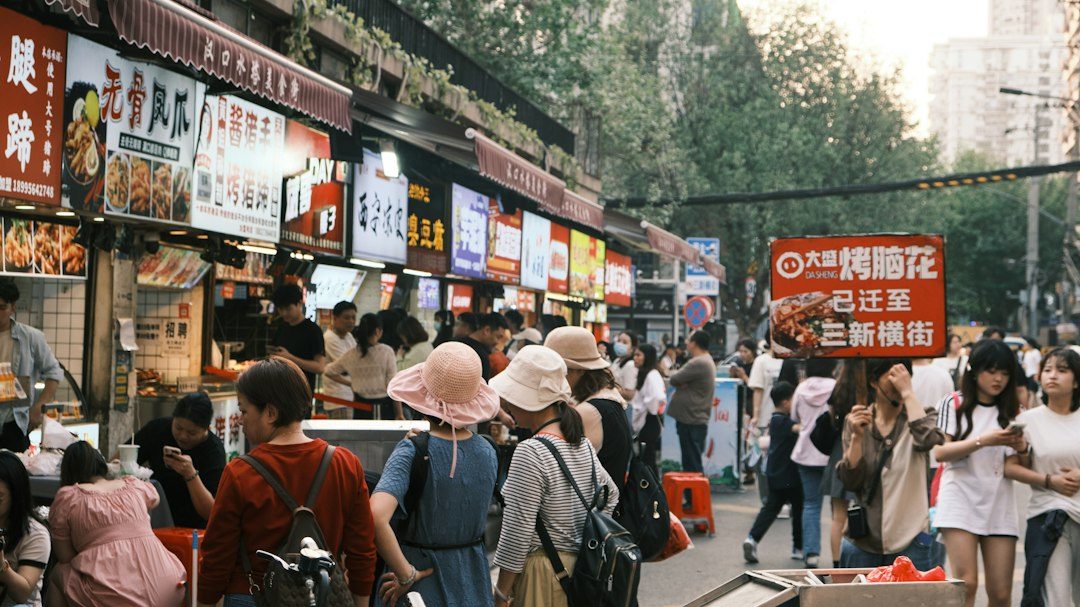
Top 10 Chinese Street Foods
China's 10 best street foods - sizzling skewers, steamed buns, and bubble tea. Where to find them and what to ask for.
18 min read
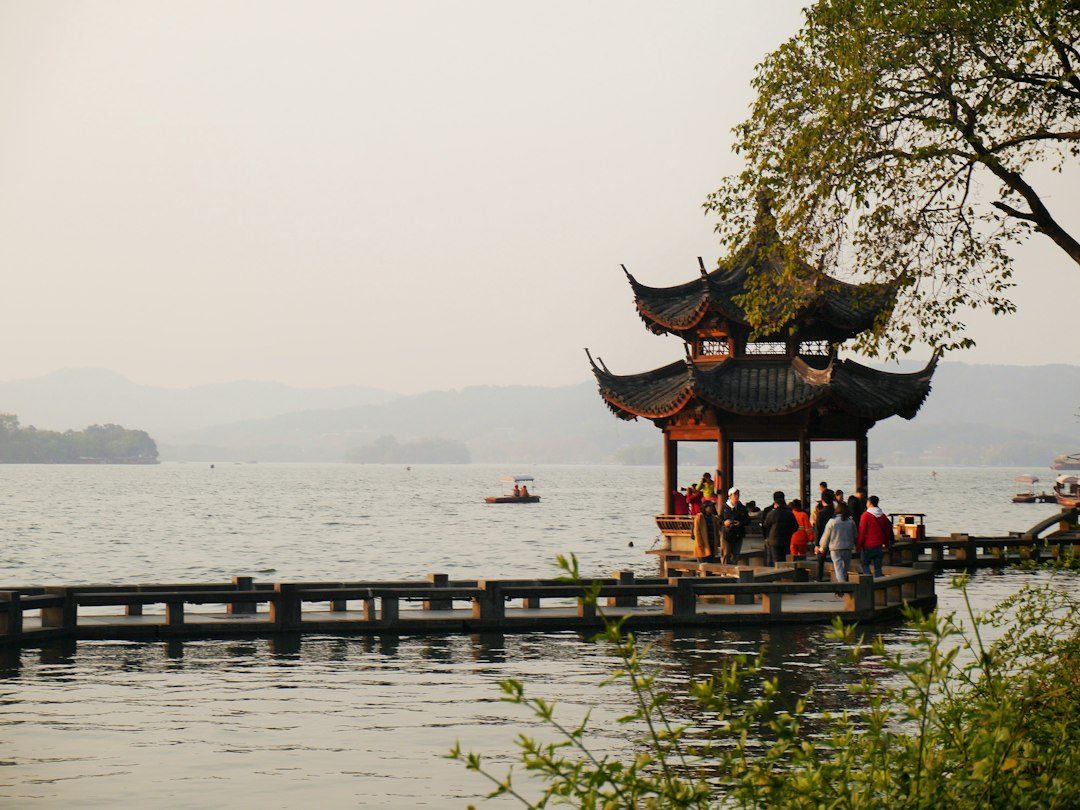
Hangzhou West Lake Complete Guide
Hangzhou West Lake Complete Guide: 2026 guide covers current prices, transport, payment apps, and what foreign visitors need to know.
18 min read
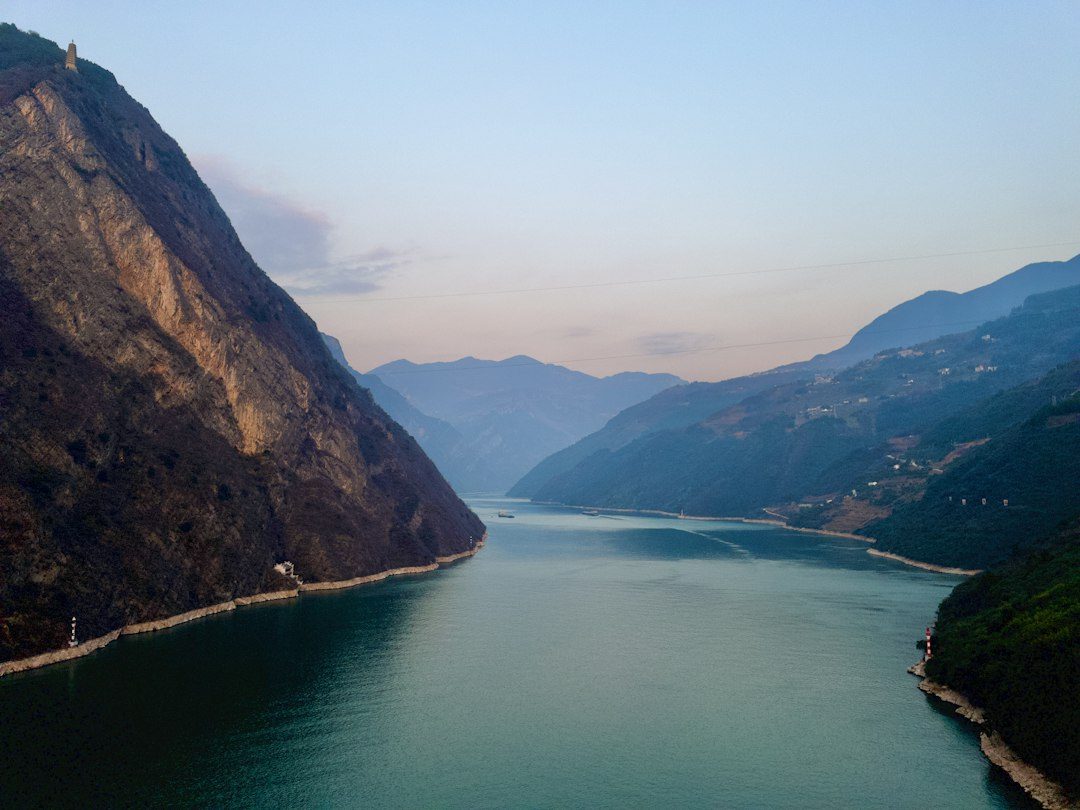
Yangtze River Cruise Three Gorges Guide
Yangtze River Cruise Three Gorges Guide: 2026 guide covers current prices, transport, payment apps, and what foreign visitors need to know.
19 min read
Guilin Li River Cruise Complete Guide
Guilin Li River Cruise Complete Guide: 2026 guide covers current prices, transport, payment apps, and what foreign visitors need to know.
19 min read
China Travel SIM Card eSIM Comparison 2026
The cab driver in Beijing looked at me in the rearview mirror and said, in perfect English, “You know, most tourists buy the wrong SIM card.” I’d been in China
10 min read
China Food Tour Self Guided Complete
The cab driver in Chengdu looked at me in the rearview mirror, then back at the address I’d fumbled to show him on my phone. He laughed. Not a mean laugh—the ki
16 min read