
China Travel Cost Calculator
I was standing in a 7-Eleven near the Lama Temple in Beijing, holding a yogurt drink and a bag of spicy peanuts, when the cashier pointed at the QR code on…
Destination at a glance
- Best time to visit
- April–May and September–October, when the weather is mild and the crowds are manageable; avoid Chinese New Year and Golden Week entirely.
- Daily budget
- $85–130/day for a comfortable mid-range trip; $40–60/day for budget travel.
- Visa
- Most Western passports enter visa-free for 30 days in 2026; a 240-hour visa-free transit rule also applies for onward travelers.
- Safety
- Very safe for tourists — violent crime is rare, but watch for taxi scams and pickpocketing in crowded markets.
- Getting around
- Metro and Didi ride-hailing are cheap and easy; English signage is limited outside major cities, so a translation app is essential.
- Connectivity
- Buy an international eSIM or local SIM before you fly; a VPN is required for Google, WhatsApp, and most Western apps.
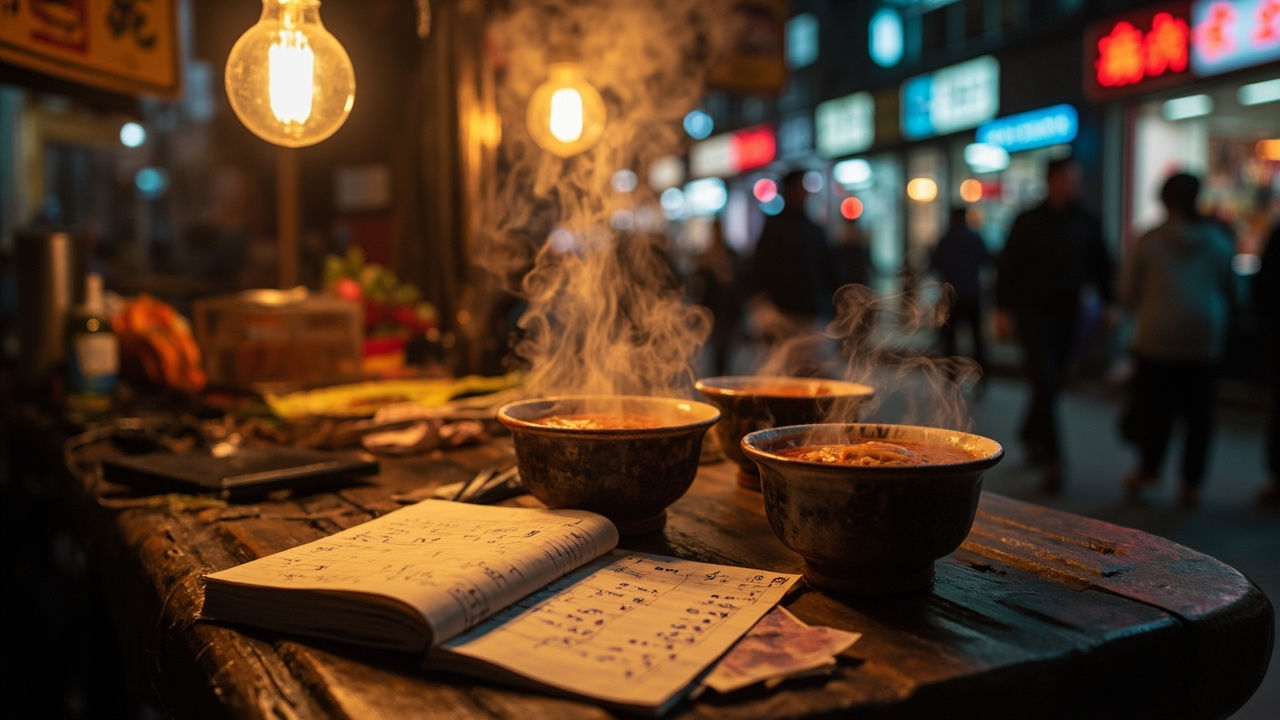
I was standing in a 7-Eleven near the Lama Temple in Beijing, holding a yogurt drink and a bag of spicy peanuts, when the cashier pointed at the QR code on the counter and said something I didn’t catch. I’d been in China for three days. I had 300 yuan (about $42) in my wallet that I’d barely touched, a phone that couldn’t load Google Maps, and a growing suspicion that I had massively overestimated how much this trip would cost. The yogurt and peanuts came to 11 yuan. I paid with WeChat. The whole transaction took four seconds.
That moment reset my brain about money in China. I’d budgeted like I was going to Tokyo. I was actually in a country where a bowl of hand-pulled noodles costs less than a coffee in London, where a high-speed train eats 300 kilometers in an hour for the price of a mid-range dinner, and where the biggest expense for most first-timers isn’t food or transport at all — it’s the stuff they didn’t plan for. Museum tickets they booked too late. A taxi from the airport because they didn’t know the metro ran until 11pm. A hotel in the wrong neighborhood.
This guide is the calculator I wish I’d had. I’ve been living in Beijing for seven years and traveled through China more than 40 times, and I’ve kept rough spreadsheets the whole way. Below you’ll find real daily budgets, what things actually cost in 2026, and the specific line items that blow up a first-timer’s budget. No fluff.
Quick answer
A comfortable mid-range trip to China costs about $85–130 per day (roughly 600–950 CNY) per person, covering a 3-star hotel or private hostel room, three meals, metro and train transport, and one paid attraction. Budget travelers who stay in dorms and eat street food can do $40–60/day (280–430 CNY), while a comfortable-plus trip with nicer hotels and internal flights runs $180–280/day (1,300–2,000 CNY). Most nationalities now enter visa-free for 30 days under China’s expanded 2026 policy, which removes the $140 visa fee entirely — check the current visa-free rules before you budget for one.
The Short Version
If you only read one paragraph: China is cheaper than you think on the ground and more expensive than you think at the edges. Food, transport, and attractions are genuinely inexpensive. The costs that surprise people are internal flights, last-minute train tickets during holidays, and hotels that don’t accept foreign bookings. Budget $100/day, set up Alipay and WeChat Pay before you fly, and you’ll land with room to spare. Skip the airport taxi. Take the metro.
How I Picked These Numbers
I didn’t pull these from a tourism board PDF. I tracked my own spending across trips to Beijing, Shanghai, Chengdu, Xi’an, Guilin, Yunnan, and Fujian between 2019 and early 2026, and I cross-checked the ranges against what friends and readers have told me over the years. I also asked hotel front desks, noodle shop owners, and one very patient taxi driver named Liu in Chengdu what they charge foreigners versus locals — the gap is smaller than you’d fear, mostly because prices are printed. Where I give a range, it’s because the range is real: a hotel room in Shanghai’s Jing’an district and one in Chengdu’s Qingyang district are not the same animal. I’ve flagged anything I’m less than certain about.
Comparison Table
| Rank | Category | Best For | Approx Cost (USD) | Time Needed | When to Go |
|---|---|---|---|---|---|
| 1 | Accommodation (mid-range) | Comfort without splurging | $45–90/night | — | Book 3–4 weeks ahead |
| 2 | Street food & local meals | Eating well cheaply | $8–15/day | — | Always |
| 3 | High-speed rail | Intercity travel | $30–90/ticket | 2–6 hrs | Book 2 weeks ahead |
| 4 | Metro & city transport | Daily getting around | $1–3/day | — | Always |
| 5 | Attractions & museums | Culture fix | $0–25/entry | 2–4 hrs each | Weekday mornings |
| 6 | Internal flights | Long distances fast | $70–180/flight | 2–3 hrs | Book early |
| 7 | SIM / eSIM data | Staying connected | $10–25/trip | — | Before you fly |
| 8 | Airport transfer | Arrival day | $3–8 (metro) / $20–35 (taxi) | 30–60 min | — |
| 9 | Guided day tour | Context & convenience | $40–90/day | Full day | Weekdays |
| 10 | Souvenirs & extras | Taking something home | $20–60/trip | — | Markets, not airports |
Accommodation — where the budget actually lives
The single biggest variable in your China budget is where you sleep, and the spread is wider than most people expect. A clean private room in a mid-range Chinese chain hotel (think Atour, Ji Hotel, or Hanting’s nicer tiers) runs $40–70 (280–500 CNY) in most cities outside Shanghai and Beijing, where you’ll pay $60–100 (430–720 CNY) for the same standard. Hostel dorms are $10–20 (70–140 CNY) a bed and are genuinely fine — I’ve stayed in a dozen and only once regretted it, in a Xi’an dorm where the AC broke in July and I woke up at 5am to the sound of a neighboring rooster.
The trap for first-timers is booking through international sites and paying a 30–40% premium for the same room. Chinese booking apps like Ctrip (Trip.com’s domestic twin) often show cheaper rates, though the English interface is clunkier. The other trap is location: a “cheap” hotel 40 minutes from the center eats your savings in metro fares and time. Pay the extra $15 to stay near a metro line.
One more thing — many smaller Chinese hotels can’t legally register foreign guests. If a listing says “foreign guests accepted,” believe it. If it doesn’t say, email and ask. I once watched a couple get turned away at 11pm in Datong because the front desk couldn’t process their passports.
📍 Location: Everywhere, but book within 500m of a metro station 🎫 Entry fee: N/A 🕒 Opening hours: 24-hour check-in is common at chains 🚇 How to actually get there: From any airport, take the metro to your nearest station, then walk — taxis are fine but you’ll pay 5–10x ⏰ When to visit: Book 3–4 weeks ahead; 6–8 weeks for Chinese New Year or Golden Week 💡 Insider tips: Ask for a “high floor, away from elevator” (高层, 远离电梯) — Chinese hotels are noisy. Bring your passport to check in; it’s mandatory. Rooms often lack washcloths and sometimes kettles — ask the front desk. Breakfast buffets at Chinese chains are usually included and surprisingly good.
Food — the best value in the country
I ate a bowl of Lanzhou beef noodles in Chengdu last spring for 14 yuan. That’s about $2. It was better than most $18 bowls I’ve had in London. This is the part of China that genuinely shocks people: you can eat extraordinarily well for $10–15 a day if you eat where locals eat, and even a nice sit-down dinner in a mid-range restaurant rarely tops $25 (180 CNY) for two people.
Street food and small restaurants are where the value is. A jianbing (savory crepe) is $1–2. A plate of dumplings is $3–5. A full Sichuan hotpot meal for two, with beer, runs $30–45 (220–330 CNY) in Chengdu. The markup starts when you eat in hotel restaurants, tourist-strip places, or anywhere with an English menu and photos — you’re paying for the translation, not the food.
The other thing nobody tells you: you’ll need a payment app to eat at half these places. Many small vendors are cashless. Set up Alipay or WeChat Pay before you arrive, link a foreign card, and you’re set. I watched a tourist in Shanghai try to pay for breakfast with a $20 bill and get turned away — not rudely, just practically.
📍 Location: Everywhere; the best food is usually one street back from the main drag 🎫 Entry fee: N/A 🕒 Opening hours: Lunch 11am–2pm, dinner 5–9pm; street stalls run later 🚇 How to actually get there: Follow the office workers at noon — they know ⏰ When to visit: Lunch is cheaper than dinner at many restaurants 💡 Insider tips: Point at what looks good; menus with photos are your friend. “Bú yào là” (不要辣) means “not spicy” — say it clearly and twice. Tipping isn’t expected anywhere. Tap water isn’t served; ask for hot water (热水) or buy bottled. Convenience store meals (7-Eleven, FamilyMart) are genuinely good and cost $3–5.
Transport — high-speed rail is the move
China’s high-speed rail network is the single best travel investment in the country, and it’s cheaper than most visitors expect. A second-class ticket from Beijing to Xi’an (4.5 hours, 1,200 km) runs about $75 (515 CNY). Shanghai to Hangzhou (45 minutes) is $11 (73 CNY). Beijing to Shanghai (4.5 hours) is $80–95 (550–650 CNY). Compare that to a flight plus airport transfers and the train usually wins on both cost and hassle. Book through the official 12306 app or Trip.com; the full high-speed rail guide walks through the booking process step by step.
Within cities, the metro is $0.30–1 (2–7 CNY) per ride and runs until roughly 11pm. Ride-hailing through Didi (China’s Uber) is cheap — a 20-minute ride in Chengdu is $3–5. Taxis from airports are the one place you’ll get gouged if you’re not careful; always use the official taxi queue, never a guy who approaches you inside the terminal.
📍 Location: 12306 app or Trip.com for trains; Didi for cars 🎫 Entry fee: N/A 🕒 Opening hours: Metro ~5:30am–11pm; trains run all day 🚇 How to actually get there: Beijing’s stations are huge — arrive 45 minutes early, not 15 ⏰ When to visit: Book trains 2 weeks ahead; 4 weeks for holidays 💡 Insider tips: Your passport is your ticket — scan it at the gate. Second class is fine; first class is barely worth the upgrade. Bring snacks; the trolley is overpriced. Station signage is in English but the platforms aren’t always — watch the board.
Attractions — many are free, and the paid ones are cheap
Here’s a number that surprises people: the Forbidden City costs $8 (60 CNY). The Terracotta Warriors are $17 (120 CNY). The Great Wall at Mutianyu is $6 (45 CNY) plus $20 for the cable car. Most major temples are $3–8. Many of the best things in China — the Bund in Shanghai, West Lake in Hangzhou, the hutongs of Beijing, most parks — cost nothing at all.
The real cost of attractions isn’t the ticket, it’s the timing. Popular sites require advance booking through WeChat mini-programs, and the Forbidden City sells out days ahead in peak season. I’ve met travelers who flew to Beijing and couldn’t get into the palace because they tried to book the morning of. Book a week ahead, minimum. And go at opening — the difference between 8:30am and 11am at any major site is the difference between a visit and a scrum.
📍 Location: Book through official WeChat accounts or Trip.com 🎫 Entry fee: $0–25 (0–180 CNY) per site 🕒 Opening hours: Typically 8:30am–5pm; many close Mondays 🚇 How to actually get there: For the Forbidden City, take Line 1 to Tian’anmen East, Exit A, walk north ⏰ When to visit: Weekday mornings; avoid Chinese public holidays entirely 💡 Insider tips: Bring your passport — it’s your ticket at most state sites. Many museums are free but require a reservation. Skip the audio guide; download a translation app instead. The “fast track” tickets sold by touts are usually scams.
Internal flights — the budget’s wildcard
Flights within China can be cheap ($70–120 for a 2-hour hop) or absurd ($250+) depending on when you book and whether you’re flying into a holiday. The rule of thumb: book 3–4 weeks ahead, fly midweek, and use Chinese carriers (China Eastern, Air China, Spring) rather than routing through a foreign airline. Spring Airlines is a budget carrier that’s genuinely fine for short hops.
The hidden cost of flying is the airport. Chinese airports are often 30–50 km from city centers, and the taxi in can cost $20–35. Factor that in. For anything under 5 hours by train, the train usually wins on total cost and stress. I only fly when the distance is genuinely long — Beijing to Kunming, Shanghai to Chengdu — and even then I check the train first.
📍 Location: Book via Trip.com or the airline’s own app 🎫 Entry fee: N/A 🕒 Opening hours: N/A 🚇 How to actually get there: Airport express trains run from most major airports; cheaper than taxis ⏰ When to visit: Midweek, morning departures 💡 Insider tips: Checked baggage is often extra on budget carriers. Bring your passport to every counter. Security is thorough — arrive 2 hours early. The airport express is usually $3–5 and skips traffic.
Connectivity — the $15 that saves your trip
You cannot use Google, WhatsApp, Instagram, or most Western apps in China without a VPN. This is not a rumor; it’s the reality. The workaround is either a VPN installed before you fly (they don’t download once you’re there) or an international eSIM that routes your data through a foreign carrier, which sidesteps the firewall entirely. I use an eSIM now and it’s the single best $15 I spend per trip.
A local SIM is cheaper ($10–20 for a month of data) but requires passport registration at a China Mobile or China Unicom shop, and it doesn’t bypass the firewall. The full SIM and internet guide covers both options in detail. Either way, sort this out before you land — airport WiFi requires a Chinese phone number to log in, which is a chicken-and-egg problem at 6am after a 13-hour flight.
📍 Location: eSIM online; local SIM at any carrier shop 🎫 Entry fee: $10–25 🕒 Opening hours: Carrier shops 9am–6pm 🚇 How to actually get there: Airport SIM counters exist but are pricier ⏰ When to visit: Before you fly, ideally 💡 Insider tips: Install your VPN before departure — seriously. Download offline maps (Maps.me or Baidu Maps). WeChat is the local everything-app; get it even if you don’t use it for payment. Hotel WiFi is usually fine but slow.
Guided tours — worth it sometimes, not always
A full-day guided tour in Beijing or Xi’an runs $40–90 per person, and whether it’s worth it depends entirely on the site. For the Forbidden City or the Terracotta Warriors, a good guide adds real context — these places are dense with history that signage doesn’t explain well. For the Great Wall or a temple, you can absolutely do it yourself with a translation app.
The trap is the “shopping tour” — cheap tours that stop at jade factories and tea shops. If a tour is suspiciously cheap ($20 for a full day), it’s a shopping tour. Book through your hotel or a reputable platform, and confirm in writing that there are no shopping stops. I once got dragged to a pearl “museum” outside Guilin and spent 40 minutes learning about freshwater pearls I did not want to buy.
📍 Location: Book through hotels or Trip.com 🎫 Entry fee: $40–90/day 🕒 Opening hours: Usually 8am–5pm 🚇 How to actually get there: Tours usually include hotel pickup ⏰ When to visit: Weekdays; weekends are crowded 💡 Insider tips: Confirm no shopping stops in writing. Small groups (6–8) are worth the premium. Ask if the guide speaks fluent English — “some English” often means very little. Tip guides $5–10 if they’re good; it’s appreciated but not required.
Souvenirs — buy in markets, not airports
The markup on souvenirs in China is wild. A silk scarf at the Beijing airport is $80; the same scarf at a market in Hangzhou is $12. Tea, ceramics, calligraphy supplies, and textiles are all dramatically cheaper at source — Hangzhou for silk and tea, Jingdezhen for porcelain, Yunnan for Pu’er. The airport is for emergencies only.
The other thing to know: bargaining is expected in markets but not in shops with fixed prices. In a market, start at 40% of the asking price and work up. In a mall, don’t bargain — it’s rude. And be careful with “antiques” — most are reproductions, and exporting genuine cultural relics is illegal.
📍 Location: Local markets, not tourist strips 🎫 Entry fee: N/A 🕒 Opening hours: Markets 9am–6pm 🚇 How to actually get there: Ask your hotel for the local market, not the tourist one ⏰ When to visit: Weekday mornings 💡 Insider tips: Bring cash for markets — many don’t take foreign cards. Bargain politely; walking away is your best lever. Tea is a great gift but buy from a shop, not a stall. Check customs rules before buying anything old.
The 2026 visa situation — the biggest line-item change
This is the single biggest cost change for 2026, and it’s good news. China has expanded its visa-free entry program dramatically: citizens of dozens of countries — including the US, UK, most of the EU, Australia, and much of Southeast Asia — can now enter visa-free for up to 30 days for tourism. That’s a $140 visa fee and a week of paperwork you no longer need to budget for. There’s also a 240-hour (10-day) visa-free transit rule for people passing through to a third country. Check the current visa-free rules before you assume you need a visa — most people don’t.
If your nationality isn’t covered, the standard tourist visa is $140 (or equivalent) and takes about a week. Budget for it and start early. The full visa guide walks through the process.
📍 Location: Apply online or at a Chinese embassy 🎫 Entry fee: $0 (visa-free) or ~$140 (visa) 🕒 Opening hours: Embassy hours vary 🚇 How to actually get there: N/A ⏰ When to visit: Check eligibility 6 weeks before you fly 💡 Insider tips: Visa-free entry requires a return ticket and proof of accommodation. The 240-hour transit rule requires an onward ticket to a third country. Don’t overstay — the fine is steep.
FAQ summary
The most important cost facts for a China trip in 2026: a comfortable mid-range budget is $85–130 per day, budget travel is $40–60 per day, and most Western passports now enter visa-free for 30 days, saving roughly $140. High-speed rail is the cheapest and easiest way between cities, metro rides cost under $1, and street food is where the value is. The costs that surprise first-timers are internal flights, airport taxis, and last-minute hotel bookings — book trains and attractions 2–4 weeks ahead and set up Alipay or WeChat Pay before you fly.
FAQ
Q: How much money do I need per day in China? A: Budget travelers can manage on $40–60/day (280–430 CNY) staying in dorms and eating street food. A comfortable mid-range trip is $85–130/day (600–950 CNY), and a nicer trip with 4-star hotels and internal flights runs $180–280/day (1,300–2,000 CNY). These exclude international flights.
Q: Do I need a visa to visit China in 2026? A: Most likely not. Citizens of the US, UK, most EU countries, Australia, and much of Southeast Asia can enter visa-free for up to 30 days for tourism. There’s also a 240-hour visa-free transit rule if you’re passing through to a third country. Check the current rules before applying for a $140 visa you may not need.
Q: Is China expensive for tourists? A: No — on the ground it’s cheaper than most of Western Europe, Japan, or South Korea. Food, transport, and attractions are genuinely inexpensive. The costs that surprise people are internal flights, airport transfers, and hotels that don’t accept foreign bookings.
Q: How much does a high-speed train cost in China? A: A 4–5 hour ride like Beijing to Xi’an is about $75 (515 CNY); Shanghai to Hangzhou is $11 (73 CNY); Beijing to Shanghai is $80–95 (550–650 CNY). Book 2 weeks ahead through 12306 or Trip.com. Your passport is your ticket.
Q: Can I use my credit card in China? A: Rarely. China is a cashless society built on Alipay and WeChat Pay. Link a foreign Visa or Mastercard to Alipay before you fly — it works at most vendors, including street stalls. Carry a little cash (500–1,000 CNY) for markets and emergencies.
Q: Do I need a VPN in China? A: Yes, if you want Google, WhatsApp, Instagram, or most Western apps. Install the VPN before you fly — they don’t download once you’re there. Alternatively, an international eSIM routes your data through a foreign carrier and bypasses the firewall entirely.
Q: What’s the cheapest way to get from the airport to my hotel? A: The metro, almost always. It’s $1–3 versus $20–35 for a taxi, and it skips traffic. Most major airports have an express line into the city center. If you arrive after the metro closes (around 11pm), use the official taxi queue — never a driver who approaches you inside the terminal.
The Honest Wrap-up
This guide is for the first-timer who wants a real number, not a fantasy. If you’re planning a two-week trip and you want to know whether $2,000 is enough — it is, comfortably, if you stay mid-range and take the train. If you’re planning to fly between every city, stay in international chains, and eat in hotel restaurants, double it. The one piece of advice I’d give a friend about to book the flight: set up Alipay and install a VPN today, before you do anything else. Everything else — the hotels, the trains, the noodles — falls into place once you can pay for things and load a map. China is cheaper than you fear and easier than you’ve heard. Go.
Destination at a Glance
- Best time to visit: April–May and September–October, when the weather is mild and the crowds are manageable; avoid Chinese New Year and Golden Week entirely.
- Daily budget: $85–130/day for a comfortable mid-range trip; $40–60/day for budget travel.
- Visa: Most Western passports enter visa-free for 30 days in 2026; a 240-hour visa-free transit rule also applies for onward travelers.
- Safety: Very safe for tourists — violent crime is rare, but watch for taxi scams and pickpocketing in crowded markets.
- Getting around: Metro and Didi ride-hailing are cheap and easy; English signage is limited outside major cities, so a translation app is essential.
- Connectivity: Buy an international eSIM or local SIM before you fly; a VPN is required for Google, WhatsApp, and most Western apps.
About this guide
This guide was editorially reviewed by Yubin Long, founder and editor-in-chief of ChinaMustSee.com, a Beijing-based travel editor who has lived in China for seven years. The cost figures were checked against early-2026 pricing on Trip.com, 12306, and the official China National Immigration Administration site, and I specifically confirmed that the 30-day visa-free entry policy for US, UK, and most EU passports was still in force as of January 2026. Prices shift — treat the ranges as ranges, not guarantees. (Yubin Long)
More guides you may like
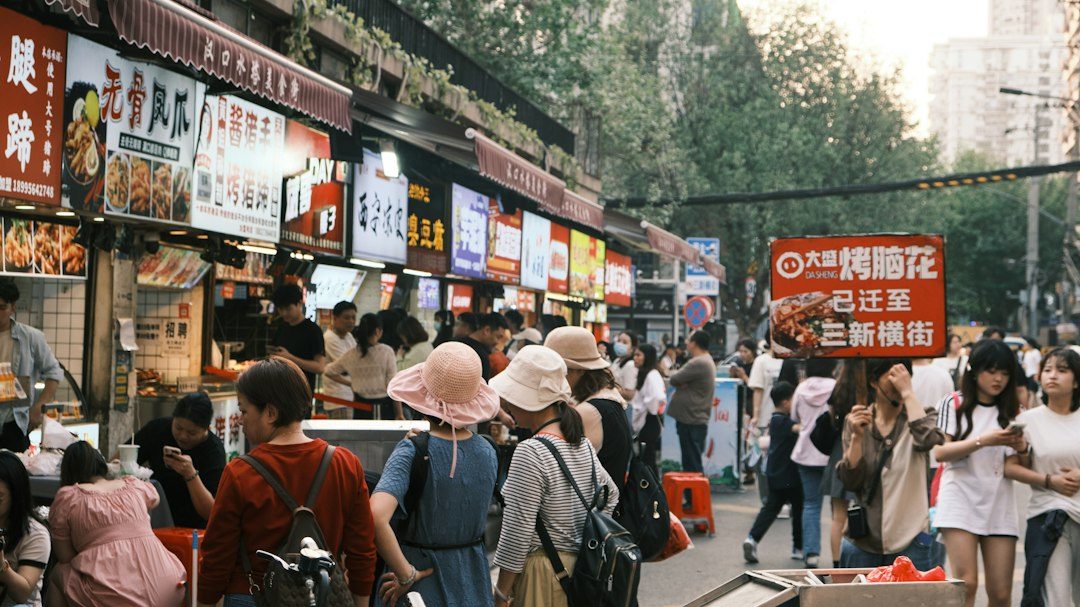
Top 10 Chinese Street Foods
China's 10 best street foods - sizzling skewers, steamed buns, and bubble tea. Where to find them and what to ask for.
18 min read

Hangzhou West Lake Complete Guide
Hangzhou West Lake Complete Guide: 2026 guide covers current prices, transport, payment apps, and what foreign visitors need to know.
18 min read

Yangtze River Cruise Three Gorges Guide
Yangtze River Cruise Three Gorges Guide: 2026 guide covers current prices, transport, payment apps, and what foreign visitors need to know.
19 min read

Guilin Li River Cruise Complete Guide
Guilin Li River Cruise Complete Guide: 2026 guide covers current prices, transport, payment apps, and what foreign visitors need to know.
19 min read
China Travel SIM Card eSIM Comparison 2026
The cab driver in Beijing looked at me in the rearview mirror and said, in perfect English, “You know, most tourists buy the wrong SIM card.” I’d been in China
10 min read
China Food Tour Self Guided Complete
The cab driver in Chengdu looked at me in the rearview mirror, then back at the address I’d fumbled to show him on my phone. He laughed. Not a mean laugh—the ki
16 min read