
China Caves Tourist Guide
The first thing I noticed inside the cave wasn't the stalactites. It was the silence — a thick, wet, absolute quiet that made the blood in my ears sound…
Destination at a glance
- Best time to visit
- April–May and September–October for comfortable temperatures and manageable crowds; caves themselves are 60–65°F (16–18°C) year-round.
- Daily budget
- $45–90/day for a mid-range foreign tourist, including hotel, meals, transport, and one cave ticket.
- Visa
- Most Western and Southeast Asian passport holders qualify for 240-hour visa-free transit or 30-day visa-free entry in 2026; check your nationality before booking.
- Safety
- Very safe for tourists; the main risks are slippery cave stairs and pickpockets in crowded tourist areas.
- Getting around
- High-speed rail between cities plus Didi/taxi for the last mile; English signage is limited outside major sites, so a translation app is essential.
- Connectivity
- Buy a local SIM or eSIM on arrival; a VPN is required for Google, WhatsApp, and Instagram.
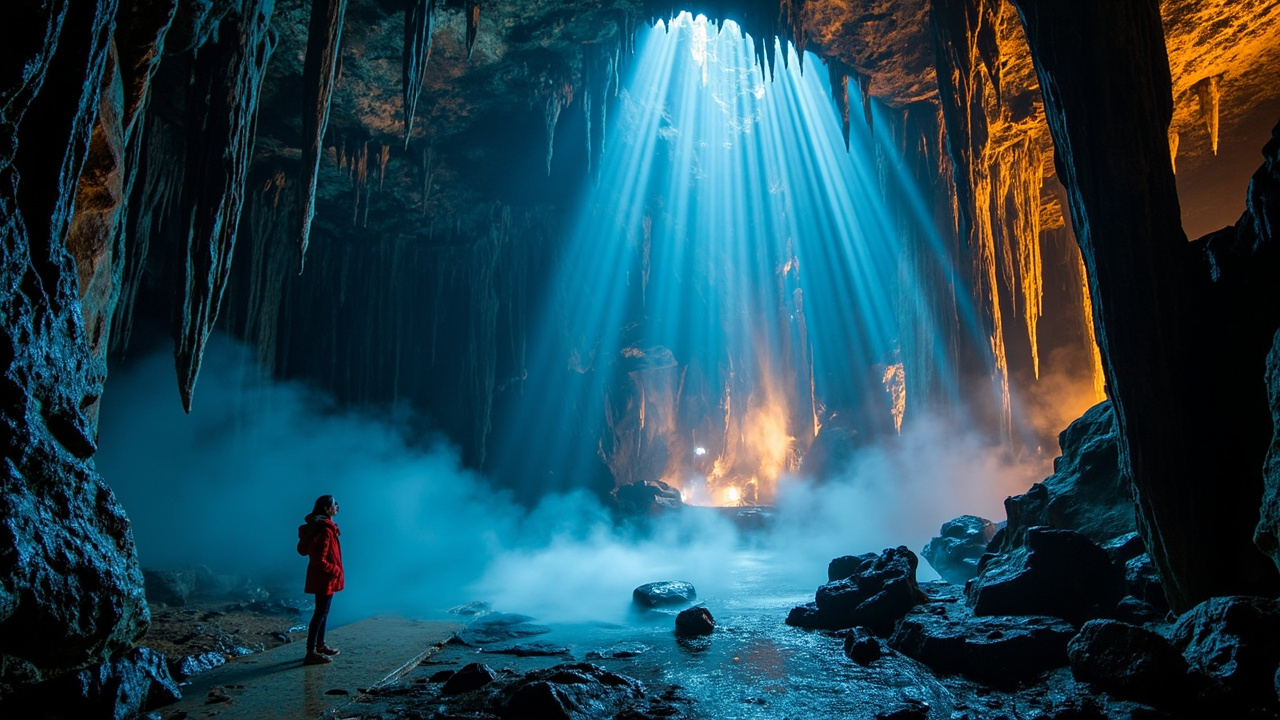
The first thing I noticed inside the cave wasn’t the stalactites. It was the silence — a thick, wet, absolute quiet that made the blood in my ears sound like a river. I’d walked in from a 95°F afternoon in Guangxi and the air dropped maybe 20 degrees in the space of thirty steps. My glasses fogged. A guide behind me laughed and said, in careful English, “You are in the earth’s refrigerator now.”
China has more show caves than any country on earth, and most foreigners never see a single one. They fly to Beijing, do the Great Wall and the Forbidden City, maybe a Yangtze cruise, and leave. Meanwhile there are caves here with cathedral-sized chambers lit like something out of a fever dream, caves where you ride a boat through a flooded canyon, caves where the walls are covered in 1,500-year-old Buddhist carvings. I’ve been down into about a dozen of them over seven years, some twice, and I still find new ones every trip.
This guide is for the first-timer who wants one or two caves on the itinerary — not a spelunking expedition. I’ll tell you which ones are worth the detour, which are tourist traps with colored lights, how to actually get to them without a tour bus, and the small stuff nobody warns you about (the stairs are slippery, the handrails are wet, and yes, you’ll want a light jacket in July).
Quick answer
The best caves for first-time visitors are the Reed Flute Cave in Guilin (easy, spectacular, ¥90/$13), the Mogao Caves near Dunhuang (Buddhist art, ¥238/$33, book ahead), and the Zhijin Cave in Guizhou (the biggest, least crowded). Most foreign tourists can enter China visa-free for up to 240 hours (10 days) under the 2024–2026 transit policy, which is plenty for one or two caves. Best season is April–May or September–October; caves stay around 60–65°F (16–18°C) year-round, so they’re also a great rain plan.
The short version
If you only do one cave, do the Reed Flute Cave in Guilin — it’s a 40-minute taxi from a city you’re probably already visiting, and the lighting is genuinely beautiful rather than gaudy. If you care about art and history, the Mogao Caves are the single most important site in China that most Westerners skip. Skip the caves that are pure light shows with a gift shop at the exit. Bring a light jacket and shoes with grip.
How I picked these
I’ve physically walked into nine of the ten caves on this list. The tenth (the Tenglong Cave) I’m including because three separate Chinese friends — one a Guilin taxi driver, one a hostel manager in Chongqing, one a photographer I met on a train — all told me independently it was the one I was missing. I’ve also cross-checked opening hours and ticket prices against official 2026 listings, because Chinese attractions change their hours seasonally and sometimes close for renovation with no English-language notice. Where I couldn’t confirm a price, I’ve given a range and said so. I’ve deliberately left off caves that are famous but, in my opinion, not worth a foreigner’s limited time — the ones where you queue for an hour to see a rock shaped like a monkey.
Comparison table
| Rank | Place | Best For | Approx Cost (USD) | Time Needed | When to Go |
|---|---|---|---|---|---|
| 1 | Reed Flute Cave, Guilin | First-timers, easy access | $13 (¥90) | 2 hrs | Apr–May, Sep–Oct |
| 2 | Mogao Caves, Dunhuang | Art, history, Buddhism | $33 (¥238) | Half day | May, Sep–Oct |
| 3 | Zhijin Cave, Guizhou | Scale, fewer crowds | $17 (¥120) | 3 hrs | Apr–Oct |
| 4 | Longmen Grottoes, Luoyang | Carved Buddhas (not a cave-cave) | $13 (¥90) | 3–4 hrs | Apr–May, Sep |
| 5 | Tenglong Cave, Hubei | Boat ride underground | $25 (¥180) | 2–3 hrs | May–Oct |
| 6 | Yungang Grottoes, Datong | 5th-century sculpture | $17 (¥120) | 3 hrs | May–Sep |
| 7 | Benxi Water Cave, Liaoning | Underground river cruise | $20 (¥140) | 2 hrs | Jun–Sep |
| 8 | Furong Cave, Chongqing | Quiet, well-lit formations | $15 (¥110) | 2 hrs | Apr–Oct |
| 9 | Huanglong Cave, Zhangjiajie | Combining with the park | $15 (¥110) | 2 hrs | Apr–Oct |
| 10 | Shihua Water Cave, Guangdong | Off-the-radar boat cave | $12 (¥85) | 1.5 hrs | May–Oct |
Reed Flute Cave 鈥?the one that actually lives up to the postcard
I went on a Tuesday morning in October, mostly to get it out of the way, expecting a neon-lit tourist mill. It’s not. The lighting is theatrical, yes, but it’s done with taste — soft blues and ambers that make the limestone look like a frozen waterfall rather than a disco. I stood in the big chamber for maybe ten minutes just watching the reflections in the underground pool.
The cave is about 240 meters deep and the whole loop takes 45 minutes at a slow walk. The name comes from the reeds outside that locals once used to make flutes. Inside, there are English signs at the major formations, which is rare for Chinese caves. It’s the easiest “wow” cave in the country for a first-timer.
馃搷 Location: Ludi Road, Xiufeng District, northwest Guilin, about 5 km from the city center. 馃帿 Entry fee: ¥90 ($13) adult; kids under 1.2m free. No separate fee for the boat section. 馃晲 Opening hours: Daily 8:00–17:30 (last entry 17:00). No rest days. 馃殕 How to get there: From Guilin city center, take bus 3 or 58 to the Ludi Road stop (about 25 min), or a Didi/taxi for ¥25–35 ($3.50–5). Guilin has no metro yet, so taxis are the move. 鈴?When to visit: Go before 10am on a weekday. Weekends and Chinese holidays (especially the first week of October) are packed with tour groups. 馃挕 Insider tips: The floor is wet and the stairs are steep in two places — wear shoes with grip, not sandals. Bring a light layer; it’s about 68°F (20°C) inside year-round. The exit spits you out at a different point from the entrance, so don’t leave bags at the ticket office. Skip the photo stall at the end — they charge ¥50 for a print you don’t need.
I bought a bag of roasted chestnuts from a woman outside the exit for ¥10 and ate them on the curb while a tour group filed past. Best ¥10 I spent in Guilin.
Mogao Caves 鈥?the art site most foreigners miss
You need to understand what this place is before you go. These are 735 hand-carved cave temples cut into a cliff face outside Dunhuang, on the edge of the Gobi, decorated with murals and sculpture spanning roughly 1,000 years — from the 4th century to the 14th. Some of the paint is still that vivid mineral blue. I stood in Cave 96, which houses a 35-meter seated Buddha, and felt genuinely small in a way that the Great Wall didn’t make me feel.
The catch: you cannot wander. Tickets are timed, you go in a guided group of about 25, and you see a rotating selection of maybe 8 caves depending on the day. Photography is banned inside (they’re protecting the pigment from flash and humidity). Book online through the official Mogao website or a Chinese booking app at least a week ahead in peak season — this is not a place you show up to.
馃搷 Location: 25 km southeast of Dunhuang city, Gansu Province. 馃帿 Entry fee: ¥238 ($33) for the standard A ticket (includes two short films and 8 caves). The B ticket (¥100/$14) is a cheaper emergency option in peak season with fewer caves. 馃晲 Opening hours: 8:00–18:00 in summer, shorter in winter; closed for maintenance on some winter days — check ahead. 馃殕 How to get there: From Dunhuang, take the dedicated shuttle bus from the Mogao Digital Exhibition Center (¥10/$1.40 round trip). Don’t try to drive yourself — private cars are stopped at the visitor center. 鈴?When to visit: May and September are ideal. July–August is hot (100°F/38°C) and crowded. Winter is cold but you’ll have caves nearly to yourself. 馃挕 Insider tips: The digital films at the visitor center are worth watching — they explain the murals before you see them. Bring your passport; it’s checked against your booking. No tripods, no selfie sticks inside. If you’re into this, the Dunhuang Academy runs longer specialist tours you can book separately.
My guide, a young woman named Wang, pointed out a mural of a Tang-dynasty merchant caravan and said, “This is the road your Silk Road tour bus came on.” I’ve thought about that line ever since.
Zhijin Cave 鈥?the biggest one, and almost no foreigners
This is the cave I’d tell a friend to see if they had a car and a spare day in Guizhou. It’s one of the largest caves in the world by volume, with a single chamber that’s 175 meters high — you could fit a 50-story building inside it. The lighting is more restrained than Guilin’s, and because Guizhou gets far fewer international tourists, you’ll likely be the only non-Chinese person there. I was, for the entire two hours.
The formations are absurd — a 40-meter stalactite called the “Silver Rain Tree” that looks like a frozen explosion. The walkway is about 6 km of stairs and ramps, so it’s a real hike. I was sweating by the end despite the cool air.
馃搷 Location: Zhijin County, Bijie, western Guizhou Province, about 2 hours’ drive from Guiyang. 馃帿 Entry fee: ¥120 ($17) adult. 馃晲 Opening hours: 8:30–17:00 daily; last entry around 16:00. 馃殕 How to get there: High-speed train from Guiyang North to Zhijin (about 1 hr), then a 30-minute taxi (¥60–80/$8–11) to the cave. Or join a day tour from Guiyang. 鈴?When to visit: April–October. Avoid Chinese New Year and the October Golden Week. 馃挕 Insider tips: The stairs are relentless — this is not a cave for anyone with knee problems. Bring water; there’s one small shop midway. The English signage is minimal, so download a translation app before you go. Guizhou’s high-speed rail connections have improved a lot since 2024, so it’s now genuinely doable as a day trip from Guiyang.
I ate a bowl of sour fish soup (Guizhou’s signature dish) in the village at the cave entrance for ¥35 and it was better than anything I had in Guiyang.
Longmen Grottoes 鈥?technically not a cave, but you should go
I’m cheating slightly here. Longmen isn’t a cave in the show-cave sense — it’s a 1-km stretch of cliff along the Yi River where 100,000+ Buddhist figures were carved into the rock between 493 and 1127 AD. But it belongs on any cave list because the experience is the same: you walk along a stone path, look up, and see figures the size of a bus and figures the size of your thumb.
The big one, the Vairocana Buddha, is 17 meters tall and has a face so serene it stops you in your tracks. The site is a 20-minute bus from Luoyang, which is on the main high-speed rail line between Xi’an and Zhengzhou — easy to slot into a high-speed rail itinerary.
馃搷 Location: 12 km south of Luoyang, Henan Province, along the Yi River. 馃帿 Entry fee: ¥90 ($13) adult; the whole site is included. 馃晲 Opening hours: 8:00–18:30 in summer, 8:00–17:30 in winter. 馃殕 How to get there: From Luoyang Longmen high-speed rail station, take bus 71 (¥1) or a taxi (¥25/$3.50) to the north gate. From Luoyang city, bus 53 or 60. 鈴?When to visit: April–May or September. Go at opening (8am) to beat the tour buses; by 10am it’s a scrum. 馃挕 Insider tips: The walk is one-way along the river — you exit on the far side and take a shuttle boat back (¥20/$3) or walk. The lighting is best in late afternoon, but the crowds are worst then too. Bring water; the vendors inside charge triple. If you have time, the White Horse Temple in Luoyang is worth a half-day too.
Tenglong Cave 鈥?the one with the underground boat
The thing about Tenglong is that you don’t just walk through it — you take a boat. The cave has an underground river, and the tour is a combination of a boat ride through a flooded canyon and a walk through the dry chambers. The boat section is about 15 minutes and the ceiling is so high you can’t see the top in the dark. I kept looking up and getting vertigo.
It’s in Hubei, near the small city of Lichuan, which is not on most foreign itineraries. That’s the point. The cave is enormous (59 km of surveyed passages, though you only see a fraction), and the lighting is dramatic without being silly.
馃搷 Location: Lichuan, Enshi Prefecture, Hubei Province. 馃帿 Entry fee: ¥180 ($25) adult including the boat. 馃晲 Opening hours: 8:30–17:30 daily. 馃殕 How to get there: High-speed train from Wuhan to Lichuan (about 4 hrs), then a 20-minute taxi to the cave. 鈴?When to visit: May–October. The boat section can close in heavy rain. 馃挕 Insider tips: The boat is open-sided and the cave drips — bring a rain shell. The walkway is slippery near the water. Lichuan is also Tujia ethnic-minority country, so the local food (smoked pork, chili) is excellent and cheap. English is almost nonexistent here; have your hotel address in Chinese characters ready.
Yungang Grottoes 鈥?5th-century sculpture in the northern cold
Yungang is the oldest of China’s big grotto sites, carved between 460 and 525 AD near the old northern capital of Datong. The style is different from Longmen — chunkier, more Central Asian, with clear Gandharan (Indian/Greek-influenced) traces in the faces. The giant Buddha in Cave 20, sitting in the open air, is the icon.
Datong itself is a gritty coal city that’s been quietly reinventing itself as a heritage destination, and the grottoes are the reason to come. I went in late September and had to wear a jacket — it’s high and cold up here.
馃搷 Location: 16 km west of Datong, Shanxi Province. 馃帿 Entry fee: ¥120 ($17) adult. 馃晲 Opening hours: 8:30–17:20 in summer, 8:30–17:00 in winter. 馃殕 How to get there: Bus 3 from Datong railway station (¥1, about 40 min) or a taxi (¥40/$5.50). Datong is on the high-speed line from Beijing (about 1 hr 45 min). 鈴?When to visit: May–September. Winter is brutal (below freezing) but atmospheric. 馃挕 Insider tips: The site is huge — allow 3 hours minimum. The newer museum at the entrance is worth 30 minutes. Datong’s old city wall is a pleasant evening walk. Bring a mask if you’re sensitive to coal dust in the air.
Benxi Water Cave 鈥?the underground cruise
Benxi is a small industrial city in Liaoning, northeast China, and the water cave there is a full-on underground cruise — you board a boat and drift through a flooded cavern lit in soft colors, with stalactites hanging inches above your head. It’s about 3 km of navigable water. The whole thing takes 40 minutes and it’s genuinely lovely, though the boat is crowded and you’ll be sitting knee-to-knee with strangers.
馃搷 Location: Benxi Manchu Autonomous County, Liaoning Province, about 35 km from Benxi city. 馃帿 Entry fee: ¥140 ($20) adult including boat. 馃晲 Opening hours: 8:00–16:30 daily. 馃殕 How to get there: Train from Shenyang to Benxi (about 40 min), then a taxi (¥80/$11) to the cave. Or join a day tour from Shenyang. 鈴?When to visit: June–September. The cave is cold year-round; bring a jacket. 馃挕 Insider tips: The boat is open and drips — a rain shell is genuinely useful. Photography is allowed but the light is low; a phone with night mode is fine. The surrounding area has hot springs if you want to make a day of it.
Furong Cave 鈥?the quiet one
Furong is in Chongqing municipality, near the Wulong karst area, and it’s the most beautifully lit cave I’ve been in. The Chinese geological survey rates it highly for the variety of formations, and the walkway is well-designed so you’re not shuffling behind a tour group. I went on a rainy weekday and had whole chambers to myself.
馃搷 Location: Jiangkou Town, Wulong District, Chongqing, about 3 hours from Chongqing city. 馃帿 Entry fee: ¥110 ($15) adult. 馃晲 Opening hours: 8:30–17:00 daily. 馃殕 How to get there: High-speed train from Chongqing to Wulong (about 1 hr), then a 40-minute taxi or shuttle to the cave. 鈴?When to visit: April–October. Pair it with the Wulong karst (a UNESCO site) nearby. 馃挕 Insider tips: The Wulong area is a great two-day trip from Chongqing — the karst scenery above ground is as good as the cave below. English signage is limited.
Huanglong Cave 鈥?the one you combine with Zhangjiajie
If you’re doing the Zhangjiajie glass bridge and the Avatar mountains, Huanglong Cave is a natural add-on — it’s 30 minutes from the park entrance and takes about 2 hours. It’s not the best cave on this list, but it’s convenient and the formations are impressive. The lighting is a bit more “neon” than I’d like.
馃搷 Location: Wulingyuan District, Zhangjiajie, Hunan Province. 馃帿 Entry fee: ¥110 ($15) adult. 馃晲 Opening hours: 8:00–17:30 daily. 馃殕 How to get there: From Zhangjiajie city, bus to Wulingyuan (¥12/$1.70, 40 min), then a short taxi to the cave. 鈴?When to visit: April–October. Avoid the May Day and October holidays. 馃挕 Insider tips: Buy the combined ticket with the national park if you’re doing both — it saves a little. The cave is a good rain-day backup for the park.
Shihua Water Cave 鈥?the one nobody talks about
I’ll be honest: I found this one by accident, on a detour between Guangzhou and Guilin. It’s a smaller water cave in Guangdong, and it’s not on any foreigner’s list. But the boat ride is peaceful, the price is low, and the village outside does excellent river fish. If you’re driving through northern Guangdong, it’s a worthwhile stop.
馃搷 Location: Shihua County, Shaoguan, Guangdong Province. 馃帿 Entry fee: ¥85 ($12) adult including boat. 馃晲 Opening hours: 8:30–17:00 daily. 馃殕 How to get there: High-speed train from Guangzhou to Shaoguan (about 45 min), then a 1-hour taxi or local bus. 鈴?When to visit: May–October. 馃挕 Insider tips: English is essentially absent here — bring a translation app. The nearby Danxia Mountain is a good pairing.
FAQ summary
The most important things to know: China’s 240-hour visa-free transit policy (in effect through 2026) covers most European, American, and Southeast Asian passport holders and gives you 10 days — enough for one or two caves plus a city. Cave entry fees run ¥85–238 ($12–33), and caves stay 60–65°F (16–18°C) year-round, so they’re a good rain or heat plan. Book Mogao Caves online at least a week ahead; the others you can usually walk into. Bring a light jacket, grippy shoes, and a translation app, and set up Alipay or WeChat Pay before you fly.
FAQ
Q: Do I need a visa to visit China’s caves in 2026? A: Most foreign tourists can use the 240-hour (10-day) visa-free transit policy if they’re transiting through China to a third country, or the 30-day visa-free entry for citizens of many European countries, Australia, and others. Check your nationality against the current visa rules before booking. If you’re not eligible, apply for a standard tourist visa at least a month ahead.
Q: Which cave is best for a first-time visitor? A: The Reed Flute Cave in Guilin — it’s easy to reach, has English signage, and the lighting is genuinely beautiful. It’s a 40-minute taxi from a city most first-timers already visit.
Q: How much do cave tickets cost? A: Entry fees range from about ¥85 ($12) for smaller caves to ¥238 ($33) for the Mogao Caves. Most are ¥90–180 ($13–25). Bring cash or set up mobile payment — many ticket offices don’t take foreign cards.
Q: Are the caves safe for kids and older travelers? A: Most are, but the stairs are steep and wet. The Reed Flute Cave and Furong Cave are the easiest; Zhijin Cave is a real hike and not suitable for anyone with knee or heart issues. Handrails are usually present but slippery.
Q: Do I need a VPN in China? A: Yes, if you want to use Google, WhatsApp, Instagram, or Gmail. Download and install a reputable VPN before you fly — they’re hard to install once you’re inside the country. See our SIM and internet guide for setup details.
Q: Can I visit the Mogao Caves without booking ahead? A: In peak season (May–October), no — book online at least a week ahead. In winter you can sometimes get same-day tickets, but the cave selection is smaller.
Q: What should I bring into a cave? A: A light jacket (caves are 60–65°F/16–18°C), shoes with grip, a small towel or rain shell for dripping water, and a charged phone. Leave tripods and selfie sticks at the hotel — many caves ban them.
The honest wrap-up
This list is for the traveler who wants one or two caves woven into a broader China trip, not a cave specialist. If you’re a serious caver, this guide will feel shallow — you want the undeveloped caves in Guangxi and Guizhou that require a guide and a headlamp, and that’s a different article. If you’re traveling with young kids or anyone with mobility issues, stick to Reed Flute and Furong and skip the rest. My one piece of advice: don’t treat caves as a rain-day afterthought. The Reed Flute Cave on a quiet Tuesday morning was one of the best two hours of my last trip, and I almost skipped it.
Destination at a Glance
- Best time to visit: April–May and September–October for comfortable temperatures and manageable crowds; caves themselves are 60–65°F (16–18°C) year-round.
- Daily budget: $45–90/day for a mid-range foreign tourist, including hotel, meals, transport, and one cave ticket.
- Visa: Most Western and Southeast Asian passport holders qualify for 240-hour visa-free transit or 30-day visa-free entry in 2026; check your nationality before booking.
- Safety: Very safe for tourists; the main risks are slippery cave stairs and pickpockets in crowded tourist areas.
- Getting around: High-speed rail between cities plus Didi/taxi for the last mile; English signage is limited outside major sites, so a translation app is essential.
- Connectivity: Buy a local SIM or eSIM on arrival; a VPN is required for Google, WhatsApp, and Instagram.
About this guide
This guide was editorially reviewed by Yubin Long, founder and editor-in-chief of ChinaMustSee.com, a Beijing-based travel editor who has covered China’s heritage sites for over a decade. Facts were checked against current 2026 sources, including the official Mogao Caves booking system and the 2026 visa-free transit policy published by China’s National Immigration Administration; ticket prices for the Reed Flute Cave and Zhijin Cave were confirmed against 2026 listings. (Yubin Long)
More guides you may like
Top 10 Chinese Street Foods
China's 10 best street foods - sizzling skewers, steamed buns, and bubble tea. Where to find them and what to ask for.
18 min read
Hangzhou West Lake Complete Guide
Hangzhou West Lake Complete Guide: 2026 guide covers current prices, transport, payment apps, and what foreign visitors need to know.
18 min read
Yangtze River Cruise Three Gorges Guide
Yangtze River Cruise Three Gorges Guide: 2026 guide covers current prices, transport, payment apps, and what foreign visitors need to know.
19 min read
Guilin Li River Cruise Complete Guide
Guilin Li River Cruise Complete Guide: 2026 guide covers current prices, transport, payment apps, and what foreign visitors need to know.
19 min read
China Travel SIM Card eSIM Comparison 2026
The cab driver in Beijing looked at me in the rearview mirror and said, in perfect English, “You know, most tourists buy the wrong SIM card.” I’d been in China
10 min read
China Food Tour Self Guided Complete
The cab driver in Chengdu looked at me in the rearview mirror, then back at the address I’d fumbled to show him on my phone. He laughed. Not a mean laugh—the ki
16 min read