
Kashgar Old Town Travel Guide
The first thing I noticed was the sound of hammers. Not the polite tap-tap of a museum restoration, but the real thing — men on bamboo scaffolding knocking…
Destination at a glance
- Best time to visit
- Late April–June and September–October, when temperatures sit around 68–82°F (20–28°C) and the Sunday market is at its best.
- Daily budget
- $40–70/day (280–500 CNY) for mid-range lodging, food, and local transport.
- Visa
- A standard China tourist visa is required; the 240-hour visa-free transit rule does not apply to Xinjiang.
- Safety
- Very safe for tourists, though security checks are frequent and you must carry your passport at all times.
- Getting around
- No metro — use taxis (from $2 / 15 CNY) and walk; English signage is limited, so a translation app is essential.
- Connectivity
- Buy a local SIM or eSIM on arrival; a VPN is required for Google, WhatsApp, and most Western apps.
Kashgar Old Town Travel Guide
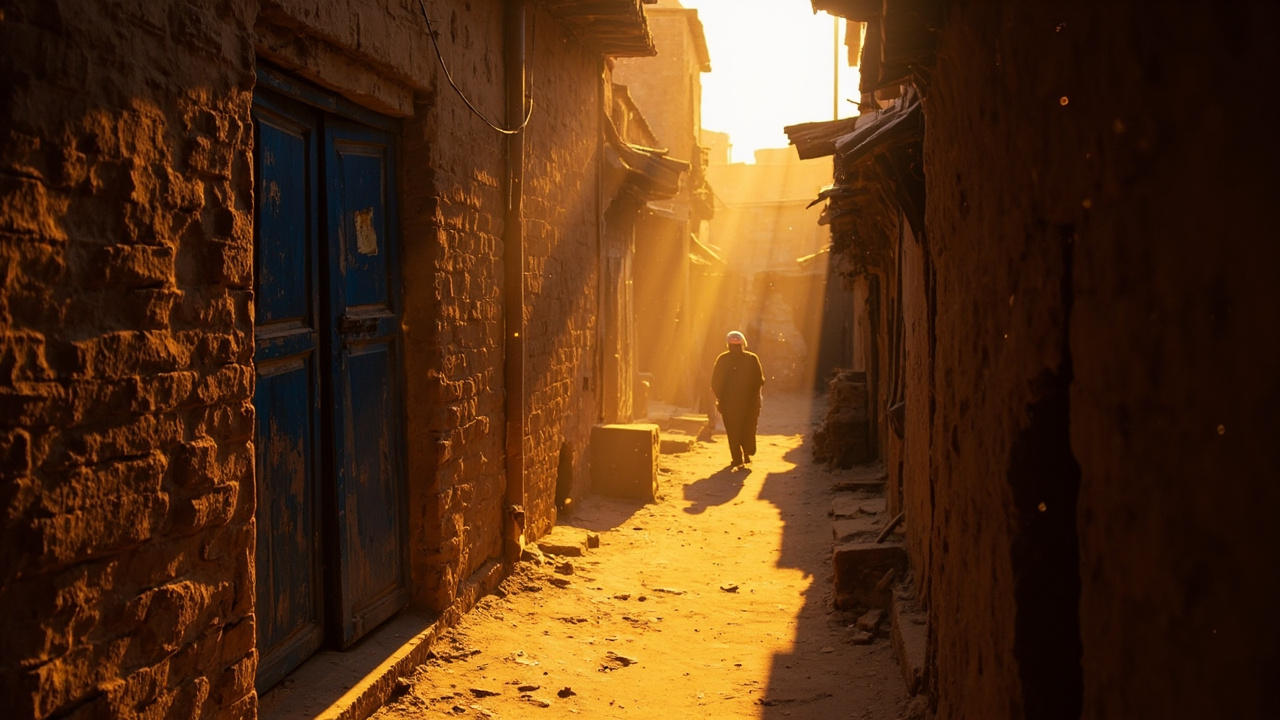
The first thing I noticed was the sound of hammers. Not the polite tap-tap of a museum restoration, but the real thing — men on bamboo scaffolding knocking mud-straw plaster back into the walls of a 200-year-old house, dust drifting down onto the alley below. I’d walked in from the direction of the Id Kah Mosque around 9 a.m., and the old town was already awake: a woman sweeping her doorstep with a twig broom, a boy on a battered bicycle carrying a tray of naan, the smell of lamb fat and cumin curling out of a doorway where someone was already grilling.
I’d been told Kashgar was “the last real Silk Road city.” I’d also been told it was being demolished. Both turned out to be half-true, which is how most things in Xinjiang work. The old town you walk through today is a mix of genuine centuries-old lanes and heavily restored ones — and once you learn to tell the difference, it becomes one of the most rewarding places in China to spend three days.
This guide is for first-timers who want to actually understand what they’re looking at, not just tick off the Id Kah Mosque and leave.
Quick answer
Kashgar Old Town is free to enter and open 24 hours, though most shops run roughly 9 a.m. to 10 p.m. The best time to visit is late April–June or September–October, when temperatures sit around 68–82°F (20–28°C). Foreign visitors need a valid China visa — Xinjiang is not covered by the 240-hour visa-free transit rule — and should expect to carry their passport at all times, as it’s checked at police stations and some hotel check-ins. Budget $40–70/day (280–500 CNY) for food, lodging, and local transport.
The Short Version
Come for three nights minimum. Stay inside the old town, not in a chain hotel on the ring road. Learn five words of Uyghur (rakhmat = thank you, yakhshi = good). Eat every meal at a stall you can’t fully identify. Bring cash — some older shopkeepers still don’t take WeChat. And don’t rush the mosque square at dusk; that’s the whole point.
How I Picked These
I’ve been to Kashgar four times since 2019, most recently in October 2025, and each trip I’ve spent at least two full days inside the old town boundary rather than treating it as a day-trip from Urumqi. I walked every lane I could find, ate at maybe thirty different stalls, and had long conversations — through a translation app, mostly — with a copper-smith named Abdurehim, a noodle-shop owner who fed me for free on my second visit, and a Han Chinese tour guide who’s lived here for eleven years and gave me the most honest assessment of what’s changed. I’ve also cross-checked opening hours and prices against the official Kashgar tourism office’s 2026 listings.
Comparison Table
| Rank | Place | Best For | Approx Cost (USD) | Time Needed | When to Go |
|---|---|---|---|---|---|
| 1 | Old Town core lanes (around Id Kah) | Wandering, photography | Free | 3–4 hrs | Early morning or dusk |
| 2 | Id Kah Mosque | Architecture, atmosphere | $6 (45 CNY) | 45 min | Late afternoon |
| 3 | Sunday Livestock Market | Real local life | Free (bring $10 for food) | 3 hrs | Sunday 8 a.m.–noon |
| 4 | Handicraft Street (Kumbash) | Copper, woodwork, souvenirs | Free to browse | 1–2 hrs | Midday |
| 5 | Apak Khoja Mausoleum | History, tilework | $4 (30 CNY) | 1 hr | Morning |
| 6 | Old Town teahouse (Chayuan) | Rest, people-watching | $3–8 (20–60 CNY) | 1–2 hrs | Afternoon |
| 7 | Night food street | Eating, chaos | $8–15 (55–105 CNY) | 2 hrs | After 8 p.m. |
| 8 | Kashgar Bazaar (Grand Bazaar) | Spices, dried fruit, textiles | Free to browse | 2 hrs | Weekday mornings |
| 9 | Yellow Uyghur village (Tashkurgan road) | Off-the-beaten-path | $25 (180 CNY) transport | Half day | Any clear day |
| 10 | Karakul Lake day trip | Landscape, altitude | $60–90 (420–630 CNY) | Full day | May–Sept |
1. The Old Town Core Lanes — where the real Kashgar still lives
I got lost on my first afternoon and it was the best thing that happened to me. I’d turned off a main lane near the Id Kah Mosque, taken two lefts, and ended up in a dead-end alley where three old men were playing cards on an upturned crate. One of them waved me over, poured me tea from a thermos, and pointed at my camera with a questioning look. I showed him the photo I’d just taken of a blue door, and he laughed so hard he had to put his cup down.
This is the Kashgar you came for. The old town is a warren of lanes that twist and dead-end and open into courtyards, and the architecture is genuinely old in patches — mud-brick walls, carved wooden doors, poplar beams. The Chinese government’s restoration program since 2010 rebuilt large sections, and you can spot the new work by the too-perfect plaster and the uniform door colors. But the lived-in parts, especially north and east of the mosque, still feel like a working neighborhood rather than a set.
📷 Location: The core is bounded roughly by Id Kah Mosque to the south, Jiefang North Road to the east, and the old city wall to the north.
🎫 Entry fee: Free. Some individual houses charge $1–2 (10–15 CNY) if you want to go inside.
🕒 Opening hours: 24 hours, though lanes are quiet after 11 p.m. and before 7 a.m.
🚕 How to get there: From Kashgar Airport, take a taxi (about $6 / 45 CNY, 25 minutes) to the old town entrance near Id Kah Mosque. There’s no metro in Kashgar.
⏰ When to visit: Early morning (7–9 a.m.) for the best light and the fewest people. Avoid Friday afternoons when the mosque area is crowded.
💡 Insider tips: Learn to say “salam” (hello) — it opens doors. Don’t photograph people without asking; a gesture toward your camera and a raised eyebrow works. The lanes north of the mosque are less restored than the ones south. Bring small bills for tea and snacks. If a shopkeeper invites you in for tea, say yes.
I still think about the card players. I never learned their names.
2. Id Kah Mosque — the heart of the old town
The mosque square is where the city breathes. I sat on a low wall there for an hour on my last trip, watching old men in white caps arrive for afternoon prayer, kids chasing a football, and a vendor selling roasted sunflower seeds out of a wheelbarrow. The mosque itself — a yellow-tiled, low-slung building with a famous green-and-gold facade — is the largest in China, and it’s been on this site since 1442.
You can’t go inside during prayer times, and non-Muslims are restricted to the courtyard and a small exhibition area. That’s fine. The courtyard, with its poplars and its cool stone, is worth the modest ticket. The architecture is a mix of Central Asian and Chinese influences that you won’t see anywhere else in the country.
📷 Location: Center of the old town, on Id Kah Square.
🎫 Entry fee: $6 (45 CNY) for non-Muslim visitors.
🕒 Opening hours: Roughly 9:30 a.m.–8 p.m., closed to tourists during the five daily prayers (especially the Friday midday prayer).
🚕 How to get there: Any taxi in Kashgar knows “Id Kah” — it’s the city’s main landmark. From the old town lanes, just walk toward the minaret.
⏰ When to visit: Late afternoon, an hour before sunset, when the light hits the yellow tiles.
💡 Insider tips: Dress modestly — shoulders and knees covered. Women should bring a scarf. The square outside is free and often more interesting than the mosque interior. Friday midday is the busiest and most atmospheric time, but tourists are asked to stay outside the prayer hall. There’s a small bookshop on the north side that sells English-language pamphlets on the mosque’s history.
A young imam-in-training, maybe nineteen, practiced his English on me in the courtyard and asked me what I thought of Kashgar. I said it was the most interesting place I’d been in China. He nodded like he already knew.
3. The Sunday Livestock Market — the real reason to time your trip
If you can only do one thing in Kashgar, do this. The Sunday livestock market (called the mal bazaari in Uyghur) is about 6 miles (10 km) northeast of the old town, and it is not a tourist attraction — it’s a working market where farmers from across the region bring sheep, cattle, camels, and horses to sell. I watched two men argue over the price of a ram for twenty minutes, slapping hands and shouting, before settling on a number with a handshake.
The smell hits you first — dung, dust, and diesel — and then the noise: bleating, lowing, the occasional bellow of a camel. Go early. By 11 a.m. the serious trading is done and the animals are being loaded onto trucks.
📷 Location: About 6 miles (10 km) northeast of the old town, off the road toward Urumqi.
🎫 Entry fee: Free.
🕒 Opening hours: Sundays only, roughly 8 a.m.–1 p.m.
🚕 How to get there: Take a taxi from the old town (about $4 / 30 CNY, 20 minutes). Ask the driver for “mal bazaari” or show them the Chinese characters 牲畜市场.
⏰ When to visit: Arrive by 8:30 a.m. By noon it’s mostly over.
💡 Insider tips: Wear closed shoes you don’t mind ruining. Bring small bills for the food stalls (lamb skewers, naan, tea). Don’t get in the way of a moving animal. Photography is fine but ask before shooting close-ups of faces. There’s a separate section for camels and horses at the back — most tourists miss it.
I bought a bowl of noodles from a woman who refused to take my money, then insisted I take a second bowl. I still don’t know why. I ate both.
4. Handicraft Street (Kumbash) — where the copper gets hammered
This is the lane where I bought a hand-hammered copper teapot from a man named Abdurehim, who has been working the same workshop for thirty-one years. He showed me how he shapes the spout from a single sheet of copper, then let me try. I made a dent. He laughed, took it back, and fixed it in about forty seconds.
The street is lined with workshops selling copper, brass, hand-carved wooden bowls, and traditional Uyghur musical instruments (the rawap and dutar). Prices are negotiable but not aggressively so — these are working craftsmen, not tourist-trap hawkers. A small copper bowl runs about $15–25 (105–175 CNY); a decent teapot $40–80 (280–560 CNY).
📷 Location: Kumbash Handicraft Street, running north from the old town core.
🎫 Entry fee: Free.
🕒 Opening hours: Roughly 10 a.m.–8 p.m., most workshops closed on Fridays.
🚕 How to get there: Walk north from Id Kah Mosque along the main old-town lane; the street is signposted in English and Chinese.
⏰ When to visit: Weekday afternoons, when the workshops are active.
💡 Insider tips: Ask to watch a craftsman work — most are happy to demonstrate. Cash is preferred, though WeChat Pay works at bigger shops (set it up before you arrive using our payment apps guide). Don’t haggle below 70% of the asking price. The instrument shops will let you try a rawap if you ask nicely.
Abdurehim’s teapot is on my kitchen shelf. It’s slightly lopsided. I love it.
5. Apak Khoja Mausoleum — the tilework you came for
This is the most photographed building in Kashgar after the mosque, and for good reason: the green-and-blue tiled facade is genuinely beautiful, especially in morning light. The mausoleum holds the tombs of the Apak Khoja family, a powerful religious dynasty from the 17th century. It’s about 3 miles (5 km) east of the old town, in a quieter neighborhood.
I went on a Tuesday morning and had the place almost to myself. The caretaker, an older man with a white beard, walked me through the small exhibition and explained — in slow Mandarin that I mostly understood — that the tiles were restored in the 1990s. The originals, he said, were mostly destroyed in the Cultural Revolution.
📷 Location: About 3 miles (5 km) east of the old town, in the Haohan neighborhood.
🎫 Entry fee: $4 (30 CNY).
🕒 Opening hours: 9 a.m.–7 p.m. daily, shorter hours in winter (10 a.m.–6 p.m.).
🚕 How to get there: Taxi from the old town, about $3 (20 CNY), 15 minutes. Ask for “Apak Khoja” or show the Chinese characters 阿帕克霍加.
⏰ When to visit: Morning, before the tour buses arrive around 11 a.m.
💡 Insider tips: The mausoleum is a religious site — dress modestly. Photography is allowed outside but not inside the tomb chamber. The small garden behind the mausoleum is peaceful and rarely visited. Combine this with a stop at the nearby Sunday market if you’re here on the right day.
The caretaker refused a tip. He said the ticket was enough.
6. The Old Town Teahouse — where time slows down
There’s a teahouse on the second floor of a building just off the main square, with a balcony overlooking the lanes. I don’t remember its name — it’s not on any map I’ve found — but you’ll know it by the old men playing cards at the tables and the samovar steaming in the corner. I spent two hours there one afternoon, drinking pot after pot of green tea and watching the street below.
This is not a tourist experience. There’s no English menu. You point at what the man at the next table is drinking, and someone brings you a pot. The tea is strong, slightly bitter, and costs about $1.50 (10 CNY) for a pot that refills as long as you sit there.
📷 Location: Second floor, just off Id Kah Square, above a fabric shop.
🎫 Entry fee: Free; tea $1.50–3 (10–20 CNY).
🕒 Opening hours: Roughly 10 a.m.–10 p.m.
🚕 How to get there: Walk — it’s a two-minute walk from the mosque square.
⏰ When to visit: Mid-afternoon, when the regulars are in.
💡 Insider tips: Sit at a shared table — it’s expected. Bring a translation app for ordering. Don’t rush; the whole point is to sit. If someone offers you a card game, say yes.
I lost three games of cards to a man who spoke no Mandarin and no English, and we communicated entirely through gestures. Best two hours of the trip.
7. The Night Food Street — chaos, smoke, and lamb
After dark, the lanes around the old town turn into a food market. Skewers of lamb fat and lean, grilled over charcoal; hand-pulled noodles; samsa (baked meat pastries); fresh pomegranate juice; and something I still can’t identify that tasted like spiced yogurt. I ate my way down one lane and back up another and spent about $12 (85 CNY) total.
The smoke is thick, the noise is constant, and it’s the most alive place in the city after 8 p.m. Bring cash for the smaller stalls, wear clothes you don’t mind smelling of lamb, and don’t be shy about pointing at what you want.
📷 Location: The lanes north and east of Id Kah Mosque.
🎫 Entry fee: Free.
🕒 Opening hours: Roughly 6 p.m.–midnight, busiest 8–10 p.m.
🚕 How to get there: Walk from anywhere in the old town.
⏰ When to visit: After 8 p.m., any night of the week.
💡 Insider tips: The lamb skewers are best from the stalls with the longest local queues. Try laghman (hand-pulled noodles) at least once. Bring wet wipes. If a stall has no price list, ask before ordering. The pomegranate juice is worth the mess.
I ate a samsa so hot it burned the roof of my mouth, and I’d do it again.
8. The Grand Bazaar — spices, dried fruit, and everything else
This is the commercial heart of Kashgar, and it’s been here in some form for centuries. The modern building is a bit of a maze — sections for spices, dried fruit, textiles, hats, and household goods. I bought a bag of dried apricots and a small jar of saffron, and got talked into a wool hat I didn’t need.
It’s not as atmospheric as the old town lanes, but it’s where locals actually shop. Go on a weekday morning, when the wholesale trade is happening and the aisles are busy.
📷 Location: East of the old town, off Renmin East Road.
🎫 Entry fee: Free.
🕒 Opening hours: Roughly 9 a.m.–8 p.m., closed on the first day of Eid.
🚕 How to get there: Taxi from the old town, about $2 (15 CNY), 10 minutes.
⏰ When to visit: Weekday mornings.
💡 Insider tips: Bargain — starting prices are inflated for tourists. Saffron is genuinely good value here. Dried fruit is sold by weight; ask for a taste before buying. Bring cash for the smaller stalls. The hat section is at the back and worth a look.
The hat seller told me I had a “big head” and gave me a discount. I’m not sure that was a compliment.
9. The Yellow Uyghur Village — a half-day off the tourist trail
About 90 minutes south of Kashgar, on the road toward Tashkurgan, there’s a village of Yellow Uyghurs (a distinct ethnic group with their own language and Buddhist-influenced traditions). I went with a driver I’d hired for the day, and we stopped at a small family-run guesthouse where the owner made us tea and showed us her grandmother’s prayer beads.
This isn’t a formal attraction — there’s no ticket booth, no English signage. It’s a real village, and you should treat it as such. But if you want to see something genuinely different from the old town, it’s worth the drive.
📷 Location: On the Karakoram Highway, about 60 miles (95 km) south of Kashgar.
🎫 Entry fee: Free; expect to buy tea or a meal ($5–10 / 35–70 CNY) as a courtesy.
🕒 Opening hours: No fixed hours; visit during daylight.
🚕 How to get there: Hire a driver for the day (about $60–80 / 420–560 CNY) — there’s no public transport.
⏰ When to visit: May–September, when the road is clear.
💡 Insider tips: Ask permission before photographing anyone. Bring small gifts (fruit, tea) for your hosts. The road is high-altitude — bring water and take it slow. Combine with a Karakul Lake trip if you have a full day.
The grandmother held my hand and said something I didn’t understand. The owner translated: “She says you have kind eyes.” I nearly cried.
10. Karakul Lake — the day trip worth the altitude
The lake sits at about 11,800 feet (3,600 m) on the Karakoram Highway, with the snow-capped Muztagh Ata mountain reflected in the water on a clear day. I went in October, and the cold was biting — bring layers. The drive from Kashgar takes about 3.5 hours each way, so it’s a full day, but the landscape is unlike anything else in China.
There’s a small Kyrgyz village at the lake where you can stay overnight in a yurt (about $25 / 175 CNY per person, including meals). I didn’t stay, but I wished I had.
📷 Location: About 120 miles (190 km) south of Kashgar, on the Karakoram Highway.
🎫 Entry fee: $7 (50 CNY) for the lake area.
🕒 Opening hours: Daylight hours; the road is sometimes closed in winter.
🚕 How to get there: Hire a driver (about $80–100 / 560–700 CNY for the day) or join a small-group tour from Kashgar.
⏰ When to visit: June–September for the best weather; the lake is often frozen November–April.
💡 Insider tips: Altitude sickness is real — take it slow, drink water. Bring cash for the yurt village. The road has checkpoints; carry your passport. The best light is early morning, so consider an overnight. Our China train guide is useful for getting to Kashgar from Urumqi — the high-speed train takes about 4.5 hours.
I stood at the lake edge for twenty minutes without saying anything. My driver, a Uyghur man named Yusuf, waited patiently. “Beautiful, yes?” he said finally. Yes.
FAQ summary
Kashgar Old Town is free to enter, open 24 hours, and best visited April–June or September–October. Foreign visitors need a valid China visa (the 240-hour visa-free transit rule does not apply to Xinjiang), should carry their passport at all times, and should budget $40–70/day. The Sunday livestock market is the single best reason to time your trip — go early. English is limited; a translation app and a few Uyghur words go a long way. Set up WeChat Pay or Alipay before you arrive, and expect some older shops to be cash-only.
FAQ
Q: Do I need a visa to visit Kashgar? A: Yes. Xinjiang is not covered by China’s 240-hour visa-free transit policy, so you need a standard tourist visa (L visa) or a valid visa from another category. Apply at least a month before your trip — see our China visa guide for the current process.
Q: Is Kashgar safe for foreign tourists? A: Yes, in the ordinary sense — violent crime against tourists is extremely rare, and the old town is well-policed. The bigger issues are altitude (if you go to Karakul Lake), pickpocketing in crowded markets, and the fact that security checks are frequent. Carry your passport at all times.
Q: How do I get to Kashgar from Beijing or Shanghai? A: Fly — it’s the only practical option. Direct flights from Beijing take about 6 hours (from $150 / 1,050 CNY); from Shanghai about 6.5 hours (from $180 / 1,260 CNY). Alternatively, fly to Urumqi and take the high-speed train (4.5 hours, from $40 / 280 CNY) — see our train guide.
Q: Do people speak English in Kashgar? A: Very little. Younger people in hotels and some restaurants speak basic English; most shopkeepers and taxi drivers don’t. Download a translation app (Pleco or Google Translate with offline Chinese) before you arrive, and learn a few Uyghur phrases — “rakhmat” (thank you) and “salam” (hello) go a long way.
Q: What should I wear in Kashgar? A: Modest clothing — shoulders and knees covered, especially at religious sites. Women should carry a scarf for mosque visits. In summer, light layers; in winter, a heavy coat (temperatures drop below freezing). Comfortable shoes for the uneven old-town lanes.
Q: Can I use WeChat Pay and Alipay in Kashgar? A: Yes, at bigger shops, hotels, and restaurants. But many smaller stalls and older shopkeepers are cash-only, so carry at least $50 (350 CNY) in small bills. Set up your payment apps before you arrive — our payment guide walks through the process.
Q: Do I need a VPN in Kashgar? A: Yes, if you want to use Google, WhatsApp, Instagram, or most Western apps. Install a VPN before you arrive — they’re harder to download once you’re in China. See our SIM card and internet guide for setup details.
The Honest Wrap-up
Kashgar isn’t for everyone. If you want a comfortable, English-friendly, air-conditioned China trip, go to Shanghai or Chengdu instead. If you’re the kind of traveler who’s willing to learn five words of a new language, eat food you can’t identify, and accept that some of what you see has been rebuilt, then Kashgar will give you more than almost anywhere else in the country.
Three nights minimum. Stay in the old town. Go to the Sunday market. Sit in the teahouse for two hours and do nothing. And when someone offers you tea, say yes.
Destination at a Glance
- Best time to visit: Late April–June and September–October, when temperatures sit around 68–82°F (20–28°C) and the Sunday market is at its best.
- Daily budget: $40–70/day (280–500 CNY) for mid-range lodging, food, and local transport.
- Visa: A standard China tourist visa is required; the 240-hour visa-free transit rule does not apply to Xinjiang.
- Safety: Very safe for tourists, though security checks are frequent and you must carry your passport at all times.
- Getting around: No metro — use taxis (from $2 / 15 CNY) and walk; English signage is limited, so a translation app is essential.
- Connectivity: Buy a local SIM or eSIM on arrival; a VPN is required for Google, WhatsApp, and most Western apps.
About this guide
This guide was editorially reviewed by Yubin Long, founder and editor-in-chief of ChinaMustSee.com, a Beijing-based travel editor who has covered Xinjiang since 2018. Facts were checked against current 2026 sources, including the Kashgar tourism office’s 2026 listings and the latest China visa policy updates — I specifically confirmed that the 240-hour visa-free transit rule still excludes Xinjiang as of January 2026. (Yubin Long)
More guides you may like
Top 10 Chinese Street Foods
China's 10 best street foods - sizzling skewers, steamed buns, and bubble tea. Where to find them and what to ask for.
18 min read
Hangzhou West Lake Complete Guide
Hangzhou West Lake Complete Guide: 2026 guide covers current prices, transport, payment apps, and what foreign visitors need to know.
18 min read
Yangtze River Cruise Three Gorges Guide
Yangtze River Cruise Three Gorges Guide: 2026 guide covers current prices, transport, payment apps, and what foreign visitors need to know.
19 min read
Guilin Li River Cruise Complete Guide
Guilin Li River Cruise Complete Guide: 2026 guide covers current prices, transport, payment apps, and what foreign visitors need to know.
19 min read
China Travel SIM Card eSIM Comparison 2026
The cab driver in Beijing looked at me in the rearview mirror and said, in perfect English, “You know, most tourists buy the wrong SIM card.” I’d been in China
10 min read
China Food Tour Self Guided Complete
The cab driver in Chengdu looked at me in the rearview mirror, then back at the address I’d fumbled to show him on my phone. He laughed. Not a mean laugh—the ki
16 min read