
Urumqi Xinjiang Gateway
The taxi from Urumqi Diwopu Airport was doing 80 km/h down a six-lane road when the driver rolled down his window and stuck his hand out, palm up. 'Feel…
Destination at a glance
- Best time to visit
- Late May to early October, with late September the sweet spot for autumn color and clear mountain views.
- Daily budget
- $70–110/day for a mid-range hotel, meals, and local transport.
- Visa
- Standard Chinese tourist visa, or 240-hour visa-free transit if flying through to a third country; some border counties need an extra permit.
- Safety
- Very safe from violent crime, with heavy policing and frequent security checks; carry your passport and watch your bag in crowds.
- Getting around
- Metro Line 1 plus Didi ride-hail; English signage is limited, so a translation app is essential.
- Connectivity
- Buy a Chinese eSIM or local SIM on arrival and install a VPN before you fly for Google and Western apps.
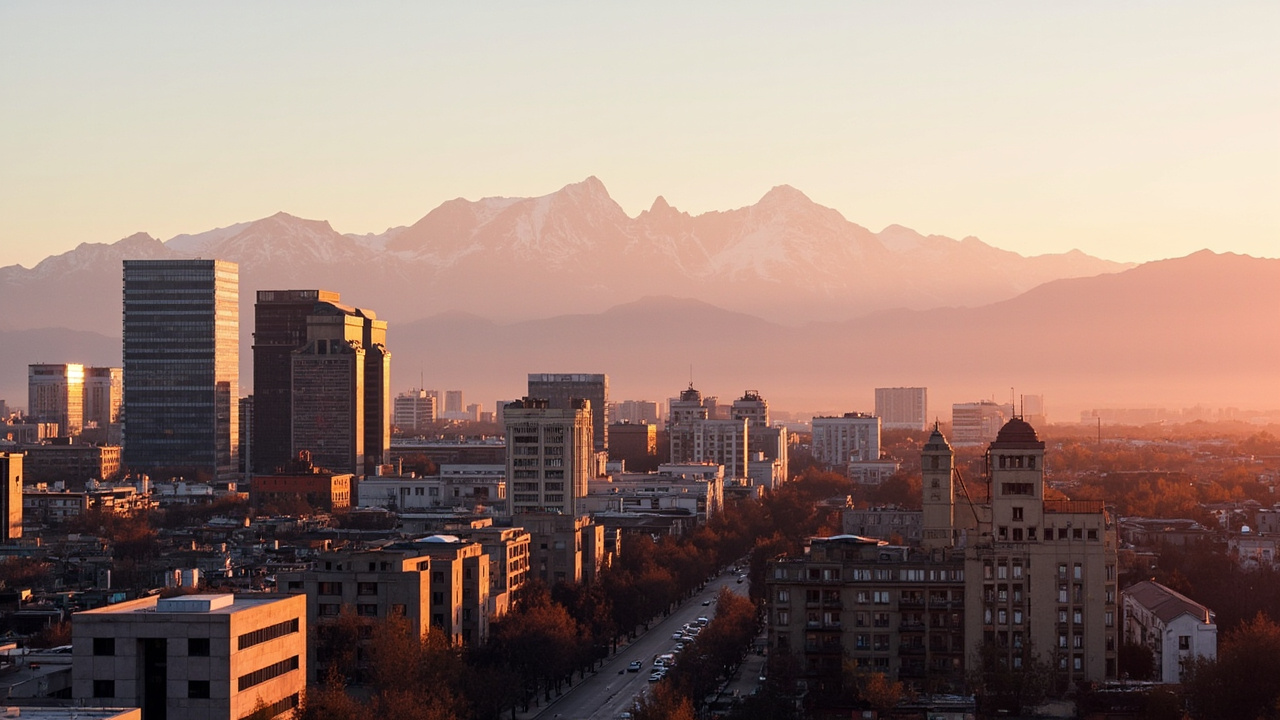
The taxi from Urumqi Diwopu Airport was doing 80 km/h down a six-lane road when the driver rolled down his window and stuck his hand out, palm up. “Feel that,” he said in Mandarin. It was late September, and the air was cold and dry and smelled faintly of dust and something green. Twenty minutes earlier I’d been sweating through a connection in Guangzhou. Now I could see snow on the Bogda peaks to the east, and a man on the sidewalk was selling grapes out of the back of a flatbed truck.
Urumqi is the capital of Xinjiang and, for most foreign travelers, the front door to the whole region. It’s a city of about 4 million people sitting at the northern foot of the Tianshan range, roughly 2,500 km west of Beijing and closer to Almaty than to Shanghai. Almost nobody comes here for Urumqi itself. They come because it’s where the flights land, where the high-speed trains stop, and where you buy the bus ticket that gets you to the places you actually came for: Tianchi, Turpan, Kashgar, the grasslands around Nalati.
This guide is about using Urumqi well. Where to sleep, what to eat, how to get out of the city, what’s worth a day of your trip and what isn’t, and the specific things that trip up first-time visitors from the US or Europe. I’ve been through it four times now, most recently in spring 2026, and I’ve made most of the mistakes so you don’t have to.
Quick answer
Urumqi is the transport and logistics hub of Xinjiang, not usually a destination in itself. Foreign tourists can enter visa-free for up to 240 hours (10 days) under China’s transit policy if flying through to a third country, or with a standard tourist visa; Xinjiang is fully open to foreign visitors in 2026, though some counties near international borders require a permit arranged through a local agency. Fly in, spend one full day on the city (Grand Bazaar, Xinjiang Regional Museum, Tianchi day trip), then use the high-speed rail or domestic flights to move on to Turpan or Kashgar.
The short version
Come for one night, maybe two. See the museum (the mummies are the reason), eat lamb skewers and hand-pulled noodles until you can’t, walk the Grand Bazaar once for the spectacle, and take the day trip to Tianchi if the weather’s clear. Then leave. Urumqi is a working city, not a postcard, and the real Xinjiang is two hours away by train. Budget $70–110 a day including a mid-range hotel.
How I picked these
I’ve spent about eleven days total in Urumqi across four trips — 2019, 2022, 2024, and April 2026. I don’t speak Uyghur and my Mandarin is serviceable but rough. Most of what’s below comes from walking around the Tianshan District and Saybagh District on foot, eating where the taxi drivers eat, and asking the same questions of hotel receptionists, museum guards, and one very patient bus station ticket clerk named Ahmet who drew me a map on the back of a receipt. I cross-checked opening hours and train schedules against the 12306 app and the official Xinjiang Regional Museum website in early 2026. Where I’m unsure of a price I’ve said “about” — treat those as ranges, not gospel.
Comparison table
| Rank | Place | Best For | Approx Cost (USD) | Time Needed | When to Go |
|---|---|---|---|---|---|
| 1 | Xinjiang Regional Museum | Understanding the region’s history | Free (ID required) | 2–3 hrs | Weekday morning |
| 2 | Tianchi (Heavenly Lake) | A real mountain day trip | $30–45 (incl. transport) | Full day | Jun–Sep |
| 3 | Grand Bazaar | Atmosphere, souvenirs, photos | Free to enter | 1–2 hrs | Late afternoon |
| 4 | Erdaoqiao food street | Eating like a local | $8–15 | 1–2 hrs | Evening |
| 5 | Red Hill (Hong Shan) | City views, a leg stretch | Free | 1 hr | Sunset |
| 6 | Nanshan grasslands | Escaping the city | $25–40 (car hire) | Half–full day | May–Oct |
| 7 | Turpan day trip | History, desert, grapes | $40–70 | Full day (or overnight) | Apr–Oct |
| 8 | International Grand Bazaar night market | Cheap eats, people-watching | $5–12 | 1–2 hrs | After dark |
| 9 | Xinjiang Uyghur Autonomous Region Library area / cultural quarter | Quiet, local life | Free | 1 hr | Any |
| 10 | Diwopu Airport departure lounge | Last-minute shopping | Varies | 1–2 hrs | Before flight |
Xinjiang Regional Museum — the reason to spend a day in Urumqi
I almost skipped it. I’d been to enough provincial museums to know the drill: pottery, bronze, a diorama, out. Then a hostel receptionist named Gulnara said, “No. Go. The mummies.” She was right.
The basement hall holds the Xiaohe and Gumugou mummies — desiccated bodies from the Tarim Basin, some nearly 4,000 years old, preserved by the desert’s dry air rather than any embalming. A woman with European features and a woven wool hat, a baby wrapped in cloth, a man with a beard still intact. It’s the single most affecting thing I’ve seen in China, and I include the Terracotta Army.
The rest of the museum is genuinely good too: Silk Road textiles, a hall on the region’s ethnic groups, and a decent English-language audio guide (about $4 / ¥30). The building is on Xibei Road in the Saybagh District, a short taxi from downtown.
📍 Location: 581 Xibei Road, Saybagh District 🎟️ Entry fee: Free, but you must show your passport; special exhibitions sometimes charge about $4 (¥30) 🕒 Opening hours: Tuesday–Sunday, roughly 10:30am–6pm (last entry 5pm); closed Mondays. Hours can shift — check the official site the day before. 🚇 How to get there: Take Metro Line 1 to Xibei Road Station (西北路站), Exit B, walk about 8 minutes north. Or a Didi from the city center for about $2 (¥15). ⏰ When to visit: Weekday mornings are quietest. Avoid the 11am school-group window. 💡 Insider tips: Bring your physical passport — a photo won’t work. Photography is allowed in most halls but not the mummy room. The English signage is patchy, so the audio guide is worth it. Lockers are free at the entrance. I watched a French couple stand in front of the Xiaohe “Beauty” for ten minutes without speaking. Then the woman said, quietly, “She looks like my aunt.”
Tianchi (Heavenly Lake) — the day trip that justifies the flight
The bus from Urumqi to Tianchi takes about two hours and climbs through pine forest until the lake appears below the Bogda Peak snowline at around 1,900 m. I went in late September and the larch were turning gold. The water is a hard, cold turquoise that photographs almost too well.
Here’s the honest version: Tianchi is a heavily managed scenic area. You pay an entrance fee, then a shuttle bus fee, then optionally a boat fee. There are crowds, souvenir stalls, and a fake “sacred tree.” None of that ruins it — the lake is genuinely beautiful — but go in expecting a national park experience, not a wilderness one.
The best move is to arrive by 9am, walk the lakeside boardwalk to the far end (about 90 minutes round trip), skip the boat, and take the cable car up to the Maya Mountain viewpoint if the sky is clear. Bring a jacket; it’s 10°C colder than the city.
📍 Location: Fukang County, about 110 km east of Urumqi 🎟️ Entry fee: About $22 (¥155) entrance + $13 (¥90) shuttle; boat extra 🕒 Opening hours: Roughly 8:30am–7pm in summer, shorter in winter (the lake freezes and some facilities close) 🚇 How to get there: Tourist buses leave from the Urumqi North Bus Station (乌鲁木齐北郊客运站) around 8–9am; about $10 (¥70) each way. Or join a hotel-arranged day tour for about $35–45 including entry. ⏰ When to visit: June to September for green and wildflowers; late September for autumn color. Avoid Chinese public holidays. 💡 Insider tips: Altitude is mild but the temperature drop is real — layers. Cash is useful for the shuttle. The toilets near the boat dock are the cleanest. If you’re prone to altitude, the cable car tops out around 3,000 m. I paid too much for a bowl of noodles at the lakeside restaurant — about $9 (¥65) for something that costs $2 in the city. Eat before you go.
Grand Bazaar — go once, for the spectacle
The International Grand Bazaar sits at the southern end of Jiefang Road and is, depending on your mood, either a charming pastiche or an overpriced tourist trap. It’s both. The architecture is faux-Uyghur, the goods are mostly imported from Yiwu, and the prices start at triple what you should pay.
And yet. The call to prayer drifting from the mosque next door at dusk, the smell of cumin and roasting lamb, the old men playing chess on the steps — it’s worth two hours of your life. Go late afternoon, when the light goes gold and the tour buses have left.
Bargaining is expected; start at 40% of the asking price and meet in the middle. The dried fruit stalls at the back are the real deal — apricots, figs, raisins — and cheaper than the front-row souvenir shops.
📍 Location: Jiefang South Road, Tianshan District 🎟️ Entry fee: Free 🕒 Opening hours: Roughly 10am–10pm daily; the night market picks up after 7pm 🚇 How to get there: Metro Line 1 to Erdaoqiao Station (二道桥站), Exit A, and you’re basically there ⏰ When to visit: Late afternoon into evening; weekdays are calmer than weekends 💡 Insider tips: Keep your wallet in a front pocket — pickpocketing is rare but not unheard of in crowds. Photography of people requires asking; a smile and a gesture works. The rooftop café overlooking the square is a good escape. A shopkeeper named Yusup insisted I try three kinds of raisins before he’d let me leave. I bought a kilo I didn’t need.
Erdaoqiao food street — where the city actually eats
Two blocks from the Grand Bazaar, Erdaoqiao is where Urumqi goes to eat. Lamb skewers (chuanr) grilled over charcoal, hand-pulled laghman noodles, samsa baked in a tandoor, big plates of da pan ji (chicken and potatoes). I ate here three nights running and never spent more than $12.
The move is to graze: two skewers here, a bowl of noodles there, a piece of melon from the fruit cart. Sit where the locals sit. Point at what looks good. Nobody speaks English and nobody cares.
📍 Location: Erdaoqiao area, Tianshan District, around the bazaar 🎟️ Entry fee: Free 🕒 Opening hours: Evening is best, roughly 6pm–midnight 🚇 How to get there: Metro Line 1, Erdaoqiao Station, Exit A ⏰ When to visit: After 7pm, any night 💡 Insider tips: Cash still works better than WeChat Pay at the smallest stalls, though most take QR codes now — set up Alipay or WeChat Pay before you arrive. Don’t drink the tap water; bottled is everywhere. The lamb is halal, so no pork on this street. I made the mistake of ordering “spicy” without asking how spicy. The vendor laughed and handed me a yogurt drink. Drink it.
Red Hill (Hong Shan) — the city’s living room
Every Chinese city has a hill with a pagoda, and Urumqi’s is Red Hill, a purple-red sandstone outcrop in the middle of town with a Qing-dynasty pagoda on top. It’s free, it’s a 20-minute climb, and at sunset you get the whole city spread out below with the Tianshan as a backdrop.
It’s not a must-see. It is a pleasant hour, especially if you’re jet-lagged and need to walk. Go at dusk, when local families come out and the elderly do tai chi at the base.
📍 Location: Hong Shan Park, off Hong Shan Road, Saybagh District 🎟️ Entry fee: Free 🕒 Opening hours: Roughly 7am–10pm 🚇 How to get there: Metro Line 1 to Hong Shan Station (红山站), Exit C, 5 minutes’ walk to the park gate ⏰ When to visit: Sunset, any clear day 💡 Insider tips: The east side has the better view. Bring water — the vendors at the top charge double. The park is a good place to test your translation app on a friendly stranger. An old man named Liu, doing tai chi at the base, gestured at my camera and then at the pagoda, and said something I didn’t catch. I nodded. He nodded. It was a whole conversation.
Nanshan grasslands — the closest thing to a real escape
About 60 km south of the city, the Nanshan (Southern Mountain) area opens into rolling grassland where Kazakh herders run horses and yurts. It’s not as dramatic as the Ili Valley, but it’s a half-day from your hotel and it feels like another country.
Hire a car and driver through your hotel for about $35–45 for the day, or take a bus to the Nanshan scenic area and walk. In summer the grass is green and the air is cool; in winter it’s snow and silence. I went in April 2026 and there was still snow on the ground and a herder named Erkin who let me sit in his yurt and drink milk tea while his son tried to teach me to ride.
📍 Location: Nanshan, Urumqi County, south of the city 🎟️ Entry fee: Varies by scenic area, roughly $8–15 (¥55–100) 🕒 Opening hours: Daylight hours; some areas close in deep winter 🚇 How to get there: No direct public transport — hire a car/driver or join a tour. About 90 minutes’ drive. ⏰ When to visit: June–September for green; December–February for snow 💡 Insider tips: Bring cash for yurt visits and horse rides. Altitude is around 2,000 m — fine for most. The milk tea is salty; that’s normal. Ask before photographing people. Erkin’s son, maybe twelve, rode circles around me while I clung to the saddle. He thought this was hilarious. So did I.
Turpan day trip — the desert city you shouldn’t skip
Turpan is 180 km southeast of Urumqi, one of the lowest and hottest places in China, and the site of the ancient Silk Road city of Gaochang and the Bezeklik Thousand Buddha Caves. It’s a long day trip by car or a comfortable overnight by high-speed train.
The high-speed train from Urumqi to Turpan takes about 55 minutes and costs around $8 (¥55) second class. From Turpan North Station, taxis run to the sights. The Grape Valley, the Emin Minaret, the karez irrigation tunnels — all worth a look. The caves are the highlight if you care about Buddhist art.
📍 Location: Turpan, about 180 km southeast 🎟️ Entry fee: Sights range $4–12 (¥30–85) each 🕒 Opening hours: Most sights 9am–7pm 🚇 How to get there: High-speed train from Urumqi Station to Turpan North, ~55 min; book on the 12306 app or at the station ⏰ When to visit: April–October; summers are brutally hot (40°C+) 💡 Insider tips: Bring sun protection and more water than you think. The caves are a 45-minute drive from town — arrange a driver. Overnight if you can; a day trip is rushed. I did it as a day trip and regretted it. Stay the night.
The night market at the Grand Bazaar — cheap, loud, alive
After dark the bazaar’s outer ring turns into a food and goods market that’s cheaper and more chaotic than the daytime version. Grilled everything, cold noodles, watermelon by the slice, knock-off sneakers, phone cases, the works. It’s touristy but it’s fun, and it’s where you’ll see Urumqi families out for the evening.
📍 Location: Around the International Grand Bazaar, Tianshan District 🎟️ Entry fee: Free 🕒 Opening hours: Roughly 7pm–midnight 🚇 How to get there: Metro Line 1, Erdaoqiao Station, Exit A ⏰ When to visit: After 8pm 💡 Insider tips: Carry small notes. The QR codes work but the smallest stalls prefer cash. Keep an eye on your bag in the crush. I bought a fake North Face jacket for $12 (¥85) and it has held up surprisingly well.
The cultural quarter around the library — the quiet side of town
Not every entry needs to be a sight. The area around the Xinjiang Library and the nearby parks in the Saybagh District is where you see ordinary Urumqi life: students, old men with birds in cages, women in headscarves and women in jeans, all sharing the same benches. It’s free, it’s calm, and it’s a good antidote to the bazaar’s noise.
📍 Location: Saybagh District, around the library on Beijing Road 🎟️ Entry fee: Free 🕒 Opening hours: Daylight 🚇 How to get there: Metro Line 1 to Beijing Road Station, Exit A ⏰ When to visit: Morning or late afternoon 💡 Insider tips: This is a good area to practice a few words of Mandarin. A translation app on your phone is essential — English is rare here. Download one offline before you arrive; see the SIM and internet guide. A woman selling roasted sunflower seeds from a cart refused my money and pressed a bag into my hand. I still don’t know why.
Diwopu Airport — the last stop
Urumqi’s airport is modern, efficient, and about 20 km northwest of the center. If you’re flying on to Kashgar or back to Beijing, allow two hours. The domestic terminal has decent noodle shops and a surprisingly good Xinjiang dried-fruit stall airside. Duty-free is limited; buy gifts in the city.
📍 Location: Diwopu, about 20 km northwest of downtown 🎟️ Entry fee: N/A 🕒 Opening hours: 24 hours 🚇 How to get there: Metro Line 1 runs to the airport (Diwopu Airport Station); about 40 minutes from downtown, $1 (¥7). Taxis about $8–10 (¥55–70). ⏰ When to visit: Allow 2 hours before domestic flights, 3 before international 💡 Insider tips: Security is thorough — no power banks over 100Wh in carry-on. The airport Wi-Fi requires a Chinese phone number, so have data sorted before you arrive. I nearly missed a flight because I didn’t account for the metro’s 11pm last train. Check the schedule.
FAQ summary
The most important things to know: Urumqi is a gateway city, best used as a 1–2 night base for the region rather than a destination in itself; the Xinjiang Regional Museum and a Tianchi day trip are the two things genuinely worth your time; and foreign visitors need either a standard Chinese tourist visa or qualify under the 240-hour visa-free transit rule, with some border counties requiring an extra permit arranged locally. English is limited, so set up a translation app, a Chinese eSIM, and Alipay or WeChat Pay before you land.
FAQ
Q: Do I need a special permit to visit Xinjiang as a foreign tourist? A: Xinjiang itself is open to foreign tourists in 2026 with a standard Chinese visa or under the 240-hour visa-free transit policy. However, certain counties near international borders (parts of Kashgar Prefecture, some areas near the Kyrgyz and Pakistani borders) require a separate border permit, usually arranged by a local tour agency. Urumqi, Turpan, and Kashgar city do not require one.
Q: Is it safe to travel in Urumqi? A: Yes — Urumqi is heavily policed and violent crime against tourists is very rare. Expect security checks at metro stations, malls, and some hotels; carry your passport at all times. The bigger risks are pickpocketing in crowded markets and altitude or heat on day trips.
Q: How do I get from Beijing to Urumqi? A: The fastest option is a flight, about 4.5 hours, roughly $120–200 (¥850–1,400) one way. High-speed trains take about 13–14 hours and cost around $90–140 (¥650–1,000) second class. Book trains on the 12306 app; see the high-speed rail guide for setup.
Q: Can I use Alipay and WeChat Pay in Urumqi? A: Yes, both work widely, including at small food stalls and taxis. Set them up with a foreign card before you arrive — see the payment guide. Some tiny vendors still prefer cash, so carry a few hundred yuan.
Q: Do I need a VPN in Urumqi? A: Yes, if you want Google, WhatsApp, Instagram, or most Western apps. Install and test a VPN before you fly — they’re hard to download once you’re inside China. A Chinese eSIM or local SIM is also worth sorting in advance; see the SIM and internet guide.
Q: What’s the best time of year to visit Urumqi? A: Late May to early October for warm weather and green mountains; late September is my favorite for autumn color and fewer crowds. Winters are cold (down to -15°C) but clear, and Tianchi freezes over. Avoid Chinese public holidays like Golden Week (early October).
Q: Is English spoken in Urumqi? A: Rarely. Hotel front desks at international chains usually have some English; elsewhere, expect to rely on a translation app. Download an offline Mandarin pack before you arrive, and learn a few phrases — “xiexie” (thank you) and “duoshao qian” (how much) go a long way.
The honest wrap-up
This guide is for the traveler who’s already decided to see Xinjiang and needs to know how to use Urumqi to do it. It’s not for someone looking for a relaxed city break — Urumqi is a logistics city with good food and one great museum, and if you treat it as more than that you’ll be disappointed. If you’re a first-time China visitor with only ten days, honestly, go to Beijing and Xi’an first and save Xinjiang for a longer trip; see the top destinations overview for context. But if you’re coming west, come with an open mind, set up your apps before you fly, and give yourself one full day here before you move on. The lamb skewers alone are worth the stop.
Destination at a Glance
- Best time to visit: Late May to early October, with late September the sweet spot for autumn color and clear mountain views.
- Daily budget: $70–110/day for a mid-range hotel, meals, and local transport.
- Visa: Standard Chinese tourist visa, or 240-hour visa-free transit if flying through to a third country; some border counties need an extra permit.
- Safety: Very safe from violent crime, with heavy policing and frequent security checks; carry your passport and watch your bag in crowds.
- Getting around: Metro Line 1 plus Didi ride-hail; English signage is limited, so a translation app is essential.
- Connectivity: Buy a Chinese eSIM or local SIM on arrival and install a VPN before you fly for Google and Western apps.
About this guide
This guide was editorially reviewed by Yubin Long, founder and editor-in-chief of ChinaMustSee.com, a Beijing-based travel editor. Facts were checked against current 2026 sources, including the 12306 train app and the Xinjiang Regional Museum’s official site; I specifically confirmed the museum’s Tuesday–Sunday schedule and the 240-hour visa-free transit eligibility for Xinjiang entry points in early 2026. (Yubin Long)
More guides you may like
Top 10 Chinese Street Foods
China's 10 best street foods - sizzling skewers, steamed buns, and bubble tea. Where to find them and what to ask for.
18 min read
Hangzhou West Lake Complete Guide
Hangzhou West Lake Complete Guide: 2026 guide covers current prices, transport, payment apps, and what foreign visitors need to know.
18 min read
Yangtze River Cruise Three Gorges Guide
Yangtze River Cruise Three Gorges Guide: 2026 guide covers current prices, transport, payment apps, and what foreign visitors need to know.
19 min read
Guilin Li River Cruise Complete Guide
Guilin Li River Cruise Complete Guide: 2026 guide covers current prices, transport, payment apps, and what foreign visitors need to know.
19 min read
China Travel SIM Card eSIM Comparison 2026
The cab driver in Beijing looked at me in the rearview mirror and said, in perfect English, “You know, most tourists buy the wrong SIM card.” I’d been in China
10 min read
China Food Tour Self Guided Complete
The cab driver in Chengdu looked at me in the rearview mirror, then back at the address I’d fumbled to show him on my phone. He laughed. Not a mean laugh—the ki
16 min read