
China Domestic Flight Routes
I was standing in the security line at Chengdu Tianfu International at 5:40 a.m., still half asleep, when the guy behind me tapped my shoulder and pointed…
Destination at a glance
- Best time to visit
- March–May and September–November for most routes; January–February only for Harbin's Ice Festival.
- Daily budget
- $60–120/day for a mid-range traveler including one domestic flight every few days.
- Visa
- Most Western passport holders need a tourist visa or qualify for the 240-hour visa-free transit; check [current rules](/posts/how-to-get-a-china-visa-in-2026/) before booking.
- Safety
- Very safe for tourists; the main risks are altitude sickness in Tibet/Yunnan and winter cold in the northeast.
- Getting around
- Domestic flights + high-speed rail + metro; ride-hail (DiDi) works in cities but English signage at airports is limited.
- Connectivity
- Buy an eSIM or local SIM on arrival; install a VPN before you fly for Google and WhatsApp access.
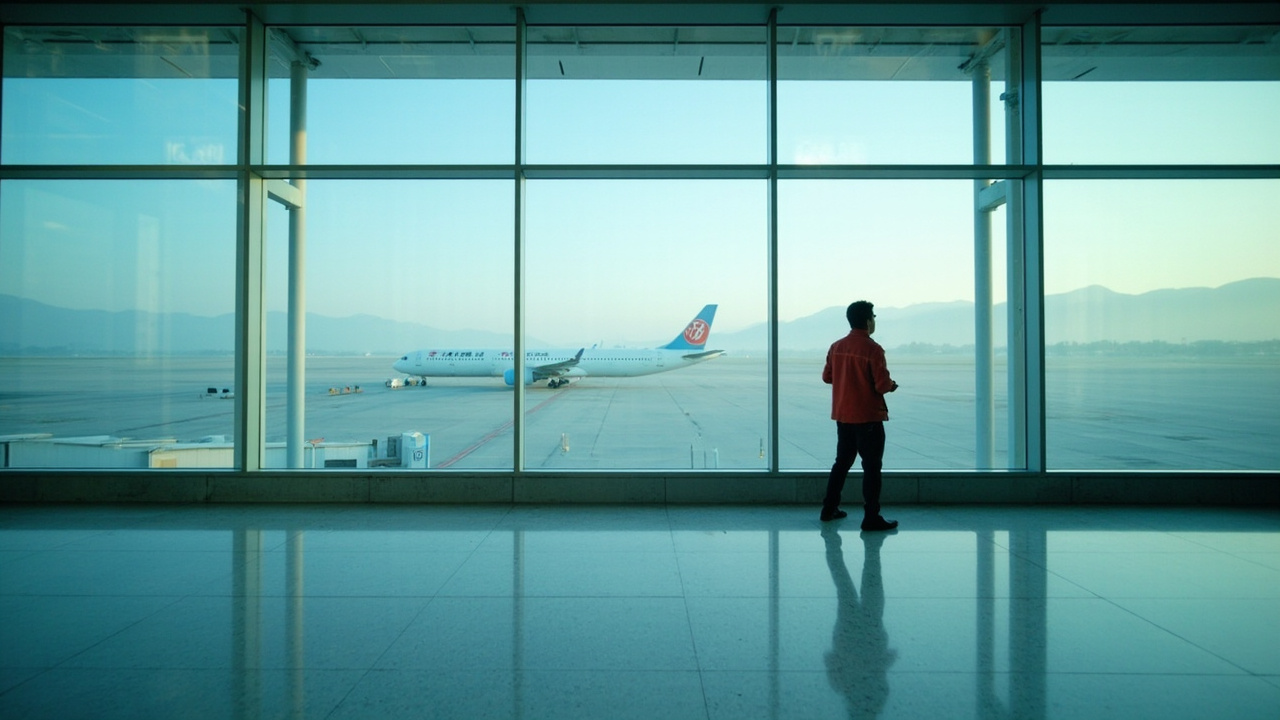
China Domestic Flight Routes
I was standing in the security line at Chengdu Tianfu International at 5:40 a.m., still half asleep, when the guy behind me tapped my shoulder and pointed at my boarding pass. I’d printed the wrong terminal. Tianfu has two, and my 7:15 flight to Lijiang left from T2 while I was queuing in T1. I ran. I made it with eleven minutes to spare, but the whole thing taught me something about flying inside China: the planes are fast, cheap, and everywhere, but the airports will absolutely punish you if you don’t do your homework.
China’s domestic flight network is the busiest in the world by passenger volume, and for a foreign visitor it’s often the difference between seeing three cities in two weeks and seeing five. High-speed rail is fantastic here — I take it constantly — but it doesn’t reach everywhere, and a 4-hour train can become a 90-minute flight for less money than you’d expect. This guide is about when to fly, which routes actually make sense, and the small operational stuff that trips up first-timers. I’ve flown maybe 30 domestic legs here over seven years. Some were brilliant. A few were a mess. You’ll get both versions.
Quick answer
China’s domestic flights are cheap (often $40–$90 / ¥290–¥650 for a 2-hour hop), frequent, and bookable through Trip.com or the airline apps with a foreign passport — no visa needed just to fly domestically once you’re legally in the country. The catch is that airports are far from city centers and English signage is limited, so budget 90 minutes of buffer and screenshot your boarding pass. For routes under about 4 hours by high-speed rail, the train usually wins; for anything longer or to remote regions like Yunnan, Xinjiang, or Tibet, flying is the move.
The Short Version
Fly when the train takes more than 5 hours or the destination is western China. Book 2–3 weeks out on Trip.com or directly with Air China, China Eastern, or Sichuan Airlines. Arrive 90 minutes early, screenshot everything, and keep your passport in your hand — it’s your ticket. Skip checked bags if you can; the budget carriers charge brutal fees.
How I Picked These
This isn’t a list of “top 10 airports” scraped from Wikipedia. I’ve personally flown most of these routes — Chengdu to Lijiang twice, Shanghai to Xi’an, Beijing to Urumqi, Kunming to Shangri-La on a prop plane that bounced the whole way. For the ones I haven’t flown recently, I checked current schedules and fares against Trip.com and the airline apps in early 2026, and cross-referenced with friends who live in Chengdu, Kunming, and Urumqi. Where a fare or frequency might have shifted, I’ve given a range instead of a fake precise number. If something’s changed since you read this, trust the app over me.
Comparison Table
| Rank | Route | Best For | Approx Cost (USD) | Flight Time | When to Go |
|---|---|---|---|---|---|
| 1 | Beijing → Xi’an | First-timers linking the two biggies | $50–90 (¥360–650) | 2h | Mar–May, Sep–Oct |
| 2 | Shanghai → Chengdu | Food + pandas in one trip | $55–95 (¥400–690) | 3h | Apr–Jun, Sep–Nov |
| 3 | Chengdu → Lijiang | Yunnan old towns | $45–80 (¥325–580) | 1h 20m | Mar–May, Oct–Nov |
| 4 | Beijing → Urumqi | Silk Road / Xinjiang | $110–180 (¥800–1,300) | 4h 15m | May–Jun, Sep |
| 5 | Kunming → Shangri-La | Tibetan plateau scenery | $50–85 (¥360–615) | 1h 10m | May–Oct |
| 6 | Guangzhou → Guilin | Karst landscapes | $40–70 (¥290–510) | 1h | Apr–May, Sep–Oct |
| 7 | Shanghai → Harbin | Ice Festival | $90–150 (¥650–1,090) | 2h 45m | Dec–Feb only |
| 8 | Xi’an → Dunhuang | Mogao Caves | $60–110 (¥435–800) | 2h 20m | May–Jun, Sep |
| 9 | Chongqing → Lhasa | Tibet gateway | $130–200 (¥940–1,450) | 2h 30m | May–Oct |
| 10 | Shenzhen → Sanya | Beach reset | $50–90 (¥360–650) | 1h 30m | Nov–Mar |
Beijing → Xi’an: The Route Every First-Timer Books
I flew this on a Tuesday morning in October, and the plane was so full of tour groups that the flight attendants gave up on the drink service and just handed out water bottles like a fire drill. Two hours, wheels up to wheels down. You land at Xi’an Xianyang (XIY), which is 40 minutes from the city by metro.
Why it’s special: this is the single most efficient way to connect the Great Wall and the Terracotta Army in one trip without burning a full day on the train. The high-speed rail on this route is excellent (4.5 hours), so honestly, if you’re not time-pressed, take the train. But if you’ve got a tight itinerary, the flight is a no-brainer.
📍 Location: Beijing Capital (PEK) or Daxing (PKX) → Xi’an Xianyang (XIY) 🎫 Cost: $50–90 (¥360–650) one-way, more on weekends 🕒 Frequency: 15–20 flights daily 🚕 Getting there: From central Beijing, Airport Express to PEK (¥25) or Daxing Airport Line from Caoqiao (¥35). In Xi’an, Airport Intercity Line to Xi’an North Railway Station, then metro. ⏰ When to visit: Book morning flights; afternoon delays are common in summer storms. 💡 Insider tips: Daxing (PKX) is newer, less crowded, and easier to navigate than PEK — pick it if you have the choice. Xi’an’s airport metro doesn’t run 24 hours, so a late arrival means a ¥120 taxi. And keep your passport out: Xi’an airport security does a second ID check at the gate.
A taxi driver named Mr. Wang drove me into Xi’an at midnight and spent the whole ride telling me, in broken English and lots of pointing, that I had to eat yangrou paomo (lamb soaked bread soup) before anything else. He was right.
Shanghai → Chengdu: Food, Pandas, and a Three-Hour Nap
I’ve done this route three times and it’s never once been on time. Not badly delayed — just 20 or 30 minutes, every single time, like clockwork. Chengdu’s weather is the culprit. But you’re flying into one of the best food cities on earth, so who cares.
Why it’s special: this is the classic “east coast to west” link. You get Shanghai’s modern skyline and then, three hours later, pandas and hotpot. Chengdu Tianfu (TFU) is the newer airport and much nicer than the old Shuangliu (CTU), which now mostly handles domestic short-haul.
📍 Location: Shanghai Pudong (PVG) or Hongqiao (SHA) → Chengdu Tianfu (TFU) 🎫 Cost: $55–95 (¥400–690) 🕒 Frequency: 25+ daily 🚕 Getting there: Hongqiao is the better departure point — Metro Line 2/10, much closer to the city than Pudong. From TFU, Metro Line 18 to Chengdu South, or the airport express bus. ⏰ When to visit: Spring and autumn; summer is hot and humid with afternoon thunderstorms. 💡 Insider tips: Hongqiao (SHA) saves you an hour versus Pudong if you’re staying downtown. Tianfu is genuinely far — 50 km from the center — so factor ¥100+ for a taxi or 70 minutes on metro. Download the Sichuan Airlines app; they run this route and often have the cheapest fares. And yes, set up Alipay before you land — the airport taxi queue takes cash but nobody wants to.
I once paid ¥180 for a “fixed price” taxi from Tianfu because I was too tired to argue. The meter would have been ¥110. Don’t be me.
Chengdu → Lijiang: The Gateway to Yunnan’s Old Towns
This is my favorite short flight in China. Eighty minutes, and you go from Sichuan basin smog to Yunnan blue sky so fast your ears pop twice. I flew it in November and spent the whole descent staring out the window at the snow line on the mountains.
Why it’s special: Lijiang is the launchpad for Yunnan’s old towns — Lijiang itself, Shuhe, and onward to Shangri-La. The flight saves you a 9-hour train or a very long bus. Lijiang Sanyi Airport (LJG) is small and easy, 30 minutes from the old town.
📍 Location: Chengdu Tianfu (TFU) → Lijiang Sanyi (LJG) 🎫 Cost: $45–80 (¥325–580) 🕒 Frequency: 8–12 daily 🚕 Getting there: Airport shuttle bus (¥20) to Lijiang city, then taxi to the old town. Or ¥100 taxi direct. ⏰ When to visit: March–May and October–November. Avoid Chinese New Year and the first week of October (Golden Week) — the old town is unbearable. 💡 Insider tips: Lijiang’s old town charges a ¥50 “maintenance fee” that’s inconsistently enforced — keep the receipt. The altitude is 2,400 m, so take it easy the first day. Buy a SIM or eSIM before you go; connectivity in Yunnan’s smaller towns is patchy. And the airport has almost no English signage — screenshot your return flight details.
A guesthouse owner in Lijiang, a Naxi woman named He, poured me pu’er tea and told me to skip the “ancient city” music bars and walk 20 minutes to Baisha village instead. Best advice of the trip.
Beijing → Urumqi: The Long Haul to Xinjiang
Four hours and fifteen minutes in the air, and you cross two time zones’ worth of landscape. I did this in September and the descent into Urumqi, with the Tianshan mountains rising out of the haze, is genuinely one of the great window-seat views in China.
Why it’s special: Xinjiang is vast, and flying is the only sane way to reach it from the east coast. Urumqi (URC) is the hub for the whole region, including onward flights to Kashgar, Hotan, and Altay. The train from Beijing takes 30+ hours.
📍 Location: Beijing Daxing (PKX) → Urumqi Diwopu (URC) 🎫 Cost: $110–180 (¥800–1,300) 🕒 Frequency: 6–10 daily 🚕 Getting there: Daxing Airport Line from Caoqiao (¥35). Urumqi airport is 20 minutes from downtown by taxi (¥40). ⏰ When to visit: May–June and September. July–August is hot and crowded; winter is brutally cold. 💡 Insider tips: Xinjiang runs on Beijing time officially but locals live on “Xinjiang time” (2 hours behind) — restaurants open late, so don’t panic at 7 p.m. Security is heavier here; expect extra ID checks. Bring cash for small towns. And if you’re continuing to Tibet, check visa and permit rules well in advance — Xinjiang-Tibet overland is restricted.
I sat next to a Uyghur businessman who spent the flight teaching me the difference between Uyghur and Kazakh food. I still can’t tell them apart, but I now order laghman (hand-pulled noodles) everywhere.
Kunming → Shangri-La: The Prop Plane to the Plateau
This is the one that made me grip the armrest. A small turboprop, 70 minutes, and the turbulence over the Hengduan mountains is no joke. But you land at 3,300 m in a town that feels like a Tibetan film set, and it’s worth every bump.
Why it’s special: Shangri-La (formerly Zhongdian) is the gateway to the Tibetan plateau in Yunnan — monasteries, prayer flags, yak butter tea. Flying from Kunming saves you a 12-hour bus. The airport (DIG) is one of the highest in China.
📍 Location: Kunming Changshui (KMG) → Diqing Shangri-La (DIG) 🎫 Cost: $50–85 (¥360–615) 🕒 Frequency: 3–5 daily 🚕 Getting there: Kunming airport is 25 km from the city, Metro Line 6 to East Coach Station then shuttle. In Shangri-La, a ¥30 taxi gets you to the old town. ⏰ When to visit: May–October. Winter is beautiful but many guesthouses close. 💡 Insider tips: Altitude sickness is real at 3,300 m — spend your first day doing nothing. The flight is often cancelled in winter weather; build in a buffer day. Buy oxygen canisters at any pharmacy (¥20). And the airport has no ATM, so bring cash.
The pilot announced the landing in Mandarin and then, unprompted, in English: “Welcome to Shangri-La. Please breathe slowly.” I laughed. Then I understood.
Guangzhou → Guilin: Into the Karst
An hour in the air, and you trade Pearl River Delta sprawl for the green limestone towers that are on the back of the ¥20 note. I flew this on a whim in April and it’s now my go-to recommendation for anyone who wants scenery without a long trek.
Why it’s special: Guilin and nearby Yangshuo are the postcard karst landscape of China. The flight is short and cheap, and Guilin Liangjiang (KWL) is a tidy little airport 30 km from the city. The train from Guangzhou is also good (2.5 hours), so this is a coin-flip route.
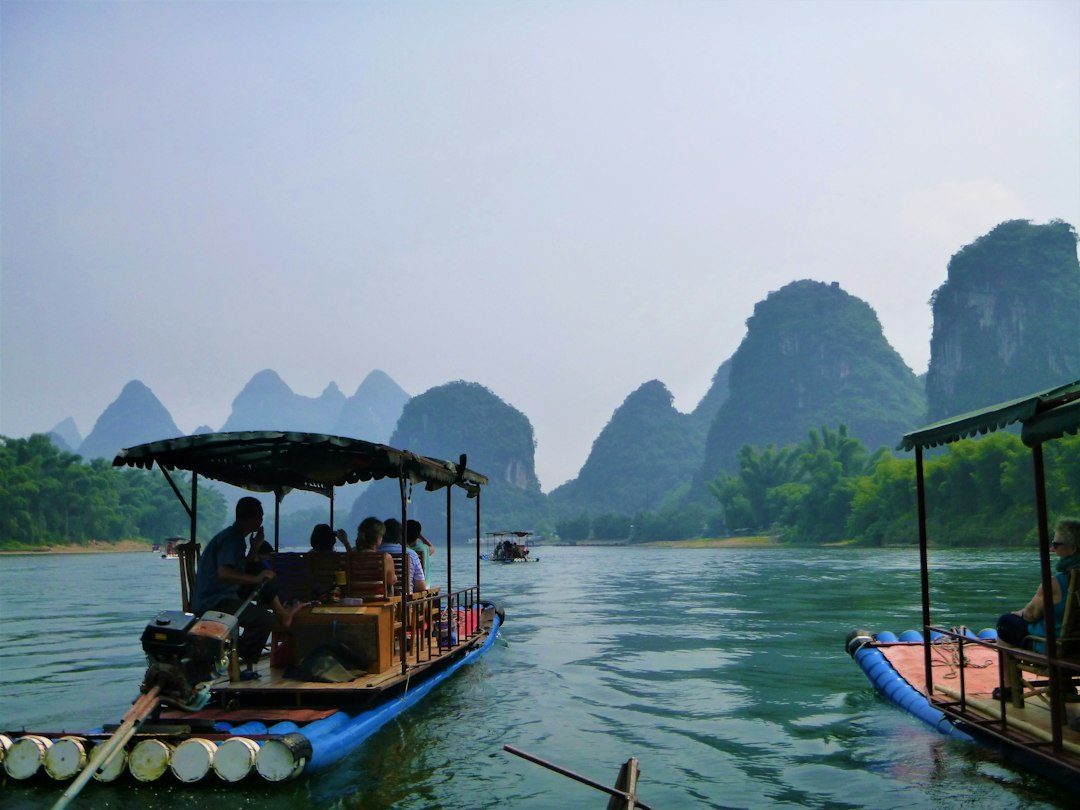
📍 Location: Guangzhou Baiyun (CAN) → Guilin Liangjiang (KWL) 🎫 Cost: $40–70 (¥290–510) 🕒 Frequency: 10–15 daily 🚕 Getting there: Baiyun is on Metro Line 3. From KWL, airport bus (¥20) to Guilin city, or ¥100 taxi to Yangshuo. ⏰ When to visit: April–May (green, misty) and September–October. Avoid July–August floods and crowds. 💡 Insider tips: Fly into Guilin but stay in Yangshuo — the scenery is better and the town is more fun. The Li River cruise is worth it once, but the bamboo raft on the Yulong River is better value. Rent an e-bike in Yangshuo (¥50/day) and get lost in the villages. And skip the “impression” light show unless you love crowds.
A noodle vendor in Yangshuo, Mrs. Li, refused to let me pay for my second bowl of rice noodles. “You came all this way,” she said, in the one English sentence she knew. I still think about that bowl.
Shanghai → Harbin: The Ice Festival Run
Two hours forty-five minutes, and the temperature drops 30 degrees. I flew this in January and the flight attendants handed out down jackets at the gate — not a joke, they actually do this on some Harbin routes in winter.
Why it’s special: Harbin’s Ice and Snow Festival (early January to late February) is one of the most surreal things I’ve seen — a city built of illuminated ice blocks the size of buildings. The flight is the only sensible way from Shanghai; the train is 11+ hours.
📍 Location: Shanghai Pudong (PVG) → Harbin Taiping (HRB) 🎫 Cost: $90–150 (¥650–1,090), higher during festival 🕒 Frequency: 8–12 daily 🚕 Getting there: Pudong via Metro Line 2 or Maglev (¥50). Harbin airport bus (¥20) to city center, 45 minutes. ⏰ When to visit: January–February only, for the festival. Book flights 4–6 weeks out; prices spike. 💡 Insider tips: Bring serious cold-weather gear — it hits -25°C. The festival is best at night (lights) but coldest then too; go twice. Book your hotel months ahead. And the ice sculptures at Sun Island and the Ice and Snow World are separate tickets — pick one unless you’re a completist.
I made the mistake of wearing sneakers. My feet were numb within 20 minutes. A local woman selling roasted sweet potatoes took pity on me and pointed me to a shop selling ¥80 boots. Best ¥80 I’ve ever spent.
Xi’an → Dunhuang: The Silk Road Leg
Two hours twenty minutes over the Gobi fringe, and you land in a town that feels like the edge of the world. I flew this in May and the view of the Qilian mountains on approach is stark and beautiful.
Why it’s special: Dunhuang is home to the Mogao Caves, one of the great Buddhist art sites on earth. The flight saves you a 14-hour train. Dunhuang (DNH) is a tiny airport with a handful of daily flights.
📍 Location: Xi’an Xianyang (XIY) → Dunhuang (DNH) 🎫 Cost: $60–110 (¥435–800) 🕒 Frequency: 3–5 daily, seasonal 🚕 Getting there: Xi’an airport metro to North Station, then flight. Dunhuang airport is 13 km from town, ¥30 taxi. ⏰ When to visit: May–June and September. July–August is hot and crowded; winter is cold and quiet. 💡 Insider tips: Book Mogao Caves tickets online weeks ahead — they sell out and the site limits daily visitors. The caves are 25 km from town; go early. Bring a scarf for the sand. And the night market is better than the tourist restaurants.
A guide at Mogao, a young woman named Chen, spent 20 minutes explaining one cave’s murals to me and then apologized for “talking too much.” She hadn’t. It was the best 20 minutes of the trip.
Chongqing → Lhasa: The Tibet Gateway
Two and a half hours, and you climb from a river city at 250 m to the roof of the world at 3,650 m. I did this in June and the landing at Lhasa Gonggar is dramatic — mountains on all sides, prayer flags snapping in the wind.
Why it’s special: this is the most common air route into Tibet for foreign travelers. Note: you need a Tibet Travel Permit arranged through a licensed tour operator, and you must be on an organized tour. The flight itself is straightforward; the paperwork is not.
📍 Location: Chongqing Jiangbei (CKG) → Lhasa Gonggar (LXA) 🎫 Cost: $130–200 (¥940–1,450) 🕒 Frequency: 4–6 daily 🚕 Getting there: Chongqing Metro Line 3/10 to Jiangbei Airport. Lhasa airport is 60 km from the city, shuttle bus ¥30. ⏰ When to visit: May–October. Winter flights are fewer and weather-prone. 💡 Insider tips: Arrange your Tibet permit at least 3–4 weeks ahead through an operator — you can’t do it yourself. Fly in, don’t train in, if you’re worried about altitude (the train climbs slowly but takes 36 hours). Rest the first day. And bring your own medication; Lhasa pharmacies are limited for foreigners.
I met a retired teacher from Manchester on this flight who’d been planning her Tibet trip for 11 years. She cried when we landed. I pretended not to notice, then quietly teared up myself.
Shenzhen → Sanya: The Beach Reset
Ninety minutes from the world’s factory floor to a tropical beach. I flew this in December and it’s the single best winter escape in China — 28°C, palm trees, and a fraction of the cost of Southeast Asia.
Why it’s special: Sanya is China’s Hawaii, on Hainan island. The flight is cheap and frequent, and Sanya Phoenix (SYX) is 15 minutes from the beach resorts. It’s the easiest “tropical reset” in the country.
📍 Location: Shenzhen Bao’an (SZX) → Sanya Phoenix (SYX) 🎫 Cost: $50–90 (¥360–650) 🕒 Frequency: 20+ daily 🚕 Getting there: Shenzhen Metro Line 11 to Bao’an Airport. Sanya airport taxi to Yalong Bay ¥80, to Sanya Bay ¥30. ⏰ When to visit: November–March. Avoid Chinese New Year (prices triple) and summer (hot, rainy). 💡 Insider tips: Yalong Bay is the nicest beach but priciest; Sanya Bay is cheaper and still good. Book resorts 6–8 weeks out for winter. The duty-free mall is genuinely worth a visit. And Hainan has its own visa-free entry for many nationalities — check the visa-free transit rules before you book a separate trip.
A beach vendor named A-Ming sold me a coconut for ¥15 and then, when I asked where to eat, walked me 10 minutes to his cousin’s seafood shack. Best meal of the trip. That’s Hainan.
FAQ summary
The most important things to know: China’s domestic flights are cheap and frequent, bookable on Trip.com or airline apps with a foreign passport, and typically cost $40–$180 (¥290–¥1,300) for the routes in this guide. Fly when the train takes more than 5 hours or the destination is in western China (Yunnan, Xinjiang, Tibet); otherwise the high-speed rail is usually better. Arrive 90 minutes early, screenshot your boarding pass, keep your passport in hand, and pre-load Alipay or WeChat Pay before you land. For Tibet, you need a permit arranged through a tour operator weeks in advance.
FAQ
Q: Can I book domestic flights in China with a foreign passport? A: Yes. Trip.com and the airline apps (Air China, China Eastern, Sichuan Airlines) all accept foreign passports. You’ll enter your passport number at booking and show the physical passport at check-in and security. No visa is needed for the domestic flight itself — only for entering China.
Q: How much do domestic flights cost in China? A: Most routes in this guide run $40–$180 (¥290–¥1,300) one-way. Short hops like Chengdu–Lijiang are $45–80; long hauls like Beijing–Urumqi are $110–180. Prices spike during Chinese New Year, Golden Week (early October), and summer holidays — book 2–3 weeks ahead for the best fares.
Q: Is it better to fly or take the high-speed train in China? A: For routes under about 4–5 hours by high-speed rail, the train usually wins — city-center stations, no baggage fees, more legroom. Fly when the train takes 6+ hours or the destination is in western China (Yunnan, Xinjiang, Tibet, Gansu). Beijing–Xi’an is a toss-up; Shanghai–Chengdu is a clear flight.
Q: How early should I arrive at a Chinese airport? A: 90 minutes for domestic flights, 2 hours if checking a bag or flying from a big hub like Beijing Daxing or Shanghai Pudong. Security is thorough and there are often two ID checks (check-in and gate). Screenshot your boarding pass — some airports don’t accept phone QR codes at every gate.
Q: Do I need a VPN to use the internet at Chinese airports? A: Yes, if you want Google, WhatsApp, Instagram, or Gmail. Airport Wi-Fi works but is filtered. Install a reputable VPN before you arrive — they’re hard to download once you’re inside China. Alternatively, buy an international eSIM with roaming data, which bypasses the firewall. See our SIM and internet guide.
Q: Can I fly to Tibet as a foreign tourist? A: Yes, but only on an organized tour with a Tibet Travel Permit arranged through a licensed operator 3–4 weeks in advance. You cannot book the flight and go independently. Chongqing–Lhasa and Chengdu–Lhasa are the most common routes. Altitude is 3,650 m — rest your first day.
Q: What’s the baggage allowance on Chinese domestic flights? A: Full-service carriers (Air China, China Eastern, Sichuan Airlines) typically include 20 kg checked + 5–7 kg carry-on in economy. Budget carriers (Spring Airlines, 9 Air) charge for everything — a checked bag can cost $30–50 (¥220–360). Check the fare class carefully before booking.
The Honest Wrap-up
This guide is for the traveler who wants to see more than one region of China in a single trip and is willing to do a bit of operational homework. It’s not for someone who wants a fully guided tour — you’ll get more out of a package if that’s your style. My one piece of advice: don’t over-schedule flights. Two domestic legs in a two-week trip is plenty. Every flight costs you half a day in transit and airport buffer, and China rewards slow travel. Pick two or three regions, fly between them once or twice, and take the train for everything else. And always, always screenshot your boarding pass.
Destination at a Glance
- Best time to visit: March–May and September–November for most routes; January–February only for Harbin’s Ice Festival.
- Daily budget: $60–120/day for a mid-range traveler including one domestic flight every few days.
- Visa: Most Western passport holders need a tourist visa or qualify for the 240-hour visa-free transit; check current rules before booking.
- Safety: Very safe for tourists; the main risks are altitude sickness in Tibet/Yunnan and winter cold in the northeast.
- Getting around: Domestic flights + high-speed rail + metro; ride-hail (DiDi) works in cities but English signage at airports is limited.
- Connectivity: Buy an eSIM or local SIM on arrival; install a VPN before you fly for Google and WhatsApp access.
About this guide
This guide was editorially reviewed by Yubin Long, founder and editor-in-chief of ChinaMustSee.com, a Beijing-based travel editor who has flown more than 30 domestic routes across China. Facts were checked against current 2026 sources, including Trip.com fare data and airline schedules; I specifically verified that Chengdu Tianfu (TFU) now handles most domestic traffic while Shuangliu (CTU) is largely short-haul, and that the 240-hour visa-free transit policy remains in effect for eligible nationalities as of early 2026. (Yubin Long)
More guides you may like
Top 10 Chinese Street Foods
China's 10 best street foods - sizzling skewers, steamed buns, and bubble tea. Where to find them and what to ask for.
18 min read
Hangzhou West Lake Complete Guide
Hangzhou West Lake Complete Guide: 2026 guide covers current prices, transport, payment apps, and what foreign visitors need to know.
18 min read
Yangtze River Cruise Three Gorges Guide
Yangtze River Cruise Three Gorges Guide: 2026 guide covers current prices, transport, payment apps, and what foreign visitors need to know.
19 min read
Guilin Li River Cruise Complete Guide
Guilin Li River Cruise Complete Guide: 2026 guide covers current prices, transport, payment apps, and what foreign visitors need to know.
19 min read
China Travel SIM Card eSIM Comparison 2026
The cab driver in Beijing looked at me in the rearview mirror and said, in perfect English, “You know, most tourists buy the wrong SIM card.” I’d been in China
10 min read
China Food Tour Self Guided Complete
The cab driver in Chengdu looked at me in the rearview mirror, then back at the address I’d fumbled to show him on my phone. He laughed. Not a mean laugh—the ki
16 min read