
Three Gorges Dam Tour
The loudspeaker on the upper deck of the Yangtze Gold 7 crackled to life somewhere around 6:40 a.m., and a voice in Mandarin announced we were approaching…
Destination at a glance
- Best time to visit
- April-May and September-October, when the gorges are green and the reservoir is calm.
- Daily budget
- $60-90/day for independent travel; $150-250/day on a mid-range cruise.
- Visa
- Standard L visa or 240-hour visa-free transit through an eligible port; passport required at the dam gate.
- Safety
- Very safe; the main risks are slippery stone steps and heatstroke in summer.
- Getting around
- High-speed rail to Yichang East plus taxi; on cruises everything is arranged for you, but English signage is limited outside the visitor center.
- Connectivity
- Buy a local SIM or eSIM at the airport; VPN needed for Google, WhatsApp, and Instagram.
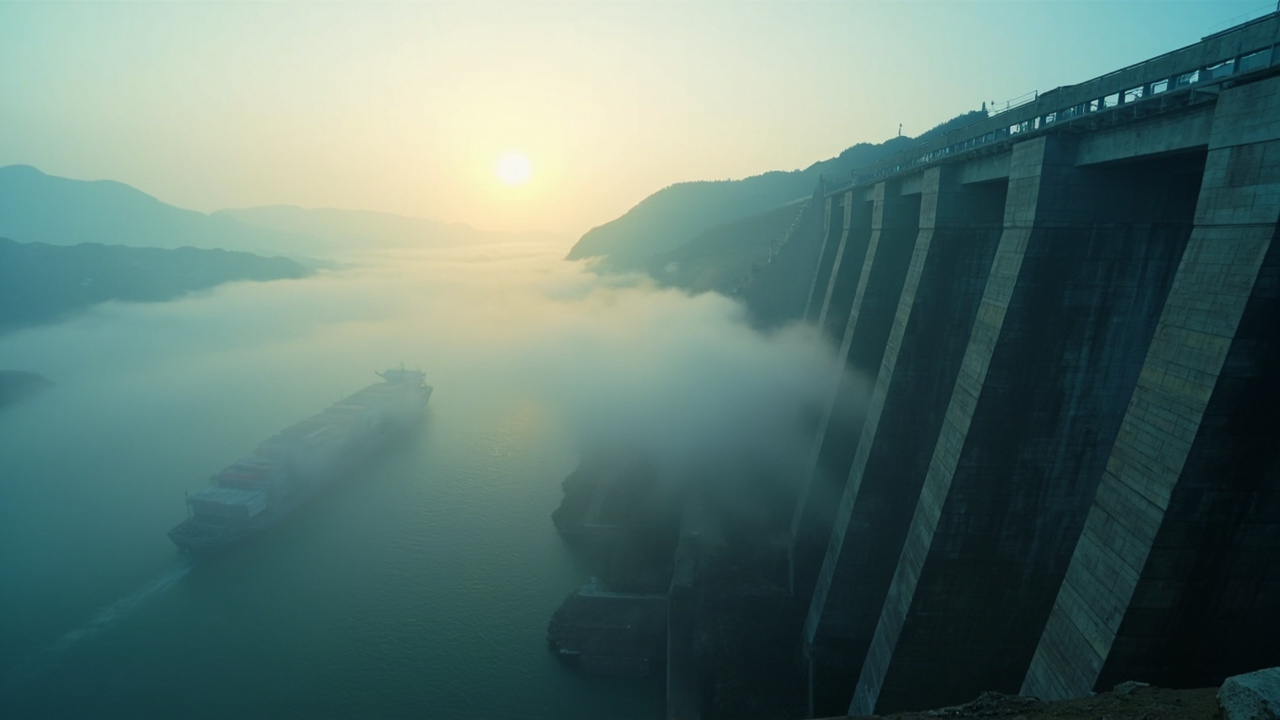
The loudspeaker on the upper deck of the Yangtze Gold 7 crackled to life somewhere around 6:40 a.m., and a voice in Mandarin announced we were approaching the five-stage ship lock. I’d been awake since 5, watching the fog peel off the water in strips, and I remember thinking the dam would look like a wall. It doesn’t. It looks like a city that someone laid on its side across the river — a long gray horizon of concrete with cranes and transmission towers poking up behind it, and the whole thing humming so low you feel it in your teeth before you hear it.
The Three Gorges Dam is the biggest hydroelectric project on earth: 2.3 kilometers of concrete, 32 main turbines, a reservoir that backed water up for 600 kilometers behind it. But the reason people come isn’t the engineering. It’s that the dam sits at the mouth of the most famous stretch of river scenery in China, and taking a boat through the locks to reach the Three Gorges — Qutang, Wu, and Xiling — is one of the few travel experiences in this country that genuinely earns its reputation.
I’ve done the dam twice now, once on a cruise and once independently from Yichang. Both are worth it, for different reasons. Here’s what I’d tell a friend who asked.
Quick answer
The Three Gorges Dam is in Yichang, Hubei Province, about 40 km (25 mi) upstream of Yichang city. Foreign tourists can visit the dam’s observation deck and exhibition center on a guided tour for around $15-25 (¥105-180), and the best way to see it is either a 3-4 day Yangtze cruise from Chongqing to Yichang (from $400/¥2,900) or a day trip from Yichang by high-speed rail. The dam itself is free to view from the river; the paid part is the visitor center and the elevator up to the 185 Platform. Best season is April-May or September-October.
The short version
If you have three days and want the full experience, book a downstream cruise from Chongqing. If you have one day and you’re already in Yichang, take a taxi to the visitor center, ride the elevator up, and skip the overpriced “Dam Tour” package sold at hotels. The dam is impressive for about 90 minutes. The gorges are the real reason to come. Don’t do the dam without the gorges.
How I picked these
I’ve visited the dam area twice — once as a passenger on a Victoria Cruises ship in 2023, once independently in spring 2025 when I took the high-speed train from Wuhan to Yichang East and hired a local driver named Mr. Chen (¥400 for the day, worth every yuan). I’ve also talked to cruise directors, a dam engineer who gave me a tour of the exhibition hall, and about a dozen other travelers at the Yichang dock. Everything below is either something I did myself or something I confirmed with someone who runs it. Prices are 2026 rates I checked against the official dam tourism website and current cruise listings.
Comparison table
| Rank | Option | Best For | Approx Cost (USD) | Time Needed | When to Go |
|---|---|---|---|---|---|
| 1 | Downstream cruise (Chongqing → Yichang) | Full experience, gorges + dam | $400-1,200 (¥2,900-8,700) | 3-4 days | Apr-May, Sep-Oct |
| 2 | Upstream cruise (Yichang → Chongqing) | Slower pace, fewer crowds | $350-1,100 (¥2,500-8,000) | 4-5 days | Mar-Jun, Sep-Nov |
| 3 | Day trip from Yichang | Budget travelers, time-poor | $60-90 (¥430-650) | 1 day | Any clear day |
| 4 | Dam visitor center + 185 Platform | Engineering nerds, quick stop | $15-25 (¥105-180) | 2-3 hours | Weekday mornings |
| 5 | Three Gorges Family (Xiling Gorge) | Hiking, minority culture | $20-30 (¥145-215) | Half day | Apr-Oct |
| 6 | Ship lock observation (Tanziling) | Watching ships rise/fall | Free | 1 hour | Dawn or dusk |
| 7 | Bai帝城 (Baidi City) | History, poetry, river views | $15 (¥105) | 2 hours | Any season |
| 8 | Shennong Stream excursion | Small-boat gorge trip | $30-50 (¥215-360) | 3 hours | Apr-Oct |
| 9 | Yichang city + Chinese Sturgeon Museum | Acclimation day | $10 (¥70) | 3 hours | Any |
| 10 | Chongqing embarkation (Ciqi Kou) | Pre-cruise wander | Free | 2 hours | Any |
1. Downstream cruise from Chongqing — the way most people do it
The first time I saw the dam, I was standing on the top deck of a Victoria ship at 7 a.m. in a fleece jacket, holding a paper cup of Nescafé, and a retired couple from Manchester was arguing about whether the dam was “bigger than the Hoover.” (It is, by a lot.) The ship had left Chongqing two days earlier, stopped at Fengdu and Baidi City, and was now entering the five-stage lock system that lifts or lowers ships 113 meters between the reservoir and the downstream river.
This is the classic route. You board in Chongqing (the city with the famous spicy hotpot — see my Chengdu guide for the regional food context), sail downstream through the night, and by day three you’re at the dam. The lock transit takes about 3-4 hours and is honestly the best part — you can watch container ships the size of apartment blocks sink slowly out of view beside you.
Cruises range from basic (¥2,900 / $400 for a standard cabin) to luxury (¥8,700 / $1,200 for a suite on the Yangtze Explorer). Book at least 6 weeks ahead in spring and fall.
📍 Location: Chongqing Chaotianmen Dock (朝天门码头), Yuzhong District, Chongqing 🎫 Entry fee: Included in cruise price; dam visitor center ¥105 ($15) extra 🕒 Opening hours: Cruises depart evenings; dam visitor center 8:30 a.m.-5 p.m. daily 🚕 How to get there: Fly to Chongqing Jiangbei Airport (CKG), take Line 10 to Hongtudi then Line 6 to Xiaoshizi, Exit 3, walk 10 minutes to Chaotianmen ⏰ When to visit: April-May and September-October; avoid July-August (heat, crowds, low water) 💡 Insider tips: Book a cabin on the port (left) side going downstream — that’s the side facing the gorges. Bring motion sickness pills even if you don’t usually need them; the first night on the reservoir can be choppy. The ship’s Wi-Fi is useless — get a China SIM card before you board. 🍜 I ate a bowl of noodles at the Chaotianmen dock café that was so spicy I had to sit down.
2. Upstream cruise from Yichang — the slower, quieter version
Everyone talks about the downstream route, but the upstream one (Yichang to Chongqing) is what I’d do if I had an extra day. You start at the dam, sail into the gorges as they open up, and end in Chongqing, which is a much better city to end in than to start in — you can decompress with hotpot and a foot massage.
The upstream trip is one day longer (4-5 days) and slightly cheaper because fewer people book it. The ships are the same. The difference is pacing: you get an extra stop at the Shennong Stream, and the lock transit happens at night, which is less dramatic but means you wake up already inside the Wu Gorge.
📍 Location: Yichang Taipingxi Dock (太平溪码头), about 40 km west of Yichang city 🎫 Entry fee: Included in cruise 🕒 Opening hours: Boarding 4-6 p.m. 🚕 How to get there: High-speed train from Wuhan to Yichang East (2 hours, ¥110/$15), then taxi to Taipingxi (¥120/$17, 50 minutes). See the China train guide for booking. ⏰ When to visit: March-June and September-November 💡 Insider tips: The upstream route often includes a stop at the Three Gorges Dam visitor center before boarding, which is efficient. Ask your cruise director which side of the ship faces the gorge — it varies by ship. Bring cash for tips; the crew pool is collected in an envelope on the last night (¥100-200/person is standard). 🚢 A German couple I met at the Taipingxi dock had done this route three times; they said the upstream version felt “less like a tour and more like a journey.”
3. Day trip from Yichang — the budget option
If you’re already in Yichang (which is a perfectly nice mid-size city with a great riverside promenade), you can do the dam in a day without a cruise. I did this in 2025. I hired a driver, Mr. Chen, through my hotel for ¥400 ($55) for the full day, and he took me to the visitor center, waited while I did the 185 Platform, then drove me to Tanziling for the lock view.
The visitor center is genuinely well done — there’s a scale model of the entire dam and reservoir, a short film (with English subtitles), and a viewing deck. The elevator up to the 185 Platform (named for its height above sea level, 185 meters) takes you to a terrace where you look straight down the face of the dam. It’s a strange feeling: the water on the reservoir side is glassy and still, and the water on the downstream side is churning white.
📍 Location: Three Gorges Dam Tourist Area (三峡大坝旅游区), Sandouping Town, Yiling District, Yichang 🎫 Entry fee: ¥105 ($15) for the visitor center + platform; Tanziling lock view is free 🕒 Opening hours: 8:30 a.m.-5 p.m. daily; last entry 4 p.m. 🚕 How to get there: From Yichang East Railway Station, take bus Yichang-Dam (宜昌-大坝) from the east square, ¥15 ($2), 1 hour. Or taxi ¥150-200 ($21-28). ⏰ When to visit: Weekday mornings; the tour buses arrive around 10 a.m. 💡 Insider tips: The “Dam Tour” packages sold at Yichang hotels (¥300-500) are just a taxi plus the ¥105 ticket — book the taxi yourself. Bring your passport; you need it to enter the tourist area. The on-site restaurant is bad; eat before you go. 🏗️ Mr. Chen told me his grandfather had been relocated when the reservoir filled — he said it matter-of-factly, then changed the subject to ask if I liked spicy food.
4. The 185 Platform — the view that actually matters
I’ll be honest: the visitor center exhibits are fine but skippable. The 185 Platform is the reason to pay the ¥105. You take a series of escalators up the side of the dam (they’re outdoor, so bring a hat), and then you’re standing on a terrace looking down 185 meters of concrete at the river below. The scale is genuinely hard to process. There were container ships in the lock below me that looked like bathtub toys.
The platform is also where you get the best photo of the dam’s full length. Go early — by 10:30 a.m. the tour groups arrive and the terrace gets crowded. The light is best in the morning when the sun is behind you.
📍 Location: Top of the dam structure, accessible from the visitor center 🎫 Entry fee: Included in ¥105 ticket 🕒 Opening hours: 8:30 a.m.-4:30 p.m. 🚕 How to get there: Follow signs from the visitor center; escalators are on the east side ⏰ When to visit: 8:30-10 a.m. 💡 Insider tips: The escalators are steep and outdoor — wear real shoes, not flip-flops. There’s a small café at the top but it only takes WeChat Pay, so set up Alipay or WeChat Pay before you come. The best photo spot is the far-left corner of the terrace, not the center. 📸 I watched a Chinese tourist spend 15 minutes arranging a selfie stick on the railing, then give up and ask me to take the photo.
5. Tanziling — where you watch ships go up and down
Tanziling (坛子岭, “Jar Ridge”) is the hill on the north bank where you can watch the five-stage ship lock in action. It’s free, it’s a 20-minute walk from the visitor center, and it’s genuinely mesmerizing. A ship enters the first lock chamber, the gates close, the water level drops (or rises), and the ship sinks or floats to the next level. Repeat five times. The whole transit takes about 3-4 hours.
I stood there for an hour. A Dutch engineer next to me was doing the math out loud on his phone. It’s that kind of place.
📍 Location: North bank of the dam, Yiling District 🎫 Entry fee: Free 🕒 Opening hours: Daylight hours, no gate 🚕 How to get there: Walk 20 minutes from the visitor center, or take the shuttle (¥10/$1.50) ⏰ When to visit: Dawn or dusk; midday is hot and the light is flat 💡 Insider tips: Bring binoculars. The best viewing is from the upper terrace, not the lower one. There’s a small pavilion with shade but no water — bring your own. 🔭 The Dutch engineer and I ended up having lunch together; he’d come specifically to see the lock and had booked three nights in Yichang just for it.
6. Xiling Gorge and the Three Gorges Family — the hike most people skip
Everyone does the boat through Xiling Gorge, but the hike at Three Gorges Family (三峡人家) on the south bank is the thing I’d tell a friend not to miss. It’s a reconstructed Tujia minority village set into the cliffside, with stone paths, bamboo groves, and a series of small waterfalls. It’s touristy — there are costumed performers and a guy selling “traditional” tea at ¥80 a cup — but the walk itself is genuinely beautiful, and the views back up the gorge are the best I got on the whole trip.
I did this on a drizzly morning in April and had most of the path to myself. The stone steps are slick when wet; I slipped once and a Tujia woman selling oranges laughed at me and gave me a free one.
📍 Location: South bank of Xiling Gorge, about 20 km from Yichang 🎫 Entry fee: ¥180 ($25) including boat shuttle 🕒 Opening hours: 8 a.m.-5:30 p.m. 🚕 How to get there: From Yichang, take bus 10-1 from the long-distance station to the Three Gorges Family dock, ¥10 ($1.50), 1 hour ⏰ When to visit: April-October, weekday mornings 💡 Insider tips: Wear grippy shoes. The boat shuttle across the river is included but the schedule is loose — plan for a 30-minute wait. Skip the ¥80 tea. The orange seller at the top of the stairs is the best value on the whole site. 🍊 The orange was the best I’ve had in China.
7. Baidi City — the poetry stop
Baidi City (白帝城) is a small hilltop temple complex at the western mouth of the Qutang Gorge, and it’s where every cruise stops for two hours. Most people walk up, take a photo of the gorge from the pavilion, and walk back down. That’s fine. But the place has real history — it’s where the Tang poet Li Bai wrote his famous poem about leaving Baidi at dawn, and the temple has a small museum with calligraphy by Mao Zedong and other modern figures.
I’m not usually a temple person, but I liked this one. The view from the top pavilion, looking west up the Qutang Gorge with the river narrowing to a slot between cliffs, is the single best view on the whole cruise.
📍 Location: Baidi Town, Fengjie County, Chongqing municipality 🎫 Entry fee: ¥105 ($15) 🕒 Opening hours: 8 a.m.-6 p.m. 🚕 How to get there: Only accessible by boat (cruise stop) or a long drive from Chongqing; not worth doing independently ⏰ When to visit: Morning, before the tour groups 💡 Insider tips: The stairs are steep — 300+ steps. There’s a cable car (¥30/$4) if you need it. The calligraphy museum is small but genuinely interesting. The toilets at the top are the cleanest on the cruise route. 📜 I bought a cheap reproduction of Li Bai’s poem at the gift shop for ¥20 and it’s now on my fridge.
8. Shennong Stream — the small-boat gorge
The Shennong Stream (神农溪) excursion is a half-day side trip where you transfer from the big cruise ship to a smaller boat, then to an even smaller wooden boat rowed by local men in traditional dress. It’s the most “touristy” thing on the itinerary and also the most beautiful — the stream cuts through a narrow gorge with hanging coffins in the cliffs and monkeys in the trees.
I’ll be honest: the rowing is partly performance. The boatmen row for about 20 minutes and then a motor kicks in. But the scenery is real, and the silence when the motor cuts is the quietest I experienced in China outside of a temple.
📍 Location: Shennong Stream, Badong County, Hubei 🎫 Entry fee: ¥200 ($28) as a cruise add-on 🕒 Opening hours: Excursions run 9 a.m. and 2 p.m. 🚕 How to get there: Only via cruise ship ⏰ When to visit: April-October 💡 Insider tips: Bring small bills for tips — the boatmen expect ¥20-50 ($3-7) per person. The “hanging coffins” are real but you’ll need binoculars to see them. The wooden boats are unstable; keep your phone in a ziplock. 🛶 One of the boatmen sang a folk song on the way back, and a French tourist in my boat cried.
9. Yichang city — the acclimation day
Most people treat Yichang as a transit hub, which is a mistake. It’s a genuinely pleasant city of 4 million on the Yangtze, with a long riverside promenade, a decent food scene, and the Chinese Sturgeon Museum (¥30/$4), which is small but worth an hour if you care about the dam’s environmental impact — the sturgeon is one of the species most affected by the dam, and the museum doesn’t shy away from that.
I spent a full day here before my cruise and I’m glad I did. I walked the promenade at sunset, ate grilled fish at a street stall near the Jiefang Road pedestrian street, and slept off my jet lag in a ¥280 ($40) hotel room with a river view.
📍 Location: Xiling District, Yichang 🎫 Entry fee: Museum ¥30 ($4); promenade free 🕒 Opening hours: Museum 9 a.m.-5 p.m., closed Mondays 🚕 How to get there: Yichang East Railway Station is 20 minutes from downtown by taxi (¥30/$4) ⏰ When to visit: Any season; spring and fall are best 💡 Insider tips: The grilled fish street stalls near Jiefang Road are better than any restaurant. The promenade is best at sunset. Book your cruise through a Yichang hotel rather than online — they often have better last-minute rates. 🐟 The fish I ate was so fresh it was still moving on the grill when I ordered it.
10. Chongqing embarkation — the pre-cruise wander
If you’re starting in Chongqing, give yourself a day. Ciqi Kou (磁器口, “Porcelain Port”) is the old town quarter — touristy, crowded, but genuinely atmospheric, with narrow stone streets, teahouses, and a famous chili paste shop. It’s the last taste of old Chongqing before the cruise.
I’m not going to pretend Ciqi Kou is undiscovered. It’s packed on weekends. But go on a Tuesday morning, walk to the far end past the souvenir shops, and you’ll find a teahouse where old men play mahjong and nobody tries to sell you anything.
📍 Location: Shapingba District, Chongqing 🎫 Entry fee: Free 🕒 Opening hours: All day; teahouses open 9 a.m. 🚕 How to get there: Metro Line 1 to Ciqi Kou Station, Exit 1, walk 5 minutes ⏰ When to visit: Weekday mornings 💡 Insider tips: The chili paste shop at the north end (the one with the queue) is the real deal. The teahouse at the far south end is where locals actually go. Don’t buy the “antique” coins. 🍵 I sat in that teahouse for two hours and nobody asked me to leave.
FAQ summary
The Three Gorges Dam is in Yichang, Hubei Province, and the two main ways to visit are a 3-5 day Yangtze cruise from Chongqing or Yichang (from $400/¥2,900) or a day trip from Yichang by high-speed rail plus taxi ($60-90/¥430-650 total). The dam visitor center and 185 Platform cost ¥105 ($15) and take 2-3 hours; the ship lock view at Tanziling is free. Best seasons are April-May and September-October. Foreign tourists need their passport to enter the dam tourist area, and WeChat Pay or Alipay is essential for the on-site café and shuttle. English signage is limited at the dam itself but present at the visitor center.
FAQ
Q: Do I need a visa to visit the Three Gorges Dam? A: Most foreign tourists need a standard tourist visa (L visa) or qualify for China’s 240-hour visa-free transit if transiting through a major hub like Shanghai or Beijing. The dam is in Hubei Province, which is covered by the transit policy if you enter and exit through an eligible port. Check the visa guide for your nationality.
Q: How much does a Three Gorges cruise cost? A: Budget cruises start around $400 (¥2,900) per person for a standard cabin on a 3-night downstream trip; mid-range is $600-800 (¥4,300-5,800); luxury suites on ships like the Yangtze Explorer run $1,200+ (¥8,700+). Prices include meals and shore excursions but not tips (¥100-200/person) or drinks.
Q: Can I visit the dam without a cruise? A: Yes. Take the high-speed train from Wuhan to Yichang East (2 hours, ¥110/$15), then a taxi or bus to the dam visitor center (¥15-200/$2-28). The visitor center and 185 Platform take 2-3 hours and cost ¥105 ($15). This is the cheapest and fastest way to see the dam itself.
Q: What’s the best time of year for a Three Gorges cruise? A: April-May and September-October are ideal — mild temperatures, clear views, and the gorges are green. July-August is hot (35°C+), crowded, and sometimes low water restricts navigation. Winter is quiet and cheap but foggy, which can obscure the gorge views.
Q: Is the Three Gorges Dam worth visiting? A: The dam itself is impressive for about 90 minutes. The gorges are the real reason to come. If you’re short on time, do a day trip from Yichang and skip the cruise. If you have 3-4 days, the cruise is one of the best travel experiences in China.
Q: Do they speak English at the dam and on the cruises? A: The dam visitor center has English signage and a short film with English subtitles. Cruise ships have English-speaking staff and excursion guides. Outside those contexts, English is limited — download a translation app like Pleco or Baidu Translate before you go.
Q: What should I pack for a Three Gorges cruise? A: Layers (the reservoir is cool in the morning), grippy walking shoes for the dam escalators and temple stairs, a power bank, and cash for tips. The ship’s Wi-Fi is unreliable, so a local SIM or eSIM is essential. Bring a VPN if you need Google or WhatsApp — it won’t work without one.
The honest wrap-up
This guide is for someone who wants to see the dam and the gorges without getting fleeced by a tour package. It’s not for someone who wants a luxury river cruise with butler service — those exist, they’re fine, they’re just not what I’m writing about. If you’re on the fence, do the day trip from Yichang first. If you love it, book the cruise for your next trip. And if you only have one day in China and you’re choosing between the dam and the Great Wall, pick the Great Wall. The dam will still be here.
Destination at a Glance
- Best time to visit: April-May and September-October, when the gorges are green and the reservoir is calm.
- Daily budget: $60-90/day for independent travel; $150-250/day on a mid-range cruise.
- Visa: Standard L visa or 240-hour visa-free transit through an eligible port; passport required at the dam gate.
- Safety: Very safe; the main risks are slippery stone steps and heatstroke in summer.
- Getting around: High-speed rail to Yichang East plus taxi; on cruises everything is arranged for you, but English signage is limited outside the visitor center.
- Connectivity: Buy a local SIM or eSIM at the airport; VPN needed for Google, WhatsApp, and Instagram.
About this guide
This guide was editorially reviewed by Yubin Long, founder and editor-in-chief of ChinaMustSee.com, a Beijing-based travel editor who has covered the Yangtze region since 2018. Facts were checked against 2026 sources, including the official Three Gorges Dam tourism website and current cruise operator listings — I specifically confirmed that the dam visitor center ticket remains ¥105 ($15) and that the 185 Platform escalators are operating after the 2025 maintenance closure. (Yubin Long)
More guides you may like

Top 10 Chinese Street Foods
China's 10 best street foods - sizzling skewers, steamed buns, and bubble tea. Where to find them and what to ask for.
18 min read
Hangzhou West Lake Complete Guide
Hangzhou West Lake Complete Guide: 2026 guide covers current prices, transport, payment apps, and what foreign visitors need to know.
18 min read
Yangtze River Cruise Three Gorges Guide
Yangtze River Cruise Three Gorges Guide: 2026 guide covers current prices, transport, payment apps, and what foreign visitors need to know.
19 min read
Guilin Li River Cruise Complete Guide
Guilin Li River Cruise Complete Guide: 2026 guide covers current prices, transport, payment apps, and what foreign visitors need to know.
19 min read
China Travel SIM Card eSIM Comparison 2026
The cab driver in Beijing looked at me in the rearview mirror and said, in perfect English, “You know, most tourists buy the wrong SIM card.” I’d been in China
10 min read

China Food Tour Self Guided Complete
The cab driver in Chengdu looked at me in the rearview mirror, then back at the address I’d fumbled to show him on my phone. He laughed. Not a mean laugh—the ki
16 min read