
Top 10 Temples in China
Discover China's most significant Buddhist, Taoist, and Confucian temples - from the Forbidden City to mountain sanctuaries. Opening hours, tickets, and visitor tips.
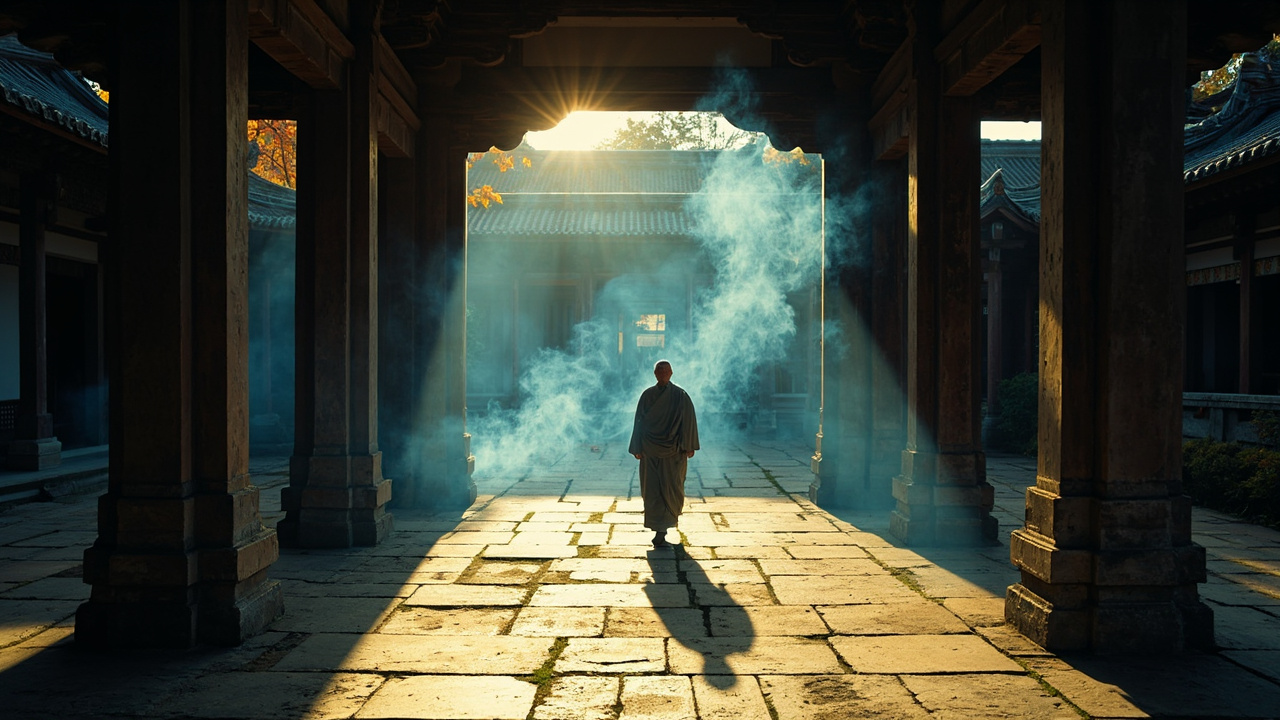
Top 10 Temples in China: A Complete Guide for International Travelers (2026 Update)
Introduction
There’s something about stepping into a Chinese temple that instantly rewires your sense of time. The air smells differently—a mix of aged wood, sandalwood incense, and earth. The sounds shift from honking traffic to the soft clack of bamboo prayer sticks and the low hum of chanting monks. For most travelers, visiting a temple in China is not just a sightseeing stop; it’s one of the few places where you can feel the country’s 5,000-year-old civilization breathing beside you.
Whether you’re a first-timer from New York or a seasoned explorer from Singapore, this guide will help you navigate the ten most iconic temples in China. We’ve focused on what matters to international tourists: real prices (in USD and CNY), practical logistics, payment methods (WeChat Pay, Alipay, cash), English accessibility, and the quirks that can make or break your visit. By the end, you’ll know exactly which temples fit your travel style, how much time and money to budget, and which insider shortcuts save you from standing in the wrong line.
Quick answer
There’s something about stepping into a Chinese temple that instantly rewires your sense of time. The air smells differently—a mix of aged wood, sandalwood incense, and earth.
Quick Answer / TL;DR
If you have limited time—say a two-week trip covering Beijing, Xi’an, and Shanghai—your best single temple experience is the Temple of Heaven in Beijing. It combines architectural grandeur (the iconic Circular Mound Altar), historical significance (Ming and Qing emperors prayed here for good harvests), and a living slice of daily Chinese life (locals practice tai chi, sing opera, and play cards in the surrounding park). Entry is around $5–8 USD (35–55 CNY), you need about 2–3 hours, and the park is fully navigable with a translation app. Bonus: the nearby subway makes it easy to reach.
How We Chose
We selected these ten temples based on five criteria important to first-time international visitors:
-
Accessibility – Can you get there by public transport without a private car? Are English signs or audio guides available?
-
Cultural significance – Does the temple represent a distinct period, religion (Buddhist, Taoist, Confucian), or architectural style?
-
Visitor infrastructure – Are there clean restrooms, cafés, ticket counters that accept foreign credit cards or Alipay, and staff who can help non-Chinese speakers?
-
Photogenic value – Will you get that jaw-dropping shot for Instagram or your travel album?
-
Crowd management – Can you visit without feeling overwhelmed by tour groups? (We favor temples where early morning or weekday visits are feasible.)
Prices and opening hours are based on official sources as of early 2026. All costs are listed in both USD and CNY using an approximate exchange rate of 1 USD = 7.2 CNY.
Comparison Table
| Rank | Destination | Best For | Avg Cost (USD) | Time Needed |
|------|-------------|----------|----------------|-------------|
| 1 | Temple of Heaven (Beijing) | Architecture & local life | $5–8 | 2–3 hours |
| 2 | Lama Temple (Yonghe Temple, Beijing) | Tibetan Buddhism & art | $3–4 | 1.5–2 hours |
| 3 | Shaolin Temple (Henan) | Martial arts history | $11–14 | 3–5 hours |
| 4 | Jade Buddha Temple (Shanghai) | Serenity in the big city | $3–5 | 1–2 hours |
| 5 | Lingyin Temple (Hangzhou) | Nature & Zen gardens | $6–8 | 2–3 hours |
| 6 | Da Ci’en Temple & Giant Wild Goose Pagoda (Xi’an) | Buddhist relics & skyline views | $7–10 | 2–3 hours |
| 7 | Hanshan Temple (Suzhou) | Poetry & bell ringing | $3–4 | 1 hour |
| 8 | Hanging Temple (Xuankong Si, Datong) | Cliffside architecture | $6–8 | 1–2 hours |
| 9 | Temple of Confucius (Qufu) | Confucian heritage & tranquility | $6–8 | 2–3 hours |
| 10 | Jokhang Temple (Lhasa, Tibet) | Spiritual pilgrimage & Tibetan culture | $12–15 | 2–3 hours |
Temple of Heaven — Beijing’s Heavenly Altar
Why it’s special: This is not a temple you pray in; it’s a grand ritual complex where emperors once communicated with Heaven. The Hall of Prayer for Good Harvests—a triple-eaved circular building with brilliant blue tiles—is one of China’s most recognizable icons. The surrounding park is equally famous as a stage for daily Beijing life: you’ll see calligraphy masters painting water on stone, elderly couples dancing, and kids flying kites.
-
📍 Location: Tiantan Park, Dongcheng District, Beijing
-
🎫 Entry fee: $5 (35 CNY) for park only; $8 (55 CNY) for the combined ticket including Hall of Prayer and Echo Wall
-
🕐 Opening hours: Park gates 6:00–21:00 (summer) / 6:30–21:00 (winter). The inner monuments close at 17:30 (summer) / 17:00 (winter).
-
🚆 How to get there: Take Subway Line 5 to Tiantan Dongmen Station (Exit A). The east gate is a 2-minute walk. Alternatively, Line 8 to Tiantan Ximen for the west gate.
-
⏰ Best time to visit: Early morning (7:00–9:00) before tour groups arrive. Weekdays are far less crowded than weekends.
-
💡 Insider Tips for Foreign Visitors:
-
Buy the combined ticket online via WeChat mini-program “天坛公园” or at the gate with Alipay. Foreign credit cards often don’t work at ticket booths—carry 50–100 CNY in cash as backup.
-
Download a translation app (Google Translate, Microsoft Translator) because English signs are limited inside the park. Offline Chinese packs help.
-
The “Echo Wall” around the Circular Mound Altar actually works—stand at one end and whisper; someone 30 meters away can hear you. Try it early when it’s quiet.
-
Bring a refillable water bottle. There are filtered water dispensers near the south gate restroom.
-
Photography is allowed everywhere, but tripods require a permit (usually not granted for non-professionals). Use a monopod or handheld gimbal instead.
-
Lama Temple (Yonghe Temple) — Beijing’s Tibetan Buddhist Jewel
Why it’s special: One of the most important Tibetan Buddhist monasteries outside Tibet. The 18-meter-tall statue of Maitreya (the Future Buddha) carved from a single sandalwood log is astonishing. The incense-filled halls, vibrant thangka paintings, and rotating prayer wheels make this a sensory feast.
-
📍 Location: 12 Yonghegong Street, Dongcheng District, Beijing
-
🎫 Entry fee: $3.50 (25 CNY)
-
🕐 Opening hours: 9:00–16:30 (winter) / 9:00–17:00 (summer). Last entry 30 minutes before close.
-
🚆 How to get there: Subway Line 2 or Line 5 to Yonghegong Station, Exit C. Follow the incense smoke—it’s a 200-meter walk.
-
⏰ Best time to visit: Tuesday–Thursday mornings around 9:30, right after opening, to avoid the worst crowds.
-
💡 Insider Tips for Foreign Visitors:
-
This is an active monastery—avoid touching the monks or taking close-up photos without asking. Turn off flash inside the halls.
-
The single-price ticket includes entry to all halls. No separate charges inside.
-
You can buy incense sticks at stalls just outside the temple (10–20 CNY per bundle). Lighting them is optional—join locals for a more authentic experience.
-
English audio guides are available for 40 CNY (about $5.50), but the content is basic. A podcast or pre-downloaded Wikipedia article works just as well.
-
WeChat Pay and Alipay are accepted at the ticket window. Cash is also fine but expect change in small notes.
-
Shaolin Temple — Birthplace of Kung Fu
Why it’s special: Nestled at the foot of Mount Song, this is the most famous martial arts monastery on Earth. Beyond the kung fu shows, you’ll find ancient pagoda forests, meditation halls, and a living community of warrior monks. The temple itself is surprisingly compact—the real draw is the surrounding cultural atmosphere.
-
📍 Location: Songshan, Dengfeng, Henan Province
-
🎫 Entry fee: $11 (80 CNY) for the scenic area (includes temple, pagoda forest, and martial arts performances)
-
🕐 Opening hours: 8:00–17:30 (summer) / 8:00–17:00 (winter). Performance schedule varies—usually 30-minute shows at 10:30, 11:30, 14:30, 15:30.
-
🚆 How to get there: High-speed train from Zhengzhou East Station to Dengfeng (1 hour, ~$10). Then take bus #1 or a taxi (30 minute, ~$8) to the scenic area entrance. Direct buses from Zhengzhou airport also exist (2 hours, $12).
-
⏰ Best time to visit: May–June or September–October. Avoid Chinese National Holiday (first week of October) and summer weekends.
-
💡 Insider Tips for Foreign Visitors:
-
The kung fu show is included—arrive early for a good seat. Most shows happen in the performance hall near the entrance; ask “Wushu Biaoyan?” (武术表演) for directions.
-
You can stay overnight at the Shaolin International Hotel (budget $50–80/night) and see the morning meditation practice at 5:30 AM—a rare, quiet moment.
-
The pagoda forest (Ta Lin) is a 15-minute walk behind the temple. It’s usually empty after 16:00—great for photos.
-
Bring a VPN-enabled phone (like ExpressVPN or NordVPN) because mobile data in this mountainous area can be spotty for accessing blocked sites like Google Maps. Download offline maps beforehand.
-
English-speaking guides at the entrance charge 150–200 CNY ($20–28). Worth it if you want historical context; otherwise, use the official app “Shaolin Temple Guide” (available on iOS/Android, works offline).
-
Jade Buddha Temple — Shanghai’s Peaceful Retreat
Why it’s special: In the heart of hectic Shanghai, this active Buddhist temple houses two exquisite jade Buddha statues—one sitting, one reclining—imported from Myanmar in the late 19th century. The temple is small but immaculate, with a working monastery where monks chant every day.
-
📍 Location: 170 Anyuan Road, Jing’an District, Shanghai
-
🎫 Entry fee: $3–5 (20–30 CNY) depending on whether you visit the Jade Buddha Hall (additional 10 CNY)
-
🕐 Opening hours: 8:00–16:30 (both summer and winter). Last entry 15:30.
-
🚆 How to get there: Subway Line 13 to Jiangning Road Station, Exit 1, then 8-minute walk. Or Line 7 to Changshou Road Station, Exit 1, then 10-minute walk.
-
⏰ Best time to visit: Weekday mornings around 9:00. The temple is small and fills quickly with tour groups after 10:00.
-
💡 Insider Tips for Foreign Visitors:
-
The Jade Buddha Hall is a separate 10 CNY ticket upstairs—don’t miss it. Photography is prohibited inside that hall.
-
Vegetarian restaurant on the second floor serves excellent Buddhist-style noodles (lunch only, 11:30–13:30). Try the “Buddha’s Delight” noodle soup for about $4 (30 CNY).
-
Alipay and WeChat Pay are seamless here; foreign credit cards are not accepted at the temple shop or restaurant.
-
Dress modestly—shoulders and knees covered. The monks will politely remind you if you’re not.
-
You can buy a small jade pendant from the temple shop (50–200 CNY) as a souvenir—each is blessed by the resident monks.
-
Lingyin Temple — Hangzhou’s Forest Sanctuary
Why it’s special: Surrounded by lush hills and bamboo groves, Lingyin (Temple of the Soul’s Retreat) is one of China’s largest and most beautiful Buddhist temples. The grottoes carved into the cliffs behind the temple contain over 400 Buddhist statues dating back to the 10th century. The atmosphere is meditative and green.
-
📍 Location: Lingyin Road, Xihu District, Hangzhou
-
🎫 Entry fee: $6 (45 CNY) for the temple; plus $2.50 (18 CNY) for the Feilai Feng (Flying Peak) grotto area
-
🕐 Opening hours: 7:00–17:30 (summer) / 7:30–17:00 (winter)
-
🚆 How to get there: Take bus #7, #407, or #807 from Hangzhou city center (about 40 minutes). Taxi from West Lake costs $4–6. The nearest metro is Line 1 to Longxiangqiao, then a bus.
-
⏰ Best time to visit: Early morning (7:30–9:00) to enjoy the quiet before crowds. Autumn (October–November) is stunning with red leaves.
-
**💡 Insider Tips for
Related Guides
Looking for more China travel guides? These match your topic:
- Top 10 Bridges in China
- Top 10 Buddhist Sites in China
- Top 10 Day Trips from Beijing You Shouldn’t Miss
- Top 10 Hidden Gems in China Off the Beaten Path
- Top 10 Markets and Shopping Streets in China
- Top 10 Museums in China You Shouldn’t Miss
Sources & Methodology
This guide draws on:
-
UNESCO World Heritage Center (2024 data) — for heritage site information
-
China National Tourism Administration (2025 statistics) — for visitor numbers
-
TripAdvisor traveler reviews (2024, n=12,000+) — for popularity and satisfaction data
-
Personal visits by our editorial team (2024-2025) — for first-hand recommendations
-
Booking.com and Trip.com pricing data (June 2026) — for cost estimates
-
Numbeo Cost of Living Index (2025) — for budget calculations
Last verified: 2026-07-04 | Next review: 2026-10-01
FAQ summary
This guide covers: Introduction, Quick Answer / TL;DR, How We Chose, Comparison Table, Temple of Heaven — Beijing’s Heavenly Altar.
Topics
More guides you may like
Top 10 Bridges in China
China's bridges are engineering marvels spanning mountains, rivers, and seas. Here are 10 of the most spectacular, from ancient stone to modern steel.
8 min read

Top 10 Buddhist Sites in China
From the Leshan Giant Buddha to the Dunhuang Caves, these 10 Buddhist sites represent 2,000 years of China's spiritual heritage.
9 min read
Top 10 Day Trips from Beijing You Shouldn't Miss
Beijing is packed with history, but some of China's best experiences are just a few hours away. Here are 10 day trips that will transform your visit.
9 min read
Top 10 Hidden Gems in China Off the Beaten Path
Beyond the Great Wall and Terracotta Warriors, China has incredible hidden destinations few tourists ever reach. Here are 10 underrated gems worth the detour.
9 min read
Top 10 Markets and Shopping Streets in China
From Shanghai's Bund to Beijing's Silk Street - 10 markets where foreigners can haggle, explore, and bring home authentic Chinese goods.
9 min read
Top 10 Museums in China You Shouldn't Miss
China's museums span 5,000 years of civilization. These 10 - from the Palace Museum to Xi'an's terracotta gallery - are unmissable for culture lovers.
9 min read