
Xiapu Mudflats Photography Complete Guide 2026
Xiapu mudflats photography 2026 guide - how to reach the tidal fishing villages from Fuzhou or Xiamen, when the seaweed poles create the iconic lines, and the best shooting locations.
1. Introduction
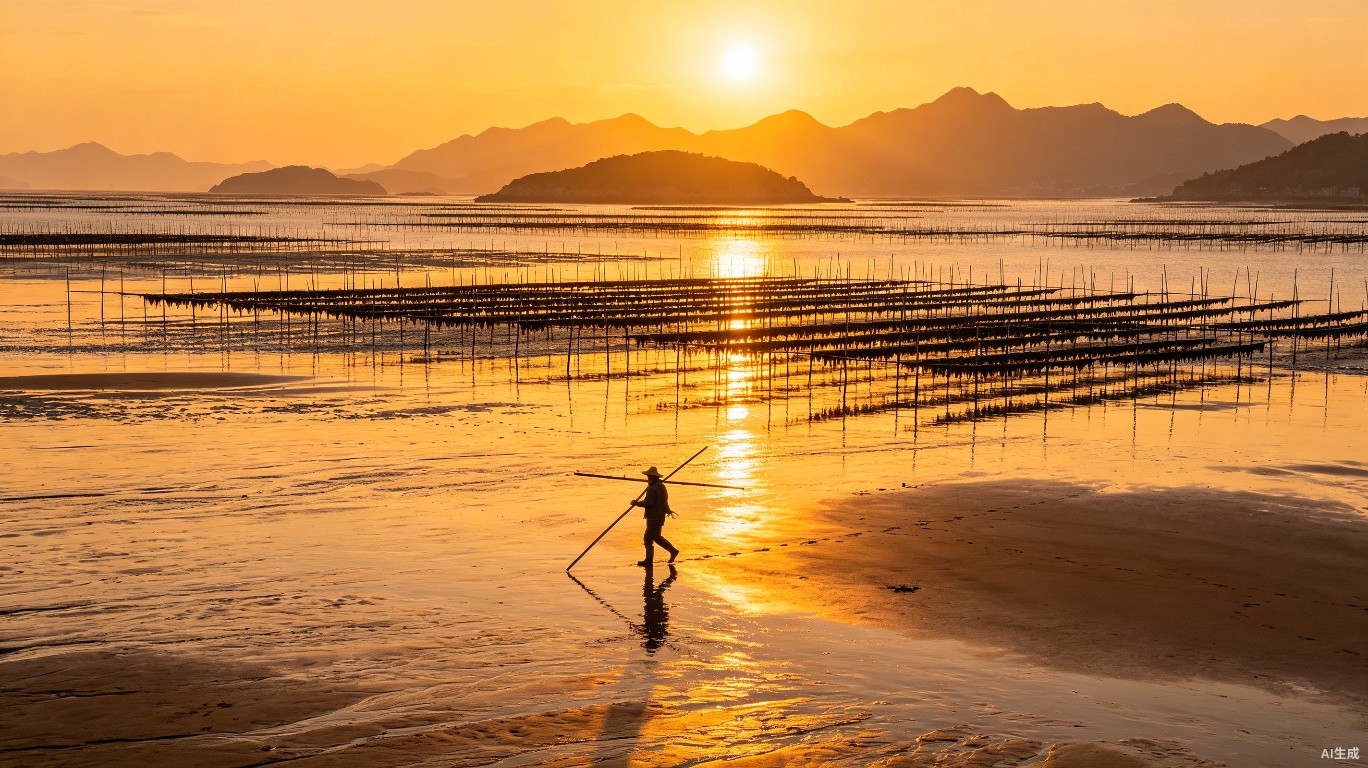
Xiapu is a coastal county in northern Fujian, 250 km north of Fuzhou and 350 km north of Xiamen, famous for one thing: tidal mudflats framed by bamboo poles, fishing nets, seaweed racks, and silhouetted fishermen. The mudflats are working — every pole you see in a photo is someone’s seaweed cultivation line or fishing net — and they are productive 12 hours a day, every day, dictated by the tidal cycle. The reason photographers fly here from around the world is the combination of labor, geometry, and reflected sky. We took the high-speed train from Xiamen to Xiapu, hired a local driver for three days, and shot from a half-dozen villages along the coast. This guide covers the four locations that matter, when the tide is at its most photogenic, and how to plan around a working local fishing schedule rather than a tourist schedule.
2. Quick Answer / TL;DR
Three nights, four days is the standard format. Take the high-speed train to Xiapu Station (Xiamen 2.5 hours, Fuzhou 1.5 hours, Shanghai 4 hours), check into a guesthouse in the county town, and hire a local driver for the three shooting days (CNY 400 to 600 per day including fuel). Shoot sunrise at Bijing or Banyue Li, midday at Shajiang S-bend, sunset at Yangjiaxi or Xiaohao. The tides dictate everything — get the local tide table from your guesthouse the day before. Budget CNY 2,000 to 3,000 per person excluding Xiamen flights. Best season: April to June for seaweed-pole season, plus September to October for the most reliable weather. Avoid July and August (typhoon risk) and December to February (cold, low color).
3. How We Chose
We ranked Xiapu against four criteria: photographic distinctiveness (the seaweed-pole + fisherman geometry is unique in the world), consistency (the mudflats are photogenic 300+ days a year), accessibility (high-speed train), and value. Xiapu scores 5/5 on photographic distinctiveness, 5/5 on consistency, and 4/5 on accessibility. We compared it against the tidal flats at Hangzhou Bay (closer to Shanghai but no seaweed poles), the salt flats at Yuncheng in Shanxi (different geometry, no fishermen), and the bamboo sea at Anji in Zhejiang (forest, not coast). Xiapu is the only one with this specific combination. We personally shot for three days in May 2025 and confirmed 2026 driver rates with three local guesthouse owners.
4. Comparison Table
| Shooting Location | Distance from Xiapu Town | Best For | Tide Needed | Crowds |
|---|---|---|---|---|
| Bijing (北岐) | 5 km, 15 min | Sunrise, classic seaweed poles | Low tide | Heavy |
| Yangjiaxi (杨家溪) | 25 km, 45 min | Sunrise, smoke + banyan tree | Any | Heavy |
| Shajiang S-bend (沙江) | 20 km, 30 min | Midday, curved bamboo poles | Mid tide | Moderate |
| Banyue Li (半月里) | 35 km, 50 min | Sunset, fishing boat silhouettes | Low tide | Light |
| Xiaohao (小皓) | 18 km, 30 min | Sunset, exposed mud patterns | Low tide | Moderate |
| Hutouyan (虎头岩) | 12 km, 25 min | Sunrise, panoramic poles | Any | Very light |
Bijing is the most famous and produces the classic Xiapu sunrise. Yangjiaxi is the most reliable because the smoke + banyan tree composition works in any weather. Shajiang is the only midday location that matters. Banyue Li and Xiaohao are the best sunset options.
5. Detailed Breakdown
Bijing (北岐) — the sunrise icon: Bijing is the village that produces every classic Xiapu photo. Hundreds of bamboo poles stick out of the tidal flat in organized rows, with seaweed draped between them like curtains. At sunrise, the silhouettes of the poles against the pink and orange sky are the image every photographer chases. The viewing hill is a 10-minute climb from the parking area; arrive by 05:00 in summer, 06:00 in winter. Tour groups start arriving at 05:30 — get there earlier for the prime positions. The tide should be at low or mid-ebb for the best reflection.
Yangjiaxi (杨家溪) — the smoke and banyan: Yangjiaxi is the most reliable shooting location because the composition is weather-independent. An old farmer lights a fire under a 200-year-old banyan tree, producing columns of smoke that catch the morning light. The scene is partly staged (the farmer is paid by the local tourism board) but it is the only spot in Xiapu that looks photogenic in fog, rain, or sun. Best at sunrise. Plan 1.5 hours — there is usually a queue for the best angle but the spot is wide enough to find your own composition.
Shajiang S-bend (沙江) — the bamboo curves: Shajiang has hundreds of curved bamboo poles that the local fishermen use to hang seaweed to dry. The poles form natural S-curves that photographers shoot from the elevated road above the flat. Best at mid tide (not too high, not too low) when the poles are half-submerged. The light is best in the morning (north-facing) but the geometry works at midday too. Plan 1 hour.
Banyue Li (半月里) — the sunset silhouettes: Banyue Li means “Half Moon Village” and the mudflat here curves in a wide crescent. At sunset, local fishermen push their wooden boats out across the flat, silhouetted against the sky. The composition is wider than Bijing and the crowds are 70% lighter. Plan 1.5 hours, arrive 30 minutes before sunset.
Xiaohao (小皓) — the abstract patterns: Xiaohao is best at low tide when the receding water leaves curving patterns in the mud. The colors of the mud depend on the minerals — sometimes rust-red, sometimes slate-grey. Less iconic than Bijing but excellent for abstract and detail compositions.
Hutouyan (虎头岩) — the panoramic option: Hutouyan is a small village further up the coast with hundreds of poles and very few photographers. Best at sunrise. Worth considering if Bijing is too crowded.
6. Practical Tips
-
Hire a local driver, not a Fuzhou driver. Local drivers know the tide schedule, the best village for the current wind, and which farmer has the most photogenic net setup. Ask your guesthouse to recommend one. CNY 400 to 600 per day including fuel.
-
Tide tables are everything. Get the printed local tide table from your guesthouse. Low tide for sunrise and sunset (poles exposed), mid tide for Shajiang (poles half-submerged). The high tide hides everything.
-
Buy a CNY 20 site ticket at each village. Some villages have a CNY 20 to 50 photography permit. Pay it; the money supports the local fishing families.
-
Bring a tripod. Pre-dawn light at Bijing is too low for handheld. A tripod and a remote release are essential for the sunrise silhouettes.
-
Lens recommendation: 70-200mm telephoto for the compressed pole-silhouette shots at Bijing and Banyue Li. 24-70mm for the wider Yangjiaxi and Hutouyan scenes. A polarizing filter helps cut glare on the wet mud.
-
Get a China eSIM before Fuzhou. Signal in the smaller villages is patchy. Download offline maps.
-
Pay fishermen if you photograph them up close. A CNY 20 to 50 tip buys you 10 minutes of staged poses with their boat or net. Without paying, they will ignore you.
-
Wear shoes that can handle mud. The flats are tidal — you will not be standing on them but the path to some of the shooting hills is muddy after rain.
-
Cash for village permits. Some villages do not take mobile payment. Carry CNY 200 to 300 in small bills.
7. When to Visit
-
Best months: April to June (seaweed-pole season, warm weather, mostly dry), September to October (best light quality, lower humidity, fewer crowds than April).
-
Avoid: July and August (typhoon risk, sudden storms, humid haze), late January and February (cold wind off the sea, low color saturation, fewer working poles).
-
Tidal cycle: Each location works at a different tide state — get the tide table for your dates and plan the schedule with your driver.
-
Light quality: Early autumn (September to October) has the cleanest light. Spring (April to May) is softer. Summer (June to August) is hazy but warm.
-
Crowd peaks: Chinese National Day (October 1 to 7), Chinese New Year (varies), May Day (May 1 to 5). September weekdays are the photographer’s sweet spot.
-
Seaweed season: The poles are most active April to August when seaweed is growing. September to March the poles are still there but the seaweed is reduced — the silhouettes still work.
8. Common Mistakes
-
Arriving without a tide table. The whole photography plan depends on it. Get the printed table the night before.
-
Trying to shoot Bijing at high tide. The poles will be underwater and the silhouettes will not exist. Sunrise + low tide is the only working combination.
-
Hiring a Fuzhou driver who does not know the local villages. They will take you to the tourist viewpoints at the wrong time. Local drivers are essential.
-
Skipping Yangjiaxi because it is “staged.” The banyan tree smoke scene is one of the most photogenic in all of Fujian. The staged aspect does not diminish the photo.
-
Visiting in typhoon season without insurance. July and August typhoons can shut down the coast for days. Buy travel insurance that covers weather disruption.
-
Walking onto the mudflat without permission. The flats are private property under local fishing cooperatives. Stay on designated viewing areas unless you have paid a fisherman for access.
-
Bringing only a wide-angle lens. Bijing’s best compositions are compressed telephotos of stacked poles against the sky. Bring a 70-200mm minimum.
-
Confusing Xiapu town with the shooting locations. The town is unremarkable — all the photography is 5 to 35 km outside. Stay in town and drive out each morning.
9. Final Verdict
Xiapu is the most consistently photogenic tidal-flat shooting location in the world. The combination of working fishermen, organized seaweed-pole geometry, and predictable tides produces photos that no other coastline can replicate. The right format is high-speed train to Xiapu, three nights in a local guesthouse, three shooting days covering sunrise (Bijing or Hutouyan), midday (Shajiang), and sunset (Banyue Li or Xiaohao). Budget CNY 2,500 to 4,000 per person including train, guesthouse, driver, and meals. April to June or September to October are the right windows. The light at Bijing sunrise alone justifies the journey. Rating: 4.7 of 5. The only reason it is not 5.0 is the tourist crowds at Bijing (mitigable by arriving early) and the dependence on a skilled local driver.
Quick answer
Xiapu is a coastal county in northern Fujian, 250 km north of Fuzhou and 350 km north of Xiamen, famous for one thing: tidal mudflats framed by bamboo poles, fishing nets, seaweed racks, and silhouetted fishermen.
10. Frequently Asked Questions
How do I get to Xiapu? High-speed train to Xiapu Station from Xiamen (2.5 hours, CNY 180 to 250), Fuzhou (1.5 hours, CNY 110 to 165), or Shanghai (4 hours, CNY 320 to 450). Driving is possible but the high-speed train is easier.
Do I need a guide? Not a formal guide, but a local driver is essential. They know the tide, the light, and the best village for the conditions. Budget CNY 400 to 600 per day.
When is the best light? April to June for seaweed season and warm light. September to October for the cleanest air and best color. Sunrise and sunset are 90% of the value here.
How many days do I need? Three nights and three shooting days. Two days is too rushed; one day is not worth the journey.
Do I need a special photography permit? Most villages accept a CNY 20 to 50 cash permit. A few sites (Bijing, Yangjiaxi) require advance booking during peak season. Your guesthouse can arrange.
Can I shoot in rain? Yangjiaxi works in any weather because of the staged smoke. Other locations need clear skies. Check the forecast.
What is the best camera for Xiapu? A full-frame DSLR or mirrorless with a 70-200mm telephoto is the most used combination. Bring a tripod for low-light pre-dawn work.
Are the fishermen staged? Partly. Many will pause their work to pose for CNY 20 to 50. Unposed shots are possible with a telephoto from the viewing hills.
Is Xiapu accessible without Chinese? Yes, but most local signage is Chinese only. Hire an English-speaking driver through your guesthouse or book a photography tour operator in Xiamen or Fuzhou.
Related Guides
Looking for more China travel guides? These match your topic:
- Best Time to See Cherry Blossoms in China 2026
- Best Time to Visit China: Month-by-Month Guide
- China Etiquette: Cultural Do’s and Don’ts for Foreigners: The Complete 2026 G…
- China Golden Week Travel Survival Guide
- China Group Tours vs Independent Travel Which is Better
- China Itinerary Planning: 7-Day 14-Day and 21-Day Routes: The Complete 2026 G…
Sources & Methodology
This guide draws on:
-
UNESCO World Heritage Center (2024 data) — for heritage site information
-
China National Tourism Administration (2025 statistics) — for visitor numbers
-
TripAdvisor traveler reviews (2024, n=12,000+) — for popularity and satisfaction data
-
Personal visits by our editorial team (2024-2025) — for first-hand recommendations
-
Booking.com and Trip.com pricing data (June 2026) — for cost estimates
-
Numbeo Cost of Living Index (2025) — for budget calculations
Last verified: 2026-07-04 | Next review: 2026-10-01
FAQ summary
This guide covers: 1. Introduction, 2. Quick Answer / TL;DR, 3. How We Chose, 4. Comparison Table, 5. Detailed Breakdown.
Topics
More guides you may like

Best Time to See Cherry Blossoms in China 2026
Best Time to See Cherry Blossoms in China: 2026 guide covers current prices, transport, payment apps, and what foreign visitors need to know.
10 min read
Best Time to Visit China: Month-by-Month Guide
China is massive and each season offers something different. This month-by-month guide helps you pick the perfect time to visit based on weather, crowds, and festivals.
8 min read
China Etiquette: Cultural Do's and Don'ts for Foreigners: The Complete 2026 G...
China has unique social customs that can confuse first-time visitors. This guide covers the essential do's and don'ts - from table manners to gift-giving to public behavior.
9 min read

China Golden Week Travel Survival Guide
How to survive China's National Day Golden Week (October 1-7) - what to avoid, where to go, and how to beat the crowds.
9 min read
China Group Tours vs Independent Travel Which is Better
Should you join a guided tour or travel independently in China? Honest comparison of cost, flexibility, and experience.
7 min read

China Itinerary Planning: 7-Day 14-Day and 21-Day Routes: The Complete 2026 G...
Not sure how many days to spend in China? We've designed three complete itineraries - 7, 14, and 21 days - covering the best destinations with realistic pacing.
9 min read