
China Lantern Festival Guide
The cab driver in Xi'an looked at me in the rearview mirror and laughed. Not a mean laugh, but the kind you get when you've said something genuinely ridiculous.
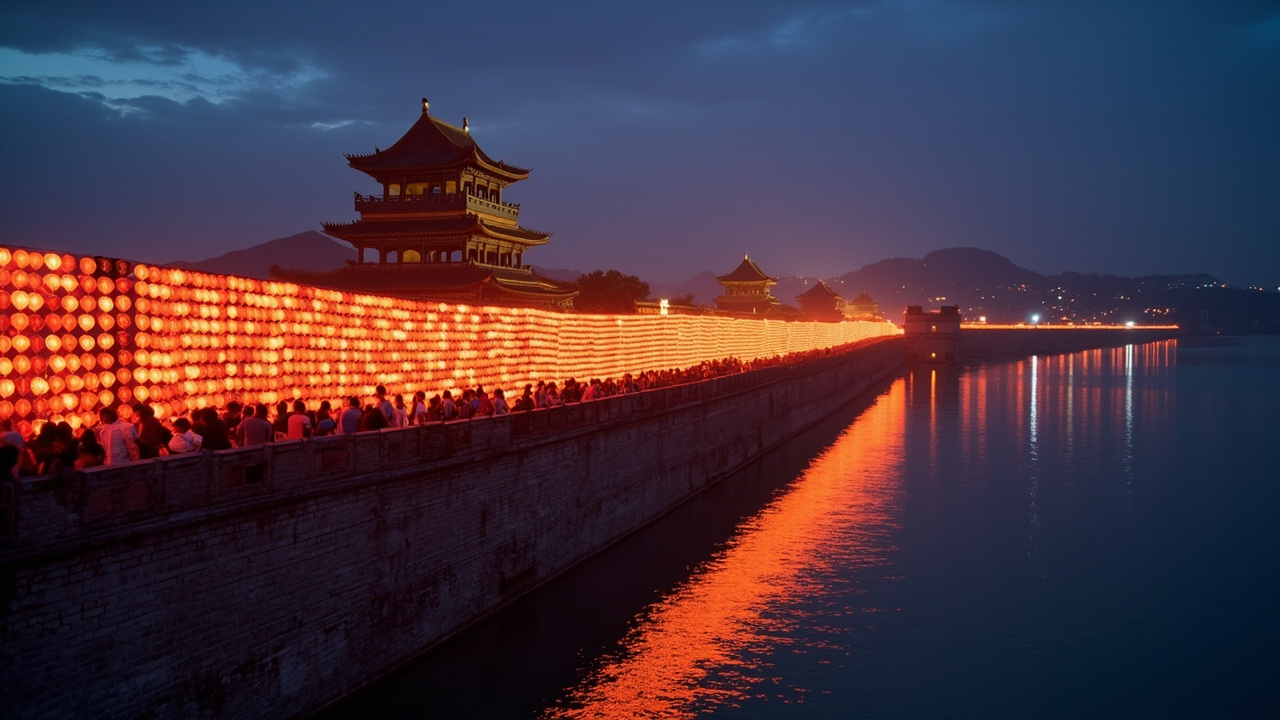
The cab driver in Xi’an looked at me in the rearview mirror and laughed. Not a mean laugh, but the kind you get when you’ve said something genuinely ridiculous. I had just asked, in my broken Mandarin, if the lanterns were still up after the fifteenth day of the first lunar month. He shook his head, gestured at the empty streets, and said something I only half-understood: the festival is a moment, not a season. You either catch it, or you wait a year.
That was my first lesson in how China’s oldest festival actually works. The Lantern Festival marks the end of Chinese New Year celebrations, and it’s a single night, not a week-long event. The date shifts every year because it follows the lunar calendar, landing on the first full moon of the new year. In 2026, that’s March 3rd. If you’re planning a trip around it, you need to build your itinerary backward from that one evening.
This guide covers the ten best places in China to experience the festival, based on seven years of living in Beijing and more trips to these cities than I can count. I’ll tell you exactly where to stand, what to eat, how much it costs, and which crowds are worth fighting through. Some of these picks will surprise you, because the most magical lantern displays aren’t always in the biggest cities.
Quick answer
The Lantern Festival falls on March 3rd, 2026, and the best places to experience it are Xi’an, Nanjing, and Pingyao for traditional displays, with Zigong in Sichuan offering the largest modern lantern shows in China. Most festival events are free to attend, though major theme parks charge $15-40 (CNY 100-280) for entry. Book train tickets at least two weeks ahead, as this is one of the busiest travel periods in China, and check if your nationality qualifies for China’s visa-free transit policy before booking flights.
The Short Version
If you only have 90 seconds, here’s the deal. The Lantern Festival is one night, not a festival season, so pick one city and commit. Xi’an gives you the most dramatic setting with its ancient city wall lit up like something out of a dream. Nanjing’s Confucius Temple area is the most atmospheric for a first-timer, with lanterns reflecting off the Qinhuai River. Zigong has the biggest and most impressive modern lantern engineering if you’re willing to go off the beaten path. Skip Beijing unless you’re already there, because the displays are scattered and underwhelming compared to the south. And whatever you do, eat tangyuan (glutinous rice balls) that night, because that’s the whole point.
How I Picked These
I’ve been to every city on this list at least twice, and most of them multiple times during the festival period itself. I’ve stood in the crowds at Nanjing’s Confucius Temple, gotten lost in Zigong’s lantern park, and watched the ice lanterns in Harbin until my fingers went numb. I’ve also made mistakes, like showing up to Pingyao a day late and missing the main procession, or trying to get a taxi in Xi’an after the fireworks ended, which took over an hour. The picks below reflect both what worked and what didn’t. I also talked to locals in each city, from a tea shop owner in Chengdu to a university student in Nanjing, about where they actually go on the night itself, rather than where the tourism boards point you.
Comparison Table
| Rank | Place | Best For | Approx Cost (USD) | Time Needed | When to Go |
|---|---|---|---|---|---|
| 1 | Xi’an | Ancient city wall lanterns | $15-25 (CNY 100-180) | Full evening | Festival night, 6-10 PM |
| 2 | Nanjing | River reflections, traditional feel | Free (temple area) | 2-3 hours | Festival night, after dark |
| 3 | Zigong | Massive modern lantern shows | $20-30 (CNY 140-210) | 3-4 hours | Any evening during festival period |
| 4 | Pingyao | Ancient town atmosphere | $10-15 (CNY 70-105) | 2-3 hours | Festival night, early evening |
| 5 | Chengdu | Lanterns + Sichuan food | Free (park area) | 2 hours | Festival night, before 9 PM |
| 6 | Harbin | Ice lanterns, extreme cold | $25-35 (CNY 175-245) | 2-3 hours | Late January to late February |
| 7 | Shanghai | Modern light installations | Free (Yu Garden area) | 2 hours | Festival night, after 7 PM |
| 8 | Beijing | Lantern fairs, easy logistics | Free (parks) | 1-2 hours | Festival night, early evening |
| 9 | Suzhou | Classical garden lanterns | $10-15 (CNY 70-105) | 2 hours | Festival night, before 8 PM |
| 10 | Kaifeng | Historical lantern tradition | $15-20 (CNY 105-140) | 2-3 hours | Festival night |
Xi’an 鈥?The City Wall Glows Like a Storybook
I remember standing on the South Gate of the Xi’an city wall as the sun dropped behind the Drum Tower, and the entire wall just, well, ignited. Thousands of lanterns in the shapes of dragons, phoenixes, and Tang dynasty dancers flickered to life simultaneously. A kid next to me, maybe six years old, screamed with delight and pointed at a giant rabbit lantern that was taller than our hotel. I had seen photos of this event for years, and they didn’t do it justice.
The Xi’an City Wall Lantern Festival is the most famous in China, and for good reason. The wall itself is 14 kilometers around, and the lantern displays run along the top of it, creating a glowing ribbon around the old city. The craftsmanship is extraordinary, with many lanterns hand-painted and built from silk over wire frames. It’s not just a display, it’s a museum of Chinese mythology rendered in light.
📍 Location: Xi’an City Wall, South Gate (Yongningmen), Beilin District 🎫 Entry fee: $15-25 (CNY 100-180) depending on the night, with peak festival night prices higher 🕒 Opening hours: 6 PM to 10 PM during the festival period (late February to early March) 🚇 How to get there: Take Metro Line 2 to Yongningmen Station, Exit D, and walk 3 minutes to the South Gate ticket office 📅 When to visit: Festival night itself is spectacular but packed; the two nights before are calmer and nearly as good 💡 Insider tips:
- Rent a bike on the wall if you want to see the full circuit, but be prepared to stop constantly for photos
- Book your ticket online through the official WeChat account at least two days ahead, walk-up tickets often sell out
- Bring cash as backup, some small food stalls on the wall don’t accept cards or mobile payments
- The best photo spot is the southwest corner of the wall, where you can frame the lanterns against the modern skyline
- Wear shoes with good grip, the wall surface is uneven stone and it gets slippery with evening dew
I tried the roujiamo (Chinese hamburger) from a stall near the South Gate after the lanterns came on, and the vendor, an older man named Mr. Chen, insisted I eat it while standing at his cart because “the steam is part of the flavor.” He wasn’t wrong.
Nanjing 鈥?Lanterns on the River, Crowds on the Bridge
The first time I went to Nanjing for the Lantern Festival, I made the mistake of trying to cross the Wende Bridge over the Qinhuai River at 8 PM. Bad idea. I was packed in so tight that my feet barely touched the ground for about ten minutes. But when I finally made it to the other side and looked back, I understood why everyone was there. The lanterns along the riverbank reflected in the black water, doubled and shimmering, and the ancient buildings behind them looked like they’d been there for a thousand years, which they basically have.
The Confucius Temple area, known as Fuzimiao, is the heart of Nanjing’s Lantern Festival celebrations. This is the most traditional version of the festival you’ll find in a major city, with lanterns in the shapes of zodiac animals, historical scenes, and folk tales. The river cruise is worth the money, because you see the displays from a completely different angle, and the boat’s guide narrates the history in Chinese, which is a nice immersion even if you don’t understand every word.
📍 Location: Confucius Temple area (Fuzimiao), Qinhuai District, along the Qinhuai River 🎫 Entry fee: Free to walk around; river cruise $10-15 (CNY 70-105); some temple exhibits charge $5-10 (CNY 35-70) 🕒 Opening hours: Lanterns on from dusk to 10:30 PM; shops stay open until 11 PM 🚇 How to get there: Take Metro Line 3 to Fuzimiao Station, Exit 2, and walk 5 minutes south toward the river 📅 When to visit: Go at 6 PM before the crowds peak, or after 9 PM when families with young kids start heading home 💡 Insider tips:
- The best photos are from the east side of the Wende Bridge, away from the main pedestrian flow
- Try the duck blood vermicelli soup from a small shop called Xiaopanzi on Gongyuan Street, it’s a local institution
- The lantern market on the north bank sells handmade paper lanterns for $2-5 (CNY 15-35), much cheaper than the tourist stalls
- Avoid driving, the entire area is pedestrianized and traffic is a nightmare on festival night
- If you want to write a wish on a lantern and release it, buy one from the official stalls near the temple, the ones on the bridge are overpriced
I met a university student named Li Wei who was photographing the lanterns for his photography class. He told me his grandmother used to bring him here every year as a kid, and now he comes back to document how it’s changed. He pointed out a lantern shaped like a panda eating bamboo and said, “That’s new. My grandmother would say it’s not traditional. But I think she’d like it anyway.”
Zigong 鈥?The Lantern Capital Nobody Talks About
Zigong is not on most tourist itineraries, and that’s exactly why you should go. This small city in Sichuan province is known as the “Lantern Capital of China,” and it’s where the big, jaw-dropping lantern displays you see in photos actually come from. The city has a lantern-making industry that employs thousands of artisans, and their annual festival is a showcase of what they can do when they’re not shipping their work to other cities.
I went to Zigong on a whim after a friend in Chengdu told me I was missing out. He was right. The lanterns here are not the delicate paper-and-silk affairs you see elsewhere. They’re massive, engineered structures, some as tall as ten-story buildings, made from porcelain, glass bottles, and even recycled materials. One display I saw was a full-scale replica of a Tang dynasty palace, built entirely from ceramic tableware. It was absurd and magnificent at the same time.
📍 Location: China Lantern Museum and surrounding park, Ziliujing District, Zigong 🎫 Entry fee: $20-30 (CNY 140-210) during the festival period 🕒 Opening hours: 5 PM to 10:30 PM daily during the festival (runs from late January to mid-March) 🚇 How to get there: Zigong has no metro; take a high-speed train from Chengdu East to Zigong North (about 1 hour), then a taxi 20 minutes to the park 📅 When to visit: Weekday evenings are much calmer; weekends are packed with domestic tourists 💡 Insider tips:
- The lantern museum next to the park is worth an hour before the displays open, it explains the history and craft
- Bring a tripod if you’re serious about photos, the lanterns are bright but the surrounding areas are dark
- The food stalls inside the park serve decent Sichuan snacks, but the best hotpot in Zigong is at a restaurant called Shi Zi Lou, about 10 minutes away by taxi
- English is almost nonexistent here, download a translation app before you arrive
- The last high-speed train back to Chengdu leaves around 9 PM, so either stay overnight or leave the park by 8:15 PM
I ate dan dan noodles from a stall inside the park and the vendor, a woman who had been making lanterns for 30 years before switching to food, told me she preferred cooking because “lanterns don’t talk back.” She gave me extra chili oil because I was a foreigner and she wanted to see my reaction. I managed not to cry, but it was close.
Pingyao 鈥?An Ancient Town That Time Forgot
Pingyao is the kind of place that makes you feel like you’ve stepped into a period drama. The entire old town is a UNESCO World Heritage site, with Ming and Qing dynasty architecture, cobblestone streets, and city walls that have stood for over 600 years. During the Lantern Festival, the whole town transforms into a living lantern display, with paper lanterns strung across every street and alley.
I arrived in Pingyao on the afternoon of the festival and immediately felt like I’d made the right call. The town was quieter than Xi’an or Nanjing, with fewer international tourists and more families from nearby cities who had come for the day. The lanterns here are simpler, more handmade, and somehow more charming for it. As night fell, the town’s main street glowed with red and gold light, and the smell of grilled lamb skewers and fried dough filled the air.
📍 Location: Pingyao Ancient City, Pingyao County, Shanxi Province 🎫 Entry fee: $10-15 (CNY 70-105) for the combined ticket to the town’s attractions; walking the streets is free 🕒 Opening hours: The town is open 24/7; most lantern displays are lit from dusk to 10 PM 🚇 How to get there: Take a high-speed train to Pingyao Ancient City Station from Beijing West (about 4 hours) or Xi’an North (about 2.5 hours), then a taxi 15 minutes to the town 📅 When to visit: Go on festival night itself, but arrive by 4 PM to see the lanterns being lit and avoid the evening rush 💡 Insider tips:
- Stay overnight in one of the traditional courtyard guesthouses inside the town walls; waking up there is half the experience
- The lantern parade starts at the north gate around 7 PM, get there early for a good spot
- Try the pingyao beef, it’s a local specialty and the best version of Chinese braised beef I’ve had anywhere
- The town’s walls are walkable and give you a great elevated view of the lanterns below
- Most shops close by 9 PM, so buy any souvenirs before dinner
I got lost in the back alleys of Pingyao trying to find my guesthouse after the lanterns came on. A shopkeeper selling hand-painted lanterns saw me wandering and walked me back himself, refusing the tip I tried to give him. “You’re a guest,” he said in English, which surprised me. “Guests don’t pay for help.”
Chengdu 鈥?Lanterns, Hotpot, and the Slow Life
Chengdu is famous for pandas and spicy food, but it also knows how to do the Lantern Festival right. The city’s celebrations are spread out across several parks and temples, which means the crowds are thinner and the experience feels more relaxed. The main event is at the Wuhou Shrine, a temple dedicated to the Three Kingdoms era, where the lanterns tell stories from that period of Chinese history.
I spent a Lantern Festival in Chengdu a few years ago and what I remember most isn’t the lanterns themselves, though they were beautiful. It was the pace of everything. Families strolled slowly, couples sat on benches eating tangyuan from paper cups, and the whole event felt like a neighborhood gathering rather than a tourist spectacle. The Sichuan approach to festivals, it turns out, is the same as the Sichuan approach to everything: don’t rush, enjoy the food, and stay a while.
📍 Location: Wuhou Shrine and surrounding park, Wuhou District, Chengdu 🎫 Entry fee: Free for the park area; the temple itself charges $8-12 (CNY 55-85) 🕒 Opening hours: Park open until 10 PM; lanterns lit from dusk 🚇 How to get there: Take Metro Line 3 to Gaoshengqiao Station, Exit C, and walk 10 minutes east to the shrine 📅 When to visit: Go around 7 PM, after the initial rush but before the late-night crowds 💡 Insider tips:
- Eat hotpot before you go, the lantern park is beautiful but the food inside is mediocre and overpriced
- The best tangyuan in Chengdu are at a tiny shop called Lai Tangyuan near the shrine, they’ve been making them for over 100 years
- If you want to see pandas and lanterns in one trip, the panda base is 40 minutes away by taxi, do it in the morning
- The park gets busy with families around 8 PM, so go early or late
- Sichuan people speak a strong dialect, but most younger locals can switch to Mandarin if you ask
I sat next to an elderly couple on a bench in the park, and the wife offered me a piece of the tangyuan she was eating. When I thanked her, she nodded and said something to her husband that I didn’t catch, but he laughed. I like to think she was telling him I reminded her of their son, who lives in Shanghai now.
Harbin 鈥?Ice Lanterns in the Frozen North
Harbin is a different beast entirely. The Lantern Festival here is celebrated with ice lanterns, carved from blocks of ice taken from the Songhua River and illuminated from within. The city’s Ice and Snow World is the main attraction, and while it’s technically a winter festival rather than a Lantern Festival event, the two overlap in late February, and the effect is unforgettable.
I went to Harbin in February one year, when the temperature was minus 25 degrees Celsius. The cold is not a joke, it hurts to breathe, and your phone battery dies in minutes unless you keep it in an inner pocket. But the ice lanterns, which glow in every color imaginable, are worth every frozen finger. The craftsmanship is incredible, with entire castles, pagodas, and even a full-scale replica of the Great Wall carved from ice.
📍 Location: Harbin Ice and Snow World, Songbei District, Harbin 🎫 Entry fee: $25-35 (CNY 175-245) depending on the night 🕒 Opening hours: 11 AM to 9:30 PM daily, late January to late February 🚇 How to get there: Take Metro Line 2 to World Trade City Station, then a taxi 10 minutes to the park entrance 📅 When to visit: Go on a weekday evening after 6 PM when the ice is fully lit; weekends are packed 💡 Insider tips:
- Rent the heated boots and coat at the entrance, they cost $5 (CNY 35) and are worth every yuan
- Bring hand warmers, the ones that activate when you open the packet, and put them in your gloves
- The ice slides are free and genuinely fun, but the lines get long after 7 PM
- Don’t plan to use your phone much, the cold drains batteries fast
- The best photos are from the observation tower in the center of the park, but the elevator line is long, so go early
I met a father and son from Guangzhou at the entrance, both wearing every piece of clothing they owned. The father told me his son had begged to come to Harbin for years, and this was their first trip north of the Yangtze. “He wanted to see snow,” the father said, shivering. “I wanted to see him happy.” The kid was building a snowman with a grin that could have melted the ice lanterns.
Shanghai 鈥?Modern Lights, Traditional Roots
Shanghai does the Lantern Festival differently, and that’s okay. The city’s main celebration is at the Yu Garden area in the old city, where the classical Ming dynasty architecture gets a modern lighting treatment. The lanterns here are a mix of traditional designs and contemporary art installations, and the effect is more like a light festival than a historical reenactment.
I wasn’t sure what to expect when I first went to Shanghai for the festival, having spent previous years in more traditional cities. But the Yu Garden area won me over. The lanterns are hung from the curved eaves of the ancient buildings, and when they reflect in the surrounding water, the whole scene looks like a cyberpunk version of an imperial garden. It’s the most Instagrammable Lantern Festival in China, and I mean that as a compliment.
📍 Location: Yu Garden area, Huangpu District, Shanghai 🎫 Entry fee: Free to walk around; the Yu Garden itself charges $7-10 (CNY 50-70) 🕒 Opening hours: Lanterns lit from dusk to 10 PM; the surrounding bazaar stays open until 11 PM 🚇 How to get there: Take Metro Line 10 to Yuyuan Garden Station, Exit 1, and walk 5 minutes to the garden entrance 📅 When to visit: Go after 8 PM when the day-trip crowds have thinned out 💡 Insider tips:
- The xiaolongbao (soup dumplings) at Nanxiang Steamed Bun Restaurant are famous for a reason, but the line is always long, go at 5 PM before the dinner rush
- The best view of the lanterns is from the Nine Zigzag Bridge, but it gets crowded, so time your crossing carefully
- The shops in the bazaar are tourist traps, but the ones on the side streets east of the garden are cheaper and more interesting
- Shanghai has the best English signage of any Chinese city, so getting around is easy
- If you want a break from the crowds, the Bund is a 15-minute walk away and offers a completely different view of the city
I watched a group of elderly women in matching red jackets doing tai chi in a small park near the Yu Garden while the lanterns glowed behind them. One of them caught me watching and waved. I waved back, and she went back to her movements, perfectly unhurried, perfectly at peace.
Beijing 鈥?The Capital’s Understated Celebration
Beijing’s Lantern Festival is a bit of a letdown if you’ve built it up in your head. The city doesn’t have a single iconic lantern display like Xi’an or Nanjing, and the celebrations are scattered across various parks and temples. That said, if you’re already in Beijing during the festival, there are worse ways to spend an evening than wandering through the city’s parks as they light up.
The most reliable option is the Lantern Fair at the Temple of Earth (Ditan Park), which has been running for years and attracts a mix of locals and tourists. The lanterns are decent, the food stalls are plentiful, and the atmosphere is genuinely festive. It’s not the best Lantern Festival in China, but it’s the easiest one to get to if you’re on a tight itinerary.
📍 Location: Ditan Park (Temple of Earth), Dongcheng District, Beijing 🎫 Entry fee: Free for the park; some special exhibits charge $3-5 (CNY 20-35) 🕒 Opening hours: Park open until 9:30 PM; lanterns lit from dusk 🚇 How to get there: Take Metro Line 2 to Yonghegong Station, Exit B, and walk 10 minutes north to the park’s south gate 📅 When to visit: Go early, around 6 PM, to avoid the biggest crowds 💡 Insider tips:
- The best tangyuan in Beijing are at a shop called Daoxiangcun, which has branches all over the city, get the black sesame filling
- The food stalls inside the park are overpriced, eat before you go or grab something from the street vendors outside the gates
- If you want a more local experience, the Temple of the Moon (Yuetan Park) in the west of the city has a smaller but more authentic celebration
- Beijing’s air can be cold and dry in early March, bring a scarf and lip balm
- The park gets crowded with families, so expect noise and chaos, it’s part of the charm
I bought a paper lantern from a vendor outside Ditan Park and spent an hour walking around the park with it, feeling like a kid again. A Chinese woman stopped me and asked, in English, if I knew what the lantern meant. When I said I wasn’t sure, she smiled and said, “It means you’re letting go of last year and welcoming the new one. Happy festival.”
Suzhou 鈥?Lanterns in the Classical Gardens
Suzhou is known for its classical gardens, and during the Lantern Festival, those gardens become something else entirely. The city’s main celebration takes place in the Humble Administrator’s Garden, a UNESCO World Heritage site that dates back to the Ming dynasty. The lanterns are placed among the pavilions, ponds, and rockeries, and the effect is like walking through a painting that has come to life.
I visited Suzhou for the festival on a recommendation from a friend who lives in Shanghai, and I’m glad I did. The garden’s lanterns are more understated than Xi’an’s or Zigong’s, but they’re placed with such care that every corner reveals a new composition. The reflections in the garden’s ponds are particularly beautiful, and the crowds are thinner than at the more famous festival locations.
📍 Location: Humble Administrator’s Garden, Gusu District, Suzhou 🎫 Entry fee: $10-15 (CNY 70-105) during the festival period 🕒 Opening hours: 7:30 AM to 5:30 PM normally; extended to 9 PM during the festival 🚇 How to get there: Take Metro Line 4 to Beisita Station, Exit 2, and walk 10 minutes south to the garden entrance 📅 When to visit: Go at dusk, around 5:30 PM, when the lanterns first come on and the garden is at its most magical 💡 Insider tips:
- The garden is much quieter on weekdays, plan your visit for a Tuesday or Wednesday if possible
- The nearby Pingjiang Road is a historic street with canals and traditional houses, worth a walk after the garden closes
- Try the squirrel-shaped mandarin fish at a restaurant called Songhelou, it’s a Suzhou specialty and it’s delicious
- The garden’s tea house serves excellent Biluochun green tea, which is grown in the nearby Dongshan area
- English signage is limited, so download a translation app or bring a guidebook
I sat in the garden’s tea house for an hour, drinking Biluochun and watching the lanterns come on one by one as the sky darkened. The tea master, an older woman with hands that moved like she’d been doing this for decades, refilled my cup without being asked. When I tried to pay for the second pot, she waved me off. “You’re a guest,” she said in Mandarin. “Guests don’t pay twice.”
Kaifeng 鈥?The Original Lantern Festival City
Kaifeng, in Henan province, claims to be the birthplace of the Lantern Festival, and while historians might quibble, the city’s celebrations have a historical weight that’s hard to match. The festival here dates back over a thousand years to the Song dynasty, when Kaifeng was the capital of China and the Lantern Festival was the biggest event of the year.
I went to Kaifeng specifically to see if the city lived up to its reputation, and I wasn’t disappointed. The main lantern display is at the Dragon Pavilion, a palace complex that sits on the site of the original Song dynasty palace. The lanterns here are a mix of historical scenes and modern designs, and the setting, with the palace buildings lit up behind them, is genuinely impressive. It’s not as polished as Xi’an or as massive as Zigong, but it has a sense of history that the others can’t match.
📍 Location: Dragon Pavilion, Longting District, Kaifeng 🎫 Entry fee: $15-20 (CNY 105-140) during the festival period 🕒 Opening hours: 8 AM to 10 PM during the festival 🚇 How to get there: Kaifeng has no metro; take a high-speed train from Zhengzhou East to Kaifeng North (about 30 minutes), then a taxi 20 minutes to the pavilion 📅 When to visit: Go on festival night itself, the historical reenactments and performances are best then 💡 Insider tips:
- The night market near the Dragon Pavilion is one of the best in China, try the spicy fried tofu and the candied hawthorn skewers
- The city’s Song dynasty theme park, Qingming Riverside Landscape Garden, has its own lantern display that’s worth a visit
- Kaifeng is a small city, so most attractions are within walking distance or a short taxi ride
- English is rarely spoken here, so be prepared to use translation apps and hand gestures
- The best view of the lanterns is from the top of the Dragon Pavilion itself, but the stairs are steep and there’s no elevator
I tried the spicy fried tofu at the night market and immediately regretted it, not because it was bad, but because it was so good that I ate too much and couldn’t finish my dinner. The vendor, a young man who looked like he was still in high school, laughed at my red face and offered me a bottle of water. “First time?” he asked in English. I nodded. “It gets easier,” he said. “Or you just get used to the pain.”
FAQ summary
The Lantern Festival in 2026 falls on March 3rd, and the best destinations for first-time visitors are Xi’an for its iconic city wall display, Nanjing for its traditional riverside atmosphere, and Zigong for the largest modern lantern shows. Most festival events are free or cost under $30 (CNY 210), but train tickets and hotels should be booked at least two weeks in advance due to the post-New Year travel rush. Visitors should check if their nationality qualifies for China’s visa-free transit policy, set up Alipay or WeChat Pay before arriving, and download a translation app since English is limited outside major tourist areas.
FAQ
Q: When is the Lantern Festival in 2026? A: The Lantern Festival falls on March 3rd, 2026, which is the 15th day of the first month of the Chinese lunar calendar. It marks the end of the Chinese New Year celebrations.
Q: Do I need a visa to visit China for the Lantern Festival? A: Many nationalities qualify for China’s visa-free transit policy, which allows stays of up to 10 days in certain cities. Check the latest visa-free transit rules to see if you qualify, or apply for a standard tourist visa through your local Chinese embassy.
Q: How much does it cost to attend the Lantern Festival? A: Most street-level celebrations are free, but major displays like Xi’an’s city wall or Zigong’s lantern park charge $15-30 (CNY 100-210) for entry. Food, souvenirs, and transport will add another $20-50 (CNY 140-350) per person.
Q: Is the Lantern Festival crowded? A: Yes, extremely. It’s one of the busiest travel periods in China, with domestic tourists traveling to see the displays. Go on a weekday if possible, arrive early, and be prepared for large crowds, especially in Xi’an and Nanjing.
Q: What should I eat during the Lantern Festival? A: Tangyuan, glutinous rice balls filled with black sesame, peanut, or red bean paste, are the traditional food. You’ll find them at every festival stall, and they’re also sold in supermarkets and bakeries throughout the festival period.
Q: Do I need to set up Alipay or WeChat Pay before attending? A: Yes, most vendors and even some ticket offices only accept mobile payments. Set up Alipay or WeChat Pay before you arrive, and link your international credit card to the app.
Q: Can I use my phone and internet in China during the festival? A: You’ll need a local SIM card or an international roaming plan, and you’ll need a VPN to access Google, Facebook, and other blocked services. Check our SIM card and internet guide for the latest options.
The Honest Wrap-up
This list is for travelers who want to see the Lantern Festival done right, whether that means standing on Xi’an’s ancient walls or wandering through Zigong’s lantern wonderland. It’s not for people who want a quiet, crowd-free experience, because the festival is inherently loud, packed, and chaotic. That’s the point. It’s a celebration, and celebrations are messy.
If you’re booking a trip around the festival, my advice is simple: pick one city and commit to it. Don’t try to see two or three lantern displays in different cities, because you’ll spend your whole time on trains and miss the actual experience. And whatever city you choose, find a local spot to eat tangyuan. The festival is about light, yes, but it’s also about family, food, and the simple act of gathering together to mark the end of winter. That’s the part you’ll remember long after the lanterns have been packed away.
Topics
More guides you may like

Top 10 Bridges in China
China's bridges are engineering marvels spanning mountains, rivers, and seas. Here are 10 of the most spectacular, from ancient stone to modern steel.
8 min read

Top 10 Buddhist Sites in China
From the Leshan Giant Buddha to the Dunhuang Caves, these 10 Buddhist sites represent 2,000 years of China's spiritual heritage.
9 min read

Top 10 Day Trips from Beijing You Shouldn't Miss
Beijing is packed with history, but some of China's best experiences are just a few hours away. Here are 10 day trips that will transform your visit.
9 min read

Top 10 Hidden Gems in China Off the Beaten Path
Beyond the Great Wall and Terracotta Warriors, China has incredible hidden destinations few tourists ever reach. Here are 10 underrated gems worth the detour.
9 min read

Top 10 Markets and Shopping Streets in China
From Shanghai's Bund to Beijing's Silk Street - 10 markets where foreigners can haggle, explore, and bring home authentic Chinese goods.
9 min read

Top 10 Museums in China You Shouldn't Miss
China's museums span 5,000 years of civilization. These 10 - from the Palace Museum to Xi'an's terracotta gallery - are unmissable for culture lovers.
9 min read