
Tibet Everest Base Camp Guide
The cab driver looked at me in the rearview mirror and laughed. Not a mean laugh, but the kind you get when you've said something genuinely absurd.
The cab driver looked at me in the rearview mirror and laughed. Not a mean laugh, but the kind you get when you’ve said something genuinely absurd. I had just asked, in my broken Mandarin, if we could “go to the mountain of the sky.” He nodded, shifted gears, and we started climbing out of Lhasa. That was seven years ago, and I’ve made the trip to Everest Base Camp four times since. Each visit has been different, and each has taught me something new about this place that sits at the top of the world.
Tibet’s Everest Base Camp (EBC) isn’t just a destination. It’s the end of a long, dusty road that tests your patience, your lungs, and your tolerance for instant noodles. The reward is standing at 5,150 meters (16,900 feet) staring at the highest point on Earth, a pyramid of rock and ice that looks close enough to touch, even though it’s 20 kilometers away. This guide covers everything you need to know: permits, transport, altitude sickness, what to pack, and the exact spots where you’ll want your camera ready. I’ve included prices in USD and CNY, current for 2026, and the kind of practical details that only come from having done this trip multiple times.
Quick answer
A Tibet Everest Base Camp trip costs roughly $1,200–$2,500 (CNY 8,600–18,000) per person for a 7–10 day itinerary from Lhasa, including permits, transport, and basic lodging. You need a Tibet Travel Permit arranged through a registered tour agency, and most foreign visitors require a Chinese visa plus a separate Tibet entry permit. The best season is April to October, with May and September offering the clearest skies. You cannot reach EBC independently; you must book through an organized tour or with a licensed guide.
The Short Version
If you only have 90 seconds, here’s the deal. You can’t just show up in Tibet and hop a bus to Everest. You need a Tibet Travel Permit, which means booking through a licensed agency. The trip from Lhasa takes 4–5 days by road, and you’ll spend two nights at base camp or the nearby Rongbuk Monastery guesthouse. Budget at least $1,500 (CNY 10,800) per person for the full experience. The altitude is no joke, so plan for at least two days in Lhasa first to acclimatize. And bring cash, because the ATM at base camp is a rumor I’ve never confirmed.
How I Picked These
I’ve made this journey four times since 2019, most recently in October 2025. I’ve traveled by hired Land Cruiser, by shared minibus, and once by a combination of local buses that I do not recommend. I’ve stayed at the Rongbuk guesthouse, in the tents at base camp, and in a hotel in the nearby town of Darchen that had no running water but the best views of the north face. I’ve talked with Tibetan drivers, Chinese tour operators in Lhasa, and fellow travelers from Germany, Australia, and Singapore. The prices and logistics below reflect what I’ve actually paid and seen, cross-checked with two Lhasa-based agencies in early 2026. Some things change fast in Tibet, so treat the numbers as a solid baseline, not gospel.
Comparison Table
| Rank | Place | Best For | Approx Cost (USD) | Time Needed | When to Go |
|---|---|---|---|---|---|
| 1 | Everest Base Camp (North) | The summit view | $1,200–$2,500 (tour) | 2 nights | May, Sep–Oct |
| 2 | Rongbuk Monastery | Sunrise photos | Included in tour | 1 night | May, Sep–Oct |
| 3 | Yamdrok Lake | Scenic drive stop | Included in tour | 1–2 hours | May–Oct |
| 4 | Gyantse Kumbum | Tibetan architecture | $5 (CNY 35) | 2 hours | Year-round |
| 5 | Shigatse Tashilhunpo | Monastery culture | $7 (CNY 50) | 3–4 hours | Year-round |
| 6 | Lhasa Potala Palace | Tibetan history | $12 (CNY 85) | 3 hours | Year-round |
| 7 | Jokhang Temple | Pilgrimage site | $12 (CNY 85) | 2 hours | Year-round |
| 8 | Namtso Lake | High-altitude lake | $15 (CNY 100) | 1 day | Jun–Sep |
| 9 | Sakya Monastery | Ancient murals | $7 (CNY 50) | 2 hours | Year-round |
| 10 | Everest Panorama Viewpoint | Best photo spot | Free | 1 hour | May, Sep–Oct |
1. Everest Base Camp (North) — The End of the Road
The last stretch of road to base camp is a series of switchbacks that look like a child’s scribble on the map. I remember gripping the door handle as our driver, a Tibetan man named Tenzin, navigated the hairpins without touching the brakes. He was singing along to a pop song on the radio, completely unbothered by the drop on his left side.
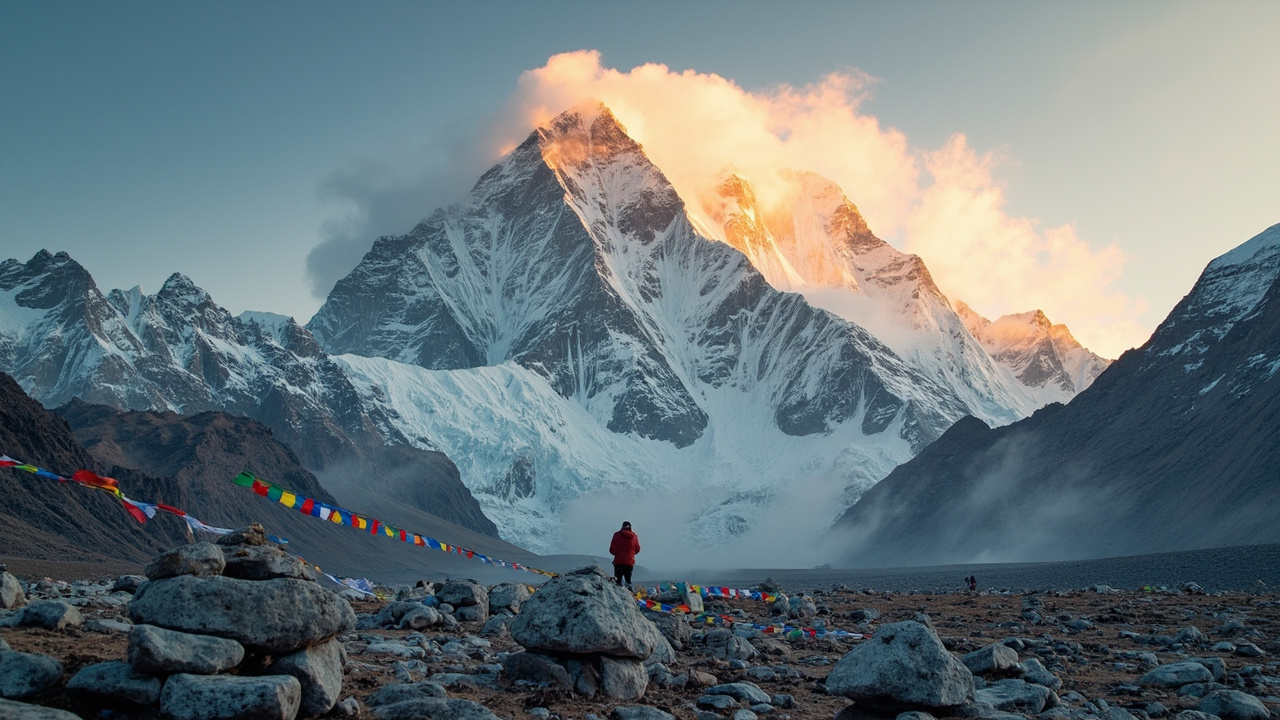
Base camp itself is a flat, windswept plain at 5,150 meters, dotted with tents and prayer flags. The famous “Everest Base Camp” stone marker sits at the far end, and beyond it, a restricted path leads to the advanced base camp where climbers prepare. You can’t go further without a climbing permit. The mountain itself dominates the horizon, and on a clear day, the plume of snow blowing off the summit is visible from miles away.
📍 Location: Tingri County, Shigatse Prefecture, about 110 km (68 miles) south of the town of Shegar.
🎟️ Entry fee: Included in your tour package. Standalone entry is approximately $25 (CNY 180) for the base camp area, but you’ll have already paid for it through your agency.
🕒 Opening hours: The gate is staffed 24/7, but the tent camp operates from May to October. From November to April, only the Rongbuk guesthouse is open, and the road can close due to snow.
🚕 How to get there: From Lhasa, it’s a 2-day drive via the Friendship Highway (G318). Most tours stop overnight in Shigatse or Shegar. The final 100 km from Shegar to base camp takes about 3 hours due to the mountain pass.
☀️ When to visit: May and September–October offer the clearest skies. June to August brings more clouds but warmer temperatures. Winter is brutally cold and often impassable.
💡 Insider tips:
- The tent guesthouses at base camp are basic but warm. Ask for the ones closest to the stone marker for the shortest morning walk.
- Bring your own sleeping bag liner. The provided bedding is washed rarely, if ever.
- The public toilet is a squat over a pit. Bring your own toilet paper and hand sanitizer.
- Mobile signal is surprisingly good at base camp, but don’t count on it. Download offline maps before you leave Lhasa.
- The sunset light on Everest is better than sunrise. The mountain glows pink for about 20 minutes before dark.
I met a retired teacher from Melbourne at the stone marker. She had saved for three years to make this trip and cried when she saw the mountain. I didn’t cry, but I understood.
2. Rongbuk Monastery — The Highest Monastery on Earth
The guesthouse at Rongbuk Monastery is where you’ll likely spend the night before or after base camp. It’s a simple, concrete building with bunk beds and a dining room that serves surprisingly decent fried rice and noodle soup. The monastery itself, at 4,980 meters (16,340 feet), is the highest in the world, and its whitewashed walls glow against the brown hills.
The view of Everest from the monastery courtyard is, in my opinion, better than the one from base camp. The mountain rises directly behind the monastery’s golden roof, and the foreground of prayer flags and stone walls gives the scene a human scale that the flat plain of base camp lacks.
📍 Location: 8 km (5 miles) before Everest Base Camp, in the Rongbuk Valley.
🎟️ Entry fee: Included in your tour. Standalone entry is about $4 (CNY 30).
🕒 Opening hours: The monastery is open from sunrise to sunset. The guesthouse operates year-round, though the road may close in winter.
🚕 How to get there: Your tour vehicle will stop here on the way to base camp. If you’re hiking, it’s a 2-hour walk from base camp, but at this altitude, plan for 3.
☀️ When to visit: Any time the road is open. The guesthouse is warmer than the tents at base camp, so consider staying here instead if you’re sensitive to cold.
💡 Insider tips:
- The guesthouse has a small shop selling instant noodles, biscuits, and bottled water. Prices are double what you’d pay in Lhasa, so stock up beforehand.
- Ask for a room on the second floor facing the monastery. The sunrise view is worth the extra stairs.
- The monks here are used to foreign visitors and are happy to chat if you speak some Tibetan or Mandarin.
- There’s a small stupa behind the monastery with a clear view of Everest. Most tourists miss it.
I once watched a group of monks play a card game in the courtyard, completely unfazed by the altitude. One of them offered me a sip of his sweet butter tea. It was an acquired taste I never fully acquired.
3. Yamdrok Lake — The Turquoise Stop You Didn’t Expect
The drive from Lhasa to Shigatse passes over the Kampala Pass, and at the top, you’ll see Yamdrok Lake spread out below. It’s a deep turquoise blue that looks photoshopped, even in person. The lake is sacred in Tibetan Buddhism, and pilgrims walk its entire 250 km (155 miles) circumference as an act of devotion.
Most tours stop at the viewpoint for 20 minutes, take photos, and move on. I’d suggest asking your driver for a bit more time. The lake changes color as clouds pass overhead, shifting from turquoise to a deep sapphire. There’s a small path down to the shore, and the water is cold enough to make your hand go numb in seconds.
📍 Location: 100 km (62 miles) southwest of Lhasa, on the road to Gyantse.
🎟️ Entry fee: Free. The viewpoint at Kampala Pass has a small parking fee of about $1 (CNY 7).
🕒 Opening hours: Always open. The pass can be foggy in the morning, so aim for late morning or early afternoon.
🚕 How to get there: On the Lhasa–Shigatse route, your tour will pass this viewpoint. If you’re on a day trip, it’s a 2-hour drive from Lhasa.
☀️ When to visit: May to October. The lake freezes in winter, and while it’s still beautiful, the turquoise color is muted under the ice.
💡 Insider tips:
- The yaks at the viewpoint are photo props. The owners will charge you about $2 (CNY 15) for a photo. Negotiate if you want multiple shots.
- There’s a small tea house at the pass serving instant noodles and thermos tea. The tea is free with a noodle purchase.
- The road down to the lake is steep and unpaved. Only go if your driver is comfortable with the descent.
- The lake’s color is best in the late afternoon when the sun is lower in the sky.
A Tibetan woman at the viewpoint tried to sell me a string of fake coral beads. I declined, and she laughed, then offered me a piece of dried yak meat instead. It was chewy and salty, and I bought a bag to take on the road.
4. Gyantse Kumbum — The Stupa You Shouldn’t Skip
Gyantse is a small town that most tours pass through on the way to Shigatse. The Kumbum, a nine-tiered stupa with 77 chapels, is the town’s main attraction. It’s a chunky, whitewashed structure that looks like a wedding cake designed by someone who loved geometry.
The interior is a maze of narrow staircases and dim chapels, each with its own set of murals and statues. Some of the paintings date back to the 15th century, and the colors are still vivid. The top tier offers a panoramic view of the town and the surrounding valley, with the Gyantse Dzong fortress visible on the hill above.
📍 Location: Pelkor Chode Monastery complex, Gyantse town center.
🎟️ Entry fee: $5 (CNY 35) for the monastery complex, which includes the Kumbum.
🕒 Opening hours: 9:00 AM to 6:00 PM in summer, 9:30 AM to 5:30 PM in winter.
🚕 How to get there: Your Lhasa–Shigatse tour will pass through Gyantse. If you’re traveling independently, buses from Lhasa to Gyantse take about 5 hours.
☀️ When to visit: Year-round. The interior is dim, so the murals are visible regardless of the time of day.
💡 Insider tips:
- The staircases are steep and uneven. Take your time and use the handrails.
- Some chapels are locked. Ask the caretaker to open them if you’re interested in specific murals.
- The rooftop offers a great view of the Gyantse Dzong. The fortress is a 30-minute uphill walk if you have the energy.
- Photography is allowed in most chapels, but flash is prohibited to protect the murals.
I had the Kumbum almost to myself on a Tuesday afternoon. A young monk followed me up the stairs, pointing out the best murals and explaining the stories behind them in broken English. He refused the tip I offered, then asked if I had any extra batteries for his flashlight.
5. Shigatse Tashilhunpo Monastery — The Panchen Lama’s Seat
Tashilhunpo is the largest functioning monastery in Tibet, home to over 800 monks. It’s the seat of the Panchen Lama, the second-highest figure in Tibetan Buddhism after the Dalai Lama. The monastery is a walled city of white and red buildings, with the golden-roofed Maitreya Chapel as its crown jewel.
The Maitreya Chapel houses a 26-meter (85-foot) bronze statue of the future Buddha, gilded in gold and studded with jewels. It’s the largest seated bronze Buddha in the world, and the sheer scale of it is overwhelming. You have to crane your neck to see the face, which is serene and slightly smiling.
📍 Location: The western edge of Shigatse, the second-largest city in Tibet.
🎟️ Entry fee: $7 (CNY 50).
🕒 Opening hours: 9:00 AM to 5:00 PM. The main chapels close for lunch from 12:00 to 2:00 PM.
🚕 How to get there: Shigatse is a 5–6 hour drive from Lhasa. Your tour will likely stay overnight here. The monastery is a 20-minute walk from the city center, or a short taxi ride for about $1 (CNY 7).
☀️ When to visit: Year-round. The morning hours are best, as the monks’ chanting sessions happen between 9:00 and 11:00 AM.
💡 Insider tips:
- The kora (pilgrimage path) around the monastery walls offers great views of the city and the surrounding mountains. It takes about an hour at a slow pace.
- The butter lamps in the chapels are constantly refilled by monks. The smell of yak butter is strong, so be prepared.
- There’s a small market outside the monastery gates selling prayer beads, thangkas, and other religious items. Bargaining is expected.
- The rooftop of the Maitreya Chapel has a small terrace with a view over the entire monastery complex.
I sat in the courtyard for an hour, watching monks debate philosophy. Their arguments were loud and animated, with lots of hand clapping and foot stomping. It looked like a fight, but it was just how they studied.
6. Lhasa Potala Palace — The Icon You’ve Seen in Photos
The Potala Palace is the postcard image of Tibet, a white and red fortress that rises 300 meters (1,000 feet) above the Lhasa valley. It was the winter residence of the Dalai Lamas from the 17th century until 1959, and it’s now a museum. The palace has over 1,000 rooms, though only a fraction are open to visitors.
The visit is a steep climb up the zigzag ramps to the entrance, and at 3,700 meters (12,100 feet), it’s a workout. The interior is a maze of dark chapels, golden stupas, and rooms filled with the personal belongings of past Dalai Lamas. The most impressive is the stupa of the 5th Dalai Lama, which is covered in 3,700 kilograms (8,150 pounds) of gold.
📍 Location: The Marpo Ri hill, in the center of Lhasa’s old town.
🎟️ Entry fee: $12 (CNY 85) in the high season (May–October). The ticket office is at the base of the palace.
🕒 Opening hours: 9:30 AM to 4:30 PM. The palace is closed on Mondays and during certain religious festivals.
🚕 How to get there: From the Barkhor area, it’s a 15-minute walk. Alternatively, take a taxi for about $1 (CNY 7). The entrance is at the base of the palace on the east side.
☀️ When to visit: Year-round, but the high season crowds are intense. Go early in the morning or late in the afternoon to avoid the worst of it.
💡 Insider tips:
- You must visit at your ticket’s designated time slot. Arrive 30 minutes early to go through security.
- The palace has a strict dress code. Shoulders and knees must be covered.
- Photography is prohibited inside the chapels. The guards are strict about this.
- The climb to the entrance is steep. Take it slow and carry water.
- The rooftop offers a panoramic view of Lhasa and the surrounding mountains. It’s worth the climb.
I once saw a group of tourists trying to take a selfie with the palace behind them, but the sun was directly behind the building, so they were all squinting. A local guide told them to come back at sunset. They didn’t listen.
7. Jokhang Temple — The Heart of Lhasa
The Jokhang Temple is the most sacred site in Tibetan Buddhism. It’s not the biggest or the most ornate, but it’s the spiritual center of Lhasa, and the crowds of pilgrims prostrating in front of it are a constant presence. The temple was built in the 7th century to house a statue of the Buddha at age 12, which is said to have been brought to Tibet by a Chinese princess.
The interior is a dark, smoky labyrinth of chapels, each with its own murals and statues. The main chapel houses the Jowo Shakyamuni statue, which is covered in gold and jewels and is the most venerated object in Tibet. The queue to see it can be an hour long, but it moves quickly.
📍 Location: The Barkhor Square, in the heart of Lhasa’s old town.
🎟️ Entry fee: $12 (CNY 85).
🕒 Opening hours: 8:00 AM to 6:00 PM. The main chapel is open from 8:00 to 11:30 AM for pilgrims, then opens to tourists from 12:00 PM.
🚕 How to get there: From the Potala Palace, it’s a 20-minute walk through the old town. Taxis are cheap, but the walk is part of the experience.
☀️ When to visit: Year-round. The morning pilgrim hours are the most atmospheric, but also the most crowded.
💡 Insider tips:
- The kora (pilgrimage circuit) around the temple is a must-do. Walk it clockwise, following the flow of pilgrims.
- The rooftop terrace offers a great view of the Potala Palace and the old town. It’s less crowded than the palace’s rooftop.
- The Barkhor market surrounding the temple is a great place to buy souvenirs, but be prepared to bargain hard.
- The temple’s butter lamps are constantly burning. The smell is strong, but it’s part of the experience.
I watched a young pilgrim prostrate herself across the entire Barkhor square, a journey of several hundred meters. Her hands were wrapped in cloth, and her forehead was calloused. I felt like I was intruding on something deeply personal.
8. Namtso Lake — The High-Altitude Lake Worth the Bumpy Ride
Namtso Lake sits at 4,718 meters (15,480 feet), making it one of the highest saltwater lakes in the world. It’s a 4–5 hour drive from Lhasa, and the last 30 kilometers are a washboard of potholes that will rattle your teeth. The lake itself is a deep blue that stretches to the horizon, with the Nyenchen Tanglha mountain range rising behind it.
The drive is worth it. The lake is vast, and on a clear day, the water is so blue it looks like a piece of the sky has fallen to earth. There’s a small monastery on a hill overlooking the lake, and a series of stone stupas along the shore that are perfect for photos.
📍 Location: 250 km (155 miles) north of Lhasa, in the Damxung County.
🎟️ Entry fee: $15 (CNY 100) for the park entrance.
🕒 Opening hours: The gate is open from 8:00 AM to 6:00 PM. The road to the lake is closed in winter due to snow.
🚕 How to get there: You’ll need a private car or a tour. There’s no public transport to Namtso. The drive takes 4–5 hours from Lhasa.
☀️ When to visit: June to September. The lake is frozen from November to May, and while the ice is beautiful, the road is often impassable.
💡 Insider tips:
- The altitude is brutal. Spend a few days in Lhasa before attempting this trip.
- The wind at the lake is constant and strong. Bring a windbreaker, even in summer.
- There are basic guesthouses near the lake, but they’re cold and basic. Most people do this as a day trip.
- The sunset over the lake is spectacular, but the last 30 km of road back to the highway is dangerous in the dark. Leave early.
I saw a group of Chinese tourists trying to take a group photo with the lake behind them. They were all holding their breath and jumping at the same time. The altitude made them dizzy, and they all had to sit down afterward.
9. Sakya Monastery — The Hidden Gem of the Southern Route
Sakya Monastery is often skipped by tours heading directly to Everest, but it’s one of the most unique monasteries in Tibet. It’s the seat of the Sakya sect, one of the four main schools of Tibetan Buddhism, and it’s known for its grey walls and its vast library of ancient texts.
The monastery is a massive fortress-like structure, with walls that are 10 meters (33 feet) thick. The interior is a maze of dark halls, each filled with statues, murals, and thangkas. The library is the highlight, with thousands of manuscripts stacked in shelves that reach the ceiling. Some of the texts are over 700 years old.
📍 Location: Sakya County, about 160 km (100 miles) southwest of Shigatse.
🎟️ Entry fee: $7 (CNY 50).
🕒 Opening hours: 9:00 AM to 6:00 PM.
🚕 How to get there: Your Everest tour may pass through Sakya if your driver takes the southern route. If not, it’s a 3-hour drive from Shigatse.
☀️ When to visit: Year-round. The monastery is less crowded than Tashilhunpo, so you’ll have more space to explore.
💡 Insider tips:
- The library is the main attraction. Ask the caretaker to show you the oldest texts, which are kept in a separate room.
- The monastery’s walls are covered in murals that are in remarkably good condition. Take your time to look at them.
- The town of Sakya is small and quiet. There are a few basic guesthouses if you want to stay overnight.
- The monastery’s gift shop sells reproductions of the ancient texts. They’re a unique souvenir.
I met a monk who had spent 20 years cataloging the library’s manuscripts. He showed me a text that was so old, the pages were crumbling. He handled it with the care of a parent holding a newborn.
10. Everest Panorama Viewpoint — The Photo Spot Locals Know
Most tourists stop at the base camp stone marker and think they’ve seen the best view. They haven’t. About 10 kilometers before base camp, there’s a small pullout on the side of the road that offers a panoramic view of the entire Everest massif, including the north face, the west ridge, and the neighboring peaks of Lhotse and Cho Oyu.
The viewpoint is marked by a small cairn with prayer flags. On a clear day, the view is so expansive that you can see the entire mountain range laid out before you. It’s the kind of view that makes you feel small, in the best possible way.
📍 Location: On the road to base camp, about 10 km (6 miles) before the final checkpoint.
🎟️ Entry fee: Free.
🕒 Opening hours: Always open.
🚕 How to get there: Ask your driver to stop at the pullout. It’s on the left side of the road if you’re heading toward base camp.
☀️ When to visit: The best light is in the late afternoon, when the sun is behind you and the mountains are fully lit.
💡 Insider tips:
- The viewpoint is unmarked, so you’ll need to tell your driver to stop. They’ll know what you’re talking about.
- The wind at this spot is brutal. Hold onto your hat.
- The view is better here than at base camp because you can see the entire mountain, not just the summit.
- There’s a small path up the hill behind the cairn that offers an even higher vantage point. It’s a 10-minute climb.
I’ve stopped at this viewpoint every time I’ve made the trip, and it never gets old. On my last visit, I met a photographer from Japan who had been waiting three days for a clear view. He got it, and he cried.
FAQ summary
For a Tibet Everest Base Camp trip, you must book through a licensed tour agency to obtain the Tibet Travel Permit, which is required for all foreign visitors. The trip from Lhasa takes 4–5 days, costs $1,200–$2,500 (CNY 8,600–18,000) per person, and is best done in May or September–October for clear skies. You’ll need a Chinese visa, and most visitors can use the 240-hour visa-free transit policy if they’re passing through China to a third country. Altitude sickness is the main risk, so acclimatize in Lhasa for at least two days before heading to base camp.
FAQ
Q: Do I need a special permit to visit Everest Base Camp from Tibet? A: Yes. You need a Tibet Travel Permit, which can only be arranged through a licensed tour agency in Lhasa. Your agency will also handle the Alien Travel Permit for the base camp area. You cannot obtain these permits independently.
Q: How long does the trip from Lhasa to Everest Base Camp take? A: The drive takes 4–5 days, depending on your itinerary. Most tours spend two nights on the road, one in Shigatse and one at Rongbuk Monastery, before returning to Lhasa. Add 2–3 days in Lhasa for acclimatization.
Q: What is the best time of year to visit Everest Base Camp? A: May and September–October offer the clearest skies and the best views of the summit. June to August brings more clouds and rain, while November to April is extremely cold and the road may be closed due to snow.
Q: How much does a Tibet Everest Base Camp tour cost? A: A 7–10 day tour from Lhasa costs $1,200–$2,500 (CNY 8,600–18,000) per person, depending on the level of accommodation and the size of the group. This includes permits, transport, guides, and basic lodging.
Q: What is the altitude at Everest Base Camp, and how do I avoid altitude sickness? A: Base camp is at 5,150 meters (16,900 feet). Spend at least two days in Lhasa (3,650 meters) before heading to base camp, drink plenty of water, avoid alcohol, and consider taking acetazolamide (Diamox) after consulting your doctor.
Q: Can I use my credit card or need cash in Tibet? A: Cash is king in Tibet, especially in rural areas. ATMs are available in Lhasa and Shigatse, but they may not accept foreign cards. Bring enough cash for the trip, and set up Alipay or WeChat Pay before you arrive, as they’re widely accepted in cities.
Q: Do I need a VPN for my phone in Tibet? A: Yes. Google, WhatsApp, Instagram, and Facebook are blocked in China, and the restrictions are stricter in Tibet. Install a reliable VPN before you arrive, and consider getting a Chinese SIM card for data coverage on the road.
The Honest Wrap-up
This trip isn’t for everyone. The altitude will make you feel terrible at some point, the roads are rough, and the accommodation is basic. But if you’re willing to endure the discomfort, the view of Everest from the north side is something you’ll never forget. It’s not the easiest way to see the world’s highest mountain, but it’s the most raw and authentic.
If you’re short on time or prefer comfort, consider the Nepal side instead. But if you want to experience Tibet, with its monasteries, its pilgrims, and its vast, empty landscapes, then this is the trip for you. My advice: book through a reputable agency, give yourself extra days for acclimatization, and don’t rush. The mountain will still be there.
Topics
More guides you may like

Top 10 Bridges in China
China's bridges are engineering marvels spanning mountains, rivers, and seas. Here are 10 of the most spectacular, from ancient stone to modern steel.
8 min read

Top 10 Buddhist Sites in China
From the Leshan Giant Buddha to the Dunhuang Caves, these 10 Buddhist sites represent 2,000 years of China's spiritual heritage.
9 min read

Top 10 Day Trips from Beijing You Shouldn't Miss
Beijing is packed with history, but some of China's best experiences are just a few hours away. Here are 10 day trips that will transform your visit.
9 min read

Top 10 Hidden Gems in China Off the Beaten Path
Beyond the Great Wall and Terracotta Warriors, China has incredible hidden destinations few tourists ever reach. Here are 10 underrated gems worth the detour.
9 min read

Top 10 Markets and Shopping Streets in China
From Shanghai's Bund to Beijing's Silk Street - 10 markets where foreigners can haggle, explore, and bring home authentic Chinese goods.
9 min read

Top 10 Museums in China You Shouldn't Miss
China's museums span 5,000 years of civilization. These 10 - from the Palace Museum to Xi'an's terracotta gallery - are unmissable for culture lovers.
9 min read