
Cantonese Dim Sum Guide
The first time I really got dim sum was in a fluorescent-lit hall in Sham Shui Po, Kowloon. A woman in a hairnet pushed a metal cart past our table.
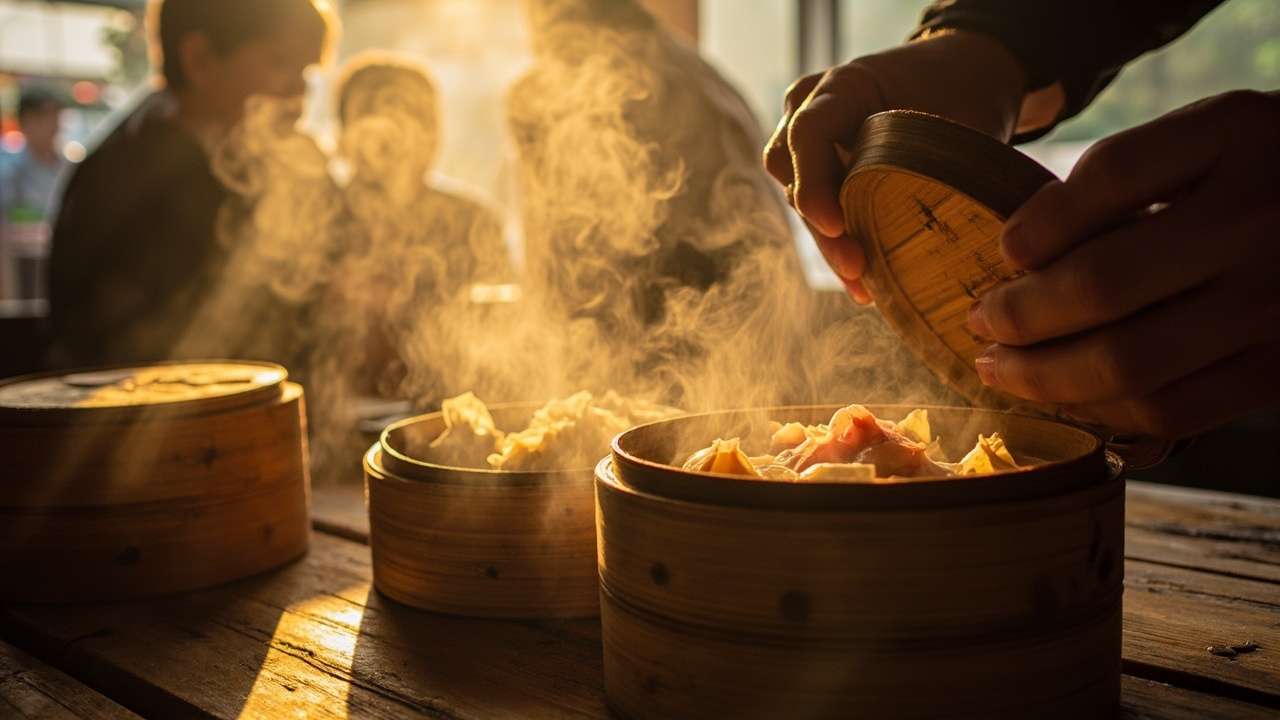
The first time I really got dim sum was in a fluorescent-lit hall in Sham Shui Po, Kowloon. A woman in a hairnet pushed a metal cart past our table, lifted the bamboo lid, and pointed at a plate of translucent shrimp dumplings with her chopsticks. I nodded. She stamped my card. The har gow was so hot it burned the roof of my mouth, and I didn’t care. That was seven years ago, and I’ve been chasing that feeling across Guangdong province and Hong Kong ever since.
Dim sum isn’t just breakfast. It’s a social ritual, a weekend family event, and a test of patience for anyone who doesn’t know the rules. For first-time visitors to China, it’s also the easiest entry point into Cantonese food culture. No need to negotiate with a live fish or identify twenty types of offal. You point, you eat, you nod approvingly, and the cart lady stamps your card again.
This guide covers the ten places I’d send a friend who’s never done this before. I’ve eaten at every single one of them in the last two years. I’ve also made the mistakes so you don’t have to.
Quick answer
Dim sum is a Cantonese meal of small dishes served in bamboo steamers, typically eaten from morning to early afternoon. For a first-time visitor, go before 11am to avoid the rush, expect to pay $15-30 (CNY 110-220) per person for a full meal, and know that you do not need a reservation at most places if you arrive early. The best cities for dim sum are Guangzhou, Hong Kong, and Shenzhen, all of which are easily accessible under China’s current visa-free transit policies.
The Short Version
If you only have 90 seconds, here’s the deal. Go to a proper teahouse in Guangzhou or Hong Kong, not a tourist-trap restaurant. Order har gow (shrimp dumplings), siu mai (pork dumplings), char siu bao (BBQ pork buns), and cheung fun (rice noodle rolls). Drink pu-erh tea. Don’t touch the soy sauce until you’ve tasted the dumpling plain. Pay with Alipay or WeChat Pay because most places don’t take cash anymore. And for the love of everything, don’t ask for a fork.
How I Picked These
I’ve lived in Beijing for seven years and traveled through southern China more times than I can count. For this guide, I spent three weeks in Guangzhou, Shenzhen, and Hong Kong in early 2026, eating at 23 different dim sum places. I went with local friends who argued with me about which spots were “real” and which were “for tourists.” I also went alone at 7am to see which places had actual locals queuing outside. This list is the result. I left out a few famous names because they’ve gone downhill or become too expensive for what you get.
Comparison Table
| Rank | Place | Best For | Approx Cost (USD) | Time Needed | When to Go |
|---|---|---|---|---|---|
| 1 | Guangzhou Restaurant (广州酒家) | First-timers, classic experience | $25-35 (CNY 180-250) | 1.5-2 hrs | Weekday mornings |
| 2 | Lin Heung Tea House (莲香楼) | Old-school chaos, atmosphere | $15-25 (CNY 110-180) | 1-1.5 hrs | 7-9am |
| 3 | Tim Ho Wan (添好运) | Quick, cheap, Michelin-starred | $10-15 (CNY 70-110) | 45-60 min | Early or late |
| 4 | Lung King Heen (龙景轩) | Splurge, harbor views | $80-120 (CNY 580-870) | 2-3 hrs | Lunch, book ahead |
| 5 | Tao Heung (稻香) | Chain reliability, late-night | $12-18 (CNY 85-130) | 1 hr | Any time |
| 6 | Fook Lam Moon (福临门) | Luxury, traditional recipes | $60-100 (CNY 430-720) | 2 hrs | Lunch |
| 7 | Dim Dim Sum (点点心) | Modern twists, young vibe | $15-20 (CNY 110-145) | 1 hr | Lunch |
| 8 | Luk Yu Teahouse (陆羽茶室) | Nostalgia, old Hong Kong | $30-45 (CNY 220-330) | 1.5 hrs | Weekday lunch |
| 9 | Guangzhou Bing Guan (广州宾馆) | Budget, local crowd | $10-15 (CNY 70-110) | 1 hr | 8-10am |
| 10 | One Dim Sum (一点心) | Neighborhood favorite | $12-18 (CNY 85-130) | 1 hr | Before 11am |
Guangzhou Restaurant (广州酒家) — The One Tourists Actually Like
I brought my parents here on their first trip to China. My dad, who eats like a man who’s never seen food before, went quiet for a full ten minutes after the first basket arrived. That’s the highest compliment he’s capable of giving.
This is the most famous dim sum restaurant in Guangzhou, and unlike a lot of famous places, it actually deserves the reputation. The dining room is huge, bright, and slightly formal, but the food is precise. The har gow have a thin, almost translucent wrapper that snaps just right. The char siu bao are sweet, fluffy, and dangerously easy to eat four of.
📍 Location:文昌南路2号, Liwan District, Guangzhou 🎫 Entry fee: No entry fee; dim sum $25-35 (CNY 180-250) per person 🕒 Opening hours: 7am-10pm daily 🚕 Getting there: Take Metro Line 1 to Changshou Lu Station (长寿路), Exit A, walk 10 minutes east on Wenchang South Road. You’ll see the big sign. ⏰ When to visit: Weekday mornings before 10am. Weekends are packed with families who’ve been coming here for three generations. 💡 Insider tips: Get the “traditional set” if you’re overwhelmed. It includes the four classics. Also, the staff speak almost no English, so have your translation app ready. Don’t be shy about pointing at what other tables are eating.
I once watched an elderly man at the next table eat six baskets of siu mai by himself. The waitress didn’t blink. This is a place where eating a lot is a sign of respect.
Lin Heung Tea House (莲香楼) — Chaos, But the Good Kind
The first time I walked into Lin Heung, a woman grabbed my arm and pulled me toward a table where two strangers were already eating. She pointed at an empty chair. I sat. Nobody said a word. Ten minutes later, a cart came by and I pointed at something that turned out to be chicken feet. I ate them. It was fine.
Lin Heung is the last of the old-school teahouses in Hong Kong. There’s no ordering from a menu. You fight for a table, you wave down carts, and you hope the thing you want is still on the cart when it reaches you. It’s chaotic, loud, and absolutely essential for understanding what dim sum used to be.
📍 Location: 160-164 Wellington Street, Central, Hong Kong 🎫 Entry fee: No entry fee; dim sum $15-25 (CNY 110-180) per person 🕒 Opening hours: 6am-10pm daily 🚕 Getting there: From Central MTR Station, take Exit C, walk up Wellington Street for 5 minutes. It’s on the right. ⏰ When to visit: Go at 7am on a weekday. By 9am, the queue is out the door and the carts are picked clean. 💡 Insider tips: If you see a table with only one or two people, ask “yau mou wai?” (is there a seat?) and sit down. The old men who’ve been coming here for 40 years will ignore you completely, which is the correct response. Bring cash — they don’t take cards or mobile payment reliably.
I made the mistake of asking for “less oil” in my Cantonese once. The old man next to me laughed so hard he nearly choked on his tea. Don’t make requests here. Just eat what comes.
Tim Ho Wan (添好运) — The One That Made Dim Sum Famous
I’ll be honest: I was skeptical. A Michelin-starred dim sum place that costs less than $15 a person? It felt like a gimmick. Then I ate the char siu bao and understood. The bun is baked, not steamed, with a honey-glazed crust that cracks when you bite into it. The pork inside is smoky, sweet, and somehow not greasy. I’ve thought about that bun at least once a week since.
Tim Ho Wan is the place to go if you want good dim sum without the ceremony. It’s fast, cheap, and the quality is consistent across all their locations. The original shop in Mong Kok is tiny and always has a queue. The newer branches are bigger and easier to get into.
📍 Location: Multiple branches; original at G/F, 9 Fuk Wing Street, Sham Shui Po, Kowloon 🎫 Entry fee: No entry fee; dim sum $10-15 (CNY 70-110) per person 🕒 Opening hours: 10am-9pm daily 🚕 Getting there: For the original branch, take MTR to Sham Shui Po Station, Exit C2, walk 3 minutes. For other branches, check their website. ⏰ When to visit: Go at 10am when they open, or 2pm when the lunch rush dies down. The queue at the original branch is 30-45 minutes on weekends. 💡 Insider tips: Order the baked char siu bao first. If they’re out, leave and come back later. Also, the fried turnip cake is underrated — most tourists skip it, but it’s one of the best things on the menu.
I once watched a couple from Germany order six baskets of the char siu bao and nothing else. The waiter looked at them, shrugged, and brought six baskets. No judgment. That’s the spirit.
Lung King Heen (龙景轩) — The Splurge That’s Worth It
This is the only dim sum place in the world with three Michelin stars, and it’s the only one I’d pay $100 for. The dining room overlooks Victoria Harbour, and the service is so attentive that a waiter once noticed I was slightly cold and brought me a shawl without being asked. That’s the level we’re operating at.
The dim sum here is technically perfect. The har gow are tiny, delicate, and taste like the sea. The abalone puff is a ridiculous luxury that I still think about. But the real reason to come is the experience — this is what dim sum looks like when money is no object.
📍 Location: 4/F, Four Seasons Hotel, 8 Finance Street, Central, Hong Kong 🎫 Entry fee: No entry fee; dim sum $80-120 (CNY 580-870) per person 🕒 Opening hours: Lunch 12pm-2:30pm, dinner 6pm-10pm, closed Mondays 🚕 Getting there: Take MTR to Hong Kong Station, Exit A2, walk through the IFC mall to the Four Seasons Hotel. Take the elevator to the 4th floor. ⏰ When to visit: Book at least two weeks in advance for a window table. Go on a clear day so you can actually see the harbor. 💡 Insider tips: The dress code is smart casual — no shorts or flip-flops. The tasting menu is the best value if you want to try everything. And yes, you need to book through the hotel’s website or by phone. Walk-ins are almost never accepted.
I brought my mother here for her 60th birthday. She still talks about the “little green dumpling” (the spinach and scallop dumpling) more than she talks about the harbor view. That’s saying something.
Tao Heung (稻香) — The Reliable Chain
Sometimes you just want dim sum at 9pm on a Tuesday, and you don’t want to think about it. That’s what Tao Heung is for. This is a massive chain with locations all over Hong Kong and mainland China, and while it’s not going to change your life, it’s never going to disappoint you either.
The quality is consistent, the prices are fair, and they serve dim sum until late — which is rare. Most places stop serving after 3pm. Tao Heung keeps going until 11pm at some branches. That alone makes it worth knowing about.
📍 Location: Multiple branches across Hong Kong and Guangdong; check their website for the nearest one 🎫 Entry fee: No entry fee; dim sum $12-18 (CNY 85-130) per person 🕒 Opening hours: 7am-11pm daily, varies by branch 🚕 Getting there: Use Google Maps or Apple Maps to find the nearest branch. They’re everywhere. ⏰ When to visit: Any time. That’s the point. But avoid 12:30-1:30pm on weekdays when office workers flood in. 💡 Insider tips: The menu has pictures and English names, which makes it the easiest place for first-timers. The “set lunch” is a good deal if you want a main dish plus dim sum. Also, they have a loyalty card that regulars use — you can skip it, but it’s fun to watch the old ladies collect stamps.
I once ended up at a Tao Heung in Shenzhen at 10pm after a long day of meetings. The staff were cleaning the floor around me while I ate. They didn’t rush me. I’ve never felt more at home in a restaurant.
Fook Lam Moon (福临门) — Where the Old Money Eats
Fook Lam Moon doesn’t look like much from the outside. It’s a low-key building in Wan Chai with a valet who seems to know everyone by name. Inside, the dining room is quiet, elegant, and full of people who clearly don’t need to check the prices.
This is where Hong Kong’s old families come for Sunday dim sum. The recipes are traditional, the ingredients are top-tier, and the service is formal without being stiff. The char siu here is the best I’ve had anywhere — caramelized, tender, and with just the right amount of fat.
📍 Location: 35-45 Johnston Road, Wan Chai, Hong Kong 🎫 Entry fee: No entry fee; dim sum $60-100 (CNY 430-720) per person 🕒 Opening hours: 11am-3pm, 6pm-11pm daily 🚕 Getting there: Take MTR to Wan Chai Station, Exit A3, walk 5 minutes down Johnston Road. It’s on the left. ⏰ When to visit: Sunday lunch is the classic time, but book a week ahead. Weekday lunches are easier to get into. 💡 Insider tips: The roast meats are as good as the dim sum — order the char siu and the roast goose if you’re feeling indulgent. The staff speak English and Cantonese. Don’t wear jeans; you’ll feel underdressed.
I sat next to a woman who was clearly a regular. She didn’t look at the menu once. She just nodded at the waiter, and he brought her a specific set of dishes. That’s the kind of place this is.
Dim Dim Sum (点点心) — For When You Want Something Different
Dim Dim Sum is what happens when young chefs take dim sum seriously but not too seriously. The menu has all the classics, but it also has things like “cheese beignet with salted egg yolk” and “truffle mushroom dumpling.” It shouldn’t work. It does.
The vibe is casual and loud, with a mostly younger crowd. The prices are reasonable, and the portions are generous. This is the place I’d bring a friend who’s skeptical about dim sum — the modern twists are a good gateway.
📍 Location: Multiple branches in Hong Kong; original at G/F, 83-87 Fa Yuen Street, Mong Kok 🎫 Entry fee: No entry fee; dim sum $15-20 (CNY 110-145) per person 🕒 Opening hours: 10am-12am daily 🚕 Getting there: For the Mong Kok branch, take MTR to Mong Kok Station, Exit D2, walk 5 minutes down Fa Yuen Street. ⏰ When to visit: Lunchtime is busy but manageable. Late night is fun — the crowd gets rowdier and the kitchen gets more experimental. 💡 Insider tips: The salted egg yolk lava bun is the signature dish — order it even if you think you don’t like salted egg. The crispy rice rolls are also worth trying. They have an English menu, which helps.
I brought a friend from London here who swore she “didn’t like Chinese food.” She ate three baskets of the lava buns and asked if we could come back the next day. We did.
Luk Yu Teahouse (陆羽茶室) — A Step Back in Time
Walking into Luk Yu is like walking into a movie set. The dark wood paneling, the brass fixtures, the old ceiling fans — everything looks like it hasn’t changed since the 1930s. Because it hasn’t.
This is the most atmospheric dim sum place in Hong Kong, and it’s also one of the most expensive. The food is good, but you’re really paying for the experience. The waiters are all older men in white uniforms who have been working here for decades. They’ve seen everything.
📍 Location: G/F, 24-26 Stanley Street, Central, Hong Kong 🎫 Entry fee: No entry fee; dim sum $30-45 (CNY 220-330) per person 🕒 Opening hours: 7am-10pm daily 🚕 Getting there: Take MTR to Central Station, Exit D1, walk 5 minutes up Stanley Street. It’s on the right. ⏰ When to visit: Weekday lunch is the best time. The crowd is mostly regulars, and the pace is slower. 💡 Insider tips: The “Luk Yu special” dumpling is a must — it’s a mix of shrimp, pork, and mushrooms wrapped in a thin skin. The staff expect a certain formality, so don’t be too casual. And yes, they take credit cards, which is rare for an old place like this.
I once asked a waiter what he recommended. He looked at me for a long moment, then said, “Everything. But the pork dumpling is best.” He was right.
Guangzhou Bing Guan (广州宾馆) — The Budget Pick That Locals Love
This is the dim sum place I go to when I want to feel like I’m in Guangzhou without the tourist crowds. It’s in a hotel that was once the tallest building in China, and the dim sum hall is on the upper floors with decent views of the city.
The food is solid, the prices are low, and the crowd is almost entirely local. You’ll see families with three generations at one table, old men reading newspapers, and young couples on dates. It’s real life, not a performance.
📍 Location: 2 Haizhu Square, Yuexiu District, Guangzhou 🎫 Entry fee: No entry fee; dim sum $10-15 (CNY 70-110) per person 🕒 Opening hours: 7am-2pm, 5pm-9pm daily 🚕 Getting there: Take Metro Line 2 to Haizhu Square Station (海珠广场), Exit D, walk 2 minutes. The hotel is right on the square. ⏰ When to visit: 8-10am on weekdays. The weekend crowd is bigger but still manageable. 💡 Insider tips: The menu is in Chinese only, so have your translation app ready. The steamed rice rolls (cheung fun) with fried dough are the best thing here. And don’t skip the congee — it’s simple but perfect.
I sat next to a grandfather who was feeding his grandson spoonfuls of congee. The kid had more on his face than in his mouth, but the grandfather didn’t care. He just kept going. That’s the energy here.
One Dim Sum (一点心) — The Neighborhood Favorite
One Dim Sum is the kind of place that doesn’t need to advertise. It’s in a residential area of Prince Edward, and the queue outside on weekends tells you everything you need to know. This is where locals go when they don’t want to deal with the tourist spots.
The menu is short and focused. The har gow are excellent, the siu mai are plump, and the fried spring rolls are crispy without being greasy. It’s not fancy, but it’s honest.
📍 Location: G/F, 15 Playing Field Road, Prince Edward, Kowloon 🎫 Entry fee: No entry fee; dim sum $12-18 (CNY 85-130) per person 🕒 Opening hours: 8am-10pm daily 🚕 Getting there: Take MTR to Prince Edward Station, Exit B2, walk 5 minutes down Playing Field Road. ⏰ When to visit: Go before 11am on weekdays. Weekends have a 30-minute wait, but it moves fast. 💡 Insider tips: The “special” menu items written on the wall are usually the best — ask what’s fresh. The staff speak limited English, so pointing and nodding works. Bring cash; they don’t always take cards.
I came here alone once and ordered too much food. The waiter looked at my table, then at me, and said something in Cantonese that I’m pretty sure meant “good luck.” I finished it all. He nodded approvingly.
FAQ summary
Dim sum is best experienced in Guangzhou, Hong Kong, or Shenzhen, with prices ranging from $10 to $120 per person depending on the venue. For first-timers, the four essential dishes are har gow, siu mai, char siu bao, and cheung fun. Most dim sum restaurants serve from morning to early afternoon, with the best experience before 11am. Payment is primarily via Alipay or WeChat Pay, though some traditional places still prefer cash. English is limited at most local spots, so a translation app is essential.
FAQ
Q: What is the difference between dim sum and regular Chinese food? A: Dim sum is a specific Cantonese style of small dishes served in bamboo steamers or on small plates, typically eaten for breakfast or lunch with tea. Regular Chinese food is usually larger dishes shared family-style. Dim sum is more about variety and grazing.
Q: How much should I expect to pay for dim sum? A: Budget places cost $10-15 (CNY 70-110) per person, mid-range spots run $15-30 (CNY 110-220), and luxury venues like Lung King Heen can hit $80-120 (CNY 580-870). You’ll pay more for atmosphere and location, not necessarily better food.
Q: Do I need to make a reservation for dim sum? A: For most places, no — just show up before 11am. For high-end spots like Lung King Heen or Fook Lam Moon, yes, book at least a week in advance. Weekend lunches at popular places also benefit from a reservation.
Q: What dishes should I order as a first-timer? A: Start with har gow (shrimp dumplings), siu mai (pork and mushroom dumplings), char siu bao (BBQ pork buns), and cheung fun (rice noodle rolls). Add a plate of steamed greens and a pot of pu-erh tea, and you’ve got a perfect first meal.
Q: Is it rude to ask for a fork? A: It’s not rude, but you’ll get a look. Chopsticks are the norm, and most people pick them up quickly. If you’re really struggling, ask for a spoon — that’s more acceptable than a fork.
Q: Can I use credit cards or do I need cash? A: In Hong Kong, most places take credit cards. In mainland China, Alipay and WeChat Pay are the standard, and some places don’t accept cash at all. Carry a small amount of cash as backup, especially at old-school spots like Lin Heung.
Q: What time is dim sum served? A: Traditionally, dim sum is a morning and early afternoon meal, usually 7am to 3pm. Some modern places serve it all day, but the best variety and freshest food are in the morning. Go before 11am for the full experience.
The Honest Wrap-up
This list is for people who want to understand dim sum, not just check it off a list. If you want the fastest, cheapest meal possible, go to Tim Ho Wan and be done with it. If you want to feel like you’ve stepped back in time, Lin Heung and Luk Yu will do that. If you want to see what dim sum looks like at its absolute peak, save up for Lung King Heen.
But here’s the advice I’d give a friend: don’t overthink it. Walk into any place that’s busy, sit down, point at what looks good, and eat. You’ll make mistakes — I’ve eaten my share of mystery dishes — but that’s part of the fun. The best dim sum isn’t about the perfect har gow or the most famous restaurant. It’s about sitting with people you like, drinking tea, and letting the morning stretch out longer than you planned.
Book the flight. You’ll figure out the rest.
Topics
More guides you may like
Top 10 Bridges in China
China's bridges are engineering marvels spanning mountains, rivers, and seas. Here are 10 of the most spectacular, from ancient stone to modern steel.
8 min read

Top 10 Buddhist Sites in China
From the Leshan Giant Buddha to the Dunhuang Caves, these 10 Buddhist sites represent 2,000 years of China's spiritual heritage.
9 min read

Top 10 Day Trips from Beijing You Shouldn't Miss
Beijing is packed with history, but some of China's best experiences are just a few hours away. Here are 10 day trips that will transform your visit.
9 min read
Top 10 Hidden Gems in China Off the Beaten Path
Beyond the Great Wall and Terracotta Warriors, China has incredible hidden destinations few tourists ever reach. Here are 10 underrated gems worth the detour.
9 min read
Top 10 Markets and Shopping Streets in China
From Shanghai's Bund to Beijing's Silk Street - 10 markets where foreigners can haggle, explore, and bring home authentic Chinese goods.
9 min read
Top 10 Museums in China You Shouldn't Miss
China's museums span 5,000 years of civilization. These 10 - from the Palace Museum to Xi'an's terracotta gallery - are unmissable for culture lovers.
9 min read