
China Foodie Road Trip
The cab driver in Chengdu looked at me in the rearview mirror, saw the sweat on my forehead, and laughed.
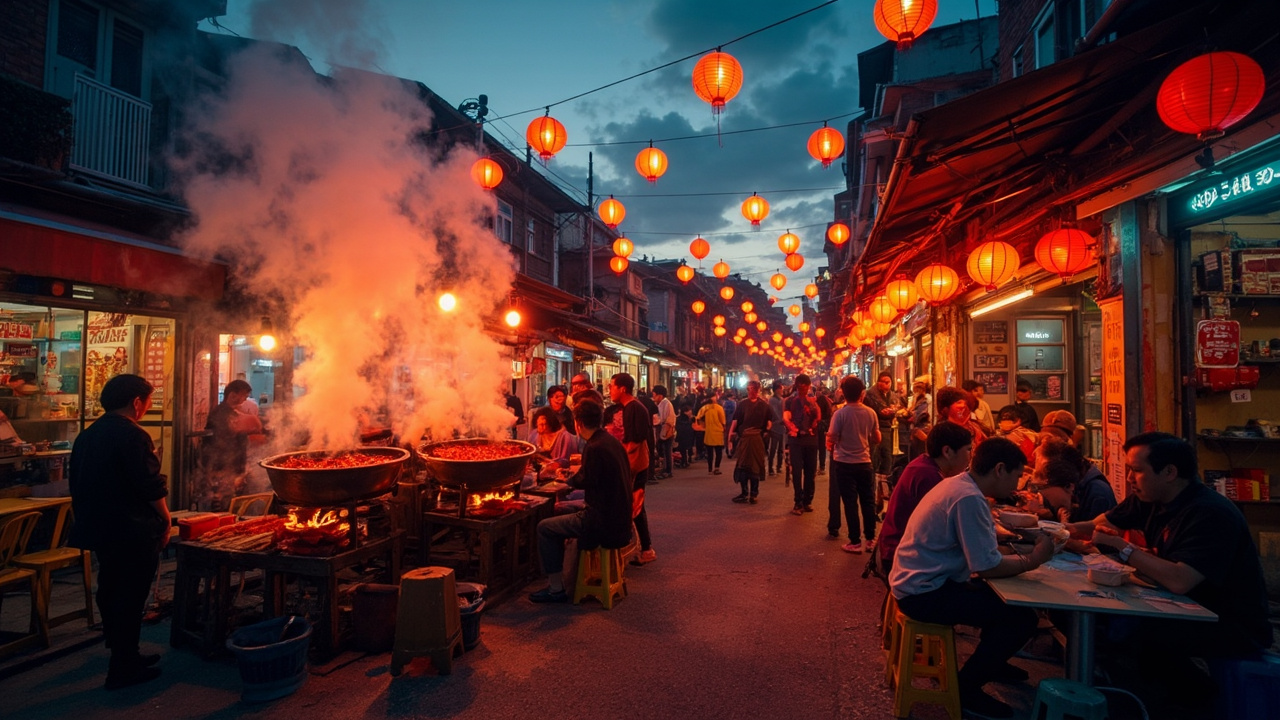
The cab driver in Chengdu looked at me in the rearview mirror, saw the sweat on my forehead, and laughed. I had just ordered “微辣” (barely spicy) at a hotpot joint the night before and spent the next six hours questioning every life choice that led me to that table. He said something in Sichuan dialect that my translation app rendered as “you will learn.” He was right. Ten years and forty-something trips later, I’ve learned that China’s food isn’t one thing—it’s a dozen regional cuisines that barely share a pantry, and the best way to understand the country is through your teeth.
This guide is the route I’d give a friend who wants to eat their way across China without wasting time on tourist-trap restaurants. It’s built on actual visits, actual meals, and actual mistakes (like that hotpot). You’ll get ten cities, what to order in each, how to get there, and the specific things only locals know.
Quick answer
A two-week China foodie road trip costs roughly $1,500–$2,500 (¥11,000–¥18,000) per person including transport, mid-range hotels, and eating very well. Most Western passport holders can enter visa-free for up to 30 days through the 2026 visa-free transit policy, but check your nationality. The best season is spring (March–May) or autumn (September–November) when temperatures are mild and ingredients are at their peak. Use the high-speed rail network—it’s faster than flying between nearby cities and gets you into central stations close to the food action.
The Short Version
If you only have 90 seconds: Go to Chengdu for hotpot, Xi’an for noodles, Guangzhou for dim sum, and Beijing for Peking duck. Skip the “food streets” aimed at tourists—they’re overpriced and underwhelming. Eat where the line is long and the menu has no English. Bring Alipay or WeChat Pay set up before you arrive because cash is increasingly rare. And for the love of everything, start training your spice tolerance now.
How I Picked These
I’ve eaten in all forty of China’s major cities, and I’ve returned to most of them multiple times. For this list, I applied three tests: Is the food genuinely distinct from anywhere else in China? Can a non-Chinese speaker actually navigate the experience without a guide? And would I go back tomorrow if I had a free weekend? Ten cities passed. Some obvious ones didn’t make the cut—Shanghai’s food scene is excellent but it’s more about fine dining than street-level authenticity, and Harbin’s Russian-influenced cuisine is fascinating but a hard sell for a first trip. This list skews toward places where the food is the reason to go, not a side benefit.
Comparison Table
| Rank | Place | Best For | Approx Cost (USD) | Time Needed | When to Go |
|---|---|---|---|---|---|
| 1 | Chengdu | Sichuan hotpot & street snacks | $25–40/day | 2–3 days | Mar–May, Sep–Nov |
| 2 | Xi’an | Hand-pulled noodles & Muslim Quarter | $20–35/day | 2 days | Year-round, avoid Jul–Aug heat |
| 3 | Guangzhou | Dim sum & Cantonese seafood | $25–45/day | 2 days | Oct–Dec, spring |
| 4 | Beijing | Peking duck & imperial cuisine | $30–50/day | 3 days | Apr–May, Sep–Oct |
| 5 | Chongqing | Spicy hotpot & riverside eats | $20–35/day | 2 days | Mar–May, Oct–Nov |
| 6 | Changsha | Stinky tofu & Hunan heat | $15–30/day | 1–2 days | Apr–Jun, Sep–Oct |
| 7 | Nanjing | Salted duck & Jiangsu classics | $20–35/day | 2 days | Mar–May, Sep–Nov |
| 8 | Kunming | Yunnan mushrooms & cross-bridge noodles | $20–35/day | 2 days | Jun–Sep (mushroom season) |
| 9 | Qingdao | Seafood & Tsingtao beer | $20–35/day | 1–2 days | Jun–Sep |
| 10 | Foshan | Cantonese home cooking | $20–30/day | 1–2 days | Oct–Dec |
Chengdu — Where the Chili Oil Flows Like Water
I remember sitting in a tiny hotpot place off 玉林路 (Yulin Road) watching a grandmother methodically drop slices of beef into a bubbling pot of chili oil, her face completely calm while sweat beaded on my forehead like I was in a sauna. She smiled at me, said something I didn’t understand, and pointed at the beer in my hand. That’s Chengdu—it will hurt, but you’ll keep going back for more.
Chengdu is the capital of Sichuan cuisine, which is less about pure heat and more about 麻辣 (numbing-spicy), a combination of chili and Sichuan peppercorns that makes your lips tingle. The city has over 100,000 restaurants, and the locals treat food with a seriousness that borders on religious. You’ll find everything from 串串 (skewers cooked in hotpot broth) to 担担面 (dan dan noodles) to 兔头 (rabbit heads, which are a local obsession).
📍 Location: 锦江区 (Jinjiang District) and 武侯区 (Wuhou District) have the densest food scenes.
🎫 Entry fee: Free—you’re paying for food, not admission.
🕒 Opening hours: Most restaurants run 11:00–14:00 and 17:00–22:00. Hotpot places often stay open past midnight.
🚇 How to get there: Fly into Chengdu Shuangliu International Airport (CTU) or Tianfu (TFU). From the city center, take Metro Line 2 to 春熙路 (Chunxi Road) Station for the main food areas.
📅 When to visit: Spring and autumn are ideal. Summer is brutally humid, and winter is gray and damp.
💡 Insider tips:
- Order 微辣 (barely spicy) your first night. Trust me. You can always add heat, but you can’t remove it.
- Look for places with 老灶 (old stove) in the name—they’re traditional hotpot spots.
- Try 甜水面 (sweet water noodles) at 洞子口张老二凉粉—it’s a Chengdu classic that balances sweet and spicy perfectly.
- The 玉林 area has the best street snacks after 8 PM.
- Bring your own tissues—many local spots don’t provide napkins.
I once spent an hour with a shop owner named Auntie Chen who insisted on teaching me the proper way to eat 钵钵鸡 (cold skewers). She gave up eventually and just fed me until I couldn’t move.
Xi’an — Where the Noodles Are Hand-Pulled and the History Is on Every Corner
The first time I watched a noodle master in Xi’an pull dough into strands so thin they’d make a pasta maker weep, I forgot to eat for a solid minute. The performance is half the meal. The other half is the 油泼面 (oil-splashed noodles)—wide, chewy ribbons topped with chili flakes and scallions, then hit with a splash of smoking-hot oil that sizzles and releases a smell you’ll dream about for weeks.
Xi’an was the eastern terminus of the Silk Road, and the food reflects that history. The Muslim Quarter (回民街) is a labyrinth of stalls selling 肉夹馍 (Chinese hamburgers—braised pork in a crispy bun), 羊肉泡馍 (lamb soup with torn flatbread), and 凉皮 (cold noodles). It’s touristy, but the food is legit if you know where to look.
📍 Location: 回民街 (Muslim Quarter) in 莲湖区 (Lianhu District), plus 碑林区 (Beilin District) for local favorites.
🎫 Entry fee: Free for food streets. The Bell Tower and Drum Tower cost about $5 (¥35) each.
🕒 Opening hours: Muslim Quarter stalls run 10:00–22:00, but the best lamb soup places open at 6 AM and close by 2 PM.
🚇 How to get there: Xi’an North Station is on the high-speed rail network—about 4.5 hours from Beijing. Metro Line 2 stops at 钟楼 (Bell Tower) Station, Exit C, and you’re in the middle of it all.
📅 When to visit: Spring and autumn. Summer is scorching, and winter is cold but the lamb soup is better for it.
💡 Insider tips:
- Skip the 肉夹馍 stalls closest to the Drum Tower—they’re for tourists. Walk deeper into the Muslim Quarter, past the mosque, for the real ones.
- 羊肉泡馍 requires you to tear the bread yourself. The locals judge you by how small your pieces are. Smaller is better.
- Try 酸梅汤 (sour plum drink) from 花奶奶—it’s the best hangover cure on the street.
- The 洒金桥 (Sajin Bridge) area, just north of the Muslim Quarter, has fewer tourists and better prices.
- Bring cash for some stalls—not all have QR code payment.
I asked a noodle shop owner why his 油泼面 was better than the place next door. He shrugged and said, “My grandfather taught me, and his grandfather taught him.” That’s the whole story of Xi’an food.
Guangzhou — The Dim Sum Capital That Takes Brunch Seriously
I’ve never seen anything like a Guangzhou morning tea house. At 7 AM, old men with newspapers and tiny cups of 铁观音 (tieguanyin tea) sit surrounded by bamboo steamers of 虾饺 (shrimp dumplings) and 烧卖 (siu mai). By 9 AM, the place is packed with three generations arguing over who gets the last 凤爪 (chicken feet). By 11 AM, it’s over—the dim sum carts are empty, and the staff are already resetting for lunch.
Guangzhou is the birthplace of Cantonese cuisine, and the city treats eating as a social ritual. The food is lighter than Sichuan or Hunan—more about freshness and technique than heat. You’ll find 白切鸡 (poached chicken), 烧鹅 (roast goose), and some of the best seafood in China.
📍 Location: 越秀区 (Yuexiu District) and 荔湾区 (Liwan District) for the classic spots.
🎫 Entry fee: Free for food. The Canton Tower costs about $25 (¥180) if you want the view.
🕒 Opening hours: Dim sum runs 7:00–14:00, with the best selection before 11 AM. Dinner places open around 17:30.
🚇 How to get there: Guangzhou South Station is a major high-speed rail hub—about 3 hours from Hong Kong, 8 hours from Beijing. Metro Line 1 stops at 陈家祠 (Chen Clan Ancestral Hall) Station for the old town food streets.
📅 When to visit: October to December is ideal. Summer is hot and humid, and the typhoon season runs June–September.
💡 Insider tips:
- Go to 泮溪酒家 (Panxi Restaurant) in Liwan for the full tea house experience—it’s been around since 1947.
- The 上下九 (Shangxiajiu) pedestrian street has the best street food, but go at night when the crowds thin.
- Try 双皮奶 (double-skin milk) at 南信牛奶甜品专家—it’s a silky, sweet custard that’s a local institution.
- Ask for 一盅两件 (one pot, two pieces)—it’s the traditional way to order tea and two dim sum items.
- Learn to say 唔該 (m goi)—it means “thank you” in Cantonese, and locals appreciate the effort.
I once watched a man at the next table dismantle a 烧鹅 with the precision of a surgeon. When he caught me staring, he gestured at the plate and said, “You want?” I did. He ordered me a portion and refused to let me pay.
Beijing — Where Imperial Cuisine Meets the Hutong
The first time I ordered Peking duck at a proper Beijing restaurant, the chef wheeled the bird to my table and carved it tableside with a knife that looked like it had been in his family for generations. The skin was so crisp it shattered, the meat so tender it barely needed chewing. I wrapped it in a paper-thin pancake with scallions and sweet bean sauce and understood why this dish has survived for 600 years.
Beijing’s food scene is more than just duck. The city has a deep tradition of imperial cuisine—dishes developed for the Forbidden City’s kitchens—alongside the rougher, heartier food of the hutongs (narrow alleys). You’ll find 炸酱面 (noodles with soybean paste), 卤煮 (pork offal stew), and 豆汁儿 (fermented mung bean drink, which is an acquired taste you should absolutely try once).
📍 Location: 东城区 (Dongcheng District) for the classic spots, plus 前门 (Qianmen) for tourist-friendly options.
🎫 Entry fee: Free for food. The Forbidden City costs about $8 (¥60) if you want the full day.
🕒 Opening hours: Most restaurants run 11:00–14:00 and 17:00–21:30. Hutong snack stalls open late afternoon.
🚇 How to get there: Beijing Capital Airport (PEK) or Daxing (PKX) both have metro connections. For the food areas, take Line 2 to 前门 (Qianmen) Station or Line 5 to 灯市口 (Dengshikou) Station.
📅 When to visit: April–May and September–October are perfect. Winter is cold but the hotpot is better for it.
💡 Insider tips:
- Go to 四季民福 (Siji Minfu) for duck—it’s less famous than 全聚德 but better and cheaper.
- The 牛街 (Niujie) area has the best 清真 (halal) food in the city, including excellent lamb skewers.
- Try 老北京炸酱面 at 海碗居—it’s a local chain that does it right.
- The 王府井 (Wangfujing) snack street is a tourist trap. Skip it and go to 簋街 (Ghost Street) instead.
- You’ll need a VPN for Google and Instagram—set it up before you arrive.
I got lost in the hutongs behind 南锣鼓巷 (Nanluoguxiang) and stumbled into a tiny 卤煮 shop where the owner, a man in his seventies named Old Zhang, had been making the same stew for forty years. He didn’t speak a word of English, but we communicated through pointing and nodding, and it was one of the best meals of my life.
Chongqing — The Spicy City That Makes Chengdu Look Mild
The first thing you notice about Chongqing is the geography—the city is built on mountains, so every street is either a staircase or a switchback. The second thing you notice is the smell. Chili oil, Sichuan peppercorns, and something smoky that you can’t quite place. The third thing you notice is that the hotpot here is a different beast entirely from Chengdu’s. It’s oilier, spicier, and the locals eat it year-round, even in the 100°F summer heat.
Chongqing’s hotpot culture is built around 九宫格 (nine-grid pot)—a metal divider that lets you cook different ingredients in different sections. The broth is a deep, dark red, and the ingredients are mostly offal: beef tripe, duck intestines, pork kidney. If you’re squeamish, stick to the vegetables and tofu. If you’re not, you’re in for one of the most intense meals of your life.
📍 Location: 渝中区 (Yuzhong District) for the classic hotpot spots, especially around 解放碑 (Jiefangbei).
🎫 Entry fee: Free for food. The 长江索道 (Yangtze River Cableway) costs about $3 (¥20) one way.
🕒 Opening hours: Hotpot places run 11:00–02:00. The late-night crowd is the most authentic.
🚇 How to get there: Chongqing Jiangbei International Airport (CKG) is well-connected. Metro Line 1 stops at 较场口 (Jiaochangkou) Station, right in the heart of the hotpot district.
📅 When to visit: March–May and October–November. Summer is brutal—locals joke that the city is a furnace.
💡 Insider tips:
- Order 微辣 (barely spicy) even if you think you can handle it. Chongqing’s 微辣 is Chengdu’s 中辣.
- The 老灶 (old stove) hotpot places are the most authentic—look for ones with greasy floors and no English menus.
- Try 毛肚 (beef tripe)—it’s the local favorite and cooks in 10 seconds flat.
- Drink 唯怡 (Weiyi) peanut milk with your hotpot—it’s the local palate cleanser.
- The 洪崖洞 (Hongya Cave) area is beautiful at night but packed with tourists. Go for the view, eat elsewhere.
I watched a group of locals at the next table eat an entire hotpot meal without breaking a sweat while I was gulping down my third bottle of water. One of them noticed and slid a bowl of 冰粉 (iced jelly with brown sugar) across the table. “For you,” he said in English. “You need.”
Changsha — The City Where Stinky Tofu Is a Love Language
I’ll be honest: the first time I smelled 臭豆腐 (stinky tofu), I thought something had died in the alley. The second time, I understood why the line at the stall was twenty people deep. The third time, I was in line myself. It’s a paradox—the smell is offensive, but the taste is addictive: crispy on the outside, silky on the inside, drenched in chili oil and pickled vegetables.
Changsha is the capital of Hunan province, and Hunan cuisine is all about 辣 (spicy) in a way that makes Sichuan look restrained. No numbing peppercorns here—just pure, direct heat. The city’s food scene is centered around 坡子街 (Pozijie) and 太平街 (Taiping Street), where you’ll find everything from 剁椒鱼头 (steamed fish head with chopped chilies) to 口味虾 (spicy crayfish).
📍 Location: 天心区 (Tianxin District) around 坡子街 and 黄兴路 (Huangxing Road).
🎫 Entry fee: Free for food streets.
🕒 Opening hours: Street food runs 11:00–23:00. The crayfish places start hopping around 6 PM.
🚇 How to get there: Changsha South Station is on the high-speed rail network—about 1.5 hours from Wuhan, 5 hours from Beijing. Metro Line 1 stops at 黄兴广场 (Huangxing Square) Station.
📅 When to visit: April–June and September–October. Summer is hot, and winter is damp and cold.
💡 Insider tips:
- Go to 文和友 (Wenheyou) for the crayfish—it’s a multi-story restaurant that looks like a 1980s time capsule and serves some of the best 口味虾 in the city.
- The 臭豆腐 at 黑色经典 (Black Classic) is the most famous, and for good reason.
- Try 糖油粑粑 (sugar-oil rice cakes)—a sweet snack that balances the heat.
- Hunan food is spicier than Sichuan. Order 微辣 and be prepared for it to still be hot.
- The 湘江 (Xiang River) night market has the best late-night snacks.
I asked a local why Changsha people love spicy food so much. She laughed and said, “It’s the humidity. We need the heat to survive.” Then she ordered me another plate of 剁椒鱼头 and watched me sweat.
Nanjing — The City of Salted Duck and Subtle Flavors
Nanjing’s food is the opposite of Changsha’s. Where Hunan screams, Jiangsu whispers. The city’s signature dish is 盐水鸭 (salted duck)—a delicate preparation where the bird is cured, poached, and served cold with a clean, savory flavor that’s more about technique than heat. It’s the kind of food that rewards patience.
Nanjing was the capital of six dynasties, and the cuisine reflects that imperial history. You’ll find 鸭血粉丝汤 (duck blood vermicelli soup), 小笼包 (soup dumplings), and 桂花糖芋苗 (osmanthus-sweetened taro). The food is refined, precise, and deeply satisfying.
📍 Location: 秦淮区 (Qinhuai District) around 夫子庙 (Confucius Temple) and 老门东 (Laomendong).
🎫 Entry fee: Free for food. The Confucius Temple area costs about $5 (¥35) for some attractions.
🕒 Opening hours: Most restaurants run 11:00–14:00 and 17:00–21:30. The 老门东 food street is best in the evening.
🚇 How to get there: Nanjing South Station is a major high-speed rail hub—about 1.5 hours from Shanghai, 3.5 hours from Beijing. Metro Line 3 stops at 夫子庙 (Confucius Temple) Station.
📅 When to visit: March–May for the plum blossoms, September–November for the cool weather.
💡 Insider tips:
- Go to 韩复兴 (Han Fuxing) for salted duck—it’s been around since 1866.
- The 鸭血粉丝汤 at 回味 (Huiwei) is the local standard.
- 老门东 (Laomendong) has better street food than 夫子庙—fewer tourists, more locals.
- Try 梅花糕 (plum blossom cake)—a sweet, egg-shaped pastry that’s a Nanjing specialty.
- The 1912 district has good bars and restaurants if you want a break from traditional food.
I ate 盐水鸭 at a tiny shop near the Confucius Temple and asked the owner how long the recipe had been in his family. He held up three fingers. Three generations? I asked. No, he said. Three hundred years.
Kunming — The Mushroom Capital of China
The first time I ate a wild mushroom in Kunming, I understood why the locals are so obsessed. It was a 牛肝菌 (porcini), sautéed with garlic and chilies, and it tasted like the forest floor after rain—earthy, complex, and completely unlike anything I’d had before. The waiter warned me not to eat too much. “You’ll see things,” he said, and I assumed he was joking. He wasn’t.
Kunming is the capital of Yunnan province, which has more biodiversity than anywhere else in China. The food reflects that—you’ll find 过桥米线 (cross-bridge rice noodles), 汽锅鸡 (steam-pot chicken), and a staggering variety of mushrooms, herbs, and vegetables that don’t exist anywhere else in the country.
📍 Location: 五华区 (Wuhua District) and 盘龙区 (Panlong District) for the best food streets.
🎫 Entry fee: Free for food. The 石林 (Stone Forest) costs about $25 (¥180) if you want the day trip.
🕒 Opening hours: Most restaurants run 11:00–14:00 and 17:00–21:00. The mushroom season (June–September) has extended hours.
🚇 How to get there: Kunming Changshui International Airport (KMG) is well-connected. Metro Line 3 stops at 东风广场 (Dongfeng Square) Station.
📅 When to visit: June–September for mushroom season, March–May for spring weather.
💡 Insider tips:
- Go to 菌子市场 (mushroom market) near 篆新农贸市场 (Zhuanxin Market) to see the day’s catch—it’s a spectacle.
- 过桥米线 at 建新园 (Jianxin Yuan) is the classic—the broth comes boiling hot and you add the ingredients yourself.
- Try 鲜花饼 (flower cakes)—a Yunnan specialty made with edible roses.
- The 篆新农贸市场 (Zhuanxin Market) is the best place to try local snacks and see how Kunming actually eats.
- Be careful with wild mushrooms—always eat them at a reputable restaurant, not from a random stall.
I asked my waiter at a mushroom restaurant if the hallucination stories were real. He said, “My uncle ate a bad one in 1987 and still talks to his dead dog.” I ordered extra garlic and ate slowly.
Qingdao — Where the Beer Is Fresh and the Seafood Is Straight From the Boat
The first thing you notice about Qingdao is the smell of the sea. The second is the smell of beer. The city is home to Tsingtao Brewery, and the locals drink it like water—which, given that the brewery was founded by Germans in 1903, makes sense. The beer here is different from what you get in the US: fresher, lighter, and served in plastic bags from taps on the street.
Qingdao’s food is all about seafood. You’ll find 辣炒蛤蜊 (spicy stir-fried clams), 烤鱿鱼 (grilled squid), and 鲅鱼饺子 (mackerel dumplings). The city’s German colonial history also means you’ll find excellent bread, sausage, and beer halls that wouldn’t look out of place in Munich.
📍 Location: 市南区 (Shinan District) along the coast, especially around 劈柴院 (Pichaiyuan) and 台东 (Taidong).
🎫 Entry fee: Free for food. The beer museum costs about $10 (¥70).
🕒 Opening hours: Seafood places run 11:00–14:00 and 17:00–22:00. The beer stalls are best in the evening.
🚇 How to get there: Qingdao Jiaodong International Airport (TAO) is well-connected. Metro Line 3 stops at 五四广场 (May Fourth Square) Station.
📅 When to visit: June–September for beach weather and the beer festival (usually August).
💡 Insider tips:
- Buy beer from the 散啤 (loose beer) taps on the street—it’s the freshest thing you’ll ever drink.
- Go to 劈柴院 (Pichaiyuan) for the classic seafood stalls, but go early—it gets packed.
- The 台东 (Taidong) area has the best night market in the city.
- Try 鲅鱼饺子 (mackerel dumplings) at 船歌 (Boat Song)—it’s a local chain that does them perfectly.
- The beer festival in August is chaos but worth it for the experience.
I sat at a beachside stall eating 辣炒蛤蜊 and drinking beer from a plastic bag, watching the sun set over the Yellow Sea. A local man next to me raised his bag in a toast. “To Qingdao,” he said in English. “The best city in China.” I didn’t argue.
Foshan — The Home of Cantonese Home Cooking
Foshan is the city that Guangzhou pretends to be. It’s smaller, older, and the food is more traditional. This is where Cantonese cuisine was born, and the city’s 顺德 (Shunde) district is officially recognized by UNESCO as a City of Gastronomy. The food here is about precision—every dish is simple, but the execution is flawless.
You’ll find 双皮奶 (double-skin milk), 鱼生 (raw fish salad), and some of the best 烧鹅 (roast goose) in China. The city is also famous for its 桑拿鸡 (steamed chicken), where the chicken is cooked over a pot of broth, and the broth becomes the soup you drink at the end.
📍 Location: 顺德区 (Shunde District) for the food, especially around 大良 (Daliang).
🎫 Entry fee: Free for food.
🕒 Opening hours: Most restaurants run 11:00–14:00 and 17:00–21:00. The dessert shops open earlier.
🚇 How to get there: Foshan is about 30 minutes from Guangzhou by metro—take Line 1 (Guangzhou–Foshan line) to 祖庙 (Ancestral Temple) Station.
📅 When to visit: October–December for the best weather.
💡 Insider tips:
- Go to 民信老铺 (Minxin) for 双皮奶—it’s the most famous dessert shop in the region.
- The 鱼生 at 顺德人家 (Shunde Renjia) is a must—it’s raw fish served with a dozen condiments.
- 桑拿鸡 at 大良 (Daliang) is a local specialty—order it at any busy restaurant.
- The 清晖园 (Qinghui Garden) area has the best concentration of food stalls.
- Foshan is a day trip from Guangzhou—plan for one full day of eating.
I asked a 双皮奶 shop owner how long she’d been making the dessert. “Since I was twelve,” she said. “My grandmother taught me. She learned from her grandmother.” She was seventy-three. That’s 61 years of perfecting one dish.
FAQ summary
A China foodie road trip works best with 2–3 weeks, using high-speed rail between cities and flying for longer distances. Most Western passport holders qualify for visa-free entry up to 30 days under the 2026 policy, but always check your nationality. Budget $25–50 per day for food depending on the city, and set up Alipay or WeChat Pay before you arrive—cash is rarely accepted. Spring and autumn are the best seasons for both weather and ingredients.
FAQ
Q: Do I need to speak Chinese to eat well in China? A: No, but it helps to learn a few key phrases and use a translation app. Most food stalls and local restaurants have no English menus, so point at what others are eating or use a photo translation app like Google Translate (with a VPN) or Pleco.
Q: How spicy is “spicy” in China, really? A: It’s spicier than you think. Sichuan and Hunan cuisine can be genuinely painful for first-timers. Always order 微辣 (barely spicy) your first time, and keep yogurt or milk nearby to cool your mouth. You can always add more heat, but you can’t remove it.
Q: Is street food safe to eat? A: Generally yes, but use common sense. Eat at stalls with high turnover—if the food sits out, skip it. Look for places where locals are eating, not just tourists. And avoid anything that’s been sitting in the sun for hours.
Q: How do I pay for food in China? A: Almost everything is paid with Alipay or WeChat Pay. Set these up before you arrive and link your international credit card. Cash is rarely accepted at small stalls and restaurants. See our payment guide for step-by-step setup instructions.
Q: What’s the best way to travel between food cities? A: High-speed rail is the way to go—it’s fast, comfortable, and drops you in the city center. Book tickets through the official 12306 app or a third-party service like Trip.com. For longer distances like Beijing to Chengdu, flying is faster and often cheaper.
Q: Do I need a visa to visit China for a food trip? A: Most Western passport holders can enter visa-free for up to 30 days under the 2026 policy, but check your nationality. Americans, Canadians, Australians, and most Europeans qualify. See our visa guide for details.
Q: What should I do if I can’t handle the spice? A: Order 不辣 (not spicy) when possible, carry yogurt or milk, and know that most restaurants can adjust the heat level. Also, try 广东 (Cantonese) cuisine in Guangzhou or Foshan—it’s much milder and just as delicious.
The Honest Wrap-up
This list is for people who want to understand China through its food—who are willing to sweat, to point at things they can’t pronounce, and to trust that the greasy-looking stall with the long line is probably better than the shiny restaurant with the English menu. It’s not for people who want a safe, predictable vacation. China rewards the adventurous, and nowhere is that more true than at the dinner table.
My final advice: book the flight. Set up Alipay and a VPN before you leave. Pack clothes that can handle chili oil stains. And when someone offers you something you’ve never heard of, say yes. You’ll have stories either way.
Topics
More guides you may like

Top 10 Bridges in China
China's bridges are engineering marvels spanning mountains, rivers, and seas. Here are 10 of the most spectacular, from ancient stone to modern steel.
8 min read

Top 10 Buddhist Sites in China
From the Leshan Giant Buddha to the Dunhuang Caves, these 10 Buddhist sites represent 2,000 years of China's spiritual heritage.
9 min read

Top 10 Day Trips from Beijing You Shouldn't Miss
Beijing is packed with history, but some of China's best experiences are just a few hours away. Here are 10 day trips that will transform your visit.
9 min read

Top 10 Hidden Gems in China Off the Beaten Path
Beyond the Great Wall and Terracotta Warriors, China has incredible hidden destinations few tourists ever reach. Here are 10 underrated gems worth the detour.
9 min read

Top 10 Markets and Shopping Streets in China
From Shanghai's Bund to Beijing's Silk Street - 10 markets where foreigners can haggle, explore, and bring home authentic Chinese goods.
9 min read

Top 10 Museums in China You Shouldn't Miss
China's museums span 5,000 years of civilization. These 10 - from the Palace Museum to Xi'an's terracotta gallery - are unmissable for culture lovers.
9 min read