
Xi'an Muslim Quarter Food Guide
The cab dropped me at the south gate of the Drum Tower, and the first thing I heard wasn't music or chatter.
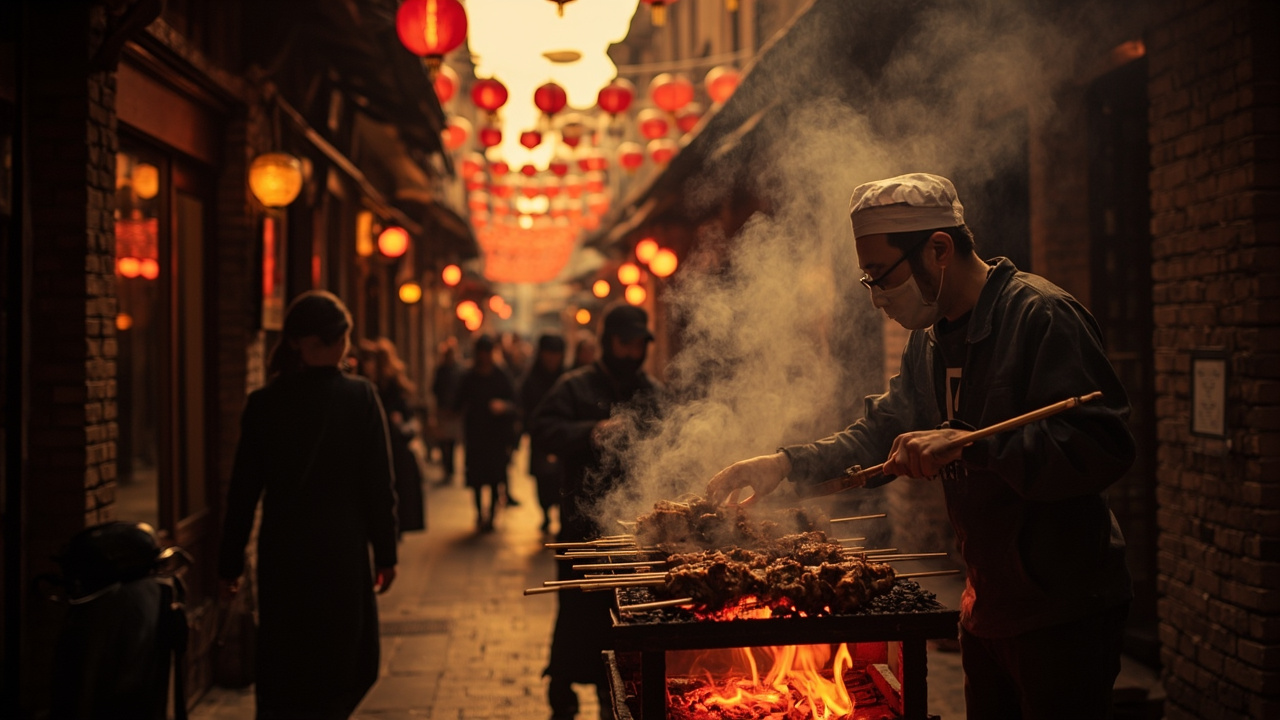
The cab dropped me at the south gate of the Drum Tower, and the first thing I heard wasn’t music or chatter. It was the rhythmic thwack of a hammer against a metal block. A man was making candied hawthorn skewers, flattening the sugar into a brittle sheet with practiced, almost violent, precision. The steam from his pot mixed with the smell of cumin and lamb fat, and I knew I was exactly where I needed to be.
The Muslim Quarter isn’t one street. It’s a tangled web of alleys behind the Drum Tower, the historic heart of Xi’an’s Hui community. For over a thousand years, this neighborhood has been the culinary crossroads of the Silk Road, where spices from the West met the wheat and lamb of the northern plains. For a first-time visitor to China, it’s the most accessible, chaotic, and rewarding food experience you can have without a translator by your side.
This guide is the result of seven years of eating my way through these alleys. I’ve brought friends, family, and grumpy colleagues here. I’ve had meals that made me want to hug strangers, and a few that made me want to find the nearest trash can. Here’s what’s actually worth your time, and what you can skip.
Quick answer
The Xi’an Muslim Quarter is a free, pedestrianized food street network behind the Drum Tower, open daily from late morning until midnight. A filling meal costs $5–15 (CNY 35–110), and the signature dish is yangrou paomo (lamb soup with torn flatbread). Most vendors accept Alipay and WeChat Pay, but bring some cash (CNY 50–100) for the tiny stalls that don’t. It’s safe, chaotic, and absolutely essential to understanding Xi’an.
The Short Version
If you only have 90 seconds: Go hungry. Start at the Drum Tower’s north side and walk straight into Beiyuanmen. Eat the roujiamo (Chinese hamburger) from the stall with the longest line. Drink a pomegranate juice. Try the liangpi (cold noodles) from a shop with seating, not the street carts. Skip the “emperor’s dumpling” tourist traps. Save room for paomo at a sit-down restaurant. And for the love of all that is holy, don’t take photos of people’s food without asking first.
How I Picked These
I didn’t consult a single “top 10” listicle. I walked. I ate. I got lost. I asked the Hui uncles who’ve been running their stalls for decades what they’d recommend, and I watched what the locals ordered, not what the tour groups pointed at. I went back to the same spots multiple times, at different hours, to see if the quality held up. Some famous places failed the test. A few hole-in-the-wall joints became regular stops. This list reflects what I’d actually eat again tomorrow, not what looks good on Instagram.
Comparison Table
| Rank | Place | Best For | Approx Cost (USD) | Time Needed | When to Go |
|---|---|---|---|---|---|
| 1 | Old Sun’s Roujiamo | The iconic Xi’an snack | $2–3 (CNY 15–20) | 15 min | Late morning, before 11am |
| 2 | Laosunjia Paomo | The definitive lamb soup | $6–8 (CNY 45–60) | 45–60 min | Early dinner, 5–6pm |
| 3 | Jia San Guan Tang Bao | Soup dumplings | $4–5 (CNY 30–35) | 30 min | Lunch, weekdays only |
| 4 | Liangpi at the Corner Shop | Cold noodles | $2–3 (CNY 15–20) | 20 min | Afternoon snack |
| 5 | Biángbiáng Noodles Stall | Hand-pulled belt noodles | $3–4 (CNY 25–30) | 20 min | Any time |
| 6 | Yangrou Chuan’er Alley | Lamb skewers | $1–2 per skewer (CNY 8–15) | 30–45 min | Evening, after 7pm |
| 7 | Hulutou at the Old Gate | Braised lamb head | $5–7 (CNY 40–50) | 40 min | Lunch only |
| 8 | Jing Gao Sweet Rice Cake | Traditional dessert | $1–2 (CNY 8–12) | 10 min | Morning |
| 9 | Suantang Shuijiao | Sour soup dumplings | $3–4 (CNY 25–30) | 30 min | Dinner |
| 10 | Eight Treasures Porridge | Sweet breakfast | $2–3 (CNY 15–20) | 15 min | 8–10am |
Old Sun’s Roujiamo — The Line Is the Review
I remember my first bite. The crispy, flaky bread shattered between my teeth, and the braised pork inside was so tender it practically dissolved. The fat, the lean, the cilantro, the chili oil — it all came together in a messy, glorious handful that made me understand why locals eat this for breakfast, lunch, and dinner.
This is the most famous roujiamo stall in Xi’an, and the line tells you everything. It’s not a tourist line. It’s office workers, grandmothers, and taxi drivers. The bread is baked fresh in a clay oven, and the pork is braised for hours in a dark, fragrant broth. You order, you pay, you get your sandwich wrapped in paper. That’s it.
📍 Location: North end of Beiyuanmen, on the west side, look for the crowd. 🎫 Entry fee: Free. Just the cost of food. 🕒 Opening hours: 7am–2pm, or until they sell out. Go early. 🚇 How to get there: Take Metro Line 2 to Zhonglou Station, Exit C. Walk north through the Drum Tower archway into Beiyuanmen. It’s about 300 meters on your left. 🕐 When to visit: Weekday mornings, before 10am. Weekends are a scrum. 💡 Insider tips:
- Order the “lean” (纯瘦) version if you don’t want the fatty bits.
- Ask for extra chili oil. They’ll add it for free.
- Eat it immediately. The bread gets soggy fast.
- Don’t bother with the “beef” version. Pork is the classic.
I once watched a German tourist try to eat one with a knife and fork. The stall owner laughed so hard he gave him a second one for free.
Laosunjia Paomo — The Ritual of Tearing Bread
The first time I was handed a whole, rock-hard flatbread and a bowl of steaming broth, I had no idea what to do. My Chinese friend looked at me with pure pity. “You tear it,” she said. “Small. Smaller than that. Smaller.” It took me twenty minutes to shred that bread into tiny, uniform pieces. It was meditative. And then the waiter took my bowl away, added the lamb and broth, and brought it back bubbling. The bread had absorbed everything. It was rich, lamby, and utterly satisfying.
This is the signature dish of Xi’an, and Laosunjia is the most respected chain for it. The ritual matters. The smaller you tear the bread, the better the texture. It’s not fast food. It’s a slow, deliberate meal.
📍 Location: 5 Beiyuanmen, just north of the Drum Tower. 🎫 Entry fee: Free. 🕒 Opening hours: 10am–10pm daily. 🚇 How to get there: Same as above. It’s on the main drag, impossible to miss. 🕐 When to visit: Weekday early dinners, 5–6pm, to avoid the rush. 💡 Insider tips:
- You’ll be given two pieces of bread. Tear them both. It’s the standard portion.
- Add the pickled garlic and chili paste from the condiment tray. Trust me.
- The “premium” version with extra lamb is worth the $2 upcharge.
- If you’re in a hurry, this isn’t the place. Budget an hour minimum.
I once sat next to a retired Hui man who tore his bread with the precision of a surgeon. He saw me struggling and wordlessly demonstrated the correct size. We didn’t speak the same language, but we understood each other.
Jia San Guan Tang Bao — Soup Dumplings With a Bite
The first rule of guan tang bao is patience. The second rule is don’t burn your tongue. These are not the delicate, thin-skinned soup dumplings of Shanghai. These are Xi’an’s version — thicker, heartier, and filled with a rich, peppery broth that’s meant to wake you up. You bite a small hole in the top, slurp the soup, then eat the rest.
Jia San is a local institution, and the place is always packed with families. The menu is simple: pork, beef, or lamb dumplings, served in a bamboo steamer. The lamb version is the most distinctive, with a gamey depth that you won’t find anywhere else.
📍 Location: 93 Beiyuanmen, further north, on the west side. 🎫 Entry fee: Free. 🕒 Opening hours: 11am–2pm, 5pm–8pm. Closed Mondays. 🚇 How to get there: Walk north on Beiyuanmen for about 500 meters from the Drum Tower. 🕐 When to visit: Weekday lunch, right at 11am. It fills up fast. 💡 Insider tips:
- Order the lamb dumplings. The pork is fine, but the lamb is the point.
- The vinegar and ginger dipping sauce is essential. Don’t skip it.
- Each steamer has 8 dumplings. One steamer per person is the right amount.
- The broth is scalding. Wait at least two minutes before you bite in.
I ordered two steamers out of pure greed and couldn’t finish them. The elderly woman at the next table gave me a look that said, “Young people.” She was right.
Liangpi at the Corner Shop — Cold Noodles for Hot Days
Xi’an gets brutally hot in July. The air shimmers, the crowds press in, and the last thing you want is hot soup. That’s when you need liangpi — cold, slippery wheat noodles tossed with cucumber, bean sprouts, and a vinegary chili oil dressing. It’s refreshing, tangy, and has just enough heat to make you feel alive.
This particular corner shop doesn’t have a name in English. It’s just the place on the corner where the old man pulls the noodles by hand. He’s been doing it for forty years. The noodles are wide, chewy, and slightly translucent. The sauce is a family recipe. He won’t tell me what’s in it.
📍 Location: The corner of Beiyuanmen and Xiyangshi, look for the hand-pulled noodle action. 🎫 Entry fee: Free. 🕒 Opening hours: 11am–8pm, or until the noodles run out. 🚇 How to get there: Walk north on Beiyuanmen, turn left at Xiyangshi. It’s on the corner. 🕐 When to visit: Afternoon, 2–4pm, when the lunch rush is over. 💡 Insider tips:
- Ask for it “spicy” (辣). The default is mild.
- The sesame paste version (麻酱) is creamier and richer. Try both.
- Eat it standing at the counter. That’s how the locals do it.
- Bring small bills. This place is cash-only, and they don’t have change for a $50.
I asked the old man once what his secret was. He just pointed at his hands and laughed. Fair enough.
Biángbiáng Noodles Stall — The Noodle With the Impossible Name
The character for biáng has 58 strokes. It’s the most complex Chinese character in existence, and it exists solely for this noodle. The noodles themselves are equally dramatic — wide, thick belts of wheat dough, slapped against the counter with a sound that echoes down the alley. They’re chewy, substantial, and served with a simple sauce of chili, garlic, and hot oil that sizzles when it hits the bowl.
This stall is loud. The slapping, the sizzling, the shouting of orders. It’s performance art as much as food. The noodles are served in a bowl the size of your head, and you will not finish it alone.
📍 Location: Xiyangshi, about 100 meters west of Beiyuanmen. 🎫 Entry fee: Free. 🕒 Opening hours: 11am–9pm daily. 🚇 How to get there: Walk west on Xiyangshi from Beiyuanmen. You’ll hear it before you see it. 🕐 When to visit: Any time. The show is always on. 💡 Insider tips:
- Share a bowl. It’s enormous.
- The “oil splash” (油泼) version is the classic. Don’t get the tomato sauce one.
- Watch the noodle maker. The technique is mesmerizing.
- The plastic stools are not decorative. Sit on them.
I tried to eat an entire bowl by myself once. I made it halfway before I had to wave the white flag. The noodle maker saw me and gave me a thumbs up. I think it was respect. Or pity.
Yangrou Chuan’er Alley — Lamb Skewers and Cold Beer
As the sun goes down, the skewer stalls come alive. Charcoal grills glow orange, smoke rises into the evening air, and the smell of cumin and lamb fat becomes almost overwhelming. This is the Muslim Quarter after dark, and it’s a completely different place. The tour groups are gone. The locals have taken over.
The skewers are simple: chunks of lamb, marinated, grilled, and dusted with a heavy hand of cumin and chili powder. You order by the dozen. You eat them with your hands. You drink cold beer or, if you’re feeling brave, the local yogurt drink. The best stalls are on the side alleys, not the main drag.
📍 Location: The small alleys branching off Beiyuanmen, particularly around Dapiyuan. 🎫 Entry fee: Free. 🕒 Opening hours: 6pm–midnight. 🚇 How to get there: Walk north on Beiyuanmen, turn right at Dapiyuan. Follow the smoke. 🕐 When to visit: 8–10pm, when the grills are at full capacity. 💡 Insider tips:
- Order the “half fat, half lean” (半肥半瘦) skewers. The fat is where the flavor is.
- The lamb kidney skewers are an acquired taste. I love them. You might not.
- Don’t be afraid to point at what you want. No one expects you to speak Chinese.
- The grilled garlic is a sleeper hit. Order a few.
I once spent an entire evening at one of these stalls, drinking beer and eating skewers with a group of local college students who adopted me for the night. We communicated through a translation app and a lot of pointing. It was one of the best nights I’ve had in China.
Hulutou at the Old Gate — Braised Lamb Head, Done Right
This is not for the faint of heart. Hulutou is a traditional Hui dish made from braised lamb head, served in a rich, gelatinous broth with flatbread and glass noodles. It’s a breakfast food, a hangover cure, and a test of culinary courage. The texture is… challenging. The flavor is deep, gamey, and utterly unique.
The best place is a small, unmarked shop near the old city gate. It’s been there for decades, and the owner is a third-generation hulutou maker. He doesn’t speak English, and his menu is written in Chinese only. But he’ll see you’re a foreigner, smile, and bring you a bowl anyway.
📍 Location: Near the South Gate (Nanmen), on a small alley off Shuncheng Xiang. 🎫 Entry fee: Free. 🕒 Opening hours: 6am–1pm, or until it’s gone. 🚇 How to get there: Take Metro Line 2 to Yongningmen Station, Exit A. Walk east along the city wall for 5 minutes. 🕐 When to visit: 8–9am, when it’s fresh. 💡 Insider tips:
- The “small bowl” (小碗) is plenty for a first-timer.
- Add the pickled chili and garlic. It cuts through the richness.
- The lamb brain is an optional add-on. I’ll leave that decision to you.
- Don’t ask what’s in it until after you’ve eaten.
I brought a friend here once who was a professional chef. He took one bite, put down his spoon, and said, “I have no idea what part of the animal this is, but it’s incredible.” That’s the spirit.
Jing Gao Sweet Rice Cake — A Sweet Ending
After all the lamb and chili, you need something sweet. Jing gao is a traditional snack made from sticky rice, red dates, and honey, steamed until it’s dense and chewy. It’s not cloyingly sweet. It’s earthy, with a subtle date flavor that lingers.
The best jing gao is sold from a small cart near the north end of Beiyuanmen. The vendor, a woman in her sixties, has been making it the same way for thirty years. She cuts it with a piece of string, wraps it in a leaf, and hands it to you with a smile.
📍 Location: North end of Beiyuanmen, near the intersection with Huajue Xiang. 🎫 Entry fee: Free. 🕒 Opening hours: 8am–6pm. 🚇 How to get there: Walk north on Beiyuanmen until it ends. 🕐 When to visit: Morning, when it’s fresh. 💡 Insider tips:
- Ask for the piece with extra dates. She’ll know what you mean.
- It’s best eaten warm.
- The red bean version is also good, but the date one is the classic.
- Buy two. You’ll want one for later.
The vendor’s hands are covered in calluses from decades of cutting rice cake. She handed me my piece one morning and said something I didn’t understand. My friend translated: “She says you look like you need more honey.” She was right.
Suantang Shuijiao — Sour Soup Dumplings for Dinner
Dinner in the Muslim Quarter is a different beast. The crowds thin out, the lights dim, and the serious eaters come out. Suantang shuijiao are boiled dumplings served in a sour, spicy soup with cilantro and sesame. The tanginess cuts through the richness of the filling, and the heat builds slowly.
The best place is a small restaurant on a side alley that doesn’t seem to have a name. The owner, a young woman who took over from her father, makes the dumplings fresh every evening. The filling is lamb and green onion, simple and perfect.
📍 Location: A small alley off Beiyuanmen, look for the red lanterns. 🎫 Entry fee: Free. 🕒 Opening hours: 5pm–10pm. 🚇 How to get there: Walk north on Beiyuanmen, turn left at the second alley. 🕐 When to visit: 7–8pm, after the skewer rush. 💡 Insider tips:
- The soup is the star. Drink it all.
- Add a splash of vinegar to the soup. It brightens everything.
- The dumplings are boiled to order. Be patient.
- The owner speaks a little English. She’s happy to help.
I asked the owner once how she learned to make the dumplings. She said, “My father’s hands. I watched them for twenty years.” That’s the kind of food this place is.
Eight Treasures Porridge — The Breakfast of Champions
If you’re staying in Xi’an for more than a day, you need to experience the Muslim Quarter in the morning. It’s quiet. The vendors are setting up. The air is cool. And the eight treasures porridge is just coming off the stove.
This is a sweet, sticky rice porridge with eight different ingredients — dates, lotus seeds, goji berries, walnuts, and more. It’s warming, nourishing, and the perfect start to a day of walking and eating. The best version is at a small shop near the Drum Tower that’s been there since the 1980s.
📍 Location: Just north of the Drum Tower, on the east side of Beiyuanmen. 🎫 Entry fee: Free. 🕒 Opening hours: 7am–11am. 🚇 How to get there: Walk north from the Drum Tower archway. It’s on your right. 🕐 When to visit: 8–9am, before the crowds. 💡 Insider tips:
- It’s served hot. Don’t burn your mouth.
- The “eight treasures” vary by season. That’s the point.
- Add a bit of sugar if you want it sweeter.
- The shop also does a great soy milk and fried dough sticks.
I sat in this shop one morning, watching the city wake up. An old man at the next table was reading a newspaper and sipping his porridge. He caught my eye and nodded. No words needed.
FAQ summary
The Xi’an Muslim Quarter is a free, open-air food district behind the Drum Tower, accessible via Metro Line 2 (Zhonglou Station, Exit C). Most visitors spend 2–3 hours eating their way through the alleys, with a full meal costing $5–15 (CNY 35–110). The must-try dishes are yangrou paomo (lamb soup with torn bread), roujiamo (braised pork sandwich), and liangpi (cold noodles). The area is safe, walkable, and English signage is limited, so a translation app is essential. Alipay and WeChat Pay are widely accepted, but carry CNY 50–100 in cash for small stalls. The best times to visit are weekday mornings for breakfast and weekday evenings for skewers, avoiding weekend crowds.
FAQ
Q: Do I need to speak Chinese to eat at the Muslim Quarter? A: No, but it helps. Most vendors don’t speak English, but pointing and gesturing works fine. Download a translation app like Pleco or Google Translate before you go, and have the names of dishes written down in Chinese to show vendors.
Q: Is the food in the Muslim Quarter safe for foreigners to eat? A: Yes, generally. The turnover is high, so food is fresh. Stick to cooked, hot items and avoid anything that’s been sitting out. Drink bottled water, and carry your own tissues or wet wipes, as not all stalls have napkins.
Q: How much money should I budget for a meal? A: A filling meal costs $5–10 (CNY 35–70) per person. Snacks are cheaper, around $1–3 (CNY 8–20) each. If you’re trying a bit of everything, budget $15–20 (CNY 110–140) for a full afternoon of grazing.
Q: What’s the best time of day to visit the Muslim Quarter? A: Morning (8–10am) is calm and good for breakfast dishes. Evening (7–10pm) is lively and best for skewers and street food. Avoid midday on weekends, when it’s packed with tour groups and the heat is intense.
Q: Can I use my credit card at the Muslim Quarter? A: Unlikely. Most vendors only accept Alipay, WeChat Pay, or cash. If you haven’t set up Alipay or WeChat Pay with a foreign card yet, check out this payment guide before you go. Carry CNY 100–200 in small bills as backup.
Q: Is the Muslim Quarter accessible for people with mobility issues? A: It’s flat and pedestrianized, but it’s also crowded and uneven in places. There are no ramps or elevators. If you use a wheelchair, go early in the morning when it’s quieter, and consider skipping the narrow side alleys.
Q: Do I need a VPN for my phone in the Muslim Quarter? A: Yes, if you want to use Google Maps, WhatsApp, or Instagram. China blocks many foreign websites and apps. Set up a VPN before you arrive, and check out this SIM card and internet guide for the best options.
The Honest Wrap-up
This list is for the traveler who wants to eat like a local, not like a tourist. It’s for the person who’s willing to tear bread for twenty minutes, to point at things they can’t pronounce, and to trust that the line is usually right. It’s not for anyone in a hurry, or anyone who needs a menu in English, or anyone who thinks “adventurous eating” means trying the ketchup at McDonald’s.
If you take one piece of advice from this entire guide, it’s this: go twice. Go once in the morning, when the quarter is quiet and the breakfast stalls are just waking up. Then go again at night, when the grills are blazing and the beer is cold. You’ll see two completely different places, and you’ll be glad you did.
And when you’re standing in front of a stall, overwhelmed by the choices, just point at what the person in front of you is having. It’s never let me down.
Topics
More guides you may like

Top 10 Bridges in China
China's bridges are engineering marvels spanning mountains, rivers, and seas. Here are 10 of the most spectacular, from ancient stone to modern steel.
8 min read

Top 10 Buddhist Sites in China
From the Leshan Giant Buddha to the Dunhuang Caves, these 10 Buddhist sites represent 2,000 years of China's spiritual heritage.
9 min read

Top 10 Day Trips from Beijing You Shouldn't Miss
Beijing is packed with history, but some of China's best experiences are just a few hours away. Here are 10 day trips that will transform your visit.
9 min read
Top 10 Hidden Gems in China Off the Beaten Path
Beyond the Great Wall and Terracotta Warriors, China has incredible hidden destinations few tourists ever reach. Here are 10 underrated gems worth the detour.
9 min read

Top 10 Markets and Shopping Streets in China
From Shanghai's Bund to Beijing's Silk Street - 10 markets where foreigners can haggle, explore, and bring home authentic Chinese goods.
9 min read
Top 10 Museums in China You Shouldn't Miss
China's museums span 5,000 years of civilization. These 10 - from the Palace Museum to Xi'an's terracotta gallery - are unmissable for culture lovers.
9 min read