
Chinese Tea Ceremony Guide
The first time I sat through a proper gongfu tea ceremony, I was in a tiny shop in Chengdu that smelled of damp wood and roasted barley.
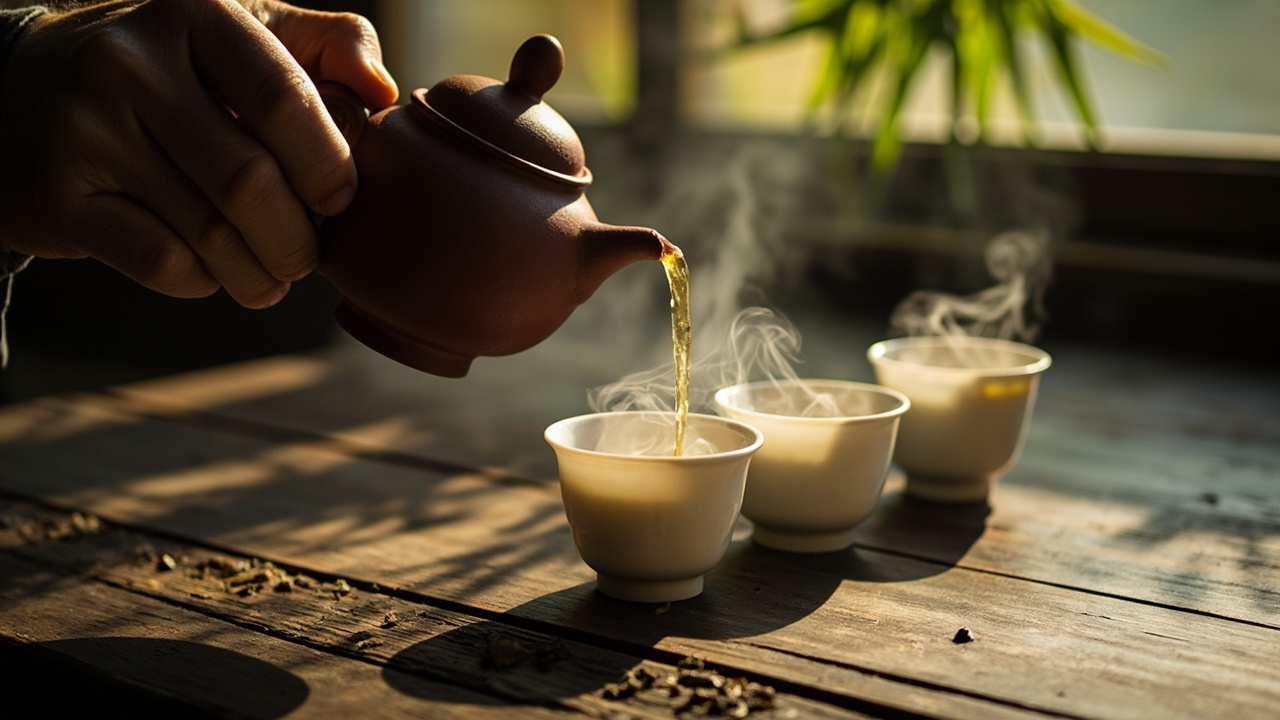
The first time I sat through a proper gongfu tea ceremony, I was in a tiny shop in Chengdu that smelled of damp wood and roasted barley. The owner, a woman named Mrs. Chen who looked like she was in her seventies but moved like she was forty, didn’t ask me what I wanted. She just put a clay pot on the table and started pouring hot water over it. I sat there for two hours, drinking maybe eight tiny cups of tea, and I learned more about Sichuan in that time than I had in the previous week of sightseeing.
That’s the thing about tea in China. It’s not a drink. It’s a way of sitting down, a way of talking, a way of slowing down in a country that moves fast. Every province has its own leaves, its own pots, its own rituals. And every tea house has its own regulars who will absolutely judge you if you pick up the cup wrong.
This guide covers everything a first-timer needs: how to find a good tea house, what to expect when you sit down, how much to pay, and how to behave without looking like a tourist who just stepped off the bus. I’ve done the awkward parts so you don’t have to.
Quick answer
A Chinese tea ceremony typically costs $5–$30 per person (¥35–¥215) at a public tea house, with private ceremony experiences running $30–$80 (¥215–¥575). You don’t need to book ahead for most tea houses, but you should budget 1–2 hours and expect to drink 5–10 small cups. Most venues accept Alipay or WeChat Pay; bring cash as backup for tiny rural shops. The best places for a first ceremony are Chengdu, Hangzhou, and Beijing, where tea culture is deeply embedded in daily life.
The Short Version
If you only have 90 seconds, here’s the deal. Find a tea house in Chengdu’s People’s Park or a Hangzhou teahouse near West Lake. Sit down, let the server pour, and watch what locals do before you touch your cup. Expect to pay $10–$20 (¥70–¥145) for a session that lasts an hour or two. Don’t worry about knowing the “right” way — just don’t slurp loudly, don’t pour your own tea if someone else is hosting, and for the love of everything, don’t ask for milk and sugar. You’ll be fine.
How I Picked These
I’ve spent seven years living in Beijing and traveled through 40+ provinces and cities. For this guide, I went back to ten tea houses I’ve visited multiple times, plus three new ones I checked out in the last year. I sat through ceremonies in each, talked to the owners and regulars, and made a point of going as a normal customer rather than someone who gets special treatment. I also asked local friends what they’d recommend to a foreign visitor, because the places tourists find on their own are usually the worst ones. Every price and hour listed here is what I actually paid or saw posted, though prices do drift — treat everything as approximate.
Comparison Table
| Rank | Place | Best For | Approx Cost (USD) | Time Needed | When to Go |
|---|---|---|---|---|---|
| 1 | Wenshu Monastery Tea Garden, Chengdu | First-timers, people-watching | $5–$10 (¥35–¥70) | 1–2 hours | Morning, weekdays |
| 2 | Meijiawu Village, Hangzhou | Dragon Well tea, countryside | $10–$20 (¥70–¥145) | Half day | April–May |
| 3 | Laoshe Teahouse, Beijing | Traditional performances | $15–$30 (¥105–¥215) | 2–3 hours | Evening shows |
| 4 | Yuyuan Teahouse, Shanghai | Historic setting, tourists | $8–$15 (¥55–¥105) | 1 hour | Early morning |
| 5 | Xi’an Tea House Circuit | Silk Road history | $10–$20 (¥70–¥145) | 2 hours | Afternoon |
| 6 | Fujian Wuyi Mountain Tea Farms | Rock oolong, authenticity | $20–$40 (¥145–¥290) | Full day | October–November |
| 7 | Guangzhou Teahouse (Dim Sum Style) | Morning tea culture | $10–$25 (¥70–¥180) | 2–3 hours | 8–11 AM |
| 8 | Kunming Tea Market | Pu’er exploration | $15–$30 (¥105–¥215) | 2–3 hours | Any season |
| 9 | Suzhou Garden Teahouse | Aesthetics, tranquility | $10–$20 (¥70–¥145) | 1–2 hours | Autumn |
| 10 | Lhasa Sweet Tea House | Non-ceremonial, local life | $2–$5 (¥15–¥35) | 30 minutes | Any time |
Wenshu Monastery Tea Garden, Chengdu — The One I Always Bring Friends To
The first time I brought a friend here, a monk walked past our table and nodded at the tea I was drinking. That doesn’t happen anywhere else in China. The tea garden sits inside the grounds of Wenshu Monastery, a working Buddhist temple in the north of Chengdu, and the whole place has a calm that’s hard to find in a city of 21 million people.
You sit at bamboo tables under big trees, and the servers come around with thermos flasks of hot water. You pick a tea from a list — jasmine, green, oolong — and they bring you a glass with a few leaves in the bottom. That’s it. No ceremony, no fuss. You just sit, drink, and watch old men play Chinese chess while their wives gossip.
📍 Location: Wenshu Monastery, Wenshuyuan Street, Qingyang District, Chengdu 🎫 Entry fee: Free for the monastery grounds; tea costs $3–$8 (¥20–¥55) per glass, refillable with hot water 🕐 Opening hours: 8:00 AM – 6:00 PM daily 🚇 How to get there: Take Metro Line 1 to Wenshu Monastery Station, Exit B, walk north for about 5 minutes. The entrance is on the left side of the street. 📅 When to visit: Weekday mornings before 10 AM. Weekends are packed with families. 💡 Insider tips: Bring your own tea if you’re picky — locals do. The jasmine is fine, but the green tea is mediocre. Also, the monastery’s vegetarian restaurant on the east side serves the best Buddhist food I’ve had in China, and it costs about $5 (¥35) per person.
I once sat next to an old man who drank three thermoses of hot water with the same tea leaves, and when I asked him why, he said, “The first cup is for the taste. The rest are for the conversation.” I think about that a lot.
Meijiawu Village, Hangzhou — Where Dragon Well Tea Actually Comes From
The cab driver looked at me like I was crazy when I asked him to take me to Meijiawu instead of West Lake. “There’s nothing there,” he said. He was wrong. Meijiawu is a village of about 600 families, and almost all of them grow Longjing (Dragon Well) tea on the hillsides behind their houses. The whole valley smells like toasted chestnuts during harvest season.
You walk into any farmhouse and they’ll sit you down, brew you a cup of their own tea, and try to sell you a bag. Some of them are pushy about it. Most aren’t. The good ones just want to talk about the weather and their grandchildren. If you show genuine interest in the tea, the conversation gets better.
📍 Location: Meijiawu Village, Xihu District, Hangzhou (about 30 minutes from West Lake) 🎫 Entry fee: Free to wander; tea tasting $5–$15 (¥35–¥105) per person; a bag of good Longjing runs $30–$100 (¥215–¥720) depending on grade 🕐 Opening hours: Farmhouses are open roughly 8 AM – 6 PM, but knock on any door and someone will answer 🚇 How to get there: Take Metro Line 3 to Gudun Road Station, then a taxi or bus 27 to the village. A taxi from West Lake costs about $8 (¥55). 📅 When to visit: Late March to early May for the spring harvest. The first picking of the year (Ming Qian tea) is the most expensive and the best. 💡 Insider tips: Don’t buy tea from the first farmhouse you see. Walk deeper into the village — the prices drop and the quality goes up. Ask to see the tea leaves dry-roasted in a wok before you buy. If they refuse, walk away. Also, the “Dragon Well” sold in tourist shops in Hangzhou is often not from Hangzhou at all. Buy from the village or don’t buy at all.
I bought a bag of tea from a farmer named Wu who insisted on showing me his entire drying process before he’d let me pay. He didn’t speak a word of English, and my Mandarin was terrible, but we communicated fine through gestures and shared appreciation for a good cup.
Laoshe Teahouse, Beijing — Tea With a Side of Opera
This is not a quiet tea house. Laoshe Teahouse, named after the famous Chinese writer, is a three-story performance venue in Qianmen that puts on shows every evening — traditional opera, acrobatics, face-changing, puppetry. You drink tea while watching the spectacle, and it’s about as subtle as a firework display.
I have mixed feelings about this place. It’s touristy. The prices are high. The tea is average. But if you want to see a dozen Chinese performance arts in one sitting without running around Beijing all night, this is the only place that does it. And the building itself is beautiful, all carved wood and red lanterns.
📍 Location: No. 3, West Qianmen Street, Dongcheng District, Beijing 🎫 Entry fee: Evening performances $25–$50 (¥180–¥360) including tea and snacks; daytime tea only $10–$20 (¥70–¥145) 🕐 Opening hours: 9:00 AM – 10:30 PM; performances start around 7:30 PM 🚇 How to get there: Take Metro Line 2 to Qianmen Station, Exit C, walk south on Qianmen Street for about 8 minutes. It’s on the west side of the street. 📅 When to visit: Book the evening show in advance, especially on weekends. The daytime tea service is quieter and cheaper. 💡 Insider tips: The cheapest seats are in the back rows — you can still see the stage fine. The snacks that come with the tea are mostly mediocre, but the candied hawthorn is worth trying. If you want a more authentic Beijing tea experience, skip this and go to a small tea shop in the hutongs instead, but come here for the spectacle.
The face-changing performer came down into the audience during the show, and an American tourist next to me nearly dropped her tea cup when he appeared inches from her face. She laughed about it for the rest of the night.
Yuyuan Teahouse, Shanghai — Pretty, Crowded, and a Bit Overrated
I’ll be honest: I think the Yuyuan Teahouse is more about the building than the tea. It’s a Ming dynasty-style structure in the middle of the Yuyuan Garden complex, and it’s genuinely beautiful — carved beams, curved roofs, a perfect spot for photos. But it’s also one of the most crowded tourist attractions in Shanghai, and the tea is priced accordingly.
That said, if you’re already at Yuyuan Garden, it’s worth stopping in for one cup. The view over the garden from the upper floors is lovely, and the experience of drinking tea in a 400-year-old building is something you’ll remember even if the tea itself is forgettable.
📍 Location: 249 Yuyuan Old Street, Huangpu District, Shanghai (inside the Yuyuan Garden complex) 🎫 Entry fee: Tea starts at $8 (¥55) per person; the garden itself costs $5 (¥35) to enter 🕐 Opening hours: 9:00 AM – 9:00 PM daily 🚇 How to get there: Take Metro Line 10 to Yuyuan Garden Station, Exit 1, walk 5 minutes east. The teahouse is the big building on the corner of the main square. 📅 When to visit: Go at opening time (9 AM) to beat the crowds. By 10:30 AM it’s a sea of tour groups. 💡 Insider tips: Skip the “tea ceremony” package they push on tourists — it’s overpriced and rushed. Just order a pot of jasmine or biluochun and sit by the window. Also, the restrooms are downstairs and require a token from the counter. Don’t lose it.
I watched a tour guide herd thirty people through the teahouse in about fifteen minutes, snapping photos the whole way. None of them actually drank their tea. That’s the wrong way to do this place.
Xi’an Tea House Circuit — Silk Road History in a Cup
Xi’an isn’t the first city people think of for tea, but it should be. This was the eastern end of the Silk Road, and the tea trade that flowed through here shaped half of Asia. The tea houses around the Muslim Quarter and the South Gate area carry on that tradition, and they’re a fascinating mix of Han Chinese and Hui Muslim tea culture.
The standout is the “Eight Treasures Tea” served in Muslim tea houses — a sweet, nutty brew with goji berries, jujubes, walnuts, and rock sugar. It’s served in a lidded bowl, and the proper way to drink it is to use the lid to push the floating bits aside. I still can’t do it without making a mess.
📍 Location: Muslim Quarter and Shuyuanmen area, Xi’an 🎫 Entry fee: $5–$15 (¥35–¥105) per person depending on the tea house 🕐 Opening hours: Most tea houses open 10 AM – 10 PM; the Muslim Quarter is busiest in the evening 🚇 How to get there: Take Metro Line 2 to Zhonglou Station, Exit C, and walk into the Muslim Quarter. The tea houses are scattered throughout the narrow streets. 📅 When to visit: Evening, when the quarter comes alive with street food and the tea houses fill up with locals. 💡 Insider tips: Try the Eight Treasures Tea at least once, but don’t order it at a fancy place — the best versions are in the small, slightly grubby tea houses on the side streets. Also, the tea houses here serve snacks, and the candied walnuts are worth the extra yuan. Don’t expect a formal ceremony — this is casual, social tea drinking.
A tea house owner in the Muslim Quarter told me that his family had been selling tea in Xi’an for six generations. He showed me a photo of his great-grandfather standing in front of the same shop, taken in 1935. The building had changed, but the tea was the same.
Wuyi Mountain Tea Farms, Fujian — The Real Deal for Oolong
This is the one on the list that requires real effort to reach, but if you care about tea at all, it’s worth it. Wuyi Mountain in northern Fujian is where rock oolong (yancha) comes from — teas like Da Hong Pao and Rou Gui that are grown in rocky crevices and taste like minerals and smoke. The tea farms here are family operations, and the best way to visit is to hire a local guide or just show up and walk the trails.
The tasting rooms at the farms are simple — a wooden table, a gongfu set, and a farmer who will brew you tea for hours if you show genuine interest. The prices are high for the famous names, but the experience is priceless.
📍 Location: Wuyishan City, Nanping, Fujian Province 🎫 Entry fee: Free to walk the tea fields; tastings $10–$30 (¥70–¥215) per person; famous Da Hong Pao can cost $100+ (¥720+) per gram 🕐 Opening hours: Farms are open during daylight hours; call ahead for formal tastings 🚇 How to get there: High-speed train from Fuzhou or Xiamen to Wuyishan North Station (about 2–3 hours), then a taxi to the scenic area. From the scenic area entrance, walk or take a shuttle to the tea fields. 📅 When to visit: October–November for the autumn harvest, when the farms are most active. Spring (April–May) is also good but wetter. 💡 Insider tips: Don’t buy Da Hong Pao from the tourist shops near the scenic area — it’s almost certainly fake. Buy from the farms directly. Also, the “Mother Tree” Da Hong Pao that tourists line up to see is just a tourist attraction; the real famous trees are protected and you can’t get near them. The hiking trails through the tea fields are gorgeous and mostly empty.
I spent an afternoon with a farmer named Zhang who brewed me five different oolongs and explained the difference between each one by pointing at the rocks where they grew. He spoke no English, and my Mandarin ran out after about ten minutes, but we kept going through gestures and shared enthusiasm.
Guangzhou Teahouse (Dim Sum Style) — Breakfast Is a Verb
In Guangzhou, morning tea isn’t a ceremony — it’s a way of life. The city’s tea houses (yum cha) serve tea with dim sum from early morning until noon, and families fill the tables for hours. You don’t go for the tea; you go for the food, and the tea is there to wash it down.
The ritual is simple: you sit down, a server asks what tea you want (pu’er, jasmine, and oolong are standard), and then carts or order sheets bring you endless small plates. The tea is strong and cheap, and the atmosphere is loud and chaotic. It’s the opposite of a quiet, meditative ceremony, and it’s wonderful.
📍 Location: Various locations across Guangzhou; the most famous are in the old city near Shamian Island and in the Yuexiu District 🎫 Entry fee: $10–$25 (¥70–¥180) per person including food and tea 🕐 Opening hours: 7:00 AM – 2:00 PM for morning tea; some places serve all day 🚇 How to get there: Take Metro Line 1 to Chen Clan Academy Station for the old city tea houses, or Line 2 to Haizhu Square for the Shamian area. Any taxi driver knows the local favorite. 📅 When to visit: Weekday mornings before 9 AM to avoid the weekend rush. Sunday mornings are packed with families. 💡 Insider tips: The “tea ceremony” here is just pouring tea for each other — the person closest to the pot pours for everyone else, and you tap your fingers on the table to say thanks. Don’t be shy about flagging down servers; the food comes fast. Also, the traditional way to end the meal is to pour the last cup of tea over your chopsticks to clean them. Locals will notice if you do it right.
An elderly man at the table next to me noticed I was struggling with chopsticks and silently demonstrated how to pick up a slippery shrimp dumpling. He didn’t say a word, just showed me, then went back to his newspaper.
Kunming Tea Market — A Maze of Pu’er
Kunming’s tea market is not a single place — it’s a collection of warehouses and shops clustered around the Zhuantang area, and it’s where the serious pu’er buyers go. Pu’er is the fermented tea from Yunnan that gets better with age, and the market here has everything from $5 (¥35) cakes to $10,000 (¥72,000) vintage bricks.
Walking through the market is overwhelming. Every shop owner will wave you in and offer you a tasting. Some are genuine enthusiasts who love talking about their tea. Others are salespeople who will tell you anything to make a sale. You need to develop a sense for which is which.
📍 Location: Zhuantang Tea Market, Wuhua District, Kunming, Yunnan Province 🎫 Entry fee: Free to browse; tastings usually free if you’re a serious buyer, $5–$10 (¥35–¥70) if you’re just a tourist 🕐 Opening hours: 9:00 AM – 7:00 PM daily 🚇 How to get there: Take Metro Line 3 to Xizhan Station, then walk or take a short taxi ride to the market. The main entrance is on Zhuantang Road. 📅 When to visit: Any time of year; the market is always active. 💡 Insider tips: Don’t buy anything on your first lap. Walk the whole market, taste at several shops, and then go back to the one you liked best. Ask to see the “nei fei” — the paper label inside the cake — as a way to check authenticity. And be aware that the “aged” pu’er sold here is often artificially aged in a few months. Real aged pu’er costs a fortune.
I met a shop owner who had been in the tea business for 30 years and could tell the age of a pu’er cake by smelling it. He let me try, and I smelled nothing. He laughed and poured me another cup.
Suzhou Garden Teahouse — Tea Among the Scholars
Suzhou’s classical gardens are UNESCO World Heritage sites, and some of them have teahouses tucked into their corners. Drinking tea in a Ming dynasty garden, watching the light filter through the lattice windows and the koi fish circle in the pond, is about as close to a meditative experience as you’ll get in a Chinese city.
The most famous is the teahouse in the Humble Administrator’s Garden, but it’s always packed. I prefer the smaller ones in the Master of the Nets Garden and the Garden of Cultivation, which are quieter and more atmospheric.
📍 Location: Various gardens in Suzhou’s old city; the Humble Administrator’s Garden is at 178 Dongbei Street 🎫 Entry fee: Garden entry $10–$15 (¥70–¥105) plus $5–$10 (¥35–¥70) for tea 🕐 Opening hours: Gardens open 7:30 AM – 5:30 PM; the teahouses close an hour before the gardens 🚇 How to get there: Take Metro Line 4 to Beisita Station for the Humble Administrator’s Garden, or Line 1 to Lindun Road for the Master of the Nets Garden. Both are short walks from the stations. 📅 When to visit: Autumn (October–November) when the gardens are at their most beautiful. Go at opening time to have the place mostly to yourself. 💡 Insider tips: The tea at these teahouses is nothing special — you’re paying for the setting. Don’t expect a ceremony; just order a pot and sit. Also, the gardens are busiest on weekends and holidays, so plan accordingly. The Master of the Nets Garden has an evening tour in summer that includes a tea performance.
I sat in the Master of the Nets Garden teahouse for an hour, drinking biluochun and watching a calligrapher practice his brush strokes at the next table. He finished a piece, looked at it, crumpled it up, and started again. I’ve never seen anyone so focused.
Lhasa Sweet Tea House — The Anti-Ceremony
This one is a curveball. Lhasa’s sweet tea houses have nothing to do with the formal Chinese tea ceremony. They’re simple rooms with plastic tables where Tibetans drink butter tea and sweet tea all day, playing cards and gossiping. The tea is cheap, the atmosphere is warm, and it’s the most authentic “tea culture” experience you can have in Tibet.
The sweet tea is black tea boiled with milk and sugar, served in glass bottles or thermoses. It’s delicious, especially at altitude when you need the calories. The butter tea is an acquired taste — salty, rich, and not for everyone. Try both.
📍 Location: Various tea houses across Lhasa; the most famous is the Guangming Sweet Tea House on Deji Road 🎫 Entry fee: $1–$3 (¥7–¥20) per thermos of tea 🕐 Opening hours: 8:00 AM – 8:00 PM daily 🚇 How to get there: Lhasa doesn’t have a metro. Take a taxi to Deji Road in the old town, or walk from the Jokhang Temple area. The Guangming Sweet Tea House is on the corner of Deji Road and Barkhor Street. 📅 When to visit: Any time; the tea houses are busiest in the late afternoon 💡 Insider tips: The etiquette here is different from the rest of China. You pay for a thermos of tea and it’s refillable. Don’t expect anyone to pour for you — you’re on your own. Also, the sweet tea is served with a stack of plastic cups; grab one and pour yourself. The locals won’t mind if you’re a bit clumsy.
A Tibetan grandmother sitting across from me at the Guangming Sweet Tea House offered me a piece of her tsampa (roasted barley flour mixed with butter tea). I had no idea how to eat it without making a mess, and she laughed at me, then showed me how to roll it into a ball. It tasted like nothing I’d ever had before.
FAQ summary
The most important things to know: a casual tea house session costs $5–$20 (¥35–¥145) per person, while formal ceremonies run $30–$80 (¥215–¥575). You don’t need to book ahead for most places, but do book evening performances at places like Laoshe Teahouse. Payment is almost always via Alipay or WeChat Pay — set these up before you arrive. English is rarely spoken at smaller tea houses, so download a translation app. The best first-time experiences are in Chengdu, Hangzhou, and Beijing, where tea culture is most accessible to visitors.
FAQ
Q: Do I need to know anything about tea before attending a ceremony? A: No. The whole point is to learn by doing. Just be honest that you’re a beginner, and most tea masters will enjoy teaching you. Don’t pretend to know more than you do — they’ll see through it immediately.
Q: How much should I tip at a tea house? A: Tipping is not expected anywhere in China, including tea houses. The price you pay is the price. If you really enjoyed the experience, a small gift or just a sincere thank you is more appropriate than money.
Q: Can I use a credit card to pay for tea? A: Probably not. Most tea houses, especially smaller ones, only accept Alipay or WeChat Pay. Some accept cash, but you’ll need small bills. Set up Alipay or WeChat Pay before you arrive — it’s essential for almost everything in China.
Q: Is it rude to ask for milk and sugar in my tea? A: Yes, at a traditional tea house it would be seen as strange. Chinese tea is meant to be drunk plain. If you really can’t handle the bitterness, order a sweeter tea like jasmine or a fruit tea instead. The exception is Lhasa, where sweet tea is the norm.
Q: Do I need to book a tea ceremony in advance? A: For most casual tea houses, no — just walk in. For formal ceremonies, private rooms, or performance venues like Laoshe Teahouse, yes, especially on weekends. You can book through your hotel or directly via the venue’s WeChat account.
Q: What should I wear to a tea ceremony? A: There’s no dress code. Locals wear everything from business suits to hiking clothes. Just be comfortable and clean. The only thing to avoid is strong perfume or cologne, which can interfere with the tea’s aroma.
Q: Will I need a VPN to use my phone at a tea house? A: Yes, if you want to use Google, WhatsApp, Instagram, or any Western apps. China blocks many foreign websites and apps. Check my SIM card and internet guide for the latest on getting connected.
The Honest Wrap-up
This list is for people who want to understand China through its tea, not just check off a tourist attraction. If you want a quick photo and a cup of mediocre tea, any place in a tourist district will do. But if you want to sit with locals, taste something you’ve never tasted before, and leave with a story, these are the places.
I’ve had bad tea in beautiful settings and incredible tea in grubby little shops. The setting matters less than the people. If you remember nothing else, remember this: the tea is just an excuse to sit down and talk. The conversation is the real ceremony.
And if you’re about to book that flight, do it. China is loud, chaotic, and exhausting, and it will absolutely change how you think about tea. Bring an open mind and an empty stomach. You’ll need both.
Topics
More guides you may like
Top 10 Bridges in China
China's bridges are engineering marvels spanning mountains, rivers, and seas. Here are 10 of the most spectacular, from ancient stone to modern steel.
8 min read

Top 10 Buddhist Sites in China
From the Leshan Giant Buddha to the Dunhuang Caves, these 10 Buddhist sites represent 2,000 years of China's spiritual heritage.
9 min read
Top 10 Day Trips from Beijing You Shouldn't Miss
Beijing is packed with history, but some of China's best experiences are just a few hours away. Here are 10 day trips that will transform your visit.
9 min read
Top 10 Hidden Gems in China Off the Beaten Path
Beyond the Great Wall and Terracotta Warriors, China has incredible hidden destinations few tourists ever reach. Here are 10 underrated gems worth the detour.
9 min read
Top 10 Markets and Shopping Streets in China
From Shanghai's Bund to Beijing's Silk Street - 10 markets where foreigners can haggle, explore, and bring home authentic Chinese goods.
9 min read
Top 10 Museums in China You Shouldn't Miss
China's museums span 5,000 years of civilization. These 10 - from the Palace Museum to Xi'an's terracotta gallery - are unmissable for culture lovers.
9 min read